A Reckoning for Older Men

When sin — I call it ‘sin’ but, if you use some other word without a religious ring to it, you know what I mean — becomes the prevailing topic from which we cannot break away, it feels good to take a break from the news, and from ourselves.

So we pass along Lloyd Omdahl’s column “Reckoning has arrived for older men” in the Nov. 27 Grand Forks Herald in hopes it might bring a chuckle at some point, but also knowing that some people think any sort of chuckle on this topic is downright sinful.

0B0xyv9CaKhSmVDhOU2p4bEtaVGs_1

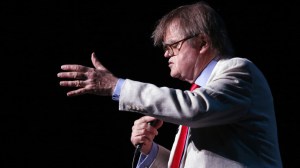
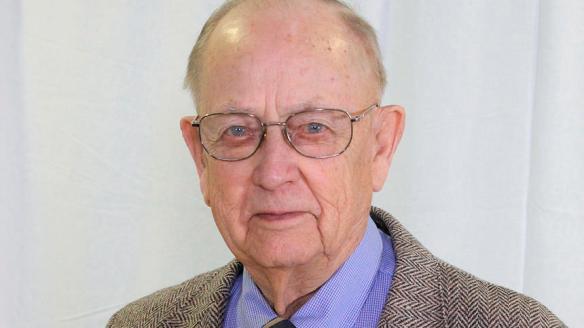
Lloyd Omdahl

94 year-old Lloyd Omdahl, the man with the twinkle in his eyes,  served as Lieutenant Governor of North Dakota and is professor emeritus of  political science at the University of North Dakota. He continues to write a weekly column for The Grand Forks Herald. His former student, Gary Severson, brought this column to our attention today as a comment on Views from the Edge‘s morning post.

In case you missed it the first time, here’s the link: “Reckoning has arrived for older men“. Sexual harassment is not funny. It’s ugly. It’s sinful. Even so, if you can’t find a laugh somewhere in Lloyd’s column, take a nap, take a walk, or see a priest, rabbi, imam, or guru, and, by all means, go back and read Norman Cousins before you’re taken by a stroke.

  • Gordon C. Stewart, Chaska, MN, November 30, 2017.


Where angels fear to tread…

…fools rush in. 

garrison-keillor112917

Garrison Keillor, A Prairie Home Companion

In places like Like Wobegon and Minnesota Public Radio’s firing of A Prairie Home Companion creator and host Garrison Keillor for “inappropriate conduct” and MPR’s erasure of all things Prairie Home Companion. MPR will no longer air A Prairie Home Companion re-runs or Keillor’s thoughtful “Writer’s Almanac” and will give a new name to the show hosted by Keillor’s successor. If you opened the last link and it said “Page Not Found – NPR” you get the picture.

27-donald-trump-roy-moore.w710.h473.2x

President Trump and Roy Moore

Meanwhile the President of the United States gets elected after 20 women have accused him of sexual misconduct or harassment — and continues to deny all allegations as fake new, though he himself has been recorded as bragging about groping — while he and conservative evangelicals in Alabama support the candidacy of Roy Moore whose behavior is alleged to be more than “inappropriate”.

220px-Alexander_Pope_by_Michael_DahlIt was English poet Alexander Pope (1688-1744) who wrote the line “Fools rush in where angels fear to tread” in An Essay on Criticism that invites the reader to ponder which is worse: criticism of writing that “judges ill” or writing that is in “Want of Skill”?

‘Tis hard to say, if greater Want of Skill

Appear in Writing or in Judging ill,

But, of the two, less dang’rous is th’ Offence,

To tire our Patience, than mis-lead our Sense

Some few in that, but Numbers err in this,

Ten Censure wrong for one who Writes amiss;

A Fool might once himself alone expose,

Now One in Verse makes many more in Prose.

-Alexander Pope, An Essay on Criticism (1–8).

Fools — both writers and their critics — are rushing in where angels fear to tread. Views from the Edge just became one of the them. Sometimes fools can’t help themselves.

Wishing everyone a nice day from what little remains of the little fictional Minnesota town that just went the way of all flesh. Farewell to thee, Lake Wobegon. We can only wish the same or worse in the nonfictional places of Pennsylvania Avenue and the State of Alabama.

  • Gordon C. Stewart, Chaska, MN, November 30, 2017

Two Birds of the Secret Heart

59476eb9d98ab50256137e216d23f129--scripture-art-psalms

“Create in me a clean heart, O God…” is a well-known prayer from the Psalms.  It’s context — its back-story — is not so familiar.

Psalm 51 is a prayer attributed to David. It is not a quiet prayer. It is a wrenching, sobbing prayer, the words tumbling from David’s mouth in halting phrases and stammers with tears flooding his eyes, streaming down his cheeks.

The Inward Being

“Behold, You seek truth in the inward being;
therefore teach me wisdom in my secret heart.” (Psalm 51:6)

Is the secret heart the deepest place in us, the place where God is: the equivalent or synonym for “the inward being” – a poetic parallelism of Hebrew poetry? Or is it, perhaps, the secret place where we hide from God: the hiding place where we go off to a different heart than the Divine heart? Or could it be both at the same time?

David’s secret heart is dirty and he knows it. He cannot wash the stain of blood from his hands. “Wash me thoroughly from my iniquity,” he cries out, “and cleanse from my sin! For I know my transgressions, and my sin is ever before me.” It is a scene from Shakespeare’s Macbeth:

“Out, damn spot! OUT, I say…. all the perfumes of Arabia will not sweeten this little hand. Oh, oh, oh!”

The Hebrew Psalms are like that. They are not sanitized. They plunge the reader into the conflict between the reader’s inmost being, the true secret heart, you might say – the heart that pumps life into us – and the secret heart of our flight from truth and goodness, the heart of deception and self-deception.

Why is David crying out? What has he done? What is the sin that is ever before him, the blood he can’t wash from his own hands?

A Response to Accusation

Psalm 51 comes in response to an accusation that has exposed the bloody behavior his secretive heart has produced. It is Nathan, David’s commander on the battlefront, who confronts David with the truth.

Nathan has just returned from the front to tell David that Uriah, the King’s next door neighbor, a man of impeccable loyalty valor, Bathsheba’s husband, whom David’s scheming heart has sent off to war, is dead! His blood is on David! Nathan has spoken the truth to power.

There is no wisdom in David’s secret heart. There is treachery there.

“Purge me!” cries David. Imagine Richard Burton at his most dramatic. “Purge me with hyssop, and I shall be clean; wash me and I shall be whiter than snow!” (Ps. 51:7)

Hyssop, the foliage of an aromatic plant named in the Passover story (Exodus 12:21-27), was used in the cleansing of a leper (Leviticus 4:51).

Two Small Birds

The rite of cleansing centers on two small birds. One bird is killed. The other bird is washed in the blood of the other under the flow of water and the sweetness of hyssop. The one bird dies. The second bird lives.

“Thus he (the priest) shall cleanse the house with the blood of the bird, and with the running water, and with the living bird, and with the cedarwood and hyssop and the scarlet stuff; and he shall let the living bird go out of the city into the open field; so he shall make atonement for the house, and it shall be clean.” (Lev. 14:52-53)

“Deliver me from blood-guiltiness, O God, the God of my salvation” cries Uriah’s killer curled up in a ball, hoping against all hope, “and my tongue will sing aloud of Your deliverance.” (Ps. 51:14)

Release Into the Open Field

David is both birds. He is the one who deserves to die. He is also the one who is living. He lives not because of the secretive heart that had conspired against Uriah, betraying his own inward being – “Against You only have I sinned…” (Ps. 51:4). He lives on because there is more mercy in God (the inward being) than there is sin in him.

“The sacrifice acceptable to God,” he concludes with tears, is “a broken spirit; a broken and contrite heart, O God, You will not despise.”

His body quivers as he imagines himself as the bird released into the open field by mercy alone, “according to Your steadfast love; according to Your abundant mercy.” (Ps. 51:1)

  • Gordon C. Stewart, Chaska, MN, Nov. 27, 2017

Christ the King

Poet Malcolm Guite’s poetry holds the essential paradox of the Christian faith and life. Open the re-blogged piece to read and listen to his poem for the last Sunday of the Christian liturgical year, Christ the King Sunday.

malcolmguite's avatarMalcolm Guite

20111119-111210We come now to a feast of Ends and Beginnings! This Sunday is the last Sunday in the cycle of the Christian year, which ends with the feast of Christ the King, and next Sunday we begin our journey through time to eternity once more, with the first Sunday of Advent. We might expect the Feast of Christ the King to end the year with climactic images of Christ enthroned in Glory, seated high above all rule and authority, one before whom every knee shall bow, and of course those are powerful and important images, images of our humanity brought by him to the throne of the Heavens. But alongside such images we must also set the passage in Matthew (25:31-46) in which Christ reveals that even as He is enthroned in Glory, the King who comes to judge at the end of the ages, he is also the hidden King…

View original post 215 more words

Thanksgiving for The Boston Declaration

This Thanksgiving I’m thankful for The Boston Declarationissued several days ago by 300+ Christian theologians on the state of Christianity in the United States in 2017 and a call for repentance by evangelical Christians.

Susan Thistlethwaite’s Huffington Post article gives the background and more detail on The Boston Declaration. Click Original Signatories for a listing of the original signers of the Declaration.

Boston Declaration original signatories.

I’m thankful for Rev. Dr. Reggie Williams, Associate Professor of Ethics at my alma mater, McCormick Theological Seminary, and author of Bonhoeffer’s Black Jesus: Harlem Renaissance Theology and an Ethic of Resistance, one of the original signers. Reggie is the tall one in the center of the photo.

Rev. Dr. Reggie Williams, professor of ethics at McCormick Theological Seminary, talked of the heavy hearts carried by himself and other African-Americans in this current moment. “These are sinister times, but they are not new. As a black person educated in Evangelical Christian institutions, I am familiar with a Christianity that has a history of ignoring my being, and providing theological justification for my non-being.”

But, he emphasized, what is “new in my lifetime to have such an over embrace of it.” How can people say it is Christianity “to proclaim good news to the rich or push the differently embodied person to the margins? Now is the time to follow Jesus the poor Jewish prophet whose teaching of the Kingdom was the inspiration for the Boston Declaration.” – Susan Thistlethwaite, Huffington Post.

The Trump Administration’s 18-month deadline for 60,000 Haitian refugees to leave the U.S. strikes me as the latest confirmation of white supremacy as the nation’s “original sin.” The order makes no sense apart from shoring up a base that sees white supremacy in peril. What’s happening in America today is only secondarily ‘political’. The primary  issue is theological and ethical — how we understand ultimate reality (God) and ourselves. It is what the Boston Declaration says it is.

Grace and Peace to all on this Thanksgiving holiday.

  • Gordon C. Stewart, Chaska, MN, November 23, 2017.


Taking Heart in Heartless Times

1Nessan

Rev. Dr. Craig L. Nessen

by Craig L. Nessan

Wartburg Theological Seminary

Dubuque, Iowa

“I have said this to you, so that in me you may have peace. In the world you face persecution. But take heart; I have conquered the world!” John 16:33

We live in unprecedented times. Polarizing discourse, red versus blue, the failure of public reasoning, name calling, and denial of facts are the order of the day. The post-modern yields to the post-truth era. Some political leaders simply make it up as they go along.

There is a public heartlessness evident about the needs of others, especially the most vulnerable, that concludes with repeated assertions of privileged self-interest. Public discourse is diverted daily from focusing on the needs of those in harm’s way, including the well-being of creation. In the church many contend that it is useless even to try and engage in civil conversation about what makes for the common good.

All this unfolds in a world of enormous and increasing disparity in wealth between an economic elite and those struggling to make ends meet. This economic disparity is visible everywhere, in every state and local community. Moreover, it is the secret in plain sight behind the movement of people across borders, the unprecedented numbers of displaced persons and refugees.

The need for political advocacy is urgent. Yet it is extremely hard to know where to begin. There appear a dozen new issues or tweets each day against which to react. It becomes crucial to search out reliable information, as from church based advocacy organizations, to help us discern wisely in this political moment. In my own analysis I seek to distinguish between what might be considered the “substantive agenda” of the current administration, which primarily has to do with executive orders and legislative initiatives intended to increase private profit for a few, and the symbolic agenda, especially designed to daze, distract, and confuse us.

To make this distinction is not, however, to minimize the harmful effects of the symbolic agenda, grounded in a white male identity politics that operates in binary categories to incite fear, anger, and hatred against all categories of difference, whether based on race, gender, sexual orientation, immigration status, or religion, especially against Muslims. By contrast to this white male identity politics, we seek to articulate and enact a neighbor politics, embracing of all, especially the marginalized.

In these heartless times we are called actively to participate in spiritual disciplines, in order to reduce our reactivity and seek to remain oriented to the mind and character of Jesus Christ. How does one remain centered and grounded in these heartless times? How does one remain rooted in the peace of Jesus Christ, taking heart and courage amid the whirlwind?

The mystical and political always belong together. Consider the witness of Mahatma Gandhi and Dietrich Bonhoeffer, Dorothy Day and Thomas Merton, Rosa Parks and Martin Luther King, Jr., Gustavo Gutiérrez and Elsa Tamez, Walter Brueggemann and Elizabeth Johnson. As with Jesus, prayer and praxis belong together. Retreat for prayer leads to prophetic engagement: acts of healing, feeding, exorcizing, welcoming, sharing, and publicly demonstrating. The rhythm of the Christian life is both inward and outward.

“Radix,” the origin of “radical” means going to the root of the matter in a twofold movement—the mystical as inward movement and the political as outward movement. Both movements are needful. Counter-intuitively, a heartless political climate makes the inward mystical movement even more needful.

The Mystical

How do we move ever more deeply into relationship with God?

Spiritual practices draw us into the depths of classical disciplines. Personal practices include prayer, meditation, walking, breathing. Communal practices encompass worship, study, dwelling in the Word. Practices that involve colleagues lend us encouragement and accountability in life-giving relationships

Spiritual practices and worship contribute to a mysticism of the ordinary, by which we detect the holy in what is right in front of us, even in what may appear chaotic in these heartless times. We need to attune the eyes to see and the ears to hear.

Hearing the Word of Christ in Scripture stories and participating in sacraments at worship provide the lens for recognizing divine presence in the everyday. Liturgy entails formation in life practices: truth telling, peacemaking, listening, confessing, interceding, offering thanks, welcoming, feeding, and blessing. At worship we participate in the divine economy where all are welcome and there is enough for all. All of this provides the means for us to perceive the shalom of God in the commonplace, even in heartless times like these.

The Political

The mystical movement toward God always turns us inexorably toward political movement for the sake of our neighbors. In the Great Commandment the vertical and horizontal dimensions are inextricable. Should we persist in efforts to provoke change from above? Yes, advocacy at the national and state levels remains essential. Following the guidance of trusted organizations—denominational advocacy organizations, Fellowship of Reconciliation, Bread for the World, 350.org, Amnesty International, and many others—remains imperative.

Even more in heartless times, however, we need to redouble efforts at change through organizing at the grassroots in local communities. Not only by making financial donations or sending advocacy letters, this means engaging people in one’s community. For all their limitations, congregations remain the most intact neighbor-directed communities on the local level, faith communities such as already exist in every locale across the country. We need to become very intentional and proactive in building coalitions with others in local communities—through one on one conversations, writing personal viewpoints for social media or in newspapers, and engaging in symbolic actions. When asked by a reporter whether he really thought that he could change the world by lighting a candle in a demonstration, A.J. Muste replied: “Oh, you’ve got it all wrong. I’m not doing this to change the country. I do it so the country won’t change me.”

The theory and practices of active nonviolent resistance are still in their infancy in human history, but these offer our best hope for lasting change in establishing the foundations for democracy and building up an equitable civil society. In this regard the research of Erica Chenowith and Maria Stephan published in their book, Why Civil Resistance Works: The Strategic Logic of Nonviolent Conflict, needs to become widely known.

I encourage us not to underestimate the ripples of difference our efforts can make, as we remain spiritually centered and especially as we join together in ecumenical and interfaith groups, as well as with all those ethically engaged but not religiously affiliated people who are committed to common good, reaching out to one neighbor at a time. We are called to create safe places and spaces of trust where people can be together, listen to each other, and learn from one other.

Taking Heart

While through the mystical movement we put on the mind and character of Christ—which is peacemaking, social justice, eco-justice, and respect for the inalienable dignity of each person—in the political movement we engage through reasoned and persuasive arguments that are not overburdened by religious jargon. In our public articulation we remain deeply grounded in faith, as strategically we may choose to express our political convictions in categories not freighted with explicit religious references. We do so to communicate effectively in the public square and to transcend the off-putting rhetoric of the religious right.

There are times and occasions for making explicit theological claims, as did Dr. King. Yet in this heartless time of excessively hyperbolic discourse, including that by religious people, we are called to communicate clearly through reasoned, publicly accessible language. In this polarized climate, where Christians are assumed to take regressive political stances, it is of even more value for Christians to make compelling arguments that are understandable to those who may not share our theological categories. This helps us move beyond the religious identity politics of the religious right to an expansive neighbor politics. This honors too what Bonhoeffer meant by the nonreligious interpretation of biblical concepts.

Finally, we are on this journey for life. We may not now see many signs of effectiveness, yet we take heart in even small signs of the kingdom’s appearance. As our bottom line we seek to live by integrity, searching to align our lives with the things of God in Christ, especially in times like these when we cannot see that it makes a difference. We trust that the things that make for peace, like generosity, a healthy creation, and human respect, are the things that last forever. In the words of Carrie Newcomer, in the end, only kindness matters.

 “And let us consider how to provoke one another to love and good deeds, not neglecting to meet together, as is the habit of some, but encouraging one another, and all the more as you see the Day approaching.”  Hebrews 10:24-25

  • Rev. Dr. Craig L. Nessan is Academic Dean & Professor of Contextual Theology and Ethics, The William D. Streng Professor for the Education and Renewal of the Church at Wartburg Theological Seminary in Dubuque, Iowa. Views from the Edge is pleased to have the honor of being the first to publish “Taking Heart in Heartless Times” with the author’s permission.


Getting Older

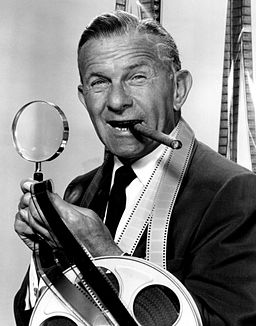
256px-George_Burns_1961INTRODUCTION: There’s nothing like an old friend when you have nothing worth saying, as though you ever really do, and are focused on getting back to writing a novel instead of your blog. One such old friend is the Rev. John M. Miller, or “the Least Reverent John Miller,” as I call him, whose sermon from The Chapel Without Walls arrived by email this morning. John remembers a Pickles comic strip. I think of George Burns.

FOR OLDER AMERICANS WHO ARE GETTING OLDER

Text – “For everything there is a season, and a time for every matter under heaven: a time to be born, and a time to die.” – Ecclesiastes 3:1-2 (RSV)

This sermon has taken many years to germinate. In one sense, it has taken almost seventy-nine years for it to come to full fruition. Thus the first reason for preaching this sermon is that the preacher himself is an older American who increasingly realizes he is getting older. The other reason which prompts this sermon is that Lois and I have lived in a retirement home for almost three years. That has given me the opportunity to have observed more than three hundred other older people getting older. That leads someone such as I to reflect on what all that means.

Hilton Head Island has a much older average population than the average American community. That has been true for at least the past fifty or sixty years. Over time we had three large retirement homes built here, plus several other smaller facilities of various types for various older people. The Seabrook, where we live, has 225 residents. Of those people, a hundred are ninety or older. We even have eight centenarians, people who are a hundred years of age or more.

Americans are getting older. Of course everybody is getting older, even newborns. However, by means of advancements in medical care, nutrition, and physical activity, many millions of Americans are going to make it into old age, whether they like it or not. Are we thinking about that? Are we consciously and conscientiously preparing for it? Or shall we just let it happen, come what may, with little or no thought given to it and what it might portend?

A member of The Chapel Without Walls sent me an email piece which he received as an email from someone else who no doubt received it as an email. It is called Ramblings of a tired mind. Among other things, it said these things: “I was thinking about old age and decided that old age is when you still have something on the ball, but you are just too tired to bounce it….The older you get the tougher it is to lose weight because by then your body and your fat have become really good friends….Aging: Eventually you will reach a point when you stop lying about your age and start bragging about it.”

But what happens if you realize you are old and you’re not bragging about it, or you fear it, or you wonder what is going to happen to you because of it? What if you’re older and not feeling well, and you think you are probably going to feel worse and worse, or you are fairly certain you’re going to run out of money because you lived too long and you see no way out of that heretofore unforeseen eventuality? Old age isn’t for sissies, they say, but must it be a severe trial for everyone who makes it into old age? For everyone, no, but for many, sadly, yes.

 When I was young, I didn’t like the Book of Ecclesiastes. I thought the writer, who is variously known as Ecclesiastes, Koheleth, or The Preacher, was too skeptical and cynical and sour. Now that I’m old I am more positively drawn to the unquestionably older person who wrote Ecclesiastes than to any other writer in the entire Bible. I suggest all of you take an hour or two this week to read this short book, and then ponder it and ruminate upon it. It is directed especially to older people who are getting older, and it has multitudes of golden nuggets for golden-agers. I’m serious. Read Ecclesiastes. Throughout this sermon I will use isolated quotes from Ecclesiastes. I won’t identify them as such, but if you listen closely, you’ll recognize them when you hear them, because you heard two readings earlier from this outstanding book.

I have said this before in several different ways, but I want to say it again: God does not determine when or how or why anyone dies. In my opinion, it is a serious mistake for anyone to believe God determines those things, because it can turn people into puppets or doormats. “Nature,” terminal illness, or longevity may terminate our lives, or we ourselves may do that, but it is never God who settles when anyone dies. Young or old, we die when we die. There is no explaining when or how or why it happens, other than medically or forensically. Theology can’t unveil why death happens when it happens. We die when we die, and faith cannot explain why.

That having been said, it behooves all of us, particularly as we get not only older but actually old, to contemplate everything we need to do to prepare for death. This may sound morbid, but what is really morbid is not to prepare for death by merely waiting passively for death to negate our existence. When we are living is the only time we have to prepare for death.

So what do we need to do? We need to have a written will, and a living will, and a medical power of attorney, whereby we designate someone to make medical decisions for us if we are physically and/or mentally incapable of expressing our own wishes for ourselves. We need to make sure somebody knows where all our important papers are, and to have access to them if they are under lock and key. We should establish a legal power of attorney for someone we trust who can handle our financial affairs if we are unable to handle them ourselves. We need to let our spouse or children or other relatives or attorney or somebody know what our wishes are concerning some sort of official recognition of our life soon after we have died.

I’m going to give you an opinion about which I have thought a great deal, probably more than most people. In my vocation, one is thrust into thinking about these things more than most other people. My advice? Please don’t tell your children or your lawyer that you don’t want any kind of service after you die. That is unfair to those who have known you and loved you, even if you are an irascible or ornery old coot, which of course no one here is. Everyone is a child of God, and as such, other children of God should be granted the opportunity and privilege to acknowledge and give thanks for the life of everyone who dies. Those who know they are going to die may not want a service, but a memorial service or celebration of life is for those who have lost the one who has died, and not for the deceased.  Everyone dies, and everyone else should have the  option of giving thanks to God for that person’s life when anyone dies. In my long-considered opinion, it is unseemly for a dying individual to prevent others from joining into a celebration of that person’s life, and also in a witness to the resurrection for those who are Christians.

Half a century in the ministry has convinced me that sadly, many people live too long. Most such people are not happy about that situation, but slowly or rather suddenly, there they are. For many oldsters, their quality of life declines into oblivion. It is my three years in a retirement home that have alerted me as nothing else could to the heart-wrenching reality of how relatively quickly too many Americans discover themselves to be living too long. Laws, customs, and faulty theology all contribute to their dilemma. The long-running British comedy on PBS called Waiting for God accurately describes this sober circumstance in a humorous but also telling manner.

Last Monday evening Turner Classic Movies showed a bittersweet film called Whales in August. It was about some elderly people on the Maine coast, and it starred Betty Davis in her final role, Lillian Gish, Ann Southern, Vincent Price and a couple of other loveable, colorful geezers. In the movie, Betty Davis and Lillian Gish play elderly sisters. The sister who is nearly blind says to her more positive and able-bodied sibling, “We have outlived our lives.” That was an honest, but sober, statement. We have outlived our lives. “So I hated life, because what is done under the sun is grievous to me, for all is vanity and a striving after wind” – Ecclesiastes 2:17).

Outliving one’s life in advanced age is a circumstance no one would ever choose. Nonetheless it is a situation confronted by increasing numbers of older people. Where once they were hale and hearty, now they are frail and weak. Where once their funds were sufficient, now they wonder which shall give out first, their money or them. Is it wise or prudent  — or ethical — to run out of money in old age? In any event, can it always be avoided? “In the day of prosperity be joyful, and in the day of adversity consider; God has made the one as well as the other, so that man will not find out anything that will be after him” Ecc. 7:14).

Countless older people have told me that wherever they are living is the last place in which they shall live. They say they are too old for another move. Don’t count on it. Circumstances may force older people to move to a nursing home or to be closer to children in other quarters or in a nursing home there. We like to think we are in control of our lives, but we may not be.

Thus far society has not made sufficient preparations for the legions of oldsters who are confronting the viability of the American health system. Social Security, pensions, and 401Ks cannot handle the costs of maintaining everyone who needs to be maintained. Here is an extremely sober and sobering question: Is it valid for any of us, if we are very old and sick, to keep on living? Voluntary, not mandatory answers to that question are the only valid ones.

Illness of any sort becomes a growing concern for older people. Dementia is a far greater concern. The older we get, the more likely we are to be afflicted with Alzheimer’s disease or some other form of dementia. Dementia requires more care than almost any other form of illness. If one spouse in a marriage begins to lose memory, demands inevitably shall increase for the other spouse who is still doing relatively well. Both can only try to make the best of it.

A few days ago I saw my longest-term close friend on the island. I hadn’t seen him for a couple of years. I was astonished at how much he had aged in that time. He has lost weight and is stooped and uncertain in his gait. His wife has had dementia for perhaps eight to ten years, and he is at the point where he simply is no longer able to give her the care she needs, but he has not found a suitable and affordable memory care facility for her. And so they both toddle along into a darker and ever more uncertain future. “Sorrow is better than laughter, for by sadness of countenance the heart is made glad” (Ecc. 7:3) Was Koheleth correct when he wrote that?

One of my favorite comic strips is Pickles. It features flinty Earl, his wife Gladys, and their grandson Nelson. Earl and Gladys look to be in their seventies, and Nelson is about six or seven. Last Monday Earl was in the kitchen with his hand on his chin. Gladys asked him what he was doing there. “I came here to get something,” he said. “To get what?” she asked. “I don’t know. It slipped my mind. But I’m not leaving until it comes to me!” Exasperated, Gladys disappears. Earl looks after her, saying, “How about bringing me a chair?” On Tuesday he was still in the kitchen, trying to remember why he came there. She offered him a cookie while he waited. “Now I know why I came here!” he said, happy that the mystery of his muddled memory had been solved.

It is wise for older people to do what they can while they can still do it. Take trips. Go on cruises. See relatives, or have relatives come to see you. Visit friends. Go to the movies. Walk.  Play games, especially “thoughty” games like bridge. Have fun. Enjoy life. “I have seen the business that God has given to the sons of men to be busy with. He has made everything beautiful in its time; also he has put eternity into man’s mind, yet so that he cannot find out what God has done from the beginning to the end” Ecc. 3:10-11). Life becomes more of a mystery in old age.

On the cover of the bulletin today is a quote from an article wisely entitled Old, frail, called by God (Christian Century July 17, 2017. It was written by Joyce Ann Mercer, who teaches pastoral theology at Yale Divinity School. The author quoted the psychologist Erik Erikson. “Old age in one’s eighties and nineties brings with it new demands, revelations, and daily difficulties.” He said it is the time of the struggle between integrity and what he ruefully identified as “despair and disgust.” He went on, “Loss of capacities and disintegration may demand almost all of one’s attention. One’s focus may become thoroughly circumscribed by concerns of daily functioning so that it is enough just to get through a day intact, however satisfied or dissatisfied one feels about one’s previous life history.” To me, Erik Erikson sounds a lot like Ecclesiastes, Koheleth, the Preacher.

Commenting on this, Dr. Mercer writes, “Perhaps at no other time…does the body occupy such a premier place in defining the contours of life….The heightened body consciousness of older adulthood critiques the cultural overvaluing of independence and autonomy.” How true that is! Why should anybody imagine, as we get older, that we should be physically able to do all the things we could do when we younger? Can a fifty-year-old Triumph sports car still do 140 miles per hour for four hours? Can a century-old clock still keep perfect time? Why do we think we can do what we always did? Why do younger people expect us to do more than we can do?

Joyce Ann Mercer ended her article with these words: “God’s call in older adulthood sometimes takes place in a receptive-dependent mode, a vocation of forming others in faith by evoking in them the practices, habits, and dispositions of faithful people….God’s call for older adults to receive care from others is also a call to experience the care and presence of God.” Or, as Koheleth put it, “That which is, already has been; that which is to be, already has been; and God seeks what has been driven away” (Ecclesiastes 3:15).   

 It has often been said that in old age people are “cramming for their finals.” That phrase is meant to be humorous, but it is also very serious. Many who are older feel closer to God. If that is true, we should make the most of it. Cram away! Carpe diem; Seize the day! If you didn’t do it before, do it now; get as close to God as you can, because God is getting ever closer to you.

Some of you have met my wife’s sister, Millie Ruhl. Millie has been visiting us for the past three weeks. In December, she will moving into The Seabrook. Lois has the second-best memory of anyone I have ever known, but Millie is the unquestionable Number One Rememberer.

When Loie and her two sisters were in grade school, their parents were the counselors for three summers at the Nottingham Camp in northern Maryland, near the headwaters of the Chesapeake Bay. It was a very fine camp which attracted girls and boys from wealthy families all over the Northeast. The three Seifried girls had a free ride there for those idyllic years. Millie was reminiscing about the prayer the entire camp recited every morning. It was composed by the camp director, Cal Burley, a remarkable man about whom I have heard much through the past twenty years. “O God, forasmuch as without Thee we are not able to please Thee in anything we may undertake, mercifully grant that Thy Holy Spirit will direct and rule our hearts and minds in all that we do this day, so that, at the end of the day we shall hear the eternal benediction: Well done, thou good and faithful servant.” He is now gone, but well done yourself, Calvin Burley.

“If a man begets a hundred children, and lives many years, so that the days of his years are many, but he does not enjoy life’s good things, and also has no burial, I say that an untimely birth is better off than he” (Ecc. 6:3). Mr. Burley taught values to his campers, and his life continues to live on in them. May we also live on in those who shall live after us long after we are gone.
miller

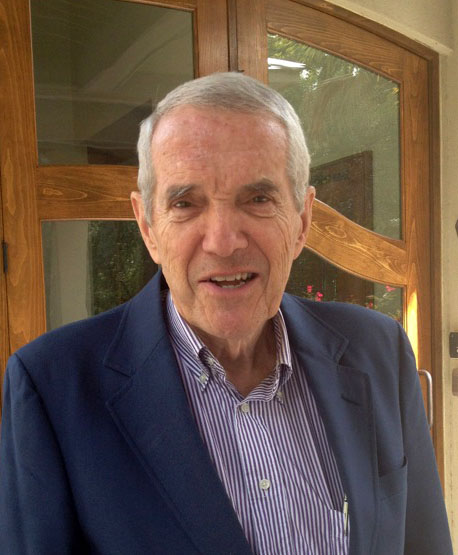
Rev. John M. Miller, Chapel Without Walls

The Rev. John M. Miller, Chapel Without Walls, Hilton Head, N.C., Nov. 12, 2017 sermon.

John Miller has written and published six books including The Irony of Christianity: A Pastor’s Appeal for a Higher Theology and a Lower Christology, which was published by The Institute for Religion in 2002. The book remains available thru Amazon.

Geoengineering and the Climate Crisis

Rex Tillerson clearly stated his views of climate change during remarks in 2012 at an event sponsored by the Council on Foreign Relations.

“And as human beings as a — as a — as a species, that’s why we’re all still here. We have spent our entire existence adapting, OK? So we will adapt to this. Changes to weather patterns that move crop production areas around — we’ll adapt to that. It’s an engineering problem, and it has engineering solutions. And so I don’t — the fear factor that people want to throw out there to say we just have to stop this, I do not accept.” 

earthwrenchGeoengineering now seems to have become the de facto climate policy of the Trump White House and the GOP as they, on the one hand, deny the apparent fact of climate change, and on the other hand, prepare to fight it by employing poorly tested technology with unknown long term effects! 

In Conservative circles, seductive but superficial reasoning exists for Geoengineering being so popular.  One is that on a large scale, it can make several corporations and individuals very rich.  Another is that the effects of carbon based fuels can be downplayed by government and industry now.  After all, any atmospheric heating caused by burning fossil fuels and a buildup of carbon dioxide can be minimized by employing geoengineering technologies.  In short, the current state of Conservative thinking, Jobs, Jobs, Jobs translates into Burn, Burn, Burn.

Globally, the atmospheric carbon dioxide level reached 403 ppm this year (it held between 180 ppm and 290 ppm for the previous 800,000 years).  Even so, fossil fuels still reign supreme as the power source of world economies.  With no end in sight for the abatement of atmospheric carbon dioxide levels or the employment of alternative/renewable power sources, carbon dioxide levels will continue to rise.  Planet cooling by geoengineering will just mask the warming effects of elevated carbon dioxide levels.  At some point, as yet undetermined, Earth will depend upon geoengineering to remain within livable limits.  It is apparent that once we are hooked on geoengineering in a world with high atmospheric carbon dioxide levels, any cessation of geoengineering efforts will be accompanied by rapid and severe global climate changes to unacceptable levels.

Obviously, clear thinking is in short supply.  At best, geoengineering is the environmental equivalent of the opioid crisis and at its worst it is applied asininity, if not a downright “Faustian Bargain” of epic proportions.

If you want deeper insight into geoengineering and the climate emergency, please read the following:

https://cleantechnica.com/2017/11/09/new-computer-modeling-helps-scientist-analyze-effects-geoengineering

http://www.mcclatchydc.com/news/nation-world/national/article183547911.html

http://www.npr.org/sections/thetwo-way/2017/11/02/561608576/massive-government-report-says-climate-is-warming-and-humans-are-the-cause

https://www.usatoday.com/story/news/politics/2017/11/08/pruitt-says-alarming-climate-report-not-deter-replacement-clean-power-plan/839857001

https://www.theguardian.com/environment/2017/nov/06/how-indias-battle-with-climate-change-could-determine-all-of-our-fates

https://www.theguardian.com/environment/2017/nov/08/seven-megatrends-that-could-beat-global-warming-climate-change

https://qz.com/index/1116160/for-800000-years-carbon-dioxide-levels-moved-between-180-ppm-and-290-ppm-last-year-they-got-to-403-ppm/

DOOM DESTRUCTION AND THE DNC. AGAIN! – BY TOM CURLEY

Like Tom Curley of SERENDIPITY, I get apocalyptic, or hyped, emails every day that assume I’m a member of a certain club.

tomcurley1's avatarSerendipity - Seeking Intelligent Life on Earth

I wrote this on election day 2017. It reminded me of a post I wrote a while back that sadly is still as current as it was back then. And it will be current next year too. And the year after that.

I don’t know about anybody else but I usually spend about five minutes every day deleting the junk email from my account.

I’ve had an AOL account from literally when they first started. I briefly worked for them and got the account for free. Yes you had to pay for an email account back in those dark early days.

I have other email accounts, but I like this one. I’ve had it for over 20 years. I know that if you have an AOL email account millennials think it’s funny and it means you’re old.  And do you know what I say to that? Fuck you, you little…

View original post 249 more words

HOLLYWOOD SEX AND OTHER DISTASTEFUL STUFF

Marilyn Armstrong's avatarSerendipity - Seeking Intelligent Life on Earth

I’m afraid there won’t be any men left in Hollywood. The way things are going, they will all be out on sexual assault charges. This is not me saying this stuff didn’t happen. I’m positive it did. I always thought it was going on. Everything I knew about people in show business said that powerful men abused women pretty much all the time and got away with it because … they were powerful men.

Some guy I know suggested he had thought that it was a mutual thing. Sort of humorous.

No, it wasn’t. Not mutual nor humorous. Guys who force women to have sex don’t look like a young Robert Redford. Guys who can have any woman by saying “Hey baby … ” and she faints in his arms, don’t need to force anyone to have sex. Okay, well, there are some pretty weird guys out there, so who…

View original post 302 more words