The Invaders of the Land of the Long White Cloud

Llightning struck down 50 worshipers and injured another 50 In Aotearoa — the Land of the Long White Cloud — the Maori name for their home before foreign invaders re-named New Zealand.

Evening scene of the Maori people on the banks of the Waikato River, Land of the Long White Cloud, 1847

The mind of western white nationalism makes few, if any, distinctions between Muslims and Jews. Although we rightly think of anti-Semitism as responsible for the gas ovens of Nazi Germany and the long history of anti-Jewish pograms, the term ‘Semite’ applies more broadly to the Hebrew- and Arab-speaking people of the Middle East. Whether gathered at Tree of Life synagogue in Pittsburgh or in the mosques of New Zealand makes no difference. Their existence is a threat to the mindset of white superiority and, more lately, western nationalism.

A 72 page white nationalist manifesto did not know, or chooses not to know, that the original invaders were not dark skinned people. They were not Middle Easterners. They were not Semites. They were not Muslim. It was the Dutch and English colonizers who “discovered” and then invaded the Maori “Land of the Long White Cloud” (English translation) that turned the Maori homeland into the land of their own displacement, subjugation, and long-suffering. The invaders were white Europeans who considered it their right and calling to spread their religion and culture around the world.

Judaism and Islam claim a common family origin in Abraham, but they do not same the same maternal lineage. They do not claim the same mother. Jews and Christians see themselves as the children of Sarah, the mother of Isaac. Muslims claim Hagar, Sarah’s banished slave woman, the mother of Ishmael, as their mother. Neither Sarah nor Hagar, nor Abraham, nor Isaac, nor Ishmael was “white.” The predominant religion of the western culture is rooted in Middle Eastern people and cultures. And, the scriptures Jews, Christians, and Muslims share in common the memory that the estrangement between the Isaac and Ishmael ended when the re-united to bury father Abraham.

One can suppose with near certainty that yesterday’s attack on mosques in New Zealand, like the bombing of Tree of Life in Pittsburgh arose from the cauldron of anti-Semitism, hatred toward the children of Abraham — Isaac, the son of Sarah, and Ishmael, the son of Hagar. So apparently different, and yet the same.

Ignorance is not bliss. Knowledge that feigns ignorance is a fools’ paradise that turns long white clouds of an otherwise blue sky into dark clouds of smoke, dust and smog.

— Gordon C. Stewart, Chaska, MN, March 19, 2019.

A Snoopy Philosophy — the Blessing of a Dog

“Life” according to Peanuts by Charles Schultz.

Snoopy and Charlie Brown’s conversation greeted me today in Marilyn Armstrong’s “What’s the Point of It All?” Some mornings I’m like Charlie Brown. Other days I’m like Snoopy.

More often than I’d like, I’m the human being on the left side of the dock — a morose Gloomy Gus. But I’ve most always been blessed by a Snoopy. A Maggie. A Sebastian. And, then, after Maggie and Sebastian died, a Barclay who looks on the bright side of life. How about you?

Sebastian and Maggie with Kay

Charles Schulz was a native Minnesotan. I never met Charles, but his cartoon of Charlie Brown and Snoopy sitting at the end of the dock looking out to the far horizon leads me to suppose two things about him. 1) Charles Schulz had a dog as his philosophical partner. Like me, he had a Maggie, Sebastian, or a Barclay. 2) He spent time in the Boundary Waters Canoe Wilderness Area (BWCWA), paddling a canoe through a narrow channel between the rocks, or sitting with his dog at the end of a Kawishiwi cabin dock . . . or nestled in a hammock . . . pondering the meaning of it all, and feeling more like Snoopy than a Gloomy Gus.

Kay in the Boundary Water Canoe Wilderness Area
Kay in the Boundary Waters Canoe Wilderness Area

“Yesterday I was a dog. Today I’m a dog. Tomorrow I’ll probably still be a dog. Sigh! There’s so little hope for advancement.” – Charles Schulz

“Gratitude is not only the greatest of virtues, but the parent of all others.”
― Marcus Tullius Cicero

— Gordon C. Stewart and Barclay, Chaska, MN, March 14, 2019.

The Stones Are Singing

Some people in pulpits are skeptics as well as believers. I am one of them. Of the 12 apostles, I feel the deepest kinship with the Thomas, who refused to take someone else’s word for what lay beyond his empirical verification. But there are moments when someone shows up unexpectedly to coax a Thomas into the realm of the Ineffable. Dennis Aubrey’s Via Lucis description of his day in the Romanesque Church of the Magdalene was a moment like that. It wasn’t until early this morning, that I noticed the Via Lucis site still recommends a link to the sermon evoked by Dennis’s “Elle Chante, Pere!” (The Stones Are Singing.) The words of Jesus about the stones — “if these [people] keep silent, the very stones will cry out’ — has always been close to my heart.

“Sermon “The Stones Are Singing” at Shepherd of the Hill Presbyterian Church, Chaska, MN

“The Search for reason ends at the known; on the immense expanse beyond it only the sense of the ineffable can glide. It alone knows the route to that which is remote from experience and understanding. … We sail because our mind is like a fantastic seashell, and when applying our ear to its lips we hear a perpetual murmur from the waves beyond the shore.”

Abraham Joshua Heschel, Man Is Not Alone: A Philosophy of Religion.

— Gordon C. Stewart, Chaska, MN, March 12, 2019.

DINNER TABLE CONVERSATION – BY ELLIN CURLEY

Reading Ellin Curley’s post brings back similar childhood memories of the family dinner table with one exception. The dinner hour was a sacred time when all of us gathered to pass the bowls of mashed potatoes and beans and break the bread of the world’s daily life.  We were schooled in the best family practice: unselfishly sharing food with each other, never taking more than our fair share, unconditional regard and high expectation, respectful listening and thoughtful speaking, and the exercise of responsible citizenship in public life. It was a gift that keeps on giving.

There was one big difference. My mother never talked about sex at the Passover meal!

Ellin Curley's avatarSerendipity - Seeking Intelligent Life on Earth

I was raised by well-educated, well-read, New York City intellectuals. My mother was a psychologist and my father was a psychoanalyst. In addition to seeing patients, my father wrote books and articles in the inter-disciplinary fields of psychology, sociology, and anthropology.

From the time I was old enough to sit at the dining room table, I remember lively intellectual discussions. Like most families, we’d talk about our day and share personal news. But we always eventually got around to current events or what my father was currently writing about.

Me, Larry, David, and Sarah. Sarah was eight. David was thirteen

My parents talked about the social trends of the day with my father’s unique inter-disciplinary approach and talked about the day’s news through a historical perspective. We’d talk about everything from science and history to the current trends in the arts, movies, and TV. Our conversations took on a life…

View original post 624 more words

what it isn’t.

Good Morning, Daylight Savings Time. Time is a funny thing!

beth's avatarI didn't have my glasses on....

“in the time it takes to say ‘now,’ now is already over.

it’s already ‘then.’ ‘then’ is the opposite of ‘now.’

so saying ‘now’ obliterates its meaning,

turning it into exactly what it isn’t.” 

-ruth ozeki, a tale for the time being

my life’s interpretation of the above passage from ruth’s beautiful book :

by the time i get my clocks reset,

the time will change back again to the time it was when i started

like it never happened

until it happens again.

 daylight saving time has arrived once again

image credit: pinterest, photographer unknown

View original post

Sentencing Disparity in the American Oligarchy

Judge T.S. Ellis’s lenient sentence of Paul Manafort came as a jolt. It should not have. I know better. So do you.

I am an ordained minister of the gospel who has spent lots of time in courtrooms. It was a short step from pulpits of privilege to a criminal defense law firm founded by the American Indian Movement and African-American civil rights center. I left the pulpit, but the faith that points to an essential human dignity went with me. Irrespective of the seriousness of the charges and crimes, I saw, or tried to see, a dignity and worth in defendants no court sentence can take away.

Legal Rights Center clients convicted of serious crimes were sentenced to the state prisons, about as far from the comforts of federal prisons as their neighborhoods were from gated communities and country clubs.

Unlike the inmates of Faribault and Stillwater who have been found guilty of street crimes, a great number of the guests of the federal correctional system are doing time for white collar crimes. There’s a world of difference. Yet, as to sentence disparity, they are the same.

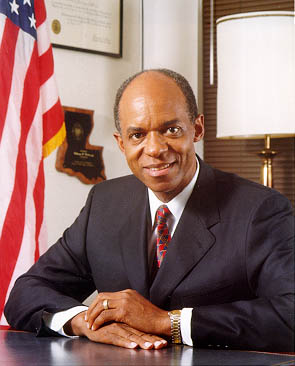
Comparing Judge Ellis’s 13 year sentence of African-American Congressman William J. Jefferson (D) from Louisiana in 2009 with the 47 month sentence of the former chair of the president’s presidential campaign committee draws attention to the ugly realities of race and class we often see but quickly forget or choose not to see at all.

We do not live in a democracy; we live in an oligarchy—
“government by the few, especially despotic power exercised
by a small and privileged group for corrupt or selfish
purposes.” I’ve been waiting for people in high places to say it.

Goldman Sachs executives’ testimony Tuesday before the
Senate Permanent Subcommittee on Investigations4 brought the
elephant into the living room, but the name of this species of government remains unspoken for understandable reasons.

A democratic republic is a constitutional form of government
where the people rule through their elected representatives
gathered in deliberative bodies. The faces and voices of Goldman
Sachs’s executives demonstrated the intransigent arrogance of the
private institutional concentration of the wealth and power of deregulated capitalism.

The matter is growing more serious.

The “small and privileged group” that operates corruptly and
selfishly knows that elections are bought and sold in America. No
one gets elected without big money. Goldman Sachs executives’ testimony Tuesday before the Senate Permanent Subcommittee on Investigations brought the elephant into the living room, but the name of this species of government remains unspoken for understandable reasons.

Excerpt, gordon c. stewart, “The american oligarchy — 4/29/10,” p.126, Be Still! Departure from collective madness (2017, wipf & stock).

Nine years after publishing The American Oligarchy, the reality is, for the most part, the same. But there is a difference. The selfishness of “despotic power exercised by a small and privileged group for corrupt or selfish purposes” (Encylopaedia Brittanica definition of oligarchy) feels heavier now. The judge’s lenient sentence of Paul Manafort caught me off-guard. How quickly we forget!

“The American Oligarchy” was first published by MinnPost.com with the title “They may squirm in hearings, but Wall Street Oligarchs know who has he power.” With Minnpost’s generous copyright permission, it became one of Be Still!’s 49 essays on faith and the news.

— Gordon C. Stewart, Chaska, MN, March 9, 2019.

Judicial Bias: the fight in the back hallway

Yesterday’s light sentence of Paul Manafort leads observers to wonder what happened. Why would Judge T. S. Ellis depart from the federal sentencing guidelines (19-24 years)? Why would a judge depart so egregiously to render a sentence of 47 months?


These questions and the judge’s remarks painting Mr. Manafort as an ill-fated first-time offender who had led a blameless life beg for answers.

Searching the internet for cases of judicial bias or misconduct led to the case of Judge John C. Murphy of Brevard County, Florida that brought an unexpected laugh.

Judge John C. Murphy of Brevard County, Florida, made headlines in June 2014, when he was recorded on camera challenging a public defender to a fistfight. Andrew Weinstock, the public defender acting in the normal course of representation, had refused to have his client waive the right to a trial. This set off a number of heated remarks which included Judge Murphy stating: “You know, if I had a rock, I would throw it at you right now.” When Weinstock refused to sit down, Judge Murphy then told him: “If you want to fight, let’s go out back and I’ll just beat your ass.”

Deputy Bryon Griffin, who was at the scene, described it as follows: “I stepped into the back hallway and saw the two of them grabbing ahold of each other’s suitcoat, pushing each other back and forth…I heard Judge Murphy say, ‘Do you wanna f-ck with me, do you?’ and I heard Mr. Weinstock say, ‘Alright.’ I immediately stepped in and separated the two of them as they still had a grasp on each other.”

Top 5 list of real-life judicial misconduct, Ballotpedia

We need a laugh in times like this when different ones of us might welcome a good fist fight in the back hall, but the humor is momentary. An article in Forbes this morning suggests political bias behind Judge Ellis’s lenient sentence of Manafort when compared with a similar case of a Democrat in 2009:

Take a comparison of the Manafort case with another prosecution of a political figure, a Democratic Congressman from Louisiana named William J. Jefferson. …

Manafort may have gotten off easy with four years, but Ellis threw the book at Jefferson. In 2009 Ellis sentenced Jefferson to 13 years, the longest sentence of any Congressman to that date. … It seems that while Judge Ellis can sympathize with Manafort, the Republican presidential campaign manager, he did not sympathize with Jefferson.

Charles Tiefer, “Judge who let manafort off easy with 47 months has conservative pedigree,” forbes, March 7, 2019.

Describing Paul Manafort at yesterday’s sentencing, Judge Ellis cedited Mr. Manafort for having been “a good friend” and “a generous person” who “has lived a blameless life” and “earned the admiration of a number of people.” It’s commendable judicial practice to offer some hope to the person being sent to prison. But might not these same attributes have been said of Al Capone, John Gotti, or Gordon Liddy, all good, generous family men who, until they were caught, had led “blameless lives”?.

Given Judge Ellis’s disrespectful remarks and angry outbursts against the Mueller investigator prosecutors, and his rulings against the admission of evidence, is it unthinkable to imagine the “Caesar of his own little Rome,” challenging the prosecutor to a fist fight in the back hallway behind the bar?

— Gordon C. Stewart

“Lent” – a Verse by Steve Shoemaker

Steve Shoemaker (1942-2016) shared equal time on Views from the Edge until his untimely death. Steve’s genre was poetry. Often his poems and verses led readers by the nose through his lines to the surprising last line that shed a humorous light on all that had come before. Steve was a 6’8″ gentle giant who lay on his side at night, quietly typing a new inspiration into his iPhone in the dark so as not to disturb his wife Nadja at 3:00 A.M. Poems like this one were waiting in my in-box in the morning.

Steve lived to write and craved desserts (especially his nightly bowl of ice cream) and sex, matters about which, so far as I could tell, he hadn’t lied. Nor did he brag or exaggerate. Of the seven friends who knew each other well over four decades, Steve was the least self-centered with the wryest sense of humor. He never denied himself a bowl of ice cream!

LENT

I will give up writing poems for Lent

I will give up eating desserts for Lent.

I will give up sex for Lent.

I will give up thinking about sex for Lent.

I will give up lying for Lent.

I will give up bragging for Lent.

I will give up exaggerating for Lent.

I will give up self-centeredness for Lent.


I will give up self-denial for Lent.

– Steve Shoemaker, Urbana, IL

March 5, 2014 (Ash Wednesday)

In this era of ill-humor and self-indulgence, Steve’s tongue-in-cheek verse again rings the bell on the betrayals of our best intentions, and our common need for repentance and forgiveness.

The Day the Ashes Were Turned into Water

We are drowning in a sea of lies, but the ocean has a way of caring for itself. Without exception, all life is part of the Ocean. If it seems strange to be talking about water on Ash Wednesday, perhaps a memory will bring water and ashes together for you, as it did for me.

The Ash Wednesday I’m remembering, I robed 20 minutes or so before the 7:00 PM Ash Wednesday. There was plenty of time. I went to fetch the the little ZipLock bag of ashes. I’d forgotten that the credenza where I’d always stored the ashes had been moved from my office to the church basement. I rushed to the basement to where the credenza had re-located. There was no credenza. Finally it dawned me that the credenza had been sold at for a couple of bucks at the annual festival-flea market last fall.

“Somebody has my ashes,” I thought, “and they’ll probably treat them like dirt! Or maybe they’ll freak out, thinking the ashes are somebody’s cremains!”

What to do? Burn some newspapers! Smoke a cigar! No time for that. There would be no imposition of ashes. No outward, visible sign that we are dust and we return to the dust — the thing we never want hear. It was then that the missing ashes were turned into water.

We filled the baptismal font with water and marked each worshiper with the waters of baptism. “[Carol, Bob, Judi, Clyde], you are a disciple of Jesus Christ. Live in his love and serve him. And never forget to be grateful.”

The last worshiper to leave that Ash Wednesday Service offered to do for me what had been done for her.

“Gordon,” she said, marking my forehead with water, “you are a disciple of Jesus Christ. Live in his love and serve him. And never forget to be grateful.”

Like the miracle at Cana where water was turned into wine at a wedding, the turning of ashes into water became an unexpected moment of joy in the communion of saints.

Today, when we feel overwhelmed by a sea of lies, remember that everything empties in the Ocean. I wish you an Ash Wednesday when your ashes are turned to water, and a few drops of the vast Ocean wash away what you’ve lost and welcome you home for a sacred communion.

— Gordon C. Stewart, Ash Wednesday, March 6, 2019, in Chaska, MN.

Photograph is the baptistery in the Church of the Sacred Heart in Monza, Italy, uploaded from Wikipedia.

The Level Playing Field: Ash Wednesday

Today levels the playing field. Our differences make no difference today.  What you have become is beside the point today. All the quarrels and distinctions are beside the point. Ash Wednesday is the leveler. The eraser. The antidote. The reminder that we are mortal. That I am living my death as you are living yours and dying my life while you are dying yours. Today, the roosters comb their heads with ashes and stop crowing.

Roosters strutting and crowing in the barnyard

If it often seems that the roosters are in charge of the barnyard, today reminds them and us that, in the end, they are not. Neither are we. Ash Wednesday levels us all to the baseline of zero. “Remember that you are dust and to dust you shall return.” No matter whether you’ve crowed or cowered, no matter the story you tell yourself about yourself in comparison to others, you are no exception. Every reason for pride or self-loathing, and division, is erased by a pencil bigger than our mortal selves.

Whether our stories are re-written by a better Author will continue to be one more matter of dispute and division, but there can be no reasonable doubt about our mortality. “You are dust, and to dust you shall return.” In the meantime, before the roosters stop strutting and crowing and all the cock combs fall to the leveling plain, those who see the face of God in the compassion of Jesus remember the ethic appropriate to those still living in the barnyard:

“As they were arguing over who was the greatest, Jesus said to his disciples, ‘The roosters strut and crow, and you think you are dependent on them. Don’t be like them. Instead, the greatest among you should be like the youngest, and the one who leads like the one who serves.”– (Luke 22: 24-26, GCS translation)

Today, I offer my forehead for the imposition of ashes and pray that in the citadels of power someone else will do the same, for the sake of life itself.

— Gordon C. Stewart, Chaska, MN, Feb. 14, 2018.