The Democracy of the Dead

An Unexpected Discovery

A lifelong aversion to anything ‘orthodox’ kept me away from G.K. Chesterton’s Orthodoxy before inheriting a copy from the library of my late friend Wayne. Wayne was neither orthodox nor Orthodox, but there it was — Orthodoxy — with passages he had marked and indecipherable comments he had written in the margins.
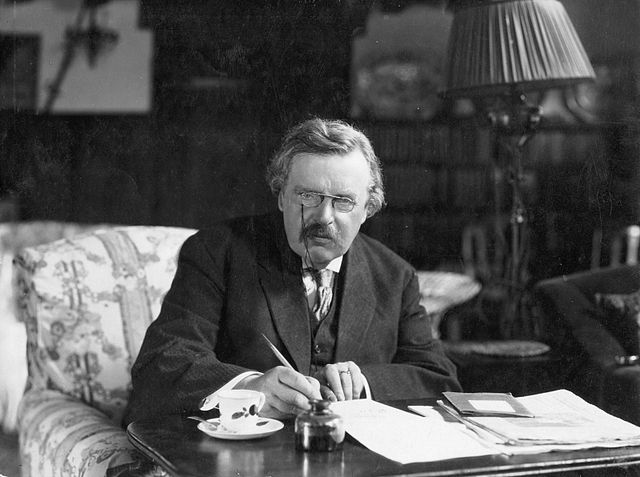
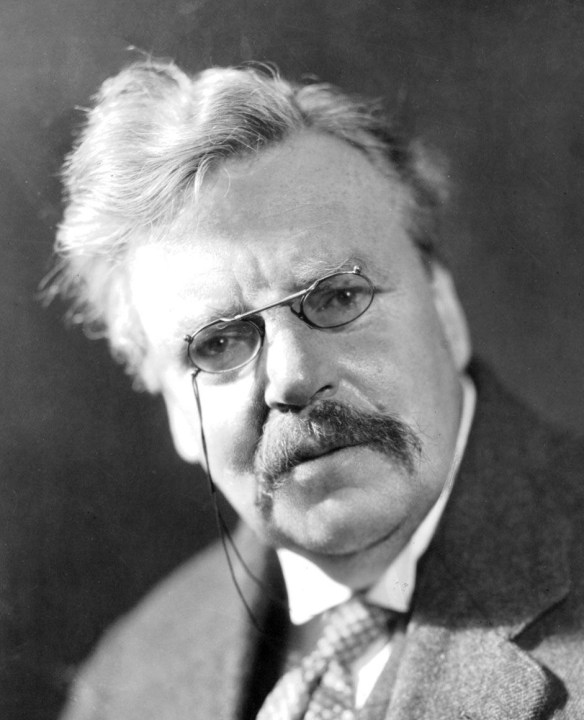
G. K. Chesterton at work

The Arrogant Oligarchy of the Living

“Tradition means giving votes to the most obscure of all classes, our ancestors,” wrote G.K.Chesterton in a book I’d never read until my friend Wayne died. “It is the democracy of the dead. Tradition refuses to submit to the small and arrogant oligarchy of those who merely happen to be walking around.” — G.K. Chesterton, “The Ethics of Elfland,” Orthodoxy (1908).

I’ve often had the sense of this oligarchy and find it treacherous. Not only because it’s arrogant and oligarchical, but because it is foolish and destructive. Tradition is not the enemy of vitality. Nor is it the enemy of free thought nor science.

Photograph of by-the-sea sailors

Without tradition we are like by-the-wind sailors, the jellyfish who have no way to propel themselves, thrown this way and that by the tides and storms. Jellyfish go with the flow without conscience, memory, or agency to create a better future.

Collecting the Fragments: Egoism and Altruism

“There is a huge and heroic sanity in which moderns can only collect the fragments. There is a giant of whom we see only the lopped arms and legs walking about. They have torn the soul of Christ into silly strips, labeled egoism and altruism, and they are equally puzzled by His insane magnificence and His insane meekness. They have parted His garments among them, and for his vesture they have cast lots; though the coat was without seam woven from the top throughout.” — G.K. Chesterton, “The Ethics of Elfland,” Orthodoxy.

The Seamless Coat Woven from the Top

“Lopped arms and legs walking about.” What an image! The soul of Christ torn into silly separate strips of egoism and altruism. Chesterton had a way with words — images that jar the senses of what is real, pushing the by-the-sea sailors in a direction we did not expect.

The Democracy of the Living and the Dead

“All democrats object to [anyone] being disqualified by the accident of birth; tradition objects to their being disqualified by the accident of death. Democracy tells us not to neglect a good man’s opinion, even if he is our groom; tradition asks us not to neglect a good person’s opinion, even if he is our father. I, at any rate, cannot separate the two ideas of democracy and tradition; it seems evident to me that they are the same idea.” — Chesterton, “The Ethics of Elfland,” Orthodoxy.

Honoring the Great Ancestors and Great Grandchildren

My seven years at the Legal Rights Center — a public defense corporation founded in 1970 by the American Indian Movement and African-American civil rights activists — moved this by-the-sea sailor to think again about freedom and tradition.

We inherit a tradition from the ancestors and are responsible for passing the treasure (i.e., the tradition) to the next generation. In times of decision-making, American-Indian culture universally calls us to consider the previous seven generations and the seven generations that will follow: the democracy of the dead, the living, and those who come after us. This tradition of
America’s First Nations, like the Reformed Christian tradition, looks back, looks ahead, and looks up for the re-weaving of the strips. The coat without seam was, is, and always will be woven from the top.

Wayne’s name is scribbled in pencil at the top of the title page of Orthodoxy. This year Wayne no longer lives to protest and resists the arrogant oligarchy of those who happen to be walking around. He has joined the blessed democracy of the dead.

Gordon C. Stewart, Chaska, MN, November 20, 2019.

The Ides of March — Are the boys still there?

JULIUS CAESAR AND THE IDES OF MARCH

Statue of Julius Caesar Via dei Fori Imperiali
Leomudde [CC BY-SA 4.0 (https://creativecommons.org/licenses/by-sa/4.0)]

Last Friday was not the Ides of March, but it may have been the day the soothsayer warned Julius Caesar of the consequences of overstepping the Roman Republic’s limits to executive power.

According to Plutarch, on his way to the fateful meeting of the Roman Senate on the Ides of March, Caesar passed the seer, mocking his fortune-telling with a confident sneer: “The Ides of March are come.”

“Aye, Caesar,” said the seer, “but not gone.”

That same day in 44 BCE the soothsayer’s warning was confirmed. As many as 60 senators ended the threat to turn the Roman Republic into an eternal dictatorship.

THE DAY OF THE SOOTHSAYER

Events last Friday echo the soothsayer’s warning:

  • Maria Yovanovich, the nonpartisan diplomat of impeccable character summarily recalled from her duties in Ukraine with no explanation, honored the House Intelligence Committee’s subpoena to appear for testimony at the Committee’s impeachment inquiry hearing;
  • The president who had suddenly dismissed Ms. Yovanovich just as suddenly smeared her reputation with a tweet while she was testifying before the Committee;
  • Roger Stone, the career dirty-trickster and long-term friend and mentor of Donald Trump, architect of the 2016 “Make America Great Again” campaign strategy and tactics, was convicted by a jury on all seven counts of making false statements, obstruction, and witness tampering;
  • President Trump tweeted:

“So they now convict Roger Stone of lying and want to jail him for many years to come. Well, what about Crooked Hillary, Comey, Strzok, Page, McCabe, Brennan, Clapper, Shifty Schiff, Ohr & Nellie, Steele & all of the others, including even Mueller himself? Didn’t they lie?”

Donald J. Trump tweet during Maria Yovanovich testimony, November 15, 2019.

ROGER STONE’S RULES

Roy Cohn and Roger Stone are the the political dirty-trickster mentors who who trained Donald Trump in the Machiavellian rules for how to succeed in business and politics.

The following are a few of “Stone’s Rules” as he shared them in the documentary film Get Me Roger Stone:

  • “Hate is stronger than love”
  • “Unless you can fake sincerity, you’ll get nowhere in this business”
  • “Politics isn’t theater. It’s performance art. Sometimes, for its own sake”
  • “White shirt + tan face = confidence”
  • “Hit it from every angle. Open multiple fronts on your enemy. He must be confused, and feel besieged on every side.
  • “Always praise ’em before you hit ’em”
  • “Admit nothing, deny everything, launch counterattack”
  • “Attack, attack, attack, never defend”
  • “Never turn down the opportunity to have sex or be on TV.” (attributed to Gore Vidal)
  • “Nothing is on the level”
  • “It’s better to be infamous than never famous at all.”

CONGENITALLY INCAPABLE

Presidential historian Jon Meacham spoke within hours of the president’ latest tweety. “My sense,” he said, “is that we have a president who is congenitally incapable of seeing beyond his own self-interest. And what these witnesses have done is proven that while he wants to build a wall at the border, he has no interest in building a wall around our elections.” (The Beat, Friday, Nov. 15.)

ARE THE BOYS (THE KING’S MEN) STILL THERE?

“A political leader must keep looking over his shoulder all the time to see if the boys are still there. If they’re not, he’s no longer a political leader.” (NYT obituary for Bernard Baruch, June 21, 1965.)

Bernard Baruch Obituary, New York Times, June 21, 1964

The impeachment inquiry is about much more than a sitting president’s continuance or removal from office. It’s about the survival of the Constitution of the American Republic in an era when an entire political party has substituted the habits of Stone’s Rules for the sworn duty of every elected member of Congress “to support and defend the Constitution of the United States of America.”

“Admit nothing. Deny everything. Launch counterattacks. Attack, attack, attack. Never defend. Distract, distract, distract!” is a heinous violation of the Oath Office.

Is it too much to hope that soothsayer’s warning will result in coming to our senses? If not, we may be left to hope John Arburthnot was right that “political parties die at last of swallowing their own lies.”

  • Gordon C. Stewart, Chaska, MN, Nov. 18, 2019.

America in the Stress Test Waiting Room

Last week I asked a psychiatrist friend whether he has been seeing increased levels of stress in his patients. “Yes,” he said, “Universally.”

As the impeachment inquiry hearings begin today, we are divided and angry. But we’re all under stress, and we’re all Americans. When we’re stressed, we do strange things. Some of us clam up. Some of us scream and shout. Some of us need company. Which led me to think again this morning about the stress test waiting room and a World War II veteran named Bill. I’m wondering what Bill might say.

Bill in the Stress Test Waiting Room

visual image of hospital waiting room

He sits by himself in the hospital waiting room.

“Where you from?” he asks, as if welcoming the stranger who’s come to his home for a stress test.

“Chaska.”

Where?” he asks over the whine from his hearing aids.

I’m not anxious to strike up a conversation. I’m here for a stress test. I’m an introvert. Chatting with strangers when I’m gathering myself when I’m under stress, waiting for a stress test, is the last thing I want.

C h a s k a!” I repeat.

“Oh! I’m from Waconia! I’m Bill.”

He gives a broad smile as though we’re related. (Waconia and Chaska are neighbors in Carver County, MN.)

His gowned wife, fresh off the treadmill, returns from her stress test.

“This is my wife, Jane. She’s a lot younger than I am. I’m 96.”

“Ninety-four,” says the younger wife. “We’ve been together 15 years.”

“Chaska’s the county seat,” says Bill. “That’s where i was sworn in.” (Clearly, he’s an extrovert. He feels better when he has guests.)

“World War II?”

“February 6, 1942. Eighty of us. A lot of guys from Chaska.”

“Where’d you serve?”

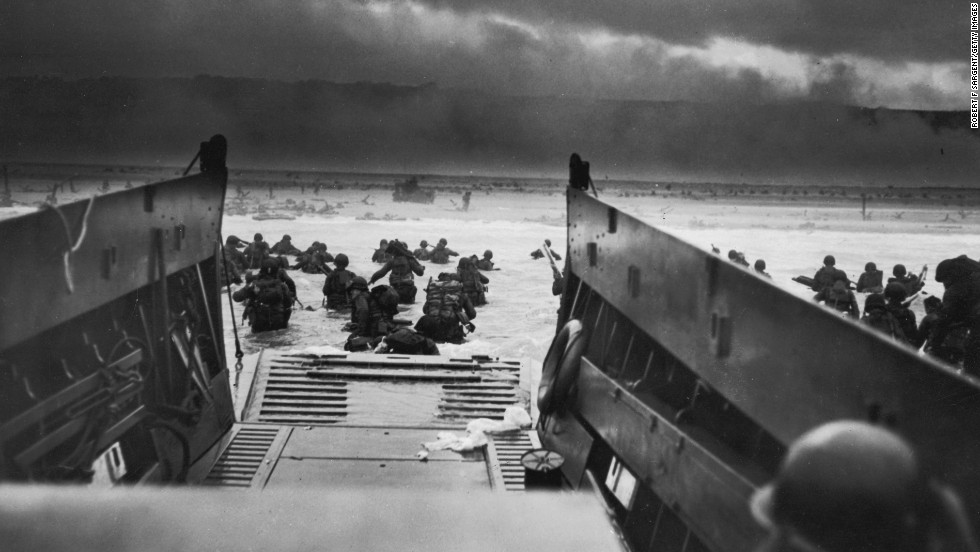
“He was part of D-Day,” answers Jane. Bill’s head sinks toward his lap. His chin begins to quiver. A long pause follows.

D-Day, WWII.

Only 15 of us came back.”

“Were you injured?”

“No,” he says, forming his hands in prayer and looking up. “I don’t know why.” He falls again into silence.

Fort Snelling National Cemetery, Minnesota

Bill’s body is with us, but he’s not here. He’s back at Normandy Beach on D-Day.

“That’s a lot of death,” I say. “A lot of killing. A lot of loss.”

He looks up, nods, and drops his head again.

Post-traumatic Stress,” I say quietly to Jane. “I’m a pastor. I’ve seen it so many times with Vietnam War and Iraq War veterans.”

“I think so,” she says. “He still can’t talk about it after all these years.”

The technician calls my name. “Mr. Stewart?”

As I stand to leave the stress test waiting room, Bill reaches up to say good-bye with a firm handshake and friendly smile for the whippersnapper from Chaska.

Robert Davis of Clarkston has an outpatient stress test run by exercise physiologist’s Richard Andrevzzi and Donna McCollom in the Royal Oak hospital.

I leave the waiting room and get on the treadmill, reminded that there is stress and there is stress, knowing that mine bears no comparison to Bill’s and thankful for a few moments with a 94 year-old who has every reason to think he’s 96.

Today and tomorrow, as I zoom in on the televised public hearings on impeachment, I’m wondering what Bill would say.

  • Gordon C. Stewart, Chaska, MN, November 13, 2019.

Telling the Truth — the Journey of Repair

An earlier Views from from the Edge post featured a brief summary of an unusual step: a Board of Trustees’ $27.6M action plan to redress institutional entanglement in institutional slavery and ongoing institutional racism. Here’s the full press release from Princeton Theological Seminary (founded in 1819) in Princeton, New Jersey.

Photograph of Princeton Theological Seminary in 1879
Princeton Theological Seminary in 1879

PRESS RELEASE, Princeton, NJ, October 18, 2019

PRINCETON, N.J., October 18, 2019 – Princeton Theological Seminary’s Board of Trustees unanimously endorsed the implementation of a multi-year action plan to repent for its ties to slavery. The approved series of new initiatives, ranging from increased student financial assistance to curriculum changes to added support for the Center for Black Church Studies, is a direct response to a report the Seminary published in October 2018 after conducting a two-year historical audit.

“The report was an act of confession,” says John White, dean of students and vice president of student relations. “These responses are intended as acts of repentance that will lead to lasting impact within our community. This is the beginning of the process of repair that will be ongoing,” says White.

White served as chair of the historical audit recommendations task force, which included trustees, faculty, administrators, students, and alumni, who led a deliberative process to provide opportunities for the campus community to discuss and respond to the audit report. The task force hosted more than 25 events, meetings, and conversations on the campus in the previous academic year. Feedback gathered from students, faculty, administrators, and alumni was incorporated in the recommendations presented to the Seminary’s board. The Board of Trustees also conducted a year-long process of study.

“From the beginning,” says White, “the Board of Trustees has encouraged a thorough process of understanding our history that would lead to meaningful response.”

With an immediate rollout of the plan and continuation through 2024, the Seminary intends to make meaningful and lasting change with the more than 20 approved initiatives, including:

  • Offering 30 new scholarships, valued at the cost of tuition plus $15,000, for students who are descendants of slaves or from underrepresented groups
  • Hiring a full-time director of the Center for Black Church Studies
  • Hiring a new faculty member whose research and teaching will give critical attention to African American experience and ecclesial life
  • Changes in the Seminary curriculum, including a required cross-cultural component and integrating into the first-year curriculum for every master’s student sustained academic engagement with the implications of the historical audit
  • Designating five doctoral fellowships for students who are descendants of slaves or from underrepresented groups
  • Naming the library after Theodore Sedgwick Wright, the first African American to attend and graduate from Princeton Seminary
  • Naming the Center for Black Church Studies after Betsey Stockton a prominent African American educator in Princeton during the antebellum North and a Presbyterian missionary in the Sandwich Islands (present-day Hawaii). Prior to gaining freedom, Stockton was owned by the chair of Princeton Seminary’s Board of Trustees.
  • Enhancing community partnerships and supporting historically disenfranchised communities in and around Princeton
  • Ensuring every member of the Princeton Seminary community understands its history
  • A committee has been established to oversee the implementation of the plan and will regularly report progress to the board. The program costs for the responses represent a commitment of more than $1 million annually on an ongoing basis. To sustain this programming in perpetuity, $27.6 million will be reserved in the endowment.

“The Seminary’s ties to slavery are a part of our story. It is important to acknowledge that our founders were entangled with slavery and could not envision a fully integrated society,” says Princeton Seminary President M. Craig Barnes. “We are committed to telling the truth. We did not want to shy away from the uncomfortable part of our history and the difficult conversations that revealing the truth would produce.”

The historical audit uncovered that the Seminary did not own slaves and its buildings were not constructed with slave labor. Yet, the Seminary benefited from the slave economy, both through investments in Southern banks in the mid-19th century and from donors who profited from slavery. Also, founding faculty and leaders used slave labor at some point in their lives. Several of the first professors and board members were deeply involved in the American Colonization Society, which advocated sending free blacks to Liberia.

“Our response to the historical audit is the beginning of our community’s journey of repair as we seek to redress historic wrongs and to help the Seminary be more faithful to our mission as a school of the church, both now and in the years to come,” says Barnes. “We are taking tangible action to write a new chapter in our story.”

CONFESSION AND REPENTANCE: VIEWS FROM THE EDGE COMMENTARY ON CONTEXT OF PRESBYTERIAN ETHOS

A Prayer of Confession of Sin for “what we have done” and “what we have left undone“– like the one below — is an essential component of Presbyterian Church (USA) services of worship. We do it every Sunday as a habit.

Merciful God,
we confess that we have sinned against you
in thought, word, and deed,
by what we have done,
and by what we have left undone.

We have not loved you
with our whole heart and soul
and mind and strength.

We have not loved our neighbors as ourselves.

In your mercy,
forgive what we have been,
help us amend what we are,
and direct what we shall be,
so that we may delight in your will
and walk in your ways,
to the glory of your holy name.

[Book of Common Worship]

Sometimes a habit is more than habitual. Sometimes we mean what we ask: “help us amend what we are, and direct what we shall be….” Sometimes, with God’s help, we do it.

Gordon C. Stewart, Presbyterian Church (U.S.A) Minister of Word and Sacrament H.R., Chaska, MN, November 12, 2019.

The last refuge of the scoundrel

THIS MOMENT IN TIME

At long last, this Wednesday (Nov. 13, 2019) we will see the faces, hear the voices, and watch the body language of the members of the House Intelligence Committee and those who testify. Witnesses to the quid pro quo — we’re no longer arguing whether there was a quid pro quo — will bring their testimonies. Members of the Committee will examine, weigh the evidence, and decide whether to recommend impeachment.

This Wednesday we will be ushered to our seat in the observer section through different doors chosen by the flip of remote to select the door that suits the conclusions to which we have already come. Some will be ushered in by Fox; some by MSNBC or CNN; a few who prefer no pundits, will watch it on C-Span. Those who walk through different doors to the left or the right will watch the same thing so differently that an outside observer might wonder whether we were seeing different things.

THE QUESTION AND THE VOICE OF THE DEAD

The question at issue is whether the President violated his oath to preserve, protect, and defend the Constitution. As each of us considers the gravity of Mr. Trump’s quid pro quo with Mr. Zelensky, we might do well to listen to the dead. Our ancestors no longer belong to a political party. Some of the dead were patriots, others were not. The harshest critic sometime was a patriot while the one who talked incessantly of patriotism turns out to have been a scoundrel. G.K. Chesterton is among the dead who speak from the grave with wisdom and wit and a twinkle in his eye:

I have formed a very clear conception of patriotism, I have generally found it thrust into the foreground by some fellow who has something to hide in the background. I have seen a great deal of patriotism; and I have generally found it the last refuge of the scoundrel.

G.K. Chesterton, The Judgement of Dr. Johnson, Act III.

WHAT KIND OF “QUID PRO QUO?

Michael Mulvaney was right, and he was wrong in saying that quid pro quo‘s “happen all the time.” “Something for something” is not evil. I want an apple; you want an orange. II give you one of my apples; you give me one of your oranges. “We do it all the time.” “I’ll support the funding bill for bridge repair in your district, if you support the bill for road repair in my district.” We do it all the time. That’s the nature of politics in a democratic republic. We elect public servants to serve us within the wider context where local self-interests convene to get thing done by the art of compromise.

But this alleged wrongdoing is not that kind of legitimate quid pro quo between equals. There is nothing inherently unconstitutional in a “something for something” transaction to protect, preserve and defend the Constitution of the United States of America. The question is whether the President’s “something” (release of $300+ Million of military assistance with an invitation to the White House) in exchange for a conditional “something” (Ukrainian investigation of a likely opponent in the 2020 U.S. election with a public announcement by Mr. Zelensky) was in the best interest of the United States or whether it served his own personal purposes for re-election.

THE DEMOCRACY OF THE DEAD

The American Republic is still young among the nations, but we have a tradition, an inheritance of self-government under the Constitution and the rule of law. Tradition and freedom are not opposites. “Tradition means giving voice to the most obscure of all classes, our ancestors,” wrote Chesterton, sounding like an Ojibwe teaching his people to make decisions after looking back seven generations of the ancestors and forward seven future generations yet unborn. “[Tradition] is the democracy of the dead.” — G.K. Chesterton, “The Ethics of Elfland” in Orthodoxy.

Was the President’s quid pro quo an act of patriotism, or was it the behavior of a scoundrel. If Donald Trump was a scoundrel, does the offense rise to the level of “high crimes and misdemeanors”?

  • Gordon C. Stewart, Chaska, MN, November 11, 2019.

What if resting, all by itself, is the real act of holiness?

North American culture of 2019 is like a house on fire. Words like ‘holy’ and holiness’ are . . . well… relics of tradition. We’re free thinkers, not … not like that!

It was, I suppose, a coincidence that this post caught my eye while reading G.K. Chesterton’s view of democracy and tradition, yet the two readings strike me leading upstream to the same source.

“Tradition means giving votes to the most obscure of all classes, our ancestors. It is the democracy of the dead,” wrote 34 year-old Chesterton nearly a century ago in a book with an arcane title (Orthodoxy) that sends us free thinkers running from a house fire.

Although it seemed outdated at the time, I now remember with nostalgia the rest I knew as a child on Sundays when the noise and distractions were stilled. We opened the windows, breathed fresh air, gave thanks we were still breathing, and went down for a long afternoon nap.

Click THIS LINK to open Live and Learn’s post featuring Margaret Renkl, from “What if resting, all by itself, is the real act of holiness?” (NY Times, October 21, 2019).

Thanks for dropping by Views from the Edge to see more clearly,

Gordon C. Stewart, Chaska, MN, Nov. 10, 2019.

Elijah with Grandpa and the Postage Stamp Monologue

Two year-old grandson Elijah engages grampa in a telling conversation

Good morning, Elijah. Whatcha doin’?

Playing etch-a-sketch on our iPad. Did you draw when you were liddle?

I did. But not like that.

Like what, then? Was it a different App? What kind of Mac did you play with in your carseat on the way to day care?

It was a long time ago, Elijah. A very long time ago. It was a different world. We didn’t have day care. We didn’t have iPads and cell phones. We used to lick postage stamps back in the day.

picture of U.S. postage stamps

What’s a stamp and why did you have to lick it? Were you being punished for being bad?

No, it wasn’t anything like that. We didn’t tweet back then. The only thing that tweeted in our world was Tweetie Bird on Loony Tunes.

How’d you talk if you couldn’t tweet? I tweet all the time. Watch! Mom hates it when I do this. I like FaceTime better. It’s more personal.

We sent letters. We wrote them with a pencil or a pen, put them in envelopes, licked the back of the postage stamps — if you had lots of letters, it took a long time — and we took them to the Post Office. The letters would arrive in two or three days, sometimes a week. We had to be patient back then. Everything was slower.

And we dialed phone numbers on rotary phones. I still remember our number on Church Lane, EL6-1490. Teddy Bonsall’s was EL6-1476. And sometimes, when I’d pick up the phone to dial Teddy, somebody else was already talking to somebody else on our phone. It was called “a party line“.

Wow! Did you have parties every day?

It’s hard to explain, Elijah. Maybe this will help. Search for the Postage Stamp Monologue on Mom’s iPad for a better feel for how grampa feels most of the time in your world.

“The Postage Stamp Monologue” from Vanya and Sonia and Masha and Spike, a play by Christopher Durang, performed at the Goodman Theater.

Wow! He’s really mad, grampa! I’m glad you don’t have to lick postage stamps anymore or dial 999-999-9999, like Vanya. I got an idea! Let’s FaceTime Uncle Andrew and Calvin!

Uncle Andrew and cousin Calvin answering FaceTime call.

Gordon C. Stewart (Grandpa), Chaska, MN, Nov. 7, 2019.

Where’s my Elliot Richardson?

BREAKFAST WITH ELLIOT RICHARDSON

Why a memory bubbles up in a particular moment often is a mystery. Other times an explanation does not require a Freudian or Jungian analyst.

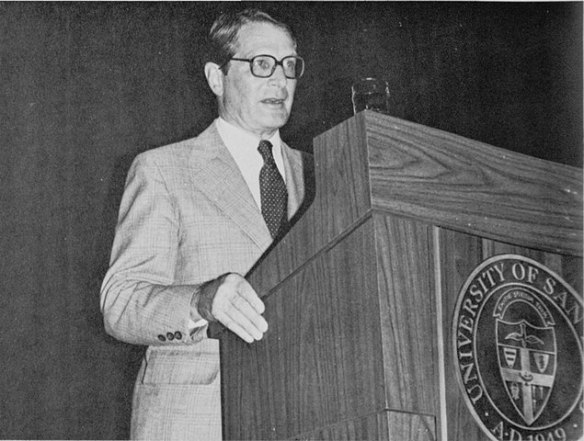
I’m having breakfast at the Hyatt in downtown Minneapolis with former U.S. Attorney General Elliot Richardson. Just the two of us. We are meeting to get acquainted before the noon Westminster Town Hall Forum when I will introduce him to a packed house and the radio audience of Minnesota Public Radio (MPR).

“VOICES OF CONSCIENCE: KEY ISSUES IN ETHICAL PERSPECTIVE”

A singular moment of American history qualifies Elliot Richardson for the public forum that features “Voices of Conscience: Key Issues in Ethical Perspective.” Elliot Richardson was the United States Attorney General in the Nixon Administration, a lifelong Republican remembered for refusing President Richard Nixon’s order to fire Archibald Cox, the Special Prosecutor of the Watergate affair. The memory of Elliot Richardson’s act of courage is still fresh in the hearts and minds of those who respect the courage of conscience in American public life. Elliot Richardson refused to sell his soul to the White House.

“WHERE’S MY ROY COHN?”

The turmoil of 2019 seems explanation enough for the reappearance of the memory from twenty-two years ago.

Bill Barr became the Trump Administration Attorney General after Jeff Session angered the president for refusing to recuse himself from overseeing the Department of Justice investigation into Russian interference in the 2016 election. That was after FBI Director James Comey had been fired after a one-on-one private dinner at the White House when the president asked for Comey’s pledge of personal loyalty.

In the midst of failed attempts to secure personal loyalty, and nostalgic for the fealty of his former lawyer, whom Alan Derschowitz described as “the quintessential fixer,” the president’s is reported by the New York Times to have cried in a moment of exasperation, “Where’s my Roy Cohn?”

ROY COHN AND THE TACTICS OF JOSEPH MCCARTHY

Roy Cohn had been front and center stage on national television as Senator Joseph McCarthy’s Senate Committee hearings hunting for Communists and Communist sympathizers allegedly hidden in the U.S. military, government agencies, and the entertainment industry.

Edward R. Murrow‘s televised commentary featuring Army defense lawyer Joseph Welsh’s rebuke of McCarthy and his tactics brought McCarthy to a screeching halt:

“You’ve done enough. Have you no sense of decency, sir? At long last, have you left no sense of decency?”

Joseph Welsh, Esq. statement to Sen. Joseph McCarthy, 1954.

THE LONG ARM OF ROY COHN

In the wake of Murrow’s broadcast and the turning of public opinion against McCarthy’s character assassinations of America’s political left as unpatriotic, Roy Cohn left McCarthy’s side to go into private practice. During the 30 years that followed, his clients were a rare assortment of the famous (the Archdiocese of New York, the New York Yankees and the team’s owner, George Steinbrenner; Aristotle Onassis) and the infamous (mob bosses “Fat Tony” Salerno, Carmine “the Cigar” Galante, extortionist “Teflon Don” John Gotti, and the owners of Studio 54 convicted of tax evasion, among others.

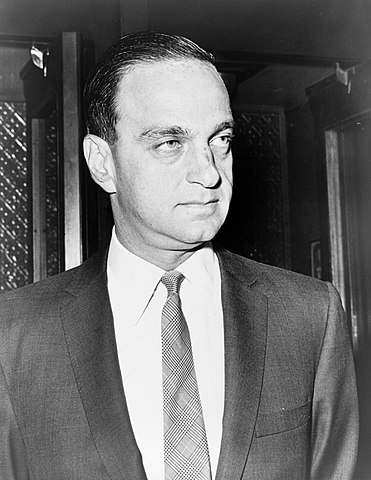
Roy Cohn became Donald Trump’s personal lawyer, mentor, and fixer, the master teacher who taught his disciple how to succeed in public life: require absolute loyalty, strike fear in anyone who dare oppose you, manipulate the media, attack harder when attacked, and demonize your opponents as public enemies. In the end, the disciple did to Cohn what Cohn had taught him to do. After the New York Supreme Court disbarred Roy Cohn and Cohn was dying from complications reportedly related to AIDS, the lawyer-fixer-mentor’s friend was no longer useful. The mentee dropped his loyal “friend” like a rock.

ELLIOT RICHARDSON and THE ARC OF THE MORAL UNIVERSE

Roy Cohn and Elliot Richardson had three things in common. They were lawyers. They had their moments in the national spotlight. They worked closely Republican Presidents. But they stand on opposite sides of history.

But, if “the arc of the moral universe is long, but … bends toward justice” (Martin Luther King, Jr., quoting Theodore Parker), the shadow of Joseph McCarthy and Roy Cohn is short and fleeting, and the memory of a courageous Republican who refused to sell his soul to the White House may yet awaken the party he would not recognize to surrender the question “Where’s my Roy Cohn?” for a different question:

Where’s my Elliot Richardson?

Gordon C. Stewart, Chaska, MN, November 5, 2019.

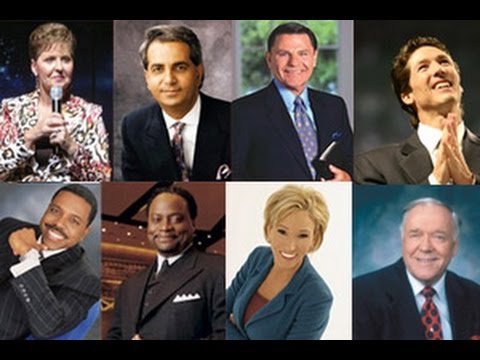
The “Prosperity Gospel” and White House “spiritual warfare”

Thursday’s New York Times (Oct. 31) reported that “Paula White, a televangelist based in Florida and personal pastor to President Trump whom he has known since 2002, has joined the Trump administration in an official capacity.” The White House announced the news the same day the House authorized its impeachment procedures.

If you’re an embattled president about to be impeached for betraying your oath of office to “preserve, protect, and defend the Constitution,” you might welcome a spiritual advisor who, though lacking theological education credentials, confirms your view that you are engaged in spiritual warfare.

As one observer put it, “If you’re wealthy like Donald Trump is, and you have a preacher who says your wealth is a sign God approves of you, you’re probably going to like that preacher. And if there is one major element in Donald Trump’s religious beliefs, it would be this prosperity gospel.” — Tom Gjelten.

PAULA WHITE’S MESSAGE OF SPIRITUAL WARFARE

THE PROSPERITY GOSPEL IS NOT THE GOSPEL OF JESUS

Whatever the differences between evangelical Christians and progressive Christians on Biblical interpretation, there is general agreement that the gospel of Jesus and the “prosperity gospel” are very different gospels.

The Book of Amos and the Letter of James scorn the worship of wealth and privilege, and the teaching of Jesus consistently calls people to make friends with their enemies rather than seek their defeat. “You have heard it was said ‘you shall love your neighbor and hate your enemies’. But I say to you ‘love your enemies and do good to those who persecute you.'”

CREDENTIALS

Furthermore, there is the matter of credentials. The majority of American Christian churches — progressive, orthodox, or evangelical — require three years of theological education beyond a Bachelor of Arts/Science as qualification for ordination. My denomination — Presbyterian Church (U.S.A) requires courses in Hebrew and Greek, the languages in which the Hebrew Bible and New Testament were written, as a qualification for ordination. Why? Because the people in the pews deserve preachers and teachers who know what they’re talking about before they set foot in the pulpit — or step on stage.

Paula White has no such credentials. She falsely claims to have a doctorate. Not even close. She never finished college, let alone graduate school. She’s an entertainer and a fraud whose performances belong on The Apprentice. “You’re fired!”

PAULA WHITE QUOTATIONS

  • There are many different ways that people get licensed or ordained through different ministries, denominations, etc. So – but for myself, there was no formal seminary.
  • I have nothing to be sorry about.
  • God takes what the enemy meant for your bad and turns it for your good! It wasn’t a set back but a set up! Wait and see what God is getting ready to do for you!
  • Some people left you for dead. They thought it was over. They said you’re hopeless, you’re helpless. You can’t be used. You’re not ministry material. You’re going to be poor. You’re going to be messed up. But guess what? Tell the devil, go to hell. You’re a liar.
  • YOU are on the verge of a complete breakthrough in every area of your life. Spiritually, Financially, and Relationally God has shown me that this is a season of victory for His people. As I went deeper in the Spirit the Lord revealed that before the breakthrough comes, certain things must be dealt with. Specifically, there must be a complete defeat of your enemies!
  • I don’t go where I’m tolerated. I go where I’m celebrated.
  • What I might have considered good, good doesn’t mean every day is going to be perfect, you’re going to have bad breath, your hair is not going to be in perfect place.

THE WAR ON THE CONSTITUTION

By most indications, the American constitutional crisis will only get worse as the White House continues to stonewall Congress and publicly whitewash itself with the likes of the appointment of Paula White. It could be worse. It could be Ms. White’s dear friend, Benny Hinn. It remains to be seen whether the American people will fall for it.

NBC Dateline exposure of televangelist Benny Hill

— Gordon C. Stewart, public theologian, author of Be Still! Departure from Collective Madness, Chaska, MN.

Do you have the time?

When my most intimate companion failed to respond as normal, I feared she had suffered a stroke like the cerebral hemorrhage that took Uncle Bob years ago. Uncle Bob was the smartest guy in South Paris, the Harvard Law valedictorian who, against all expectation, had made South Paris his home until he suddently dropped dead leading the Congregational Church’s Annual Meeting. He had shown no signs of stress during worship, directing the Choir from the organ bench as he had for 25 years. Church meetings are like that — they often raise a leader’s blood pressure — but this was different! All of a sudden he was gone.

Like Uncle Bob, she showed no signs of stress before retiring last night. She is the one who has done the most of anyone to encourage my writing and publishing — filing things away until I needed them, flagging a mis-spelled word or correcting faulty grammar. I’ve depended on her every day for the past six years. She is more than an assistant. Since the day we met, I’ve turned her on. This morning is different. Nothing turns her on.

I  gently carry her to the garage, cover her with a blanket, and drive to the Urgent Care at the Southdale Mall. They admit her for tests and suggest I return in an hour in an hour or so.

“Do you have the time?” I ask.

He gives me a strange look and checks his iPhone. “It’s 10:30. We’ll text you when we’re done. Where can I reach you? What’s your number?”

“I don’t have a number.”

“Okay, how about an email?”

“I don’t have a mobile phone. You know, there are no public clocks anywhere anymore. Everybody’s in a bubble.” 

He pauses and looks up. “Hmmm. You know . . .I hadn’t thought about that! Come to think of it, I guess you’re right. “Okay . . .well, just be back by 11:30.”

Anxious and alone with an hour to kill, I wander the corridor from shop to shop before going into Macy’s. It’s easy to distract yourself shopping, and Macy’s is just the place. You can find anything at Macy’s…except a clock. “Excuse me, do you have the time?” I ask the clerk in the men’s shoe department. It’s not a question he gets anymore. He glances at his iPhone, looks up, and, with a strange look, gives me the time: “10:45.”

With forty-five minutes to spare, I remember Macy’s famous Lakeside Grille and follow the confusing signs to catch a late breakfast or early lunch. I tell the waitperson I have an important appointment at 11:30 and ask for the time. “10:50,” he says. “I don’t have a phone. Would you be so kind as to give me a heads up when it’s 11:15?” He takes my order and agrees to notify me. I scarf down the Oktoberfest special of pork schnitzel, spaetzl, and green beans, wondering what time it is. The waitperson is nowhere to be seen. I ask another waitperson, “I’m sorry. Do you have the time?”

I rush back to Urgent Care, anxious about the test results. “Mr. Stewart,” says the neurologist, “I’m sorry. We ran all the tests and the news is not good, but it’s not beyond hope.” I breathe a sigh of relief, waiting for what comes next. “She’s still alive, but she needs immediate surgery. We have a neurologist standing by.” “What’s the cost,” I ask, knowing she has no insurance. “We can replace her keyboard for $485 so you can turn her on again, but she’s old. It’s only a matter of time before she goes. Or you can buy a new one for an additional six-hundred dollars or so. Your call.”

End of life decisions, like putting down my canine companion after fourteen years– are harder than others. For months after Maggie’s death, I swore I’d never get another dog. There’d never be another Maggie. I couldn’t bear the thought of holding another Maggie in my arms when her time would come.

“I’m a writer,” I say. “Like lots of other writers, I have ADHD and sometimes, like Hemingway and F. Scott Fitzgerald, I drink too much. I’m completely dependent on her for filing and saving my work. She keeps it all in her head. Besides she’s the only one I’ve ever turned on.”

“Not to worry, Mr. Stewart. If you leave her with us for 24 hours, we’ll be glad to download her memory to the new MacBook Air. We’ll treat her with great respect. We’ll take good care of things. We’ll be glad to recycle her free of charge. As Hemingway said, ‘Time is the last thing we have.'”

I leave her behind to be downloaded and recycled, grieving my loss, but consoled by the knowledge that, life Uncle Bob and Maggie, she will be in a safe place.

 — Gordon C. Stewart, author of NYT Worst Seller List Be Still! Departure from Collective Madness, dedicated to my late assistant, Chaska, MN, October 30, 2019.