Second of four haiku poems on RAIN: “Rain 2”
earth thirsts first for rain
but in moderation please
no flood hurricane
– Steve Shoemaker, Urbana, IL, 11/12/12
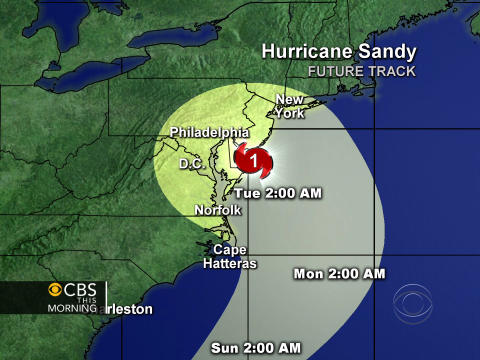
Sandy – CBS This Morning

Second of four haiku poems on RAIN: “Rain 2”
earth thirsts first for rain
but in moderation please
no flood hurricane
– Steve Shoemaker, Urbana, IL, 11/12/12
Sandy – CBS This Morning
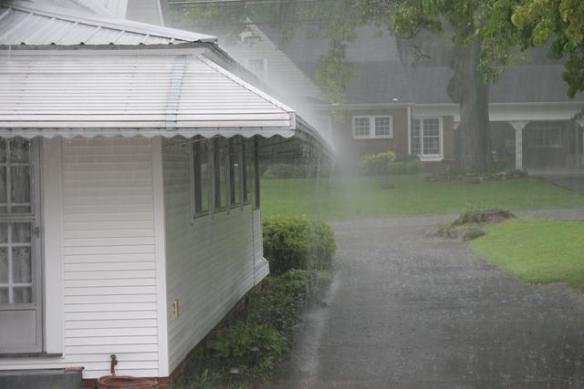
rain pings on steel roof
inside is dry and lonely
soggy knocks on door
– Steve Shoemaker, Urbana, IL, 11/12/12
A sermon preached the Sunday before Election Day at Shepherd of the Hill Presbyterian Church in Chaska, Minnesota.
A sermon preached at Shepherd of the Hill Presbyterian Church in Chaska, MN the Sunday following the death of Dana Niskanen, a member whose father had been a professional shepherd.
Old pond,
frog jumps in –
splash.
Views from the Edge jumped OUT of the blog pond two days ago. Then… yesterday… it made a big splash. The daily number of visits soared to 1,466 yesterday, 14 times larger than average. Why would the visits go up … at all … after announcing silence? Was it applause? Three cheers for one less noisy gong?
Answer? An earlier post, “The Germans at the Service Club Meeting,” had suddenly gone viral with 1296 visits – on Election Day.
Why or how it happened is a head-scratcher. Maybe yesterday’s inexplicable splash is a tribute to the efficacy of silence, our preference for the Older Pond over the new one, and reason for a humble re-write of Basho’s (1644-1694) old haiku:
New Pond,
frog jumps out –
splash.
This old frog is smiling the day after Election Day. Big money can’t buy the Old Pond…or the country. 🙂
Views from the Edge will be closing down for the time being.
Whether on Wednesday morning we wake to election results to our personal liking or to results that confirm, in our opinion, the adage that one should never underestimate the stupidity of the general public, we will not need more words from pundits. We will need something else. Until Views from the Edge can contribute something more than another noisy gong, we’ll opt for silence and see what, if anything, bubbles up that might be worth sharing.
Thanks for all your visits and encouragement.
Until later (maybe),
Grace and Peace,
Gordon
This lovely post from Via Lucis was almost deleted in the avalanche of campaign soliticitations in this morning’s in-box. Scroll down for the post. It lifted my spirits, prompting the following thank you:
Dennis and PJ, Your post gave me a lift this morning. Such grandeur. I am so weary of campaign television ads, phone calls, and internet solicitations that reduce the human spirit to its smallest proportions. I need the height, the soaring arches, the clean lines – and the reminder that sometimes even barbarity recognizes something else worth preserving. Beautiful shots and great commentary.
An English Friend in Norman Coutances (Dennis Aubrey).
Their post took me to the psalms, and psalm paraphrases set to music. One is Christopher L. Webber’s “I will give thanks with my whole heart,” a paraphrase of Psalm 138 set to the music of Cantionale Germanicum (1628) arranged by J.S. Bach (c. 1708).
All kings on earth who hear Your words,
O Lord, will give you thanks and praise
And tell how great Your glory is,
And they will sing of all Your ways.
…
The Lord is high, yet scornes the proud,
Protects the lowly on their path;
Although I walk in trouble, Lord,
You keep me safe from my foe’s wrath.
…
Lord, Your right hand shall save my life
And make Your purpose for me sure;
Do not forsake what You have made;
Your love forever will endure.
– Third, fourth and fifth stanzas
Chris Jones was old (he must have been
fifty) to us teenagers back
in 1960. Summers, when
the two of us (a running-back
and center) worked as laborers
for a construction company,
the foreman had assigned him as
our guide. One arm hung uselessly,
although both hands could grip and hold
a shovel. We would flail away
down in the ditch we had been told
to dig. “Use legs, not arms,” he’d say,
“Push with your knee against your fist–
to work all day, swing dirt, don’t lift..”
– Steve Shoemaker, Urbana, IL November 2, 2012

The Gospel of Mark tells the story of the blind beggar who regained his sight. His name in Mark is “‘Bartimaeus’, the Son of Timaeus”. The name is strange because although the word ‘Son’ is in Hebrew (‘Bar’), the name ‘Timaeus’ is Greek, raising the question of what Mark wants his readers to “see” when the blind Son of Timaeus cries out “Son of David, have mercy on me!”
The New York Stock Exchange was closed down. For two full days the trading bell on Wall Street did not ring. But on Main Street the bells that mis-identify American freedom with Wall Street were ringing in our living rooms, flooding the airwaves with campaign ads about freedom and the loss of it.
In front of Westminster Presbyterian Church on the Nicollet Mall at the heart of downtown Minneapolis stands an eye-catching sculpture called “The Birth of Freedom.”. The figures are naked, emerging from primal slime, evolving, reaching toward the heavens.
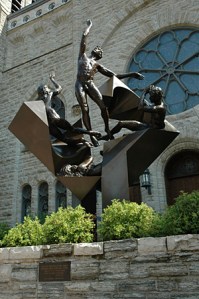
The Birth of Freedom, Paul Granlund
The late Paul Granlund was the sculptor. Westminster commissioned him to give visual expression to the words of the Apostle Paul:
“For freedom Christ has set you free; stand fast therefore, and do not submit again to a yoke of slavery.” (Galatians 5:1)
There is a freedom from and there is a freedom for.
“For your were called to freedom; only do not use your freedom as an opportunity for the flesh, but through love be servants of one another. For the whole law is fulfilled in one word, ‘You shall love your neighbor as yourself.’ But if you bite and devour one another take heed that you are not consumed by one another.” (Letter to the Galatians 5:13-15)
I listen to the campaign speeches. I hear the freedom talk. I see crowds cheering. I hear loud applause. And I wonder…what kind of freedom is being cheered? What kind of slavery is feared?
The advertisers who write the ads for the candidates and the PACs know the answers to these questions. They know that the psyche of American generations that grew up in the Cold War defines freedom as freedom from “Communism” or “Socialism.” They also know that the Christian Right fears submission to the “godless” whom they believe threatens their religious freedom.
But no one can take away my freedom or yours, and it is misleading to paint one’s political opponent as intending to take it way. For me, as a Christian, the freedom for which we are released (set free) is not freedom from but freedom for communion with my neighbors. It applies not only to personal relationships. It applies equally to the political and economic systems.
This morning the bell rang again at the stock exchange. The biting, devouring, and consuming of each other becomes a way of life again, the adored substitute for freedom. To condone it is to submit again to a yoke of slavery, the most widespread violence where, to quote Jacques Ellul,
“in this competition ‘the best man wins’ – and the weaker, more moral, more sensitive people necessarily lose.
“The violence done by the superior may be physical (the most common kind, and it provokes hostile moral reaction), or it may be psychological or spiritual, as when a superior makes use of morality and even of Christianity to inculcate submission and a servile attitude; and this is the most heinous of all forms of violence.”
– Jacques Ellul, Violence: Reflections from a Christian Perspective, Seabury Press, 1969.
Meanwhile Paul Granlund’s “The Birth of Freedom” still stands silently in downtown Minneapolis, calling for the birth of something as yet beyond our imagination. “Stand fast therefore [in the freedom for which Christ has set you free], and do not submit again to a yoke of slavery.” The Apostle Paul often wrote his letters from jail cells, charged with disturbing the Pax Romana.

