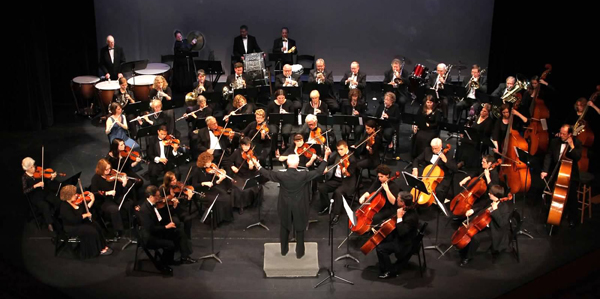
The Concert Goers – I Fib You Not!

Below is a “Fib” – shorthand for a Fibonacci – explained HERE on The Poetry Foundation website.

The number of syllables in each line of the “The Concert Goers” should be 1, 1, 2, 3, 5, 8, 13, 21, and 34. Unfortunately this blog post does not permit the 34 syllable line to be read as a single line. Let your eyes do the trick of combining the last two lines into one.

The Concert Goers

O
the
joyful
harmonies
whose orchestras and
choristers draw longing, lonely
specks of stardust to the hall to join as one to hear
the yet-to-be-voiced dots and lines and signs played and sung by drums, piano,
clarinets, piccolos, triangle, timpani, trumpets, sopranos, altos, tenors, and basses to the magic of the Maestro’s baton!

 – Gordon C. Stewart, Feb. 4, 2015

Lake Murray Symphony Orchestra

Lake Murray Symphony Orchestra

Preaching to Myself

The longer I live, the less I know. The less I have lived, the more I think I know.

“Knowledge puffs up; but love builds up.”(I Cor. 8:1b)

These words seem strange to those of us who value education. But peeking into the internal squabble within the First Century CE Corinthian church (First Corinthians 8:1-13) may also give us an unexpected peek into ourselves in 2015.

There is a tension between knowledge and love. The better educated among us see the relation between knowledge and love as complimentary. Love and knowledge grow together into ever expanding circles of freedom, like snakes shedding their skins and lobsters shedding their shells for bigger skins and shells that can hold their more mature selves.

Yet we are sometimes scornful of the less educated, the concrete thinkers, the legalists who are certain about what little knowledge they have. We are quick to join Paul’s opinion that “Anyone who claims to know something does not yet have the necessary knowledge ….” (I Corinthians 8:2). A little knowledge is a very dangerous thing. True education leads not only to increasing knowledge but to increasing awareness of one’s own vast ignorance.

We think of Copernicus and Galileo who challenged the prevailing knowledge, and those who judged them for their unbelief, a new “knowledge” that has changed the human view of our place in a vast, expanding universe. Or we think of Darwin and the Scopes Trial – the showdown between the knowledge of evolution and the ignorance of the creationists. We think of the difference between enlightened biblical scholarship that interprets Scripture through the eyes of love’s expansion and the biblical inerrantists who insist that the Bible be taken literally, such that the book is closed on matters of human sexuality.

“‘All of us possess knowledge.’ Knowledge puffs up; but love builds up.” 

Paul makes a masterful move here in the chess game of the knowers. He says that all the “knowers” know little, and that those who know more – the stronger in faith – are in greater danger than those who know less – the weaker in faith.

He is writing to the strong, the ones who are more advanced in the knowledge of the liberty to which Christ has set them free. “But take care that this liberty of yours does not somehow become a stumbling block to the weak.” Knowledge itself puts us on trial, the trial of humility, the trial of love. Paul calls for the stronger to be humble lest what they assume to know become the new idolatry that places Christ’s weaker followers on the cross of educated privilege.

The Christian claim of faith is not our knowledge, no matter how great or small. The claim of the disciples of Jesus is God’s knowledge of us. It is God’s knowing us that is the heart of faith for followers of the crucified, risen Christ. It is God’s knowledge -the wisdom of love – into which we are baptized as novices. One might even say, we die to every claim but love.

We are saved by grace through faith, not by works. For the likes of me and my progressive friends and colleagues in the Presbyterian Church (USA) and for members of the church who are choosing to leave the PC(USA) because of what they regard as excessive liberty, knowledge sometimes becomes the new “works” that substitute for justification by grace.

To be justified (i.e. made “right” with God) by grace through faith, as Paul understood it, represents a 180 degree repentance, a reversal of the direction and flow of the human-divine encounter from us to God to from God to us. Paul later speaks of the practical implications of love with respect to all claims of knowledge:

“And if I ….understand all mysteries and all knowledge, and if I have all faith, so as to remove mountains, but have not love, I am nothing.” (I. Co. 13:2)

“Love is patient and kind; love does not envy or boast; it his not arrogant or rude. It does not insist on its own way; it is not irritable or resentful; it does not rejoice at wrongdoing, but rejoices with the truth. Love bears all things, believes all things, hopes all things, endures all things.” (I Corinthians 4-7)

I am among those who remain puzzled by what to do. It’s far from simple. Paul’s description of the Christ-like life is centered, but it’s not simple. The patience and kindness come hard when faced with what I am sure are the weaker, more homophobic folks whose view of Scripture supports their opposition to the full inclusion of LGBTQ members. I boast of a greater knowledge based on love. In the name of love, I become arrogant. I am rude. I have a short fuse. I want to separate myself and the more enlightened from the less enlightened, the weaker, as Paul might say. In their presence I quickly become irritable, resentful of their presence in the Body of Christ. I do not bear all things. I do not believe all things, hope all things, endure all things. I do not believe that if I understand all mysteries and have all knowledge but have not love, I am nothing.

Though Paul was writing his letter to the tumultuous church at Corinth in the middle of the First Century CE, his words still speak. They arrive unexpectedly like a surgeon’s scalpel removing a cancer for the sake of the Body of Christ. The gospel cuts with a knife, but it is always for the sake of healing, a dying to ego for the sake of the resurrected Body of Christ.

Gracious Lord, by your healing mercy, keep me in the knowledge of Your love.

– Gordon C. Stewart, Sunday, Feb. 1, 2015.

Kennel-mates, After Work

At first when they paired-off, the dog and cat
would fight when they got home from work. His bark

was silent almost the whole day, and that
made the young Irish wolfhound want to speak

so badly he would arf and yowl when she
came through the door. The tabby, though had heard

enough already, thank you, from the three
cats and five dogs in her small lab, and would

soon scratch at him “Can’t you leave me alone?!”
Their love made them negotiate, in time:

he gave her thirty minutes to wind down,
and then would softly smooth her fur… When tame,

she’d purr, and they would share their different days:
his reading, her solving squabbles between

the strange and varied, feisty animals
at work. Neither the dog nor cat was mean

at heart. There didn’t have to be a spat
each day…even between a dog and cat.

– Steve Shoemaker, Urbana, IL, Jan. 30, 2015

Verse – Laments and Transmutations

O
to
see
them
whole
before
laments
overcome
excessive
confidence
anticipating
transmutation

gcs
St. Augustine, FL
1.23.2015

————-

So…you may be wondering what this is, the desire to see them who now before we lament the day we missed the opportunity. We need to pay attention NOW and act on behalf of wholeness in THIS LIFE instead of indulging in excessive confidence in an afterlife to remedy the injustices of how.

“Young and old lie together in the dust of the streets; my young men and young women have fallen by the sword. You have slain them in the day of your anger; you have slaughtered them without pity.” – Lamentations, 2:21, NIV

God as Policeman or Lover

Sebastian Moore, OSB

Sebastian Moore, OSB

In the eyes of Views from the Edge, the  late Dom Sebastian Moore, O.S.B. (12.17.1917 – 02.21-2014) of Downside Abbey, England, is one of our time’s more interesting thinkers.

Steeped in the psychology of Carl Jung, the spiritual discipline of the Benedictine Order, the theology of Bernard Lonergan, S.J., and the mimetic theory of Rene Girard, his eyes were penetrating, his vision both deep and far-reaching. During a long life os spiritual searching, he wrote in his book The Inner Loneliness:

[O]nce you see the self as naturally self-centered, you deny that the self wants God above all things, and you degrade God from being the fulfiller, the lover, into being the policeman. Paul’s conversion, through the stunning vision of Jesus he had on the road to Damascus, was from God the policeman to God the lover.

[The Inner Loneliness, Crossroads Press, 1982, p.49]

We met briefly in 1971 at a meeting of campus ministers in Milwaukee. He was chaplain at Marquette University at the same time I served as campus minister at the University of Wisconsin-Whitewater. Gathered at the Episcopal Campus Ministry Center at UW-Milwaukee, I wondered who this strange monk was who seemed to observe everyone very closely without saying more than a word or two. I’m not sure I even knew his name. I just knew he was unusual.

Twenty-six years later, during a period of personal and professional turmoil, a therapist mentioned the name Sebastian Moore. I purchased The Crucified Jesus Is No Stranger and saw his picture on the jacket. His perspective left me in awe and anchors me still. I’ve been knocked off my horse on the way to way to Damascus. Every real conversion is the turning from God the policeman to God the Lover.

Joseph the Widower – Christmas Eve

Steve’s poems and verses often capture something very large in a few short lines. His “In the Stable” manages to keep the earthly and the heavenly together: an iconic smile at the end offered to a grief-stricken Joseph in the shame-filled, smelly stable. We publish “In the Stable” again for those of you who, like Steve’s Joseph, are dealing at the same time with grief and hope on Christmas Eve:

The shame that old man Joseph felt
in taking Mary to the barn
was mainly that, of course, it smelt:
it reeked with sheep shit, donkey dung,
and cattle plops. The widower
knew wives who whelped were never clean
themselves until the midwives pour
the well water over their loins
and legs, wash front and back. His first
young wife had died in giving birth
to their third child. He shook his fist
at heaven as she lay in filth
and breathed no more. Sweet Mary mild
step-mother, virgin, pushed and smiled…

– Verse by Steve Shoemaker; introduction by Gordon.

CLICK “Festival of Nine Lessons and Carols” to hear today’s live BBC broadcast (10:00 a.m. EST) from King’s College, Cambridge England.  Merry Christmas to all our readers.

Verse – In the Stable

The shame that old man Joseph felt
in taking Mary to the barn
was mainly that, of course, it smelt:
it reeked with sheep shit, donkey dung,
and cattle plops. The widower
knew wives who whelped were never clean
themselves until the midwives pour
the well water over their loins
and legs, wash front and back. His first
young wife had died in giving birth
to their third child. He shook his fist
at heaven as she lay in filth
and breathed no more. Sweet Mary mild,
step-mother, virgin, pushed and smiled…

– Steve Shoemaker, Urbana, IL, Dec. 24, 2014

The Angel Gabriel and Mary

A sermonic reflection for the Fourth Sunday of Advent, Dec. 21, 2014, Gordon C. Stewart.

Text: Luke 1:26-38

The Annunciation {El Greco]

The Annunciation {El Greco]

Mary has every reason to fear the appearance of Gabriel. Every demure depiction to the contrary, the Angel Gabriel’s “annunciation” to Mary is no private affair. It’s a public matter of the first order. Gabriel  is the archangel commissioned to destroy the offspring of the rebellious angels and human women. (see below). Mary shrinks back.

“Do not be afraid,” says Gabriel.

Why should she not be afraid? This is not just any angel.

This is the Angel Gabriel, whose trumpet will summon the people, sweep away the occupation forces that substitute their rule for the Kingdom of love and delight. This is an angel of revolution. The Archangel of conflict who inspires both hope and fear.

”Do not be afraid!”

El Greco’s painting of the Annunciation illustrates the problem of textual interpretation.
Gabriel’s appearance is not frightening. It’s very…how shall we say? Feminine. Even to the point of appearing perhaps pregnant himself. The great masters did not paint an angel messenger as male, even when his name is Gabriel or Michael, the only two angels named in Holy Scripture.

Gabriel in Hebrew means “God is my Warrior”. Gabriel is a warrior angel, announcing to Mary that she too is to become a warrior, a mother whose birth-giving will lead to conflict with the Empire and the religious authorities who collaborate with it.

As described by New Testament scholar Carol Newsom, any annunciation by Gabriel inspires fear.

In the Book of Daniel, Gabriel is preeminently an angel of eschatological revelation. He is sent to Daniel to explain a vision of ‘the time appointed for the end’ (Dan. 8:15-26)…. Gabriel’s functions are more varied in I Enoch. In the Book of the Watchers (I Enoch 1- 36) he is listed as ‘the one of the holy angels who is in charge of paradise and the dragons and the cherubim (20:2). He is commissioned to destroy the offspring of the rebellious angels and human women (10:9-10)….

In the War Scrolls from Qumran (IQM) the names of 4 archangels, Michael, Gabriel, Sariel, and Raphael, are written on the shields of the 4 towers of the army. The positioning of the 4 archangels around the throne of God or other sacred space has a long subsequent history in both Jewish and Christian tradition…. [Carol Newsom, “Gabriel.” The Anchor Bible Dictionary, Vol. 2]

So why does Gabriel look the way he does in the art museums and literature of Christian interpretation? Why does the original Gabriel look so benign? And why does Mary look so calm, perhaps even demure, as in El Greco’s Annunciation?

The Jesus story has been neutered. The End Time has been re-interpreted by the Constantinian Church as a paradise beyond time, a state of afterlife, not this life. In no way political. In no way economic. In no way conflictual. Peaceful. Serene. Calm. Quiet Passive. “Let it be to me according to your word.” Never disquieting. Never disrupting. Never revolutionary.

Gabriel has been transformed, neutered, emasculated, rendered harmless by the Constantine religion whose adherents can no longer see the conflict between Christ, or his mother, Mary, and his father, Joseph, with the systems of unbridled greed and poverty under which they live. The Gabriel spoken of in most pulpits is not the Angel Gabriel that came to Mary.

We’ve turned Gabriel into our own image. But though we may tame him in our hearts and minds, our paintings and our sermons, we can erase neither the need to be afraid nor his invitation to fear not. Gabriel’s finger points at us, asking whether we will rally to the trumpet sound, the sound of his coming. We can repaint the young girl Mary as an icon of passive obedience and tranquility. But it will be a different Mary than the courageous one painted by the Gospel of Luke.

Luke and his Mary know that “Do not be afraid!” makes no sense unless there really is something to fear, and that we cannot overcome fear unless we hear Gabriel’s word of favor, “Hail, O favored one! The LORD is with you. Blessed are you among women…You shall conceive….”Do not be afraid…. For with God nothing will be impossible.”

“Then Mary said, ‘Here am I, the servant of the Lord; let it be to me according to your word.’

“Then the angel departed from her” for parts unknown to make his visits down through the ages, making the impossible possible.  Word has it he appeared last week in Washington, D.C. and Havana, Cuba to turn the impossible into the possible, a new Order being born from the old.

If you listen with faith, you might hear him. If you look, you will see him.

 

The Lonely Blogger and Steve Martin

It’s been lonely. Traffic is down on Views from the Edge. I ask myself why. But I suspect I know the answer. I’ve broken blogging rule #1. Blogs are mostly about entertainment, not serious stuff . People go to blogs to get away from serious stuff. Not that this one is all that serious, but it’s hardly a rendition of Steve Martin’s happy feet.

Then two comments arrive. The first is from Gary who shares the experience of being influenced early on by Ernest Becker’s seminal work, The Denial of Death.  The second comes from Jim, a former classmate. Both Gary and Jim went on to become teachers.

Gary wrote:

The book title Amusing Ourselves To Death by educator Neil Postman comes to mind. Postman believes we have reduced most values to equate with entertainment. Education he says has to be entertaining. We demand constant amusement through sports, films, travel etc. There is a constant search for entertaining experiences to make us feel alive. It is as though our existence is so fraught with escaping death that the only antidote to dying is amusement. Just as everyone uses humor to take the edge off of awkward social encounters, humor has become the background context of existence. Humor is used as a cover for what human nature really is about and that is “Real Politic” or the feeling that what needs to be done is whatever is practical to survive.

Two other books by Peter Gay and Karl Marx come to mind: Gay’s The Enlightenment: The New Paganism and Marx’s The Communist Manifesto. Gay suggests the Enlightenment led to a loss of traditional religious metaphors to live by, resulting in new forms of paganism arising to supplant the old worldviews. These include everything from “consumerism” to “new age” religions like Scientology. Karl Marx says in his “Manifesto” that “capitalism will destroy all that is permanent”. I think we can say Groucho Marxism seems to be the preferred way to analyze our culture’s ills. Everything has to be couched in humor or it is considered boring. At best we can say humor functions as the sigh of the oppressed as we try to take the edge off of everyday existence that seems to be all about a belief in human society as a survival of the fittest existence. We all want something better but science has been hijacked by capitalism for its own need to constantly revolutionize production to keep novel products arriving to allow us to feel alive when we no longer can see loving people as the real antidote to a preoccupation with fending off death. That was Christ’s reason for sacrificing himself in the face of a pagan Roman Empire. We have come full circle. Hopefully the Coliseum isn’t next as we escalate the need to amuse ourselves to death.

Jim wrote:

Folks get twisted in knots over things which they have neither read nor understood. Back in the days of teaching I had students read a writer who argued that under pure capitalism if profits are to be maximised there are several alternatives: Raise prices; Lower Wages. Then you have a product your workers cannot afford to buy. Because there are more workers than capitalists they will soon suffer. They liked the argument until they learned its author was Lenin.

Thanks, Steve Martin. Thanks, Gary. Thanks, Jim. I feel better.

Verse – One State, Two States?

Jesus was a Palestinian,
born, by some accounts,
in the West Bank town
of Bethlehem.
If the sobriquet
Jesus of Nazareth
is more accurate,
that region of Judea
is also Palestinian today.

He was born in poverty,
not privilege, in a territory
occupied by a cruel
and ruthless military.
His family was taxed, but had
no voice. He was a target
of official violence
and brutality from his birth
to the last week of his life.

Born of a Jewish mother,
Jesus was a son of David
as well: was circumcised,
studied and taught
in the Jerusalem Temple,
was called Rabbi.

With whom would Jesus
identify today?

– Steve Shoemaker, Urbana, IL, Dec. 16, 2014