Morning Fog and the Horizon

The horizon disappears behind the morning fog.Prairie grasses in fog

Tall grasses that yesterday colored the prairie as far as eye could see are still there. Only the nearest 100 feet of the rusty red, yellow, and brown prairie grasses now appears, the rest only imagined behind the gray mist curtain.

The Nebraska prairie and its earth-tone colors are native to Kay. They’ve been less appreciated by her husband, raised on the tree-covered hills and the bright ocean blues and greens, dotted occasionally with sumac red and willow yellow, of the Northeast Coast.

The Hutton Niobrara Ranch Wildlife Sanctuary, this 5,000 acre wildlife refuge of Audubon of Kansas, feels unspoiled by human hands, except for the indigenous people who long ago vanished with the buffalo along the Niobrara River.

By noon the fog is still here. So are the earthen colors. What’s changed is the Yankee’s fresh appreciation for the intrinsic beauty of the browns, yellows, and rusty reds he once viewed as the dull, faded colors of boredom and decay.

The Earth is a splendid place to live. Morning fog blew in years ago over Old Garden Beach in Rockport, Massachusetts leaving only the gray granite, red sumac and pink primrosed white picket fence visible to the eye. Then and now, there and here, life is wrapped in mist and wonder. The horizon disappears in morning fog.

  • Gordon C. Stewart, Hutton House, Hutton Niobrara Ranch Wildlife Sanctuary, somewhere near Bassett, Nebraska, September 22, 2015.

I’m Sorry

Remember Love Story’s line: “Love means never having to say you’re sorry”?

It was mistaken then, and it’s mistaken now. Love often means saying your sorry. Repeatedly. It means some sadness. It means taking responsibility.

Watching and listening to Hillary Clinton over these last weeks and months leads me to another version of the Love Story line, created by the increasing perception of entitlement.

“Haughtiness means never having to say you’re sorry”… except when it becomes necessary to rescue one’s own ambitions. The smirk, the tilt of the head, the rolling of the eyes speak louder than “I’m sorry”.

http://www.cnn.com/2015/09/08/politics/hillary-clinton-private-email-abc-news-apology/

Sorry (kinda/sorta) for being so political!

  • Gordon C. Stewart, Chaska, MN, September 10, 2015

An American Paradox

“Our laws are not generally known; they are kept secret by the small number of nobles who rule us.”

[Franz Kafka, “The Problem of Our Laws,” Parables and Paradoxes, Schocken Books, New York.]

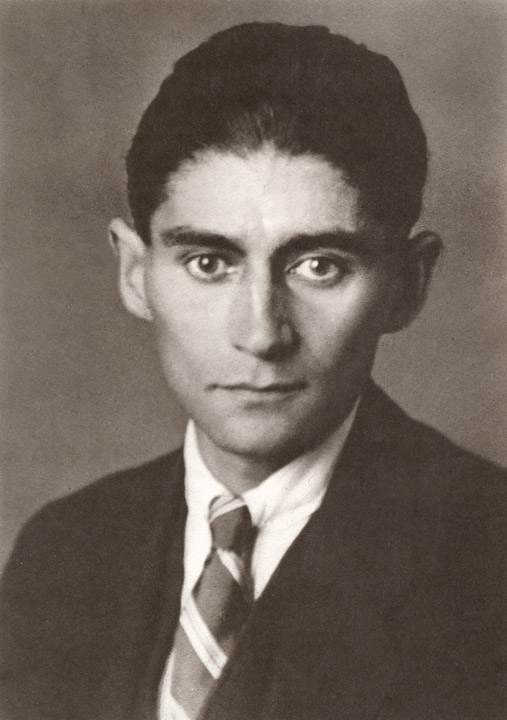
Franz Kafka

Franz Kafka

The laws of which Kafka wrote in the early 20th Century are not the ones peculiar to his time. They are not written in legislation. They are not acts of Congress. They are not the federal, state, or local statutes and ordinances lawyers argue in courts of law. The laws of which he speaks are not visible to the masses. They are the secret of the nobles. They are laws of a different order.

“The laws were made to the advantage of the nobles from the very beginning; they themselves stand above the laws.”

According to Kafka, the nobles themselves have inherited the Law as a mystery whose origins are hidden in antiquity. The nobles believe in this Law, but, in fact the Law is whatever the nobles do.

We, the populace who live under the Law of the nobles, dream of a time “when everything will have become clear, the law will belong to the people, and the nobility will vanish. This is not maintained in any spirit of hatred against the nobility; not at all, and by no one. We are more inclined to hate ourselves, because we have not yet shown ourselves worthy of being entrusted with the laws.”

Franz Kafka knew nothing of Donald Trump, the noble who knows the Law is whatever the nobles do and convinces the masses that we, too, can become nobles.

“Actually,” wrote Kafka, “we can express the problem only in a sort of paradox: Any party that would repudiate, not only all belief in the laws, but the nobility as well, would have the whole people behind it; yet no such party can come into existence, for nobody would dare to repudiate the nobility. We live on this razor’s edge. A writer summed the matter up in this way: the whole visible and indubitable law that is imposed upon us is the nobility, and must we ourselves deprive ourselves of this one law?”

  • Gordon C. Stewart, writing from the shoreline of Lake Shagawa, Ely, MN, September 9, 2015.

“When you’re rich, they think you really know”

Video

A song for Labor Day from Fiddler on the Roof helps explain the rise of You-Know-Who who seems to really know. When ordinary folks are losing their heads momentarily, a little humor’s good for the soul. Keep an eye out here for Emily Hedges Trumped.

  • Gordon C. Stewart, Chaska, MN, September 6, 2015


From Labor Day to Shopping Day

Remember Labor Day?

Violence against labor

Violence against labor – 1938 strike

There was a time when the nation closed down on Labor Day as a tribute to America’s working people.

Then something happened. The Labor Movement which brought about the end of child labor, the 40 hour work week, and won workplace safety laws, lost its steam. “Unions” became a four-letter word. Free market economists convinced the country that unions were responsible for America’s economic problems. The auto industry vacated Detroit for “Right to work” states or Mexico or outsourced parts production, as did other industries, to places where management would have free reign setting wages, benefits, pensions, and work conditions for employees.

This morning I asked a store clerk whether she’ll be working on Monday. “No,” she said, “We’re closed.” “Good,” I said, “you should be. Good for [name of the company]. Everyone should be off unless they’re working somewhere where  an essential public interest at stake.”

Then I came home and searched “Labor Day”.  9 Best Sales of Labor Day 2015 – US News popped up. It’s a shopper’s holiday in the free-market consumer society. Tenty-three percent of American workers work in retail. Amnesia reigns. But, in case you’re wondering, Costco will honor its workers Monday. Walmart invites you to “celebrate hard work with huge savings”.

Click HERE for the heart of Labor Day and why Labor Day is important in the year 2015 when America’s 1%, the class of J.P. Morgan, have succeeded in turning Labor Day into a shopping event when the laborers have to work.

  • Gordon C. Stewart, Chaska, MN, September 5, 2015

A Deeper Look @ the “Migrant” Crisis in Europe

This morning as the BBC reports on Hungarian migrants’ “Walk to the Border” of Austria, this report offers a different picture of the crisis’s origins and meaning for the future. Views from the Edge has added Maroon to draw attention to the humane impulse and to the too easily ignored question of who’s responsible for the crisis.

Victor GrossmanIMMIGRANTS, WELCOME AND UNWELCOME

by Victor Grossman – Berlin Bulletin No. 98, September 5 2015

After finishing off this bulletin late last night – actually early this morning – I sent off a first batch and finally went to bed after 2 AM. But in the morning I found it was already outdated on one important point: the Hungarian government, facing growing violence and the “Walk to the Border” mentioned below, gave in and agreed to the offer by the Austrian and German governments to skip strict rules and let the migrants cross the border into either country. Skeptical at first, fearing new tricks, the refugees, after waiting a few hours until the news proved genuine, have since been moving out of Hungary by the thousand, arriving exhausted but grateful in their hoped-for new Gardens of Eden, getting for a start a bottle of water, a banana and a new registration number. It all seemed a ragged replay of the journey of jolly, well-nourished GDR emigrants – or “freedom seekers” – along much the same border-crossing route in 1989, leading to major changes in all Europe. Will this also have seismic effects? Who knows?

Otherwise I think my bulletin is still valid.
+++++++

A silent three-year-old, lying drowned on a Turkish beach, the tearful protest of a Syrian man as he, his wife and baby are torn from the tracks next to a locomotive by Hungarian police, desperate families jammed into tiny, leaky vessels boats hoping to reach Europe alive or, if they do, facing ever new obstacles from weather, hunger and thirst to barbed wire fences and pepper spray – these pictures hammer at emotions here for one tragic week after another.

In truth, for many months and years such scenes caused those in power more irritation than dismay. British PM Cameron complained of immigrant swarms as if a nasty foreign ant species was threatening his island. He and French President Hollande viewed the miserable “Jungle” of asylum-seekers in Calais, icy-cold, as a problem for truck insurers and police squads. The officialdom of Germany and a largely obedient European Union focused on squelching hopes for true sovereignty, jobs and an endurable existence of the Greek people – or any others daring to follow their example.

But as more and more human beings fled the bloody fighting, the air raids and ruins in the Middle East or hopeless poverty in their homelands, events in Europe escalated. Far-right organizers, always present in Germany, took advantage of the growing numbers of refugees to denounce even planless, weak measures to help them and turn citizens’ dissatisfaction and fears for the future into hatred toward anyone weaker than they, suspected rivals for any improvement or assistance. Thousands marched with ugly signs and banners, at first aimed at “Islamists” but soon at anyone with a different culture or skin color. This was officially disapproved of but often tolerated, even protected.

Older buildings or container structures, renovated to house the growing numbers of arrivals, were often faced with mob protests, even riots. When buildings were set ablaze, usually but not always empty, Germany’s reputation demanded a response. Leaders like Vice-Chancellor Gabriel visited and denounced the “mob”. At last, on August 25th, Frau Merkel also visited Heidenau near Dresden, where xenophobia had reached fever heat. Quite horribly for Germany’s so very respected, calm and collected leader, she was confronted with posters and shouts calling her a “Traitor”. Some intoned a slogan, greatly admired in 1989 when directed against East German leaders, but now less welcome: “We are the people”.

It was ironic that Saxony’s police, so numerous and arrest-happy when leftists block Nazi march routes, were too pitifully understaffed to do much; despite barrages of rocks, bottles and fireworks they made only one paltry arrest. Saxony, the only East German state run by Christian Democrats ever since West Germany took over the GDR in 1990, is known for its lax attitude towards far-right forces, despite pious disclaimers – and that is where there are the most mobs and fires.

But then a change became apparent. The discovery of a truck on an Austrian highway with a hardly conceivable number of 71 corpses inside, refugee men, women and children suffocated and deserted by the “people-smugglers”, was a shock and one key element in much new thinking. Instead of a courageous but limited number of mostly young anti-fascists, large numbers of often less political Germans discovered their humane impulses – and increasingly acted on them. While most government officials on local, state and federal levels dillied and dallied, tied up with matters like officially registering people and always understaffed, more and more citizens moved in to help, bringing blankets, clothes, diapers, food, water and toys. They cooked, teachers organized German classes, some simply stood guard against the racists – with posters saying “Refugees Welcome!”

What has occurred is a real split in the German population, somewhere near the middle, with many people taking not only a humane position but often a courageous one, for nationalist grumbling about immigrants, at least as common as in some regions in the USA or elsewhere, has in Germany especially disturbing reverberations from the past and some potentially very violent elements.

It is unexpectedly interesting that German leaders, with open ears to all factors, began to welcome this huge wave, which may reach 800,000 this year, at least in words and with often hesitant steps.

Some media recalled that after World War II Germany, in ruins and reduced in size, absorbed 12 to 14 million refugees from Eastern Europe, especially Poland and Czechoslovakia. Of course, they were Germans who spoke the same language. Then, from 1969 to 1972, millions of so-called “guest workers” were taken in, originally to do the rough, dirty work and then leave. But a large number, especially Turks, stayed and settled down, although this time the integration has been far more problematic. But it was possible, and after the Berlin Wall went down there was another big wave, East German and Eastern European, with 700,000 arriving in 1992 alone. None of the waves ruined the economy! Economists point out that the demographic facts of life, with ethnic Germans having ever fewer children, demand many immigrants, especially young people with growing families.

Now, surprisingly, and despite rightist terror and foot-dragging politicians, Germany has become the main defender of the refugees in the European Union and a Mecca for the majority of them, like those in Budapest’s Main Station chanting “Germany, Germany”. Indeed, the Hungarian government had to trick them into thinking the trains they were crammed into were headed for Germany; instead they were soon halted so their misled passengers could be bussed off to a caged-in tent camp and registered. As I write, hundreds, probably thousands are defying this trick with a hunger strike or by trying to walk, with their elderly and their babies, to the Austrian border 150 miles away. The violence of a xenophobic Hungarian officialdom, at a total loss for any solutions, seems to be worsening, while the barbed wire fence built by Hungary to stop the refugees may recall to some the pageantry involved when it cut its fence to Austria in 1989, setting in motion the downfall of any form of socialism in Eastern Europe.

A few countries, led by Germany and the unwilling hosts to the arriving boats, Italy and Greece, now demand that the refugees be shared out through Europe, with quotas based on size and economic strength. Cameron responded with a vague hint at limited approval, Denmark, the Netherlands and above all Eastern Europe reject any such plan. At first Slovakia had said “We’ll take a few hundred – but only Catholics!” Now it and the Czech Republic, with Hungary and big Poland, are so stubbornly opposed that the whole wobbly structure of the European Union is trembling alarmingly.

To complicate matters even more, official Germany’s welcome smiles vanish when it comes to so-called “economic refugees”; many Africans but mostly discriminated Roma people of Eastern Europe and poverty-stricken people from Albania and all of former Yugoslavia – most of all Kosovo.

Cleo, the muse of history, must again turn to irony. It was the German government (all top parties) which was most active in splitting Yugoslavia into national slivers. Germany hotly encouraged the war to “liberate Kosovo”, joining in the merciless bombing of Serbia and leaving the “western Balkans” in wrecked, chaotic disarray. It promised Kosovo freedom and prosperity; what now reigns, in the presence of German and other UN soldiers, is described as “corruption, gang crime, poverty and discrimination against the Roma”. Wages average about 300 euro, youth unemployment is at 60 %, the health service hardly functions. But desperate attempts to reach the promised and once so grandly promising land in the north are almost hopelessly doomed to fail.

This raises a key question, almost agonizingly avoided in the media, which angrily denounces vicious, greedy “people-smugglers” but not those who caused this misery in the first place. Who provoked the wars in ex-Yugoslavia? Who unleashed “shock and awe” in Iraq, killing hundreds of thousands and driving millions from their homes? Who invaded Afghanistan, as vengeance for September 11th, with a “war on terror” unleashing fourteen years of killing and destruction and forcing thousands upon thousands to flee? Who wrecked Libya – to “protect its down-trodden” – opening the way for anarchy and a fleet of deadly cutters and rubber dinghies? And who massively armed the destructive hordes in Syria, in part via billion-euro contracts with Saudi Arabia, the United Emirates, Qatar and Turkey, all to fight Assad, all trying to hold or grab a bigger slice of that tragic land? True, one of those involved, Turkey, is filled with perhaps two million who fled from Syria. Another, the USA, agreed to welcome about 1000. The Saudis, Qatar and the UAE, so far as known, have taken none.

These forces, in different countries but all obscenely wealthy, are the real guilty ones, guilty in the long run for the rubble of Palmyra and for little Aylan Kurdi, now interred with his brother and mother in Cobane, another city destroyed by the highly profitable weapons of the fanatical, oil-rich ISIS while its erstwhile friend and customer, our NATO ally Recep Erdogan of Turkey, stood by. Aylan and his family were not allowed to enter Canada where their relatives had hoped to welcome them.

What is ahead? Let us hope the world is spared from more such blessed freedom battles against “Islamic terror” – and more unimaginable heartbreak! Iran has 75 million citizens. If some current people’s wishes and plans are not prevented we may yet be welcoming many of them, too – or as many as survive!


Go Set a Watchman: A Review

Watchman-Mockingbird

A Review: Go Set a Watchman 

by Emily Hedges*, September 3, 2015

Fans of To Kill a Mockingbird have already heard—Harper Lee’s Go Set a Watchman (Harper Collins July 2015) doesn’t reflect well on everyone’s hero, Atticus Finch. The timing couldn’t be worse. With the Charleston shootings still on our minds and the phrase “black lives matter” as a rallying cry instead of an obvious truth, we needed him. We needed Atticus’s courage and ethics to be a sign of hope. Maybe that’s why we were all so ready to accept the story of a found manuscript after all these years. We felt the gods were sending us a sign, like Mockingbird was for the Civil Rights South.

Watchman was written and set in the mid-1950’s in the aftermath of Brown vs. Board of Education. Atticus, who was willing to sacrifice everything to defy the racist establishment in Mockingbird, set in 1936, now sees a different threat looming over the South. Grown up Scout returns home and finds Atticus part of the Macomb County Citizens’ Council, an organization he knows is racist, but feels is their only protection against the federal government (and organizations like the NAACP) usurping the community’s right to determine what and how institutional changes are made.

The fact that Watchman is more about state’s rights than civil rights was always going to be disappointing to me and many fans of Mockingbird, but it’s the preachy way it’s done that makes the novel unpalatable. I think this happens because the story is more about groups than individuals. Where Watchman gives us “negros,” Mockingbird gave us Tom Robinson; where Watchman gives us racists, Mockingbird gave us Bob Ewell; where Watchman gives us the Old Sarum folks (poor whites), Mockingbird gave us Mr. Cunningham. I think this lack of compelling, fully developed characters is what forced Lee to resort to long stretches of didactic dialogue to carry her political message. This is particularly evident in Parts V, VI, and VII where Atticus’s brother, Dr. Jack, is portrayed as a two-dimensional interlocutor, a patient, patriarchal figure that forbears Jean Louise’s passionate tirades about race, guiding the exchanges with patronizing questions and long-winded homilies. There is nothing of the tender charm found in interactions between Scout and Atticus from Mockingbird.

For all its faults and disappointments, it’s almost worth reading Watchman just for Scout’s childhood flashbacks, a few precious scenes where we can once again romp through a lazy, hot summer afternoon with Scout, Jem and Dill. It’s like watching deleted scenes from your favorite movie. In these moments especially, and throughout the novel, Lee’s voice visits you like an old friend. Passages like this:

“Alexandra had been married for thirty-three years; if it had made any impression on her one way or another she never showed it. She had spawned one son, Francis, who in Jean Louise’s opinion looked and behaved like a horse, and who long ago left Macomb for the glories of selling insurance in Birmingham. It was just as well.”

I think it’s obvious that Watchman was the place Lee fine-tuned her characters and worked through plot and point-of-view. For that, we should appreciate that Watchman helped make Mockingbird a masterpiece. Appreciate it, but don’t publish it.

There was just too much money to be made. More than 1.1 million copies sold in the first week. As a recent New York Times op-ed pointed out, it’s no coincidence the manuscript was “discovered” within months after the death of Lee’s old protector (her sister Alice Lee) by her new protector, a woman who worked in Alice’s law office. Supposedly Lee, 89 years old and suffering from dementia in a nursing home, granted consent.

Since publication everyone has wondered, and worried, how Go Set a Watchman will taint the legacy of To Kill a Mockingbird. Many have said they don’t think it will, but I don’t agree. I can’t help feeling like a character from my other favorite American novel, The Great Gatsby, a character whose “count of enchanted objects had diminished by one.” I wish I could go back and un-read this book. Maybe then I wouldn’t feel guilty of shooting a mockingbird, because Atticus was right—it is a sin.

*A native of Muskogee, OK, Emily Hedges is a published writer in a master’s program at Dartmouth College, Hanover, NH.  Emily lives in Lebanon, NH with husband Joe and three beautiful children. Thank you, Emily, for setting the bar for insightful literary criticism and for trusting Views from the Edge to publish your work. – Gordon


Daily Riches: The Globalisation of Indifference Towards the Poor (Pope Francis)

Bill Britton's avatarRicher By Far

“Jesus states that we cannot serve two masters, God and wealth. … Jesus tells us what the ‘protocol’ is, on which we will be judged: I was hungry, I was thirsty, I was in prison, I was sick, I was naked and you helped me, clothed me, visited me, took care of me. (Matthew 25) Whenever we do this to one of our brothers, we do this to Jesus. Caring for our neighbour; for those who are poor, who suffer in body and in soul, for those who are in need. This is the touchstone. …Poverty takes us away from idolatry and from feeling self-sufficient. …the Gospel does not condemn the wealthy, but the idolatry of wealth, the idolatry that makes people indifferent to the call of the poor. …

‘The Church [is] everyone’s Church, and particularly the Church of the poor.’ (Pope John XXIII)

In the following years, this…

View original post 319 more words

Verse – Eugene Field…

Eugene Field
is Spinning in his Grave

The computer, smartphone, and iPad too
Are all that this child could want.
With Clash of Clans, and Auto-Theft 2,
I’ll always be so smart
School studies can suffer–no homework tonight–
I might watch a little TV,
But my brain is exploding, I’m feeling all right,
There’s nothing the matter with me,
I’m happy as I can be:
With computer,
Smartphone
And Pad.

Now Mother and Father will sputter and fuss–
They don’t understand at all.
For Granny and Gramps said, “Read! You Must!
Or all your grades will fall!”
But we take exams on computers at school,
No notes, but txts we snd!
The Principal axed the No Gizmos rule
So our school-wide strike would end–
“Unions Forever, my friend!”
With computer,
Smartphone,
And Pad!

  • Steve Shoemaker, September 2, 2015
  • NOTE: Click HERE to read Garrison Keillor’s Writer’s Almanac posting on Eugene Fields, author of such poems as “Wynken, Blinken, and Nod”.

An Open Letter to Ann Coulter

Tim Shriver's avatarThe World of Special Olympics

image John Franklin Stephens

The following is a guest post in the form of an open letter from Special Olympics athlete and global messenger John Franklin Stephens to Ann Coulter after this tweet during last night’s Presidential debate.

Dear Ann Coulter,

Come on Ms. Coulter, you aren’t dumb and you aren’t shallow.  So why are you continually using a word like the R-word as an insult?

I’m a 30 year old man with Down syndrome who has struggled with the public’s perception that an intellectual disability means that I am dumb and shallow.  I am not either of those things, but I do process information more slowly than the rest of you.  In fact it has taken me all day to figure out how to respond to your use of the R-word last night.

I thought first of asking whether you meant to describe the President as someone who was bullied…

View original post 263 more words