Thank you, Frederick Buechner

Today Day1.org features “The Seagull and the Rainbow” right beside Frederick Buechner, whose writings influenced me as a young preacher and pastor.
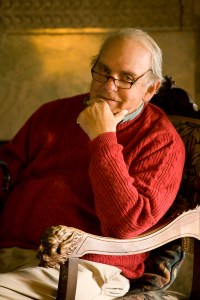
Frederick Buechner

Frederick Buechner

Thanks to Peter Wallace of Day1 for putting the student next to a man he unconsciously aspired to be. I’m older now . . .  and the distant iconic mentor who had no reason to know his mentee’s name is older still but no less alive to faith and life!

Years ago the Council of Churches in Cincinnati invited a Canadian publisher to publish “The Cincinnati Prayer Book,” a collection of prayers for the year by Cincinnati religious leaders. I was Pastor of Knox Presbyterian Church at the time. The publisher asked whether I would be interested in publishing a collection of sermons.

I recall the conversation in my office as if it were yesterday. I thought I smelled a rat.

“Are you a vanity press?” I asked.

They assurance me they were not. “The Startling Kindness of God” moved forward, including an endorsement from Frederick Buechner. But Fred’s letter to me included a private comment that changed how I preached and wrote. The sermons were good, he said, followed by a devastating “but”: “but I find them rather bloodless. I want to see some of your blood in them.”

Listening to your lifeI learned laster that he was working on Listening to Your Life. Reading my sermons, he seemed to sense I was not listening to mine. I wasn’t.

When the final contract appeared, the publisher required that I sell 300 copies of the sermon collection. I tore up the contract. The bloodless sermons are in a box in my closet, wondering why they were never published.

I have no reason to believe Fred Buechner has any recollection of that or that he remembers my name. But his combination of affirmation and warning began to change the way I preach and write. To appear next to Frederick Buechner today is a serendipitous occasion of joy and thanks. Thank you, Fred. I’m holding out a goldfish after all these years.

Thank you, Peter, for posting “The Seagull and the Rainbow” on Day1.

  • Gordon C. Stewart, May 20, 2017, Chaska, MN.


Glooming Gus at the Precipice

This otherwise cheerful morning – the sun is bright, the sky is blue, the air is brisk, the flowers are blooming – I open my eyes to find myself standing again before the precipice.

“I don’t know whether we’re on the edge of the precipice,” said Louis de Guidos, “but we’re in in a very, very, very difficult situation.”

He was speaking of the Spanish and European economy, but his description is suited to the crisis in which the world now finds itself in the aftermath of a global cyber attack and men-children in North Korea and the U.S.A. with nuclear arsenals at their fingertips.

“At times, we forget the magnitude of the havoc we can wreak by off-loading our minds onto super-intelligent machines, that is, until they run away from us, like mad sorcerers’ apprentices, and drag us up to the precipice for a look down into the abyss.” – Richard Dooling.

A lesser known author wrote on this topic:

“It’s one thing to play with toys. It’s something else when the toys are nuclear bombs and missiles.

“Our time is perilously close to mass suicide. Unless and until we get it straight that I and we are not the center of the universe, the likes of Kim Jong-un – and his mirror opposites but like-minded opponents on this side of the Pacific – will hold us hostage to the madness that lurks in human goodness.

“‘Have we not come to such an impasse in the modern world that we must love our enemies – or else?’ asked Dr. King. ‘The chain reaction of evil – hate begetting hate, wars producing more wars – must be broken, or else we shall be plunged into the dark abyss of annihilation.'” -“Mysterium Tremendum et Fascinans: Little Boys with Toys,” Be Still! Departure from Collective Madness, p. 77.

Just because a person’s a gloomy Gus doesn’t mean it’s not gloomy. 🙄

  • Gordon C. Stewart, gloomy Gus, at the precipice in Chaska, MN, May 17, 2016.

Why do we feel so unhinged?

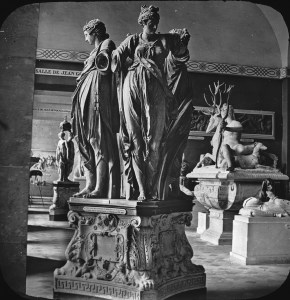
Vertus_cardinales_par_Germain_Pilon_(Louvre)

Vertus cardinales par Germain Pilon (Louvre)

Yesterday a friend reminded me of the Four Cardinal Virtues:

  1. prudence (wisdom),
  2. justice,
  3. temperance, and
  4. courage.

They are called ‘cardinal’ (Latin cardo; English: ‘hinge’) because they are the ‘hinges’ of the good life and the good society. These are the hinges on which the door to the good life opens.

We don’t think much about ‘virtue’ in the Ayn Rand society. We have learned to recoil at the smugness of those who claim to be virtuous. Even so, one is led to wonder whether we recoil at the imprudent, ill-tempered tweetings and firings in the news because of lingering respect and yearning for the Four Cardinal Virtues, the traditional moral hinges of our cultural heritage.

Prudence/Wisdom. In Greek and Roman philosophy – the works of Plato, Aristotle, and Cicero – and in subsequent Christian teaching, all other moral virtues depend on prudence or wisdom (Greek: φρόνησις, phronēsis; Latin: prudent): the ability to judge between appropriate (i.e. virtuous as opposed to vicious) actions in a given time and circumstance.

Temperance (Greek: σωφροσύνη, sōphrosynē; Latin: temperantia) – restraint, self-control, abstention, discretion, and moderation – is the practical exercise of prudence/wisdom.

Justice (Greek: δικαιοσύνη, dikaiosynē; Latin: iustitia) is the moral and economic balance between selfishness and selflessness, between having more and having less than one’s fair share.

Courage (Greek: ἀνδρεία, andreia; Latin: fortitude) means not only fortitude/strength, but forbearance, endurance, and the ability to confront fear, uncertainty, and intimidation.

Could it be that the daily unhinged violation of the Four Cardinal (hinge) Virtues is why we feel so unhinged?

  • Gordon C. Stewart, Chaska, MN, the Ides of March, 2017


Hammer-strokes against the darkness

We are living in what J. C. Blumhardt called “the wasted fields of mankind.” The fields of humankind are being laid waste in our time, as they were in his (1805 – 1880). What to do?

I’ve made phone calls. I’ve written. I’ve posted here and on FaceBook. I’ve written a book on collective madness. I’ve even tweeted! But none of it seems to have mattered much until I remembered the words of Johann Christoph Blumhardt, the German pastor who pioneered in the field of religion and mental illness at Bad Boll.

Our prayers are hammer-strokes against the princes of darkness; they must be oft repeated. Many years can pass by, even a number of generations die away, before a breakthrough occurs. However, not a single hit is wasted; and if they are continued, then even the most secure wall will fall. Then the glory of God will have a clear path upon which to stride forth with healing and blessing for the wasted fields of mankind.

Write. Write, Write. Make phone calls to congressional representatives, the White House, the princes who exercise public power and authority. Phone again if the voicemail box is full. Write again. But sustain all the activity with the hammer-strokes of prayer against the princes of darkness for the healing and blessing of the wasted fields of humankind. Live by the hope that not a single hit is wasted and that even the most secure wall will fall.

Thank you, Mom, for the faith to hammer on. RIP.

  • Gordon C. Stewart, Chaska, MN, Mother’s Day, May 14, 2017

Day One – and the Last Day

peter_wallace_2015_large_hor

Peter Wallace, Day1.org

Good news came early this morning from Peter Wallace of Day1.org.

“It (i.e. The Seagull and the Double Rainbow, previously published on Views from the Edge) will be on our homepage Saturday May 20—Saturdays are our biggest traffic day.”

Thanks to Bob Todd for introducing Peter Wallace to Be Still! Departure from Collective Madness and to Peter for featuring “Homeland Militarization” on Day1 several weeks ago.

seagull in ScarboroughEarlier today we published Dan Balz Washington Post piece on the firing of James Comey and the need to search for the truth behind the firing. Maybe the insistent seagull that kept banging away on the glass door is a model for people seeking the truth behind the curiously-timed, sudden firing that sent White House Press Secretary Sean Spicer into hiding in the White House bushes.

Maybe at the same time we could look at the beauty of the rainbow for a quieter critical perspective. Stillness comes hard on days like this. Anger and confusion come more easily. But the friendly word from Peter Wallace, and that moment last week on the Maine coast with the seagull and the double rainbow remind me that no day, in the end, belongs to the darkness or the proud.

  • Gordon C. Stewart, Chaska, MN, May 10, 2017


The Firing of James Comey

danbalz_0Dan Balz has always struck me as among the best of professional journalists. He asks the questions and searches for truth wherever it may lead.

At 8:49 P.M. last night, within hours of President Trump’s surprising firing of FBI Director James Comey, he managed to write and publish the piece that greeted readers of The Washington Post this morning.

Click HERE to read Dan Balz’s hastily gathered thoughts on the curious firing of the controversial FBI Director, its historical context and future implications. Anyone who can write that cogently in a little more than a heartbeat is a writer’s writer.

  • Gordon C. Stewart, Chaska, MN, May 10, 2017.


The Seagull and a double rainbow

seagull in ScarboroughA double rainbow appeared last evening over the tidal river beyond the house where five seminary classmates and our spouses are staying this week on the coast of Maine.

It happened after a full day feasting with our seminary Old Testament professor, Edward F. (Ted) Campbell, Jr. and poet J. Barrie Shepherd on William Greenway’s For the Love of All Creatures: the Story of Grace in Genesis in this time of climate departure. The five seminary friends, once seven, who call ourselves “The Old Dogs” or “The Gathering” have convened annually from Texas, Indiana, Illinois, Arizona, and Minnesota for study and fellowship for the past 20 years.

pepperidge-farm-goldfish-cheddar-DbXv3l-clipartJust moments before the rainbows appeared, we were entertained by two seagulls begging for treats. One of them ate a Pepperidge Farm “goldfish” our of my hand – twice. Snatch! The goldfish was gone. Down the seagull’s gullet. My hand was fine.

Then the first rainbow appeared. Followed by another. Almost as beautiful was the reflection of the sun from the yellow grasses on the far shore of the tidal river at the foot of the rainbows. The seagull and the rainbows were like exclamation points to Greenway’s case that we are seized by the love of all creatures.

“Maybe there really IS a God 😂!” I said to my seminary roommate. “You know there is,” Mr. Stewart,” said Wayne.

Early this morning at dawn there is a very aggressive seagull incessantly banging on the sliding glass door between my living room chair and the deck demanding more cheddar goldfish!

  • Gordon C. Stewart, Scarborough, Maine, May 2, 2017.


The 101st Day – What to do?

Today, following the first 100 days of President Trump’s inauguration, we offer a non-partisan invitation to focus on a phrase from a familiar prayer:

deliver us from evil“and lead us not into temptation,

but deliver us from evil.” 

Most days we pray the prayer without much reflection. Like many other things we repeat by rote memory, we give little thought to temptation or the need to be delivered from evil. But today the phrase calls out for deeper self-examination and reflection about the world in which we live.

“This was the most divisive speech I’ve ever heard from a sitting American president,” said Republican former advisor to four presidents David Gergen in response to President Trump’s speech celebrating his first 100 days in office in Harrisburg, Pennsylvania.

“He treated [those who are disturbed about him or oppose him] basically as ‘I don’t care, I don’t give a damn what you think, because you’re frankly like the enemy,'” said Gergen. “I think it was a deeply disturbing speech.”

The Lord’s Prayer (aka “the Our Father” and “the Jesus Prayer”) will be prayed in churches throughout the world today.

“Thy will be done on Earth as it is in heaven…”

“Forgive us our sins (the acts and states of mind that separate/divide us from/ hurt others) as we forgive those who sin against us.” 

“Lead us not into temptation (or “the time of testing”/”time of trial”), but deliver us from evil.”

Amen. May it be so! Lord, save us, and the world You love, from our worst selves.

  • Gordon C. Stewart, Chaska, MN, April 30, 2017.


Last TGIF of April – Day One

day1 logo

Day1.org logo

The best advertisements are the ones that aren’t paid for. Thanks to Day1 for featuring a chapter from “Be Still!” Departure from Collective Madness” today. Click THIS LINK to read “Homeland Militarization” on Day1.

spare-change-lg-300x199Then, If you like it . . . . buy it and let me know. I’ll gladly send a rebate of 99 cents to complete the purchase of the kindle edition, or 98 for the paperback.

coffeeBetter yet, next time we see each other, I’ll spring for a cheap cup of coffee and a rich conversation.

Wishing you a happy Day1 this last Friday of April!

Gordon C. Stewart, Chaska, MN, April 28, 2017.

This incessant business

John MuirJohn Muir, father of America’s National Park System, wrote:

God has cared for these trees,
Saved them from drought, disease,
and a thousand tempests and floods,
but he cannot save them from fools.
[John Muir, Our National Parks, 1903]

President Donald Trump spoke at the U.S. Department of Interior yesterday and signed an executive order freeing up use of public lands, land “which belongs to the people, which truly belongs to us.”

Henry David ThoreauHenry David Thoreau wrote in 1863:

I think there is nothing, not even crime,
more opposed to poetry, to philosophy, ay, to ay, to life itself, than this incessant business.

[Henry David Thoreau, Life Without Principle, 1863]


The Muir and Thoreau quotes lead the chapters  “A Joyful Resting Place in Time” and “The Bristlecone Pines” of Be Still! Departure from Collective Madness. God bless the memory of John Muir and Henry David Thoreau. We are increasingly without principle. They’d turn over in their graves. It’s up to us to honor their principles.

  • Gordon C. Stewart, April 27, 2017,