Verse – “Nothing Is Like Anything Else”

Similes are lies.

Metaphors mislead.

This is not like that.

Nothing moves or melts,

jumps or flys or feels

as another does.

One is one–unique.

Note the differences:

individuality,

singularity,

smell, location, sound…

Concentrate, honor each.

– Steve Shoemaker, Urbana, IL, January 27, 2013

Out of the Mouth of William Sloane Coffin, Jr.

“You’re not abandoned. God provides minimum protection – maximum support.”

William Sloane Coffin, Jr. (June 1, 1924 – April 12, 2006) was bigger than life. He had a way about him. He was a great preacher who packed the Chapel at Yale and the Riverside Church in New York City, one of the nation’s greatest pulpit dating back to Harry Emerson Fosdick. Once a promising candidate for a career as a concert pianist, Coffin chose the ministry instead, but he carried his musicality into the cadences of his speech and the power and beauty of his language. A former member of the CIA, he became fiercely committed to peace, a leader in the civil rights, peace, and nuclear freeze and disarmament movements.

After many years of watching from afar, our paths crossed while serving as Pastor to The College of Wooster in Wooster, OH and Pastor of Westminster Presbyterian Church, the College congregation-in-residence. The night of his arrival on campus, a handful of professors gathered in a home into the late hours of the night. I was spell-bound not only by his stories but by the quick repartee and personal interest in the lives of the strangers in the room. For the rest of the week Bill roused the campus with his passionate faith and wisdom.

Years later PBS broadcast Bill Moyers’ interview with him. Bill had suffered a stroke three years before, recovered his speech through persistent therapy, and was now reflecting with Bill Moyers about the recent news that he would be dead by the end of the year. It was vintage Bill Coffin. Realistic, cheerful, life-affirming, humorous, bold, loving, enjoying every moment of the conversation.

It led me to tears. “I have to call him,” I thought. “I have to tell him how important he’s been to so many of us – his close friends and distant admirers such as I.”  After some searching, I learned that he was living in Vermont and dialed the number.

Randy, Bill’s wife, answered the phone. “You don’t know me,” I said, “but I saw Bill’s interview with Bill Moyers last night on PBS. I just felt I had to call. He’s not likely to remember me but I had to call. This is Gordon Stewart calling from Minnes…” “O my, how good of you to call. Let me get Bill. I know he’ll want to talk with you… Bill…Bill….”.  “Gordon!” boomed out the familiar New York baritone voice. “We’ve thought about you many times. So good to hear from you! How the hell are you?  What’s happening out there in Minnesota?”

William Sloane Coffin was not a personal friend. He was a heroic figure I had admired and had put on a pedestal.  There are many reasons he deserved to be emulated, foremost perhaps, was that he really loved people and never forgot them. He lived freely at the end when death was knocking at his door because he believed, as he said,

“The abyss of God’s love is deeper than the abyss of death. And she who overcomes her fear of death lives as though death were a past and not a future experience.”

Poet sides with dog in Shoe War?

Dog Strikes Back at Cyberspace” brought this reply, or so I thought, from good friend Steve Shoemaker (aka “Shoe” ) in Urbana, Illinois. He seemed to have taken Sebastian’s side in the Shoe War.

Verse  —  “Heal”

I taught my dog to heel,

not so she’d be a slave,

but so she’d always be

safe to walk alongside of me.

When first I used a lead,

a leash and collar, she

would pull and jerk and try

to run away.  She thought that I

was cruel and mean to make

her suffer so.  But now

she leaves her pen with glee

as we, a team, explore the world.

– Steve Shoemaker, Urbana, IL, January 26, 2012

NOTE: The word “my” was not bolded or italicized in the Steve’s email.  “Views from Edge” bolded and italicizedmy” on the assumption that the Verse’s author was holding himself up as a man of virtue in contrast to the bad dog owner who hadn’t trained his dog properly. It turns out that “Dog Strikes Back at Cyberspace” wasn’t anywhere near his radar screen when he penned his Verse. Follow-up email from Steve: “Stop being so self-centered–I was not thinking of you and your sodden shoe at all when I wrote this. I wrote this for ___________” (who had asked him for a poem on healing in preparation for a sermon). 🙂

I think I’ll take a trip to Urbana for training… as a dog trainer…and healing.

Out of the Mouths of… #1

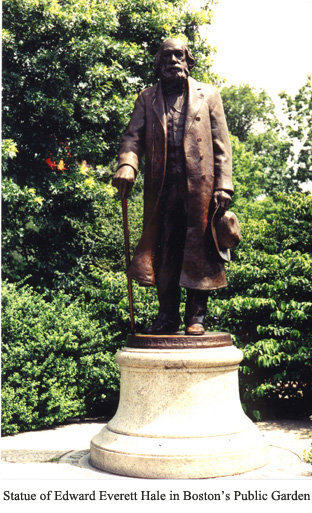
Edward Everett HaleEdward Everett Hale was asked if he prayed for the Senators. He replied:

“No. I look at the Senators and pray for the country.”

The Reverend Mr. Edward Everett Hale (1822 – 1909) served as  Chaplain to the U.S. Senate. He was appointed to the position because of his outstanding public ministry as Minister of South Congregational (Unitarian) Church in Boston. He proposed a public retirement pension system for both women and men long before there was Social Security.

First Church Boston’s website provides this account of his  ministry.

Thanks to Caroll Bryant for capturing our attention with her blog’s publication of the witticisms famous historical figures.

The Man with the Harmonica

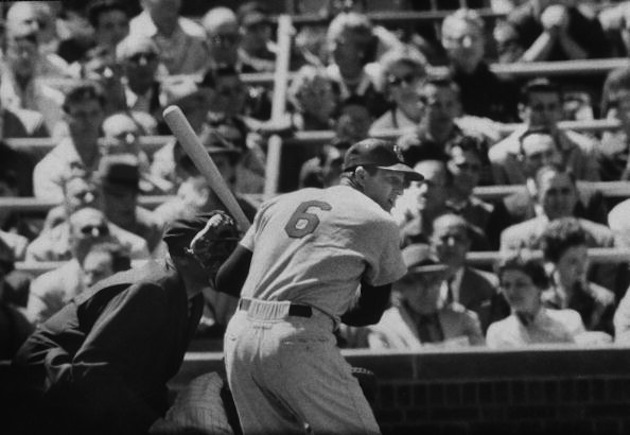
Stan MusialStan Musial, one of baseball’s greatest players of all time, died last Saturday at the age of 92. He was also a great human being. I grew up a Philadelphia Phillies fan. Robin Roberts, the great Phillies pitcher, was a boyhood hero. Roberts is quoted in this tribute to the late Stan Musial, popularly know, as the story tells, as “Stan the Man”.

Click this Link to article on Stan Musial and enjoy the ride of a positive story.

The clouds ye so much dread

The line of Tuesday’s reflection on a nearly disastrous Martin Luther King Day celebration fell on the ears of a parishioner in hospice care yesterday during a pastoral visit. Lorraine is sitting in her chair. She can no longer see.  But she can hear when the visitor speaks clearly with some volume, and she is fully alert and ready for more than entertainment or platitudes. The text was written by English poet and hymn-writer William Cowper in 1774. They give voice to faith’s trust in providence…without denying the clouds.

“Wonderful,” she said with a smile at the end of the reading. “I really like that.” Turn the volume up and see what you feel and think.

Dog strikes back at cyberspace

Think dogs don’t reason as we do? Think their reasoning is less precise? That they act only on instinct? Have no purpose of forethought? Think they can’t talk?

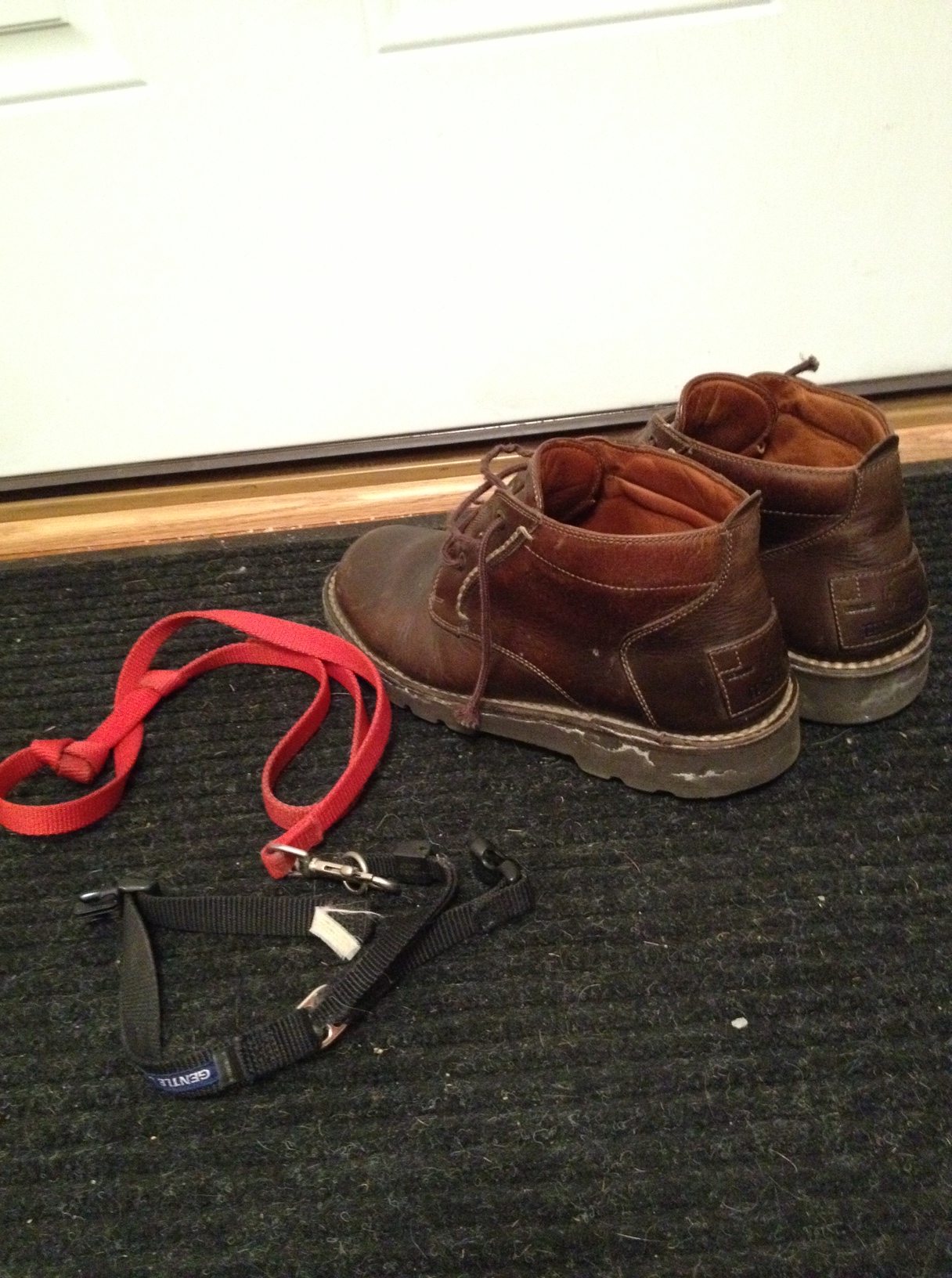
Consider the shoe by the front door.

boots by front door

The shoes belong to the “dog-owner” who has been upstairs blogging obsessively, ignoring his dog’s persistent pestering. Sebastian pawed, scratched his back feet on the carpet, and barked. At first the blogger ignored him and then chastened for interrupting the important message he was preparing to send into cyberspace.

Dog surrenders. Disappears for 10 minutes. Returns and quietly, without a word, jumps up to his customary place on the sofa in the blogger’s office.

Blogger completes his thoughtfully reasoned cyberspace communication and decides it’s time to take the little guy out.  Blogger goes downstairs, takes off his slippers, puts on the left shoe next to the leash by the front door, and winces.

Sebastian has left a perfectly directed, perfectly contained puddle in the shoe. No evidence to the side of the shoe or the back or front of the shoe. All of the message is IN the shoe, nature striking back at cyberspace with the clearest of messages carefully delivered with forethought and drone-like precision:

“Dad, you really pissed me off!!”

Sebastian

MLK Celebration in Shambles? Or…Not!

The planned Martin Luther King Day program fell to shambles with a phone call at 4:00 p.m. yesterday afternoon. The Minneapolis African drummer and the Liberian Choir that was to sing “The Hallelujah Chorus” a capella would not be coming to the 7:00 p.m. MLK Celebration here in Chaska.

When the bad news came, I was apoplectic. “This can’t be. We’ve advertised this.  People are coming to hear the drumming and the singing of this unusual choir. We can’t change this after we’ve done the PR. We’ve sent out electronic and Chaska Herald invitations to the community. We can’t disappoint these people like this.” I wanted to crawl under a rock. I wasn’t of a mind to remember or believe that sometimes…”God moves in a mysterious way his wonders to perform” (hymn by William Cowper, 1774).

After the momentary paralysis, Momoh Freeman, guest soloist and song-leader Jerry Steele, and Chaska resident Ray Pleasant quickly scrambled to put our heads together to scratch together an emergency game plan. The people who would come would be the choir – we would sing, and sing, and sing. There would be nothing to confuse as entertainment; instead there would be full participation…all the way from beginning to end. “What a concept!” I thought to myself. “That’s how it’s supposed to be. As the President had said in earlier in his Second Inaugural Address, ”It’s about we, the people.”

Jerry, a superb African-American soloist and song-leader, was magnificent. The collective voice of the people singing “Every time I feel the Spirit” filled the Chapel with joy. Strangers turned and welcomed each other easily with signs of warmth and kinship. Sections of the Sermon on the Mount that had inspired Dr. King were read. “You have heard that it was said, ‘You shall love your neighbor and hate your enemies’. But I say to you, Love your enemies, bless those who curse you, do good to those who hate you, and pray for those who despitefully use you and persecute you, that you may be children of your Father who is in heaven, for he makes his sun to rise on the evil and on the good, and sends the rain on the just and the unjust.”

A hush filled the room except for Jerry’s baritone voice, singing the song to which Martin Luther King, Jr. so often turned in tough times. “Precious Lord, take my hand, Lead me on, help me stand; I am tired, I am weak, I am worn; Through the storm, through the night, Lead me on to the light; Take my hand, precious Lord, lead me home.”

Chaska resident Ray Pleasant, a retired engineer and former MN State Representative and Bloomington City Councilman, shared the CD of African drumming he had quickly supplied for the ad hoc program.

The room was hushed by the rhythms of the drums, followed by Ray’s explanation of the central importance of drumming to African culture and the reminder that the drumming was once forbidden the African slaves.

Ray set the historical context of what later became known as “Letter from the Birmingham Jail”: Dr. King’s decision to march in Birmingham, refusing to put the need for fund-raising for the fledgling Civil Rights Movement and the Southern Christian Leadership Conference ahead of his conscience. Many of the white northern church pastors and the northern newspapers that had previously supported him rebuked him for his arrest, arguing that now was not the time, arguing that he should be law-abiding and patient. It was in that context of lonely exile in the Birmingham Jail that a young Martin Luther King, Jr. penned with courage “The Letter from the Birmingham Jail” that addressed his critics in ways that changed the world.

A brief portion of that letter fell on the ears of all of us – eyes closed so as to savor the words without distraction – and the once forbidden drums from the quickly fetched CD again filled the Chapel with African drumming and hope.

Three-time Mayor of the City of Chaska Bob Roepke and Carver County Commissioner Randy Maluchnik were invited to share brief excerpts from the speeches of Dr. King. Randy a personal moment of his visit to the MLK museum in Memphis, which is housed in the motel on whose balcony Dr. King was killed by an assassin’s rifle. Randy’s sharing, which had not been planned and could not have been anticipated, is but one example of the what happened in that room, movement of the Spirit of the Living God and the gift of something better than the lost plan that caused a distraught planner’s apoplexy just three hours before.

The voices of the 90 people who had left their couches on a freezing cold night echoed through the Chapel: “God down, Moses, way down to Egypt land. Tell ol’ Pharaoh, ‘Let my people go!'”; “Siyahamba” (“We are marking to the Light of God”),  a movement song that had kept the light of hope burning on the way to the end of apartheid and the democratic election of Nelson Mandela as President of the Republic of South Africa; “Lift Every Voice and Sing,” the Black national anthem of poet James Weldon Johnson; and “We Shall Overcome”.

The evening ended with prayer for the safety and well-being of the newly inaugurated President, whose election would have been so joyfully celebrated by the man on whose shoulders he stands.

“God moves in a mysterious way his wonders to perform.” Thank you, precious Lord, and thank you Ray, Momoh, Jerry, Bob, Randy, and each and every one who came on a frigid Minnesota night to warm your spirits by the CD drumming of an indoor campfire.

The Path Walker and the Road Builder

It’s 5th period in the Advanced Placement Art Class at the high school of an up-scale Minnesota suburb.

The African visitor who grew up walking the paths in Chad has been invited by the art teacher and the staff person whose job is to generate multicultural and cross-cultural consciousness. Koffi is standing in front of the Advanced Placement Art Class. The high-tech classroom with wi-fi displays the visiting artist’s Flicker portfolio on the large screen, reducing his art, it seems to me, to just one or two more commodities for sale, quickly deleted by the pressing of a key on the keypad. This is the world of the road builders…on the way to some advanced place.

The pitch-black, slender, physically fit path-walking landscape artist from Africa speaks in his third language to the privileged, mostly white, mostly single-language college-bound American students in the Advanced Placement Art Class of the road-builder society.

The road builders, says Wendell Berry (“The Native Hill”, The Art if the Common-Place), are the descendants of the placeless people who cut the forests, leveled the trees, and bulldozed their way to their ideas of what the world should be. They are the ancestors of Europeans who fled their familiar places to escape them. To build something better. Something freer perhaps, less restricted not only by law and custom but, more fundamentally, by the limits of creaturely life: time and space. They landed on the soil of the path walkers, the indigenous people whose foot paths wound their way harmlessly following the contours of the hills, rivers, streams and valleys. The artist from Chad, who represents the spirituality of the harmless foot paths and natural contours our road builder ancestors have disdained is standing before the Western Advanced Placement Art  Class.

“The road builders…were placeless people. That is why they ‘knew but little’. Having left Europe far behind” says Berry, “they had not yet in any meaningful sense arrived in America, not yet having devoted themselves to any part of it in a way that would produce the intricate knowledge of it necessary to live in it without destroying it. Because they belonged to no place, it was almost inevitable that they should behave violently toward the places they came to. We still have not, in any meaningful way, arrived in America. And in spite of our great reservoir of facts and methods, in comparison to the deep earthly wisdom of established peoples we still know but little.”

The Advanced Placement students watch the paintings flash across the screen in the school the road builders have built, but they show little interest or curiosity. They ask no questions of the flesh and blood African path walker whose paintings are of the natural habitat and his sisters and brothers, the elephants, lions, tigers, zebras, and giraffes,  who are disappearing because of poachers who profit from the ivory tusks of the elephants and the rhinos.

“I’m surprised and more than a little disappointed,” I say to Koffi after that class.

“Many Americans think we’re stupid. We’re from Africa. They think Africans are uncivilized,” he replies in the least preferred of the three languages he speaks fluently.

Who and what is more civil and civilized, I wonder. Many of us know that something has been lost. Something is dreadfully wrong. The students in the class and their generation are likely “greener” than my generation. But they also have drunk the poison of a linear view of history as advancement and progress. They are advancing…a step above the rest…in the Advanced Placement Class on their way to the prestigious universities that will induct them into the road builders society.

I am increasingly drawn to the simple insight of the Genesis writer who calls the prototypes of humanity “Earthlings” (the literal English rendering of the original Hebrew text) meant to delight within the limits of time and space. We are of the earth, dust to dust, ashes to ashes creatures who live in one time and one place at one time, not in every place all the time, and not all the time forever nowhere.

…..

I am on vacation…in a pool…in the Florida sun… where I dreamed of being five days ago in the Advanced Placement Art class back in  frigid Minnesota. The place is Orlando, the quintessential city of the road builders. The time is 10:00 a.m. EST. The date is January 16, 2013.

I am thinking about the path man and the students back in Minnesota when it suddenly dawns on me that even here…on vacation with no obligations, no goals to meet, no deadlines, nothing to do… I am acting like a road builder.

I alone…in the pool…doing my prescribed water exercises for my back and neck. “Lift left leg. Extend both arms. Pull arms to side as left leg goes down and right leg lifts. Keep abdomen tight. Keep neck and upper back muscles relaxed.”

Doing these exercises does not require movement from one side of the pool to the other. But I am making a highway in the water, always moving forward, advancing to the other side. ”One, two, three steps…nine, ten, eleven.” Turn. Repeat trip to other side. Repeat until the counting of strokes reaches 100. And I ask why.

I get out of the pool, dry off, and have trouble just being here…alone…in the Florida sun…by a pool surrounded by palm trees and tropical birds. I turn on the MacBook Air and, as I do, I realize that I have no good reason to turn on the MacBook Air other than to be somewhere else than where I really AM… right now, in this place…I’ve entered the world of the Flicker screen. My spirit never settles anywhere except during my afternoon nap with my two furry friends back home when the warmth of their bodies calms my spirit into a kind of joyful resting place. My dogs are not here. They’re at home in Minnesota wondering where the not-so-furry member of the pack is.

I turn of off the MacBook Air and reach over for the hard copy of The Art of the Common-Place, a book meant precisely for a reflective moment like this.

“Novalis, the German romantic poet and philosopher, once remarked that all proper philosophizing is driven instinctively by the longing to be at home in the world, by the desire to bring to peace the restlessness that pervades much of human life,” writes Norman Wirzba in the Introduction to the book

“Our failure – as evidenced in flights to virtual worlds and the growing reliance on ‘life enhancing’ drugs, antidepressants, antacids, and stress management techniques – suggest a pervasive unwillingness or inability to make this world a home, to find in our places and communities, our bodies and our work, a joyful resting place.”

A tiny lizard that has lost its tail scampers up to the arm of the lounge chair next to mine. I stay still. We look at each other…the lizard looks into the eyes of the road builder whose ancestors paved over his natural habitat; the road builder stares into the eyes of the lizard.

The lizard senses the threat…his chest and throat blow up like an orange balloon to camouflage itself into safety, then sucks the balloon back in just as quickly as the road builder moves. The lizard runs scampers back into the green foliage planted poolside by the resort’s developers, the “superior” species, the road builders of Western culture who were not content with the more humble paths that followed the natural contours and limits of time and place here in Orlando.

Here in the Florida sun by the pool it is as though a tiny ancestor of the serpent in the Garden story of Genesis 3 has returned with an altogether different question. If in the Genesis myth the serpent seduces the Earthlings into believing that they will be “like God,” the lizard now returns to the despoiled garden to ask the suddenly alert but still- advancing, far from home, restless, pool road-building vacationer in the lizard’s home:

“Do you still really think you’re God?”

A Joyful Resting Place in Time

I am on vacation…in a pool…in the Florida sun… where I wished to be several days ago back in frigid Minnesota.  I am here…but…not quite here. I am moving forward to something even in the water…not standing still in this pool. I am doing my prescribed water exercises. “Lift left knee. Extend arms. Pull arms to side as left knee goes down and right leg lifts. Keep abdomen tight. Keep neck and upper back muscles relaxed. Repeat.”

I’m doing the exercises, but even in this pool, I think I have to be moving forward, advancing to the other side. One, two, three steps. Eleven. Turn, repeat to other side. Count steps to give sense of progress.

Even in the Florida sun in this quiet pool with no distractions, I seem to feel I must accomplish something. Be on my way to something. If I’m in the middle of the pool, I’m working to get to the other side. When I reach the far side, I turn and start pulling for the opposite side. Until the counting of strokes reaches 100.  Then I change the exercise routine…and repeat…one, two, three, four, five, eleven, reach goal, turn, repeat until I count 100 strokes.

I get out of the pool, dry off, take my place in the lounge chair. I’m having trouble just being here…alone…in the Florida sun…by a pool surrounded by palm trees and tropical birds. I turn on the MacBook Air and, as I do, I recall that I am refusing to be here…where I really AM…right now. My spirit is placeless.

A tiny lizard perches on the arm of the lounge chair next to mine. I look at it; it stares at me. The lizard throat blows up like an orange balloon bigger than its head. I move. The lizard scampers away. This is the place where the lizard lives. I do not. I am human, able to be everywhere at any time, but homeless, scurrying like the lizard for a resting place.

I put down my passenger ticket to everywhere and nowhere…the MacBook Air… and reach over for the hard copy of The Art of the Common-Place: the Agrarian Essays of Wendell Berry I’ve brought for a quiet moment like this…a time to think….a time to dig deeper to get some perspective on life and the world. I open to the Introduction.

“Novalis, the German romantic poet and philosopher, once remarked that all proper philosophizing is driven instinctively by the longing to be at home in the world, by the desire to bring to peace the restlessness that pervades much of human life,” writes Norman Wirzba.

“Our failure – as evidenced in flights to virtual worlds and the growing reliance on ‘life enhancing’ drugs, antidepressants, antacids, and stress management techniques – suggests a pervasive unwillingness or inability to make this world a home, to find in our places and communities, our bodies and our work, a joyful resting place.”

The closest I get to that resting place is my daily afternoon nap back in Minnesota. I am not alone in the nap. Maggie and Sebastian join me in the siesta. Maggie cuddles up close to my head; Sebastian rests against my thigh, reminding their cerebral, restless friend, though without intention, that I really am in one place…at home…in the same time and space with them. If I am distracted when the time comes for the daily nap, Sebastian comes to get me and herds me up upstairs. “Come on, Dad, it’s nap time.” He and Maggie are attuned to time and place, the angle of the sun, the rhythms of day and night and our location in space while Dad is racing around the world and the universe on his MacBook Air looking for a resting place when the resting place is right upstairs in Chaska, Minnesota.

We humans think we are superior to the lizard who scampers down from the lounge chair, a superior species to the West Highland White Terrier and the Shitzu-Bichon Frise, yet we are less at home within the limits of creation itself…the limits of time and place…here in the Garden…where we are restless until we are timeless and spaceless…erasing all limits on the MacBook Air or the iPad…until we become…like God.

Discontent with embodied existence and valuing little, we scurry away, not seeing, not touching, not hearing, not feeling anything much but one, two, three, four…eleven on our way to nowhere in particular where perhaps the MacBook Air will take us vicariously to a joyful resting place…outside the Garden of time-bound lizards and dogs and human beings…a delusional placeless place beyond dust to dust, ashes to ashes… and we miss the whole experience…on the way to some place which is no place.

I want to learn to be in one place at one time. I want to live less anxiously. More present, one might say, to embodied life in this one spot where I really am…this one place… and find within it a joyful resting place.