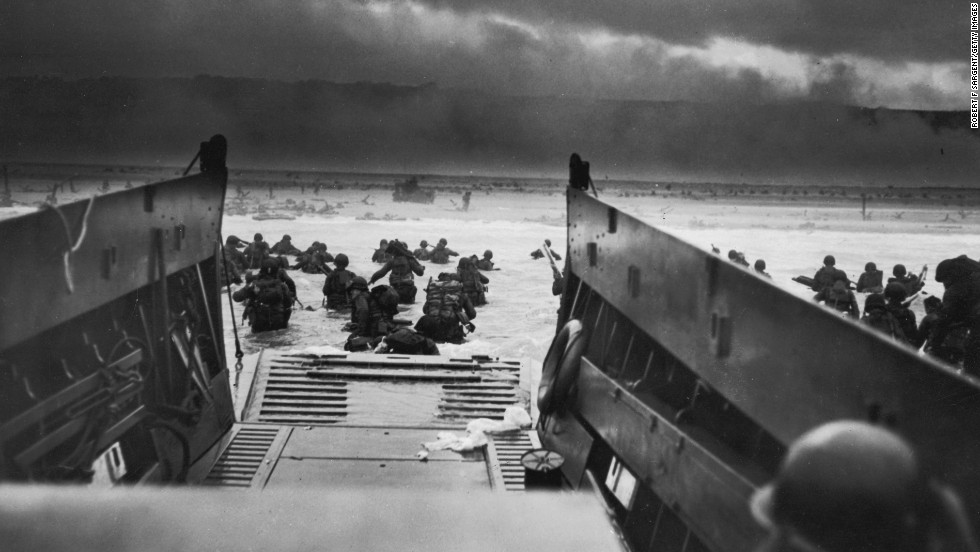
The Parents, the son, and the girlfriend

She was homeless when he welcomed her into his parents’ new townhouse. So far as the parents knew, she was “sort of” their adult son’s “girlfriend” but they weren’t exactly sure what their relationship was. It was strange. It didn’t seem romantic. She seemed different.

Among the neighbors everything seemed fine until the squad cars’ flashing red lights lit up the street and four uniformed police officers ran by their homes reaching for their holsters. Something was different.

The parents of the son who’d invited the son’s “girlfriend” to live with them had called 911 after a screaming meltdown in the upstairs bathroom where their guest had poked huge holes in the walls with the towel fixtures she had yanked from the walls and had threatened to kill everyone in the house.

When the police arrived and called upstairs, she calmly came downstairs, curious to see what the ruckus was about, appearing calm as a cucumber, without a care in the world while the son’s mother sat trembling with her head between her hands and the 35 year-old son stepped outside for a smoke.

No charges were filed. The parents had come to realize over time that the girlfriend had “some problems” and thought they could help her. The four of them continued to occupy the house after the incident was “resolved” by the police visit.
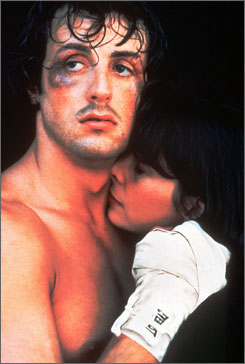
Two months later the red lights appeared again after another upstairs commotion left the son’s face looking like Rocky Balboa after his fight with Apollo Creed. This time the girlfriend was no Adrian. Adrian  had acted like Apollo…with a knife.

This time Rocky was rushed to the emergency room. Adrian was taken away in handcuffs, screaming at the officers, the boyfriend, and his parents, for another committal to a mental health facility for violation of probation resulting from previous domestic assaults. The parents stayed where they are, dumbfounded how compassion can turn out so badly.

“Life is like an onion. You peel it off one layer at a time,” said Carl Sandburg, “and sometimes you weep.”


Bill in the Waiting Room

visual image of hospital waiting room

He sits by himself in the hospital waiting room.

“Where you from?” he asks, as if welcoming the stranger who’s come to hid home for a stress test.

“Chaska.”

Where?” he asks over the whine from his hearing aids.

I’m not anxious to strike up a conversation. I’m here for a stress test. I’m an introvert. Chatting with strangers when I’m gathering myself when I’m under stress, waiting for a stress test, is the last thing I want.

C h a s k a!” I repeat.

“Oh! I’m from Waconia! I’m Bill.”

He gives a broad smile as though we’re related. (Waconia and Chaska are neighbors in Carver County, MN.)

His gowned wife, fresh off the treadmill, returns from her stress test.

“This is my wife, Jane. She’s a lot younger than I am. I’m 96.”

“Ninety-four,” says the younger wife. “We’ve been together 15 years.”

“Chaska’s the county seat,” says Bill. “That’s where i was sworn in.” (Clearly, he’s an extrovert. He feels better when he has guests.)

“World War II?”

“February 6, 1942. Eighty of us. A lot of guys from Chaska.”

“Where’d you serve?”

“He was part of D-Day,” answers Jane. Bill’s head sinks toward his lap. His chin begins to quiver. A long pause follows.

D-Day, WWII.

Only 15 of us came back.”

“Were you injured?”

“No,” he says, forming his hands in prayer and looking up. “I don’t know why.” He falls again into silence.

Fort Snelling National Cemetery, Minnesota

Bill’s body is with us, but he’s not here. He’s back at Normandy Beach on D-Day.

“That’s a lot of death,” I say. “A lot of killing. A lot of loss.”

He looks up, nods, and drops his head again.

Post-traumatic Stress,” I say quietly to Jane. “I’m a pastor. I’ve seen it so many times with Vietnam War and Iraq War veterans.”

“I think so,” she says. “He still can’t talk about it after all these years.”

The technician calls my name. “Mr. Stewart?”

As I stand to leave the stress test waiting room, Bill reaches up to say good-bye with a firm handshake and friendly smile for the whippersnapper from Chaska.

Robert Davis of Clarkston has an outpatient stress test run by exercise physiologist’s Richard Andrevzzi and Donna McCollom in the Royal Oak hospital.

I leave the waiting room and get on the treadmill, reminded that there is stress and there is stress, knowing that mine bears no comparison to Bill’s and thankful for a few moments with 94 year-old who has every reason to think he’s 96.

  • Gordon C. Stewart, Chaska, MN, June 27, 2017.

Jake’s bench visitor

The stranger sits alone on Jake’s’ bench under the elm tree in the grassy area behind the seasonal Mexican food truck parked at the edge of the Cooper’s Food parking lot.

It’s not everyone who comes to sit on Jake’s bench. I wonder whether he knows of Jake and whether he’s read the inscription etched into the marble:

“Now Jake is a man who wonders why the world is torn asunder. Better worlds he plans, where joy is at hand, and people can live in peace and plenty”.

Mexican food truck 55d36cc8485e9.imageHis back is turned to the picnic table where I eat my taco from the food truck. I only see him from the back, which, come to think of it, is how one sees Jake here – the way Elijah saw God from a cave while God passed by: from the back, the mystery of the Presence maintained against every mortal effort to control, define, or reduce a mystery to a thing.

A bedroll and a pair of well-worn shoes sit on the ground under the inscription. A pair of dirty, wet socks sits on the bench beside him. Clearly he’s been on the road. Is he a hiker on a long trek? A traveler passing through Chaska? Does he have a home somewhere else? Is he homeless and torn asunder in this world?  Or maybe he’s a rare fellow-traveler pausing in the company of Jake on Jake’s bench.

CoopersFoods1Jake’s bench is meant for the weary traveler.

Jake Cooper was an American socialist, the second generation of Cooper’s Foods.

Cooper’s still sits there today, hosting the Mexican food truck, a witness to an era when care for a stores’s customers were more important than updating its physical appearance and service to the community was as important as profits. Cooper’s is the most generous business in Chaska, the go-to supplier of food for community events and good causes. Coopers is a community institution. Its Deli offers complete meals for under $6.70 with portions large enough to provide dinner for two with some left over. Best little restaurant in Chaska! It’s not a money-maker, but it pretty much pays for itself, says Jake’s latest successor at Cooper’s – and it serves the people who can’t afford higher end restaurants or who just know good food at a great price. An example of the spirit of American democratic socialism to whose dream Jake’s bench still bears witness behind the Mexican food truck.

Whether the stranger sitting at Jake’s bench came by chance or came to pay his respect to Jake, he is like most of us in this day and time: a weary traveler who wonders why the world is so torn asunder, and hopes for a better world of peace and plenty.

  • Gordon C. Stewart, Chaska, MN, June 14, 2017.


Revelation at Andrews Hollow

After several days away from writing for Views from the Edge, today’s Daily Post invitation to write something about ‘revelation’ struck a familiar chord, so to speak.

Andrews Casket Company mill in Woodstock, ME

Andrews Casket Company mill in Woodstock, ME

Earlier this week an email arrived from a complete stranger who believed we were family. In a google search she had come across Views from the Edge’s photograph of the Andrews’ family property.

What’s that have to do with ‘revelation’?

It revealed a blood relative I didn’t know existed and led to the correspondence with the second-cousin I’d only met once on the old Andrews’ homestead years ago but had never forgotten.

The emails we’ve exchanged have removed the cover (i.e., ‘revealed’) from family origins that had remained hidden for almost 75 years.

The reflections of the second-cousin who grew up on the ancestral property of the Andrews family help explain both the sense of homesickness and forlornness I felt while visiting “The Hollow” last month. The latest visit confirmed the feeling expressed in “The Forlorn Children of the Mayflower” in “Be Still!”

Until this week’s correspondence, I hadn’t know the property was “The Hollow” to the relatives who grew up there, or as “Andrews Hollow” to the those whose relatives’ funerals had been handled by the Andrews family. It all came as a revelation.

So, today I take time out to write this post in reply to The Daily Post’s invitation. Perhaps life itself is a life-long pilgrimage of revelation – the unveiling of the deeper chords and cords of the DNA that lives on in the tissues and bloodstreams of later generations.

  • Gordon C. Stewart, Chaska, MN, June 10, 2017.

MEMORIAL DAY 2017 – REMEMBERANCE

Moment after learning that “Memorial Day and the Soldier’s Helmet” was too long to air today on MPR’s “All Things Considered,” Marilyn Armstrong’s SERENDIPITY Memorial Day 2017 stood out from the in-box. Best wishes for a thoughtful Memorial Day.

Marilyn Armstrong's avatarSerendipity - Seeking Intelligent Life on Earth

Memorial Day


Memorial Day (formerly Decoration Day) is observed on the last Monday of May. It commemorates the men and women who died in military service. In observance of the holiday, many people visit cemeteries and memorials, and volunteers place American flags on each grave site at national cemeteries.

A national moment of remembrance takes place at 3:00 p.m. local time.

72-Flags-Party_07

Three years after the Civil War ended, on May 5, 1868, the head of an organization of Union veterans — the Grand Army of the Republic (GAR) — established Decoration Day as a time for the nation to decorate the graves of the war dead with flowers. Maj. Gen. John A. Logan declared that Decoration Day should be observed on May 30. It is believed that date was chosen because flowers would be in bloom all over the country.

The first large observance was held that year at…

View original post 272 more words

Memorial Day and the Soldier’s Helmet

“Memorial Day and the Soldier’s Helmet” is read aloud here from Be Still! Departure from Collective Madness (p. 10f.). This recording is not as professional as it will be this weekend when it airs on Minnesota Public Radio’s “All Things Considered.” This practice run starts out a little mushy! But it’s good enough that Day1.org posted it yesterday on their site.

Many thanks to Chuck Lieber for making it possible to turn “Be Still!” into a podcast.

  • Gordon C. Stewart, Chaska, MN, May 24, 2017.

Mom’s Handkerchief – Good Friday

Mom

Muriel Titus Stewart

As a child, I wondered why they called Good Friday ‘good’. It wasn’t. It was awful.

At the annual Good Friday service my mother’s cheeks were wet. She’d hold her handkerchief in one hand and, without drawing attention to herself — Mom was shy and shunned attention — she would dab the tears, hoping no one would notice.

A soloist would sing:

Were you there when they crucified my Lord?

Were you there when the crucified my Lord? Oh……

Sometimes it causes me to tremble, tremble, tremble.

Were you there when they crucified my Lord?

Mom would dab her cheeks and eyes.

As I grew older I began to understand why they called the Friday of the crucifixion ‘good’. It wasn’t good because they nailed him to the tree, or because they took him down and laid him in a borrowed tomb. It was good because, in that deep darkness, tears fall in grief and in hopes of something else. Tears that recognize both the betrayal, denial, flight — our  own and others’ – and the steadfast love, courage, and magnanimity of the man on the cross.

Both sides of the human condition are front and center on Good Friday. So is the sense of god-forsakenness – the wrenching cry from the cross, “Eloi, Eloi, lama sabachthani?” (“My God, my God, why have you forsaken me?”) — the gnawing feeling of senselessness, meaninglessness, and helplessness, hanging alone, tortured and mocked, over the abyss of nothingness.

Over the years, I’ve learned that a healthy sense of denial is sometimes a good thing. So is truth-telling. Good Friday brings me face-to-face with myself at my worst and my best. And at the heart of it all is a man with arms spread wide, looking out at us who still crucify him — ours is a Good Friday world — with eyes that reach my soul. “Father, forgive them, for they know not what they do. Into Your hands I commit my spirit.”

On Easter Mom would dab her eyes for joy because she’d brought her handkerchief with her from Good Friday.

— Gordon C. Stewart. Chaska. MN, April 14, 2017. Originally published April 3, 2015.

The Dog Park

Every day at 4:00 the 91 year-old with the weathered face and halting gate – we’ll call her Mabel – arrives at the dog park. She walks slowly, but more or less steadily, on her cane with her elderly companion Missy – the 16 year-old Pomeranian-Yorkie mix.

56199a5048cdf96c4318a36d9271153cMissy, who suffered a stroke a year ago and walks with difficulty, sniffs the grass. She dutifully does her business, looking up at Mabel. She stays very close, almost like a shepherd caring for an aging sheep whose needs she lives to tend.


Mabel and her dog. Companions for life. For now. And, it seems, each thankful for the other for whatever time they have.

  • Gordon C. Stewart, Chaska, MN, April 7, 2017.

When the hearing aid goes dumb

I have two hearing aids. I need them both.

All of a sudden there was no sound in the left ear. Nada! The hearing aid just quit while listening to a sermon in church. No idea what was said from that point on.

I went home. Changed the battery. Nada. Changed the little white insert at the end of the receiver thinking it might be clogged. Still no sound.

Monday morning, while waiting at the hearing clinic for a verdict on the problem, an older man and his daughter took the seats across from me in the waiting area. They started a conversation. I pointed to my left ear, saying I couldn’t hear. The daughter said something and pointed to her father who also said something I couldn’t understand. Then I said, “I can’t hear,” and smiled. “Sometimes I like the silence. The world is very noisy.” The man laughed. The daughter nodded and smiled knowingly.

It was a momentary communion of glorious shared silence.

The result? The hearing aid has been sent off to the manufacturer for repair of a twisted wire inside the hearing mold. My left ear now wears a loaner, a rental from Herz until my vehicle returns at the cost of $250. I re-imagine the text of the sermon I couldn’t hear:

“Even fools are thought wise when they keep silent; with their mouths shut, they seem intelligent.” – Proverbs 17:28

  • Gordon C. Stewart, Chaska, MN, March 28, 2017.

America @ Middleburg: the Celebration of Ignorance

Allison StangerThis NYT Op Ed piece by Middlebury College Professor Allison Sanger (L) – now in a neck brace resulting from this attempted civil conversation with Charles Murray – is a must read for our time.