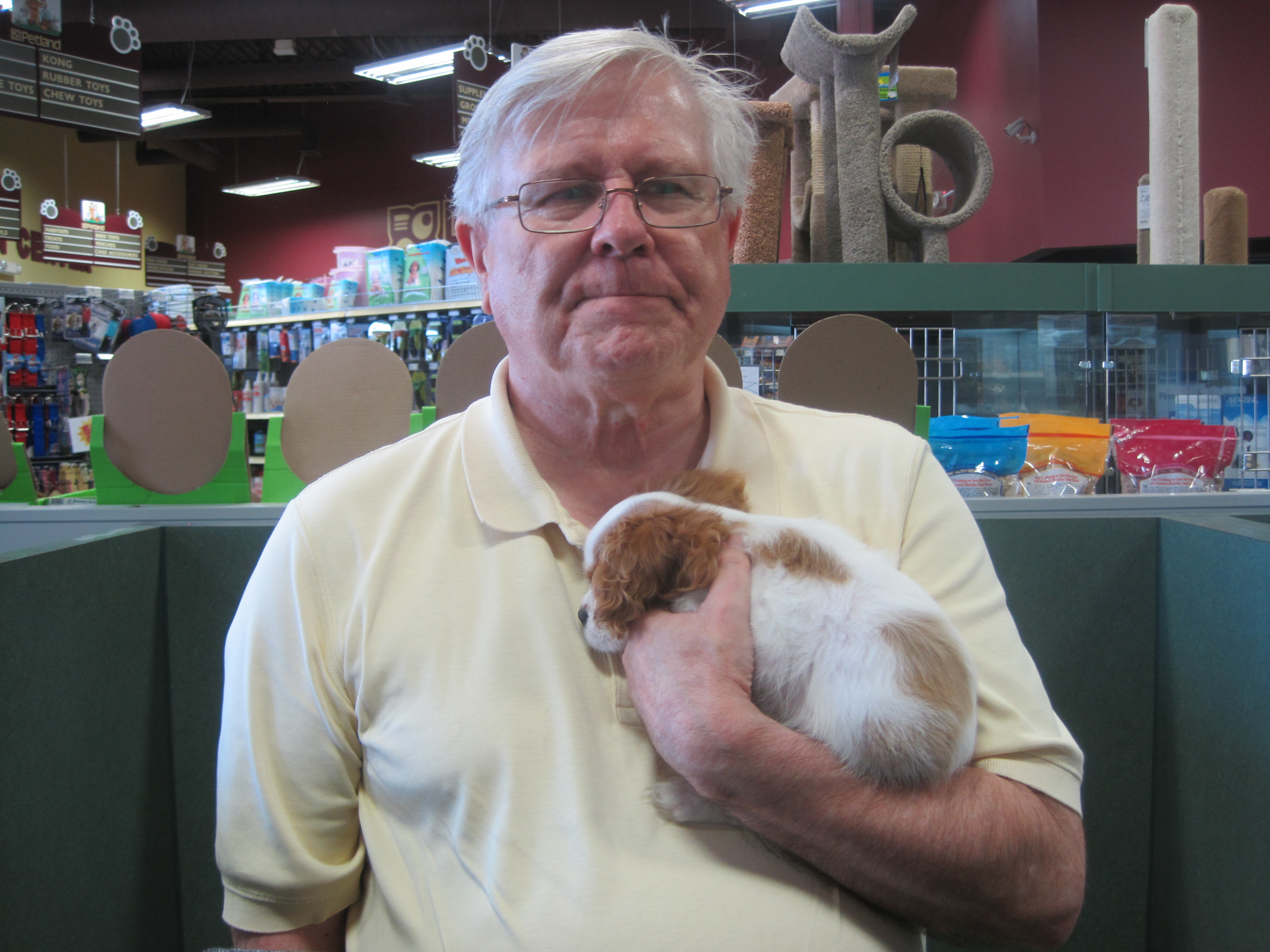
Sojourner Truth – Ain’t I a Woman?

Video

Anticipating Shepherd of the Hill Dialogues’ “Voices of the Slaves” program celebrating the 150th Anniversary of the Emancipation Proclamation, we offer Sojourner Truth’s speech here on Views from the Edge. The Tuesday Dialogue on Oct. 15 (7:00 P.M.) will feature dramatic readings like this one and the music that originated in the cotton fields.

Sojourner Truth

Sojourner Truth

The Sacredness of Time

A Sermon at Shepherd of the Hill Presbyterian Church in Chaska, Minnesota.

EXCERPTS

“I have always been bemused by time and place. I am a toddler on a train listening in the night to the eerie sound of the train whistle and the constant click-clacking of the wheels. Where were we? Where are we going – and why, just my mother and I?”

“We are all in transit. But from where to where and from when to when have become less and less my questions.”

Quaker Grit

Gravel and motorcycles don’t mix.
Even though the 73 year old Dean
(Emeritus) was only going 5 mph
on the last gravel mile to his
daughter’s lake house, when he looked
at the passing motorboat,
the big quiet bike slowly slid sideways
and down on his left leg.

A passing lake visitor helped lift
the bike off his bruised, he thought,
limb, and he limped the half-mile
to his daughter’s place carrying
his helmet–the same red as his bike.
After resting, she drove him back
to the unharmed motorcycle,
which he rode the 30 miles home.

He drove his pick-up truck to the
Walk-in Clinic to check the leg
that kept hurting as he walked.
After the X-Rays showed two
breaks, waiting for surgery,
his daughter said, “I’ll bet you
are smiling because your bike
wasn’t even scratched!”

– Steve Shoemaker, Urbana, IL, September 10, 2013

The GPS

Lost in Chicago

Parking now is privatized,
on-street prices very high,
all hotels have also raised
valet costs in the same way:
everybody wants to make
as much money as they can
before bankruptcy will take
everybody down just like
Detroit.

Mile Magnificent is still
mostly white except for men
parking cars or begging on
sidewalk sides. Inside, women
wear their diamonds on pale hands–
colored hands wear vinyl, fill
buckets, pails, trash bags, and cans:
garbage left behind by all
the rich.

Foreigners drive taxis, make
more here than at home. Send back
salaries and tips to help
families survive. I stop,
lost on lower Wacker Drive,
lower Michigan, no help
here from GPS, “Now drive
east 500 feet and stop.”
(I’d be in the lake…)

– Steve Shoemaker, Urbana, IL, September 9, 2013

P.S. On Tuesday, October 1 Steve will bring his poetry to Tuesday Dialogues at Shepherd of the Hill Church in Chaska. Free and open to the public.

Irony of Ironies: MLK and Syria?

The same day America honored the 50th Anniversary of the March on Washington most remembered for Dr. King’s “I have a dream” speech, America’s first black President appeared on the Newshour to discuss military strikes in Syria.

Martin Luther King, Jr. was as deeply committed to peace and to NON-VIOLENT, non-military solutions to global problems as he was to ending racism. As his analysis of the national, international, and human condition continued to develop, he became an outspoken critic of the Vietnam War, capitalism, and imperialism.  He grasped as well as any public figure of his time the institutional power of an unelected, undemocratic web of the economic-military-corporate power at work behind the scenes of American public life.

I was proud of President Obama’s speech from the same spot where where Dr. King had stood 50 years before at the March on Washington.  I can’t put that together with his entertainment of military action in Syria.  For whatever reason, the media did not seem to notice the incongruity.

Last night’s PBS Newhour featured a conversation about the advisability of “punishing” Syria. University of Chicago Professor John Mearsheimer’s statements, in my opinion, hit the nail on the head. “Stay out militarily.”  Click HERE to listen to the conversation. 

The military-industrial-technological-corporate complex feeds of mistakes like Iraq and Afghanistan. Martin Luther King, Jr. never lunched on their food. Nor should we. 

Puppy salutes Martin Luther King’s Dream

Barclay and the memory of Martin Luther King, Jr.

Barclay and the memory of Martin Luther King, Jr.

Fourteen-week old Barclay was reading the morning paper where he read for the first time about the Rev. Dr. Martin Luther King, Jr. and his “I have a Dream speech” 50 years ago this Wednesday. “Woof!” said Barclay. Then his eyes became sad as he read the other stories in the paper and told his Dad to put on the Society for the Prevention of Cruelty to Animals (SPCA) shirt Barclay’s Mom found at a garage sale. The America Barclay wants is one that prevents cruelty to animals, including humans.

“Dad,” he said, “We have to go to Washington this Wednesday! We have to keep the dream alive.”

“We can’t go to Washington,” said Dad. “We’re not ready to go to Washington. Not until you learn to go potty outside. Maybe next year, when you’ve learned that going outside is your contribution to the prevention of cruelty to humans and the American way of life, we can go to Washington and visit Congress to train them too.”

Barclay looked at Dad and said Dad wasn’t worthy to wear that t-shirt. Dad goes inside all the time. “It’s prejudice, pure and simple and I won’t have any part in it! Dad hates dogs!”

“Sit,” said Dad.

“Just another form of cruelty and intimidation,” said Barclay. “Martin would never have treated me like that.”

“You don’t understand,” said Dad. “Martin was able to accomplish what he did in the Civil Rights Movement and the Peace Movement because he put himself under the strict discipline of non-violent resistance. Martin Luther King, Jr. understood discipline and self-discipline. I want you to learn the same thing. Every time you go in the house, it’s an act of violent resistance. It’s an act of terror. Do you understand? Sit!”

Barclay sat, knowing that the treat was in Dad’s hand. He took the treat, then squatted right in front of Dad, and said, “Maybe some day I’ll be self-disciplined like Dr. King. Right now I’m just a puppy in training. … So next year we can go Washington, D.C. and train everyone in Congress and the White House not to make a mess in their own houses?”

Poor People’s March 50 Years Ago Today

Martin Luther King, Jr. 50 years ago

Martin Luther King, Jr. 50 years ago

2013 MLK: "What happened?"

2013 MLK: “What happened?”

Glock owner at State Capitol hearing. Photo by David Joles, StarTribune.

Glock owner at State Capitol hearing. Photo by David Joles, StarTribune.

Dad was bad today

Barclay (Cavalier King Charles Spaniel) and bad Dad (homo sapiens)

Barclay (Cavalier King Charles Spaniel) and bad Dad (homo sapiens)

The new puppy (3 pounds 8 ounces) was leaping from my arms, flying to the sidewalk before I knew what was happening. It happened so quickly. Barclay was still excited from meeting the children around the corner; he was not his customary docile self.

The plunge from my arms was terrifying. The yelping was blood-curdling. I thought for sure he had hit his head or broken a leg or suffered some internal injury. He crawled forward under the Blue Spruce for protection, still crying loudly. I fetched him from under the tree, held him close, apologized profusely – “I’m so sorry, little guy. I’m so sorry” – and carried him into the house, still traumatized and whimpering. He settled down in my arms while I checked his body for signs of damage. Finding none, I put him down to see how he would walk. His walk was slow but straight. He spent the rest of the day more quietly but was fine as the day wore on, returning to his playful self during late afternoon play time.

Barclay greeted Kay’s return from work with a wagging tail and kisses to her face, as if to say, “Dad was bad today, but I forgave him. I’m glad you’re home!”

Bemused by Time

Gordon C. Stewart, August 8, 2013 copyright.

I have always been bemused by time . . . and place. I am on a train listening in the night to the eerie sound of the train whistle and the constant click-clacking of the wheels. Where were we? Where are we going – and why, just my mother and I?

We were between times and places. My father had shipped out for war in the South Pacific. Hewas somewhere on a ship and might not return. My mother and I were on our way from LA to Boston. Two different places: one hours behind, one many hours ahead. But for the time being, there was only the now of the train, the whistle, and the steady clickety-clack from the track carrying us from there to here to there, from then to now to then. Perplexity with time and place is my earliest memory.

We are all in transit. But from where to where and from when to when have become less and less my questions.

I do not share the popular view that time is an illusion or that the material world is the prison from which we will be released at death. Time and place are gifts of creaturely existence, boundaries within which we live our lives appreciatively or scornfully in the midst of the Eternal. To scorn them is to deprecate existence itself in the Promethean hope that we can steal fire from the gods to become what we are not: timeless and placeless.

Time and place are set within the larger Mystery that Rudolph Otto called the Mysterium tremendum et fascinans – the Mystery that makes us mortals tremble and fascinates us at the same time, the Mystery of the Eternal without which we are nothing that draws us to itself like iron to a magnet. Time and place – birth, finite life, death – exist within the Mystery of that which does not die: Eternity.

I am not amused by the denial of death that is so rampant in our culture. Surveys show that roughly 90% of Americans, regardless of religious affiliation, believe in life after death, by which they do not mean that life will go on without them, but that they themselves will never die.

I have come to believe that the denial of death and the fear of death lie close to the core of American culture at its worst. Ernest Becker’s The Denial of Death informs how I see the world and myself; Becker sits beside me as I turn to the Scriptures in the morning.

Psalm 90:1-5, paraphrased by Isaac Watts (1719) and sung as the hymn “O God, Our Help in Ages Past” is as much in my early memory bank as the train whistle on the ride to Boston. It has always represented a mature faith that takes seriously Otto’s Mysterium:

Before the hills in order stood,
Or earth received its frame,
From everlasting Thou art God,
To endless years the same.

A thousand ages in Thy sight
Are like an evening gone;
Short as the watch that ends the night
Before the rising sun.

Time, like an every rolling stream
Bears all its sons away;
They fly forgotten, as a dream
dies at the opening day.

O God, our help in ages past,
Our hope for years to come,
Be Thou our guard while life shall last
And our eternal home.

Standing at the gravesites over the years, I have prayed the same prayer so many times that it has become an essential part of me. I confess that I don’t know what it means exactly but it expresses the sentiment of good faith as I have come to understand it for myself.

O Lord, support us all the day long,
until the shadows lengthen,
and the evening comes,
and busy world is hushed,
and the fever of life is over,
and our work is done.
Then, in Your mercy,
grant us a safe lodging,
a holy rest,
and peace at the last.

The shadows have grown longer since the trip to Boston and the first time I sang the hymn. Evening is closer now. The sense of the Mysterium tremendum et fascinans is different but no less real now than it was on the train to Boston. The hush of the busy world will come soon enough. Between now and the day my work is done, I want to listen more attentively for the Hush in the midst of time, and give thanks that the Silence is not empty. It is full of Eternity. I am bemused by time.

Click O God, Our Help in Ages Past for a video that captures the spirit of the hymn and the prayer.

It’s a Puppy World

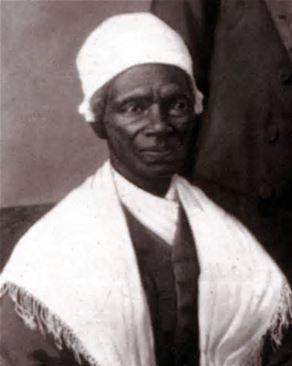
Barclay on chestAfter much careful (actually impulsive) thought, we decided to add to the household. Barclay arrived in this world May 21, 2013. We brought him home last Sunday evening.

Barclay is a Cavalier King Charles Spaniel, a breed known for extraordinary companionship, quietness, intelligence, beauty, and ease of training, all of which drew us to the breed. But when we saw this little guy, saw those big eyes and that excitedly wagging tail, picked him up (all 3 lbs.6 ounces of him), and experienced the quick licks to the face and gentle nibbles on the ear, we were putty in a 10 week-old puppy’s paw.

Life has changed for him and for us.

He has a home…..and our sleeping days are over. He’s very quiet. Doesn’t whine at all. As we learned Monday night, he’s too young to make it through the night without a potty time. Poor little guy was cold, wet, and shivering when Kay came down at 4:30 for her cup of coffee and quiet time. He recovered well throughout the day, and we adjusted our schedule to be better “parents” to the un-house-broken baby. He has had no other accidents…largely because I watch his every move every day. I’m the stay-at-home puppy dad who now required TWO naps a day, just like Barclay.

We feel very blessed to have lost our mind and ask your good wishes and prayers that the three of us survive puppyhood in “a good way,” as our American Indian friends say.