Into the Cocoon of Sorrow

The return of the prodigal son - Rembrandt drawing

The return of the prodigal son – Rembrandt drawing

During seven years as Executive Director of the Legal Rights Center, Inc. a nonprofit public defense corporation founded in 1970 by American Indian and African-American civil rights leaders, there were sacred moments when the lawyers would call me in to meet a suicidal client in a jail cell. Sometimes the person in the cell was guilty of murder or manslaughter. They were beside themselves. All I could do was be there with them as a kind of quiet presence of hope and the possibility of forgiveness and new life.

I knew then that we were sitting right in the middle of the Parable of the Prodigal Son (Gospel of Luke 15:11-32). In Jesus’ parable, the son, who has convinced his generous father into giving him his inheritance before his father’s death, has squandered it all, and, after finding himself in desperation, eating the left-overs in the pig sty of “the far country”, he staggers home to his father. He comes beating his breast with remorse and shame. “But while he was yet at a distance, his father saw him and had compassion, and ran and embraced him, and kissed him,” and orders the finest robe for him and a magnificent feast to celebrate his son’s return from “the far country.” When the older brother who has stayed home obediently objects, the father of the two sons declares: “It was fitting to make merry and be glad, for this your brother was dead, but is alive, was lost, and is found!”

Only after returning to parish ministry did I discover The Book of Common Prayer’s rite for the reconciliation of a penitent that is constructed on the story of the return of the son to the father. For those in the bowels of despair, remorse, and guilt, there is no word from inside one’s own self that can crack open the cocoon of horror, self-disgust, and condemnation. When I found this rite, it moved me deeply. I adapted parts of it for the Prayer of Confession in morning worship at Shepherd of the Hill Presbyterian Church in Chaska, MN.

RITE FOR THE RECONCILIATION OF A PENITENT from The Book of Common Prayer (The Episcopal Church)

The priest and penitent begin as follows

Have mercy on me, O God, according to your loving-kindness;
in your great compassion blot out my offenses.
Wash me through and through from my wickedness,
and cleanse me from my sin.
For I know my transgressions only too well,
and my sin is ever before me.

Holy God, Holy and Mighty, Holy Immortal One,
have mercy upon us.

Penitent: Pray for me, a sinner.

Priest: May God in his love enlighten your heart, that you may remember in truth all your sins and his unfailing mercy. Amen.

The Priest may then say one or more of these or other appropriate verses of Scripture, first saying:: Hear the Word of God to all who truly turn to him.

Come unto me, all ye that travail and are heavy laden, and I will refresh you. Matthew 11:28

This is a true saying, and worthy of all to be received, that Christ Jesus came into the world to save sinners. I Timothy 1:13

If any man sins, we have an Advocate with the Father, Jesus Christ the righteous; and he is the perfect offering for our sins, and nor for ours only, but for the sins of the whole world. I John 2:1-2

The Priest then continues:

Now, in the presence of Christ, and of me, his minister, confess your sins with a humble and obedient heart to Almighty God, our Creator and our Redeemer.

The Penitent says:

Holy God, heavenly Father, you formed me from the dust in your image and likeness, and redeemed me from sin and death by the cross of your Son Jesus Christ. Through the water of baptism you clothed me with the shining garment of his righteousness, and established me among your children in your kingdom. But I have squandered the inheritance of your saints, and I have wandered far in a land that is waste.

Especially, I confess to you and to the Church . . . . (Here the penitent confesses particular sins)

Therefore, O Lord, from these and all other sins I cannot now remember, I turn to you in sorrow and repentance. Receive me again into the arms of your mercy, and restore me to the blessed company of your faithful people; through him in whom you have redeemed the world, your Son our Savior Jesus Christ. Amen.

The Priest may then offer words of comfort and counsel.

Priest: Will you turn again to Christ as your Lord?

Penitent: I will.

Priest: Do you, then, forgive those who have sinned against you?

Penitent: I forgive them.

Priest: May Almighty God in mercy receive your confession of sorrow and faith, strengthen you in all goodness, and by the power of the Holy Spirit keep you in eternal life. Amen.

The Priest then lays upon the penitent’s head (or extends a hand over the penitent) saying:: Our Lord Jesus Christ, who has left power to his Church to absolve all sinners who truly repent and believe in him, of his great mercy forgive you all your offenses; and by his authority committed to me, I absolve you from all your sins; in the Name of the Father, and of the Son, and of the Holy Spirit. Amen.

The Priest concludes: Now there is rejoicing in heaven; for you were lost, and are found; you were dead, and are now alive in Christ Jesus our Lord. Go (or abide) in peace. The Lord has put away all your sins.

Penitent: Thanks be to God.

The Meth Shows

Gun show

Gun show

Gordon C. Stewart, February 15, 2013

Had I grown up on a farm or a ranch, I might see things differently. Had I had a good use for a gun – to protect the sheep from the coyotes or to put down an injured horse – I would likely feel differently.

We all see things through our own eyes. It’s difficult to see through someone else’s eyes when talking about the Second Amendment: “A well regulated militia, being necessary to the security of a free state, the right of the people to keep and bear arms, shall not be infringed.”

Walk into a gun show or a gun shop. What do you see? Do you see the arms of a well-regulated militia necessary to the security of a free state?

The photos of gun shows send chills up my spine. What I see is a drug store for addicts – precision, man-made machinery. Do the tables have on them the equivalent of Methamphetamine or crack cocaine to a gun aficionado?—ready to take the shopper into the illusionary highs of power and invulnerability, the cocoon of god-like power over life and death?

A bow and arrow is a hunting instrument. One shot at a time is all you get or need. The well-regulated militia seen as “necessary to the security of a free state” assumed arms like that: load, shoot…re-load…. Equally important, the “well-regulated militia” in the Second Amendment was a concession to the demands of the slave-holding states whose plantation economies were threatened by slave revolts. Those “states” insisted on the right to state regulated militias. Once the slaves were freed, the militias took another form: they moved under the white sheets and hoods of the not-so-well-regulated militias of the Ku Klux Klan, burning crosses on the lawns of uppity blacks, and of whites who had forgotten who they were as members of a superior race. “The people” were white supremacists then—are they white supremacists still? Their weapons were midnight torch parades; burning crosses left on unbelievers’ lawns; rifles; and the white militias’ hanging nooses and trees that secured their sorry state of mind.

My experience with guns is shaped in no small part by playing cops and robbers and cowboys and Indians with the neighbors in the back yard of the small town where I grew up. The closest we came to a gun was a water-pistols or a cap-gun. “Bang, bang! You’re dead!” and the victim would fall down playing dead…and then we’d get back up to play again. We were also trying to make sense out the world of cowboys and Indians, cops and robbers – shorthand for “good guys” and “bad guys” but even then we sometimes wondered whether maybe the Indians with their bows and arrows were better than the better-armed “good guys” who had conquered them and their land.

When I see a convention center filled with tables of every imaginable pistol, rifle, and semi-automatic, I see an unregulated drug store filled with shoppers sorting through the different brands of methamphetamines. I see a form of legal insanity: the fascination with power and the worship of power over another life.

A friend posted on Facebook a photograph of a hunter posing proudly with the wolf he had killed with his bow and arrow. The arrow was still protruding from the wolf’s left eye. The wolf was dead. The archer was alive and smiling.

What would a shaman say about this picture? Would the totems of a tribal people use the image of the conquered wolf with an arrow protruding through its left eye as a symbol? A symbol for what? Their bravery? Their marksmanship? Where is the sacredness in this picture?

I have no answers, just images to share: The picture of tables with addiction written all over it? “Good guys” protecting themselves from the “bad guys”? “Cowboys and Indians”? The bow and arrow in the wolf’s eye? A well-regulated militia necessary to the security of a free state?

The still, small voice of calm

We live in a pandemic sea of fear and rage. We are ridden on all side by anxiety. Our hearts are anxious, easily stirred up, annoyed, and angry.

I remember the calm that would come over me as we sang this quietly during Vespers in my boyhood church. Even then, it calmed my troubled spirit. It calms me still. John Greenleaf Whiittier’s lyrics and Frederick Charles Maker’s music combine to calm me down to listen quietly for “the still, small voice of calm” that speaks through the social earthquake, winds, and storms. “Lord, breathe through the heats of my desire Thy coolness and Thy balm.”

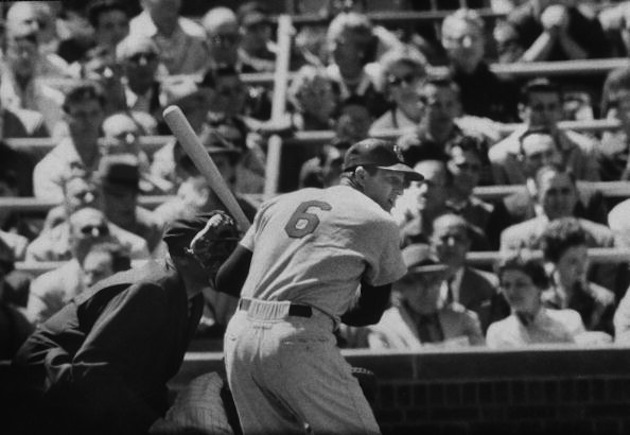
Stan Musial and the other Cardinal

The St. Louis Post-Dispatch published this piece on the Roman Catholic Cardinal with the red cap and the late Stan Musial who wore the red cap of the St. Louis Cardinals. Click “One cardinal remembers another: Cardinal Timothy Dolan on Stan Musial” for an interesting read.

Out of the mouth of Walter Rauschenbusch

Walter Rauschenbusch, "father of the Social Gospel"

Walter Rauschenbusch (1861 – 1918), “father of the Social Gospel Movement”

“All human goodness is social goodness. Man is fundamentally gregarious and his morality consists in being a good member of his community.”

“The chief purpose of the Christian Church in the past has been the salvation of individuals. But the most pressing task of the present is not individualistic. Our business is to make over an antiquated and immoral economic system….”

The Rev. Walter Rauschenbusch had a profound impact on Christian theology and activism that led to the end of child labor and to legislation that protected worker rights in the early 20th Century. The man whose theology was shaped by his ministry with the poorest of the poor in the “Hell’s Kitchen” of New York City is the man from whose “Social Gospel” Glenn Beck now urges church members to flee for their lives.

Out of the Mouth of William Sloane Coffin, Jr.

“You’re not abandoned. God provides minimum protection – maximum support.”

William Sloane Coffin, Jr. (June 1, 1924 – April 12, 2006) was bigger than life. He had a way about him. He was a great preacher who packed the Chapel at Yale and the Riverside Church in New York City, one of the nation’s greatest pulpit dating back to Harry Emerson Fosdick. Once a promising candidate for a career as a concert pianist, Coffin chose the ministry instead, but he carried his musicality into the cadences of his speech and the power and beauty of his language. A former member of the CIA, he became fiercely committed to peace, a leader in the civil rights, peace, and nuclear freeze and disarmament movements.

After many years of watching from afar, our paths crossed while serving as Pastor to The College of Wooster in Wooster, OH and Pastor of Westminster Presbyterian Church, the College congregation-in-residence. The night of his arrival on campus, a handful of professors gathered in a home into the late hours of the night. I was spell-bound not only by his stories but by the quick repartee and personal interest in the lives of the strangers in the room. For the rest of the week Bill roused the campus with his passionate faith and wisdom.

Years later PBS broadcast Bill Moyers’ interview with him. Bill had suffered a stroke three years before, recovered his speech through persistent therapy, and was now reflecting with Bill Moyers about the recent news that he would be dead by the end of the year. It was vintage Bill Coffin. Realistic, cheerful, life-affirming, humorous, bold, loving, enjoying every moment of the conversation.

It led me to tears. “I have to call him,” I thought. “I have to tell him how important he’s been to so many of us – his close friends and distant admirers such as I.”  After some searching, I learned that he was living in Vermont and dialed the number.

Randy, Bill’s wife, answered the phone. “You don’t know me,” I said, “but I saw Bill’s interview with Bill Moyers last night on PBS. I just felt I had to call. He’s not likely to remember me but I had to call. This is Gordon Stewart calling from Minnes…” “O my, how good of you to call. Let me get Bill. I know he’ll want to talk with you… Bill…Bill….”.  “Gordon!” boomed out the familiar New York baritone voice. “We’ve thought about you many times. So good to hear from you! How the hell are you?  What’s happening out there in Minnesota?”

William Sloane Coffin was not a personal friend. He was a heroic figure I had admired and had put on a pedestal.  There are many reasons he deserved to be emulated, foremost perhaps, was that he really loved people and never forgot them. He lived freely at the end when death was knocking at his door because he believed, as he said,

“The abyss of God’s love is deeper than the abyss of death. And she who overcomes her fear of death lives as though death were a past and not a future experience.”

The Man with the Harmonica

Stan MusialStan Musial, one of baseball’s greatest players of all time, died last Saturday at the age of 92. He was also a great human being. I grew up a Philadelphia Phillies fan. Robin Roberts, the great Phillies pitcher, was a boyhood hero. Roberts is quoted in this tribute to the late Stan Musial, popularly know, as the story tells, as “Stan the Man”.

Click this Link to article on Stan Musial and enjoy the ride of a positive story.

The clouds ye so much dread

The line of Tuesday’s reflection on a nearly disastrous Martin Luther King Day celebration fell on the ears of a parishioner in hospice care yesterday during a pastoral visit. Lorraine is sitting in her chair. She can no longer see.  But she can hear when the visitor speaks clearly with some volume, and she is fully alert and ready for more than entertainment or platitudes. The text was written by English poet and hymn-writer William Cowper in 1774. They give voice to faith’s trust in providence…without denying the clouds.

“Wonderful,” she said with a smile at the end of the reading. “I really like that.” Turn the volume up and see what you feel and think.

Dog strikes back at cyberspace

Think dogs don’t reason as we do? Think their reasoning is less precise? That they act only on instinct? Have no purpose of forethought? Think they can’t talk?

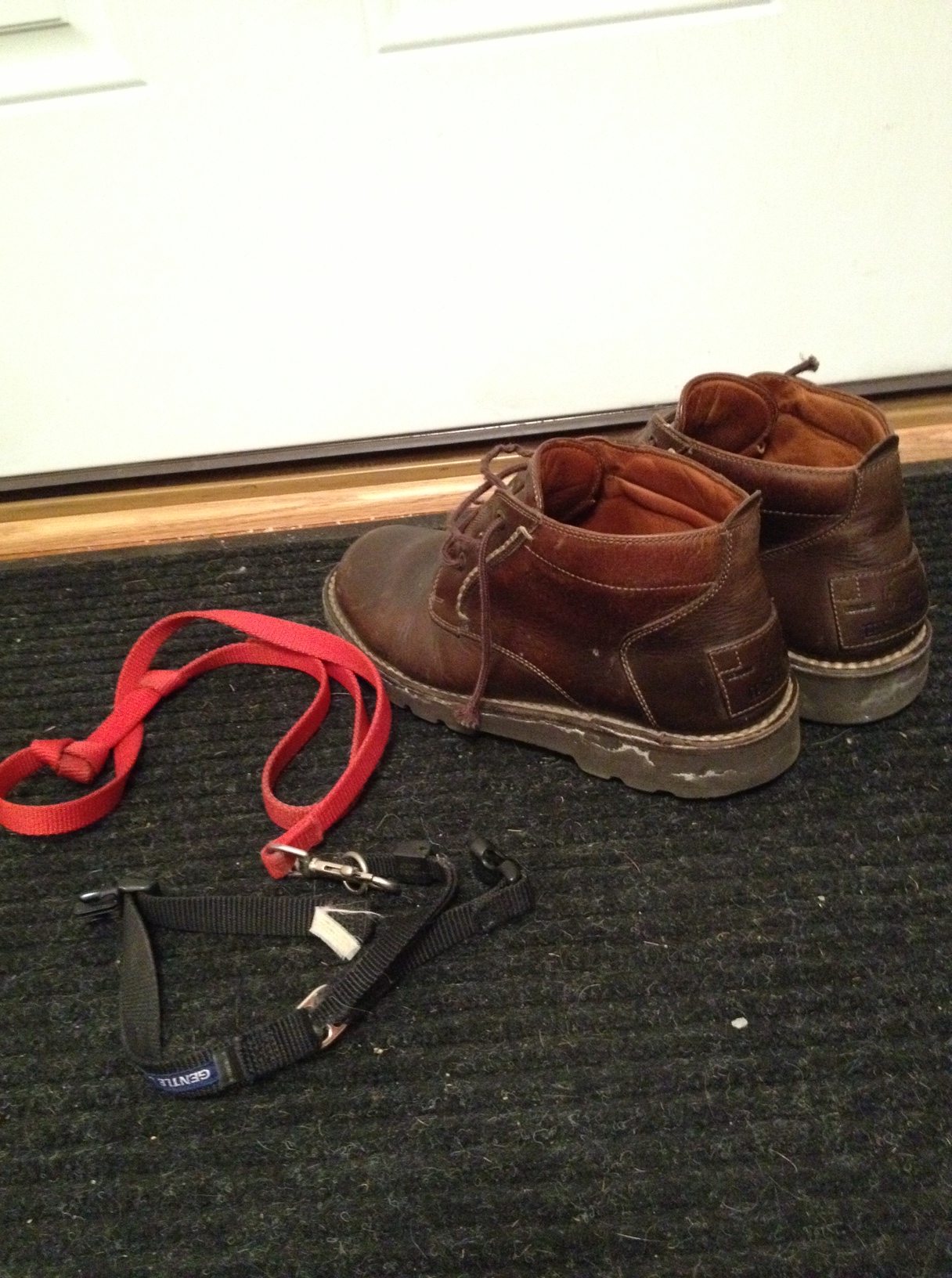
Consider the shoe by the front door.

boots by front door

The shoes belong to the “dog-owner” who has been upstairs blogging obsessively, ignoring his dog’s persistent pestering. Sebastian pawed, scratched his back feet on the carpet, and barked. At first the blogger ignored him and then chastened for interrupting the important message he was preparing to send into cyberspace.

Dog surrenders. Disappears for 10 minutes. Returns and quietly, without a word, jumps up to his customary place on the sofa in the blogger’s office.

Blogger completes his thoughtfully reasoned cyberspace communication and decides it’s time to take the little guy out.  Blogger goes downstairs, takes off his slippers, puts on the left shoe next to the leash by the front door, and winces.

Sebastian has left a perfectly directed, perfectly contained puddle in the shoe. No evidence to the side of the shoe or the back or front of the shoe. All of the message is IN the shoe, nature striking back at cyberspace with the clearest of messages carefully delivered with forethought and drone-like precision:

“Dad, you really pissed me off!!”

Sebastian

MLK Celebration in Shambles? Or…Not!

The planned Martin Luther King Day program fell to shambles with a phone call at 4:00 p.m. yesterday afternoon. The Minneapolis African drummer and the Liberian Choir that was to sing “The Hallelujah Chorus” a capella would not be coming to the 7:00 p.m. MLK Celebration here in Chaska.

When the bad news came, I was apoplectic. “This can’t be. We’ve advertised this.  People are coming to hear the drumming and the singing of this unusual choir. We can’t change this after we’ve done the PR. We’ve sent out electronic and Chaska Herald invitations to the community. We can’t disappoint these people like this.” I wanted to crawl under a rock. I wasn’t of a mind to remember or believe that sometimes…”God moves in a mysterious way his wonders to perform” (hymn by William Cowper, 1774).

After the momentary paralysis, Momoh Freeman, guest soloist and song-leader Jerry Steele, and Chaska resident Ray Pleasant quickly scrambled to put our heads together to scratch together an emergency game plan. The people who would come would be the choir – we would sing, and sing, and sing. There would be nothing to confuse as entertainment; instead there would be full participation…all the way from beginning to end. “What a concept!” I thought to myself. “That’s how it’s supposed to be. As the President had said in earlier in his Second Inaugural Address, ”It’s about we, the people.”

Jerry, a superb African-American soloist and song-leader, was magnificent. The collective voice of the people singing “Every time I feel the Spirit” filled the Chapel with joy. Strangers turned and welcomed each other easily with signs of warmth and kinship. Sections of the Sermon on the Mount that had inspired Dr. King were read. “You have heard that it was said, ‘You shall love your neighbor and hate your enemies’. But I say to you, Love your enemies, bless those who curse you, do good to those who hate you, and pray for those who despitefully use you and persecute you, that you may be children of your Father who is in heaven, for he makes his sun to rise on the evil and on the good, and sends the rain on the just and the unjust.”

A hush filled the room except for Jerry’s baritone voice, singing the song to which Martin Luther King, Jr. so often turned in tough times. “Precious Lord, take my hand, Lead me on, help me stand; I am tired, I am weak, I am worn; Through the storm, through the night, Lead me on to the light; Take my hand, precious Lord, lead me home.”

Chaska resident Ray Pleasant, a retired engineer and former MN State Representative and Bloomington City Councilman, shared the CD of African drumming he had quickly supplied for the ad hoc program.

The room was hushed by the rhythms of the drums, followed by Ray’s explanation of the central importance of drumming to African culture and the reminder that the drumming was once forbidden the African slaves.

Ray set the historical context of what later became known as “Letter from the Birmingham Jail”: Dr. King’s decision to march in Birmingham, refusing to put the need for fund-raising for the fledgling Civil Rights Movement and the Southern Christian Leadership Conference ahead of his conscience. Many of the white northern church pastors and the northern newspapers that had previously supported him rebuked him for his arrest, arguing that now was not the time, arguing that he should be law-abiding and patient. It was in that context of lonely exile in the Birmingham Jail that a young Martin Luther King, Jr. penned with courage “The Letter from the Birmingham Jail” that addressed his critics in ways that changed the world.

A brief portion of that letter fell on the ears of all of us – eyes closed so as to savor the words without distraction – and the once forbidden drums from the quickly fetched CD again filled the Chapel with African drumming and hope.

Three-time Mayor of the City of Chaska Bob Roepke and Carver County Commissioner Randy Maluchnik were invited to share brief excerpts from the speeches of Dr. King. Randy a personal moment of his visit to the MLK museum in Memphis, which is housed in the motel on whose balcony Dr. King was killed by an assassin’s rifle. Randy’s sharing, which had not been planned and could not have been anticipated, is but one example of the what happened in that room, movement of the Spirit of the Living God and the gift of something better than the lost plan that caused a distraught planner’s apoplexy just three hours before.

The voices of the 90 people who had left their couches on a freezing cold night echoed through the Chapel: “God down, Moses, way down to Egypt land. Tell ol’ Pharaoh, ‘Let my people go!'”; “Siyahamba” (“We are marking to the Light of God”),  a movement song that had kept the light of hope burning on the way to the end of apartheid and the democratic election of Nelson Mandela as President of the Republic of South Africa; “Lift Every Voice and Sing,” the Black national anthem of poet James Weldon Johnson; and “We Shall Overcome”.

The evening ended with prayer for the safety and well-being of the newly inaugurated President, whose election would have been so joyfully celebrated by the man on whose shoulders he stands.

“God moves in a mysterious way his wonders to perform.” Thank you, precious Lord, and thank you Ray, Momoh, Jerry, Bob, Randy, and each and every one who came on a frigid Minnesota night to warm your spirits by the CD drumming of an indoor campfire.