When the Power Goes Out

power-outage-composite
L
I
G
H
T
For ten
Hours
Power
Was off
With the
Storm.
After
Sunset
We lit a
Candle
In each
Room.
The fire
From the
Grate
Kept
Us all
Warm:
We each
Prayed
No one
Else
Came to
Harm…

– Steve Shoemaker, Dec. 4, 2013

Compare the spirit of Steve’s poem with that of the survivalist at last February’s public dialogue on guns who challenged the audience to think hard about the time when the little girl from next door comes to your home because you’ve stockpiled food and her family hasn’t prepared for the catastrophe. He was making the argument against gun control. “Ufdah!” as we say here in Minnesota. There are many rooms, but we all live in the ONE house. “In my Father’s house are many rooms.”

Light a candle and say a prayer.

Everyone’s Desire

Pyrenees-Saint  Bernard and Cavalier King Charles Spaniel

Pyrenees-Saint
Bernard and Cavalier King Charles Spaniel

Is there a common DNA between the frisky six-month-old 10 pound Cavalier King Charles Spaniel puppy and the lumbering two-year-old 150 pound Pyrenees-Saint Bernard who have just met?

Most large dogs ignore Barclay’s constant pawing for attention, but not this dog. Aside from their size, Sophie and Barclay could be mother and son. The fur is the identical. Its texture is the same: soft and fluffy. Slightly wavy. Beautiful to the touch. The coloring is identical: patches of auburn painted on new fallen fluffy snow white.

Watching Barclay and Sophie following each other around the crowded room on Thanksgiving after the huge meal at the retirement center lightens the air in the room and makes me thankful for these amazing creatures who we presume know nothing about conscious acts of thanksgiving, but who demonstrate the simplicity of joy and relationship that too often escapes families of the species that doggedly presumes its superiority to the canines.

We are thankful for the momentary intrusion into the relationships we take for granted. Joyful for the shared DNA and the union of two dogs who couldn’t be more different or more alike, an attraction of opposites whose fur and color mysteriously share the same DNA. Caught up in the ecstatic union of self-forgetful play that is everyone’s desire.

Footnote on the photograph:

The photograph was published by The Ipswich Star with the caption “King Charles Cavalier Spaniel Fred meets St Bernard Chopin at the Landguard Dog’s Day on Sunday, 19 May” with the following description by the photographer.

“I have to say I love this photo. I stopped to take a photo of St Bernard Chopin whose owners where feeding him his own ice cream at the Landguard Dog Day when he flopped down and Fred, a King Charles Cavalier Spaniel, a fraction of Chopin’s size came right up to his face sniffing away.

“Their colouring was so close it was perfect.”

The strange man: Honest to God

Yesterday we published a sermon by Robert Hamerton-Kelly, whose thought had ben influenced by Rene Girard. Today we draw attention to another provocative thinker influenced by Girard. His name is Sebastian Moore.

Years ago I met a strange-looking man at the Episcopal Campus Ministry Center at the University of Wisconsin-Milwaukee. I was a campus minister at the University of Wisconsin-Whitewater and had gone there to a meeting of campus ministers. There was this strange monk who said nothing. He just observed. He was weird, but his eyes were penetrating.

Sebastian Moore OSB

Sebastian Moore OSB

I never gave it much thought until much later when I recognized him from a picture related to the book that had changed my perspective on the cross: The Crucified Jesus Is No Stranger. I’ve been reading Sebastian Moore OSB, for fifteen years now. Moore is influenced, to some degree, by Rene Girard, the ground-breaking French anthropological philosopher at Stanford whose theories of mimetic desire and the scapegoat system have impacted the fields of anthropology, social psychology, sociology, philosophy, and theology.

In a recent search for Moore’s latest works, of culture, I ran across a radio interview with Sebastian Moore. Here’s a link that includes another link to Moore’s radio interview.

It appears that Moore’s The Body of Christ is the latest published book of this strange monk, published when he was of the ripe old age of 94. Here’s the link.

Two deaths on Nov. 22, 1963

Fifty years ago today two great men died. JFK is on all of our minds. C.S. Lewis was the other. Had he died on any other day than November 22, 1963, the world would have taken notice of C.S. Lewis’s death. Click HERE for a piece on C. S. Lewis.

I remember the assassination of JFK like it was yesterday. I didn’t know then that C.S. Lewis had also died. May they both rest in peace. They both live on in a world of woe and hope.

The Burning Bush and Alzheimer’s

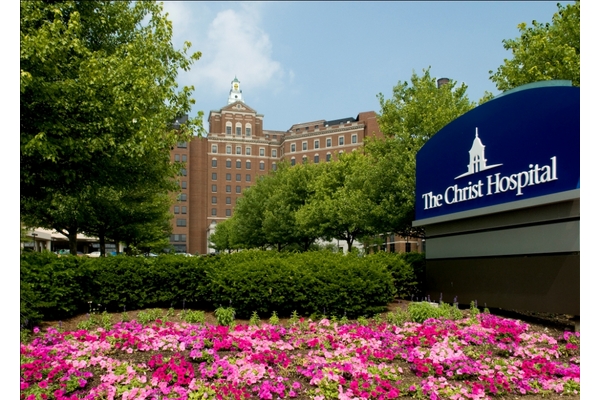
Christ Hospital, Cincinnati, OH

Christ Hospital, Cincinnati, OH

It had been three years since I’d seen Polly.

“Mom’s had a heart attack,” said Polly’s daughter. “She’s at Christ Hospital. There’s really no reason to visit. Most days she doesn’t even know me anymore.”

For eleven years we had shared the same church in Cincinnati. Polly had been chair of the Pastor Search Committee that invited me to candidate for the position of Pastor at Knox Presbyterian Church, and over the years the times together over cocktails and dinner had been frequent before we moved to Minneapolis.

I walk into her room in the cardiac care center expecting nothing.

I say her name. She opens her eyes and stares. “Well, Gordon Campbell Stewart, what are you doing here?”

“Well, that’s not the question. The question is what are you doing in a place like this?” We both chuckle, as we so often had done over something that had struck our shared funny bone.

She asks about the boys and how things are in Minneapolis. She’s clear as a bell for a good three minutes until she goes away to wherever people with Alzheimer’s go when they’ve had enough of consciousness.

Buried somewhere deep in the depths of Alzheimer’s are sacred memories that bubble up for a just a moment before they slip back down into the reservoir from which they’ve been drawn. When they bubble up, we know we are standing on holy ground. The bush is burning but it is not consumed.

The Elevator in the Memory Care Center

She rides the elevator in the memory care center every evening after dinner, hoping to get to the 3rd floor. There’s a button for the 3rd floor but, no matter how many times she pushes the button, the highest she gets is the second floor. (The third floor is locked off in the memory care center.)

She gets off on the second floor, greets the two men sitting in the chairs in the alcove, and shuffles down the long hallway. At the end of the hall, she does an about face and returns to the elevator, greeting us again as though she’s never seen us before. She mumbles something about the third floor. She pushes the elevator button. Elevator opens. She gets on. Elevator door opens. She gets off, greets us, mumbling something about the third floor, and repeats the pattern. Over and over again.

The two men in the alcove are consulting about their loved one in a room on the second floor who’s suffered a stroke, a TIA, or a heart attack. We don’t know which. All we know is that she has taken a turn for the worse during lunch. Our loved one is resting quietly after her pastor’s visit. She she had taken his face in her hands with clarity of mind enough for a smile and bantering humor. The prayer has taken her deep into some place no one can touch, come place of comfort the world cannot take away, some place maybe on the third floor.

The World in a Tunnel

Can the whole world shrink to the size of a walking path tunnel in Chaska, Minnesota?

On our morning walk, while Barclay sniffs his way along the path for signs of smaller creatures who might not have made it through the night, my eyes were drawn to the graffiti on the both sides of the tunnel. Boldly painted in black or red, the logos belonged to gangs or gang wannabes.

Eight years at the Legal Rights Center in Minneapolis left me we a knowledge of graffiti and tagging. Our defense attorneys sometimes defended “taggers”, self-proclaimed creative artists who used public space as their canvasses. Other times the graffiti was posted by a gang member to announce the gang’s claim to a block or a neighborhood. Often the gangs were competing for control. In that case, there were at least two “tags” and sometimes many: Latin Kings, the Crips, or the Gangster Disciples. The graffiti meant, “Don’t mess with us. We own this neighborhood.”

In Chaska this morning the tunnel walls were filled with gang symbols, most likely by kids who are gang “wannabes”, kids in a small city pretending to be gangsters the way my generation used to play cops and robbers or Cowboys and Indians. You couldn’t be both a cop and robber. You couldn’t be a cowboy and an Indian. You were either in the one gang or the other. We’re all in some kind of gang where we get our sense of identity and the security that comes with belonging to something.

Walking through the tunnel was like living for a moment in a microcosm of the world where the small town folks’ claims of ownership and the threats of violence mirror and replicate the power of greed, the lust for power and “the good life” that filters down from The Boss, Trump’s Tower, Wall Street, the Mall, Afghanistan, Iraq, and Washington, D.C. where the will to security and power is the motive force.

Meanwhile, six-month-old Barclay, the 10-pound puppy on my leash ignores the walls and sniffs the macadam for a mouse that has already died, unaware of handwriting on the walls of the superior species of his master.

– Gordon C. Stewart, Saturday morning, November 16, 2013

The Socks in the Kitchen Sink

Dirty sock washing

Dirty sock washing

She was washing her socks in the kitchen sink next to the hors d’oeuvres and the punch bowl after the ice skating party.

Marguerite was a bit different. Brilliant. Socially challenged. Single. The church group of singles and young marrieds was her closest thing to family. The family was used to the quirks, except for the newly married minister’s wife who’d never seen anything like this.

“What are you doing?”

“Washing my socks.”

“Why?”

“They’re wet.”

Recognizing that Marguerite was clueless, the 22-year-old minister’s wife quietly moved the splattered dish of hors d’oeuvres and the punch bowl to the long table nearby and saved her comments for later. Sometimes you have to stuff a sock in your mouth. Without room for every kind, a church is not a church.

Disclaimer: The picture is not from the church and it’s not Marguerite. It’s staged…I think.

A Tribute to Hope

In memory of Abigail Salyers
B.A, Math, 1963; PhD, Nuclear Physics, 1969.
(An Acrostic)

All A’s were on her report card,
But because she was pregnant she
Is told in 1959
Graduation will not be
Allowed. But her English teacher
Is on her side and fights to see
Learning will continue for her.

She stays in school. Mrs. Baker
Also helps her go to college
Late though it is in pregnancy.
Yes, she works, keeps her baby,
Even gets Phi Beta Kappa,
Receives “Honors” on her degree.
Serves others as a Professor.

– Steve Shoemaker, Urbana, IL, November 10, 2013

Abigail Salyers Obituary

Abigail A. Salyers died at 11:56 PM in Urbana, Illinois, Wednesday, November 6, 2013 at the age of 70. She was known worldwide as a research scientist, author and professor at the University of Illinois, Urbana-Champaign. Abigail attracted students from all over Illinois and the world. They appreciated her mastery of science, her intellect, her skills as a lecturer, mentor, and her unique sense of humor.

Abigail was born on December 24, 1942 in Louisville, KY to Robert K. and Loretta S. Salyers. Survivors include her life partner Jeffrey F. Gardner of Champaign, IL; a daughter Georgia E. Will of Seal Beach, CA; a brother Robert K. Salyers, of Louisville, KY; and sister Martha J. Salyers, of Ashville, NC.

Abigail began at Illinois in 1978 after an undergraduate degree in Mathematics (Phi Beta Kappa) in 1963 and a PhD in Nuclear Physics in1969 from George Washington University, Washington, D.C. After four years of teaching, research and tenure at St. Mary’s College in Maryland she switched fields by taking courses in Biochemistry and Microbiology and secured a second post-doctorate position in Biochemistry and Microbiology from Virginia Polytechnical Institute. She studied, taught and did research at VPI from 1973 to 1978.

She became the first female tenured professor in Microbiology at Illinois in 1983 and a full professor in 1988. While at Illinois, Abigail was named a University Scholar, Faculty Member of the Year in the College of Medicine, a member of the Center for Advanced Study and an Affiliate in the Institute for Genomic Biology. She received the Pasteur Award for Research and Teaching, the All-Campus Award for Excellence in Teaching in the University of Illinois Medical School and the Golden Apple Award for Medical School Teaching three times. She was named the G. William Arends Professor in Molecular and Cellular Biology from 2004 until she retired in 2012.

Among the books she authored are Bacterial Pathogenesis: A Molecular Approach, (by A. A. Salyers and Dixie Witt) first published in 1994 and now in its Third Edition. Bacterial Resistance to Antimicrobials, (by A.A. Salyers and co-authors) first published in 2002 and is now in its Second Edition. Revenge of the Microbes, (by A.A. Salyers and D. Witt) was published by 2005. It was a popular treatment of the latest scientific information in the fields of microbial pathegenesis and antibiotic resistance. It was intended for a broad audience.

Abigail was assisted in her research and publications by Research Associates Nadja B. Shoemaker, Gui Wang and over 30 Graduate Students working on their Ph.D.s and Masters Degrees in Microbiology at Illinois. Her 5 books, over 200 peer-reviewed research articles, reviews and chapters in books edited by others, were read by fellow microbiologists and biochemists everywhere. Her papers were cited widely (received over 600 citations) by other scientists.

Abigail was President of the 40,000 member American Society for Microbiology in 2001-2002. Her research was supported by the Department of Energy and the National Institutes of Health. In recognition of her standing in the scientific community she served several terms as a member of National Institutes of Health panels that reviewed research grants. She was awarded an an honorary Doctorate from ETH University in Zurich, Switzerland in 2001. One of Abigail’s main interests was the diversity of microorganisms on the planet. She was Co-Director of the Microbial Diversity Summer Course at the Marine Biological Laboratory in Woods Hole, MA for the Summers of 1995-1999. Abigail and her co-director, Ed Ledbetter, modernized the course. The course was extremely popular and attracted graduate students and even university faculty members with a wide range of backgrounds from all over the world. Students performed field work to enrich for and isolate a diverse array of microorganisms. They also used state of the art laboratory technology to study the biochemistry and genetics of the microorganisms isolated from the field.

Abigail was a committed teacher and taught classes in both Liberal Arts and Sciences and in the Medical School at the University of Illinois. She was awarded the 2009 National Graduate Teacher Award in Microbiology. She was also committed educating the public. For example she met with local postal workers to educate them about risks of anthrax during the alarm in 2001.

When asked about her own most influential teacher in an interview at an ASM meeting, Abigail surprised her radio questioner by saying it was a Wakefield High School (Arlington, Va.) English teacher. Mrs. Baker kept Abigail from being kicked out of school for being pregnant and helped her get into college. At that time, pregnant teenage girls were not often accepted by college administrators.

Memorials may be directed to the Development Office at the Marine Biological Laboratory, 7 MBL Street, Woods Hole, MA 02543 to establish an endowed lectureship or student scholarship for the Microbial Diversity Course in her name.

The school bus driver

The white cane moving back and forth in front of him belongs to seven-year-old Sam. The little guy moves cautiously, as the blind must do, hand-in-hand with a young woman I presume to be his mother, on his way into the Artist’s Reception.

Many of the people here on this Friday night are school bus drivers for District 112 School District. I’m wondering if perhaps Sam’s mother is a school bus driver.

Turns out that the featured artist, John Lince-Hopkins, is Sam’s school bus driver. John has invited Sam to see “Morning has broken: a Celebration of Light”, the collection of oil painting that now hangs on the walls of the Gathering Space at Shepherd of the Hill Presbyterian Church in Chaska where I serve as pastor.

It’s an evening of revelation about a very special group of people who know their passengers by name, quietly welcome each child every morning, say good-bye to them in the afternoon, and watch to be sure that children like Sam with his white cane make it safely across the street no matter what dark clouds may cross their paths that day on their slow, daily journey toward adulthood.

Most of my teachers’ names are long forgotten. But I remember my school bus driver. Why we called Mr. Thompson “Tommy” is a sign of the time in which I grew up when, sadly, school bus drivers did not command the respect that lawyers and doctors do. “Good morning, Gordon.” “Good morning, Mr. Thompson.” All these years later Mr. Thompson stands out in my memory. Bus drivers are special people. Perhaps because they call no attention to themselves, they stand out in our memories as signs of light.

John welcomes Sam in that special way some bus drivers have. “Would you like to see a painting?”

John, whose art has sold for thousands of dollars in Texas, Alaska, New Mexico, Wisconsin, and Minnesota, is inviting Sam to do what most landscape artists most dread. He’s inviting Sam to touch his paintings, to “see” the only way Sam can: by touch.

Lifted high so he can touch the oils of the cloud formations and the light of “Morning Has Broken: a Celebration of Light” Sam reaches out his hand. Very carefully he runs his fingers over the dry paint that allows him to see the light and contours of the clouds and landscapes of his bus driver’s paintings, more raptly attentive to the art than those of us who presume to see what we are viewing.

On this night John’s art is a bus ride into the light of morning breaking into the darkness of night. A seven-year-old boy named Sam, whose eyes have never seen light, gets to touch it for himself.

Morning has broken like the first morning, blackbird has spoken like the first bird. Praise for the singing! Praise for the morning! Praise for them, springing, fresh from the Word!”