This post is written by John Buchanan, Pastor Emeritus, Fourth Presbyterian Church, Chicago.
Lectio Divina
Reply

This post is written by John Buchanan, Pastor Emeritus, Fourth Presbyterian Church, Chicago.
I’ve been silent for awhile, absorbed in preparing a manuscript for submission, and the site will remain pretty silent over the next three weeks.
Between now and then, this sermon on YouTube was preached last Sunday at Shepherd of the Hill, the wonderful congregation I’m privileged to serve in Chaska, MN.
It is based on the 51st Psalm (selected) and sees the psalm in light of a rite for the cleansing of a leper in the Book of Leviticus in which the leper presents two birds.
1 Have mercy on me, O God,
according to your steadfast love;
according to your abundant mercy
blot out my transgressions.
2 Wash me thoroughly from my iniquity,
and cleanse me from my sin.
3 For I know my transgressions,
and my sin is ever before me.
4 Against you, you alone, have I sinned,
and done what is evil in your sight,
so that you are justified in your sentence
and blameless when you pass judgment.
…
6 You desire truth in the inward being;
therefore teach me wisdom in my secret heart.
7 Purge me with hyssop, and I shall be clean;
wash me, and I shall be whiter than snow.
8 Let me hear joy and gladness;
let the bones that you have crushed rejoice.
9 Hide your face from my sins,
and blot out all my iniquities.
10 Create in me a clean heart, O God,
and put a new and right spirit within me.
11 Do not cast me away from your presence,
and do not take your holy spirit from me.
12 Restore to me the joy of your salvation,
and sustain in me a willing spirit.
13 Then I will teach transgressors your ways,
and sinners will return to you.
14 Deliver me from bloodshed, O God,
O God of my salvation,
and my tongue will sing aloud of your deliverance.
15 O Lord, open my lips,
and my mouth will declare your praise.
16 For you have no delight in sacrifice;
if I were to give a burnt offering, you would not be pleased.
17 The sacrifice acceptable to God is a broken spirit;
a broken and contrite heart, O God, you will not despise.

Nathan accusing David
“Behold, You seek truth in the inward being;
therefore teach me wisdom in my secret heart.” (Psalm 51:6)
What is the secret heart?
Is it the deepest place in us, the place where God is: the equivalent or synonym for “the inward being” – a poetic parallelism of Hebrew poetry?
Or is it, perhaps, the secret place where we hide from God: the hiding place where we go off to a different heart than the Divine heart?
Or could it be both synonym and antonym at the same time?
_______
Psalm 51 is a prayer attributed to David. It is not a quiet prayer. It is a wrenching, sobbing prayer, the words tumbling from David’s mouth in halting phrases and stammers with tears flooding his eyes and streaming down his face like rivers.
David’s secret heart is dirty and he knows it. He cannot wash the stain of blood from his hands. Nathan has exposed his sin. Nathan’s story-telling has seduced David into the trap where his secret is exposed to his inner being. Nathan has baited David with a story that has aroused David’s anger. “As the LORD lives,” said David to Nathan, ” the man who has done this deserves to die!” And Nathan then said to David, “YOU are the man.”
“Wash me thoroughly from my iniquity,” cries out David in Psalm 51, “and cleanse from my sin! For I know my transgressions, and my sin is every before me.”
It is a scene straight from Shakespeare’s Macbeth:
“Out, damn spot! OUT, I say…. all the perfumes of Arabia will not sweeten this little hand. Oh, oh, oh!”
_____
Hebrew Psalms are like that. The are not sanitized. They plunge the reader into the conflict between the reader’s own inmost being, the true secret heart, you might say – the heart that pumps life into us – and the secret heart of our own flight from truth and goodness, the heart of deception and self-deception.
Why is David crying out? What has he done? What is the sin that is ever before him, the blood he can’t wash from his own hands?
Psalm 51 comes in response to an accusation that has exposed the bloody behavior his secret heart heart has produced. It is Nathan, David’s commander on the battlefront, who confronts him with the truth.
Nathan, relying on a fresh report from the front line of battle, tells David that Uriah, the King’s next door neighbor, a man of valor and impeccable loyalty to King David, whom David had sent off to war to secure Uriah’s wife Bathsheba for himself, is dead! His blood is on David! Nathan has spoken the truth to power. And the way that Nathan has spoken it to the King has taken him into the deepest parts that are at war within himself.
There is no wisdom in David’s secret heart. There is only treachery.
“Create in me a clean heart, O God,
and put a new and right spirit within me.
Cast me not away from Your presence,
and take not Your Holy Spirit from me.”
“Purge me!” cries David. Imagine Richard Burton at his most dramatic. “Purge me with hyssop, and I shall be clean; wash me and I shall be whiter than snow!”
_____
What’s hyssop?
Hyssop is the foliage of an aromatic plant named in the Passover story (Exodus 12:21-27) and used in the cleansing of a healing and cleansing of a leper (Leviticus 4:51).
The rite of cleansing involves centers on two small birds. One bird is killed. The other bird is washed in the blood of the other under the flow of water and the sweetness of hyssop. The one bird dies. The second bird lives.
“Thus he (the priest) shall cleanse the house with the blood of the bird, and with the running water, and with the living bird, and with the cedarwood and hyssop and the scarlet stuff; and he shall let the living bird go out of the city into the open field; so he shall make atonement for the house, and it shall be clean.” (Lev. 14:52-53)
“Deliver me from bloodguiltiness, O God, the God of my salvation” cries Uriah’s killer curled up in a ball, hoping against all hope, “and my tongue will sing aloud of Your deliverance.”
_____
David in Psalm 51 is both birds.
He is the one who deserves to die. Yet he is also the one who lives. He lives not because of the heart that had conspired against Uriah and betrayed his own inward being – “Against You (God) only have I sinned…” (Ps. 51:4). He lives because there is more mercy in God (the inward being) than there is sin in him.
“The sacrifice acceptable to God,” he concludes, the tears still streaming down his face, but calmer now, “is a broken spirit; a broken and contrite heart, O God, You will not despise.”
His body quivers as he imagines himself as the bird released into the open field by mercy alone, “according to Your steadfast love; according to Your abundant mercy.” (Ps. 51:1) The inner being – his Deeper Being – has taught his released him for wisdom.
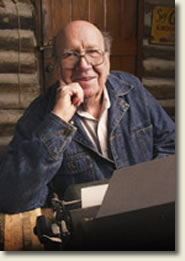
Will Campbell
Will Campbell was that rare person of integrity who seemed to fulfill the hard calling described once by his friend William Stringfellow – “to be the same person everywhere all the time” – and his different places still blow the mind.
He was idiosyncratic. Who else would or could march at the forefront of the Civil Rights Movement in the 1950s and ‘60s, once the law was changed, turn his ministry to sipping whiskey with the Good Ol’ Boys on the front porches of the Ku Klux Klan?
Campbell was a son of the Deep South, a white Southern Baptist preacher raised in Mississippi, who betrayed his white privilege as a matter of Gospel discipleship. He became one of the closest friends of the youth Rev. Dr. Martin Luther King, Jr., the only white person present at the founding of the Southern Christian Leadership Conference that led the charge for Civil Rights in America. He was trusted that much.
His life was threatened repeatedly. He gained national prominence as a field worker for the Department of Racial and Cultural Relations of the National Council of Churches, the nation’s largest ecumenical council that suffered heavy criticism from anti-civil rights forces across the country, but especially in the Deep South. The National Council of Churches and Will Campbell were to their critics what the KKK was to those who worked to eliminate segregation in America.
When the nine black school children walked through hostile crowds to integrate the public school system in Little Rock, Arkansas, Will Campbell was one of four people at their side.
He became Director of the Committee of Southern Churchman, a position he used to promote racial reconciliation, his vocation until the day he died.
With the passage of the Civil Right Act, the man who spent his ministry to help win freedom for blacks did something no one could have imagined. He chose to re-direct his ministry to the new lepers of society, the defeated hooded enemies of integration, the Ku Klux Klan.
No one but Will Campbell would have done this, and few others could have done this. But he did. He became known as the chaplain to the KKK. Campbell wrote in Brother to a Dragonfly, one of 26 publications that bear his name:
“I had become a doctrinaire social activist without consciously choosing to be. And I would continue to be some kind of social activist. But there was a decided difference. Because from that point on I came to understand the nature of tragedy. And one who understands the nature of tragedy can never take sides.”
Will Campbell was not a hater. He was a reconciler who loved people. All kinds and conditions of people, even his ‘enemies’. He was the same person everywhere all the time.
He confused his critics – first the Right and then the Left – by insisting that his soul did not belong to any team – racial, political, religious, cultural. It belonged to the Kingdom of God. There was only one team, and that was the family of ALL God’s children everywhere. Compassion came first in his hierarchy of values. Compassion led him to campaign for justice in the Civil Rights Movement, and compassion led him to sip whiskey with the cross-burners in the rocking chairs on their front porches. His was a ministry of reconciliation, a living, idiosyncratic expression a bold declaration of the biblical gospel that God was in Christ reconciling the world to God’s own Self.
The notice of Will’s death (June 3, 2013) at the age of 88 in Nashville, Tennessee reminded me of just how hard it is to be a disciple of Jesus, how hard it is to love my neighbor as myself, especially when the neighbor is the enemy of my own claims to righteousness. Would that all of us were as idiosyncratic as Will.
New Zealander David Earle of “In the Company of Hysterical Women” published this today. It features actor Patrick Stewart addressing the issue of domestic violence. Click
If only church leaders could speak like this ….
to read David’s post.
 The above letter appeared publicly online today, Saturday, May 25 2013.
Usually our sins are less egregious and are such that we never do anything to make right our wrong. Which is what prompts this post.
Apologies to my friend Steve, the author of the poem in the Views from the Edge’s most recent post (“Beyond Fundamentalism”) for misprinting the title of his poem. Strange how our eyes are conditioned to see what we expect to read. Knowing Steve’s background, I didn’t expect to see the word ‘conversion’, so my eyes read it as ‘conversATion’. Here it is again under the correct title. And, Steve, this is the last I want to hear about this! 🙂 What are friends for if not to forgive by the wider, deeper, more than fact truth that knocked the Apostle Paul off his horse?
CONVERSION AT SEMINARY
Four years Wheaton College tried
to make a fundamentalist
Christianity the first
and last thought on my searching mind.
Then a liberal McCormick
Dean Filson took a chance on me–
I learned Bible truth could be
much wider, deeper, than mere fact:
changing this world was our call!
From civil rights to stopping war,
social justice cried for more
of faithful love, that holy force
learned by the Apostle Paul
when Jesus knocked him off his horse.
– Steve Shoemaker, Urbana, IL, May 25, 2013
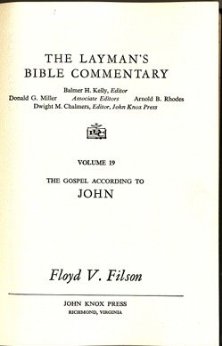
The influence of New Testament scholar Floyd Filson
Four years Wheaton College tried
to make a fundamentalist
Christianity the first
and last thought on my searching mind.
Then a liberal McCormick
Dean Filson took a chance on me–
I learned Bible truth could be
much wider, deeper, than mere fact:
changing this world was our call!
From civil rights to stopping war,
social justice cried for more
of faithful love, that holy force
learned by the Apostle Paul
when Jesus knocked him off his horse.
– Steve Shoemaker, Urbana, IL, May 25, 2013
Dean Floyd V. Filson was an internationally renowned New Testament scholar. A prolific writer, Filson published his own original New Testament commentaries and articles in scholarly journal, but he did not operate in a silo. He collaborated with co-authors and co-editors Oscar Cullman, G. Ernest Wright, and other world-class scholars. He also translated Rudolph Otto’s The Kingdom of God and the Son of Man, a book which, like Otto’s The Idea of the Holy represented a landmark shift in the understanding of God and of Jesus’s own consciousness. But more than a scholar, at least for the likes of Steve, was his unfailing kindness and belief in us. If he was aware of his stature in the world of academia, it was never apparent in the classroom or in his office. He was the definition of Christian humility. A ready smile, gentleness, respect for others, and a hearty “Good Morning!” were his signatures.
Monday six McCormick grads on whom Dean Filson took a chance will gather at the seminary for our annual Gathering. Steve and Don Dempsey were Class of ’68; Wayne Boulton, Harry Strong, Bob Young and I were the Class of ’67.

The Gathering minus Steve
Years ago four of us cut Professor Boling’s Hebrew class to take our homiletics (i.e., preaching) professor, Herb King, to the Opening Day Cubs game at Wrigley Field. We were VERY serious students!
In preparation for this year’s annual gathering, we’ve been reading John Sexton’s marvelous book, Baseball as a Road to God: Seeing Beyond the Game, and we’ll return to Wrigley Field where two of the Old Dogs’ hearts are perpetually broken. Steve Shoemaker, one of the Old Dogs, sent this to us this morning.
Seminary Reunion
Here we would each learn to preach
a sermon–going from the Greek,
Hebrew, to the common speech
of folks today. Here we would seek
answers to all questions: old,
or new, conundrums from a child,
screams of pain from a grey head
that’s waiting for a grave. Reviled
scorned, by former college friends
who now run businesses, our mild
Biblical response pretends
to follow One who like a lamb
went to the slaughter. We damn
ourselves in not forgiving them.
This year we lost one of the original seven old friends, Dale Hartwig, who grew old too soon and faster than the rest of us. John Sexton reminds us of the difference between beginnings and endings, and the need for a vantage point:
“While the teams and players on the field may change each autumn, the game’s evocative power is continuous. Opening Day in the spring and the World Series in the fall are the bookends of baseball’s liturgical time…. Vantage point is critical.”
– Baseball as a Road to God: Seeing Beyond the Game, Penguin Group, NY, NY, 2013.
Everyone should be so blessed as to have friends like these and a vantage point of continuing thanksgiving.

Akim Camara
“Pie Jesu” means “Merciful/kind Jesus”; in its context in the Latin Requiem Mass, it calls on “the Lamb of God” to show mercy to the suffering. Kindness and mercy are at the heart of spirituality.
The text has an interesting history. The “Pie Jesu” is an ancient motet based on the last couplet of the “Dies Irae” (“Day of Wrath”) that was part of the old Latin Requiem Mass. The Vatican II liturgical reforms removed the “Dies Irae” from the Mass in order to emphasize Christian hope. A number of composers, among them Andrew Lloyd Webber – influenced by Gabriel Faure’s “Pie Jesu” – gave new musical expression to the prayer: “Kind/merciful Lord Jesus, grant them rest. Kind/merciful Lord Jesus, grant them rest eternal.” BTW, Faure’s Requiem includes the “Dies Irae” which has become part of the Good Friday period of meditation at Shepherd of the Hill, not because God is wrathful, but because we so often have reason to cry out “Libera Me!” from the depths of terror and desolation.
 Views from the Edge