“The characteristic place to find Christians is among their enemies. The first place to look for Christ is in Hell.” – William Stringfellow (1928–1985), author, My People Is the Enemy.
These aren’t just words. After Harvard Law School, Constitutional attorney Bill Stringfellow moved into an East Harlem tenement apartment on the block the New York Times then called the “worst” in the city, turning down lucrative NYC corporate law firm job offers. The first of his many books, My People Is the Enemy – a theological reflection on racism and poverty in America- opens with an unusual sentence:
“The stairway smelled of piss.”
All these years later, Stringfellow’s words sound strange to many Christians and non-Christians alike who see the Christian life as the search for moral purity and the climb into a Hell-free afterlife. You want to meet Christ? According to the author of An Ethic for Christians and Other Aliens in a Strange Land, Christ will meet you from among your enemies and in the Hell of human suffering racism and wealth create.
The word for the day was suggested by a former Kindergarten classmate. Carolyn, a retired university music librarian, brought Semiotics to our attention after reading yesterday’s posts on hermeneutics. She knew the word but had had to look it up at least seven times, but could no longer remember what it meant.
The request took us online to the Encyclopaedia Britannica entry on Semiotics.
Semiotics, also called Semiology, the study of signs and sign-using behaviour. It was defined by one of its founders, the Swiss linguist Ferdinand de Saussure, as the study of “the life of signs within society.” Although the word was used in this sense in the 17th century by the English philosopher John Locke, the idea of semiotics as an interdisciplinary mode for examining phenomena in different fields emerged only in the late 19th and early 20th centuries with the independent work of Saussure and of the American philosopher Charles Sanders Peirce.
Click HERE for the Encyclopaedia Britannica‘s one page entry, ending with references and links to the influence of Semiotics in the fields of aesthetics, anthropology, psychoanalysis, communications, and semantics. The Britannica doesn’t mention hermeneutics, although the relation between them is that of kissing cousins. Both understand us humans as meaning-makers who create meaning by means of signs and language.
Most students of hermeneutics and semiotics disagree with religious fundamentalism’s view that meaning already exists and that the human task is to find it, as in the statement often made at times of death that “God has a better plan.” The role of the divine, if one supposes it, is as creative Spirit beneath the human spirit, always creating, never finished, never pre-determined. Scholars in theology, philosophy, anthropology, and linguistics can no longer do their work honestly without going through the Semiotics door of Claude Lévi-Strauss, Jacques Lacan, Michel Foucault, and Jacques Derrida.
A BIBLICAL FATHER-SON STORY: ZECHARIAH & JOHN THE BAPTIST
John the Baptist
Ever wondered why John comes out of nowhere with a fiery message?
He has a bone to pick. Why? With whom? What’s his story?
The Eastern Orthodox Christian tradition preserves a story about John’s father, Zechariah, a Temple priest, sending his wife, Elizabeth, and their son, John, into hiding. Zechariah hides his son to protect him from Herod’s “Slaughter of the Innocents” by which all males below the age of two were to be killed following rumors of a newly-born king, a threat to Herod’s rule.
According to the story told by The Infancy Gospel of James [the mid-Second Century C.E.], John and Elizabeth remain in hiding – far away from their husband and father, Zechariah – until John is five or six years old when Zechariah risks visiting their hiding place. The result is the brutal murder of Zechariah by Herod’s soldiers.
As the son of a Temple priest, John descended from the priestly lineage of Aaron. John was destined to be a Temple priest. Father-son dynamics become more difficult when the father is a public religious figure. Zechariah’s son sounds like an angry preacher’s kid.
When [John] saw the Pharisees and Sadducees coming to be baptized, he said to them, "You brood of vipers, who warned you to flee from the wrath to come? Bear fruit that befits repentance, and do not presume to say to yourselves 'We have Abraham as our father ....'" (Mt. 3:7-9a).
The Pharisees were lay people with a more liberal religious bent than the Sadducees. The Sadducees were Temple authorities and Temple supporters, the folks who aligned themselves with John’s father Zechariah and a conservative reading of the Torah. The Pharisees and the Sadducees were in conflict during the time of John and Jesus. Only the Pharisees survived the later destruction of Jerusalem and the Temple in the Roman-Jewish War of 70 C.E.
By the time the Gospels are written, the Temple had been destroyed. So we have the Temple priests and their supporters, the Sadducees, and John the Baptist in the Gospel of Matthew scolding both the Pharisees, who will carry on their tradition without accepting one of their likely members, Jesus of Nazareth, as the awaited Anointed One (Messiah), and the Sadducees who have disappeared into history.
Whether the Orthodox tradition and The Infancy Gospel of James are taken as historical fact or mythic truth, John’s real fight was with his father and the Sadducees who had compromised Jewish identity and integrity by their accommodations to Rome.
John is certain, bold, and in-your-face. His father, Zechariah, according to Matthew’s Gospel, had doubted the news of John’s conception. As a result of his doubt, Zechariah was struck dumb. He remained unable to speak until Elizabeth had named their son ‘John’, at which point his mouth was opened. “Yes,” said Zecahariah, “his name is John.”
Zechariah had been a doubter; John was no doubter. Zechariah sent John into hiding. The John who returned from safety was no hider. John became a shouter who minced no words. Far from Jerusalem and the Temple, out in untamed space by the Jordan River, he took his stand for the return of his people from the false choice of the pious laity (the Pharisees) and his father’s priestly class (the Sadducees): “You brood of vipers!”
Baby vipers were said to eat their mother’s stomachs. Israel was the Mother whom the Pharisees and Sadducees were eating from the inside out.
John wanted nothing to do with the killing of his Mother or with those who had killed his father. In the interest of protecting his Mother from the vipers, he had run from the Temple into the wilderness, returning to the place where his Mother, Israel, had been born after the Exodus. He did not go into the wilderness to hide. He went out to rescue his Mother from being eaten by her children. When the vipers arrived, he shouted in ways his mute father never did. Yet, in the end he died by the same hands as his father when Herod delivered his head to Salome on a platter.
Like father, like son. His younger cousin Jesus carried on.
Three gifts are mentioned in the story of the Three Kings, aka the Wise men, and the Magi: gold, frankincense, and myrrh.
Moments ago, on Epiphany, three seminary friends arrived at Steve and Nadja Shoemaker’s home on the prairie near Urbana, Illinois. It’d be a stretch to call Harry, Bob, and Don the Three Kings or the Wise Men. More like three wise guys, not from the East, but from the West and North – Corsicana, Texas; Prescott, Arizona; and Highland Park, Illinois – bringing a lighter touch to Steve, the patient with the terminal diagnosis of pancreatic cancer.
Harry, the musician among them, will lead them in his own freshly-written lyrics to the tune of the Epiphany hymn “We Three Kings” – a trio of bass and baritone voices – bringing laughter to the room Kay and I can hear all the way in Minnesota.
Many years ago, a similar thing happened in New York City where Episcopal lay theologian William (Bill) Stringfellow was in Surgical Intensive Care following near fatal pancreatic surgery.
Entering the room following the surgery, Stringfellow’s close friend Bishop James A. Pike exclaimed, “Well, I’m a bishop. I should do something!” He promptly disappeared. Moments later he returned with Bill’s attending nurse and a large bottle of petroleum jelly. He consecrated the jelly, declaring to the nurse with typical Pike humor that “this substance has now been set apart for uses other than those ordinary and familiar for Vaseline.”
“Taking a thumbful of this freshly made urgent, he came to the bedside and anointed me,” wrote Stringfellow, “signing my forehead with the cross, and saying:
“‘I anoint you in the name of God; beseeching the mercy of our Lord Jesus Christ, that all your pain and sickness of body being put to flight, the blessing of health may be restored to you. Amen.'” [William Stringfellow, A Second Birthday, Doubleday & Company, 1970]
The bishop’s prayer of unction for the sick was near verbatim from The Book of Common Prayer of the Episcopal Church.
When the surgeon told the patient that his recovery was spectacular, Stringfellow replied, “That doesn’t surprise me at all. I was anointed by Bishop Pike! – what else would you expect?”
This Day of Epiphany, I hope the Three Wise Men, Steve and Nadja may enjoy the same fellowship, humor, and prayer all these years later. They bring no gold, frankincense or myrrh, but everyone in the Urbana gathering tonight knows that when the end is in sight, only the frankincense, the myrrh, and telling stories only dear friends call tell are appropriate. The third gift – gold – no longer matters, if it ever did!
Gordon C. Stewart, Chaska, MN, Epiphany, Jan. 6, 2016
Ever wondered what an authentic disciple of Jesus might look like in 2016 following a year of deadly gun violence? Today is Epiphany when Christians celebrate the manifestation of Christ to the gentiles, remembering the Wise Men who presented their gifts to the Prince of Peace.
President Obama, Jan. 5, 2016
The Psalter Reading for Epiphany: Psalm 72:1,2,7-14 (NRSV)
Give the king your justice, O God, and your righteousness to a king’s son.
May he judge your people with righteousness, and your poor with justice.
In his days may righteousness flourish and peace abound, until the moon is no more.
May the kings of Tarshish and of the isles render him tribute, may the kings of Sheba and Seba bring gifts.
May all kings fall down before him, all nations give him service.
For he delivers the needy when they call, the poor and those who have no helper.
He has pity on the weak and the needy, and saves the lives of the needy.
From oppression and violence he redeems their life; and precious is their blood in his sight.
Gordon C. Stewart, Chaska, MN, January 6, 2016, The Day of the Epiphany on the Western Christian liturgical calendar.
Talking openly about death is a rare thing. We don’t like talking about it. We prefer it go away and stay away, like rain: “Rain, rain, go away. Come again some other day.”
When someone dies, it’s often said they’ve passed, passed away, or passed on, a sentiment dating back to a Greek idea of the immortality of the soul. It was/is assumed the soul at death is set free from its mortal cage to live forevermore.
The likes of Barbara Brown Taylor, of whom I consider myself one, have different idea. “Matter matters,” she says. Flesh and blood matter. Flesh, blood, and matter matter. Christians, following the older view of the Hebrew Bible, do not share the belief in a part of us – a soul – that survives our mortal frame. Instead, we profess a curious hope that affirms the essential goodness of corporal existence. Belief or hope in the resurrection of the body may seem even stranger than the immortality of the soul.
I have no more reason to believe in the resurrection of the body than I do to believe in an immortal soul. Watching the life go out of my dogs, I did not imagine some invulnerable part of them leaving their bodies to pass on to some other state of being. They were dead. I cried. I grieved. I mourned their loss. I never thought I would see them again. If they, or we, had a future, it seems more natural, so to speak, to think of them in their bodies all over again.
But which body would it be? Would Maggie, our West Highland White Terrier-Bichon Frise, be the playful pup or the one with the tumor on her hip? Would I be the 73 year-old me, the new-born me, or the teenager with the raging hormones?
Passing away has always made more sense to me than passing or passing on. “You are dust and to dust you shall return” makes better sense to me. The Earth will go on, as will those I love … for a time … but not forever, so far as any of us really knows. I say the Nicene creed on Sundays and ponder what it means to say “I look for the resurrection of the body and the life of the world to come.” The world to come, so far as I can tell, is the Earth where Cecil the lion doesn’t get killed by a dentist, and the lion and the lamb…and the dentist…lie down together in peace and hurt one other no more.
My friend Steve talks openly about death and dying. “I’m dying,” he says, not with a morose or maudlin sensibility but as a fact. It’s not a great surprise to him. Would he and we prefer the rain to go way and come back some later day? You bet. But it won’t, and even it if would, it would be back some other day. There’s great grace in the acceptance of death and the maturity to speak of it aloud, enjoy old friends when one can, laugh and cry and hug and kiss those one loves.
That we would want something more or fear death as the end is part of being human. The time of death is not time to debate philosophy or theology. It’s time for compassion, and for grace and courage to recognize our creatureliness – the distinction between every creature and the Creator, mortal life and the Immortality, the finite and the Eternal.
INTRO: Steve just posted on his CaringBridge site: “Awoke clear-headed, with more energy than in weeks. Just wrote this poem”:
I do not know how to die. No words left to say good-bye.
The cancer spread everywhere; Family and friends showed they care.
Will I find a peaceful death? Or fight for each gasping breath?
Be here now? To future bow…
Steve Shoemaker, Urbana, IL, Dec. 29, 2015
NOTE:
Biggest and smallest Dogs
My friend and Views from the Edge colleague, Steve, was diagnosed mid-November with terminal pancreatic cancer. For years death and dying have been a topic of conversation among the seminary friends who keep changing our group’s name. At first we called ourselves The Chicago Seven. After Dale died, we were six. We became The Gathering. More lately we call ourselves The Dogs. Steve at 6’8 is the biggest Dog. He’s always said “Big dogs go first.”
A month ago Steve came to Minnesota for a consultation at the Mayo Clinic. On a Thursday, Kay and I visited Steve and Nadja in their small room at the Kaylor Hotel across the street from the Clinic. While Nadja and Kay began to discuss the procedures Steve would undergo the next day, Steve stuck his fingers in his ears and smiled at me. I’m with Steve, I’d rather just do it when it’s time. I’d rather not know. I wonder if it’s a guy thing.
Steve wrote “The Last Septet” after his second Chemo treatment back in Illinois, a treatment meant to give him more time with no illusions about the outcome. To live forthrightly without illusion is a beautiful thing. Meanwhile, the other five Dogs watch and pray, growl and snarl, curse the cancer, mourn his demise, remember our shared mortality and the line from the Presbyterian Church (USA) ABrief Statement of Faith: “In life and death we belong to God.”
INTRO: This piece uses the Hebrew terms for man (atham) and woman (athama), descriptions that remind Hebrew readers that human beings are of the dust, of the earth.
The Exchange
“Did God really say you will die if you eat the fruit of the tree in the middle of the garden, the tree of the knowledge of good and evil?” asked the snake of the woman beside the Elysian tree.
So she did eat and so did he – Atham and Athama, the earthlings – wishing to be like God, mocking death by dividing evil from the good down below where a snake exchanged a hiss for a kiss.
“Cursed are you among all animals,” said God. “On your belly you shall go, eating dust along your way. Atham and Athama will bruise your head, and you shall bruise their heel.”
Then the two-legged creatures knowing good and evil, dividing the Garden between sheep and goats, stumbled at a nip on the heel and heard a hiss: “You, too, are dust, and to dust you shall return.”
Of the forbidden fruit of that one tree all earthlings still do eat despite the voice from the tree that tamed the snake, exchanging a kiss for the hiss: “Forgive them, for they know not what they do.”

 These aren’t just words. After Harvard Law School, Constitutional attorney Bill Stringfellow moved into an East Harlem tenement apartment on the block the New York Times then called the “worst” in the city, turning down lucrative NYC corporate law firm job offers. The first of his many books, My People Is the Enemy – a theological reflection on racism and poverty in America- opens with an unusual sentence: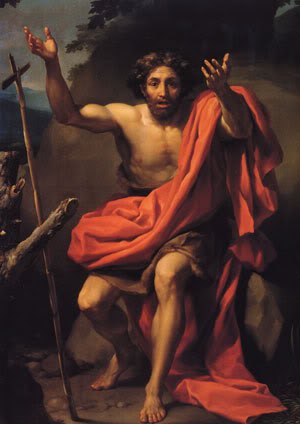


 Views from the Edge