The Prophets: Parents of Newtown

The parents of the murdered children of Sandy Hook Elementary School in Newtown are back in Washington, D.C today and tomorrow. They are meeting with our nation’s law-makers.

Like Jeremiah, “the Weeping Prophet” who cried over the plight of his people, these mourning parents are courageous spokespersons for sanity, compassion, and an end to America’s love of violence.

May the Spirit that inspires these grieving parents to leave home for meetings in the center of American power and public scrutiny stir the consciences of the Congressional Representatives and Senators with whom they meet.

A friend brought to my attention “Thank God, I’m Alive” on the latest tragedy of gun violence to garner national attention in Santa Monica, California.

As Moses said when Joshua wanted to silence two people (Eldad and Medad) who were speaking out without authorization: “I wish that all God’s people were prophets!” (Book of Numbers 11:29, Torah, Hebrew Bible).

I invite your prayers and well wishes for the parents of Newtown as they carry forward the prophetic tradition. Let no one silence you. Speak the truth with love, and let the Spirit do its work.

Please share your comments.

Let sleeping dogs lie

Poet and guilt-free friend

Poet and guilt-free friend

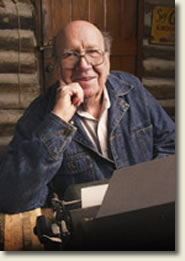
EDITORIAL NOTE: The author of this poem is the bald one, not the one with all the hair. He was taking a nap during the daytime because he couldn’t sleep at night.

AWAKE

I do not want to be awake. I wish,
instead my racing mind would shift into
a neutral gear, spin to a stop, rehash
no more today/tomorrow/yesterday.
I meditate, I take slow breaths, I say
the very first prayers that I ever knew…
I try to sing myself a lullaby,
but silently, so not to wake nearby
a gently sleeping soul who has it seems
a clear conscience and peaceful dreams.

– Steve Shoemaker, Urbana, IL, sent by email to Editor @12:25 a.m., June 11, 2013

EDITOR’S NOTE: Albert Camus said, “A guilty conscience needs to confess. A work of art is a confession.”

Thanks you, Steve, for the art.

Remembering Will Campbell

Will Campbell

Will Campbell

Will Campbell (1924-2013) is unforgettable. Beyond unusual, he was idiosyncratic. In death, he calls us to the deeper selves we so easily lose.

Will Campbell was that rare person of integrity who seemed to fulfill the hard calling described once by his friend William Stringfellow – “to be the same person everywhere all the time” – and his different places still blow the mind.

He was idiosyncratic. Who else would or could march at the forefront of the Civil Rights Movement in the 1950s and ‘60s, once the law was changed, turn his ministry to sipping whiskey with the Good Ol’ Boys on the front porches of the Ku Klux Klan?

Campbell was a son of the Deep South, a white Southern Baptist preacher raised in Mississippi, who betrayed his white privilege as a matter of Gospel discipleship. He became one of the closest friends of the youth Rev. Dr. Martin Luther King, Jr., the only white person present at the founding of the Southern Christian Leadership Conference that led the charge for Civil Rights in America. He was trusted that much.

His life was threatened repeatedly. He gained national prominence as a field worker for the Department of Racial and Cultural Relations of the National Council of Churches, the nation’s largest ecumenical council that suffered heavy criticism from anti-civil rights forces across the country, but especially in the Deep South. The National Council of Churches and Will Campbell were to their critics what the KKK was to those who worked to eliminate segregation in America.

When the nine black school children walked through hostile crowds to integrate the public school system in Little Rock, Arkansas, Will Campbell was one of four people at their side.

He became Director of the Committee of Southern Churchman, a position he used to promote racial reconciliation, his vocation until the day he died.

With the passage of the Civil Right Act, the man who spent his ministry to help win freedom for blacks did something no one could have imagined. He chose to re-direct his ministry to the new lepers of society, the defeated hooded enemies of integration, the Ku Klux Klan.

No one but Will Campbell would have done this, and few others could have done this. But he did. He became known as the chaplain to the KKK. Campbell wrote in Brother to a Dragonfly, one of 26 publications that bear his name:

“I had become a doctrinaire social activist without consciously choosing to be. And I would continue to be some kind of social activist. But there was a decided difference. Because from that point on I came to understand the nature of tragedy. And one who understands the nature of tragedy can never take sides.”

Will Campbell was not a hater. He was a reconciler who loved people. All kinds and conditions of people, even his ‘enemies’. He was the same person everywhere all the time.

He confused his critics – first the Right and then the Left – by insisting that his soul did not belong to any team – racial, political, religious, cultural. It belonged to the Kingdom of God. There was only one team, and that was the family of ALL God’s children everywhere. Compassion came first in his hierarchy of values. Compassion led him to campaign for justice in the Civil Rights Movement, and compassion led him to sip whiskey with the cross-burners in the rocking chairs on their front porches. His was a ministry of reconciliation, a living, idiosyncratic expression a bold declaration of the biblical gospel that God was in Christ reconciling the world to God’s own Self.

The notice of Will’s death (June 3, 2013) at the age of 88 in Nashville, Tennessee reminded me of just how hard it is to be a disciple of Jesus, how hard it is to love my neighbor as myself, especially when the neighbor is the enemy of my own claims to righteousness. Would that all of us were as idiosyncratic as Will.

If only church leaders could speak like this …

New Zealander David Earle of “In the Company of Hysterical Women” published this today. It features actor Patrick Stewart addressing the issue of domestic violence. Click

If only church leaders could speak like this ….

to read David’s post.

I’m not going to take it anymore!

A dear friend sent an email about cause-weariness. She’s not alone in suffering an assault of email alarms and solicitations. She’s very conscientious and exhausted. I responded:

I, too, find myself increasingly angry. And that’s not a good thing. It’s right, but it’s not good for my soul. You have always been a tender, gentle, loving, musical person with that unique sense of humor, and this hits you hard, maybe harder than it hits me. I, too, am weary of all the emails and solicitations. They, too, have come to make me angry. “Just leave me alone!!!” I say to myself…and… out loud sometimes. “I’m not on your team. I’m not on anybody’s team. I don’t like teams. And stop treating me like one of the President’s best friends! He doesn’t know me from the man-in-the-moon, and, NO, you can’t get another $100 from me by peddling a raffle for lunch with the president! I don’t like gambling. Never have. Never will. Giving should be giving, not for purposes of getting.”

Anyway, you get my point.

I am torn between being a responsible disciple and citizen – staying abreast of current events and looking deeply into their meaning and the powers and principalities behind them – and living in the joy to which we are called.

I don’t know what to do either. I do know that you are one of God’s very precious children with a love of music and the arts. Listen to LOTS of music and spend time with beauty to off-set the ugliness.

Sober and Drunk

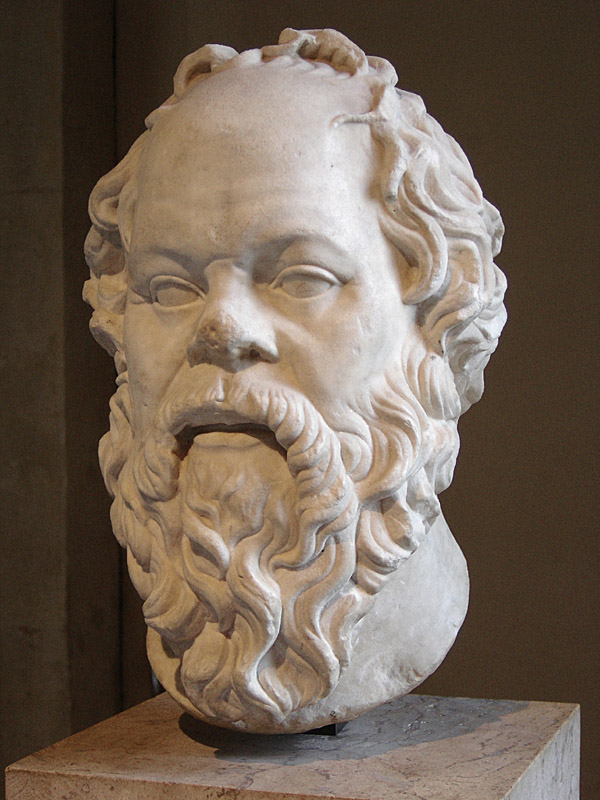
Socrates, The Louvre

Socrates, The Louvre

Is it true Socrates said
we should argue every problem
sober and then drunk? Well fed
then hungry? Free then enslaved? When
we try to ascertain truth,
historical or otherwise,
science, engineering, math–
is the answer that we all prize
irrefutable? Will all
bow down to its logic, reason,
pertinence? Or will it fail
to win the imagination,
hearts as well as minds–dreamers
as well as the philosophers?

– Steve Shoemaker, Urbana, IL, May 18, 2013

Lost

Ever dream of being lost? Or confused? Distraught? Inconsequential and dispensable? Join the club.

    Scene 1

It’s my first Sunday back from a sabbatical. I am returning to the pulpit of the large church with the great music program. I love this church and am glad to be home.

    Scene 2

It’s Sunday morning just before worship. I’m running VERY late. My robe is in the office up several flights of stairs but I can’t remember exactly where. It’s just “up”. The robed Choir – the best in the city – is coming down the stairs while I’m trying to go up the stairs to find my robe in the lost office. No one in the Choir acknowledges my presence. They are in a rush down to the Chapel.

    Scene 3

I walk into the Chancel. The Chapel is fairly full. Attendance is good. I take my normal seat as their Pastor, prepare myself for the Call to Worship that will follow the Choir’s Choral Introit. Three Choir members dressed as animals crawl out onto the front of the Chancel and start to sing. I realize then that there is no Order of Worship. Instead there is a music program.

(The music program has always been a thing of controversy. A great blessing with the highest standards and exquisite classical musical taste, but it is also criticized for drawing attention to itself and demanding disproportionate financial resources from the church budget. I am a big supporter of the music program, but have also worked to maintain its rightful place in worship and within the broader life of the church.)

    Scene 4

I am confused and annoyed that this appears to be a music program stuck into the hour of Morning Worship. This is NOT worship. The congregation and I have been blind-sided. It is not what anyone in the congregation expected. It is performance, not worship.

Two members of the congregation who love music but who care more about the integrity of worship get up and head for the doors.

More people – five or six at a time – are getting up and leaving. Disgust is emptying the place.

    Scene 5

I am no longer in the Chancel. I am in the rear balcony pleading with those who are leaving.

“This is not worship! This is something else. I’m sorry. This has to stop!” But the few people who remain are heading for the exits.

    Scene 6

The Director of Music is deeply distressed. He’s gone too far, and he knows it. Finally…he knows it. So do some of the members of the Choir. What to do? Call them together quickly right now…but newer members of the Choir whose faces and names I don’t recognize are heading down the stairs for the doors. They don’t like conflict and, I suppose, feel hurt and unappreciated, like their Director.

    Scene 7

I realize that I had returned from sabbatical without giving the church office an Order for Worship in time to meet the deadline for printing. I am disappointed with myself and upset with the Director of Music. I’m feeling lost. Alone. Invisible. Clearly dispensable. My first day back from sabbatical there has been no welcome, no acknowledgement. I have lost all of the control that, over the years, has kept the Music Program, its Director, and its critics from killing each other in ecclesiastical warfare, and, from the looks of it, everyone and everything I have worked for is…lost.

Sermon: The Spirit’s Language

Wounded Pride

Just as the truth was dropped by a pigeon on Steve Shoemaker’s head during a moment of professional aspiration (see “SPLAT”, [published earlier today), it was spoken to me riding the bus after an interview that had gone badly. Steve was a candidate for a deanship. I was one of two finalist candidates for a presidency.

I had left the interview disappointed by my performance, increasingly concerned about the fit, and feeling that it wasn’t right (i.e. it wasn’t “a call”, as we say in the Reformed theological tradition.

With suitcase in hand I got on the bus for the airport and took a lonely seat to lick the raw wounds of damaged pride.

Several stops later a distinguished looking older gentleman dressed in a coat and tie sat down next to me.

“You here for business?” he asked.

“No,” I said, “just visiting.”

“Hmmm… I saw your suitcase. I was just wondering. Usually people dressed like you are corporate executives on a business trip, but they don’t usually ride the bus. What do you do? What’s your line of work?”

“Well…I’m a pastor.”

“Wonderful,” he said, “Where you from?”

“Cincinnati.”

“So what brings you to the great city of Chicago?”

“Well, I came for an interview for a college presidency, but it didn’t go well.”

There was a pregnant pause.

“Hmmm…,” said he, “There’s no higher calling than being a pastor. Why would a pastor want to be a president?”

“SPLAT !!!”

Why, indeed! “Pride goeth before destruction and a haughty spirit before a fall.” (Proverbs 16:18)

I flew home to my church strangely comforted by the stranger on the bus, freshly called again to be a pastor.

But vanity is a curious disease that’s hard to heal, as Helen Hunt Jackson knew when she wrote in Ramona (1884),

“Wounded vanity knows when it is mortally hurt; and limps off the field, piteous, all disguises thrown away. But pride carries its banner to the last; and fast as it is driven from one field unfurls it in another.”

Memorial Day and the soldier’s helmet

Japanese soldier's helmet

Japanese soldier’s helmet

Memorial Day once honored the fallen soldiers of the Civil War, both Union and Confederate soldiers. They called it “Decoration Day” when they laid wreathes and flowers on the graves of the dead soldiers.

When I learned this in elementary school, it struck me as more than a little strange. My father had served as a Chaplain on Saipan. My father was a good guy. The people he went to war against were not. How strange to honor soldiers who fought against each other, “heroes” all, killing each other, especially when one side was good and the other was evil. And then, on top of that it seemed to pay homage to something we were also taught to scorn: war itself. It was more than a little confusing.

Many years later, it’s a Monday morning. I’m a pastor. (The person in this story is since deceased.)

A 70-something year old ex-Marine calls the church office. He’s a big ma, what tough guy call “a man’s man,” a World War II Marine, 6’2”. 250 lbs, part of the invasion of Saipan in the South Pacific when he was 17.

“My wife’s out of town. Can you come over tonight for a drink?”

I’ve never been to their home. I’m guessing he wants to talk about his marriage.

He takes my coat. We sit down. He pours us each a Scotch.

“You know, your first couple of years here I didn’t come to church much. I didn’t like your preaching. I’m not one of these peace guys. But something made me keep coming back. I started to listen and I kept coming, and all this peace stuff and Jesus stuff started to get to me. It’s been a long time now. That’s why I called you. I hate the Japs! I know I’m not supposed to call ‘em ‘Japs’. I hate them! But I can’t hate them anymore.”

He gets up and walks over to the mantel above the huge stone fireplace.

“My wife has no idea what’s in this box. I’ve never told her. I can’t tell her. I don’t want it anymore. I’m asking you to take it. I can’t live with it anymore.”

He takes the box from the mantel, places it on the ottoman in front of me, and opens the locked box with a key. He is shaking now and crying.

“This poor bastard! I killed this [expletive] with my bear hands!”

His whole body shakes as, one by one, he removes the contents from the box –

a soldier’s helmet;
a lock of hair;
two eye teeth;
dog tags, and
a gun –

that had belonged to the Japanese soldier he killed in hand-to-hand combat on Saipan.

“All these years of hate. And this poor bastard was just doing the same thing I was. He was just doing his duty to his country. How will God ever forgive me? I just want this stuff out of my house. I want it out of my life! How will God ever forgive me? I can’t hate any more. I can’t.”

We stand in the middle of his living room. I hold him like a baby: a grown man – a “man’s man” – sobbing and shaking with guilt, sorrow, and grief.

I take the box and the contents home. I give the gun to a friend who’s a gun collector. I have no memory of what I did with the box or the artifacts of what remained of the Japanese soldier. Memory is like that. It was too personal. It was too hot.

_____________

So…today I observe Memorial Day by returning to the original sense of Memorial Day as a day to remember the fallen – ALL of them – but even more, to re-commit to ending the insanity of war itself. It’s a day when I remember the in-breaking of sacredness – three men in the living room – two live Americans and one Japanese – and pray for something better for us all.