Verse – Church Bells Ringing

Sunday Morning Chimes

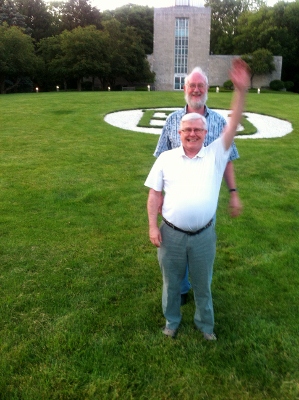
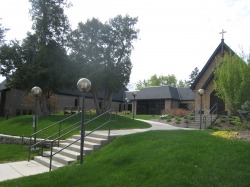
Three Church bells ring in Philo,
The Catholic Mass is first,
The Presbyterians
Are next, then Martin
Luther takes his stand.

The steeples point like preachers
To blue sky up above
But storms will soon be coming
If we don’t act with love
And follow that sweet dove.

Yes, Jesus is our teacher,
We hear his bell ring true,
you sound and I am singing
You speak and I speak, too.
Bells ring for me and you.

  • Steve Shoemaker, Urbana, IL, Jan. 10, 2016

Verse – The Last Septet

INTRO: Steve just posted on his CaringBridge site: “Awoke clear-headed, with more energy than in weeks. Just wrote this poem”:

I do not know how to die.
No words left to say good-bye.

The cancer spread everywhere;
Family and friends showed they care.

Will I find a peaceful death?
Or fight for each gasping breath?

Be here now? To future bow…

  • Steve Shoemaker, Urbana, IL, Dec. 29, 2015

NOTE:

Biggest and smallest Dogs

Biggest and smallest Dogs

My friend and Views from the Edge colleague, Steve, was diagnosed mid-November with terminal pancreatic cancer. For years death and dying have been a topic of conversation among the seminary friends who keep changing our group’s name. At first we called ourselves The Chicago Seven. After Dale died, we were six. We became The Gathering. More lately we call ourselves The Dogs. Steve at 6’8 is the biggest Dog. He’s always said “Big dogs go first.”

A month ago Steve came to Minnesota for a consultation at the Mayo Clinic. On a Thursday, Kay and I visited Steve and Nadja in their small room at the Kaylor Hotel across the street from the Clinic. While Nadja and Kay began to discuss the procedures Steve would undergo the next day, Steve stuck his fingers in his ears and smiled at me. I’m with Steve, I’d rather just do it when it’s time. I’d rather not know. I wonder if it’s a guy thing.

Steve wrote “The Last Septet” after his second Chemo treatment back in Illinois, a treatment meant to give him more time with no illusions about the outcome. To live forthrightly without illusion is a beautiful thing. Meanwhile, the other five Dogs watch and pray, growl and snarl, curse the cancer, mourn his demise, remember our shared mortality and the line from the Presbyterian Church (USA) A Brief Statement of Faith: “In life and death we belong to God.”

Gordon, a much smaller Dog, December 29, 2015.


Verse – The Exchange

INTRO: This piece uses the Hebrew terms for man (atham) and woman (athama), descriptions that remind Hebrew readers that human beings are of the dust, of the earth.

The Exchange 

“Did God really say you will die if you
eat the fruit of the tree in the middle
of the garden, the tree of the knowledge
of good and evil?” asked the snake
of the woman beside the Elysian tree.

So she did eat and so did he – Atham
and Athama, the earthlings – wishing to
be like God, mocking death by dividing
evil from the good down below where
a snake exchanged a hiss for a kiss.

“Cursed are you among all animals,”
said God. “On your belly you shall go,
eating dust along your way. Atham
and Athama will bruise your head,
and you shall bruise their heel.”

Then the two-legged creatures knowing
good and evil, dividing the Garden between
sheep and goats, stumbled at a nip on
the heel and heard a hiss: “You, too,
are dust, and to dust you shall return.”

Of the forbidden fruit of that one tree all
earthlings still do eat despite the voice
from the tree that tamed the snake,
exchanging a kiss for the hiss: “Forgive
them, for they know not what they do.”

  • Gordon C. Stewart, Chaska, MN, Dec. 28, 2015

Verse – Christmas: a Donkey’s Tale

Hee Haw

Burro's ears

Burro’s ears

“Just put the burro here,” he said,
“She’ll calm the horses of the folks
inside the inn.”  And so they tied
me to the pole above the trough.

I was surprised he later led
a man and girl into the stall
and pointing to the straw, he said,
“Sleep here,  this simple space is all
that’s left tonight, and if the child
is born the cries won’t wake the guests.”

He grimaced, but she somehow smiled
and sank down to the ground.  Their rests
did not last long.  Her labor soon
began and then the baby, wrapped
and warm, was laid under the moon
light bright where we, the stock, were trapped
and fed.  I brayed when shepherds dumb
barged in and said a king had come…

– Steve Shoemaker, Urbana, IL, Dec. 11, 2012

Verse – Christmas Re-Imagined

INTRO: How strangely idyllic Jesus’s birth appears in Matthew. No mention of the absence of a midwife, stench, or unsanitary conditions. The animals were the only neighbors, including the goats and sheep of Matthew’s parable of the Last Judgment, and as I have re-imagined it, the serpent who would bruise humanity’s heel in Genesis 3:8-15.

All the midwives were busy that night
when goats and sheep butted and
bleated for a taste of the after-birth
while a hapless not-quiet-husband
knelt beside his not-yet-wife Mary,
confused by having to birth this
child of another he’d never met,
a lamb she said was meant to be
for reasons he could not feel or see.

No Star Wars star shone above
a forgotten place the three of them
shared with none but bulls and
cows, hens and roosters, a snake
slithering through the straw toward
the donkey’s heel, the goats on
his right, the sheep on his left,
before the angels said the baby’d
come to bruise the serpent’s head.

  • Gordon C. Stewart, Chaska, MN, Dec. 27, 2015

Verse – December Rain and Reign

Trinity Episcopal Church ExcelsiorSome Sundays, like last Sunday, I just don’t feel like going to church. The weather was depressing. I was feeling kind of down. But we went, Kay and I.

After going to church, I wrote this piece. A poet I am not. Steve’s the poet of Views from the Edge. But, hey, he’s a very forgiving guy. Hope you are, too.

Advent Rain – Christmas Reign

harvest-being-2014-051In drizzling rain under
sullen gray-chilled skies
we trudge to church as
through a Scottish moor –
neither fall nor winter,
a gloomy in between
when spring’s bright
hope seems dead as
days are dark and short –
on the way toward
a reign in Bethlehem.

  • Gordon C. Stewart, Chaska, MN, Dec, 15, 2015

“Do not be afraid”

A sermonic reflection for the Fourth Sunday of Advent, Dec. 21, 2014, Gordon C. Stewart.

Text: Luke 1:26-38

El_Greco_044-medium-3

The Annunciation {El Greco]

Mary has every reason to fear the appearance of Gabriel. Every demure depiction to the contrary, the Angel Gabriel’s “annunciation” to Mary is no private affair. It’s a public matter of the first order. According to tradition’s lore, Gabriel is the archangel commissioned to destroy the offspring of the rebellious angels and human women. (see below). Mary shrinks back.

“Do not be afraid,” says Gabriel.

Why should she not be afraid? This is not just any angel.

This is the Angel Gabriel, whose trumpet will summon the people, sweep away the occupation forces that substitute their rule for the Kingdom of love and delight. This is an angel of revolution. The Archangel of conflict who inspires both hope and fear.

”Do not be afraid!”

El Greco’s painting of the Annunciation illustrates the problem of textual interpretation. Gabriel’s appearance is not frightening. It’s feminine. Even to the point of appearing perhaps pregnant himself. The great masters did not paint an angel messenger as male, even when his name is Gabriel or Michael, the only two angels named in Holy Scripture.

Gabriel in Hebrew means “God is my Warrior”. Gabriel is a warrior angel, announcing to Mary that she too is to become a warrior, a mother whose birth-giving will lead to conflict with the Empire and the religious authorities who collaborate with it.

As described by New Testament scholar Carol Newsom, any annunciation by Gabriel inspires fear.

In the Book of Daniel, Gabriel is preeminently an angel of eschatological revelation. He is sent to Daniel to explain a vision of ‘the time appointed for the end’ (Dan. 8:15-26)…. Gabriel’s functions are more varied in I Enoch. In the Book of the Watchers (I Enoch 1- 36) he is listed as ‘the one of the holy angels who is in charge of paradise and the dragons and the cherubim (20:2). He is commissioned to destroy the offspring of the rebellious angels and human women (10:9-10)….

In the War Scrolls from Qumran (IQM) the names of 4 archangels, Michael, Gabriel, Sariel, and Raphael, are written on the shields of the 4 towers of the army. The positioning of the 4 archangels around the throne of God or other sacred space has a long subsequent history in both Jewish and Christian tradition…. [Carol Newsom, “Gabriel.” The Anchor Bible Dictionary, Vol. 2]

So why does Gabriel look the way he does in the art museums and literature of Christian interpretation? Why does Gabriel look so benign? And why does Mary look so calm, perhaps even demure, as in El Greco’s Annunciation?

The Jesus story has been neutered. The End Time has been re-interpreted by the Constantinian Church as a paradise beyond time, a state of afterlife, not this life. In no way political. In no way economic. In no way conflictual. Peaceful. Serene. Calm. Quiet. Passive. “Let it be to me according to your word.” Never disquieting. Never disrupting. Never revolutionary.

Gabriel has been transformed, neutered, rendered harmless by the Constantine religion whose adherents can no longer see the conflict between Christ, or his mother, Mary, and his father, Joseph, with the systems of unbridled greed and poverty under which they live. The Gabriel spoken of in most pulpits is not the Angel Gabriel that came to Mary.

We’ve re-created Gabriel in our own image. But though we may tame him in our hearts, our paintings and our sermons, we can erase neither the need to be afraid nor his invitation to fear not. Gabriel’s finger points at us, asking whether we will rally to the trumpet sound, the sound of his coming. We can repaint the young girl Mary as an icon of passive obedience and tranquility. But it will be a different Mary than the courageous one painted by the Gospel of Luke, the one who sings the Magnificat.

Luke and his Mary know that “Do not be afraid!” makes no sense unless there really is something to fear, and that we cannot overcome fear unless we hear Gabriel’s word of favor, “Hail, O favored one! The LORD is with you. Blessed are you among women…You shall conceive….”Do not be afraid…. For with God nothing will be impossible.”

“Then Mary said, ‘Here am I, the servant of the Lord; let it be to me according to your word.’

“Then the angel departed from her” for parts unknown to make his visits down through the ages, making the impossible possible. Word has it he appeared last week in Washington, D.C. and Havana, Cuba to turn the impossible into the possible, a new Order being born from the old.

If you listen with faith, you might hear him. If you look, you will see him.

  • Gordon C. Stewart, Chaska, MN, Dec. 22, 2015

Verse on the first Christmas

“No Christians Were There”

No Christians were there at the birth
of Jesus. (For “…disciples were
first called Christians in Antioch”
years later.) But were those who were
there believers? the shepherds, the wise
astrologers, the non-father,
the Blessed mother? Did they see
with eyes of faith, or more like we
do: wonder, ponder, doubt and stare
at the small baby stabled there…?

That three were Jews, we know for sure.
The genealogies we read
in Matthew, Luke, go back as far
as Abraham. Eight days, we read,
then circumcision for the babe.
The Arab wise guys may be from
the land we call Iran. The sheep
herders may have been aliens
in the land illegally: cheap
pay for smelly foreigners.

The barn contained no royalty–
the stock had better pedigree…
and yet some say a King was born
to poor folks that the rich would scorn…

– Steve Shoemaker, Urbana, IL, Dec. 21, 2013

O Adonai, a second Advent reflection and sonnet

Malcolm Guite

Malcolm Guite

NOTE: Anglican priest, songwriter and poet poet Malcolm Guite is becoming a favorite of VFTE. His work reflects that playful but profound interplay between the particular and the universal that is poetry’s great gift. Here’s Malcolm’s post for today.

  • Gordon C. Stewart, Chaska, MN, Dec. 18, 2015. Malcolm writes from Cambridge, England. Click the link:

O Adonai, a second Advent reflection and sonnet

Link

“I cannot think unless I have been thought,
Nor can I speak unless I have been spoken….”

Opening lines ofSapientia” by Malcolm Guite.

Click  Advent in Music, Poetry, and Steve Bell’s Pilgrim Year, sit back, and enjoy the beauty of the poetry.

  • Gordon C. Stewart, Chaska, MN, Dec. 13, 2015