The Epiphany of Treason

Epiphany opens our eyes to the Light of truth and goodness, on the one hand, and the darkness of deceit and malice, on the other: the contrasts of light and darkness, hope and despair, fear and love, goodness and evil.


Gordon C. Stewart, public theologian, social commentator, author of Be Still! Departure from Collective Madness (2017, Wipf and Stock), Brooklyn Park, MN. January 6, 2024.
In the Strife of Truth with Falsehood

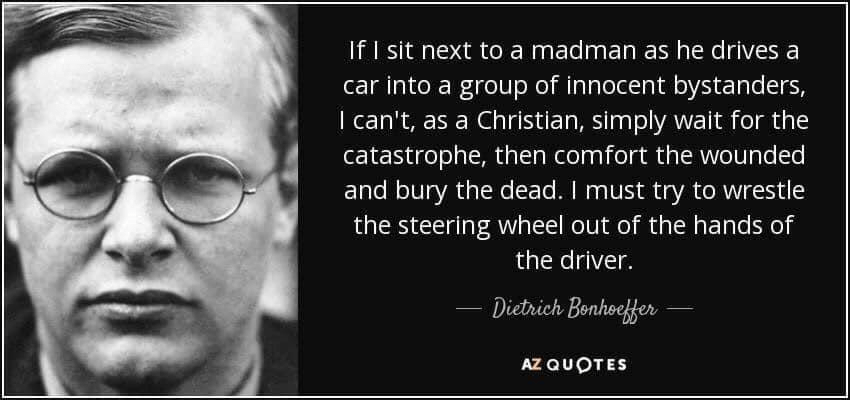
Dietrich Bonhoeffer (4 February 1906 – 9 April 1945

Bonhoeffer and James Russell Lowell

Hymn Lyrics from “The Present Crisis”

Once to every man and nation Comes the moment to decide, In the strife of truth with falsehood, For the good or evil side; Some great cause, some new decision, Offering each the bloom or blight, And that choice goes by forever ‘Twixt that darkness and that light.
Though the cause of evil prosper, Yet ’tis truth alone is strong; Though her portion be the scaffold, And upon the throne be wrong, Yet that scaffold sways the future, And, behind the dim unknown, Standeth God within the shadow, Keeping watch above His own.

JAMES RUSSELL LOWELL, “THE PRESENT CRISIS,” 1845.

The Moment to Decide

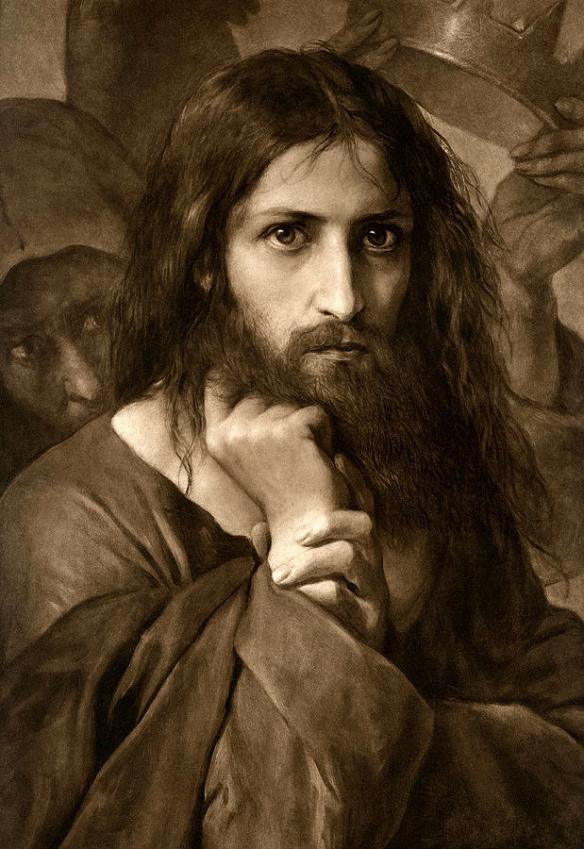
Temptation of Christ

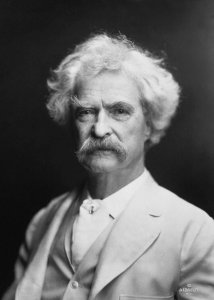
Mark Twain’s Advice to the Bible Salesman

Featured

Rev. Al Sharpton response to the “God Bless the USA Bible”

Preying on Praying

Mark Twain Advice

The Way to Easter

Rev. Gordon C. Stewart, public theologian, host of Views from the Edge, author of "Be Still! Departure from Collective Madness" (2017 Wipf and Stock Publishers), 49 two to four-page meditations on faith and public life, Brooklyn Park, MN, April 4, 2024.

Two Personal Reflections on Despair and Faith

Featured

This post comes in two parts. The first was written Holy Saturday (the day between Good Friday and Easter); the second was written yesterday, the second Sunday of Easter.

The Silence of Holy Saturday

Everything falls into silence today. Jesus is crucified, dead, and buried behind the heavy rock of a borrowed tomb. Armed guards stand on either side of the stone that secures the tomb; the governor’s seal — the occupying empire’s official seal —warns against tampering with this tomb. The seal is unbroken; everything else is broken.

Holy Saturday is the day after the victory of death on the Hill of Skulls. There is no Easter. No reason to trust that the clouds will blow over, the sun shine through, the shivering stop. Life is frozen stiff. Only the loneliness within my frozen self remains.

To protect themselves against the fear of death, two bullies twist truth into lies, and station their guards to keep the rock in place and the seal unbroken. The piercing of his side; thorns cutting into his skull; the ridicule of vision; the soldiers’ taunts to come down to prove he is the king he never claimed to be; the cynic-sneer that takes the place of innocence; the barren blindness to what was once my sense of beauty; the indictment of hope and trust; the gnarling of beauty, truth, and goodness into tangled knots that are neither truthful nor social, hammer in my head from Moscow, Mar-a-Lago, and now from the state house of Tennessee.

My soul is not still today. The stone has not been moved. The seal stays put. Only Pilate’s questions and sneer remain:”So you’re a king!” “What is truth?”

Thomas and his Twin

I’m a lot like Thomas. Neither of us was there to verify what others told us. We were not in the room when the others reported that the crucified Jesus had come through their locked door. Thomas wasn’t into ghosts. Neither am I. Although my grandmother claimed the old house on Church Lane was haunted by a previous resident named ‘Gus’, and although I often heard the creaking steps outside my bedroom, I’ve always been like Thomas. I’ve never believed in Gus or the Jesus-ghost other apostles say they’d seen and heard.

My Holy Saturday experience this year was just my latest recurring argument with my grandmother and with the surviving apostles who made up fairytales to keep us from doing what Judas did when despair and guilt overwhelmed him.

I like fairytales. I love Wendy, Peter Pan, and Tinker Bell, but I don’t confuse them with the way things are. Neither Wendy’s wand or Jiminy Cricket could wish upon a star and make the Pied Piper drop by Gus’s house to rid the rats that scampered through the walls at night.
This year reminded me of that; it’s the year of the rats, another year of the plague with no Pied Piper to lead the rats out of town. In 2023, there is no longer anywhere that is out of town.

Thomas is called ‘The Twin’ with no further explanation or elaboration. People of my ilk carry Thomas’ DNA! We’re Thomas’ identical twin. When Thomas arrives at the upper room to join the other surviving apostles, a week has passed. The difference between Thomas and Judas is that despair has not yet severed Thomas’ sense of connection. Loneliness, not belief, drives him back to what remains of his circle of friends. All hope is gone for Thomas. There is only the grieving: the sounds of nails being driven into Jesus’ hands, the horror of a soldier thrusting a spear into his side, the shouts of mockery and insult, his final declaration that it was over. His Lord is dead and buried, never to return. His friends have told him that things are not as they seem. The rock, they said, had been rolled back, the imperial seal broken, the guards lay on the ground like dead men, an encounter with Mary as a gardener, instruction to meet him in Galilee. All of it a fairytale!

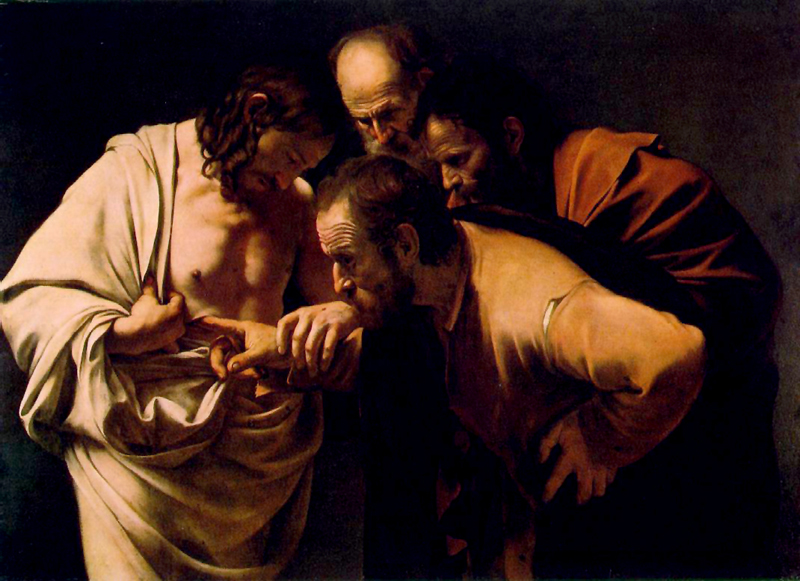
The Incredulity of Thomas – Carravagio

“Put your finger here; reach out your hand”

What happens to Thomas and others like him is more tangible than magic wands and pixie dust. “Put your finger here and see my hands. Reach out your hand and throw it into my side” is not an ethereal invitation. To be a disciple of Jesus means not only to see and hear, but to touch his physical wounds. The new community is born of his wounds and their transformation, commanded to throw ourselves into the sufferings and open wounds from which blood and water still flow. Resurrection is not pixie dust.

In the world it is called Tolerance, but in hell it is called Despair…the sin that believes in nothing, cares for nothing, seeks to know nothing, interferes with nothing, enjoys nothing, hates nothing, finds purpose in nothing, lives for nothing, and remains alive because there is nothing for which it will die.

Dorothy Sayers

Gordon C. Stewart, Be Still! Departure from Collective Madness (2017, Wipf and Stock), 49 short meditations on faith and the news; Brooklyn Park, MN, Second Sunday of Easter, April 16, 2023

Stay Woke!

Featured

A prefatory word of introduction

This sermon has been dormant since 2014. It was written the first Sunday following retirement. It has never been spoken from the pulpit, no ears have heard it, no one has read it until now. Noah Bieman’s Los Angeles Times editorial, “The Great Divide” (republished today by the Star Tribune), offers reason to post it. Jesus of Nazareth never heard of Florida or its governor’s description of it: “a refuge of sanity, a place “where woke goes to die.”

“KEEP AWAKE!”

First Sunday in Advent, 2014
Texts: Isaiah 64:1-9
Mark 13:24-37

“And what I say to you I say to all: Keep awake.”

Jesus of Nazareth (Mark 13:37, NIV)

It’s hard to stay awake in times like these. To be conscious means grief, helplessness, anger at the state of the world and the stupidity of the human race.

“Heaven and earth will pass away, but my words will not pass away” is supposed to bring comfort, but it doesn’t, unless the heaven and earth of which Jesus speaks are the ones our pride has created: the imaginary ones, the heavenly and earthly projects that rise out of human insecurity, as in the Genesis story of Babel, the story of what never was but always is, according to which the building of the ideal city is interrupted and the tower “with its top in the heavens” is “left off”. But the Word — the story about it — has not passed away. It endures. As fresh today as it was when first shared around a campfire as a way of teaching a new generation the respective places of God and humankind.

Fourteen years after the World Trade Center Twin Towers collapsed, a new tower, One World Trade Center — taller, stronger, bolder — stands where the old towers crumbled on 9/11. One World Trade Center resuscitates a national myth on life support.

Standing a few blocks from Wall Street, where the global economy is reconstructed every day, One World Trade Center picks up the pieces of the myth of national supremacy, benign goodness, and presumed virtue of the American economic system.

We could have left Ground Zero empty of monoliths. Turned it into a memorial to the error of undue pride, a turning away from national arrogance. A repentance from the economic-military-religious-technological complex that expropriated the oil fields in the Middle East, assassinated the elected President of Iran in 1958, installed the Shah in his place, ignored the human rights of Palestinians, supported and installed western-friendly oligarchies and strong men in Saudi Arabia, Iraq (Saddam Hussein), Libya (Muammar Gaddafi), and Egypt (Hosni Mubarak) until, except for Saudi Arabia, they turned against us.

Instead of listening to the word that does not pass away, we Americans, to the sorrow of New Yorkers like Michael Kimmelman (“The Great Divide,” NY Times, Nov. 29, 2014), opted for the old words and worn-out scripts that had failed us. The Democratic Spring in Libya, Egypt, and Tunisia did not do what the NeoCon exporters of Western democracy had imagined. It unleashed a seething volcano of anti-American resentment. Meanwhile, Afghanistan, Iraq, and Syria became desert quagmires – Vietnams without jungles.

Eisenhower’s last speech to the nation warning of the emerging “military-industrial complex” is a pessimistic memory we ignore as the phoenix of One World Trade Center is raised up…and up…and up out of the ashes, symbol of global dominance to fool ourselves again.

Human scale –truer neighborhoods

“But it [i.e. the World Trade Center] never really connected with the rest of Lower Manhattan. There had been talk after Sept. 11 about the World Trade Center re-development including housing, culture and retail, capitalizing on urban trends and the growing desire for a truer neighborhood, at a human scale, where the windswept plaza at the foot of the twin towers had been.”

Michael Kimmelman, “The Great Divide,” Los Angeles Times, Nov. 29, 2014

What is at issue is human scale, a windswept plaza, or a tower of divine proportions with “its top in the heavens.” Our words will pass away, even the best of them.

Keeping awake

Keeping awake is hard. Staying attuned to what is not passing away takes courage in search of wisdom. It takes faith. It takes hope. It takes love.

During this most puzzling of seasons — the Season of Advent, the season of wakeful anticipation of a Coming in fullness — I find myself crying out with Isaiah. It feels as though “you have hidden your face from us, and have delivered us into the hand of our iniquity.” [Isaiah 64:7]

O that you would tear open the heavens and come down, so that the mountains would quake at your presence—as when fire kindles brushwood and the fire causes water to boil — to make your name known to your adversaries, so that the nations [the ethnoi in NT Greek, i.e. the peoples] might tremble at your presence!

Isaiah 64:1-2

The ‘nations’ have always been God’s adversaries, closed in on themselves, puffed up, defensive against intruders, plunderers of nature and other nations, hostile to the foreigner, both human (the other) and Divine (the Other).

Deliver us from ourselves

In this season of ‘economic recovery’ when the poor continue to get poorer, the rich get richer, and the middle class shrinks, deliver us, good Lord, from “the hand of our own iniquity.

”Remember, “O LORD, you are our Father; we are the clay, and you are our potter; we are all the work of your hand.” [Isaiah 64:8]

This word is the only word that lasts. Stay awake, my soul. Stay awake to the whole of it — all of it: the sorrow and the grief of it, the loneliness of it, the anger toward it, the guilt of it, the finger pointing that points back at me, a nation to myself, and the presence of the Potter — and my soul shall be well, new and fresh every morning.

Gordon C. Stewart, public theologian, author of Be Still! Departure from Collective Madness (2027, Wipf and Stock), Brooklyn Park, Minnesota, November 20, 2022.

An Autobiographical Theology Chapter 2 Meeting Bill Stringfellow

Photo of William Stringfellow, lay theologian, author, and lawyer.

This podcast is the second in a series of autobiographical reflection on life as a theological pilgrimage.

Gordon C. Stewart, public theologian, author of Be Still! Departure from Collective Madness (2017 Wipf and Stock), 49 brief (two to four page) essays on faith and life; host of Views from the Edge; Brooklyn Park, MN.

A Good Friday World

Forlornness then and now

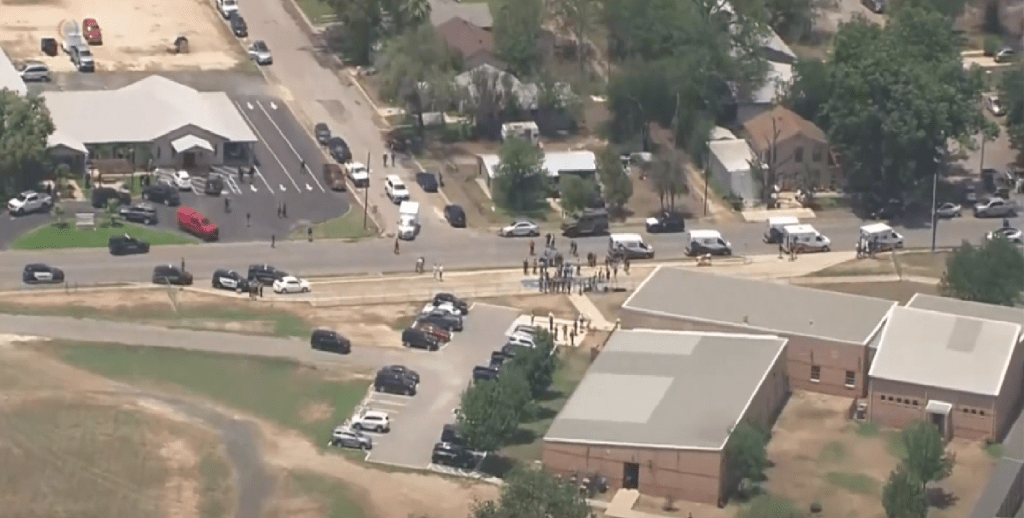
Robb Elementary School, Uvalde, Texas, May 26, 2022

The anguish keeps coming. Ukraine, Buffalo, Uvalde. There are no words. Only screams, gasps and tears in a Good Friday world. The crucifixion, then and now, stops the chatter, the distractions, and the illusion that positive thinking will save us.

 Ukranian Easter Eggs

On Good Friday hope is gone. There are no empty tombs, no resurrections, no hosannas, no palms, no lilies, no chocolate bunnies, no jelly beans, no Easter egg hunts, no Fabergé Easter eggs from Russia or Ukraine. Goodness has been nailed to a cross.

God-forsaken

The good man who hangs there screams a desperate cry religious people do not expect to hear: Eloi, Eloi, lama sabachtani?— “My God, my God, why have you forsaken me?” — the cry of the forlorn psalmist of Psalm 22. The lament is heard in our living rooms on TV, our androids and iPhones. Although the New Testament Gospels do not complete the first verse of Psalm 22, the sense of the words would have pounded the ears of the three Mary’s who stayed at the foot of the cross: “Why are You so far from helping me, from the words of my groaning?”

On Good Friday we come face-to-face with god-forsakenness. Not just the fear of it, the loneliness of it or the terror of it. The body on the cross bursts every bubble of denial, illusion, suppression, fancy, or flight.

The Hydra and the Savages

It’s a huge leap from John Calvin to Franz Kafka, but they saw the same thing hiding in every bubble. Calvin used the metaphor of the hydra. There is a hydra, said Calvin, lurking in the breast of every human being. Lop off the head of the hydra? Two new heads grow in its place. Lop off two? Two will become four and four will be replaced by eight. “We acknowledge and confess before You our sinful nature — prone to evil and slothful in good,” I remember praying as a child, wondering what it meant. Now I know.

Franz Kafka spoke of our nature in parables like The Savages:

The savages of whom it is recounted that 
they have no other longing than to die, 
or rather, they no longer have even that
longing, but death has a longing for them,
and they abandon themselves to it, or rather
they do not even abandon themselves, 
but fall into the sand on the shore 
and never get up again -- those savages 
I much resemble, and indeed I have fellow 
clansmen round about, but the confusion 
in these territories  is so great, 
the tumult is like waves rising and falling
by day and by night, and the brothers 
let themselves be borne upon it . . .
. . . . .  

And yet the fear! How people do carry their own enemy, 
however powerless he is, within themselves.

Becoming children again

The public enemy hanging from the cross had spoken in ways that had offended:

He called a little child to him, and placed the child among them. And he said: “Truly I tell you, unless you change and become like little children, you will never enter the kingdom of heaven. Therefore, whoever takes the lowly position of this child is the greatest in the kingdom of heaven. -- Gospel According to Matthew 18:2-4 NIV.

When Easter eggs break in Uvalde, Ukraine, and Buffalo, the god-forsaken cry from Golgotha (“the Hill of Skulls”) echoes in our hearts. The broken eggs and burst bubbles of 2022 reveal what we prefer not to see: the enemy we carry in ourselves, the hydra that lurks in every breast.


Gordon C. Stewart, public theologian, author of Be Still! Departure from Collective Madness (2017 Wipf and Stock), Brooklyn Park, MN, May 29, 2022.

A Pastoral Letter after Uvalde

Moments ago Andrew Long gave Views from the Edge permission to re-publish his pastoral letter to the people of First Presbyterian Church of Watertown, NY. If you read nothing else, I call attention to the fourth and fifth paragraphs that offer a peek into the new world of his five year old son and his peers.

Dear Friends in Christ, 

I had a hard time getting out of bed this morning. I didn’t sleep very well last night. The smallest sound in the cool evening air through our open bedroom widows roused me. And these words from Scripture kept circling my mind: 

A voice is heard in Ramah,
   lamentation and bitter weeping.
Rachel is weeping for her children;
   she refuses to be comforted for her children,
   because they are no more.–Jeremiah 31:15


We wept last night watching the news from Uvalde, Texas. We wept at the sight of parents frantically searching for their children. We wept for the dead. We wept over the immediate shenanigans coming from the talking heads. 

And we wept because we have an elementary-aged son who has told us about the shelter-in-place, active-shooter drills they routinely have at school.

I wish I was exaggerating. God, I wish I was exaggerating. It almost sounds comical. I had fire drills when I was in school and was told not to pick the paint off the radiator because it likely had lead in it. Our son has had to learn, before age five, how to hide and keep silent so that an active shooter in his school won’t find him. 

Are you OK with that? I’m not.

Frankly, I don’t think God is OK with it either. I know Jesus isn’t. He nearly excommunicated one his disciples when that disciple tried to keep children from coming to him. And in a society where laws are made and/or reversed to ‘protect’ the unborn, but only ‘thoughts and prayers’ are given to the families of children who are gunned-down at school, we must look at ourselves deeply and question what we truly value in life. Right now, sadly, life for every one of God’s children does not seem to be at the top of the list. 

Right now I’m thinking of the statue of Jesus that stands across the street from the Oklahoma City Bombing Memorial. Jesus has his head in his hands and his back turned to the site of the bombing. He stands on a pedestal made from the same number of polished marble stones as the number of children who were murdered in the bombing. Jesus weeps. 

We should, too. 

Feel deeply the intense sadness of this moment. As people of faith, we do not have the luxury of turning away. Our faith is founded on the truth that all people are created equally in the sacred image of God. When one of those beloved image-bearers is taken from this earth, all of us are diminished. It is no longer ‘out there’ or ‘somewhere else’; it is right here, right now. We must not turn away. 

And in our weeping, maybe the Lord will fill us with just the right amount of righteous anger to truly work for a more just and peaceful world.

A world where children can learn their ABC’s before they learn about active shooters. 

A world where thoughts and prayers are followed by action and policy. 

A world where idolatry gives way to true, robust faith in God. 

A world where every person can fully access the abundant life Jesus Christ came to give us all. 

Come, Lord Jesus. Make it so! 
 +andrew

P.S.–Secondary Traumatic Stress is a real concern in times such as these. STS happens when we witness the first-hand trauma of others. Please know that I stand ready to pray with you, visit with you, even sit with you in silence if you are struggling right now. Please reach out to me at (Phone numbers and emails deleted by Views from the Edge) if I can be of assistance.
Copyright © 2022 First Presbyterian Watertown, All rights reserved. 

Thanks for coming by Views from the Edge, May 26, 2022

The First and Second Fires

A Required Honesty

Easter was hard this year. I couldn’t bring myself to put my body in a pew. Imagining the shiny brass trumpets heralding Christ’s victory over sin and death had no more appeal than the silly silky banners waving up and down the aisle to make Easter more festive. Whether Easter felt like a fraud orI felt like the fraud didn’t matter yesterday.

A Ghost named Gus

If we’re honest about the resurrection, many, if not most, of us have some difficulty with one or another of the post-crucifixion stories of Jesus’ resurrection. Although my grandmother swore that our 120 year-old home was haunted by a friendly ghost named Gus, I’ve never gotten into ghostly apparitions.

Photo of Henri Fuseli's painting of Hamlet and his father's ghost
Hamlet and his father’s ghost — Henry Fuseli

Years ago an eccentric older congregant, long since deceased, claimed her deceased husband regularly visited her, standing at the foot of her bed. Even without this claim, there were multiple grounds for concluding that she would have been institutionalized in a previous generation. I never could get into her story, or the story about Gus’s footsteps creaking the steps of my childhood home. They were outside my experience. Like the Apostle Thomas, my faith is suspicious of such claims. “Unless I see for myself…” is second nature to me.

Unless I See

One person’s experience, however, is not the measure of all things, especially in matters that cannot be confirmed by objective verification. The world is full of experiences that are enigmas to my little piece of reality. My slice is not the whole pie, although, come to think of it, if my slice tastes like blueberries, chances are good the pie is blueberry. “To thine own self be true,” Shakespeare’s Polonius advises Laertes.

“And it must follow, as the night the day thou canst not then be false to any man . . . ” (Shakespeare, Hamlet, Act 1, Scene III). Being true to oneself leads some honest people to leave the faith. Think Jean-Paul Sartre. Think Albert Camus. It leads others to stay and dig deeper. Though I was once almost one of the former, I am still one of the latter.

An Honest Conversation

Nowhere is the challenge of good faith greater than the resurrection. “Seeing for ourselves” like the Apostle Thomas is a hard way to live; it can be tricky. Sometimes we see things that aren’t there; other times we don’t see what stares us in the face. In a year like this, I rub my eyes in hopes of a clearer view of what is true. Honesty is slipping away in America. So is hope for the nation. The dark clouds of willful ignorance and unabashed dishonesty leave me looking for the light that faith tells me cannot be overcome.

Honesty, or the attempt at it, was what I had, but not much more. Although I could not say, with James Russell Lowell, “I do not fear to follow out the truth,” I know that the search for truth takes place “along the precipice’s edge.”

A Jarring Juxtaposition Between Two Fires

For the likes of those of us who stay, Easter is less accessible in the garden outside an empty tomb than in the encounters with the skeptical Thomas, and with Peter, who has gone back to his fishing nets after the crucifixion. Staying home on Easter for the first time reading the Gospels’ passion narratives, portrayals of Peter caused me to stop and ponder the jarring juxtaposition between two scenes around a fire.

The Denial of Saint Peter by Caravaggio (1610)

The First Fire

The first fire is set in the courtyard of the High Priest’s residence where Peter “The Rock” crumbles like shale. Warming himself by the courtyard fire, two domestic workers identify Peter as Jesus’ disciple. His Galilean accent betrays him. Three times Peter denies it. “I do not know the man!”  “I do not know the man!” “I do not know the man!” The rock crumbles.

The Second Fire

The second fire is lit on the shoreline to which Peter, the fisherman, returns after what would have been a bad night without the miracle shouted by the stranger on the shore. Peter has not become a fisher of fellow-humans; he is a fisher of fish again, not different from before Jesus had called him, except for the guilt he now carries from his denial before the fire in the courtyard. That I understand. That reversal I know by experience. I wasn’t Peter, but the dead, crucified, and buried Jesus whom the Creed claims “descended into hell” reached down into the hell of my own making to blow the remaining embers of the first fire into the charcoal fire of the second. The risen Christ is not an apparition. Christ comes as the stranger we forgot we knew, the host who serves us breakfast on the shoreline.

Gordon C. Stewart, public theologian, author of Be Still! Departure from Collective Madness (2017 Wipf and Stock), writing from Brooklyn Park, Minnesota, April 20, 2022.

Faith and the Administered Consciousness

“To what shall I compare this generation? It is like children sitting in the market places and calling to their playmates, ‘We piped to you, and you did not dance; we wailed, and you did not mourn.'”

Gospel according to Matthew 11:16-17.

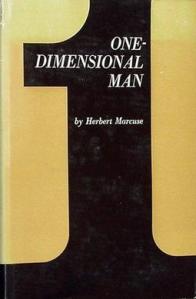
Having nothing new to say on Martin Luther King, Jr. Day, I scrolled back to this sermon on Faith and Patriotism which re-awakened my appreciation for Herbert Marcuse’s One Dimensional Man and his analysis of a culture of “administered consciousness”.

“Patriotism is the last refuge of the scoundrel” — Eugene Debs/Thomas Paine?

Love of country is a good thing. Worshiping it is not. In the hands of a scoundrel, patriotism becomes an idol.

Faith and Patriotism

Gordon C. Stewart, Brooklyn Park, Minnesota, January 19, 2022