Follow the Money

money - follow the money

money – follow the money

Eight years as Executive Director of the Legal Rights Center, Inc. in Minneapolis confirmed this perspective by Fareed Zakaria.

Money spent on Prisons is rising 6 times the rate spent on higher education  By Fareed Zakaria,  March 25, 2012.

“Televangelist Pat Robertson recently made a gaffe. A gaffe, as journalist Michael Kinsley defined it, occurs when a political figure accidentally tells the truth.

“Robertson’s truth is that America’s drug war has failed and that the country should legalize legalize marijuana. This view goes against the  deepest political, moral and religious positions Robertson has held for decades, so imagine the blinding evidence that he has had to confront-and  that has been mounting for years-on this topic.

“Robertson drew attention to one of the great scandals of American life.
“Mass incarceration on a scale almost unexampled in human history is a
fundamental fact of our country today,” writes the New Yorker’s Adam Gopnik.
“Over all, there are now more people under ‘correctional supervision’ in
America-more than 6 million-than were in the Gulag Archipelago under Stalin
at its height.”

“Is this hyperbole? Here are the facts. The U.S. has 760 prisoners per
100,000 citizens. That’s not just many more than in most other developed
countries but seven to 10 times as many. Japan has 63 per 100,000, Germany
has 90, France has 96, South Korea has 97, and Britian – with a rate among
the-highest – has 153. Even developing countries that are well known for
their crime problems have a third of U.S. numbers. Mexico has 208 prisoners
per 100,000 citizens, and Brazil has 242. As Robertson pointed out on his TV
show, The 700 Club, “We here in America make up 5% of the world’s population
but we make up 25% of the [world’s] jailed prisoners.”

“There is a temptation to look at this staggering difference in numbers and
chalk it up to one more aspect of American exceptionalism. America is
different, so the view goes, and it has always had a Wild West culture and a
tough legal system. But the facts don’t support the conventional wisdom.
This wide gap between the U.S. and the rest of the world is relatively
recent. In 1980 the U.S.’s prison population was about 150 per 100,000
adults. It has more than quadrupled since then. So something has happened in
the past 30 years to push millions of Americans into prison.

“That something, of course, is the war on drugs. Drug convictions went from
15 inmates per 100,000 adults in 1980 to 148 in 1996, an almost tenfold
increase. More than half of America’s federal inmates today are in prison on
drug convictions. In 2009 alone, 1.66 million Americans were arrested on
drug charges, more than were arrested on assault or larceny charges. And 4
of 5 of those arrests were simply for possession.

“Over the past four decades, the U.S. has spent more than $1 trillion
fighting the war on drugs. The results? In 2011 a global commission on drug
policy issued a report signed by George Shultz, Secretary of State under
Ronald Reagan; the – archconservative Peruvian writer-politician Mario Vargas
Llosa; former Fed Chairman Paul Volcker; and former Presidents of Brazil and
Mexico Fernando Henrique Cardoso and Ernesto Zedillo. It begins, “The global
war on drugs has failed … Vast expenditures on criminalization and
repressive measures directed at producers, traffickers and consumers of
illegal drugs have clearly failed to effectively curtail supply or
consumption.” Its main recommendation is to “encourage experimentation by
governments with models of legal regulation of drugs to undermine the power
of organized crime and safeguard the health and security of their citizens.”

“Bipartisan forces have created the trend that we see. Conservatives and
liberals love to sound tough on crime, and both sides agreed in the 1990s to
a wide range of new federal infractions, many of them carrying mandatory
sentences for time in state or federal prison. And as always in American
politics, there is the money trail. Many state prisons are now run by
private companies that have powerful lobbyists in state capitals. These
firms can create jobs in places where steady work is rare; in many states,
they have also helped create a conveyor belt of cash for prisons from
treasuries to outlying counties.

“Partly as a result, the money that states spend on prisons has risen at six
times the rate of spending on higher education in the past 20 years. In
2011, California spent $9.6 billion on prisons vs. $5.7 billion on the UC
system and state colleges. Since 1980, California has built one college
campus and 21 prisons. A college student costs the state $8,667 per year; a
prisoner costs it $45,006 a year.

“The results are gruesome at every level. We are creating a vast prisoner
under-class in this country at huge expense, increasingly unable to function
in normal society, all in the name of a war we have already lost. If Pat
Robertson can admit he was wrong, surely it is not too much to ask the same
of America’s political leaders.”

– appeared on-line, IllinoisDemNews@yahoogroups.com

Nebraska Senate Candidate Bob Kerrey Campaign Ad: “Not Afraid”

Nebraska Senate Candidate Bob Kerrey Campaign Ad: “Not Afraid”.

Just more hot air? Or a breath of fresh air?  You decide.

Bob Kerrey is saying what most of us long for in American politics: elected representatives who do what’s right for the American people no matter where the ideas come from.

Kay has known Bob Kerrey since he returned from Vietnam missng a leg. He came home to Nebraska as a student at the University of Nebraska. According to Kay and the others in his close circle of friends back then, Bob is for real.

Thanks again to United Politics for sharing unedited pieces from American pullic life.

I spotted Bob 10 years ago at O’Hare Airport in Chicago. “Bob Kerrey?” “Yes, hi.” “You don’t know me, but you know Kay Calkins…” His eyes grew wide. So did his smile. “O my, yes! Of course! How could I ever forget? How do you know Kay?”

Those whose lives Kay has touched do not forget; nor does she forget them. Bob Kerrey is one of them. We need more like him.

Have we become so jaded that we believe nothing, even when a man’s record stands for what he says?

The Tower

Tower, Ray Erickson photo used by permission

Tower, Ray Erickson photo used by permission

Of course a tower is built by starting from

the bottom. Strong arms and shovels make

a joint to earth with wet, gray gravel, and form

with time, a foundation almost like rock.

Orange steel is welded, riveted and made

to stand naked pointing skyward.  Then blocks

and bricks are hoisted slowly up the side

providing covering flesh the tower lacks.

Small children make towers in trees, and these,

though only made of rotting boards, still stand

as proudly strong (in the children’s eyes)

as those from which much older ones descend.

But both kinds of towers seem built to say

with their builders–we look down on the sky.

Steve kneeling behind Sheldon Jackson’s pulpit

– 6’8″ Steve Shoemaker

Anglican Theological Review, April, 1973

Steve wants you to know that we’re both important. He has his tower. I have mine. Steve is host of “Keepin’ the Faith,” a Sunday evening program on on WILL – archive programs, “including two with Gordon Stewar” (Steve ordered me to put this in here – he’s taller, so I do everything he says), can be heard anytime, anywhere @ www.will.illinois.edu/keepinthefaith

Sister Brigid McDonald calls Vatican’s reprimand of U.S. nuns group a ‘misuse of power’

Sister Brigid McDonald calls Vatican’s reprimand of U.S. nuns group a ‘misuse of power’.

Click title above for the story. Well-known here in the Twin Cities as a faithful Catholic witness for peace and justice, Sister Brigid McDonald was interviewed by MinnPost.com. Click the title to read the interview.

Earlier on Views from the Edge we posted “The Shadow of the Grand Inquisitor.” The good Sister is not intimidated by the Shadow.

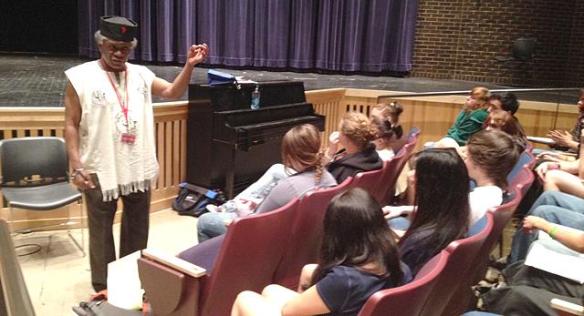
Dr. Mahmoud El-Kati talks of racism and mesmerizes students at South

Click on: Dr. Mahmoud El-Kati talks of racism and mesmerizes students at South. This man is a legend in his own time Minnesota. He deserves all the air time the world will give him. He has spoken at Shepherd of the Hill Church‘s First Tuesday Dialogues on the historical roots of the colony at Jamestown, and is a highly esteemed colleague and friend.

The Web of Sanity and Fullness

Pond with morning mist evaporating

Pond with morning mist evaporating

A newspaper reporter asked me some questions. We were preparing for a First Tuesday Dialogues series on sustainability called “The Good Green Earth.”

The series would bring five speakers, including  spokespeople from the Gulf of Mexico deeply engaged in hazard assessment, technology, and recovery in the wake of Deepwater Horizon.

What’s your sense of the possibilities and trends for sustainability in your work now and what does it look like in the future?

I responded that one of my inspirations is Paul Tillich, according to whom:

Being religious means asking passionately the question of the meaning of our existence and being willing to receive answers, even if the answers hurt.

Faith consists in being vitally concerned with that ultimate reality to which I give the symbolical name ‘God’. Whoever reflects earnestly on the meaning of life is on the verge of an act of faith.

The Spider’s Web with Morning Dew

My calling as a pastor was to help us here at Shepherd of the Hill and here in Chaska literally “go out of our mind.”

Because the collective mind that has delivered us to this place is killing us and destroying the balance of nature.

My calling is to shake us loose from the mental and spiritual chains of species superiority, My calling is to shake us loose from the mental and spiritual chains of species superiority, the mistaken notion that we – humankind – are the exception to Nature.  It’s a call to help re-shape our understanding of ourselves as participants rather than owners, participants rather than conquerors or manipulators, members of a diverse natural order of interdependent life. The spiritual resources are there in Hebrew scripture, in the New Testament epistles to the Ephesians and the Colossians, and in the ancient respectful spirituality of some of America’s indigenous people. By “going out of our mind” we will come back into a the web of sanity and fullness.

What factors do you see pushing towards or against sustainability?

Historian of science and technology Lynn White said flat-out that the root problem of the sustainability crisis is religious or spiritual, and so is the solution.

So, number one, we have to address the old and emerging questions about what Tillich called “Ultimate Reality” and the meaning of our existence.  We have to go into labor to set the new theological and anthropological  paradigm free from of the old destructive thinking.  What we are beginning to find as we go into this spiritual labor is that this more respectful, more holistic way of thinking is not new at all – it’s the older paradigm that got side-tracked by greed and pride.

Building of the Tower of Babel – Master of the Duke of Bedford

God has “come down,” as it were, to frustrate our attempts at building the secure city called Babel; God is making us nomads again who recognize that we and the Earth are already full, not empty. Every settlement comes to nothing. Every tower built as a monument to pride falls. And number two, and I’m afraid there is no other way to say this – we will never make it without leaving behind the economic system of greed. Capitalism is killing us.

The consolidation of wealth and corporate power have a stranglehold on national, state, and local public policy. The members of the boards of the oil companies sit on the boards of General Motors and Ford.  So it’s no wonder that U.S. federal policies on transportation are car-friendly and suspicious of mass-transit, regardless of a car’s gas mileage. Osalescence is built in because you can’t sell something five years from now if the old model is still like new. Our health care and the FDA are in the palm of the insurance and drug company’s so that it’s illegal to go across the border to fill your prescription in Canada.

Finally, the sustainability of the human species itself is, I believe, imperiled by chemical alterations that are meant to do good but that, in the long run, make us biologically less resistant and resilient. Our natural immune systems are being weakened by pesticides in the food we eat and by the pharmaceuticals we ingest from the drug store.

Black tar heroin - U.S. Drug Enforcement Administration

Black tar heroin – U.S. Drug Enforcement Administration

We have become a nation of addicts.  Addicted to illusionary dreams of abundance.  Addicted to prescription drugs.  Addicted to fast food and faster short-term solutions. Even instant gratification is too slow. Controlled by advertizing that sells us prescription drugs that’ll give you an immediate erection but may send you to the emergency room if it last more than four hours,or drugs that may ruin your liver or land you in a casket, and the real pushers are not the petty drug peddlers on Minneapolis’s North Side. The real pushers are legal. They’re given license, while those who would shut them down are looked upon as crackpots and throw-backs who are opposed to progress.

So…what’s stopping real progress, a more Earth-friendly way of organizing human affairs that embraces reality itfself, “Being-Itself”?  The intransigent, legal, institutionalized arrangements of power and money, on the one hand, and our willing compliance with the de-democratization of America that salutes the system of greed. We have to learn again, and we are – very slowly –  pushing and screaming, that “the Earth is the Lord’s and the fullness thereof”. We have turned it over to the forces of greed and destruction.

The Good, Good Earth: Our Island Home

The Good, Good Earth: Our Island Home

We need to recover the gratitude and spiritual paradigm of a natural abundance in order to push against the false promises of those who would have us believe that our lives and the world would be empty without all the stuff that ends up in the landfills or washes ashore in the estuaries of the Gulf of Mexico.

So……Chime in, friends. How would you answer the reporter’s questions?

Watch Dynamic speech on “My Energy Plan”

President Gerald Ford addressing the nation

President Gerald Ford addressing the nation on energy policy

Click HERE to be blissfully inspired by dynamic speaker President Gerald Ford’s speech on energy policy and Congress “doing nothing to end energy dependence,” including a call for “a windfall profits tax on oil companies,” complete with equally dynamic props. “Nothing has been done since January!” “We must get on with the job RIGHT NOW. Thank you, and good night.” – 1975

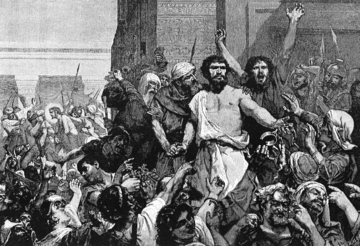
Jesus Barabbas

Give Us Barabbas

There are two Jesuses – two different Sons of the Father. One is executed; the other is released. Both are with us still.

Here’s the sermon at Shepherd of the Hill Presbyterian Church in Chaska, MN, a place for the mind and heart on YouTube:

YouTube: “” 

The Legacies of Joe Hill and Doug Hall

You who hold us in the hollow of your hand,

Who hold us in the curve of a mother’s arms,

Whose flesh is the flesh of hills and hummingbirds and angleworms,

Whose skin is the leathered skin of the barge-toter and the old Indian Chief and the smooth skin of a newborn babe,

Whose color is the color of the zebra and the brown bear and the green grass snake,

Whose hair is the aurora borealis, the rainbow and nebulae,

Whose eyes sometimes shine like the evening stars, and then like fireflies, and then again like an open wound,

Whose touch is the touch of life and the touch of death,

Whose name is everyone’s, each and all alike, for just a fleeting moment on the shore of time, the hem of your eternity:

Grant us to see ‘tis only the splendor of light hideth thee.’  Let Your healing balm salve the tender wounds of grief and turn the tears of mourning into tears of unshakable joy.

God of the sparrow, God of the whale, God of the pruning hook: You ask only that we do justice, love mercy and walk humbly with You.  Lead us to take the claims of justice, mercy and humility into the palaces and chambers of power where public policy is made and administered.  Give us confidence that, though truth still sways upon the gallows, yet it is truth alone that is strong.

Let our lives flow in endless song above earth’s lamentations.  Let no storm shake our inmost calm.  No tempest dim our vision.  No noisy gongs or clanging cymbals of ignorant armies clashing by night drown out the gentle sounds of the flute and the dulcimer, the quiet chords of love.

For this work and this alone, raise us up on eagles’ wings to follow Wamble Pok-he, our lead eagle now departed, and to see him standing there, like old Joe Hill, as big as life and smiling with his eyes.  “What they could not kill,” says Joe, says Doug, “went on to organize, went on to organize.”   “I did not die,” says he.  “I did not die.  Where workers strike and organize,” says he, “You’ll see Doug Hall,” says he, “We’ll see Doug Hall,” says he.  How can we can we keep from singing?  Amen.

– GCS, pastoral prayer at Doug Hall’s Memorial Celebration, Wabasha, MN.

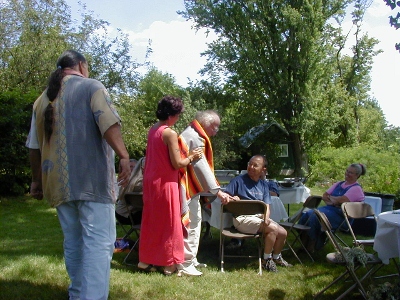
Stephanie Autumn and Clyde Bellecourt honoring Doug with Indian blanket

Stephanie Autumn and Clyde Bellecourt honoring Doug with Indian blanket

Doug was the definition of “the street lawyer.” The farewell to Doug was attended by the people he had defended over many years, the founders of the American Indian Movement, African-American activists, U.S. District Court Judges, MN Supreme Court Justices, Indian drummers, and “America’s troubadour, Larry Long.” Doug was an important figure in the standoff between the federal troops and the AIM members who occupied Wounded Knee. He served as Director of the Legal Rights Center, and, in the last decade of his life was a leading figure in the state-wide movement for restorative justice. He was the Honorary Chair of the Minnesota Restorative Justice Movement.

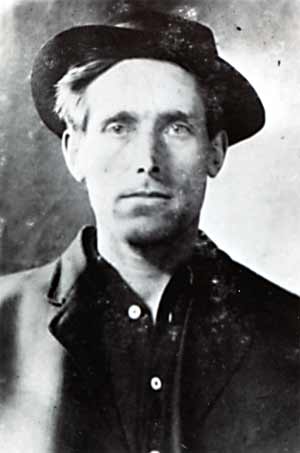
Joe Hill, Swedish-American labor organizer, songwriter, (1879-1915)

I dreamed I saw Joe Hill last night

Alive as you or me.

Says I,  “But Joe, you’re ten years dead.”

“I never died,” says he,

“I never died,” says he.
“In Salt Lake, Joe,” says I to him,

Him standing by my bed.

“They framed you on a murder charge.”

Says Joe, “But I ain’t dead,

Says Joe, “But I ain’t dead.”
“The copper bosses killed you, Joe,

They shot you, Joe,” says I.

“Takes more than guns to kill a man.”

Says Joe, “I didn’t die,” Says Joe,

“I didn’t die.”

And standing there as big as life,

And smiling with his eyes, Joe says,

“What they forgot to kill Went on to organize,

Went on to organize.”
“Joe Hill ain’t dead,” he says to me,

“Joe Hill ain’t never died.

Where working men are out on strike,

Joe Hill is at their side,

Joe Hill is at their side.”
“From San Diego up to Maine

In every mine and mill,

Where workers strike and organize,”

Says he, “You’ll find Joe Hill.”

Says he, “You’ll find Joe Hill.”
I dreamed I saw Joe Hill last night

Alive as you or me.

Says I, “But Joe, you’re ten years dead.”

“I never died,” says he,

“I never died,” says he.

Just one country?

Kosuke Koyama – RIP

The late Japanese Christian theologian Kosuke Koyama (click HERE for NYT obituary) said, “There is only one sin, and it is exceptionalism.”  Koyama was baptized during the bombing raids of Tokyo in WW II. As the bombs exploded and the building burned around the church, Kosuke’s pastor looked him in the eye. “Kosuke,” he said, “You are a disciple of Jesus Christ. You must love your enemy… even the Americans.”Koyama first saw the myth of exceptionalism in the Japan of his youth where the Emperor and the Divine were hand-in-glove. Japan was an exceptional people that could not fail. In his later years, following his retirement from Union Theological Seminary in the City of New York, “Ko,” as his friends called him with great affection moved to Minneapolis.

During the 15 years I knew him, he shared his greatest sadness that the ideology of exceptionalism he had experienced as a  boy in Japan he now saw in the United States.

Today in 2012 political candidates cunningly appeal to the myth, believing that doing so  will rally true believers to cast their votes for them as the truest believers in America. Steve Shoemaker sent this piece today.

Verse – Steve Shoemaker, Urbana, IL May 2, 2012

The U.S.A. actually  is just one

country out of quite many “under God.”

It would be wrong to think the summer sun

shines only on our farms.  In other lands

the children grow as strong and bright as here,

and elders have respect around the world

(in fact, in many places they don’t fear

such loneliness and high cost of health care.)


Other countries are also free and brave, and have fine soldiers ready to defend

their shores.  It’s sweet and seemly that we give

our lives to save our families,  friends and land,

but we must not think we’re exceptional

and forget, too, the international.