Texas Flood, Ted Cruz, and Zombie games

The other night a professional baseball game was played during a torrential downpour at Target Field in Minnesota. Meanwhile down in Texas, historic level floods were rising.

Senator Ted Cruz, the climate change denier who opposed the bill providing disaster relief to the Northeast following Hurricane Sandy in 2013, was shouting for urgent federal assistance above and beyond ordinary disaster relief.

Back in 2013 when the victims of Sandy were in New York and New Jersey, the Senator from Texas opposed the federal government “wasting” tax payers’ money.

“This bill,” he said, “is symptomatic of a larger problem in Washington—an addiction to spending money we do not have. The United States Senate should not be in the business of exploiting victims of natural disasters to fund pork projects that further expand our debt.”

Now that the scene of the disaster has shifted to Texas, he says, “At a time of tragedy, I think it’s wrong to try to politicize a natural disaster.”

“Amen” to that!

But, then again, according to The Daily Beast on May 28,

At the moment, Cruz is playing “Plants vs. Zombies,” a game where users collect sunlight points to feed plants who fight off waves of zombies; “Candy Crush,” the puzzle game where he claims he’s in the 217th level; and “The Creeps!,” a tower defense game.

One can almost hear the voice of Senator Cruz’s predecessor, Senator Lyndon B. Johnson (D), crying from the grave, wondering how the zombies took over his beloved Texas.

Senator, please join the rest of us in fighting for the plants against the zombie Climate Change denier obstructionists. What’s happened in New York and New Jersey, and what’s happening now in Minnesota, Texas and Oklahoma is not a video game. “Let’s play ball!”

– Gordon C. Stewart, Chaska, MN 55318

The Paradox of Pentecost — Presence and Absence

A stranger than strange text for today’s Feast of Pentecost, the day the Church celebrates the coming of the Spirit, the Advocate, reads:

“I tell you the truth: it is to your advantage that I go away, for if I do not go away, the Advocate will not come to you…” [Gospel according to John 16:7].

It is Jesus in John’s Gospel who speaks these words to his disciples. They scratch their heads, like confused children being dropped off at camp against their will. They already sense the homesickness that will come. The thought of being abandoned brings anguish, the foreboding of oncoming forlornness.

The experience of absence, endemic to the human condition, is essential to faith. The feeling of anguished forlornness builds courage, and faith, of one sort or another, with or without an advocate.

Enter Jean-Paul Sartre’s reflections on anguish and forlornness. Fully conscious without religious crutches, I experience the anguish of my responsibility for myself and others, and the forlornness that realizes that I am alone in my decision-making. The decisions are mine along. No one but I am responsible.

Like the disciples, we want it to be otherwise. Some of us pray as though the feelings were a hoax, the Devil’s trickery or God’s pre-ordaining, as though our course were charted by another decision-maker disbelieved by Sartre. But regardless of our faith or faith denials, the truth is that to be human is to know this sense of anguish and forlornness.

Dietrich Bonhoeffer, the brilliant theologian imprisoned and executed by the Third Reich, caught the sense of it in a letter he wrote from a prison cell.

“The only way to be honest is to recognize that we have to live in the world etsi deus non daretur. And this is just what we do see — before God! So our coming of age forces us to a true recognition of our situation visa a vis God. God is teaching us that we must live as [people] who can get along very well without him. The God who is with us is the God who forsakes us (Mark 15:34). God who makes us live in the world without using him as a working hypothesis is the God before whom we are ever standing. Before God and with him we live without God. God allows himself to be edged out of the world and onto the cross. God is weak and powerless in the world, which is exactly the way, the only way, in which he can be with us and help us. Mark 8:17 makes it crystal clear that it is not by his omnipotence that Christ helps us, but by his weakness and his suffering.” [Dietrich Bonhoeffer, Letters and Papers from Prison, pp 219-220, McMillan Company, 1953, translated from German by Reginald H. Fuller.]

Bonhoeffer’s writing acknowledges the anguish and forlornness that precede the disappearance of the divine usurper of human freedom and responsibility. In place of the bad-faith God who keeps her children in diapers, there comes the advantage of Christ’s going away — the arrival of the Advocate who brings the unexpected joy of coming of age.

“I tell you the truth: it is to your advantage that I go away, for if I do not go away, the Advocate will not come to you; but if I go, I will send him to you” [Gospel according to John 16:7].

– Gordon C. Stewart, Chaska, MN, May 24, 2015 – Feast of Pentecost.

A Blogger’s Dilemma – Words and Silence

Although no two days are the same, they divide themselves between up and down, loquacious and dumb, wordy and wordless.

Some days the words greet me in the morning. They pour out through my fingertips before I know what they’ll say. Other mornings the words play dead or hide-and-seek.

The words don’t come when the news is bad…when the world itself is too wordy, when the sacredness of words is profaned by jabber and chatter and pretentious prognostications about … just about everything. Some of those days and weeks I know enough to keep silent. On others I try to write and publish something here on Views from the Edge despite the inner voice that whispers “Shhhh! Not now. Maybe later the words will come. Shhhh!”

Although no two days are ever the same, they group themselves between “Not now; not yet!” and “Good morning! Today’s the day!”

Whether the words know when to be written is another thing altogether. Neither they nor the keyboard knows, and so some days I write in hopes they won’t profane the sacredness of words and silence.

– Gordon C. Stewart, Chaska, MN, May 7, 2015


Warning: Danger Ahead

If you’re interested in a homiletic case consistent with Bernie Sanders, check out the Rev. Ed Martin’s sermon at Shepherd of the Hill Church in Chaska, MN. It’s superb.

Compassion expressed or withheld – Plato and Luke

The question of the relation between compassion and property and the emotional-psychological-spiritual results of expressing or withholding compassion came to the fore several Sundays ago after hearing a reading from The Book of the Acts of the Apostles.

“Now the whole group of those who believed were of one heart and soul, and no one claimed private ownership of any possessions, but everything they owned was held in common” [Acts 4:32].

The whole group, i.e. the early disciples of Jesus, were putting into practice the political philosophy Plato recommended centuries before to legislators in the Greek republic:

“The form of law which I propose would be as follows: In a state which is desirous of being saved from the greatest of all plagues—not faction, but rather distraction—there should exist among the citizens neither extreme poverty nor, again, excessive wealth, for both are productive of great evil . . . Now the legislator should determine what is to be the limit of poverty or of wealth.”

– Plato, Greek philosopher (427-347 B.C.E.)

The idea of a ceiling on the accumulation of wealth is a democratic socialist principle. So is a floor to prevent poverty.

Interestingly, Plato seemed to think distraction was a greater plague than factionalism. Distraction from what? The good, the true, and the beautiful perhaps, the trinity of cardinal virtue, perhaps.

Material security becomes an obsessive distraction. Hoarding becomes a way of life. “More” becomes life’s purpose. More ad infinitum until more is no more  when il morte levels the rich and the poor to their shared destiny of dust and ashes.

The distribution of wealth is a profound spiritual issue, both publicly and psychologically. How wealth is distributed in any society is a measure of its compassion. The New Testament texts have a jarring way of discussing this. They discuss compassion as originating in “the bowels”.

Though the more recent versions translate the First Epistle of John in a sanitized way – “How does God’s love abide in anyone who has the world’s goods and sees a brother or sister in need and yet refuses help?” – the original Greek text is better translated by the KJV: “But whoso hath this world’s good, and seeth his brother have need, and shutteth up his bowels of compassion from him, how dwelleth the love of God in him?” [I John 3:17].

The words “of compassion” are added by the King James translator for purposes of giving the English reader the original sense of the Greek text. “Shutting up one’s bowels” toward someone in need is the equivalent of walling one’s self off from the common lot of humankind.

The Hebrew location of the emotions was the bowels, also translated “inner parts”  – stomach and intestines. The instinctive response to human need is a pit in the bottom of the stomach, a visceral response. One has to be carefully taught not to feel it.

The word “bowels” appears also in the Book of Acts description of the tragic death of Judas, whose bowels (compassion) had not gone out to Jesus until it was too late. Luke, the author of The Book of Acts, paints a gruesome picture intended, perhaps, to draw the psychic consequences of withholding compassion. Judas goes out and buys a field with the 30 pieces of silver he received for guiding the authorities to Jesus at the Mount of Olives. The description of Judas’ death leaves a choice of interpretation of a Greek word [prenes] that can be translated “falling headlong” or “swelling up” and splagchnon, the word for bowels, inward parts, entrails. A literal translation and choices are:

“Now indeed [Judas] acquired a field with the wages of unrighteousness. And having become prostrate/prone/flat on his face/ swelling up, he burst-open in the middle and all his bowels/inward-parts/entrails spilled-out.”

The bowels, not the heart, were regarded as the seat of human emotion. Seeing another person starving or injured leaves a pit in the stomach. Unresolved guilt or violation of one’s own moral standards or integrity often produces ulcers and intestinal problems.

Whether one translates prenes as becoming prostrate (the position of a penitent) or swollen, Luke’s picture of Judas’ death is a kind of internal combustion, a psychic explosion with societal implications.  The field that Judas bought became known as Akel’dama, the Field of Blood, so labeled from the Psalm (69:25) which Luke loosely renders, “Let his estate become desolate, and let no one be dwelling in it.”

Plato and Luke were both political philosophers. Plato, the elitist philosopher of the philosopher kings, and Luke, the author of the Gospel of Luke and the Book of Acts, seem to agree that we are meant for compassion and that extremes of wealthy and poverty were injurious to personal and societal health.

We are built for community. We are so constructed that buying a field is no substitute for the release of compassion. Compassion will release itself one way or the other. When withheld, it swells up to burst open a person or a society from the inside out. In that spirit, a society that legislates a ceiling on accumulated wealth and a floor of economic well-being is a field worth dwelling in.

– Gordon C. Stewart, Chaska, MN, April 29, 2015.

Tax Wall Street speculation

What we forget often hurts us. Sometimes remembering helps turn the tide.

Establishing a 0.03 percent Wall Street speculation fee, similar to what we had from 1914-1966, would dampen the dangerous level of speculation and gambling on Wall Street, encourage the financial sector to invest in the productive economy and reduce the deficit by more than $350 billion over 10 years.

Senator Bernie Sanders

Wealth for the Common Good, a movement of America’s wealthiest people with a conscience, is calling for the same:

Tax Wall Street Speculation

We, the undersigned investors, business owners and executives, call on the President and Congress to institute a modest federal tax on trades of stocks, futures, credit default swaps, and options. This modest levy would dampen speculation that threatens financial markets while also raising more than $150 billion annually in revenue for the US Treasury.

– See more at Wealth for the Common Good

In the run up to the 2016 national elections, citizen support for re-establishing the speculation fee is one specific way to register voters’ desire for economic fairness and democracy.

– Gordon C. Stewart, Chaska, MN, April 25, 2015.

The Race to the White House 2016

Ted Cruz, Ron Paul, Marco Rubio, and Hillary Clinton are taking their places in the starting gates for the horse race to the White House in 2016. Smiles and frowns all around, emails asking “Are you IN?“with a request for money from the partisan Yea-Sayers and Nay-Sayers. But the fact is that every horse they ride – conservative and liberal – is owned by Wall Street.

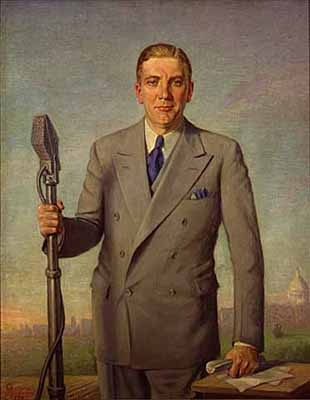
Painting of Governor Floyd B. Olson

Painting of Governor Floyd B. Olson

I’m not “IN” until a candidate rides a different horse into the starting gate. Until someone acts and sounds like Floyd B. Olson.

Click What would Floyd B. do? to find a candidate who puts them all the declared candidates to shame.

Floyd B. Olson was neither a Democrat nor a Republican. He was the first third party candidate elected Governor of Minnesota as the candidate of the progressive Farmer-Labor Party. Years later the Farmer-Labor Party joined with the Democratic Party to form the Democratic Farm-Labor Party (DFL).

I am not a liberal. I am what I want to be — a radical,” said Governor Olson to the 1934 Farmer-Labor party convention. A radical is not an ideologue. It’s a person who insists on going to the root of things. Olson was the nemesis of Wall Street, a champion of the people.

The Farmer-Labor party, a loose and, at times, tenuous coalition of farmers, workers, socialists, isolationists and progressives, coalesced around the idea that working together they would bring about a fairer distribution of income for themselves and increase social justice for the larger society. – Russell Fridley, Minnesota Law & Politics.

If and when someone like Floyd B. Olson rides a different horse into the starting gate for the 2016 White House horse race, I’ll be IN with both feet.  Until then, I’m not IN.

– Gordon C. Stewart, Chaska, MN, April 18, 2015.

The Choir – emblem of hope in a world at odds with itself

Listen in on John Rutter, one of the world’s great composers, discuss the choir as “a kind of emblem for what we need in this world, when so much of the world is at odds with itself….”

Disciples of Christ opposed Indiana RFRA

Before the national hubbub about Indiana’s Religious Freedom Restoration Act Christian Church (Disciples of Christ) leaders sent this letter to Indiana Governor Mike Pence urging him to veto the the bill.

March 25, 2015

The Honorable Michael R. Pence
Governor of the State of Indiana
200 W. Washington Street, Room 206
Indianapolis, Indiana 46204

Dear Governor Pence,

We write with respect to the Religious Freedom Restoration Act (RFRA). We urge you to veto the bill.

The Christian Church (Disciples of Christ) has been headquartered in Indianapolis for nearly 100 years. Although Butler University is no longer affiliated with the Christian Church (Disciples of Christ), its founder, Ovid Butler, was a Disciple and a noted abolitionist. The college, in keeping with our values, admitted women in a time when that was rare. We are the church that founded Christian Theological Seminary. Our offices are located on North Meridian. Our Indiana regional offices are located in Indianapolis as well.

Every two years our general assembly, a gathering of over 6000 people from across the United States and Canada, is held in a US city. In 2017 it is scheduled to be in Indianapolis as it was in 2009 and 1989. Like so many other host cities, we find Indianapolis to be a hospitable and enjoyable location for our people. Many of our leaders are citizens of this city, and we take particular pride when our selection process makes it possible to bring the assembly to our home town.

However, the recent passage in the state legislature of the RFRA bill is distressing to us. It is causing us to reconsider our decision to hold our 2017 gathering in Indianapolis.

Purportedly a matter of religious freedom, we find RFRA contrary to the values of our faith – as well as to our national and Hoosier values. Our nation and state are strong when we welcome people of many backgrounds and points of view. The free and robust exchange of ideas is part of what makes our democracy great.

As a Christian church, we are particularly sensitive to the values of the One we follow – one who sat at table with people from all walks of life, and loved them all. Our church is diverse in point of view, but we share a value for an open Lord’s Table. Our members and assembly-goers are of different races and ethnicities, ages, genders and sexual orientations. They have in common that they love Jesus and seek to follow him.

We are particularly distressed at the thought that, should RFRA be signed into law, some of our members and friends might not be welcome in Indiana businesses – might experience legally sanctioned bias and rejection once so common on the basis of race.

We are following closely the progress of this legislation. It will be a factor in whether we continue with our plans to hold an assembly in Indianapolis in 2017. We urge you to veto the bill.

Respectfully,

Sharon E. Watkins  Julia Brown Karimu, President    Ronald J. Degges, Pres. Gen.Minister & Pres.     Div. of Overseas Ministries    Disciples Home Mission

After Governor Pence signed the bill, the Christian Church (Disciples of Christ) took further action reported by The Huffington Post. Click “Disciples of Christ Church Threatens a Boycott Over New Law … that Allows GLBT Discrimination” to read the story.

Sometimes disciples of Jesus stand up for the rule of love. Do I hear hands clapping for the Disciples of Christ?

Nothing talks like money!

No sooner had Indiana enacted its new Religious Freedom Restoration Act (SB 101) than leaders of the Indiana Senate and House announced they would work to “clarify” the law’s intent by amendment.

How did this happen so  quickly? Money. Money. Money. Corporations, organizations and groups declaring they would boycott Indiana – no more conventions, meetings, etc. – meaning a huge economic hit to Indiana – because the new law opens the door to GLBT discrimination based on claims of religious scruples. Click HERE to read Views from the Edge‘s earlier post.

Real speech – words spoken and written – against the law is not new. The criticism was voiced loudly during the debated.  It passed anyway. Then, suddenly, another form of speech – money – entered the scene. Suddenly Indiana leaders are racing to the microphones to declare the law was meant to be inclusive, not exclusive.

Click HERE for the Washington Post video of Indiana Senate President Pro Tem David Long (R) and House Speaker Brian Bosma (R) feigning surprise and promising to do their best to rally their caucus to make clear the intent of the Religious Freedom Restoration Act.

– Gordon C. Stewart, Chaska, MN, March 31, 2015