Happiness

What is this searched after state we Americans pursue, one of only three “unalienable rights” specifically named as worthy of praise in the American Declaration of Independence – “the pursuit of happiness”?

Did the writers of the Declaration mean what we mean? Or was it something different? Why was such a subjective term as ‘happiness’ listed with Life, and Liberty?  Was there a reason why the pursuit of Happiness was listed as the last of the three? What it considered least important, of equal importance, or, perhaps, as most important?

Thomas Jefferson and John Adams, the principal writers of the Declaration, were well-schools in the Classics – the ancient Greek and Roman philosophers, novelists, playrites and poets; Democritus, Plato, Aristotle, Homer, Cicero and Diogenes. They read Plato’s Republic, Cicero’s Disputations, Aristotle’s Nicomachean Ethics, Metaphysics, and Politics; Virgil’s The Aeneid, and Sophocles’ Oedipus Rex in their original Greek or Latin language. They translated the New Testament Gospel of John from its original Greek into Latin and into English.

What did happiness mean to these classical writers? How did it inform Jefferson, Adams, Franklin, and the rest?

The word εὐδαιμονία’ (eudaimonia) expressed the Greek philosopher’s understanding of what Jefferson and Adams called happiness.

The term “eudaimonia” is a classical Greek word, commonly translated as “happiness“, but perhaps better described as “well-being” or “human flourishing” or “good life“. More literally it means “having a good guardian spirit”. Eudaimonia as the ultimate goal is an objective, not a subjective, state, and it characterizes the well-lived life, irrespective of the emotional state of the person experiencing it. ….

Socrates, as represented in Plato‘s early dialogues, held that virtue is a sort of knowledge (the knowledge of good and evil) that is required to reach the ultimate good, or eudaimonia, which is what all human desires and actions aim to achieve.

The Basics of Philosophy

Happiness, as understood in Aristotle’s Nicomachean Ethics, is the full human flourishing which is the highest of all good according to Nature.

The Committee of Five that wrote the final draft approved by the Second Continental Congress had something like that in mind.

One researcher claims the following:

“Actually, happiness was defined by the Continental Congress in the original May 1776 declaration of independence as “internal peace, virtue, and good order,” closely following Cicero’s Tusculan Disputations; the definition of happiness was drafted by John Adams, not Jefferson.” [Link inserted by VFTE]

[Unidentified source within longer article on the origins of “the pursuit of happiness in the American Declaration of Independence.] -Other Choices (talk) 00:14, 16 June 2012 (UTC)

Whether we are happy in America is a matter of perspective and definition. Some of us would say we are; others would say not. But a fresh look at the Declaration of Independence’s original meaning of the word as human flourishing might lead us to the discussion of “the full human flourishing which is the highest of all good according to Nature” in a consumer society intoxicated with distraction and superficial definitions of happiness.

  • Gordon C. Stewart, Chaska, MN, October 28, 2015
Re-Framing the Gun Conversation

“We hold these truths to be self-evident, that all men are created equal, that they are endowed by their Creator with certain unalienable Rights, that among these are Life, Liberty and the pursuit of Happiness.” – American Declaration of Independence, July 4, 1776.

Today in America we continue to define, weigh, and measure these three “unalienable Rights”.

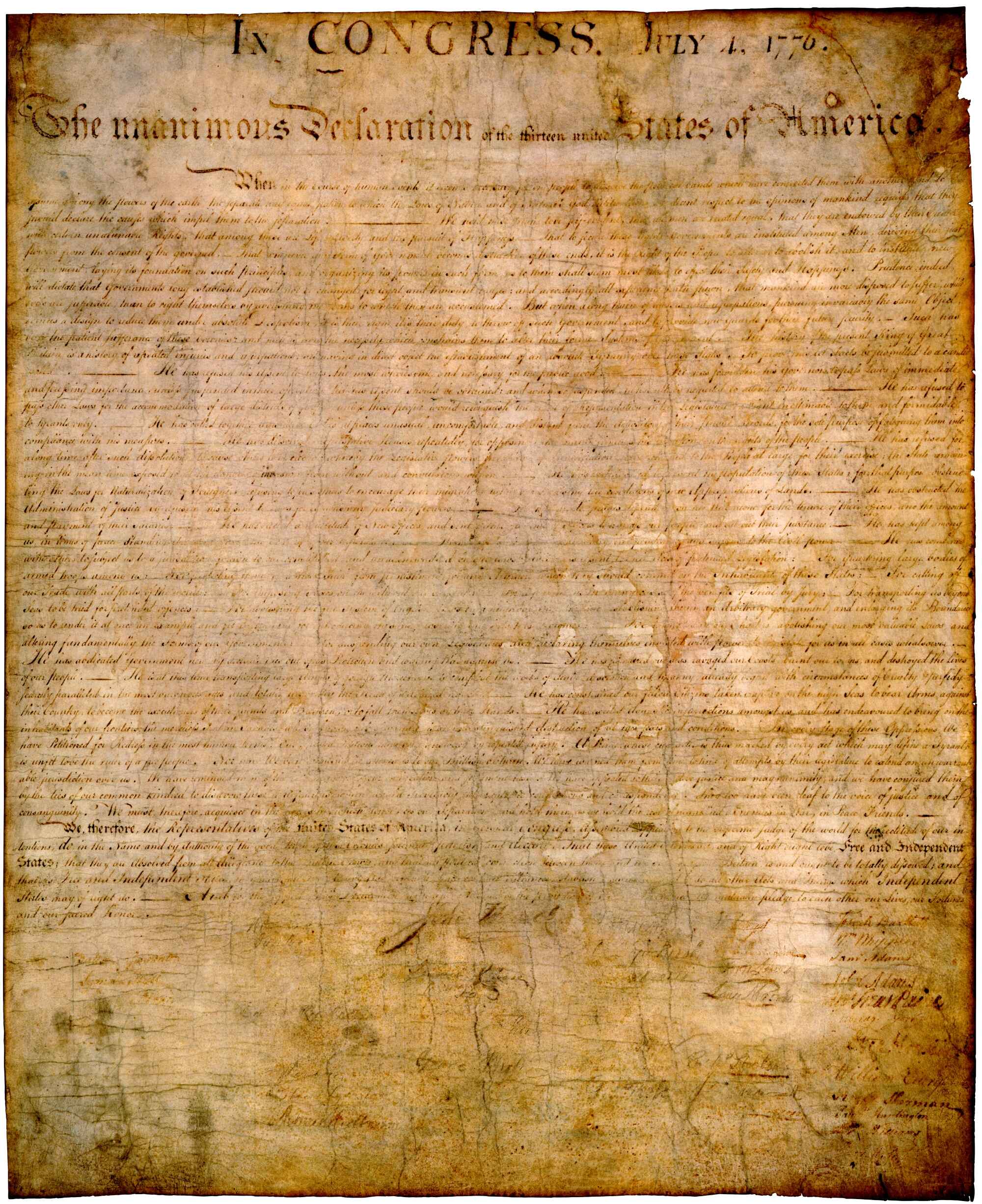
Original American Declaration of Independence

Original American Declaration of Independence

No matter whether the Declaration’s principal author, Thomas Jefferson, and the Committee of Five of the Second Continental Congress assumed these three Rights to be mutually compatible or whether they saw them in tension with each other, today in America there is little agreement about the meaning of, or the relations among, Life, Liberty, and the pursuit of Happiness. Instead we are locked in a heated debate about one of the three – Liberty – focused  on the Second Amendment to the U.S. Constitution, adopted in 1791.

Lost in the debate is the more reflective philosophical, moral, and religious pondering of the “unalienable Rights” which, in the eyes of Jefferson and the Second Continental Congress were essential virtues of a new republic. Then, as now, the way we understand life, liberty, and the pursuit of happiness is shaped, to some extent, by different cultural experiences. At the time of the Declaration of Independence, the differences were often between northern and southern colonies. Today the differences are still sectional, but perhaps even more, they are between rural and small town, urban, and suburban cultures and settings.

Rural and small town populations, especially those who plow the fields and grow our food, tend to view guns as instruments that support life and the pursuit of happiness. A gun is used for hunting, protecting the animals from coyotes, or for skeet shooting. The rifle by the back door is part of rural life, not meant to be used on another human being, except in the unlikely event of a burglary. The right to own and use a gun is a matter not only of liberty but of life and the ability to pursue happiness. The gun is a family friend.

Urban populations, especially those living in densely populated centers with the high crime rates that accompany economic deprivation, see guns differently. Guns in their neighborhoods are not for hunting, protecting animals, or shooting coyotes. They are threats to Life and the pursuit of Happiness. The cities are divided between very wealthy, middle class, and the economically impoverished neighborhoods where gun shots are heard while putting children to bed. Residents who can afford to leave for the suburbs to pursue Happiness sometimes do.

Suburban populations are a blend of former rural and urban dwellers with native suburbanites. Some grew up on the farm or in small towns where there was little or no tension among the three unalienable rights. Some left the city in pursuit of happiness or in search of a safe place to live. Some, born and raised in the suburb, can imagine neither the farm, small town, nor the city as a preferred place to live. In the suburbs it is a matter of some confusion and debate whether Liberty, as in gun rights, supports or conflicts with, Life and the pursuit of Happiness.

The National Sheriffs Association, serving rural and small town America, takes a conservative position on gun rights and gun control, while the National Association Chiefs of Police and International Association of Chiefs of Police, serving urban, small cities, and large suburban communities, call for improved gun control legislation.

Although informed debate about the origins and intent of the Second Amendment is good and necessary, a preoccupation with the Second Amendment all but insures the demise of a productive national conversation.

We would do better to look earlier in our history to the Declaration of Independence which defined the goals of a soon-to-be-born American republic. To this writer’s knowledge, there has been little if any discussion of gun rights and regulation in the context of the three unalienable rights explicitly lifted up in the document we all celebrate on July 4th.

Those who declared American independence from Great Britain in 1776 could not have imagined that one of the three named unalienable Rights — Liberty — would stand as the sole Right without reference to Life and the pursuit of Happiness.

Few venues lend themselves to a mature discussion among rural/small town, urban, and suburban American experiences. In theory, the 50 state legislatures and the United States Congress provide the forums for thoughtful discussion and the search for solutions by representatives of rural, urban, and suburban constituents. But in today’s America where representative government itself is often viewed with distrust and even fear, the likelihood of success is far less than the Founders might have hoped.

Where and how, then, do we, the people — rural and small town, urban, and suburban — citizens of the diverse country we all love, come together to discuss our life in light of the creative tension of the rights to Life, Liberty, and the pursuit of Happiness in 2015?

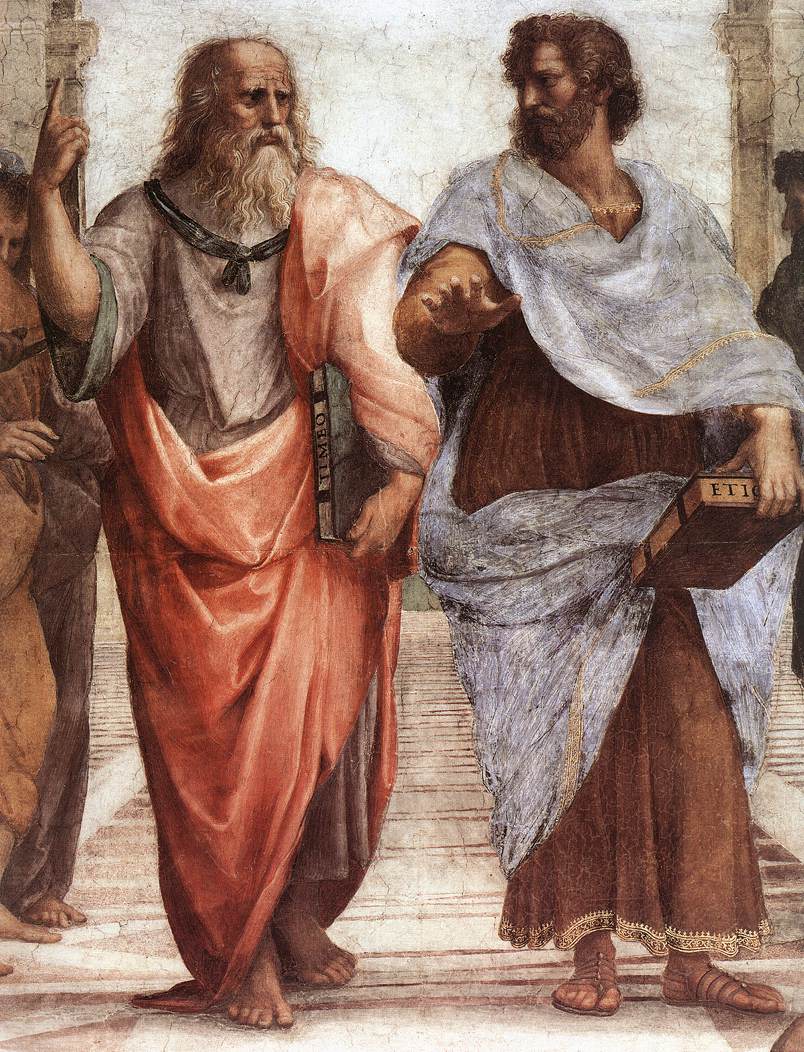
Aristotle (right) talking with Plato in The School of Athens by Raphael

Aristotle (right) talking with Plato in The School of Athens by Raphael

In 2015 one could hardly say we in America are happy. In the light of current tragedies of gun violence and our socio-poliictal history, we might do well to remember the wisdom of Aristotle (384—322 B.C.E) to help guide citizens of a constitutional republic:

Happiness depends upon ourselves.

  • Gordon C. Stewart, Chaska, MN, October 20, 2015

Shabbat Bereishit – The Sound of Your Brothers’ Bloods Cry Out to Me From the Earth

Rabbi Eric Gurvis’s post on Cain and Abel and the debate about guns and mental health came to our attention this morning after posting “Non-Verbal Communication: Cain Looking at Us”.

Source: Shabbat Bereishit – The Sound of Your Brothers’ Bloods Cry Out to Me From the Earth

The Presidential Debate

The pundits focused on Hillary and Bernie. They ignored a third candidate on the stage who fared well. His name is Martin O’Malley. He didn’t hit the home run the gurus said was required to bring him into the race, but he represented his record clearly with poise and with the dignity the American people have a right to expect of the person in the Oval Office. He had the stature of a President.

The Bernie-Hillary show was a media creation, a script which, to his great credit, Moderator Anderson Cooper did not follow. Cooper asked hard questions to every candidate with the first questions of the evening. Cooper was a professional journalist, working for the American people to flush out the inconsistencies and push for the truth of what a candidate really stands for. Bernie danced a jig on his poor record on gun control and his votes on the Brady Bill; Hillary danced on the email controversy, her Iraq War vote, and her change of opinion on the TPP trade agreement. Cooper was the consummate moderator, insisting that candidates answer the question they were asked, but respectful and fair.

Jim Webb and Lincoln Chafee were like minor leaguers on a Major League field in the early playoffs. There were five candidates on stage but only three major leaguers.

Webb performed poorly as the most conservative candidate who suffered from a shirt collar that made him look tight as a tic. He looked like the kid whose parents dressed him in a tux for the senior prom – very unnatural, ill at ease, unable to be his winsome self.  Chafee  stood by his progressive voting record and admirable credentials as a former U.S. Senator and Governor of Rhode Island, but his facial eccentricities and persona do not help his candidacy. Although he might make a great president, he’d be very hard to watch for four full years.

O’Malley, on the other hand, looked and sounded the part of a presidential candidate. Or, perhaps, Vice-Presidential. Like Joe Biden, O’Malley is both smart and tough, seasoned and fresh, just the kind of running mate Hillary or Bernie might choose, if either of them wins the Democratic Party nomination. The problem, of course, is that O’Malley is another Easterner, which all but eliminates him according to the prevailing wisdom that the best ticket is geographically balanced.

But, if in the debates ahead, Bernie and Hillary should falter, Martin O’Malley is someone to watch. If I were Bernie or Hillary, I’d sleep with one eye open. Remember the tortoise and the hare.

  • Gordon C. Stewart (Bernie supporter), Chaska, MN, October 14, 2015.


Professors and Jack-hammer Operators

Is there a difference between being retired and being dead?

Is there a difference between being employed and being dead?

It all depends, perhaps. Is your retirement deadly boring? Is your employment deadly meaningless? It all comes down to “calling” – the sense that one is called to something.

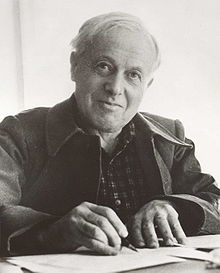
Eugen Rosenstock-Huessey

Eugen Rosenstock-Huessey

Social philosopher Eugen Rosenstock-Huessey noted how curious is was that in their leisure time professors read books and jack-hammer operators rode motorcycles. If it really was leisure, he said, the professors who worked with ideas would be riding motorcycles; the jackhammer operators whose ears were filled with noise all week would be reading philosophy, history or novels.

I think  need a motorcycle!

P.S. My audiologist said I have the ears of a 45 year old jack-hammer operator.

  • Gordon C. Stewart, Chaska, MN, Oct. 1, 2015

Pope Francis and Speaker Boehner

Is it a coincidence that Speaker John Boehner announced his resignation the morning after his invited guest, Pope Francis, spoke to a joint session of Congress?

Pope Francis and John Boehner - Joint Session of Congress

Pope Francis and John Boehner – Joint Session of Congress

Before his address to Congress yesterday Pope Francis turned to the two former altar boys behind him on the dais.  He looked quickly at Vice President Joe Biden; he looked much longer into the eyes of his host, Speaker John Boehner. It was warm but it also seemed like something else – a moment between a priest and penitent?

The Speaker wiped his eyes, as any faithful Catholic would be prone to do.  He cried, as he often does, but this time as if to ask in humility, “Who am I, John Boehner, a mere altar boy, to share this powerful platform with the Holy Father? I am not worthy that you should come under my roof.”

One had to ponder Mr. Boehner’s inner turmoil listening to the Pope’s words gently reprimand leaders who forget the Golden Rule, push aside the poor, ignore or criminalize immigrants and migrants, prefer aggression to dialogue, ignore the common good for private gain, put people on death row, and refuse to act responsibly on climate change.

What do you do sitting behind the Pope?

You take out your handkerchief at the great privilege of hosting the Pontiff and the honor of being in his presence, but perhaps also because you recognize the prevalence of sin, as in Francis’ quotation from Thomas Merton (see quotation below) or his choice of the socialist Dorothy Day of the Catholic Worker Movement as one of four Americans to emulate.  And, if you haven’t already done so in your private time with the merciful Pope Francis, you might go to confession, repent, and do penance.

This morning John Boehner announced his resignation as Speaker of the House at the end of October. Preparing to speak to the United Nations in New York, one can imagine Pope Francis blessing John while lamenting Boehner’s colleagues’ loud cheering, wondering whether anyone but Joe and Johnny was paying attention the day before.

  • Gordon C. Stewart, Chaska, MN, Sept. 25, 2015

Quote from Pope Francis commendation of Thomas Merton as an American example to follow:

A century ago, at the beginning of the Great War, which Pope Benedict XV termed a “pointless slaughter”, another notable American was born: the Cistercian monk Thomas Merton. He remains a source of spiritual inspiration and a guide for many people. In his autobiography he wrote: “I came into the world. Free by nature, in the image of God, I was nevertheless the prisoner of my own violence and my own selfishness, in the image of the world into which I was born. That world was the picture of Hell, full of men like myself, loving God, and yet hating him; born to love him, living instead in fear of hopeless self-contradictory hungers”. Merton was above all a man of prayer, a thinker who challenged the certitudes of his time and opened new horizons for souls and for the Church. He was also a man of dialogue, a promoter of peace between peoples and religions.

[Bold print added for emphasis by Views from the Edge]

Bernie Sanders at Liberty University

The very thought of Democratic Socialist candidate Senator Bernie Sanders (I-VT) speaking at a compulsory convocation at Liberty University, founded by the late Rev. Jerry Falwell who also founded the Moral Majority, seemed far-fetched until it happened. What happened is an example to follow: a genuine, face-to-face, civil discussion about America, the meaning of morality, and what the Bible has to say about justice in our time.

C-Span’s coverage of the complete 1 hr. 5 min. convocation, including Christian evangelical praise music, and prayer before and after Sanders’ presentation, is all the more remarkable.

  • Gordon C. Stewart, Chaska, MN 55318

I’m Sorry

Remember Love Story’s line: “Love means never having to say you’re sorry”?

It was mistaken then, and it’s mistaken now. Love often means saying your sorry. Repeatedly. It means some sadness. It means taking responsibility.

Watching and listening to Hillary Clinton over these last weeks and months leads me to another version of the Love Story line, created by the increasing perception of entitlement.

“Haughtiness means never having to say you’re sorry”… except when it becomes necessary to rescue one’s own ambitions. The smirk, the tilt of the head, the rolling of the eyes speak louder than “I’m sorry”.

http://www.cnn.com/2015/09/08/politics/hillary-clinton-private-email-abc-news-apology/

Sorry (kinda/sorta) for being so political!

  • Gordon C. Stewart, Chaska, MN, September 10, 2015

An American Paradox

“Our laws are not generally known; they are kept secret by the small number of nobles who rule us.”

[Franz Kafka, “The Problem of Our Laws,” Parables and Paradoxes, Schocken Books, New York.]

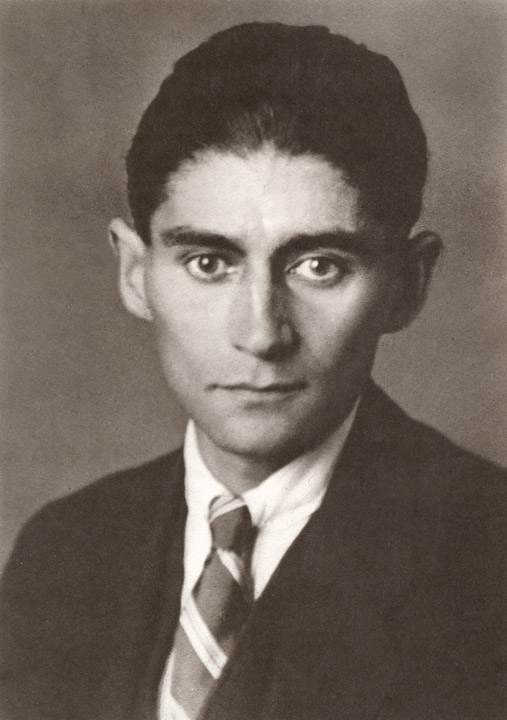
Franz Kafka

Franz Kafka

The laws of which Kafka wrote in the early 20th Century are not the ones peculiar to his time. They are not written in legislation. They are not acts of Congress. They are not the federal, state, or local statutes and ordinances lawyers argue in courts of law. The laws of which he speaks are not visible to the masses. They are the secret of the nobles. They are laws of a different order.

“The laws were made to the advantage of the nobles from the very beginning; they themselves stand above the laws.”

According to Kafka, the nobles themselves have inherited the Law as a mystery whose origins are hidden in antiquity. The nobles believe in this Law, but, in fact the Law is whatever the nobles do.

We, the populace who live under the Law of the nobles, dream of a time “when everything will have become clear, the law will belong to the people, and the nobility will vanish. This is not maintained in any spirit of hatred against the nobility; not at all, and by no one. We are more inclined to hate ourselves, because we have not yet shown ourselves worthy of being entrusted with the laws.”

Franz Kafka knew nothing of Donald Trump, the noble who knows the Law is whatever the nobles do and convinces the masses that we, too, can become nobles.

“Actually,” wrote Kafka, “we can express the problem only in a sort of paradox: Any party that would repudiate, not only all belief in the laws, but the nobility as well, would have the whole people behind it; yet no such party can come into existence, for nobody would dare to repudiate the nobility. We live on this razor’s edge. A writer summed the matter up in this way: the whole visible and indubitable law that is imposed upon us is the nobility, and must we ourselves deprive ourselves of this one law?”

  • Gordon C. Stewart, writing from the shoreline of Lake Shagawa, Ely, MN, September 9, 2015.

Who Is Emily Hedges?

Emily Hedges

Emily Hedges

Emily’s not just any writer. She’s a good one!  Emily’s review of Go Set a Watchman, Harper Lee’s controversial sequel to To Kill a Mockingbird, appeared on Views from the Edge on Thursday.

Parenting three adopted children with husband Joe, she carries a history of courageously outgrowing herself. Today she’s thriving at Dartmouth College, earning her master’s degree in creative writing and student-teaching basic writing to undergrads. Kay and I became friends the Hedges during their time here in Minnesota.

New Hampshire is politically hot right now in the run-up to the New Hampshire Presidential Primaries. Donald Trump is making it big.  So what happens when conservative parents from Oklahoma take over the television during a family visit in New Hampshire?

You may recognize yourself in this highly personal piece. She’s sensitive to her parents, although she no longer agrees with their conservative, apocalyptic view of the world. She constantly struggles with when to bite her tongue and when to speak up. Now that her children are old enough to be influenced by their beliefs, the stakes have never been higher.

Check back with Views from the Edge for her story Trumped.

  • Gordon C. Stewart, Chaska, MN, September 5, 2015.