Before the gods I will sing

Many gods? More than one?

Why does the psalmist speak of ‘gods’ — “before the gods I will sing Your praise” (Ps.138:1) –as though there is more than the One the psalmist proclaims? Why does the First Commandment of the Ten Commandments say, “You shall have no other gods before Me”?

These ‘gods’ are real. They do not exist only in our imagination. They make their appeals to our human need and aspirations in the midst of time. Like the First Commandment, Psalm 138 recognizes the ‘gods as contenders with the One God of heaven and earth. It goes to the heart of the human longing for closer-at-hand gods, the imposters of God that charm us with their melodies and promises.

...before the gods I will sing Your praise.” (Ps. 138:1 NIV)

We live among the ‘gods’. We see them with our own eyes. We hear them with our own ears.

  • Children held in squalid ‘detention’ camps in the name of national security. Parents whose children have been kidnapped and lost in the name of national security. The multitudes walking on blistered feet in hopes of crossing the Rio Grande to safety. The asylum-seekers fleeing cruel regimes. They are all living under the siege of the ‘gods’, resistance to which is commanded the First Commandment.
  • I will sing Your praise before the gods. I will not sing in silence. I will not praise You in hiding. I will publicly defy the ‘gods’ that solicit my praise and obedience. I will place my hope and trust where it belongs. Before the gods that divide and terrorize I will sing Your praise.
  • I will sing Your praise before the gods of national security that kidnap babies, separate families, and stereotype those seeking safety as criminals, drug runners, rapists and terrorists.
  • I will sing Your praise before the gods and not be silent when my president deceives the public, announcing that asylum-seekers may now apply for asylum in Guatemala, one of the nations from which the poor flee for safety because of human rights violations, whose military we train and whose arms we supply.
  • I will sing Your praise before the gods of homophily that erase the American aspiration of e pluribus from e pluribus unum, leaving the unum of whiteness.
  • I will sing Your praise before the gods of my country’s original sins: stealing the continent from its indigenous peoples’, and stealing African men, women, and children to become slaves.
  • I will sing Your praise before the gods under which the constitutional checks and balances that protect a democratic republic from totalitarian rule are eroded.
  • I will sing Your praise before the gods of fossil fuel profiteers and a government that denies climate change, removes restraints protecting clean air and water, and scorns international cooperation necessary for responsible action in the face of climate change.
  • I will sing Your praise before the gods of greed that amass wealth, consolidate power, and skirt Congress to proved arms to Saudi Arabia in spite of an American journalist’s dismemberment and supplying arms for continuance of a proxy war in Yemen.
  • I will sing Your praise before the gods of racist nationalism that excite the masses — Mein Kampf, the speeches of Hitler, and strategies for the seizure of power — now echoing from the Oval Office and campaign rallies.
  • I will sing Your praise before the gods that divert attention from atrocities at the Southern border with tweets describing the congressional district represented by the Chair of the House of Representatives’ Committee on Oversight and Government Reform as a “disgusting rat and rodent infested mess” immediately following the Rep. Elijah Cummingspointed criticism of inhumane conditions for which the Trump Administration is responsible.
I will praise You, LORD, with all my heart;
      before the gods I will sing Your praise. (Ps/ 138:1 NIV)
 For though the Lord is high, he regards the lowly,
      but the haughty he knows from afar. (Ps. 138:6 NRSV)

Before the gods: Jesus of Nazareth

One of them . . . tested [Jesus] with this question: “Teacher, which is the greatest commandment in the Law?” Jesus replied: “‘Love the Lord your God with all your heart and with all your soul and with all your mind.’ This is the first and greatest commandment. And the second is like it: ‘Love your neighbor as yourself.’ All the Law and the Prophets hang on these two commandments.” (Matthew 22:35-40 NIV)

Before these ‘gods’ — and so many more — I will sing Your praise.

  • So help me God, in the name of Jesus, Gordon C. Stewart, Chaska, MN, July 28, 2019

Truth-making and the Lie-making Machine

Special Counsel Robert Mueller

Special Counsel Robert Mueller’s appearance before Congress brings a sliver of hope that truth will prevail. Living in a surreal era where absurdity is the rule rather than the exception led me back to words from an earlier time and another country, the description offered by French novelist and absurdist philosopher Albert Camus (1913-1960).

Never before has the individual stood so alone before the lie-making machine. We used to wonder where war lived, what it was that made it so vile. And now we realize that we know where it lives, that is inside ourselves.

Albert Camus, Notebooks

If you see a turtle on top of a fencepost, you can be sure it didn’t get there by itself.

Gordon C. Stewart, Chaska, MN, July 24, 2019

Criticism and Dissent: Why don’t you just leave?

It’s almost always wise to take a deep breath. Step back as though you’re looking in from the outside, rather ‘objectively’ you might say, in order to see more clearly what’s happening.

“Why don’t you just leave/ go back where you came from?” has a certain logic and a history. Click HERE for the entire Wikipedia article on propaganda.

Ergo decedo (traitorous critic fallacy)

Ergo decedoLatin for “therefore leave” or “then go off”, a truncation of argumentum ergo decedo, and colloquially denominated the traitorous critic fallacy,[1] denotes responding to the criticism of a critic by implying that the critic is motivated by undisclosed favorability or affiliation to an out-group, rather than responding to the criticism itself. The fallacy implicitly alleges that the critic does not appreciate the values and customs of the criticized group or is traitorous, and thus suggests that the critic should avoid the question or topic entirely, typically by leaving the criticized group.[2]

Argumentum ergo decedo is generally categorized as a species of informal fallacy and more specifically as a species of the subclass of ad hominem informal fallacies.

In politics

Argumentum ergo decedo is directly related to the tu quoque fallacy when responding to political criticism. As whataboutism is used against external criticism,  is used against internal criticism.

Examples

Critic: “I think we need to work on improving Nauru‘s taxation system. The current system suffers from multiple issues that have been resolved in other places such as Tuvalu and the Marshall Islands.

Respondent: Well, if you don’t like it, why don’t you just leave and go somewhere you think is better?”

Critic: “Our office’s atmosphere is unsuitable for starting constructive conversations about reforms for the future of the company. A number of improvements are needed.

Respondent: “Well, if you don’t like the corporate system, then why are you here? You should just leave!”

A Personal Reflection

A Personal Reflection

Last night’s campaign rally in North Carolina sent chills up my spine. “Send her back! Send her back!” has a history. It paints criticism of the nation’s policies and behavior as unpatriotic. But patriotism (love on one’s country) is not nationalism. Patriotism is love of country. Nationalism makes the nation god.

We’ve heard these words before. I heard them used during the reign of terror fired up by Sen. Joseph McCarthy. II heard them in response to Ruby Bridges in Little Rock. I heard them from George Wallace and sheriffs, Selma, and Chicago. I heard them again when criticizing our policy in Vietnam War. Back then it was “America: Love it or leave it!” Now, as then, the cry to go home is not a criticism; it’s ergo deceto –a bullying response to criticism. Constitutional democratic republics assume a baseline of respect between and among people who disagree. No scapegoating. No name calling. No dismissal of each other as enemies, and a full, thoughtful discussion of policy and criticism. Wherever criticism is met with the traitorous critic fallacy, constitutional democratic republics are put to the brink of fascism.

Flash back: March 9, 1954: Dissent and Loyalty

We must not confuse dissent with disloyalty. . . . (McCarthy’s actions) “have caused alarm and dismay amongst our allies abroad and given considerable comfort to our enemies. And whose fault is that? Not really his. He didn’t create this situation of fear; he merely exploited it — and rather successfully. Cassius was right. ‘The fault, dear Brutus, is not in our stars, but in ourselves.’ Good night and good luck.

Edward R. Murrow, March 9, 1954, CBS; Commentary credited with stopping McCarthyism.
  • Gordon C. Stewart, Chaska, MN, July 18, 2019.

Pepé Le Pew and the Big Parade

Pepé Le Pew in our back yard

A strange thing happened this morning, July 4. I kid you not. True story. We had a visitor in our yard for the very first time in the two years we’ve been coming to the cabin by the wetland. Pepé Le Pew chose July 4 to say hello — a skunk just beyond the deck in broad daylight, strolling toward the woods.

American Civics 101

We’re nowhere near a television this Fourth of July, and that’s a good thing. It allows for memory and imagination. I remember all those years when we prided ourselves in not doing what they were doing in Red Square during the Cold War. Tanks and missile rolled through Red Square, a demonstration of military might in a world of nuclear threats. The generals sat and stood in the places of honor.  In Washington, D.C. there was no show of military power on the Fourth of July. We didn’t do that in a democracy. I “knew” that because my teachers, parents, and church all told me so. We prided ourselves that in America the military was under civilian rule; the Secretary of Defense was a civilian, not a general. That was just who we were, and who we were not, said our teachers, parents, faith communities, and those we elected to represent us in Congress or the White House. They’re all dead now.

The Big Parade years later

The Fourth of July parades in our nation’s capitol, like the thousands of smaller parades in American cities and towns, had no special VIP section for the wealthier folks who could afford the price of sittting there. The thought never crossed our minds. We were one nation that declared E pluribus unum. The rest of the year we were poor, middle class, or rich, eating in soup kitchens, Big Boy’s, or country clubs, but on this day we were the same. We were just Americans. We had no caste system like India. And we were all the same, irrespective of political affiliations, at the ballot box. No one’s vote was greater or smaller than another’s.

The only people who made money at Fourth of July parades stood behind the hot dog stands and the popcorn stands, but even then, most of the profits went to charity. No one made money on the Fourth of July. I knew this because our teachers, parents, faith communities, and elected officials told us so. 

How soon we forget

President Dwight David Eisenhower’s last speech to the nation warned us. The retired General who had commanded the largest military force in history during Word War II was a military hero who hated war. The greatest threat to democracy, he said was not communism or any other threat from beyond our borders. The great threat to democracy itself was the “the military-industrial complex.” 

Yesterday Eisenhower’s latest successor communicated with the nation in a tweet:

Big 4th of July in D.C. ‘Salute to America.’ The Pentagon & our great Military Leaders are thrilled to be doing this & showing to the American people, among other things, the strongest and most advanced Military anywhere in the World. Incredible Flyovers & biggest ever Fireworks!

Donald J. Trump, July 3, 2019
  • Gordon C. Stewart, Chaska, MN July 4, 2019.

Independence Day 2019: Who shall we become?

A NATIONAL HOLIDAY: “WHO ARE WE? WHAT HAVE WE BECOME?

image 0f U.S. Department of Homeland Security Customs and Border Patrol logo

Pulitzer Prize critic photographer Philip Kennicott‘s “We used to think photos like this could change the world. What needs to change is who we are” discusses the disparate responses to the photograph of the father and daughter who drowned trying to cross the Rio Grande. This Fourth of July it raises questions that deserve a thoughtful national conversation.

Kennicott’s op ed was a week ago, which means it’s mostly out-of-mind. Other photos, video coverage, and news stories have come to the fore, but our responses to them are as different as Kennicott described:

There is a fundamental difference between these two interpretations: One requires time and effort, an act of engaged empathy, while the other is a quick judgment that reaffirms an existing sense of the world. The power of a photograph like this depends on the time we devote to it and our basic sense of who these people are.

PhilipKennicott, Who are we? What have we become?, Washington Post, June 36, 2019

People of my ilk gasp with horror at the sight of real people lying face down on the shore of the river they had hoped to cross, the exodus from hopelessness to a better life in the land of promise on this side of the shore. Others see the father and child as the consequence of having paid the price for breaking the law.

THE FAULTLINE AND ABYSS

Stories that have replaced the photo from the shore of the Rio Grande come so quickly we don’t have time to stop and think about what we’re seeing, or hearing, and why we’re seeing or hearing them the way we are. The focus of the faultline of public perception is Donald Trump. We either love him or hate him with little room between visceral disgust and vociforous affirmation. Bridging the two sides of the chasm is anathema to both sides of the political-cultural chasm. If we don’t stop and find a way forward in the USA, all of us will fall into the abyss.

OXYMORONIC PERCEPTIONS

News of Mr. Trump crossing into North Korea last week is a case in point. The US President breaks precedent by stepping across the dividing line between the two halves of the Korean Penninsula.

Perception One:

People of my persuasions immediately dismiss it as one more stunt. The North Korean leader who called Mr. Trump a baby and threatened a nuclear attack and the American President who called Mr. Kim “Little Rocket Man” have laid aside their schoolyard name-calling and bullying. But it’s confusing. We are the anti-war people. We stand for peace. We are the peacemakers who likely would applaud if it were some other president. Mr. Trump just did what my faith tradition called for in 1967:

The church, in its own life, is called to practice the forgiveness of enemies and to commend to the nations as practical politics the search for cooperation and peace. This search requires that the nations pursue fresh and responsible relations across every line of conflict, even at risk to national security, to reduce areas of strife and to broaden international understanding. Reconciliation among nations becomes peculiarly urgent as countries develop nuclear, chemical, and biological weapons, diverting their manpower and resources from constructive uses and risking the annihilation of humankind.

Confession of 1967, Presbyterian Church (USA)

Mr. Trump and Mr. Kim shocked the world by doing what the Confession of 1967 called for. Whatever reasons underlie what happened, whether the handshakes were genuine or disingenuous, when something happens that we see as good, should we not encourage more, not less, of the same?

PERCEPTION TWO:

People who support President Trump applaud him for singularly bold leadership, daring to do what no previous president has done. Mr. Trump has once again defied the operations of “the deep state” in a way that puts the faux news media back on their heels. Calling Mr. Kim “Little Rocket Man” and threatening to obliterate North Korea were strategic steps that made the breakthrough possible. This is no ordinary president. Mr. Trump is a patriot’s patriot, strong, strategic, and deserving of the nation’s unconditional support.

But it’s confusing.This support rises from historic Cold War perceptions of North Korea, China, and the Soviet Union as godless enemies of all that is good in the West. Being tough on communism was required to make us secure in a world where softness would mean surrender — the end of freedom, free markets, religious freedom. Insuring national security comes first, and national security means elimination of the enemy, not accommodation.

MOSQUITOES AND FLY SWATTERS

When a people becomes anxious, when up is down one day and left is up is down the next day, the mind gets scrambled in search of solid ground.

Reason and civility become the pests in the living room. The fly swatters come out. Hard lines get drawn. Some of us are mosquitoes; some of us are fly swatters. There is no room for conversation between mosquitoes and fly swatters.

INDEPENDENCE DAY

The Fourth of July comemorates the Declaration of Independence, the birth of the American Republic. There will be parades in cities and small downs across America, and a huge parade in the nation’s capitol sure to further divide an indivisible nation. The American flag will fly everywhere. Who we are, what we have become, and who we shall become beg for reasonable discussion. Without it we will be a swarm of mosquitoes with fly swatters and a nuclear arsenal.

  • Gordon C. Stewart, Chaska, MN, July 3, 2019

Mr. Slicker and the Egg Robbers

Mickey Mouse comicstrip panel of Mickey reading invitation to Blaggard Mansion at 10o'clock tonight.
Comic strip panel from Mickey Mouse, “In the Interest of Science,” created by Floyd Gottfredson and published December 1932

Honesty and the Egg Robbers

Mr. Slicker and the Egg Robbers — 1930 AND 2023

“Mr. Slicker and the Egg Robbers” was set in Mouston, where Mickey Mouse opens up a miniature golf course on his farm. Soon a very tall mouse, Mr. Slicker, wows the citizens of Mouston, tries to woo Minnie away from Mickey, steals Minnie’s family’s farm eggs, and comes to Marcus Mouse’s (Minnie’s father) rescue when a draught and the egg thefts leave him unable to pay the mortgage. Mr. Slicker offers to pay off the family’s debt, but only if Minnie will marry him. When Mickey comes to the rescue with savings from his miniature golf course, a stange thing happens. The Mouston Bank is robbed. Mr. Slick goes to the police to pin the robbery on Mickey.

Long story short — if you want the full story, click THIS LINK — Mickey, surmising that Mr. Slicker is behind the egg thefts and the bank robbery, convinces Slicker’s right hand man that Mr. Slicker has no intention of cutting the robbers in on the heist. Slicker and the robbers are arrested, and Minnie throws a dinner party for Mickey, her hero!

REDEEMING THE COIN OF THE REALM

It’s an old story from 1930 but it still brings a smile to those who are not fooled by slickers in high places who seem never to have learned what most country folks have always known but now seem to have forgotten: honesty is the coin of the realm. Please, take Slicker down from the flagpole where the American flag once waved.

  • Gordon C. Stewart, Chaska, MN, June 27, 2019.

NO WAR AGAINST IRAN

Hours before authorization for military strikes oft Iran (and sudden reversal), an email from RABBI ARTHUR WASKOW‘s arrived in my inbox. Views from the Edge republishes it without further comment.

Although the focus of Rabbi Waskow’s epistle is Iran, the opening paragraph distills into a few words a perspective we share. There are “three urgent impending disasters:” war with Iran; the war that threatens to deport “millions” of immigrants; and the war against Mother earth.

EMERGENCY: NO WAR AGAINST IRAN

“Dear Gordon, This morning I started writing a Shalom Report letter that addressed three urgent impending disasters: A Trumpist war against Iran; a Trumpist war against immigrants living in American cities and towns, whom he just threatened with imminent sudden mass deportations of “millions”; and an escalation of the Trumpist war against Mother Earth.

“The Trumpist obsession with subjugating others is at a tipping point – between utter lethal disaster or the deepening and broadening of resistance.

“I thought we had about a week. I went to an eye-doc appointment. It turned out we had only hours. setting aside the other emergencies. Still with dilated eyses, I am trying to see clearly, and I am for the moment

“I ask you right now, as soon as your receive this, to act against the Trumpists’ plans to attack Iran. After that, please read the rest of this letter where I will outline what I think is going on..

“What to do now:

{“contact.first_name, please call your members of Congress. Here’s what I invite and encourage you to do:

“1) Call the Congressional Switchboard at 202-224-3121. Call three times, for your two Senators and one Congressperson. (If you live in DC and have no Senators, call Senator Schumer, the Minority Leader.)

“2) Ask the Capitol operator for your representative/senators, and when connected say your own version of this:

“‘My name is _ and I am a constituent living at [your address]. I’m calling to urge [Congressperson/Senator X] to publicly oppose U.S. military attacks on Iran. I urge [her/him] to tell the president he does not have constitutional authority for any attacks.’

“‘[Congressperson/ Senator X ] should point out any retaliatory strike on Iran for what happened to the U.S. drone could spiral out of control. Instead, I strongly urge [[Representative/Senator X] to call for the U.S. to return to diplomacy, including supporting a convening of the UN Security Council to work to defuse tensions in this global crisis.'”

“Gordon, I urge you to step up your activism today to prevent all-out war with Iran. The Shalom Center will have a number of suggestions for actions you can take over the next few days, but today I urge you to call Congress right away as critical meetings are happening in D.C. right now.

“A potential U.S. retaliatory strike is likely being discussed in the White House as I write this. The White House has said they will be briefing Congressional leaders later today and that is often a sign that an attack is imminent. Meanwhile, Speaker Nancy Pelosi has called a caucus meeting of Democrats for later today. Members of Congress will be the key here and active peace-loving people need to push them to stand in Trump’s way.

“The only way to pull us out of this spiral toward war is for supporters of peace like you to get active and push Congress to stand up to the president and tell him clearly that he has no authority to go to war.

“Please call now.

“Background:

“But the Trumpist Regime worsened the sanctions. They were aimed at totally disrupting the Iranian economy and literally starving the Iranian people. They were beginning to damage daily life –- all because the Trumpists could not bear an Obama-initiated agreement that offered hope for bringing Iran back into the international community. Faced with enormous US pressure, the Europeans began to cave in.

"Third big step on the road to war: Trump threatened nuclear war if Iran were to resist by interfering with oil shipments in its Gulf.

 "It is not clear whether the claims of such interference are lies as blatant as the “Tonkin Gulf attacks” in 1964 that never happened; but even if they were real, they were defenses against a devastating economic war imposed by the Trump regime.

"Now it is clear – Iran and the US agree – that Iran shot down an unmanned drone. Iran says it was flying over Iranian territory.The Trumpist regime claims it was over the Gulf. No matter where it was, cause not for war but for diplomacy. And given the history of those in Washington now unleashing the mad dogs of war, veterans of the lies about Iraqi nuclear weapons, and given the history of Trumpist efforts to provoke a war, I very much doubt the US claim. It would fit Trumpist policy to send a drone over Iranian territory.

“There are more thoughts about the past that few Americans remember but practically all Iranians do:

“The CIA’s overthrow of a democratically elected New Dealish Iranian government in 1953 to prop up a tyrannical Shah who used torture against his critics. Why this CIA/ US action? Because the Mossadeq government intended to nationalize American oil companies that were draining Iran of its resources for US profits.

“When the Islamic Revolution succeeded in 1979 and the Shah fled, the US refused to extradite him to stand trial for his crimes. Americans remember only that Iranians reacted by detaining dozens of Embassy staff for a year.

“In 1980, Iraq under the rule of Saddam Hussein invaded Iran. The US supported Saddam, even aiding him in using chemical weapons against Iran. The war ended in 1988. The death toll on both sides was about 500,000.

“This is not a history likely to inspire trust for the US government on Iran’s part. Add the
Trumpist abandonment of the nuclear-disarmament agreement so painstakingly negotiated and enforced.

“And the history of Trumpism does not inspire much trust among most of the American people in the truthfulness of the Trump regime.

“That’s the background. If you have not already made your calls to Congress, please do so now: 1202-224-3121

“Thanks!! And given the burdens this unfolding disaster is liable to put upon our ability to resist, please contribute through the maroon “Contribute” budget just below
sohl [that is “peace” in Farsi, the language of Iran], paz, peace! — Arthur
With blessings of shalom, salaam, peace.”

Thank you, Arthur,

Gordon

GORDON C STEWART, CHASKA, MN, JUNE 21, 2019

What’s wrong with the world?

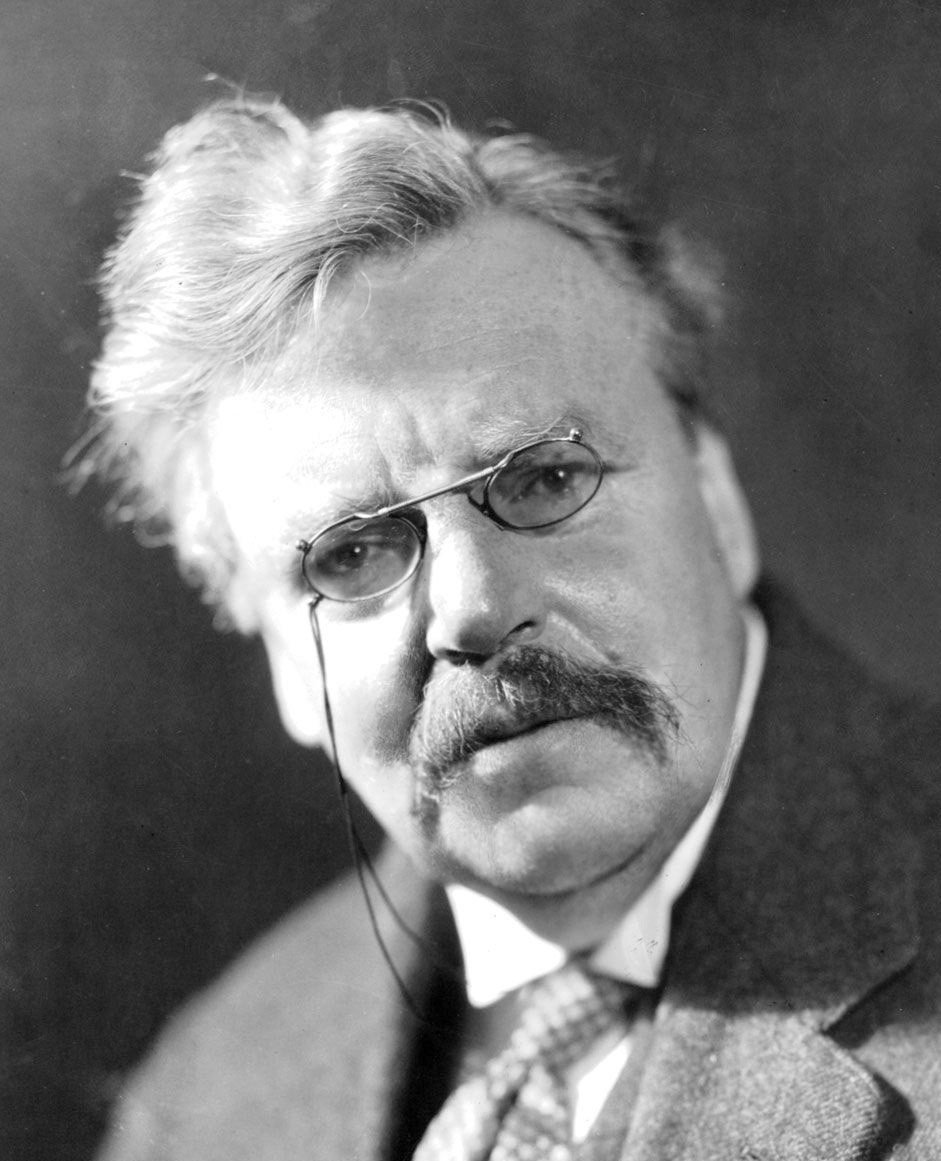
Photograph of G.K. Chesterton
G.K. Chesterton

The look on G.K. Chesterton‘s face could be ours. But who would think to give Chesterton’s answer to the question raised by a London newspaper, “What’s wrong with the world”? Chesterton wrote back two words: “I am“.

Dear Sir:

Regarding your article “What’s wrong with the world.”

I am.

Sincerely Yours,

G.K. Chesterton

The Society of Gilbert Keith Chesterton

Chesterton knew intuitively and by study that there’s something not right that defies description and prescription, a kind of universal virus that included him.

What ever happened to sin?

Psychologist Karl Menninger of the Menninger Clinic began his book Whatever Became of Sin with a funny story:

“On a sunny day in September, 1972, a stern-faced, plainly dressed man could be seen standing still on a street corner in the busy Chicago Loop. As pedestrians hurried by on their way to lunch or business, he would solemnly lift his right arm, and pointing to the person nearest him, intone loudly the single word ‘GUILTY!’

“Then, without any change of expression, he would resume his still stance for a few moments before repeating the gesture. Then, again, the inexorable raising of his arm, the pointing, and the solemn pronouncing of the one word ‘GUILTY!’

“The effect of this strange accusatory pantomime on the passing strangers was extraordinary, almost eerie. They would stare at him, hesitate, look away, look at each other, and then at him again; then hurriedly continue on their ways.

“One man, turning to another who was my informant, exclaimed: ‘But how did he know?’”

The sense of broken relatedness

“No word in the Christian vocabulary is so badly understood, in the world and in the church, as the word sin” (Douglas John Hall, The Cross in Our Context). Sin is a condition — the state of separation, broken relationship, estrangement from the Other, other people, and one’s self. This state manifests itself in particular acts of broken relatedness, “an active nonbeing, a refusal, a rejection, a no to the other: the other who is God, the author of life; the other who is the neighbor, he partner in life; the other that is creation itself, the context of life. … The recovery of relationality in Christian preaching and teaching is not a” concession to modernity or postmodernity; it is a recovery of the original Hebraic and early Christian ontology . . . .

To sin is to act in defiance of this essential relatedness of all living creatures. It is characteristic of sinful acts that the sinner points away from one’s self to shift responsibility elsewhere — the political, economic, or cultural system that shapes our behavior, or another person. It is only a mature soul who would think to answer the question “what’s wrong with the world” with two words: “I am”.

The Seven Social Evils of the World

Mohandas Gandhi made popular the “The Seven Social Evils of the World” first spoken by the Rev’d Canon Frederick Lewis Donaldson in a sermon at Westminster Abbey on March 20, 1925. Gandhi re-published them seven months later in his weekly newspaper, The Young Indian:

  1. Wealth without work.
  2. Pleasure without conscience.
  3. Knowledge without character.
  4. Commerce without morality.
  5. Science without humanity.
  6. Religion without sacrifice.
  7. Politics without principle.

The Seven Social Evils “Blunders” of the World

Mohandas Gandhi’s grandson later re-named them “The Seven Social Blunders of the World.”

The grandfather knew they were more than blunders. A blunder is a momentary slip — a mistake resulting usually from stupidity, ignorance, or carelessness. Mohandas Gandhi knew what Frederick Lewis Donaldson knew: there is something within each and all of us that makes our heads turn when the man on the street corner points in our direction and says, “Guilty.” No other word compares with the word ‘sin’ to describe what’s wrong with the world. We all are. “I am.”

Few people make much difference to the shape of the world. But every one of us, by turning from the seven social sins, contributes to the mending of the world.

— Gordon C. Stewart, Chaska, MN, June 17, 2019.

The Oath: “I do solemnly swear….”

Interview in the Oval Office

George Stephanopoulos’ Oval Office interview with President Trump is going viral. For the first time in history an American president sees nothing wrong with a candidate for public office accepting a foreign government’s dirt on an opponent.

Oaths of office

Every member of Congress knows that’s illegal. However how wide the chasm between Republicans and Democrats on this president or the Report on the Investigation into Russian Interference in the 2016 Presidential Election (“Mueller Report”), there should be no question about this one. President Trump handed Congress an issue on which its members are sworn to act. Either the President was ignorant of the federal law that protects the integrity of the American electoral system or he was consciously defying the rule of law.

Republicans for the rule of law and the Constitution

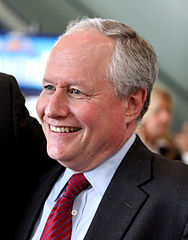
Today Republicans for the Rule of Law begins airing “THE OATH” — a TV ad calling on Congress to act. Click HERE for more on THE OATH. Bill Kristol, serves as director of Republicans for the Rule of Law

photo go Bill Kristol, Director of Republicans for the Rule of Law

Today Republicans for the Rule of Law begins airing “THE OATH” — a TV ad calling on Congress to take action. Click HERE for more on THE OATH.

Bill Kristol, a conservative highly respected in Republican Party circles, is director of Republicans for the Rule of Law.

Previous Views from the Edge commentaries on impeachment

As always, leave a comment to join the conversation, if you wish.

If you’ve come by Views from the Edge, you know where we stand. If you haven’t visited us before today, Click our May 25 commentary In the winkling of an Eye: Impeach or Wait? Or click Impeach or Wait: It’s an Oath of Office Question for MinPost’s republication and reader comments.

  • Gordon C. Stewart, Chaska, MN, June 14, 2019.

That the Rabbits Might Live

This morning’s headlines drew me back to the conversation with Psalm 55. Reflecting on the Psalm led to think of myself as a rabbit. Thinking of the rabbit brought to mind Brer Rabbit. Brer Rabbit led to think of the Africans, Cherokees, and African-Americans who identified with Brer Rabbit in the briar patch.

And I said, “O that I had wings like a dove!
    I would fly away and be at rest;
truly, I would flee far away;
    I would lodge in the wilderness;Selah
I would hurry to find a shelter for myself
    from the raging wind and tempest.”

I am not at rest. I want to get away. To another place. Another time when the wind is not raging and I am not enraged. A place and time that no longer hurts my ears and my eyes red. Like a rabbit, I freeze, hoping I will not be seen. When they see me on the sidewalk of their civilization, I scurry away in search of the briar patch.

Confuse, O Lord, confound their speech;
    for I see violence and strife in the city.

I love words. I know the power of words. They heal, and they destroy. They honor truth and trust; they lie and deceive, and boast of what they have. The preponderance of words are not civil. They are not kind. They dish out strife with a smile. They keep us in turmoil. They despise the rabbits. They erase the line between truth and falsehood, reality and hallucination, America the beautiful and America the ugly. “O Lord, confound their speech.”

10 Day and night they go around it
    on its walls,

The Lady in the harbor and Emma Lazarus are weeping. “Give me your tired, your poor, your huddled masses yearning to breathe free, the wretched refuse of your teeming shore, Send these, the homeless, tempest-tossed to me, I lift my lamp beside the golden door!”” The lamp burns dimly. ICE and the border patrol walk the walls like prison guards.

and iniquity and trouble are within it;
11     ruin is in its midst;
oppression and fraud
    do not depart from its marketplace.

The walls where the lamp once stood beside the golden door are not built to keep others out. Nor do they protect us. They protect the market of oppression and fraud. A system gone awry. The road of generous compassion is paved over with fear and greed, iniquity and fraud, inside imaginary walls patrolled by guards of wealth and power. Oppression and fraud are not outside the walls. They are within them. They never leave the marketplace of Wall Street and Washington where commercial entertainment displaces the traditional landmarks of character. The human city is a mess mesmerized by the lies we mistake for truth, the delusional reality for reality itself. The ruin is in the city’s midst. “We have seen the enemy, and he is us,” said Pogo.

It is not enemies who taunt me—
    I could bear that;
it is not adversaries who deal insolently with me—

If it were those from beyond the city walls that were intent on doing us harm, I could bear that. But It’s what’s happening within the walls — the rule of entertainment and nihilism across all divisions; the loud applause for what is insolent and vile — that taunt me, drip by drip, tweet by tweet, byte by byte. We all know what Pogo said, but we don’t believe it: “We have met the enemy, and he is us.”

I would lodge in the wilderness;
I would hurry to find a shelter for myself
    from the raging wind and tempest.”

Hope cannot be overcome. Like a cork on water, hope always bobs to the surface. Brer Rabbit lives in the briar patch.

  • Gordon C. Stewart, Chaska, MN, June 11, 2019