Hope from the Bowels of Forsakenness

Vulnerable. Weak. Lonely. Frightened. Anxious. Forlorn. Forsaken.

The hospitalized teenager suffering a sudden, undiagnosed illness of the bowels, wondering whether he’s dying, fearful there is no cure, came to my attention during the day. The consciousness of it remain through the night. Awakening in the morning, I look for something that will speak to the helpless feeling of his parents and grandparents.

Opening the Psalter, the opening verse of Psalm 22 leaps from the page — “My God, my God, why have you forsaken me?” — the tortured cry from the cross Jesus quoted many centuries after Psalm 22 had embedded itself in the collective consciousness of the Jewish people.

That the Newer Testament Gospels would put these words on Jesus’s lips is, it strikes me this morning, a Jewish code to look deeper for something much more complex, both tragically realistic and surprisingly hopeful in the psalm’s entirety. Though the forsakenness cry repeats itself immediately — “Why are You so far from helping me, and from the words of my groaning?” — Psalm 22 goes on to recall poetically the existential-spiritual history of Israel’s suffering at the hands of the nations and its deliverance from the same, ending with “They (i.e., our descendants) shall come and make known to a people yet unborn the saving deeds that He has done.”

Jesus’s cry from the cross strikes me as the kind of cry we might read or hear in the writings of Auschwitz survivor Elie Wiesel – honest yet faithful to the Jewish tradition because the tradition itself expresses the horror of god-forsakenness and faith in the absent God at the same time.

Jesus on the cross has this history in his bowels and his bones. The teenager in the hospital has no active faith community, no wisdom tradition or practice, except for the faith and prayers of his grandparents whose faith has been kept at a distance for many years.

The week before learning of the teenager’s plight I had been filled with questions about another young man: the 26 year-old who gunned down the nine students in Oregon who suffered a nano-second of god-forsakenness in the classrooms where they had presumed to be safe from death at the community college that became their execution chamber. The grizzly scene of the shooter asking people about their faith, telling those who rose that they were about to meet their Maker, chilled me to the bone, raising the question of what the shooter’s experience of Christians had been that would so fill him with anger at them and their religion. Was he one of the many in America who, for reasons explainable or inexplicable, feel forsaken and despised? Alone. Isolated. Scorned. Forlorn. Angry.

To be human is to be intrinsically vulnerable. We are all at risk; all headed inevitably toward death. We are not immortal, eternal, timeless, invulnerable. Was the young man turned executioner mocking his death row victim’s belief in an afterlife? Was he saying loudly that there is nothing on the other side of death – a message to the world that this is all there is and that religion is a cruel hoax?

Death is our common lot, but the irony is that it does not wait until the end; it takes hold of us in the middle – between birth and death – as much as at the end. The foreshadowing of it sends us running for cover, running for relief, for an escape. It appears under the guises of control, power, invulnerability. Sometimes its disguise is a pistol or an assault rifle. Other times its disguise is religion that entertains illusions of immortality, belief systems that include and exclude, like “are you a Christian?”

This morning I’m freshly struck by the entire Psalm whose first line has echoed through the centuries every Good Friday: “Eloi, Eloi, lama sabachtani?” —“My God, my God, why have your forsaken me?”. I’m wishing our bowels could hear it, feel it, digest it, weep it, and find the hope and trust that smiles the conviction that the forsakenness we feel is not the final word.

  • Gordon C. Stewart, Chaska, MN October 8, 2015
A Hopeful Prayer for Healing

A prayer for a sick person named “C______”:

Gracious God,

We know how to pray for sick C______, and, indeed, for anyone (including ourselves). Your child, Jesus, taught us to pray for daily bread, forgiveness, for You not to lead us into temptation, AND TO DELIVER US FROM EVIL!

Cancer is evil (as are heart attacks, brain tumors, diseases beyond number, and your last enemy, death.) Deliver C______, and us all. We pray for healing and full health.

We also know, however, even Jesus did not heal everyone, that not all His prayers were answered, even His prayer “If possible, may this cup pass from me.”

If healing is impossible, remind us of Psalm 23, and that in the shadow of death, we can know You are with us, fear no evil, and be comforted. Amen.

  • Steve Shoemaker, Urbana, IL, October 7, 2015

Professors and Jack-hammer Operators

Is there a difference between being retired and being dead?

Is there a difference between being employed and being dead?

It all depends, perhaps. Is your retirement deadly boring? Is your employment deadly meaningless? It all comes down to “calling” – the sense that one is called to something.

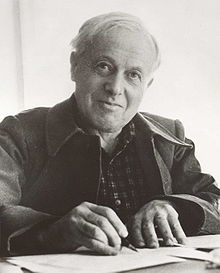
Eugen Rosenstock-Huessey

Eugen Rosenstock-Huessey

Social philosopher Eugen Rosenstock-Huessey noted how curious is was that in their leisure time professors read books and jack-hammer operators rode motorcycles. If it really was leisure, he said, the professors who worked with ideas would be riding motorcycles; the jackhammer operators whose ears were filled with noise all week would be reading philosophy, history or novels.

I think  need a motorcycle!

P.S. My audiologist said I have the ears of a 45 year old jack-hammer operator.

  • Gordon C. Stewart, Chaska, MN, Oct. 1, 2015

Hangman

The lynching tree?

The lynching tree?

Every few days a silhouette of a tree and the invitation to play Hangman appear on my iPad. It’s a real tree with limbs and branches with a kind of Halloween orange sky behind the black silhouette and the noose.

In America there are TWO hangman histories. One seems harmless enough: Hangman, the English word game of British origin some of us played as children. The other is deadly.

As one who’d never heard of the game until it appeared on my iPad, the image is grotesque. It called up America’s long history of the lynching tree when the people who played hangman hid their identity with white hoods over their heads, walking in the dark with torches ablaze, erecting and setting afire crosses on the properties of blacks and whites who hadn’t shown proper respect for their doctrine of white supremacy.

Advertisers are experts in cultural anthropology. They prey on a people’s cultural history and belief systems. Commercials like the one for Hangman are created as a result of research into the fears and hungers of a people. Their ads hold out the bait to attract the quick click to the ap.  I didn’t click, but, if I were a gambler, I’d wager that many who did weren’t thinking about an innocuous word game when they clicked. They may have been seeing what the advertisers meant them to see: a symbol of “the good old days” when white men were in control.  In 2015  America the old racist hanging tree and its hangman are still soliciting successfully, especially when we choose not to remember.

  • Gordon C. Stewart, Chaska, MN, September 29, 2015.

Pope Francis and Speaker Boehner

Is it a coincidence that Speaker John Boehner announced his resignation the morning after his invited guest, Pope Francis, spoke to a joint session of Congress?

Pope Francis and John Boehner - Joint Session of Congress

Pope Francis and John Boehner – Joint Session of Congress

Before his address to Congress yesterday Pope Francis turned to the two former altar boys behind him on the dais.  He looked quickly at Vice President Joe Biden; he looked much longer into the eyes of his host, Speaker John Boehner. It was warm but it also seemed like something else – a moment between a priest and penitent?

The Speaker wiped his eyes, as any faithful Catholic would be prone to do.  He cried, as he often does, but this time as if to ask in humility, “Who am I, John Boehner, a mere altar boy, to share this powerful platform with the Holy Father? I am not worthy that you should come under my roof.”

One had to ponder Mr. Boehner’s inner turmoil listening to the Pope’s words gently reprimand leaders who forget the Golden Rule, push aside the poor, ignore or criminalize immigrants and migrants, prefer aggression to dialogue, ignore the common good for private gain, put people on death row, and refuse to act responsibly on climate change.

What do you do sitting behind the Pope?

You take out your handkerchief at the great privilege of hosting the Pontiff and the honor of being in his presence, but perhaps also because you recognize the prevalence of sin, as in Francis’ quotation from Thomas Merton (see quotation below) or his choice of the socialist Dorothy Day of the Catholic Worker Movement as one of four Americans to emulate.  And, if you haven’t already done so in your private time with the merciful Pope Francis, you might go to confession, repent, and do penance.

This morning John Boehner announced his resignation as Speaker of the House at the end of October. Preparing to speak to the United Nations in New York, one can imagine Pope Francis blessing John while lamenting Boehner’s colleagues’ loud cheering, wondering whether anyone but Joe and Johnny was paying attention the day before.

  • Gordon C. Stewart, Chaska, MN, Sept. 25, 2015

Quote from Pope Francis commendation of Thomas Merton as an American example to follow:

A century ago, at the beginning of the Great War, which Pope Benedict XV termed a “pointless slaughter”, another notable American was born: the Cistercian monk Thomas Merton. He remains a source of spiritual inspiration and a guide for many people. In his autobiography he wrote: “I came into the world. Free by nature, in the image of God, I was nevertheless the prisoner of my own violence and my own selfishness, in the image of the world into which I was born. That world was the picture of Hell, full of men like myself, loving God, and yet hating him; born to love him, living instead in fear of hopeless self-contradictory hungers”. Merton was above all a man of prayer, a thinker who challenged the certitudes of his time and opened new horizons for souls and for the Church. He was also a man of dialogue, a promoter of peace between peoples and religions.

[Bold print added for emphasis by Views from the Edge]

Verse – Weight-Loss Plan

Each year pounds have started to show.
On belly and butt they do grow.
I decided then
That I would lose ten
And I only have fifteen to go!

  • Steve Shoemaker, Urbana, IL, September 24, 2015

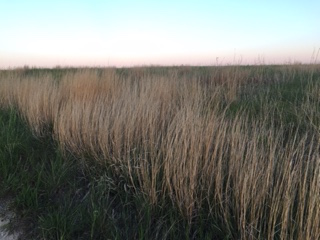
Do prairie grasses ever get depressed?


Prairie grassland, Photo by Kay Stewart

Prairie grassland, Photo by Kay Stewart

Each alone and
all together
planted on
the prairie plain
we go nowhere
in sleet and snow
wind and rain
scorching heat
and frigid cold
sun and drought
quarter moons
half moons
three-quarter moons
full moons
no moons
starless nights
and starlit nights
we stay and wait
for nothing in
particular knowing
who and where
we are — a prairie
grassland sown
for us to be our
own true selves
together and alone.

– Gordon C. Stewart, Hutton Niobrara Ranch Wildlife Sanctuary near Bassett, Nebraska, September 23, 2015.

Morning Fog and the Horizon

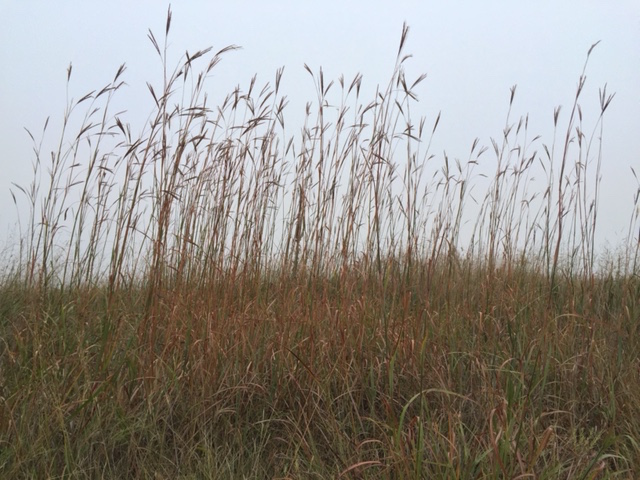
The horizon disappears behind the morning fog.Prairie grasses in fog

Tall grasses that yesterday colored the prairie as far as eye could see are still there. Only the nearest 100 feet of the rusty red, yellow, and brown prairie grasses now appears, the rest only imagined behind the gray mist curtain.

The Nebraska prairie and its earth-tone colors are native to Kay. They’ve been less appreciated by her husband, raised on the tree-covered hills and the bright ocean blues and greens, dotted occasionally with sumac red and willow yellow, of the Northeast Coast.

The Hutton Niobrara Ranch Wildlife Sanctuary, this 5,000 acre wildlife refuge of Audubon of Kansas, feels unspoiled by human hands, except for the indigenous people who long ago vanished with the buffalo along the Niobrara River.

By noon the fog is still here. So are the earthen colors. What’s changed is the Yankee’s fresh appreciation for the intrinsic beauty of the browns, yellows, and rusty reds he once viewed as the dull, faded colors of boredom and decay.

The Earth is a splendid place to live. Morning fog blew in years ago over Old Garden Beach in Rockport, Massachusetts leaving only the gray granite, red sumac and pink primrosed white picket fence visible to the eye. Then and now, there and here, life is wrapped in mist and wonder. The horizon disappears in morning fog.

  • Gordon C. Stewart, Hutton House, Hutton Niobrara Ranch Wildlife Sanctuary, somewhere near Bassett, Nebraska, September 22, 2015.

Chasing the Light: Everything in Life Is “Compared to What”?

Kay Stewart

Kay Stewart

by Kay Stewart

After 16 years of marriage you learn many lessons. But the ones on vacation are especially worth noting.

My husband and I have been given the opportunity of fulfilling a preaching assignment for a lovely little chapel named St. Timothy’s Memorial Chapel located in the abandoned mining town of Southern Cross, Montana. The chapel is perched on the edge of a beautiful mountainside with a gorgeous panoramic view of Georgetown Lake, the largest lake in the area. Breathtaking beauty. A vacation of our dreams. One for the bucket list. All he has to do is provide four Sundays of sermons and they provide us with a free cabin on the meadow down in the valley below, nestled between two mountain ranges. In the morning we hear melodies of little chirping birds, and every evening soft gentle breezes waft across our side porch as we watch sunset after sunset throw a veritable light-show of color as it criss-crosses the valley below. All we have to put up with is a modern-day schizophrenic auditory milieu–pristine quiet periodically interrupted by the highway noises from cars, trucks and RV’s. We have every reason to be grateful, and we are.

After two weeks of our four week almost-ideal vacation here in Montana, we decided the vacation could be expanded, enhanced–an improvement on perfection. “What we need is an adventure,” I said. This dynamic is better known as “the grass is always greener on the other side”. My husband didn’t really need an adventure, he was liking his Montana vacation just fine. But I was getting restless. I am seven years younger and think it is due to this age difference that I am being deprived of adventures to which I am entitled. It didn’t take long to convince him to break camp (cabin) in search of something else. I used the regret-reduction argument.  It works every time. “When we get home, won’t we wish we had done more exploring of this part of the country?” Avoiding future regret is my argument of choice–it burns like a slow wick, providing a living breathing phantom of anxiety forecast into the future when you won’t be able to do anything about it. So within 24 hours we dismantled our “ideal” vacation in search of a relocation of our vacation spot. We chose a trip to Grand Teton National Park in Wyoming.

We are experienced travelers and have always felt comfortable using Trip Advisor to book a motel reservation. With the correct box checked filtering “pet friendly” venues, we booked a motel for $179.00 a night plus fees and taxes. It seemed a bit high, but Jackson, Wyoming is a high ticket vacation destination. After all, that’s why we were going there. Our internet provider doesn’t have enough cell phone towers in the hills of Montana, so my husband did not get an immediate confirmation number and we got worried. Avoiding any problems, we called the motel to verify only to find out they were not pet friendly after all and we could not stay there if we had a dog. They directed us to another motel close to them that was assuredly pet friendly and we immediately called to book with them for two nights, sight unseen. They articulated right off that under no condition would we be allowed to leave our dog unattended in the motel room. “Fair enough” we thought, we can leave Barclay in the car, for short breaks, going to restaurants, leaving the windows open, we do it all the time when the weather is cool enough. Barclay loves to “go for a ride in the car”; he simply takes naps in the front seat where the Alpha Dog sits.

Five hours of driving later, we rolled into Jackson. We were thinking five hours wasn’t such a bad drive, since it was much less than the 19 hours it took us to drive to Montana from Minneapolis, but we were wrong. Five hours is a long day of driving any time you do it. Especially under a hot 95 degree sun. It’s July. The sun does that in Wyoming in July. This leads into another complication. It’s about our dear little dog. Barclay is a wonderful 14 pound, 2-year-old Cavalier King Charles Spaniel. His Cavalier breeding makes him adorable and affectionate, but Barclay has a psychological disorder—he is a “shadow chaser”. I prefer to call it by its more obvious name–Barclay is a “light chaser”. The disorder is not rare, it causes obsessive compulsive behavior in a dog, drawing him, like a magnet, to wherever and whenever there is a difference between light and its accompanying shadow. Barclay is a serious light chaser and intensely loves all light. He actually has no choice in the matter; it’s a compulsory lifestyle for him. When light happens, it immediately activates Barclay. He positions himself as close to the light as possible. Then he, well, just stares at it, or paws it, or licks it. When the light changes, as light often does, Barclay changes too — he moves on to his next favorite piece of it. He never goes looking for different light, better light. He is totally satisfied with the light that happens in his midst. Barclay plays with light like a young child plays with an imaginary friend, but one he will not outgrow. But, after five hours of driving with light careening off of everything metal or electronic, we are pretty much “lights out”.

We arrive at our destination in Jackson worn out and find that our $200 a night motel room would rent for about $80 in any other city but Jackson. The quality is just not there. The room is pitch dark when the heavy musty-smelling curtains are drawn which must occur at all times unless you want the 100’s of nearby tourists to look inside your motel room. But for a family with a light obsession, dark is better for us. As we listen to the roar from the room’s air conditioning unit, which can barely keep up with the afternoon heat, we decide there is nothing else we’d like to do than take a nap.

We read in our motel room the travel brochure provided us explaining Grand Teton National Park’s rules concerning pets. They must be on a leash at all times—we are used to that. But we read further to find that dogs are not allowed at all on any of the park’s trails or public attraction areas. That’s just great.

This being a spontaneous vacation get-away from our primary vacation, we had not realized we were choosing to spend it at Grand Teton National Park on the lead-up to the 4th of July holiday weekend. The city of Jackson gets 3-4 million tourists a year. We were spending the day driving around in our air conditioned car with our beloved dog in bumper to bumper traffic with a great portion of those 3-4 million tourists.

As the vacation wore on, we became grouchier and grouchier. The tourist attractions became mostly distractions because of the tourists. And although The Grand Tetons were magnificent, “when you’ve seen one mountain, you’ve seen ’em all”. We couldn’t hike the trails. Bumper to bumper traffic in 95 degree weather. We wanted to go home.

We chose to travel home through Yellowstone National Park. It made us sad watching the devastation to the forests from the 1988 forest fires. The forest was indeed “coming back”, but it just wasn’t there yet. We tried to stop and see “Old Faithful”, but gave up when we couldn’t find a parking spot. We couldn’t wait to get home so we kept driving.

In 72 hours, we drove 750 miles, spent $700, slept in a dungeon for two nights, and drove home through countless forested areas with dead trees and no parking spaces. Once back in our original vacation location, we discovered something uniquely wonderful. We saw the light of what had been in our midst the whole time–the natural beauty, rolling hills, fresh breezes on our side porch and chirping birds heard even as the highway sang its tune. This lesson learned is one we will keep for years to come.

  • Kay Stewart, Chaska, Minnesota, July 4, 2015. Recently retired from 16 years with Hennepin County Medical Center’s Addiction Medicine Program, Kay is a licensed chemical dependency counselor with degrees in theology and social work. Her reflections on grief have appeared on her blog on Raw Grief.

Verse – Thanks to a Longfellow

Lives of women all remind us
They can do all that men can.
And departing, leave behind us
Children’s footprints in the sand.

  • Steve Shoemaker, Urbana, IL, September 20, 2015