Stay Awake! An unspoken sermon

This sermon was written for a congregation of one the first Sunday after stepping out of the pulpit five years ago.

STAY AWAKE!

First Sunday in Advent, 2014
Texts: Isaiah 64:1-9
Mark 13:24-37

“And what I say to you I say to all: Keep awake.” [attributed to Jesus, Gospel of Mark 13:37].

It’s hard to stay awake in times like these. To be conscious includes grief, helplessness, anger at the state of the nation and world, and the stupidity of the human race.

“Heaven and earth will pass away, but my words will not pass away” is supposed to bring comfort but it doesn’t, unless the heaven and earth of which Jesus speaks are the ones our pride has created. The imaginary ones. The heavenly and earthly projects that rise out of human insecurity as in the Genesis story of Babel, the story of what never was but always is, according to which the building of the ideal city is interrupted and the tower “with its top in the heavens” is “left off”. But the Word – the story about it – has not passed away. It endures. As fresh today as it was when first shared around a campfire as a way of telling each generation the respective places of God and man (humankind).

Fourteen years after the World Trade Towers collapsed in NYC, a new tower, “One World Trade Center” – taller, stronger, bolder – stands where the old towers fell on 9/11. One World Trade Center, symbolizes a resurrection of the crashed myth. Standing a few blocks from Wall Street, where the global economy is reconstructed every day, One World Trade Center resurrects the myth of national supremacy, benign goodness, and virtue of the American economic system.

We could have left Ground Zero empty of monoliths. Turned it into a memorial and monument to the error of pride, a turning away from global arrogance. A repentance from the economic-military-religious complex that has expropriated the oil fields in the Middle East, assassinated the elected President of Iran in 1958, installed the Shah in his place, ignored the human rights of Palestinians, supported and installed western-friendly oligarchies and strong men in Saudi Arabia, Iraq (Saddam Hussein), Libya (Muammar Gaddafi), and Egypt (Hosni Mubarak) until, except for Saudi Arabia, they turned against us.

Instead of listening to the word that does not pass away, we Americans, to the sorrow of New Yorkers like Michael Kimmelman (NY Times, Nov. 29, 2014), opted for the old words and worn-out scripts that had failed us. The Democratic Spring in Libya, Egypt, and Tunisia did not do what the NeoCon exporters of Western democracy had imagined. It unleashed a seething volcano of anti-American resentment. Meanwhile, Afghanistan, Iraq, and Syria, have become desert quagmires – Vietnams without the jungles.

Eisenhower’s last speech to the nation warning of an emerging military-industrial complex is all but forgotten as One World Trade Center stands like a phoenix raised up…and up…and up from the ashes, symbol of global dominance resurrected from the horrifying deadly collapse of 9/11.

Words and symbols are everything in this world.
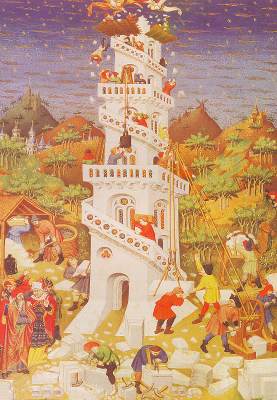
photo of Tower of Babel by Master of the Duke of Bedford

Mr. Kimmelman opines, “But it [i.e. the World Trade Center] never really connected with the rest of Lower Manhattan. There had been talk after Sept. 11 about the World Trade Center re-development including housing, culture and retail, capitalizing on urban trends and the growing desire for a truer neighborhood, at a human scale, where the windswept plaza at the foot of the twin towers had been.”

It’s all about human scale. A plaza. Not a tower with its top in the heavens.

Staying awake is hard. Being attuned to what is not passing away takes faith. It takes hope. Maybe even love.

“From the fig tree learn its lesson: as soon as its branch becomes tender and puts forth its leaves, you know that summer is near.” [Mark 13:28]

Jesus often seems to have said that the word we need to hear is spoken by nature. Learn from the fig tree. It waits through the dormant season to become tender again, to put forth its leaves toward summer and the production of figs. Nature is calling. Nature is our home. Nature is what is – the real heaven and earth – the word that will not pass away, the word that will survive when we are gone. We need to love nature again. Awaken to nature. Re-imagine ourselves as part of nature, “creatures” among the multitude of creatures. Our words will pass away, even the best of them. Our Creator’s will not.

During this most puzzling of seasons – the Season of Advent, the season of wakeful, wait-ful anticipation of a Coming in fullness – I find myself crying out like Isaiah. It feels something as though “you have hidden your face from us, and have delivered us into the hand of our iniquity.” [Isaiah 64:7]

“O that you would tear open the heavens and come down, so that the mountains would quake at your presence—as when fire kindles brushwood and the fire causes water to boil– to make your name known to your adversaries, so that the nations [the ethnoi in NT Greek, i.e. the peoples] might tremble at your presence!” [Isaiah 64:1-2]

The “nations” have always been God’s adversaries, closed in on themselves, puffed up, defensive against intruders foreign and domestic, plunderers of nature and other nations, hostile to the foreigner, both human and Divine.

In this season of “economic recovery” when the poor continue to get poorer, the rich get richer, and the middle class shrinks, and the climate change clock ticks closer to midnight, deliver us, Good Lord, from “the hand of our own iniquity”.

Remember, “O LORD, you are our Father; we are the clay, and you are our potter; we are all the work of your hand.” [Isaiah 64:8]

This word is the only word that lasts. Stay awake, my soul. Stay awake to the whole of it – all of it: the sorrow and the grief of it, the loneliness of it, the anger of it, the guilt of it, the finger pointing out and away and the finger pointing back at me, a nation to myself, and the presence of the Potter – and my soul will be well, new and fresh every morning.

Gordon C. Stewart, Be Still! Departure from Collective Madness (Wipf and Stock, 2017) available on Amazon in kindle and paperback, Chaska, MN, First Sunday of Advent, November 30, 2019.
Truth needs no propaganda

Truth and falsehood

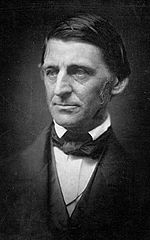
“Every violation of truth is not only a sort of suicide in the liar, but is a stab at the health of human society,” wrote Ralph Waldo Emerson in “Prudence,” Essays: First Series (1841).

I imagine Emerson quietly applauding Fiona Hill boldly calling out the false narrative that stabs at the health of democracy in her testimony before the U.S. House Intelligence Committee’s Trump impeachment inquiry.

U.S. National Intelligence expert on Russia begs U.S. House Intelligence Committee members to stop spreading the Russian intelligence false narrative about Ukrainian interference in the 2016 U.S. election.

PARTISAN PROPAGANDA: THE BIG LIE

“The great masses of people . . . will more easily fall victim to a big lie than to a small one.”

Adolf Hitler, Mein Kampf (1924), 1.10.

MAKING THE WIND APPEAR SOLID

“Political language . . . is designed to make lies sound truthful and murder respectable, and to give an appearance of solidity to the wind.”

George Orwell, “Politics and the English Language,” Shooting the Elephant (1950).

TRUTH AND FALSEHOOD

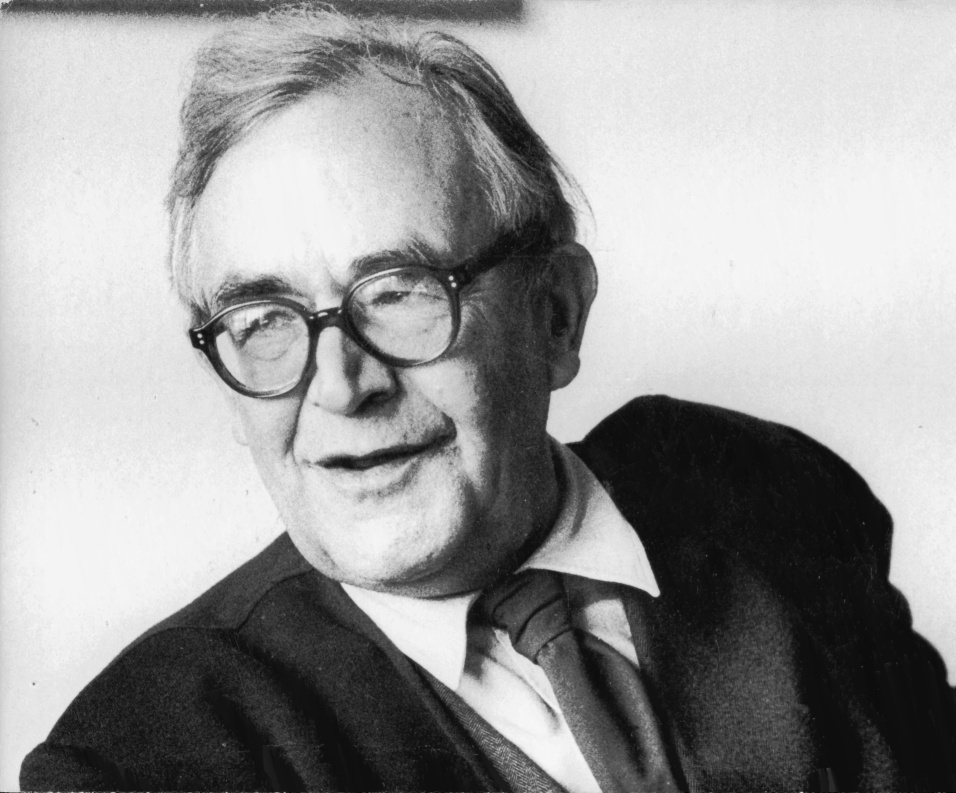
“Man can certainly keep on lying (and does so), but he cannot make truth falsehood.”

Karl Barth quoted in The New York Times obituary, December 11, 1968.

TRUTH NEEDS NO PROPAGANDA

If there has always been propaganda in some form, from the time of the modest newspapers of the seventeenth century it has developed with a new speed and to a new degree, as new and more effective instruments have been found and brought into use. One should note that the truth needs no propaganda and does not engage in it. As the truth, it simply speaks for itself and opposes falsehood. Propaganda is a sure sign that what is at issue is not the truth but an ideology which needs it, to whose nature it corresponds, and which is not ashamed to make use of it.

Karl Barth, “The Lordless Powers,” The Christian Life, translated by Geoffrey W. Bromley, p.227.

Propaganda and National Security

Continued promotion of a self-serving false narrative under the guise of patriotic concern for national security puts American national security at risk.

A subsequent Views from the Edge commentary will explore what Karl Barth‘s “lordless powers” and Christian scripture calls “principalities and powers.”

  • Gordon C. Stewart, November 23, Chaska, MN, Nov. 23, 2019.

Four and two fifths make seven

SLEEPOVERS? REALLY?

Guys don’t do sleepovers. Or so I thought reading A Plan this morning . . . until I stopped to think.

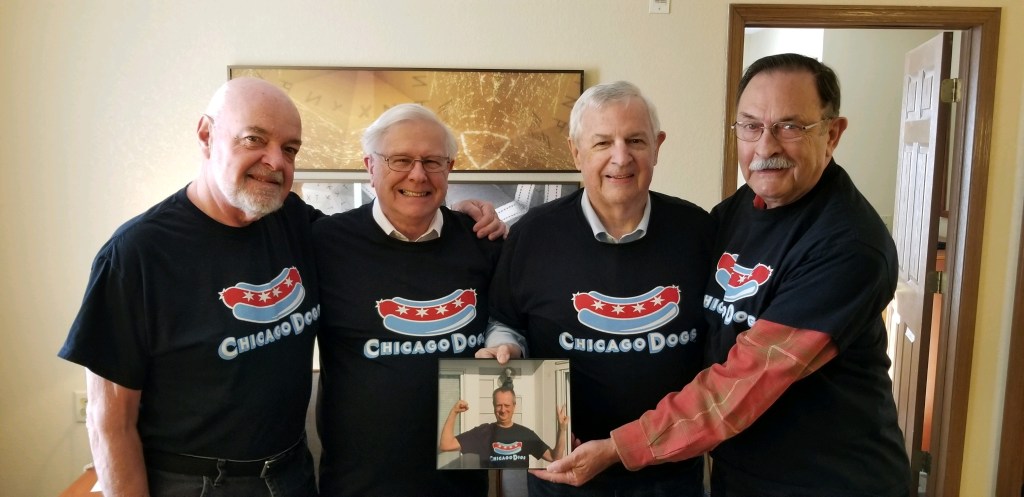
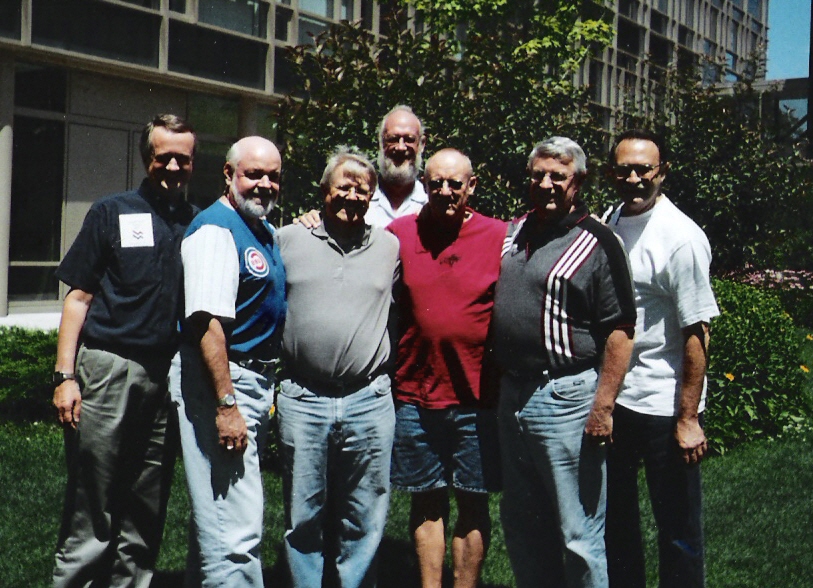
Four (4) ‘Old Dogs’ (seminary classmates who have maintained friendship through the years) do five-night sleepovers every year. Once there were seven (7). Now there are four (4).

Photograph of four 'Old Dogs' with holding a picture of Wayne Boulton.
Four ‘Old Dogs’ (L to R): Harry, Gordon, Don, Bob, with photograph of Wayne (RIP).

THE ‘GATHERINGS’

We arrive at the annual ‘Gatherings’ limping on replaced knees with hips and memories in need of repair, bearing matches to light the fire, a Book of Common Prayer, and a Fifth or two . . . to make four equal seven again.

There’s nothing like a sleepover celebration with old friends. Some are confident that the departed — Wayne, Steve, and Dale — are still with us around the fire. Others need the help of a Fifth or a few Seven-and-Sevens to get four to equal seven.

Original ‘Chicago Seven’ Gathering (L to R): Old Dogs Wayne Boulton, Harry Strong, Yours Truly, Steve Shoemaker, Dale Hartwig, Don Dempsey, Bob Young.

What I had come to know (by feeling only) was that the [GATHERING]’s true being, you might say, was a sort of current, like an underground flow of water, except that the flowing was in all directions and yet did not flow away. When it rose into your heart and throat, you felt joy and sorrow at the same time, and the joining of times and lives. To come into the presence of the [Gathering] was to know life and death, and to be near in all your thoughts to laughter and to tears.

Wendell Berry, “A Gathering,” Jayber Crow, p. 205-206.

Thanks to Beth of ‘I didn’t get my glasses on‘ for turning Gatherings into sleepover celebrations.

Gordon C. Stewart, Chaska, MN, November 23, 2019.

Cracking the Code: “I want nothing. No quid pro quo!”

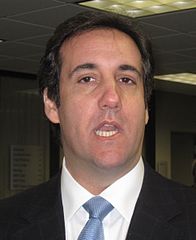
Photo of Michael Cohen, head school uploaded from Wikimedia

“Mr. Trump did not directly tell me to lie to Congress. That’s not how he operates. He doesn’t give you questions, he doesn’t give you orders, he speaks in a code. And I understand the code, because I’ve been around him for a decade.”

— Michael Cohn, Feb. 27, 2019 testimony before Congress.

SPEAKING IN CODE

Although Michael Cohen knew of his boss’s business dealings in Russia, Mr. Trump often said in Michael’s presence that he had no business ties in Russia. Michael, his lawyer-fixer for 10 years, understood what he meant. It wasn’t a statement of fact. It was code for an order: Deny any connection with Russia.

THE CODE

STONE’S RULES – BLAME THE TRANSLATORS

“Admit nothing, deny everything, launch counter-attack.”

“Attack, attack, attack, never defend.”

FLASHBACK — “They’ve got him”

“They’ve got him — credible witnesses, documents, and who knows what else. In all my years as a prosecutor, I’ve never seen such an open-and-shut case.” — U.S. Attorney General Elliot Richardson’s announcement to President Nixon of the results of the federal investigation of bribery. The case was resolved with a quid pro quo: Quid: Vice President Agnew would resign with a plea “no contest”; Quo: the Vice President would not go to prison.

— Gordon C. Stewart, Chaska, MN, Nov. 22, 2019.

Worldly Wisdom for the day after

Today is the day after an exhausting day for many Americans. It’s the day after the day that began with congressional impeachment hearings and ended with the latest presidential candidates debates. The day after our heads spun seems a good day to reach back to taste the sweetness of wisdom.

THE ART OF WORLDLY WISDOM

Never exaggerate. It is a matter of great importance to forego superlatives, in part to avoid offending the truth, and in part to avoid cheapening your judgment. Exaggeration wastes distinction and testifies to the paucity of your understanding and taste. Praise excites anticipation and stimulates desire. Afterwards when value does not measure up to price, disappointment turns against the fraud and takes revenge by cheapening both the appraised and the appraise. For this reason let the prudent go slowly, and err in understatement rather than overstatement. The extraordinary of every kind is always rare, wherefore temper your estimate.”

Baltasar Gracián y Morales (1601-1658) The Art of Worldly Wisdom (1647)

Gordon C. Stewart, Chaska, MN, November 21, 2019

America in the Stress Test Waiting Room

Last week I asked a psychiatrist friend whether he has been seeing increased levels of stress in his patients. “Yes,” he said, “Universally.”

As the impeachment inquiry hearings begin today, we are divided and angry. But we’re all under stress, and we’re all Americans. When we’re stressed, we do strange things. Some of us clam up. Some of us scream and shout. Some of us need company. Which led me to think again this morning about the stress test waiting room and a World War II veteran named Bill. I’m wondering what Bill might say.

Bill in the Stress Test Waiting Room

visual image of hospital waiting room

He sits by himself in the hospital waiting room.

“Where you from?” he asks, as if welcoming the stranger who’s come to his home for a stress test.

“Chaska.”

Where?” he asks over the whine from his hearing aids.

I’m not anxious to strike up a conversation. I’m here for a stress test. I’m an introvert. Chatting with strangers when I’m gathering myself when I’m under stress, waiting for a stress test, is the last thing I want.

C h a s k a!” I repeat.

“Oh! I’m from Waconia! I’m Bill.”

He gives a broad smile as though we’re related. (Waconia and Chaska are neighbors in Carver County, MN.)

His gowned wife, fresh off the treadmill, returns from her stress test.

“This is my wife, Jane. She’s a lot younger than I am. I’m 96.”

“Ninety-four,” says the younger wife. “We’ve been together 15 years.”

“Chaska’s the county seat,” says Bill. “That’s where i was sworn in.” (Clearly, he’s an extrovert. He feels better when he has guests.)

“World War II?”

“February 6, 1942. Eighty of us. A lot of guys from Chaska.”

“Where’d you serve?”

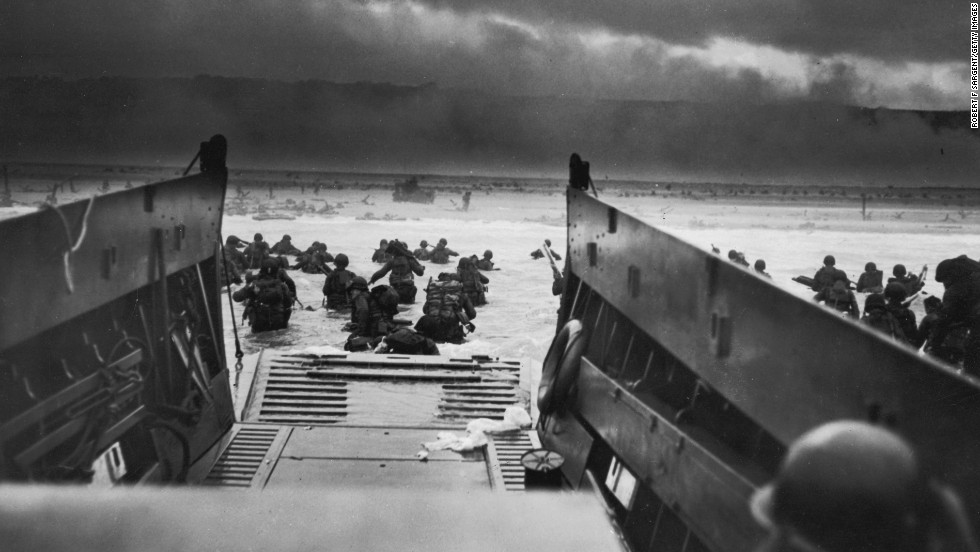
“He was part of D-Day,” answers Jane. Bill’s head sinks toward his lap. His chin begins to quiver. A long pause follows.

D-Day, WWII.

Only 15 of us came back.”

“Were you injured?”

“No,” he says, forming his hands in prayer and looking up. “I don’t know why.” He falls again into silence.

Fort Snelling National Cemetery, Minnesota

Bill’s body is with us, but he’s not here. He’s back at Normandy Beach on D-Day.

“That’s a lot of death,” I say. “A lot of killing. A lot of loss.”

He looks up, nods, and drops his head again.

Post-traumatic Stress,” I say quietly to Jane. “I’m a pastor. I’ve seen it so many times with Vietnam War and Iraq War veterans.”

“I think so,” she says. “He still can’t talk about it after all these years.”

The technician calls my name. “Mr. Stewart?”

As I stand to leave the stress test waiting room, Bill reaches up to say good-bye with a firm handshake and friendly smile for the whippersnapper from Chaska.

Robert Davis of Clarkston has an outpatient stress test run by exercise physiologist’s Richard Andrevzzi and Donna McCollom in the Royal Oak hospital.

I leave the waiting room and get on the treadmill, reminded that there is stress and there is stress, knowing that mine bears no comparison to Bill’s and thankful for a few moments with a 94 year-old who has every reason to think he’s 96.

Today and tomorrow, as I zoom in on the televised public hearings on impeachment, I’m wondering what Bill would say.

  • Gordon C. Stewart, Chaska, MN, November 13, 2019.

Elijah with Grandpa and the Postage Stamp Monologue

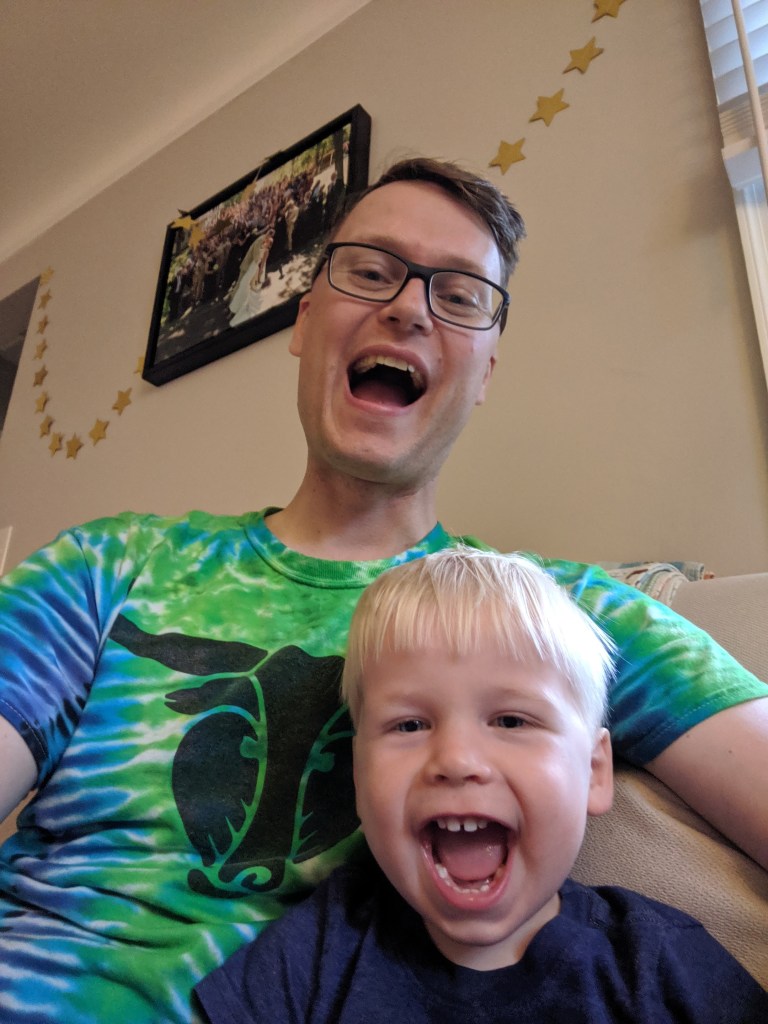
Two year-old grandson Elijah engages grampa in a telling conversation

Good morning, Elijah. Whatcha doin’?

Playing etch-a-sketch on our iPad. Did you draw when you were liddle?

I did. But not like that.

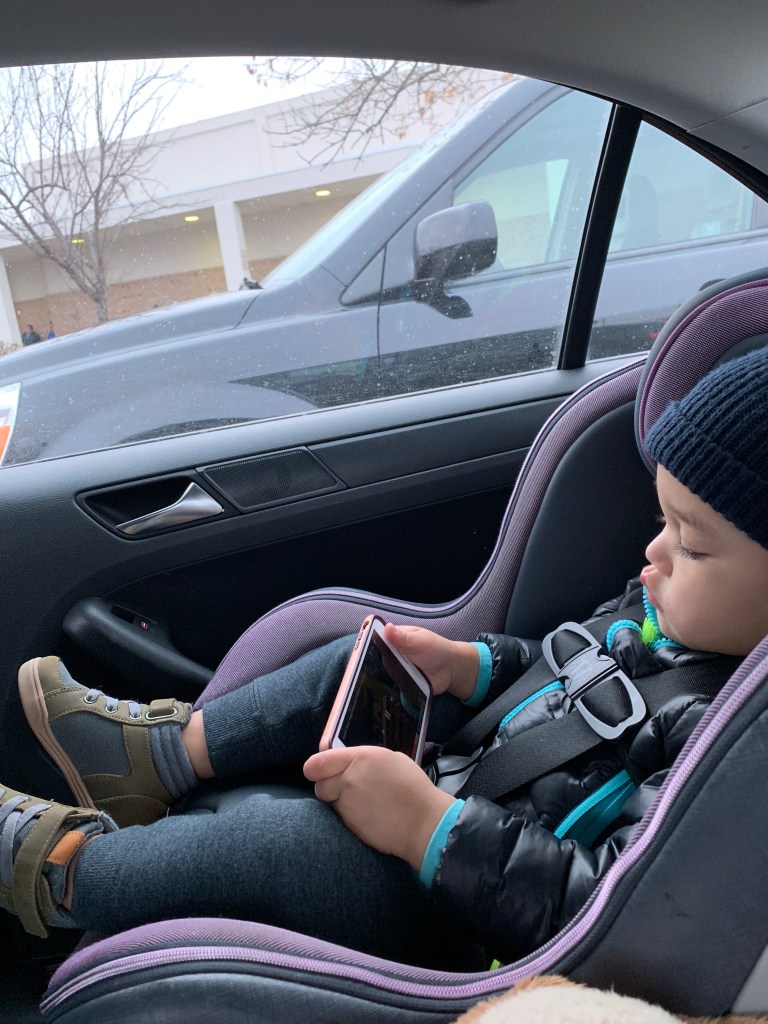
Like what, then? Was it a different App? What kind of Mac did you play with in your carseat on the way to day care?

It was a long time ago, Elijah. A very long time ago. It was a different world. We didn’t have day care. We didn’t have iPads and cell phones. We used to lick postage stamps back in the day.

picture of U.S. postage stamps

What’s a stamp and why did you have to lick it? Were you being punished for being bad?

No, it wasn’t anything like that. We didn’t tweet back then. The only thing that tweeted in our world was Tweetie Bird on Loony Tunes.

How’d you talk if you couldn’t tweet? I tweet all the time. Watch! Mom hates it when I do this. I like FaceTime better. It’s more personal.

We sent letters. We wrote them with a pencil or a pen, put them in envelopes, licked the back of the postage stamps — if you had lots of letters, it took a long time — and we took them to the Post Office. The letters would arrive in two or three days, sometimes a week. We had to be patient back then. Everything was slower.

And we dialed phone numbers on rotary phones. I still remember our number on Church Lane, EL6-1490. Teddy Bonsall’s was EL6-1476. And sometimes, when I’d pick up the phone to dial Teddy, somebody else was already talking to somebody else on our phone. It was called “a party line“.

Wow! Did you have parties every day?

It’s hard to explain, Elijah. Maybe this will help. Search for the Postage Stamp Monologue on Mom’s iPad for a better feel for how grampa feels most of the time in your world.

“The Postage Stamp Monologue” from Vanya and Sonia and Masha and Spike, a play by Christopher Durang, performed at the Goodman Theater.

Wow! He’s really mad, grampa! I’m glad you don’t have to lick postage stamps anymore or dial 999-999-9999, like Vanya. I got an idea! Let’s FaceTime Uncle Andrew and Calvin!

Uncle Andrew and cousin Calvin answering FaceTime call.

Gordon C. Stewart (Grandpa), Chaska, MN, Nov. 7, 2019.

Where’s my Elliot Richardson?

BREAKFAST WITH ELLIOT RICHARDSON

Why a memory bubbles up in a particular moment often is a mystery. Other times an explanation does not require a Freudian or Jungian analyst.

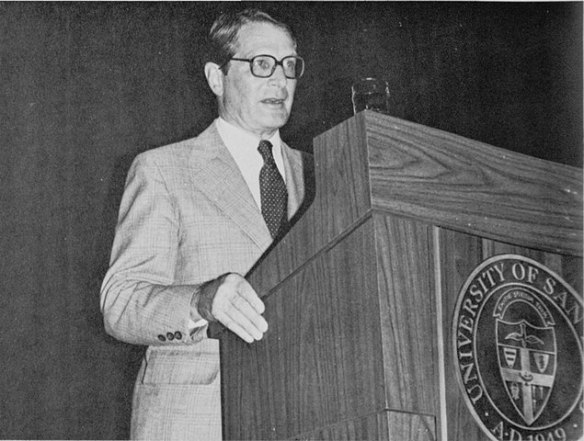
I’m having breakfast at the Hyatt in downtown Minneapolis with former U.S. Attorney General Elliot Richardson. Just the two of us. We are meeting to get acquainted before the noon Westminster Town Hall Forum when I will introduce him to a packed house and the radio audience of Minnesota Public Radio (MPR).

“VOICES OF CONSCIENCE: KEY ISSUES IN ETHICAL PERSPECTIVE”

A singular moment of American history qualifies Elliot Richardson for the public forum that features “Voices of Conscience: Key Issues in Ethical Perspective.” Elliot Richardson was the United States Attorney General in the Nixon Administration, a lifelong Republican remembered for refusing President Richard Nixon’s order to fire Archibald Cox, the Special Prosecutor of the Watergate affair. The memory of Elliot Richardson’s act of courage is still fresh in the hearts and minds of those who respect the courage of conscience in American public life. Elliot Richardson refused to sell his soul to the White House.

“WHERE’S MY ROY COHN?”

The turmoil of 2019 seems explanation enough for the reappearance of the memory from twenty-two years ago.

Bill Barr became the Trump Administration Attorney General after Jeff Session angered the president for refusing to recuse himself from overseeing the Department of Justice investigation into Russian interference in the 2016 election. That was after FBI Director James Comey had been fired after a one-on-one private dinner at the White House when the president asked for Comey’s pledge of personal loyalty.

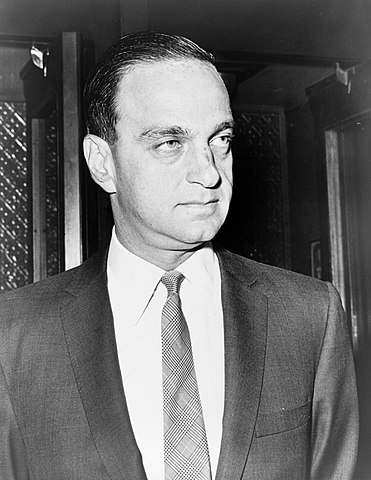
In the midst of failed attempts to secure personal loyalty, and nostalgic for the fealty of his former lawyer, whom Alan Derschowitz described as “the quintessential fixer,” the president’s is reported by the New York Times to have cried in a moment of exasperation, “Where’s my Roy Cohn?”

ROY COHN AND THE TACTICS OF JOSEPH MCCARTHY

Roy Cohn had been front and center stage on national television as Senator Joseph McCarthy’s Senate Committee hearings hunting for Communists and Communist sympathizers allegedly hidden in the U.S. military, government agencies, and the entertainment industry.

Edward R. Murrow‘s televised commentary featuring Army defense lawyer Joseph Welsh’s rebuke of McCarthy and his tactics brought McCarthy to a screeching halt:

“You’ve done enough. Have you no sense of decency, sir? At long last, have you left no sense of decency?”

Joseph Welsh, Esq. statement to Sen. Joseph McCarthy, 1954.

THE LONG ARM OF ROY COHN

In the wake of Murrow’s broadcast and the turning of public opinion against McCarthy’s character assassinations of America’s political left as unpatriotic, Roy Cohn left McCarthy’s side to go into private practice. During the 30 years that followed, his clients were a rare assortment of the famous (the Archdiocese of New York, the New York Yankees and the team’s owner, George Steinbrenner; Aristotle Onassis) and the infamous (mob bosses “Fat Tony” Salerno, Carmine “the Cigar” Galante, extortionist “Teflon Don” John Gotti, and the owners of Studio 54 convicted of tax evasion, among others.

Roy Cohn became Donald Trump’s personal lawyer, mentor, and fixer, the master teacher who taught his disciple how to succeed in public life: require absolute loyalty, strike fear in anyone who dare oppose you, manipulate the media, attack harder when attacked, and demonize your opponents as public enemies. In the end, the disciple did to Cohn what Cohn had taught him to do. After the New York Supreme Court disbarred Roy Cohn and Cohn was dying from complications reportedly related to AIDS, the lawyer-fixer-mentor’s friend was no longer useful. The mentee dropped his loyal “friend” like a rock.

ELLIOT RICHARDSON and THE ARC OF THE MORAL UNIVERSE

Roy Cohn and Elliot Richardson had three things in common. They were lawyers. They had their moments in the national spotlight. They worked closely Republican Presidents. But they stand on opposite sides of history.

But, if “the arc of the moral universe is long, but … bends toward justice” (Martin Luther King, Jr., quoting Theodore Parker), the shadow of Joseph McCarthy and Roy Cohn is short and fleeting, and the memory of a courageous Republican who refused to sell his soul to the White House may yet awaken the party he would not recognize to surrender the question “Where’s my Roy Cohn?” for a different question:

Where’s my Elliot Richardson?

Gordon C. Stewart, Chaska, MN, November 5, 2019.

Do you have the time?

When my most intimate companion failed to respond as normal, I feared she had suffered a stroke like the cerebral hemorrhage that took Uncle Bob years ago. Uncle Bob was the smartest guy in South Paris, the Harvard Law valedictorian who, against all expectation, had made South Paris his home until he suddently dropped dead leading the Congregational Church’s Annual Meeting. He had shown no signs of stress during worship, directing the Choir from the organ bench as he had for 25 years. Church meetings are like that — they often raise a leader’s blood pressure — but this was different! All of a sudden he was gone.

Like Uncle Bob, she showed no signs of stress before retiring last night. She is the one who has done the most of anyone to encourage my writing and publishing — filing things away until I needed them, flagging a mis-spelled word or correcting faulty grammar. I’ve depended on her every day for the past six years. She is more than an assistant. Since the day we met, I’ve turned her on. This morning is different. Nothing turns her on.

I  gently carry her to the garage, cover her with a blanket, and drive to the Urgent Care at the Southdale Mall. They admit her for tests and suggest I return in an hour in an hour or so.

“Do you have the time?” I ask.

He gives me a strange look and checks his iPhone. “It’s 10:30. We’ll text you when we’re done. Where can I reach you? What’s your number?”

“I don’t have a number.”

“Okay, how about an email?”

“I don’t have a mobile phone. You know, there are no public clocks anywhere anymore. Everybody’s in a bubble.” 

He pauses and looks up. “Hmmm. You know . . .I hadn’t thought about that! Come to think of it, I guess you’re right. “Okay . . .well, just be back by 11:30.”

Anxious and alone with an hour to kill, I wander the corridor from shop to shop before going into Macy’s. It’s easy to distract yourself shopping, and Macy’s is just the place. You can find anything at Macy’s…except a clock. “Excuse me, do you have the time?” I ask the clerk in the men’s shoe department. It’s not a question he gets anymore. He glances at his iPhone, looks up, and, with a strange look, gives me the time: “10:45.”

With forty-five minutes to spare, I remember Macy’s famous Lakeside Grille and follow the confusing signs to catch a late breakfast or early lunch. I tell the waitperson I have an important appointment at 11:30 and ask for the time. “10:50,” he says. “I don’t have a phone. Would you be so kind as to give me a heads up when it’s 11:15?” He takes my order and agrees to notify me. I scarf down the Oktoberfest special of pork schnitzel, spaetzl, and green beans, wondering what time it is. The waitperson is nowhere to be seen. I ask another waitperson, “I’m sorry. Do you have the time?”

I rush back to Urgent Care, anxious about the test results. “Mr. Stewart,” says the neurologist, “I’m sorry. We ran all the tests and the news is not good, but it’s not beyond hope.” I breathe a sigh of relief, waiting for what comes next. “She’s still alive, but she needs immediate surgery. We have a neurologist standing by.” “What’s the cost,” I ask, knowing she has no insurance. “We can replace her keyboard for $485 so you can turn her on again, but she’s old. It’s only a matter of time before she goes. Or you can buy a new one for an additional six-hundred dollars or so. Your call.”

End of life decisions, like putting down my canine companion after fourteen years– are harder than others. For months after Maggie’s death, I swore I’d never get another dog. There’d never be another Maggie. I couldn’t bear the thought of holding another Maggie in my arms when her time would come.

“I’m a writer,” I say. “Like lots of other writers, I have ADHD and sometimes, like Hemingway and F. Scott Fitzgerald, I drink too much. I’m completely dependent on her for filing and saving my work. She keeps it all in her head. Besides she’s the only one I’ve ever turned on.”

“Not to worry, Mr. Stewart. If you leave her with us for 24 hours, we’ll be glad to download her memory to the new MacBook Air. We’ll treat her with great respect. We’ll take good care of things. We’ll be glad to recycle her free of charge. As Hemingway said, ‘Time is the last thing we have.'”

I leave her behind to be downloaded and recycled, grieving my loss, but consoled by the knowledge that, life Uncle Bob and Maggie, she will be in a safe place.

 — Gordon C. Stewart, author of NYT Worst Seller List Be Still! Departure from Collective Madness, dedicated to my late assistant, Chaska, MN, October 30, 2019.

Elijah and Cousin Calvin

Introducing Elijah’s cousin Calvin

Followers of Views from the Edge know Elijah from his conversations with “Bumpa” (Grandpa), but have not been introduced to Elijah’s six month younger first cousin and buddy, Calvin.

The cousins are talking up a storm with impressive vocabularies — many more words than the occasional “Mine!” but they need some help with grammar.

Conversation among Elijah, Calvin, and Grandpa

Grandpa: Good morning, Elijah! Good morning, Calvin! How’d you sleep last night?

Calvin: Not so good. I cried all night. Elijah was dead! I saw it TV.

Grandpa: I’m so sorry Calvin. But look — Elijah’s standing right. He’s alive. The Elijah on TV was a United States Congressman. Elijah Cummings was 68 years old.

Calvin: Phew! That makes me happy.

Grandpa: How about you, Elijah. How was your night?

Elijah: Great! I went right to bed after me and Mom played in the bathtub.

Grandpa: Wonderful. But I want you to learn to put others before yourself.

Elijah: You mean Calvin?

Grandpa: No, I’m talking about talking, I want you to grow up saying “Mom and I”.

Elijah: I just did! I just told you! I went to bed after me and Mom played in the tub. You don’t hear so good, Bumpa.

Grandpa: Well, I did hear you, and it’s “well“, not good. “You don’t hear so well.” It a common mistake. I want you boys to grow up with good grammar. That’s why I want you to say “Mom and I.”

Elijah: I just said that!!! Didn’t I, Calvin?

Calvin: Nope. You said “me and Mom.” You didn’t say “Mom and I.” You’re selfish! You always put yourself first. Everything’s ‘Mine, mine, mine’. ‘Me, me, me!’ You always put yourself first!

Elijah: Do not!

Calvin: Do, too!

Grandpa: Okay, boys. This isn’t that important. I’m talking about talking. I want you grow up learning good grammar.

Calvin: We already love Granmma!

Elijah: Yea, Bumpa! Me and Calvin love Granmma. Me and him love Gramma more than you!

Gordon C. Stewart (Bump), Be Still! Departure from Collective Madness (click THIS LINK to explore on Amazon), Chaska, MN, Oct. 26, 2019