Elephants, palm trees…and us

Adult elephant mentor

Adult elephant mentor

This “comment” on Steve Shoemaker’s poem “What did you ask in school today?” deserves a posting of its own.

“Gordon, thanks for this from Steve S. This reminds me of a few things I’ve thought about lately. The images evoked when a parent says the above is that it is an example of how we nurture the young by helping them understand how to connect to their world in deeper ways than by just asking “what did you learn today”.

“The large Palm tree that stands wilted in front of the TreeHouse youth shelter on the highway 41 curve here in Chaska is a reminder that when we attend to our youth with the ideas in this poem we have a “live tree” vs. a dead tree”. In like manner when no attention is given to the affective behaviors the poem describes we have a “wilted” group of young people. The TreeHouse facility leaves the tree in place all winter after the Fall freeze to help our community remember it takes a village to raise our children. They will plant a live Palm again this Spring to help us see the results of their endeavors over the long winter to bring back to health the youth in their program.

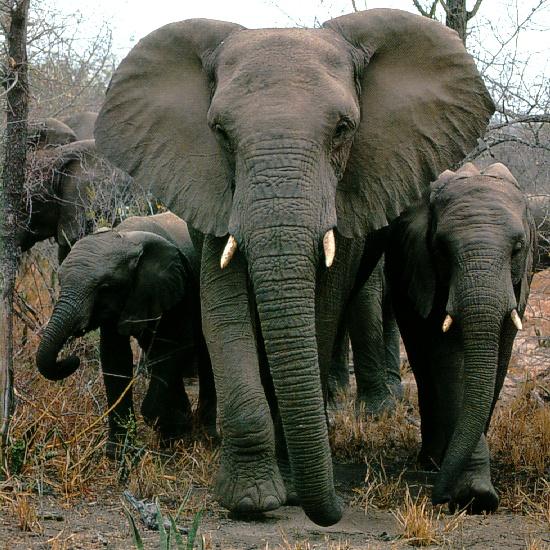
The other thought that I was reminded of by Steve’s poem is about a National Geographic documentary last week that described the rebellion of young Elephants worldwide. Yes, strange as that sounds Elephants are killing trainers, strangers et al in epidemic numbers. Why? The program went in depth to explain that because we have destroyed so much Elephant habitat, and in the process we have also destroyed the adult males by culling the herds to ostensibly prevent the destruction of crops. The result is there are no older males to raise the young males resulting in the lack of control of violent behaviors among the young males. When young males are placed in herds with older males the murderous behaviors disappear as the seniors exert that influence. We’ve known for a long time how smart Elephants are but this goes way beyond that. There can be no doubt our children are at least as sensitive to our attention.”

NOTE: Gary Severson is a historian, researcher, and writer who recently completed his teaching career at Kennedy High School in Bloomington, Minnesota. Gary lives here in Chaska where he attends Shepherd of the Hill Presbyterian Church and leads an adult course on our common indigenous spirituality. Those who have the privilege of knowing Gary enjoy the repeated pleasure of this kind of thoughtful reflection – Gary’s own views from the edge.

Harry Bellafonte: Sing your Song

Video

The Promise of a Storm

There is a warning whisper in the wind.
The birds have heard and gather on a wire
to watch. My old ears cannot hear much sound
without my aids. I search and finally find
new batteries: the wind becomes a roar!
I quickly dial them down from music to
a conversation: whistles, whines and more
now wind around our house. The clouds race to
go there from here, and here from there. I see
the colors change from white to grey. The snow
begins to fall and white returns in swirls. The ice
forms on the twigs–the trees begin to know
they’re in a struggle with the wind. They try
to bend, and hope the promise was a lie.

– Verse “The Promise of a Storm” – Steve Shoemaker, Urbana, IL, Feb. 22, 2013

It takes one

Click HERE to read “It takes one” – a poem sent to Views from the Edge today from nuclear-free New Zealand by David Earle in response to “The Home of the Scared and the Land of the Tyrannized.”

It all begins with one.

God’s Countin’ on Me

Video

The Path Walker and the Road Builder

It’s 5th period in the Advanced Placement Art Class at the high school of an up-scale Minnesota suburb.

The African visitor who grew up walking the paths in Chad has been invited by the art teacher and the staff person whose job is to generate multicultural and cross-cultural consciousness. Koffi is standing in front of the Advanced Placement Art Class. The high-tech classroom with wi-fi displays the visiting artist’s Flicker portfolio on the large screen, reducing his art, it seems to me, to just one or two more commodities for sale, quickly deleted by the pressing of a key on the keypad. This is the world of the road builders…on the way to some advanced place.

The pitch-black, slender, physically fit path-walking landscape artist from Africa speaks in his third language to the privileged, mostly white, mostly single-language college-bound American students in the Advanced Placement Art Class of the road-builder society.

The road builders, says Wendell Berry (“The Native Hill”, The Art if the Common-Place), are the descendants of the placeless people who cut the forests, leveled the trees, and bulldozed their way to their ideas of what the world should be. They are the ancestors of Europeans who fled their familiar places to escape them. To build something better. Something freer perhaps, less restricted not only by law and custom but, more fundamentally, by the limits of creaturely life: time and space. They landed on the soil of the path walkers, the indigenous people whose foot paths wound their way harmlessly following the contours of the hills, rivers, streams and valleys. The artist from Chad, who represents the spirituality of the harmless foot paths and natural contours our road builder ancestors have disdained is standing before the Western Advanced Placement Art  Class.

“The road builders…were placeless people. That is why they ‘knew but little’. Having left Europe far behind” says Berry, “they had not yet in any meaningful sense arrived in America, not yet having devoted themselves to any part of it in a way that would produce the intricate knowledge of it necessary to live in it without destroying it. Because they belonged to no place, it was almost inevitable that they should behave violently toward the places they came to. We still have not, in any meaningful way, arrived in America. And in spite of our great reservoir of facts and methods, in comparison to the deep earthly wisdom of established peoples we still know but little.”

The Advanced Placement students watch the paintings flash across the screen in the school the road builders have built, but they show little interest or curiosity. They ask no questions of the flesh and blood African path walker whose paintings are of the natural habitat and his sisters and brothers, the elephants, lions, tigers, zebras, and giraffes,  who are disappearing because of poachers who profit from the ivory tusks of the elephants and the rhinos.

“I’m surprised and more than a little disappointed,” I say to Koffi after that class.

“Many Americans think we’re stupid. We’re from Africa. They think Africans are uncivilized,” he replies in the least preferred of the three languages he speaks fluently.

Who and what is more civil and civilized, I wonder. Many of us know that something has been lost. Something is dreadfully wrong. The students in the class and their generation are likely “greener” than my generation. But they also have drunk the poison of a linear view of history as advancement and progress. They are advancing…a step above the rest…in the Advanced Placement Class on their way to the prestigious universities that will induct them into the road builders society.

I am increasingly drawn to the simple insight of the Genesis writer who calls the prototypes of humanity “Earthlings” (the literal English rendering of the original Hebrew text) meant to delight within the limits of time and space. We are of the earth, dust to dust, ashes to ashes creatures who live in one time and one place at one time, not in every place all the time, and not all the time forever nowhere.

…..

I am on vacation…in a pool…in the Florida sun… where I dreamed of being five days ago in the Advanced Placement Art class back in  frigid Minnesota. The place is Orlando, the quintessential city of the road builders. The time is 10:00 a.m. EST. The date is January 16, 2013.

I am thinking about the path man and the students back in Minnesota when it suddenly dawns on me that even here…on vacation with no obligations, no goals to meet, no deadlines, nothing to do… I am acting like a road builder.

I alone…in the pool…doing my prescribed water exercises for my back and neck. “Lift left leg. Extend both arms. Pull arms to side as left leg goes down and right leg lifts. Keep abdomen tight. Keep neck and upper back muscles relaxed.”

Doing these exercises does not require movement from one side of the pool to the other. But I am making a highway in the water, always moving forward, advancing to the other side. ”One, two, three steps…nine, ten, eleven.” Turn. Repeat trip to other side. Repeat until the counting of strokes reaches 100. And I ask why.

I get out of the pool, dry off, and have trouble just being here…alone…in the Florida sun…by a pool surrounded by palm trees and tropical birds. I turn on the MacBook Air and, as I do, I realize that I have no good reason to turn on the MacBook Air other than to be somewhere else than where I really AM… right now, in this place…I’ve entered the world of the Flicker screen. My spirit never settles anywhere except during my afternoon nap with my two furry friends back home when the warmth of their bodies calms my spirit into a kind of joyful resting place. My dogs are not here. They’re at home in Minnesota wondering where the not-so-furry member of the pack is.

I turn of off the MacBook Air and reach over for the hard copy of The Art of the Common-Place, a book meant precisely for a reflective moment like this.

“Novalis, the German romantic poet and philosopher, once remarked that all proper philosophizing is driven instinctively by the longing to be at home in the world, by the desire to bring to peace the restlessness that pervades much of human life,” writes Norman Wirzba in the Introduction to the book

“Our failure – as evidenced in flights to virtual worlds and the growing reliance on ‘life enhancing’ drugs, antidepressants, antacids, and stress management techniques – suggest a pervasive unwillingness or inability to make this world a home, to find in our places and communities, our bodies and our work, a joyful resting place.”

A tiny lizard that has lost its tail scampers up to the arm of the lounge chair next to mine. I stay still. We look at each other…the lizard looks into the eyes of the road builder whose ancestors paved over his natural habitat; the road builder stares into the eyes of the lizard.

The lizard senses the threat…his chest and throat blow up like an orange balloon to camouflage itself into safety, then sucks the balloon back in just as quickly as the road builder moves. The lizard runs scampers back into the green foliage planted poolside by the resort’s developers, the “superior” species, the road builders of Western culture who were not content with the more humble paths that followed the natural contours and limits of time and place here in Orlando.

Here in the Florida sun by the pool it is as though a tiny ancestor of the serpent in the Garden story of Genesis 3 has returned with an altogether different question. If in the Genesis myth the serpent seduces the Earthlings into believing that they will be “like God,” the lizard now returns to the despoiled garden to ask the suddenly alert but still- advancing, far from home, restless, pool road-building vacationer in the lizard’s home:

“Do you still really think you’re God?”

A Joyful Resting Place in Time

I am on vacation…in a pool…in the Florida sun… where I wished to be several days ago back in frigid Minnesota.  I am here…but…not quite here. I am moving forward to something even in the water…not standing still in this pool. I am doing my prescribed water exercises. “Lift left knee. Extend arms. Pull arms to side as left knee goes down and right leg lifts. Keep abdomen tight. Keep neck and upper back muscles relaxed. Repeat.”

I’m doing the exercises, but even in this pool, I think I have to be moving forward, advancing to the other side. One, two, three steps. Eleven. Turn, repeat to other side. Count steps to give sense of progress.

Even in the Florida sun in this quiet pool with no distractions, I seem to feel I must accomplish something. Be on my way to something. If I’m in the middle of the pool, I’m working to get to the other side. When I reach the far side, I turn and start pulling for the opposite side. Until the counting of strokes reaches 100.  Then I change the exercise routine…and repeat…one, two, three, four, five, eleven, reach goal, turn, repeat until I count 100 strokes.

I get out of the pool, dry off, take my place in the lounge chair. I’m having trouble just being here…alone…in the Florida sun…by a pool surrounded by palm trees and tropical birds. I turn on the MacBook Air and, as I do, I recall that I am refusing to be here…where I really AM…right now. My spirit is placeless.

A tiny lizard perches on the arm of the lounge chair next to mine. I look at it; it stares at me. The lizard throat blows up like an orange balloon bigger than its head. I move. The lizard scampers away. This is the place where the lizard lives. I do not. I am human, able to be everywhere at any time, but homeless, scurrying like the lizard for a resting place.

I put down my passenger ticket to everywhere and nowhere…the MacBook Air… and reach over for the hard copy of The Art of the Common-Place: the Agrarian Essays of Wendell Berry I’ve brought for a quiet moment like this…a time to think….a time to dig deeper to get some perspective on life and the world. I open to the Introduction.

“Novalis, the German romantic poet and philosopher, once remarked that all proper philosophizing is driven instinctively by the longing to be at home in the world, by the desire to bring to peace the restlessness that pervades much of human life,” writes Norman Wirzba.

“Our failure – as evidenced in flights to virtual worlds and the growing reliance on ‘life enhancing’ drugs, antidepressants, antacids, and stress management techniques – suggests a pervasive unwillingness or inability to make this world a home, to find in our places and communities, our bodies and our work, a joyful resting place.”

The closest I get to that resting place is my daily afternoon nap back in Minnesota. I am not alone in the nap. Maggie and Sebastian join me in the siesta. Maggie cuddles up close to my head; Sebastian rests against my thigh, reminding their cerebral, restless friend, though without intention, that I really am in one place…at home…in the same time and space with them. If I am distracted when the time comes for the daily nap, Sebastian comes to get me and herds me up upstairs. “Come on, Dad, it’s nap time.” He and Maggie are attuned to time and place, the angle of the sun, the rhythms of day and night and our location in space while Dad is racing around the world and the universe on his MacBook Air looking for a resting place when the resting place is right upstairs in Chaska, Minnesota.

We humans think we are superior to the lizard who scampers down from the lounge chair, a superior species to the West Highland White Terrier and the Shitzu-Bichon Frise, yet we are less at home within the limits of creation itself…the limits of time and place…here in the Garden…where we are restless until we are timeless and spaceless…erasing all limits on the MacBook Air or the iPad…until we become…like God.

Discontent with embodied existence and valuing little, we scurry away, not seeing, not touching, not hearing, not feeling anything much but one, two, three, four…eleven on our way to nowhere in particular where perhaps the MacBook Air will take us vicariously to a joyful resting place…outside the Garden of time-bound lizards and dogs and human beings…a delusional placeless place beyond dust to dust, ashes to ashes… and we miss the whole experience…on the way to some place which is no place.

I want to learn to be in one place at one time. I want to live less anxiously. More present, one might say, to embodied life in this one spot where I really am…this one place… and find within it a joyful resting place.

No Snow

In the tropicsDSCF0271

the people know

life is languid:

there is no snow.

Moving, working,

and thinking:  slow.

What’s the hurry?

It will not snow.

Ice is only

inside the drinks;

hockey players

must go to rinks.

Skating, sledding,

and snowman fun–

all is elsewhere.

Icicles:  none.

Brown ground:  dirty,

no change in sight;

nothing ever

becomes all white.

Bugs and kudzu

will swarm and grow:

never winter,

no saving snow…

– Steve Shoemaker, Urbana, IL, January 1, 2013

Note from Views from the Edge:

Steve with kite in snow

Steve with kite in snow

Prayers on New Year’s Day for 2013 “saving snow” in languid-no-change-in- sight D.C. and the hinterlands.

Confronting our inclination to violence

A thoughtful reflection from New Zealand:

Confronting our inclination to violence.

The Gift of Green Again

Spencer Swanson

Spencer Swanson, a 16 year-old student at the Integrated Arts Academy in Chaska,  died tragically on October 15 when an errant arrow from his good friend’s bow ricocheted and hit Spencer

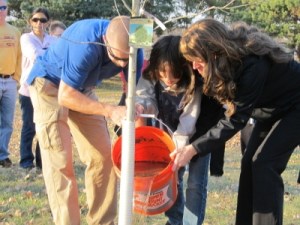
At 3:00 p.m. yesterday, November 20, Spencer’s schoolmates who study visual arts, cultinary arts and horticulture, gathered with Spencer’s family to dedicate a new 10′ tall red oak tree in his memory.

I never met Spencer, his friend, or their families. I attended yesterday’s dedication at the invitation of John Hopkins, a member of Shepherd of the Hill who teaches horticulture at the school. “The kids have put this program together,” said John. “If you’re not doing anything at 3:00, swing by.”

Spencer’s death had hit everyone at the school hard. I went to show support from the wider Chaska community for the students who had put this program together, as the program said,

“To comfort and help restore the hearts affected by the hurt of Spencer’s death.”

The printed program featured not only a carefully selected poem of Pakistani poet Faiz Ahmed Faiz, “When Autumn Came”  but art created from closer to home by the students of the Arts Academy.

Brieann’s drawing depicts her fallen schoolmate as a tree growing taller with the caption “Grow till Tall”; Dominika, another of Spencer’s schoolmates, wrote and read aloud her poem “I can see a lot of life in you”:

Hold on to the memories of

the ones we love and lost.

Take time to say what’s right.

Take time to forgive and not

fight. Each day’s a gift and

not a given right. You have to

wonder and find out what’s

your light.  Is it the One to

come?

Each day is new and full of life.

Listen through the whistling wind.

Your time is here

be content don’t linger.”

There were words there on the hill… but not many. There was quiet…. No cell phones ringing. No one texting. No one looking around in boredom. Just all of us, young and old, at home, for a moment, in the sacred silence of the community standing together to celebrate life in Spencer’s honor.

tree dedication

“To plant a tree is to give body and life to one’s dreams of a better world,” wrote Russell Page.

The red oak will grow over the years to great height and girth, spreading its branches for the birds and the squirrels, reminding each of us to honor the gift of life and the gift of the community of thoughtful speech and silence.

This is the way that autumn came to the trees:

it stripped them down to the skin,

left their ebony bodies naked.

It shook out their hearts, the yellow leaves,

scattered them over the ground.

Anyone could trample them out of shape

undisturbed by a single moan of protest.

The birds that herald dreams

were exiled from their song,

each voice torn out of its throat.

They dropped into the dust

even before the hunter strung his bow.

Oh, God of May have mercy.

Bless these withered bodies

with the passion of your resurrection;

make their dead veins flow with blood again.

Give some tree the gift of green again.

Let one bird sing.

Faiz Ahmed Faiz