
The school bus driver

The white cane moving back and forth in front of him belongs to seven-year-old Sam. The little guy moves cautiously, as the blind must do, hand-in-hand with a young woman I presume to be his mother, on his way into the Artist’s Reception.

Many of the people here on this Friday night are school bus drivers for District 112 School District. I’m wondering if perhaps Sam’s mother is a school bus driver.

Turns out that the featured artist, John Lince-Hopkins, is Sam’s school bus driver. John has invited Sam to see “Morning has broken: a Celebration of Light”, the collection of oil painting that now hangs on the walls of the Gathering Space at Shepherd of the Hill Presbyterian Church in Chaska where I serve as pastor.

It’s an evening of revelation about a very special group of people who know their passengers by name, quietly welcome each child every morning, say good-bye to them in the afternoon, and watch to be sure that children like Sam with his white cane make it safely across the street no matter what dark clouds may cross their paths that day on their slow, daily journey toward adulthood.

Most of my teachers’ names are long forgotten. But I remember my school bus driver. Why we called Mr. Thompson “Tommy” is a sign of the time in which I grew up when, sadly, school bus drivers did not command the respect that lawyers and doctors do. “Good morning, Gordon.” “Good morning, Mr. Thompson.” All these years later Mr. Thompson stands out in my memory. Bus drivers are special people. Perhaps because they call no attention to themselves, they stand out in our memories as signs of light.

John welcomes Sam in that special way some bus drivers have. “Would you like to see a painting?”

John, whose art has sold for thousands of dollars in Texas, Alaska, New Mexico, Wisconsin, and Minnesota, is inviting Sam to do what most landscape artists most dread. He’s inviting Sam to touch his paintings, to “see” the only way Sam can: by touch.

Lifted high so he can touch the oils of the cloud formations and the light of “Morning Has Broken: a Celebration of Light” Sam reaches out his hand. Very carefully he runs his fingers over the dry paint that allows him to see the light and contours of the clouds and landscapes of his bus driver’s paintings, more raptly attentive to the art than those of us who presume to see what we are viewing.

On this night John’s art is a bus ride into the light of morning breaking into the darkness of night. A seven-year-old boy named Sam, whose eyes have never seen light, gets to touch it for himself.

Morning has broken like the first morning, blackbird has spoken like the first bird. Praise for the singing! Praise for the morning! Praise for them, springing, fresh from the Word!”
After the Joyful Concert

Post Concert Animal Triste

Sixty of us sang
under one baton
spirituals and folk
songs to SRO
crowd of friends and fans
standing clapping some
shouting AMEN when
soloist filled church
with his ringing sound

Now the silence rings
through the empty space
in between my ears
early the next day
snatches of the songs
come and go glow then
fade finally bring
ashes to my tongue

never again sing

[Post coitum omni animal triste est–after sex all animals are sad] Steve Shoemaker
Urbana, IL, November 4, 2013

Joshua fit the battle of Jericho

Music like this gives me hope. The music director’s introduction and the piece itself speak of the non-violent battle of resistance against the forces that disenfranchise in our own time, as well as in the time the song was first sung. I need this.

Thanks to the Chaska Herald for additional publicity for this Saturday’s celebration of the 150th Anniversary of the Emancipation Proclamation and the ongoing spirit of emancipation. Click HERE for the story. Emancipation Day Celebration, this Saturday, Oct. 26, with guest artists, Dennis Spears, Momoh Freeman, Jerry Steele, and the Chaska High School Choir.

O Let My People Go

For ten or twenty, thirty years or more
the song was sung before the Civil War

by southern slaves in secret. First a call,
and then a sung response that came from all

around, “O let my people go!” And then
another voice, another poet, sang

out still another call, “Tell King Pharaoh!”
And then, “This world’s a wilderness of woe…”

“O let my people go!” Old Lincoln heard
the sad song sung and gave the legal word:

Abolish evil slavery first here,
and finally across the land. For where

no freedom is for some, at risk we all
will be. Each one must listen for the call:

to set each prisoner free.

– Verse “O Let My People Go” by Steve Shoemaker, Urbana, IL, October 23, 2013

Spirituals! (The first one published in 1861, “O Let My People Go,” was transcribed by a YMCA missionary sent to help escaped slaves at Fort Monroe. –Dena J. Epstein, “Sinful Tunes and Spirituals: Black Folk Music to the Civil War,” Univ of Illinois Press, 1977, 2003.)

Editor’s Note: Harriet Tubman was the Moses of the Underground Railroad.

The Climate Change Wild Card

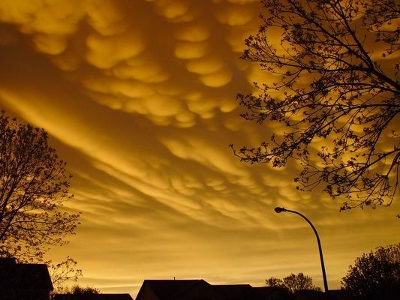
Kay Stewart photo following storm

Kay Stewart photo following storm

Water vapor is the wild card in the timing of the tipping point of climate change, said artist and scientist J. R. (John) Lince-Hopkins yesterday. Recognition of “the wild card” lies behind John’s delicious paintings of clouds, rivers, and snow-covered mountains.

Click “The projected timing of climate departure from recent variability” to read the article John brought to our attention.

John and Bob McLain’s exhibits “Morning Has Broken: a Celebration of Light” and “Seven Faces of Christ” will be displayed at Shepherd of the Hill Presbyterian Church in Chaska, MN from 9-12 a.m. Monday thru Thursday, November 4 through December 8. An Artist Reception will be held November 8, 7:00 to 9:00 P.M.

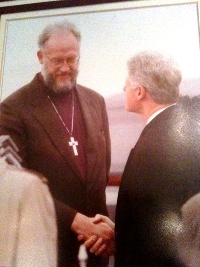
Meeting President Bill Clinton

January 28, 1998

He gave the State of the Union address
the night before, and flew on Air Force One
to our college town in the middle-west
to check out press and public reaction.
(The sex with an intern story made news
the week before.) For six years he had met
not politicians, but “Local Heroes”
at airports (Do-Gooders the Democrat
Party chose.)
Our church worked with homeless men.
As Pastor, I was picked to shake his hand
as he came off the plane (in a long line
with 14 other folks.) He called each one
of us by name. He firmly gripped my hand,
looked in my eyes, pretending to be fine…/

– Steve Shoemaker, Urbana, IL, January 28, 1988

Steve Shoemaker with President Bill Clinton

Steve Shoemaker with President Bill Clinton

Join Steve next Tuesday at 7:00 p.m. at Shepherd of the Hill Presbyterian Church.

Grandpa and the Grand-kids

Verse – Ten and Twelve

The high-caffeine pop was a mistake…
but when the older asked for it,
the younger had to have it, too.
The ping-pong chatter natter
never stopped. Good-natured,
but louder and shriller (I turned down,
then took out my hearing aids…)
Day 5 of our week caring for
the grand-kids. Their parents
love going to Burning Man–
what’s temporary noise
in the service of Art?

– Steve Shoemaker, Urbana, IL, September 2, 2013

Poor People’s March 50 Years Ago Today

Martin Luther King, Jr. 50 years ago

Martin Luther King, Jr. 50 years ago

2013 MLK: "What happened?"

2013 MLK: “What happened?”

Glock owner at State Capitol hearing. Photo by David Joles, StarTribune.

Glock owner at State Capitol hearing. Photo by David Joles, StarTribune.

The Gift of Encouragement

“You’re going to like Via Lucis this morning,” said Kay, as I came down for coffee.

She knows that I share much in common with the Hasidic rabbis described in Elie Wiesel’s Four Hasidic Masters and their Struggle against Melancholy. Like Rabbe Barukh of Medzebozh, anguish is part of my faith and character. “Faith and the abyss are next to one another,” said Barukh to one of his students. There are times, especially lately, when the abyss has been so close that I have considered silence, not speech and not writing, to be the better part of wisdom.

One of the benefits of creating Views from the Edge has been the discovery of Dennis Aubrey and PJ McKey through their blog Via Lucis Photography. Their posts speak to me in the way that little else does, in no small part, I think, because they combine art photography, careful research, and exquisite commentary on the Romanesque and Gothic church architecture. Their work elevates the discussion in a world filled with so many needless words. Their post this morning (click below on “Our Personal Favorites” left me speechless, humbled, and encouraged. Thank you, PJ and Dennis. One of these days we’ll meet face-to-face.

Our Personal Favorites.

Bemused by Time

Gordon C. Stewart, August 8, 2013 copyright.

I have always been bemused by time . . . and place. I am on a train listening in the night to the eerie sound of the train whistle and the constant click-clacking of the wheels. Where were we? Where are we going – and why, just my mother and I?

We were between times and places. My father had shipped out for war in the South Pacific. Hewas somewhere on a ship and might not return. My mother and I were on our way from LA to Boston. Two different places: one hours behind, one many hours ahead. But for the time being, there was only the now of the train, the whistle, and the steady clickety-clack from the track carrying us from there to here to there, from then to now to then. Perplexity with time and place is my earliest memory.

We are all in transit. But from where to where and from when to when have become less and less my questions.

I do not share the popular view that time is an illusion or that the material world is the prison from which we will be released at death. Time and place are gifts of creaturely existence, boundaries within which we live our lives appreciatively or scornfully in the midst of the Eternal. To scorn them is to deprecate existence itself in the Promethean hope that we can steal fire from the gods to become what we are not: timeless and placeless.

Time and place are set within the larger Mystery that Rudolph Otto called the Mysterium tremendum et fascinans – the Mystery that makes us mortals tremble and fascinates us at the same time, the Mystery of the Eternal without which we are nothing that draws us to itself like iron to a magnet. Time and place – birth, finite life, death – exist within the Mystery of that which does not die: Eternity.

I am not amused by the denial of death that is so rampant in our culture. Surveys show that roughly 90% of Americans, regardless of religious affiliation, believe in life after death, by which they do not mean that life will go on without them, but that they themselves will never die.

I have come to believe that the denial of death and the fear of death lie close to the core of American culture at its worst. Ernest Becker’s The Denial of Death informs how I see the world and myself; Becker sits beside me as I turn to the Scriptures in the morning.

Psalm 90:1-5, paraphrased by Isaac Watts (1719) and sung as the hymn “O God, Our Help in Ages Past” is as much in my early memory bank as the train whistle on the ride to Boston. It has always represented a mature faith that takes seriously Otto’s Mysterium:

Before the hills in order stood,
Or earth received its frame,
From everlasting Thou art God,
To endless years the same.

A thousand ages in Thy sight
Are like an evening gone;
Short as the watch that ends the night
Before the rising sun.

Time, like an every rolling stream
Bears all its sons away;
They fly forgotten, as a dream
dies at the opening day.

O God, our help in ages past,
Our hope for years to come,
Be Thou our guard while life shall last
And our eternal home.

Standing at the gravesites over the years, I have prayed the same prayer so many times that it has become an essential part of me. I confess that I don’t know what it means exactly but it expresses the sentiment of good faith as I have come to understand it for myself.

O Lord, support us all the day long,
until the shadows lengthen,
and the evening comes,
and busy world is hushed,
and the fever of life is over,
and our work is done.
Then, in Your mercy,
grant us a safe lodging,
a holy rest,
and peace at the last.

The shadows have grown longer since the trip to Boston and the first time I sang the hymn. Evening is closer now. The sense of the Mysterium tremendum et fascinans is different but no less real now than it was on the train to Boston. The hush of the busy world will come soon enough. Between now and the day my work is done, I want to listen more attentively for the Hush in the midst of time, and give thanks that the Silence is not empty. It is full of Eternity. I am bemused by time.

Click O God, Our Help in Ages Past for a video that captures the spirit of the hymn and the prayer.