A sermon at Shepherd of the Hill Presbyterian Church in Chaska, MN.

A sermon at Shepherd of the Hill Presbyterian Church in Chaska, MN.
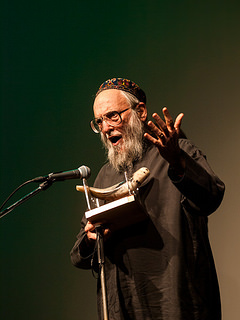
Rabbi Arthur Ocean Waskow
Rabbi Arthur Waskow of the Shalom Center in Philadelphia is one of the more interesting religious leaders of our time. Views from the Edge republishes this week’s “Shalom Report” with permission.
Dead Young Men: 50 Years Ago and Now
Spirals of Violence — or Nonviolence
Dear friends,
I spent several days last week in Mississippi –Mourning the murders of three young men
And then, a few days later, came the news of the murders of three young men just weeks ago –- three Israeli youngsters — their bodies, like those of Mickey Schwerner, Andy Goodman, and James Earl Chaney, hidden while the search went forward for them.
But not only them. The violent deaths of young Palestinian boys/men as well, during the Israeli Army crack-down on the West Bank. Their mothers also mourning. As the New York Times reported the day before the three Israeli bodies were discovered:
“Most Israelis see the missing teenagers as innocent civilians captured on their way home from school, and the Palestinians who were killed as having provoked soldiers. Palestinians, though, see the very act of attending yeshiva in a West Bank settlement as provocation, and complain that the crackdown is collective punishment against a people under illegal occupation.”
Is there a danger of “moral relativism” in mentioning these deaths together? Is the cold-blooded murder of three hitchhiking youngsters morally equivalent to killings carried out by angry, frightened soldiers faced with a protesting mob? At the individual level, No.
But at the level of decision-making and public policy, there is also no moral equivalence between a cold-blooded military occupation and the impotent rage of the occupied.
Above all, there is no “relativism” in the tears of mothers.
Some Israelis and some Palestinians have joined their sorrow over the killings of their own children to work in the Circle of Bereaved Families for a peace that would end the killing. (See http://www.theparentscircle.com/.)
Others –-including some Israeli cabinet ministers in the last day — have defined their deaths as the warrant for more killing.
But Mississippi did not change through threats like that. It changed because an aroused American citizenry from outside Mississippi allied itself with the oppressed community inside Mississippi to demand – through nonviolent direct action and through passing laws — that an oppressed population of black folk be freed to achieve some measure of political power.
As a result of that arousal, the deaths 50 years ago have made a visible difference. Fifty years ago, a scant few black Mississippians had been allowed to register to vote. As the “Freedom Summer + 50” gathering opened last week, thousands of black Mississippians who are devoted to the Democratic Party intervened in a Republican primary to prevent the nomination and for-sure election of a far-right Tea Party candidate.
Important change? Yes. Enough change? No.
In the Israeli-Palestinian conflict, no sufficiently powerful outside energy has made the commitment to bring all its lawful, nonviolent power to bear to achieve a two-state peace. So the violence worsens in a downward spiral of injustice.
What the gathering in Mississippi showed was that even when change is still necessary, even when injustice still continues, there can be an upward spiral, growing from past transformations into future ones.
For the gathering at Tougaloo College addressed the future as much as the past. The memory of youthful deaths so many years ago –- we recited their names, we sang their songs, we welcomed their families — became the celebration of youthful courage that had led to serious change. So not only many veterans of 1964 were there, but also many many young activists, come to learn and be inspired.
So we addressed the injustices that persist, and we took up some levels of injustice that fifty years ago were not on anyone’s agenda. Even Rachel Carson’s Silent Spring, published in 1962, did not envision a massive disruption of the planetary climate system and the web of life it has nurtured for millions of years.
So there was a confluence of issues almost unimaginable in 1964 when Jacqueline Patterson of the NAACP staff brought together two excellent workshops on ”climate justice.” They were the first climate–action settings I have ever seen in which people of color — Black and Hispanic and Asian and Native — were at least half of those present.
Many spoke of two clear cases in their own region when the fossil-fuel Pharaohs had shattered the lives of poor communities of color even worse than they had damaged prosperous whites:
And we learned as well how on a global level the overheating of our planet was hurting and killing the poor even worse than others: How droughts in California, the US corn-belt, central Africa, and Russia had raised the price of staple foods so badly that those who were teetering on the edge in poverty fell into hunger, and those who had been hungry faced starvation. And some who were starving fought civil wars to get their hands on food.
We discussed alternatives for climate activism. Some of us talked about the model of the “Freedom Schools that emerged in 1964, teaching where the impulses to learn and teach were deeply interwoven with the impulse to heal the world. Those Freedom Schools helped give birth to the Teach-Ins against the Vietnam War that flowered in the spring of ’65.
Could we create new Freedom Schools, new Teach-Ins, to fuse the science of climate and the facts of Corporate Carbon domination with the strategies of change? Was our gathering itself a kind of Freedom School, a Teach-In, with the young and the old teaching each other?
And Freedom Summer inspired co-ops, the redirection of our money from feeding bloated corporate power to nourishing the seeds of a grass-roots economic democracy. In that spirit, I shared The Shalom Center’s campaign to Move Our Money/Protect Our Planet (MOM/POP) and handed out copies of our “Action Handbook” on specific steps for how to Move Our Money. See https://theshalomcenter.org/treasury/209.
All of us learned more deeply how important it is to recognize and act on the true linkage of what we might call eco-social justice.
And we learned that what happened fifty years ago in Mississippi sowed the seeds of our ability to recognize and resist new depredations of today. We saw how deeply the nonviolent movement of fifty years before had, even when some of its activists were killed, given continuing birth to nonviolent responses to make more necessary change.
I ended one of those workshops by invoking the spirit of Vincent Harding. If he had not died just a month ago, I said, he would have been deeply pleased by our intergenerational learning, and he would have brought his own deep listening and the quiet with which he surrounded his own wise words.
And most of all, he would have brought his willingness to invest his life in the effort to use nonviolence to expand democracy, to win justice for those who have been oppressed.
And now, in the wake of the news from Palestine and Israel, his ghostly, powerful presence actually reminds me of the Unity of that long effort. For just two summers ago, Brother Vincent took part in a delegation of American Jews and Blacks to visit the occupied West Bank and bring hope to Palestinians committed to nonviolence.
Brother Vincent would have wept over the deaths of the young men of both peoples. As do I.
May the tears we shed become the wellsprings of transformation, not revenge — as they did in Mississippi.
And may we teach the intertwinement of eco-social justice, learning anew from Freedom Summer’s creativity to go beyond our forebears — as they did.
Shalom, salaam, paz, peace! — Arthur
“There is the possibility that fratricide may have been involved,” said a U.S. military official yesterday of the five American soldiers’ deaths in southern Afghanistan, according to news reports like this one from NBC News. The sentence came over my car radio yesterday. I’ve been pondering it ever since.
Interesting choice of words: “fratricide”, the killing of a brother, meaning, in this case, one of our guys, not one of their guys.
The Genesis story of Cain and Abel is the archetypal fratricide in Western culture. Cain turns to violence. Abel, his biological brother, is dead. When God asks Cain where his brother is, Cain retorts, “Am I my brother’s keeper?”
The answer is “Yes, Cain, you are.” Fratricide is out of order.
So is friendly fire. But what about killing the Taliban? Is that “unfriendly fire”? Is that not fratricide because the Taliban are not my brothers?
My ears are attuned to fratricide and to the use of language that brings theology and humaneness into stories like yesterday’s tragedy in Afghanistan and many wartime public relations press releases. The implication is clear. One of our guys may have killed one of his own guys.
In a subsequent statement, another military official said that, in the daylong fight preceding the apparent friendly fire airstrike, the joint U.S.-Afghan security forces operation had killed “lots of them” (i.e., Taliban, the enemy, the non-brothers). The case is being investigated.
Every death of a human being at the hands of another human being, on the ground or from the air, is an act of fratricide.
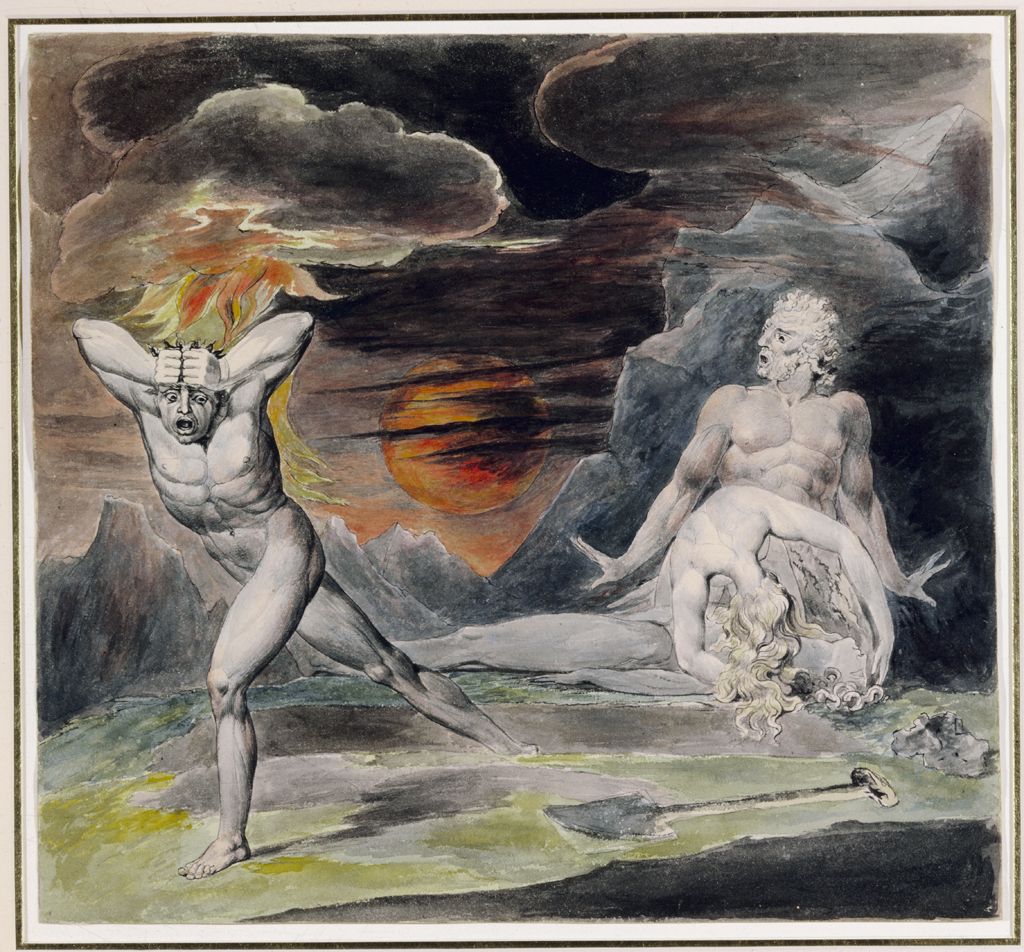
William Blake painting of “Cain fleeing from the wrath of God “as Adam and Eve look on in horror following the fratricide.
Arab American Christians
Three words not
Usually seen together
Palestinian Christians love
Hearing Acts two
Read on Pentecost
Arabs are listed
Receiving the Spirit
West Bank Bethlehem
Has had Christians
Two thousand years
Lutheran Arabs live
Next to Muslims
In Palestinian towns
The Pope’s prayers
May bring peace
Where three Faiths
Call land Holy
– Steve Shoemaker, Urbana, IL June 10, 2014
EDITOR’S NOTE: Westminster Presbyterian Church in Minneapolis is a partner church with the Lutheran congregation in Bethlehem. The pastor of the Bethlehem church has spoken to the General Assembly of the Presbyterian Church (USA). Once again this year’s General Assembly (national meeting that convenes this Saturday in Detroit) will consider a controversial proposal to divest investments in companies that support the subjugation of the Palestinian people, working against the Church’s commitment to human rights, justice, and peace. Prayers for the General Assembly as its Commissioners deliberate. – GCS
“It is clear that in this system there can be no Sabbath rest,” writes Walter Bruggemann of Pharaoh’s economic system (Book of Exodus 5:5-19) in which “cheap labor is a footnote.” Into “the grind of endless production” appears the God of the burning bush who opposes the system of weariness and endless toil.
If you’re looking for a book that stands the global economic system on its head, Old Testament scholar Walter Brueggemann’s Sabbath as Resistance: Saying No to the Culture of Now (Westminster John Knox Press, 2014) may be for you.
If you’re looking for something deeper than the mindless slogans about “the free market” and globalization, Sabbath as Resistance will take you to a different place – deep into the economic mandate of the Fourth Commandment (Exodus 20:-8-14).
If you’ve concluded that the Old Testament, i.e, Hebrew Bible, is a barbaric killing field and that “the 10 Commandments” are the pious weapons of the Religious Right, Sabbath as Resistance will blow your mind.
If you think the Fourth Commandment is about Blue Laws, think again. Pick up a copy or download Brueggemann’s masterful treatise on the relation between labor and rest, labor and management, humankind and all of nature, a just and peaceful economy hinted at by the Sabbath Command for everything to stop. To rest.
If you think minimum wage is a latecomer issue, read this book. The exploitation of labor goes directly to the heart of God, the Nameless One (YHWH) whose exodus people set free from economic bondage are summoned to resist all new renditions of the Pharaohic economic system.
Among Biblical scholars, Walter Brueggemann is as good as they come. He reads the Bible with the newspaper in his other hand, and when he’s reading the newspaper, he reads the news through the lens of the central biblical themes that have become his eyes.
Some of us have been waiting for this book for years. We’ve thought some of Brueggemann’s thoughts along the way, but we could not articulate them or argue them so clearly as Brueggemann does in this cogent little masterpiece.
Years ago the late Stirling Professor of Church History at Yale, Jaroslav Pelikan, met a young American seminary student in a rathskeller in Prague. When the discussion turned to the contentious debates about curriculum change at the student’s seminary, Professor Pelikan frowned. Three chapters from the Epistle to the Romans is all Luther needed he said. It’s about how deeply you learn to read a text, not about the curriculum. Anything can be the curriculum if it’s well taught.
Had Professor Pelikan lived to read Sabbath as Resistance, I wonder whether he might add it as the second text for anyone serious about faith and justice, faith and life, faith and nature, faith and global warming, faith and poverty, faith and wealth, faith and violence, and faithful Sabbath resistance in the culture and economy of greed and sorrow.
Sermon at Shepherd of the Hill Presbyterian Church in Chaska, MN.
Lord, save us from ourselves.
In the pecking order of academic life, Martin the kitchen manager is to the faculty and administration the closest person to the status of persona non grata or, maybe, what wives are called in the First Epistle of Peter, “the weaker vessel”, but what Jesus called “the least”.
In physical stature, Martin stands six-feet-eight inches tall. He’s a big man, hunched over at the upper back and shoulders from many years bending over the grill, serving up food from behind the lunch counter, clearing and washing the dishes of the seminary cafeteria.
It’s been a rough year at seminaries all across the country. Faculties, administrations, and Boards of Trustees have struggled with and against each other to make hard decisions that give some realistic assurance of institutional survival, or, as they euphemistically describe it, “sustainability.” People like Martin have little to no voice in whatever decisions are made.
Thursday morning, my third day staying at the seminary Guest House, I wander across campus to the seminary cafeteria for a cup of coffee. Martin is there. I ask whether he’s a student. He’s older – maybe 60 something – but that’s not unusual these days with second career people going to seminary.
“No,” he says. “I just work here.”
“So, you’re staff? How long have you worked here at the seminary?”
“Twenty years,” he says. “But I’m not on staff, I just run the kitchen.”
“So you’re an independent contractor?”
“Sort of,” he says with a delightful impish smile. “I’ve never had a contract. We do it with a handshake. They give me the space. I do the cooking. It’s all done with a handshake.”
————————-
Early in the morning Martin makes two pots of coffee and puts out the paper cup for the honor system. $1./cup. He chats with whoever comes by…if they strike up a conversation. He does not intrude. He’s just a peaceful, quiet presence who goes about setting up the kitchen and preparing the food for the daily lunch menu.
“Do you know that it takes 1.6 pounds of food for a chicken to produce one egg?” he asks. “Duck eggs are bigger and they’re better for you than chicken eggs. It takes 2.4 pounds of food to produce a duck egg, but the duck doesn’t eat grain feed; the duck just roams around and eats whatever’s there. It’s healthier and more sustainable.”
“Where’d you get that information? How do you know that?” I ask.
“Here, I’ll show you.” He takes out his iPhone and calls up the script from National Pubic Radio (NPR).
I pour myself a cup of coffee and go down the corridor to the bookstore.
———————
Half an hour later, Martin drops by the bookstore to say good morning to the bookstore manager. The bookstore serves free coffee but the first customer, who’s pouring herself a cup, says they’re out of artificial creamer. Martin raises his hairy eyebrows with a smile and asks why people would put chemicals in their bodies if they didn’t have to, but says it in such a playful way that no one seems to take offense. As a coffee drinker who uses that powdered stuff, I ask myself the same question but hearing Martin ask it throws a different light on the question.
Then it dawns on me. I hadn’t paid for my coffee at the cafeteria. I’d forgotten to put my $1 in the paper cup. I’d violated the honor system! I give Martin a five dollar bill. “I don’t have change,” he says. “It’s on the house.”
For the rest of the day, I keep running into Martin in his black t-shirt, black trousers, black socks, and black shoes. He moves slowly. People seem to seek out this gentle giant, the “weaker vessel” – the guy at the bottom of the pecking order – here at the seminary.
He catches me in the hall. He knows there are six of us who gather annually at different locations for renewal, reflection, and friendship. “I don’t know whether your group is planning on coming for lunch, but if you are, come early. There’s a large group coming. If you come by 11:30 you should be fine. Just wanted you to know.”
The group has different plans for lunch, but I need downtime. Time out from the intensity of group life. I’m an introvert who needs alone time. I excuse myself from the group’s plans and go the cafeteria after which I’ll take a quick nap.
During lunch Martin welcomes by name as they place their orders with him at the lunch counter. He looks them in the eye and smiles; they smile back. When most everyone has finished lunch, three faculty and the Academic Dean remain seated together in lively conversation. They signal to Martin to join them. The “weaker vessel” among the “stronger vessels” takes a seat and listens. I observe from a distant table, reading Resisting Structural Evil: Love as Ecological – Economic Vocation, Cynthia Moe-Lobeda’s book I’ve just purchased at the bookstore. I’m wondering whether the Dean and tenured faculty who have contracts recognize the structural disparity in which they are all enmeshed. I wonder if “the stronger vessels” understand love the way Cynthia Moe-Lobeda does, as “ecological-economic vocation” that resists structural evil as it pertains to the seminary’s own structures. My guess, looking on from a distance, is that they have a sense of it, but I still wonder. They’re there on contracts; Martin is there on a handshake and doesn’t seem to want anything more.
By late afternoon I’ve spotted Martin four different times sitting around campus with students, faculty, and administrators. Even at six-foot-eight he floats like a butterfly, hunched over but still alighting gently wherever he goes, quietly engaging others where they are.
It occurs to me that Martin is the unofficial, unpaid Chaplain of this community. His eyes see everything but act as though they are blind. His ears hear everything – all sides of the issues that sometimes roil academic institutions into infernos of accusations, counter-accusations, warring camps, and gossip factories – but he hears nothing and speaks nothing. “I’m just the Lord’s humble servant, the guy who makes the coffee” he had said, the one working behind from the kitchen counter, serving up duck egg omelets with fresh vegetables, and offering good coffee for a buck on the honor system, on nothing more than a handshake.
I leave the seminary thinking: I want to be more like Saint Martin of the Handshake.
Easter sermon by Gordon C. Stewart at Shepherd of the Hill Presbyterian Church in Chaska, MN tying together Chris Hedges’ remarks about Friedrich Nietzsche, the women at the tomb, and a fourth century monk.
 Views from the Edge