Jesus and Indiana’s Religious Freedom law

Yesterday, March 31, Christian Theological Seminary released President Matthew Myer Boultons statement on Indiana’s Religious Freedom Restoration Act (RFRA). The statement represents the official position of the CTS Board of Trustees. Views from the Edge is pleased to re-print it today:

“Christian Theology Seminary (CTS) believes deeply in religious liberty. But we witness to the fact that Jesus of Nazareth — the one every Christian disciple seeks to follow — calls us not to a freedom to exclude, or a freedom to discriminate, or a freedom to create an atmosphere where prejudice may flourish. On the contrary, again and again, Jesus calls us to a freedom of inclusion, equality, justice, and profound respect for the dignity of all.

“CTS opposes this act, then, not only because it represents an offense to the spirit of civil rights; not only because it cuts against the best of Hoosier hospitality; and not only because it has created a public relations crisis for the state of Indiana. CTS opposes RFRA primarily because it violates the Christian values we hold dear: values of inclusion, equality, justice, and the dignity of all people, including our LGBTQ brothers and sisters.

“The Christian Gospels are replete with examples of these values. In the Gospel According to Luke, in response to the command to ‘love your neighbor as yourself,’ a lawyer asks Jesus, ‘And who is my neighbor?’ It is a clannish question, a question that seeks to draw a circle around one group we are required to love and serve, creating another group we supposedly may exclude as outsiders.

“But Jesus will have none of it. In his response — the parable of the Good Samaritan — Jesus flips the question on its head, as if to say, ‘Don’t waste your time asking the clannish question of who your neighbor is; instead, go and BE an excellent neighbor, serving all with mercy and justice.’

“Three weeks ago, I was a keynote speaker at a church service rallying against RFRA. In conversations afterward, many of us who attended, including some of the event’s organizers, lamented that it appeared the bill was headed for passage. I take heart today at the bipartisan, statewide, nationwide outcry against this unwise, unjust legislation. And I continue to be inspired by the many Christians and other religious people who stand against RFRA as a matter of faith, conviction, and genuine religious liberty.

“Real damage has been done, but together we can and must begin the work of repair. Indeed, for Christians, as we move ever deeper into Holy Week, we can only be challenged and encouraged that God is a God of hope and resurrection.”

Matthew Myer Boulton
President and Professor of Theology
Christian Theological Seminary

NOTE: Christian Theological Seminary, an ecumenical seminary of the Christian Church (Disciples of Christ), and its neighbor, Butler University, founded and co-host the Desmond Tutu Center.  The Desmond Tutu Center is North America’s only academic center in a university and seminary context named for Archbishop Emeritus Tutu. The center, launched on September 12, 2013, focuses on leadership development in social justice and reconciliation, international relationships, and interreligious bridge-building. South African churchman, theologian, and anti-Aparteid leader Rev. Dr. Allan Boesak is the Tutu Center’s Executive Director.

FURTHER PERSONAL NOTE: Matthew Myer Boulton is the son of  Wayne and Vicki Boulton whose friendship has blessed us since Wayne and I met as roommates in 1964 at McCormick Theological Seminary in Chicago.  Steve and I  could not be prouder of Matt’s leadership and witness for justice and peace.

 

Disciples of Christ opposed Indiana RFRA

Before the national hubbub about Indiana’s Religious Freedom Restoration Act Christian Church (Disciples of Christ) leaders sent this letter to Indiana Governor Mike Pence urging him to veto the the bill.

March 25, 2015

The Honorable Michael R. Pence
Governor of the State of Indiana
200 W. Washington Street, Room 206
Indianapolis, Indiana 46204

Dear Governor Pence,

We write with respect to the Religious Freedom Restoration Act (RFRA). We urge you to veto the bill.

The Christian Church (Disciples of Christ) has been headquartered in Indianapolis for nearly 100 years. Although Butler University is no longer affiliated with the Christian Church (Disciples of Christ), its founder, Ovid Butler, was a Disciple and a noted abolitionist. The college, in keeping with our values, admitted women in a time when that was rare. We are the church that founded Christian Theological Seminary. Our offices are located on North Meridian. Our Indiana regional offices are located in Indianapolis as well.

Every two years our general assembly, a gathering of over 6000 people from across the United States and Canada, is held in a US city. In 2017 it is scheduled to be in Indianapolis as it was in 2009 and 1989. Like so many other host cities, we find Indianapolis to be a hospitable and enjoyable location for our people. Many of our leaders are citizens of this city, and we take particular pride when our selection process makes it possible to bring the assembly to our home town.

However, the recent passage in the state legislature of the RFRA bill is distressing to us. It is causing us to reconsider our decision to hold our 2017 gathering in Indianapolis.

Purportedly a matter of religious freedom, we find RFRA contrary to the values of our faith – as well as to our national and Hoosier values. Our nation and state are strong when we welcome people of many backgrounds and points of view. The free and robust exchange of ideas is part of what makes our democracy great.

As a Christian church, we are particularly sensitive to the values of the One we follow – one who sat at table with people from all walks of life, and loved them all. Our church is diverse in point of view, but we share a value for an open Lord’s Table. Our members and assembly-goers are of different races and ethnicities, ages, genders and sexual orientations. They have in common that they love Jesus and seek to follow him.

We are particularly distressed at the thought that, should RFRA be signed into law, some of our members and friends might not be welcome in Indiana businesses – might experience legally sanctioned bias and rejection once so common on the basis of race.

We are following closely the progress of this legislation. It will be a factor in whether we continue with our plans to hold an assembly in Indianapolis in 2017. We urge you to veto the bill.

Respectfully,

Sharon E. Watkins  Julia Brown Karimu, President    Ronald J. Degges, Pres. Gen.Minister & Pres.     Div. of Overseas Ministries    Disciples Home Mission

After Governor Pence signed the bill, the Christian Church (Disciples of Christ) took further action reported by The Huffington Post. Click “Disciples of Christ Church Threatens a Boycott Over New Law … that Allows GLBT Discrimination” to read the story.

Sometimes disciples of Jesus stand up for the rule of love. Do I hear hands clapping for the Disciples of Christ?

Nothing talks like money!

No sooner had Indiana enacted its new Religious Freedom Restoration Act (SB 101) than leaders of the Indiana Senate and House announced they would work to “clarify” the law’s intent by amendment.

How did this happen so  quickly? Money. Money. Money. Corporations, organizations and groups declaring they would boycott Indiana – no more conventions, meetings, etc. – meaning a huge economic hit to Indiana – because the new law opens the door to GLBT discrimination based on claims of religious scruples. Click HERE to read Views from the Edge‘s earlier post.

Real speech – words spoken and written – against the law is not new. The criticism was voiced loudly during the debated.  It passed anyway. Then, suddenly, another form of speech – money – entered the scene. Suddenly Indiana leaders are racing to the microphones to declare the law was meant to be inclusive, not exclusive.

Click HERE for the Washington Post video of Indiana Senate President Pro Tem David Long (R) and House Speaker Brian Bosma (R) feigning surprise and promising to do their best to rally their caucus to make clear the intent of the Religious Freedom Restoration Act.

– Gordon C. Stewart, Chaska, MN, March 31, 2015

Confession is good for the soul

Tears welled up last Sunday listening to the Gospel reading for Passion Sunday: Palm Sunday. The reading was LONG, but it didn’t matter. It pierces the heart, step by step –  the human psyche revealed under an electron microscope, humanity on parade. All in one long reading. The tears that welled up Sunday didn’t fall, but they will later this week during Tenebrae, the service of Light and Shadow by the end of which the church is left in darkness, every worshiper’s candle extinguished by recognition of our participation in betrayal, sleeplessness, flight, and denial. One by one, the individual candles get blown out. All of them.

Holy Week for liturgical Christians is a solemn time of confession. There is no escaping our participation in the passion: our readiness to betray, doze off when asked to “watch with me one hour”, flee in fear for security, throw the switch, consciously or unconsciously, into psychological and public denial. Yet there is, at the same time over it all, the faithfulness, the wakefulness, the courage, the embrace of reality in its horror for the sake of love’s transforming power, the light of Christ himself.

Christians live in the dynamic paradox of faithlessness and faithfulness, sin and grace. We include a Prayer of Confession in the Sunday liturgy. Last Sunday at Trinity Episcopal Church in Excelsior, Minnesota, the Prayer of Confession, which came following a dramatic reading of the Passion Narrative, expressed the conscious and unconscious nature of sin and grace.

God of all mercy, we confess that we have sinned against you, in thought, word, and deed, by what we have done and by what we have left undone. Some sins are plain to us, some sins escape us, some we cannot face. We repent of the sin that enslaves us, the evil we have done, and the evil don on our behalf. Forgive, restore, and strengthen us through our Savior Jesus Christ, that we may not turn from your love, but serve only your will. Amen.

We barely know ourselves. Some sins are plain to us. Some escape us. Others are too painful to face. Holy Week is time to wade into the waters of self-reflection, confident that these waters are the healing waters of the deeper Self, the crucified-risen One who cannot finally be betrayed, fled, denied, or killed.

Sunday’s liturgy ended with the singing of the hymn “My Song Is Love Unknown,” lyrics by Samuel Crossman, 1664, music composed by John Ireland. 


Ask much of us

“Ask much of us,

expect much of us,

enable much by us,

encourage many through us.”

These words from the prayer that followed Holy Communion yesterday (the Sunday of the Passion: Palm Sunday) at Trinity Episcopal Church in Excelsior, Minnesota leaped from the page. They are part of the congregation’s Post-Communion Prayer, prayed aloud by all worshipers.

In deep gratitude for this moment,

this meal, and for these people,

we give ourselves to you, most holy God.

Take us out into the world

to live as changed people

because we have shared the Living Bread

and cannot remain the same.

Ask much of us,

expect much from us,

enable much from us,

encourage many through us.

May we dedicate our lives to your glory.

Amen.

I needed that. I need daily to be reminded, asked, enabled, and encouraged to live actively in gratitude.

– Gordon C. Stewart, Chaska, MN, March 30, 2015

Verse – Legislate Morality

The Pastor asks for those in need
of prayer–
she wants their names. She writes that Bill
will go
for surgery next week. And Ann
retire
at last from waitressing–what will
she do?

In prayer, the Pastor lists each name,
each need.
She celebrates our joys, lists our
concerns–
not that the One who hears has to
be made
aware, but we require the
reminders

of what we are to do: care for
the sick,
go visit lonely folks, give food
and clothes.
Then lobby Congress for new laws
that make
the ninety-nine percent receive
from those

who have it made, a chance, at least
a share
of hope from those who never seem
to care.

– Steve Shoemaker, Urbana, IL, March 30, 2015

Religious Freedom in Indiana – the new face of discrimination

Dear IndianaThe Governor of Indiana just signed into law the “Religious Freedom Restoration Act” (SB 101) that brings to mind the pre-civil rights movement segregated lunch counters. In the era of expanding civil rights for GLBT people, Indian’s altogether unnecessary “Restoration Act” turns back the clock on the right to discriminate.

This May six Presbyterian ministers, all former seminary classmates, will spend our annual five-day retreat in Indianapolis at Christian Theological Seminary (CTS), a religious leader in welcoming, inclusive, nondiscriminatory belief and practices. CTS understands Christian freedom as the freedom for which Christ has set them free: freedom to love.

Wherever we go we will do as Amelia Aldred proposes in her blog post. Click SB101: Let’s make it awkward to read her thoughtful piece and to comment.

Wayne, Bob, Harry, Don, Steve, and I are from Indiana, Texas, Colorado, Illinois, and Minnesota. We’ll be courteous, but we will exercise our religious freedom and responsibility by making it awkward to discriminate.

– Gordon C. Stewart, Chaska, MN, March 28, 2015.

The Christian Taliban

Rafael Cruz, Ted Cruz’s father, hates “the Social Gospel” with a passion. He goes after President Obama and his former pastor, the Rev. Jeremiah Wright, for preaching “social justice”.

A Views from the Edge reader’s response to our recent posts about Senator Ted Cruz and Franklin Graham drew our attention to an article by Chris Hedges that examines a distorted form of Christianity called “Domionism” (aka, “Christian Reconstructionism”).  Ted Cruz’s choice of Liberty University as the platform to announce his candidacy for the GOP presidential nomination is consistent with his father’s views as director of Purifying Fire. Purifying Fire is the Christian equivalent of the Taliban. Its vision is a theocracy.

Click The Radical Christian Right and the War on Government to read Chris Hedges’ article. It’s a little over the top at times, but it’s well worth the read.

When the religious right dug out a short clip of the Rev. Jeremiah Wright’s sermon to embarrass another candidate for President, Barack Obama separated himself from Wright’s view that “the chickens had come home to roost” on 9/11. The same question should be asked of Senator Ted Cruz regarding his father’s fascist dominionist views, as expressed in this video. Click HERE for Rafael Cruz’s 2013 speech in Tuscon, AZ.

– Gordon C. Stewart, Chaska, MN, March 26, 2015, in honor of Jesus of Nazareth:

“Blessed are the MEEK, for they shall inherit the earth. [Gospel according to Matthew 5:4]

“Blessed are the PEACEMAKERS, for theirs is the kingdom of heaven.” [Matthew 5:9] – The Sermon on the Mount.


Our Anxious Time

Ours is an anxious time, a fearful time, an insecure time. We feel it in our bellies.

This morning we’re moved to consider anxiety, fear, and insecurity. For that purpose we turn to philosophical theologian Paul Tillich* (scroll down) and philosopher of religion Willem Zuurdeeg** for whom the questions were passionate and all-consuming over their lifetimes. Even so, they were not the best of friends.

Zuurdeeg was a severe critic of Tillich’s attempts to create a theological system. He saw every system as a flight from finitude and ambiguity into what he called “Ordered World Homes” that make sense of, and defend against, the anxiety intrinsic to finitude. For Zuurdeeg, to be human is to be thrown into chaos and every philosophy from Plato to Hegel to Tillich is “born of a cry” – the cry for help, for sense, for protection, for a security that lies beyond one’s powers.

Reading Tillich’s Systematic Theology again after reading the news this morning leads to the conclusion that Zuurdeeg and Tillich were very close, as is often the case between critics of one another. One thinks, for example, of Sigmund Freud and Carl Jung in a similar manner.

For all their differences, Zuurdeeg and Tillich were joined at the hip by their shared experience with madness in society and the demise of once-trusted foundations of western civilization. The rise of the German Third Reich led them to a lifelong search not only for answers but for the questions that might lead to insight into the existential situation into which Hitler’s madness threw the world headlong into chaos and destruction.

Anxiety, said Tillich, is distinct from fear. Fear has an object. We fear an enemy. We fear Iran; Iran fears us. Israel fears the Palestinians; The Palestinians fear the Israelis. “Objects are feared,” said Tillich.

A danger, a pain, an enemy, may be feared, but fear can be conquered by action. Anxiety cannot, for no finite being can conquer its finitude. Anxiety is always present, although often it is latent. Therefore, it can become manifest at any moment, even in situations where nothing is to be feared….. Anxiety is ontological; fear, psychological… Anxiety is the self-awareness of the finite self as finite. [Paul Tillich, Systematic Theology, Vol. 1,  p. 191-192, University of Chicago Press, 1951]

Anxiety is the self-awareness that we are mortal. We are excluded from an infinite future. We were born and we will die and we know it. Despite every flight into denial, we know it in our bones. We have no secure space and no secure time. “To be finite is to be insecure” (Tillich, p. 195). In the face of this insecurity, said Zuurdeeg, the individual and the human species itself seek “to establish their existence” in time and space, though we know we can not secure it. The threat we experience in 2015 is the threat of nothingness. Politicians pander to it. Preachers pander to it. Advertisers prey on it. They eat anxiety for breakfast, lunch and dinner. Again, Tillich, writing as if for our time:

The desire for security becomes dominant in special periods and in special social and psychological situations. Men create systems of security in order to protect their space. But they can only repress their anxiety; they cannot banish it, for this anxiety anticipates the final “spacelessness” which is implied in finitude. [Tillich, p. 195]

So this morning I sip my coffee aware of and thankful for this moment of finitude, and determined that I will not turn over my anxiety into the hands of those who promise security from every fear. Willem Zuurdeeg and Paul Tillich looked directly into the heart of human darkness and saw a light greater than the darkness. I want to live in the light of their courage and wisdom.

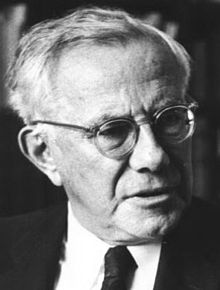
Paul Johannes Tillich (1886-1965)

Paul Johannes Tillich (1886-1965)

*Born and raised in Germany, Paul Johannes Tillich was the first professor to be dismissed from his teaching position in 1933 following the election of Adolf Hitler as Chancellor of Germany for his outspoken criticism of the Nazi movement. At the invitation of Reinhold Niebuhr, he and his family moved to New York where Tillich joined the faculty of Union Theological Seminary. He went on to become one of the best-known philosopher-theologians of the 20th century, publishing widely from teaching from chairs at Union, Harvard University, and the University of Chicago. His best know works are The Courage to Be, The Shaking of the Foundations (a collection of sermons),and his three-volume Systematic Theology.

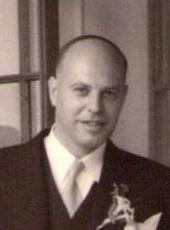
Willem Frederik Zuurdeeg (1906-1963)

Willem Frederik Zuurdeeg (1906-1963)

**Born and raised in the Netherlands in a family that served as part of the underground resistance to Hitler’s pogrom, Willem Frederik Zuurdeeg spent his life asking how western civilization’s most sophisticated culture (Germany), could fall so easily into the hands of a madman. His Analytical Philosophy of Religion became a major text for undergraduate and graduate philosophy of religion classes. When Professor Zuurdeeg died of cancer as Professor of the Philosophy of Religion at McCormick Theological Seminary in Chicago, he left behind an unfinished manuscript later completed by his friend and colleague Esther Cornelius Swenson, the title of which is Man Before Chaos: Philosophy Is Born in a Cry. Click HERE for photographs of Willem Zuurdeeg and the family that gave Jews sanctuary in the Netherlands.

Ted Cruze and The Liberty Way

Sen. Ted Cruze (R-TX)

Sen. Ted Cruze (R-TX)

Yesterday Senator Ted Cruze (R-TX) chose to announce his candidacy for the Republican Party presidential nomination at Liberty University, home of “The Liberty Way” (see below).

Liberty University is a telling choice.  Liberty has grown to become the largest university in Virginia. But, as universities go… well, Liberty is not what Thomas Jefferson or the University of Virginia would recognize as a place of higher education.

Liberty is the creation of the late Jerry Falwell (1933-2007), the televangelist host of “The Old Time Gospel Hour” and father of “the Moral Majority,” the right-wing evangelical political movement that became a national platform for the Religious Right. In the 1950s and ’60s, Falwell was a severe critic of Martin Lutber King, Jr., the civil rights movement and school desegregation. Later, in 1993, he declared

“AIDs is not just God’s punishment of homosexuals; it is God’s punishment for a society that tolerates homosexuals.”

Liberty was not always Liberty. Jerry Falwell founded Lynchburg Baptist College 1971. The name was changed to Liberty Baptist College, and finally became Liberty University in 1984. Falwell. A graduated in 1958 from Baptist Bible College, an unaccredited Bible college in Springfield, MO, named himself Chancellor. His alma mater was later granted preliminary academic accreditation 43 years later in 2001. When Falwell died in 2007, his son, Jerry Falwell, Jr., followed in his father’s footsteps, much as Franklin Graham did with the Billy Graham Evangelistic Association.

So, why would someone kick off a presidential campaign at Liberty University?

Liberty is the largest Christian university in the world, largely because of the more than 100,000 on-line students along with the roughly 13,000 who attend classes at one of Liberty’s three sites.

Liberty University’s colors are red, white, and blue. It’s patriotic. The cross and the flag go together at Liberty. And it’s hard to tell the difference between the two. Their on-line website’s tagline is “Training Champions for Christ since 1971.”

Senator Ted Cruz is a Texan. He could have chosen to announce his mission to take back “the promise of America” at the Alamo or the University of Texas, but he didn’t. He chose Liberty in Virginia.

Liberty requires students to abide by “The Liberty Way” code of conduct but doesn’t tell students what it is until after they’ve enrolled. Here’s all Liberty says about “The Liberty Way” on its website. The Daily Kos published “Liberty University’s The Liberty Way’ Exposed“. I wonder if the Senator signed before he chose Liberty.

We at Views from the Edge view “the way” a bit differently. A little Bible reading goes a long way:

“What does the LORD require of you, but to do justice, love mercy, and walk HUMBLY with your God?” [Micah 6:8]

– Gordon C. Stewart, Chaska, MN, March 24, 2015.