Ego and Dominance

Featured

Like weaker gorillas dominated by the latest chest-thumper, we keep doing it. Chest-pounding is part of gorilla culture. It’s just the way gorillas are. It’s a way they communicate to maintain order in a family. It’s in their DNA.

Looking at us in 2023, I wonder whether human beings are much different.

Chest-thiumping

What’s “this”?

Hearing a U.S. Senator declare “We can’t allow this to stand!” following Special Counsel Jack Smith’s announcement of the DOJ indictment of the former U.S. president, one might think that the thing which “we can’t allow to stand” referred to the alleged criminal behavior for which Mr.Trump’s has been charged.

But that’s not the “this” (the thing we cannot allow to stand). It was, as Mr. Hawley saw it, the continuing investigations and indictments, the prosecutions that are persecuting the leader of his party.

Questions

The questions are farther reaching than how and why a U.S. Senator and Officer of the Court, sworn by oath to uphold the rule of law and the U.S. Constitution, would disparage the judicial system which is exercising its duty to the Constitution. The more vexing question is how and why so many American citizens concur with Mr. Hawley.

No Time to Waste

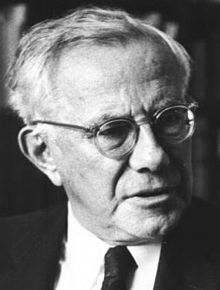
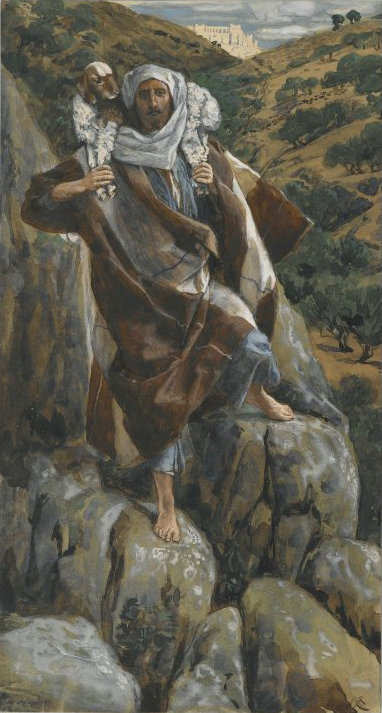
Psychologists, sociologists, and historians will offer a variety of insights for decades yet to come, but some of us can’t wait that long. I turn to historians, analytical philosophers, and theologians who have sought to understand the dynamics of illusion, anxiety, fear, and collective madness. Among them are Gabriel Marcel and Willem Zuurdeeg. Each sought for understanding during a chest-pounding momenet.

Gabriel (-Honoré) Marcel and Willam Zuurdeeg

Gabriel (-Honoré) Marcel (1889–1973), the French existentialist philosopher, playwright, and author of Homo Viator, Being and Having, and The Mystery of Being, proposes a dist between the self as ego and the self as person. The self as ego is a poseur, an actor, performing on stage, playing to the audience among whom the poseur himself is the central figure.
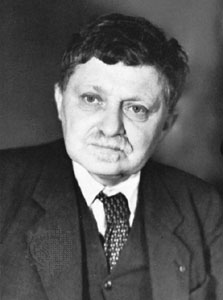
“I attract the attention of others so that they may praise me, maybe, or blame me, but at all events that they may notice me. In every case, I produce myself.”

Gabriel Marcel

Whereas, for the ego, other people exist as a mirror of one’s greatness, a person sees others of value in and of themselves. The ego sees others as objects to be manipulated; the person sees others as she has come to understand herself as responsible and accountable in a community.

Beyond the reach

Philosopher of Religion Willem Zuurdeeg reminds us of Marcel’s warning against identifying ego with evil and personhood with goodness. So long as the ego remains shut up in itself as the prisoner of its own feelings, desires, fears and anxiety, it is beyond the reach of evil as wall as good. It is not yet awake to reality. “There is no doubt that direct judgment cannot be applied to such beings,” says Zuurdeeg.

Like Sleepwalkers

Marcel goes on to say what none of us wants to hear. “Each of us, in a considerable part of his [one’s] life, is still unawakened, that is to say that he (sic) moves on the margin of reality like a sleepwalker.”

A Proverb, Truth Social, and the Science Guy

Featured

Truth Social and it’s tutor

“Truth Social,” Donald Trump’s social media platform, and Donald Trump’s use of it have two things in common. As a platform, Truth Social is neither truthful nor social. It’s a propaganda machine — untruthful and anti-social. Donald Trump’s self-serving posts are the same, untruthful and antisocial. They reflect the defense strategy Roy Cohn taught him years ago. “Never defend! Always attack! Attack, attack, attack!” Roy Cohn fried whatever and whomever stood in his way.

Two featured news headlines — “Trump reverts to scorched-earth political strategy as he runs for ’24” (NYT), and “In U.S., Phoenix tops them all; climate change threatens health” (Associated Press)— strike me this morning as two sides of the same coin. The US Constitution and Earth are being scorched by an indicted former president and his party. Denial may have worked before now, but it’s harder to ignore when Phoenix and Death Valley hit record-breaking temperatures while the forests are ablaze in the Pacific Northwest and in Canada; the Northeast U.S. is awash with flooding and the scenes are most everywhere around the globe.

It’s time to listen to Bill Nye, the Science Guy

Bill Nye the Science Guy photo

“Do you believe climate change is real? Is human impact making the earth less inhabitable?” should be the FIRST questions a voter asks a candidate. “Yes or No?” If the answer is No, or the candidate does a tap dance, it’s time to turn our backs, and find a candidate who answers “Yes.”

Seven detestable things

This direct question to candidates goes hand in hand with the seven detestable things named in the Book of Proverbs:

• haughty eyes;
• a lying tongue;
• hands that shed innocent blood;
• a heart that devises wicked schemes;
• feet that are quick to rush into evil;
• a false witness who pours out lies; and
• a person who stirs up conflict in the community.

The Faith and Freedom Coalition

At the Gala dinner at the Washington Hilton that ended this year’s Faith and Freedom Coalition Annual Conference (23–24 June 2023), the featured speaker brought his haughty eyes, lying tongue, heart that devises wicked schemes, feet that quickly rush into evil, and mouth that pours out lies to arouse the adrenaline of a crowd that claims to know their Bibles.

“Every time the radical left Democrats, Marxists, communists and fascists indict me,” he declares, “I consider it a great badge of courage. I am being indicted for you….” The faithful lift their Bibles and flags in rapturous worship and praise.

Deception, denial, scorched-earth, and scorched Earth

When a candidate blames his criminal indictments and climate change as hoaxes cooked up by “Democrats, Marxists, communists, and fascists,“ Roy Cohn would be proud. But a scorched-earth defense by offense is not only morally offensive; it is a pattern of deception that is scorching the Earth itself.

Gordon C. Stewart, author of Be Still! Departure from Collective Madness (2017 Wipf & Stock),49 brief meditations on faith and life, Brooklyn Park, MN, July 19, 2023.

The American Future

Featured

On his way to the Theatre of Pompey, where he would be assassinated, a haughty Julius Caesar passes the seer who had warned him that harm would come to him on the Ides of March. “Well, the Ides of March are come,” says Caesar, mocking the seer. “Aye, they are come,” says the seer, “but they are not gone.”

By the end of the Ides of March in 44 BCE, Caesar’s power over the Roman Republic had come to a cruel end at the hands of the Roman Senate. Although the GOP would have us believe otherwise, Tuesday’s federal indictment of former president Donald Trump was not an assassination. It was a day of accountability under the rule of law. Caesar’s voice fell silent. Donald Trump’s has not.

Of characters without character

It was miraculous. It was almost no trick at all…to turn vice into virtue and slander into truth, impotence into abstinence, arrogance into humility, plunder into philanthropy, thievery into honor, blasphemy into wisdom, brutality into patriotism, and sadism into justice. Anybody could do it; it required no brains at all. It merely required no character.

Joseph Heller, Catch-22

Conversing with Milo

“Will you commit tonight to accepting the results of the 2024 election?” asked the CNN town hall moderator, Kaitlan Collins. “Yes, if I think it’s an honest election, absolutely, I would.” Moderator follow-up: “Will you commit to accepting the results of the election regardless of the outcome?” Answer: “Do you want me to answer it again? If I think it’s an honest election, I would be honored to. And, right now, we are so far ahead of both Democrat and Republican. And you know what? If I don’t win, this country is going to be in big trouble. It’s so sad to see what’s happening.”

“If I think…

“If I think…” is not new. One expects to hear such “ifs” in the lock-down hospitals for the criminally insane, or in the fiction section of the library. Decades of serving churches and a public defense law office brought me face-to-face with the likes of Milo Minderbender. None of them had access to nuclear codes. These patients created their own worlds, but they lived within confined quarters in the real world. Aside from the nuclear codes, former daily national security briefings, command of the global spotlight, wealth, lawyers, multiple playmates, Donald Trump seems undistinguished from similar souls suffering from the worlds in their heads. He is its center. His wants, wishes, and desires —and his alone — define reality. He is, in fact, the weak man, the needy man, the sick man who puffs himself up to as a “man’s man,” the Strong Man with authority to separate truth and falsehood, good and evil. He is the star who can do whatever he wants — in a lingerie section of an upscale department store, on an airplane, or in a Moscow hotel suite— whose charm persuades masses of people that January 6 insurrectionists are patriots deserving of pardon.

“Hell rages round us” — Paul Tillich then and now

“Hell rages round us. It’s unimaginable!” wrote a young German Army chaplain in a letter to his father from the trenches of Verdun during World War I. “It’s unimaginable.” The young chaplain was Paul Tillich. During the Nazi party rise to power, Tillich served as Professor of Philosophy at University of Frankfort.

On April 13, 1933 — 10 weeks after Adolf Hitler became Chancellor —Tillich was among the first professors ousted from their teaching positions as “enemies of the Reich.”From that time forward, Tillich made his mark on American cultural history with teaching positions at Union Theological Seminary in New York City, Harvard, and the University of Chicago. His descriptions of sin as hubris and as estrangement led Time magazine to feature him on its cover in 1959. Paul Tillich left the world more than a memory or a legacy. His legacy has fresh legs. It walks the streets of the estranged nation America has become.

The cuckoo’s nest: 2023 and 1933

Hell again rages around us in ways once considered unimaginable. No two historical circumstances are identical, but some moments in time bear an uncanny resemblance. The social, cultural, political, economic, spiritual estrangement is as much the challenge now as it was when a deranged Strongman turned Germany into a cuckoo’s nest where morning becomes night, the yearning for the good is twisted into evil, where the fear of death turns life into stone, reality into delusion, faith into demagoguery, courage into cowardice, capacity into carnage.

Shakespeare and One Flew Over the Cuckoo’s Nest

“When Shakespeare was writing,” said Ken Kesey of One Flew Over the Cuckoo’s Nest, “he wasn’t writing for stuff to lie on the page; it was supposed to get up and move around.” The Ides of March are come and gone. It’s June now. The Ides of June are come…but they are not gone.

Gordon C. Stewart, Be Still! Departure from Collective Madness (2017 Wipf and Stock), 49 brief commentaries on faith and the news; Brooklyn Park, MN; June 15, 2023, the Ides of June.

An Old Parable too Fresh for Comfort

Featured

Confused and confusing

My head is swirling. I can’t keep up. My relationship with the news is like my 17 year-old son’s description of an older married couple he’d just met: “She’s confused, and he’s confusing.” The world is confusing, I’m confused, and it’s about to get worse. Macular degeneration has not yet affected my reading, but, according to my ophthalmologist, it likely won’t be long before I’ll need new glasses.

To see more clearly

For just as eyes, when dimmed with age or weakness or by some other defect, unless aided by spectacles, discern nothing distinctly; so, such is our feebleness, unless Scripture guides us in seeking God, we are immediately confused. — 16th Century CE French reformer Jean Calvin.

The parable of the sheep, the shepherd, thieves and bandits provides a way of looking at what is happening now, as well as then. Jesus’ parables exceed the boundaries of time and place. 

Very truly, I tell you, anyone who does not enter the sheepfold by the gate but climbs in by another way is a thief and a bandit (John 10:1).

Very truly, I tell you…

The introduction to the parable, “Very truly, I tell you,” commands my attention. Truth has fallen out of favor. Falsehood is in vogue. To tell the truth is suspect. If  honesty prevailed in 2023, many leaders would begin, “Very falsely, I tell you,” before they set off to undermine truth with self-serving partisan speeches, rallies, alternative facts, and agendas.

The Shepherd, thieves, and insurrectionists

The circumstances in which these words are addressed are much like our own. Parables are like that. They exceed the boundaries of time and place. The sheep (people) are threatened by religious leaders (thieves) who have twisted their faith traditions, on the one hand, and bandits (armed nationalist insurrectionists), on the other. Both thieves and bandits are climbing over the stone wall into the sheepfold. The words κλεπτης (thief) and ληστης (robber, brigand, bandit) call for deeper understanding. English translations — “thief” and “robbers” — appear to be a needless repetition, but they are not the same. The κλεπτης  is a thief; the ληστης is an insurrectionist.

The Thief

The thief is a burglar, a bad shepherd. Fourth Ezra, a non-canonical work of the second century CE, catches the sense of it. “Do not desert us [the sheep] as a shepherd does [who leaves] his flock in the power of harmful wolves.” The thief in Jesus parable robs the people’s sacred tradition in collusion with the occupying power, the wolf, the Roman empire. When Jesus  drives the moneychangers from the Temple, his fury is with the deeper theft— the robbery of the people’s sacred tradition. “Get them out of here! Stop turning my Father’s house into a house of trade!” (John 2:16)

The bandit

The bandit is different from the thief. The ληστης is not a κλεπτης ! The thief (κλεπτης) is malleable. He adapts, as circumstances require. That bandit (ληστης)  does not. The last thing a kleptomaniac wants is a ruckus! That bandit (ληστης) makes a ruckus. The ληστης is armed and dangerous, ready to do whatever it may take to get his country back.

The one who enters by the gate is the shepherd of the sheep. The sheep hear his voice. He calls his own sheep by name and leads them out. When he has brought out all his own, he goes ahead of them, and the sheep follow him because they know his voice.

Reckless assumptions

A shepherd’s voice is calm. Its assuring tone and cadence allay anxiety, fear, and panic. The sheep expect a thief or bandit to climb over the wall at night or in broad daylight. They will see it with their eyes and hear it with their own ears. 

They will not follow a stranger, but they will run from him because they do not know the voice of strangers.

But what if the stranger impersonates the shepherd’s voice? What if the sheep do not hear the difference between the shepherd’s voice and the imitative voice? What if the shepherd has been away? What if anxiety dulls the flock’s hearing and clouds its vision, such that the desire for security weakens its defenses against impostors? What if they mistake the thief (κλεπτης) for the good shepherd who enters, and leads them out, through the gate?

The thief comes only to steal, slaughter, and destroy. I came that they may have life and have it abundantly. (Jn. 10:10, NRSVA)

Penultimate thoughts

Although, with age, my eyesight is dimming, my knowledge antiquated, and my soul heavy with weakness and defect, an old pair of spectacles helps me see more clearly beneath and beyond the dazzling displays of wealth and power. I’m stunned that we can be so foolish, but I’m not shocked. The parable of the Good Shepherd zooms in on reality. It leaves me asking who I will follow before all goes dark.

Most disturbing to this old preacher are clergy colleagues who, laying aside their spectacles, on Palm Sundays, lead anxious, fearful flocks in the parade, waving palm branches for Barabbas (Bar [Son] of Abba [Father]), the alternative savior thief and insurrectionist who swears he’s been robbed.

No one can serve two masters. Either you will hate the one and love the other, or you will be loyal to the one and have contempt for the other. You cannot serve God and wealth. (Matthew 6:24, CEB)
Gordon C. Stewart, Be Still! Departure from Collective Madness (2017, Wipf and Stock), 49 short essays on faith and the news; Brooklyn Park, MN, May 2, 2023.

“Liar! Liar! Pants on Fire!”

Featured

Same day — different field trips

The day Congressman Jim Jordan took his House Judiciary Committee on a field trip to NYC, Elijah’s kindergarten teacher took the five year-olds on a field trip to the Science Museum in Saint Paul, Minnesota. Mr. Jordan’s committee went to NYC to hold a “field hearing” to expose the failure of the “pro-crime, anti-victim” policies of Democrats like Manhattan District Attorney Alvin Bragg. Elijah’s kindergarten class rode a school bus without the federal law enforcement that protects congressional committee field hearings.

Different daily drills

The visit to the Science Museum meant time out from the daily safety drills that prepare the kindergartners for what to do when a shooter shows up at their school. Mr. Jordan and his committee didn’t take a break from practicing their daily rope-a-dope drill of how to evade responsibility for the guns that are sending kids on a one way trip to the morgue.

Photo of message to parents during Uvalde school shooting
Message to Robb Elementary School parents of students several hours following the shooting.

Body language: pants on fire

Mr. Jordan’s conflicting answers to the repeated question whether and when he talked with the president on Jan. 6, 2021 are captured in this video. Watch the body language that accompanies his words.

CNN post showing Rep. Jim Jordan’s differing answers about the January 6, 2021 insurrection

Under ordinary circumstances, Jim Jordan fires words at the pace of an AR-15 magazine. The Jim Jordan we see in this video stammered, and his stammering was accompanied by something I found more telling — his body language. He was hitching his pants up.

Promoting a radical political agenda

New York City “has lost its way when it comes to fighting crime and upholding the law. Here in Manhattan, the scales of Justice are weighted down by politics. For the district attorney justice isn’t blind — it’s about advancing opportunities to promote a political agenda — a radical political agenda.”

Rep. Jim Jordan, Chair of US House of Representatives Judiciary Committee

Getting it right while getting it wrong

Mr. Jordan got it wrong. NYC’s crime rate is lower than most other American cities. It is also, however, the city whose district attorney, Alvin Bragg, had just indicted Donald Trump on 34 criminal counts for lying about not keeping his pants up.

But Mr. Jordan also got it right. His accusations of others describe himself and his party. He and the Judiciary Committee had travelled to NYC to promote their own political agenda — a radical political agenda — the conspiracy of power that lit the match of the January 6 insurrection and “the Big Lie” that never dies.

Gordon C. Stewart, Be Still! Departure from Collective Madness (2017 Wipf and Stock), 49 brief (2-4 pages) commentaries on faith and life; Brooklyn Park, MN, April 28, 2023.

CHRISTIAN NATIONALISM

Featured

There is no such thing as Christian nationalism. It’s an oxymoron. Come to think of it, so are Jesus and those who confuse Jesus with power. “You are a king, then?” asks Pilate. Jesus responds, “You have said so!” You, not I, say so. The Gospels of Matthew and Luke paint pictures of Jesus alone in the wilderness, where the Satan (the Twister/the Liar) puts him to the test. “All these (nations) I will give you, if you fall down and worship me,” says the Twister. Jesus does not bow down, and for that, he is crucified. Jesus refuses to be a king. “I have come to bear witness to the truth,” says Jesus to Pilate. The idea of a Christian nation has no biblical footing. It’s a hoax. It’s a lie.

Refusal of Special Privileges

My faith tradition has no desire to achieve religious supremacy or special privilege. The organizational meeting of the Presbyterian Church in this country adopted eight Preliminary Principles. The FIRST principle declared the following views about religion and the civil authorities:

We consider the rights of private judgment, in all matters that respect religion, as universal, and unalienable: we do not even wish to see any religious constitution aided by the civil power, further than may be necessary for protection and security, and, at the same time, equal and common to all others.

First preliminary principle, adopted in 1789 by the first general Assembly of the Presbyterian Church in America

Parable about Here and Now: the Last Judgment

In Jesus’ parable of the last judgment, the King (the Sovereign) will gather all the nations and separate the goats from the sheep. It is no accident that national identity plays no part in the division between sheep and goats. The only thing that matters to the Sovereign is compassion. Period!

It’s a parable, of course, not a peek into the end of time. It’s about now. Jesus’ parable turns every nationalist claim on its head. The question is the same for all the nations: what are you doing for “the least” among you — the hurting among you, people in the cellar of the tower?

The sheep have no idea there is a reward. They just do it. The goats complain that, if only the Sovereign had told them the rules of the game, they would have fed the hungry, given drink to the thirsty, welcomed the stranger, clothed the naked, visited the sick and imprisoned. If you had just told us, we would have done it.

No claim to national exceptionalism stands the test. Christian nationalism is an oxymoron. No questions are asked about belief or religion. There is no, “Have you accepted Jesus Christ as your Lord and Savior?” No, “What church do you belong to. No, “What’s your religion, your belief system?” There is one criterion. Only one: COMPASSION. “Insofar as you have done it to the least of these….”

Gordon C. Stewart, public theologian, Be Still! Departure from Collective Madness (2017, Wipf and Stock), Brooklyn Park, MN, March 14, 2023.

THREE PRESIDENTS in and out of the Limelight

Featured

Former President Jimmy Carter has entered hospice care at home. The love of his life, Rosalind, asked that their privacy be respected. They have had their fill of limelights and cameras. When Ronald Regan defeated his bid for a second term, President Carter graciously conceded, and returned to their home in Plains, GA. He spent the rest of his life with hammer and saw in hand, building homes for Habitat for Humanity.

On Presidents Day, President Joe Biden risked a visit to Kiev for a face-to-face meeting with Vladimir Zelensky to assure him that the USA would keep its commitment to Ukraine for as long as it takes to put down Vladimir Putin’s siege. Joe Biden was in the limelight yesterday, but the limelight was not about him. It was about Ukraine and the defense of democracy against autocracy and oligarchy.

Former President Donald Trump was at home alone with a golf club in one hand and a scorecard in the other. The cameras and microphones were missing. His soul, buried in a sand trap, was his only company, if he could find it. No one is holding their breath waiting for Mr. Trump to find the conscience he had sliced into the rough years ago, long before he pressured Vladimir Zelensky to investigate — and announce to the world — Ukraine’s investigation of Hunter Biden as the quid pro quo for releasing the US budgeted dollars he was withholding from the Zelensky administration.

Living in the Metaverse

In the latest issue of The Atlantic (March 23), Megan Garber’s “We’re Already Living in the Metaverse” draws on the insights of George Orwell, Aldous Huxley, Neil Postman, Neal Garber, Hanna Arendt, and others to trace how we came to live in the dystopian “post-truth” era when “the news is entertainment, and entertainment is the news.

In the metaverse, the ideal subjects of authoritarian rule are not the true believers in the cause. They are instead people who come to believe in everything and nothing at all: people for whom the distinction between fact and fiction no longer exists.

To live in the metaverse is to expect life should play out as it does on our screens. And the stakes are anything but trivial. In the metaverse, it is not shocking but entirely fitting that a game-show host and Twitter personality would become president of the United States.

Megan garber, “we’re already living in the metaverse,” The Atlantic, March 2023

Character counts for little in the world of the metaverse. Glitz and entertainment are everything. But flesh and blood reality doesn’t disappear. Within a matter of weeks, Jimmy Carter will breathe his last in Plains, GA. Rosalind and the Carter family will decide how best to celebrate the exemplary character of the former president whose real hammers and saws remind us that character is everything.

Gordon C. Stewart, public theologian, author of Be Still! Departure from Collective Madness (2017 Wipf and Stock), Brooklyn Park, Minnesota, February 21, 2023.

What happened in Memphis?

Featured

“King of the Hill” came to mind while looking for some explanation for the cruelty we saw in Memphis. This incident seems different. Tyre Nichols had not been stopped for “driving while Black.” The cops were also Black. Why would five Black cops stop a young Black man to beat him as though they were members of the Ku Klux Klan (KKK)? This horror was not about race. What happened was about something deeper that’s killing us all from inside out.

King of the Hill

Pieter Brueghel the Elder (1526/1530–1569) King of the Hill (cropped from “Children’s Games”)

Training for the game of Dominate

The object of King of the Hill is domination. In my back yard, most of us got to be king, for a moment. The rest of the time we were disgruntled subjects, doing what we could to knock the latest king off the mountain. It was just a game we kids played in each other’s back yards.

It was fun back then, but it’s not fun and it’s not funny anymore. It’s no longer a kindergartners’ game. Children no longer play King of the Hill in our backyards these days, and that’s too bad, because, if they did, we adults might see and flee from the game we’ve been trained to play. King of the Hill has become America’s game.

You have to dominate or you’ll look like jerks

“You have to dominate,” declared the king of the hill to the nation’s governors, “or you’ll look like a bunch of jerks, you have to arrest and try people . . . You don’t have to be too careful . . . . You have to dominate. If you don’t dominate, you’re wasting your time.”

Donald Trump had just peeled back the layers of obfuscation that keep the game’s ugliness out of sight and hearing, until it surfaced again, as it did in Memphis two years after George Floyd died under a White police officer’s knee in Minneapolis.

Some social critics attribute the unrestrained violence to police training or the lack of it. But perhaps the cause and remedy are deeper than police training. Before they put on badges and uniforms to “protect and serve,” they — like the rest of us — had been well-trained by the culture of king of the hill where the objective is to dominate without legal and moral guard rails to restrain us.

Domination = you can cheat, you can lie, you can beat without consequences

America stands at a crossroads between the reign of compassion or tyranny; between kindness and cruelty; between tending to the Samaritan’s wounds or throwing him in the ditch. “You have to dominate. If you don’t dominate, you’re wasting your time.” And, remember, “You don’t have to be too careful.”

To get to the top of the hill and stay there, you can cheat, you can lie, you can roll stones down the hill to stop disloyal subjects and enemies from taking your place.

We are well trained in how to succeed in a society without the spiritual, moral and legal guardrails that would keep us honest and true to our better selves. “It’s a movement,“ said an angry president, referring to Black Lives Matter. “The only time it’s successful is when you’re weak and most of you are weak.”

King of the Hill — dominate or you’ll be dominated — has become America’s game in Minneapolis, in Memphis, and here, there, and everywhere. It’s not fun anymore.

Gordon C. Stewart, Public Theologian, author of Be Still! Departure from Collective Madness (2017, Wipf and Stock), 49 short social commentaries on faith and public life; Brooklyn Park,

Elijah asks Grampa why Santa’s in Congress

Featured

ELIJAH (5 yrs. old): Bumpa, now that Santa Claus is in Congress, will he still come next Christmas?

BUMPA: Santa Claus isn’t in Congress.

Uh-hu! He’s all over the news. He’s very conventional. Don’t you watch the News Hour or listen to NPR?

I do. Grandma and I watch the News Hour every night. I think maybe you meant ‘controversial’.

Then you saw him with your own two eyes. He looks different ‘cause he shaved his beard and his hair’s not white, but it’s definitely Santa. You forgot to put your ears in again, didn’t ya.

You mean my hearing aids.

Yeah. your ears. Maybe you need to change the batteries.

Elijah, there must be a misunderstanding. Santa isn’t real.

Whoah! You don’t believe in Santa and Rudolph? I’m going to tell Mommy! You’re an atheist!

I think you’re confusing religion and politics. I have a lot in common with Atheists and a lot of differences. I go to church. They don’t. I worship God. They don’t. But we both believe Santa is a fantasy. He’s an illusion. Congress is different. Congress is no illusion. Congress is real.

You went to school, right, Bumpa?

Yes.

Mommy says you used to say the Pledge of Illusion every morning. 

We did, Elijah. But it’s the Pledge of Allegiance, not the pledge of illusion. It’s important to get that straight. 

What’s a pledge?

Well, it’s pretty simple, Elijah. A pledge is a promise. 

Like when I promise Santa every Christmas that I’ll be good next year.

Right. Now you’re getting the hang of it. If you’re bad, Santa won’t bring any presents. You’ll get coal in your stocking. The Pledge of Allegiance is sort of like that. It’s a promise to do the right thing for your country. 

Yeah, and it’s not an illusion, right?

Right.

What’s an illusion?

It’s something that isn’t real. Like Santa Claus. An illusion is something that isn’t there. You can’t make a promise to an illusion ‘cause it’s not real.

Our country’s real, right, Bumpa? 

Right.

And so is Congress, right?

Right.

But Santa isn’t?

Right.

He is too, Bumbpa! Santa’s real! He’s a member of Congress who pledges allegiance. He was just put on two committees. 

Okay, it’s taken me a long time to get what you’re talking about.  The new Congressman isn’t Santa. His name is Santos.

And Santos is real, right?

Well, yes and no, Elijah. Yes, Santos really is in Congress, and, No, he lied to get there. None of what he said about himself is true. It was all an illusion, and everyone knows it.

So, Santos will get coal in his stocking next Christmas?

Gordon C. Stewart, Public Theologian, Author of Be Still! Departure from Collective Madness (2017, Wipf and Stock), Brooklyn Park, MN, January 19, 2023.

The day prayers set off the hospital fire alarm

Featured

Some memories blur over time. Others, like the hospital visit with Nee-gon-we-way-we-dun (Clyde Bellecourt, Jr), still ring the fire alarm.

Photo of Clyde F. Bellecourt, co-founder of the American Movement (AIM) and the Legal Rights Center.

I had come to visit Clyde — Nee-gon-we-way-we-dun (“Thunder Before the Storm”) — in the cardiac care unit after he had suffered a minor heart attack. It had been Clyde and the Legal Rights Center (LRC) Board who invited me to step in as LRC’s interim executive director. LRC and I were in the same boat: our boats were sinking. I stayed at LRC for the next seven years.

LRC is the creation of Black and American Indian community civil right leaders as an “outside the system” community-based public defense corporation belonging to, managed by, and serving low-income African-American and American Indian defendants in the courts of Hennepin County.

I had been in Clyde’s room in the cardiac care unit no more than 10 minutes when an Anishinabe Midew arrived to offer prayers for healing to Gitche Manitou (the Great Spirit). She brought sage and sweetgrass, the herbs for ‘smudging’ in preparation for prayer. Smudging serves the purposes of cleansing, keeping evil away, and providing a spirit of calm and peacefulness.

The Midew had, of course, come with matches to bring the herbs to a smolder to create the smoke for smudging. She lit the match, and the smoke triggered the hospital fire alarm throughout Hennepin County Medical Center. The alarm stopped a few minutes later when an attending nurse smelled the sweet smell of smudging, and sent the word that stopped the alarms. We never did get to the prayers.

If we had gotten beyond the preparation for prayer, the Midew would have offered something like this Ojibwe prayer for the healing of each other and the healing of the planet:

Grandfather,
 look at our brokenness.
 We know that in all creation
 only the human family
 has strayed from the Sacred Way.
 We know that we are the ones
 who are divided
 and we are the ones
 who must come back together
 to walk the Sacred Way.
 Grandfather, 
 Sacred One,
 teach us love, compassion, and honor
 that we may heal the earth
 and heal each other. 
 (Ojibwe prayer)

The Legacy of Thunder Before the Storm

Clyde is gone now (RIP), but his legacy will live on. Though he could not end the racism or heal America of the trail of broken promises, he did what a human being is called to do. Because he did, his thunder is still heard. Professional sports teams no longer bear the names or wear the logos that dehumanize America’s first peoples. Although fans of the Cleveland ‘Guardians’ (MLB) and the Washington ‘Commanders’ (NFL) may not know or care why, when, and how their teams took their names, those who know will not forget the persistence that blew away the insults. Soon no one will remember, with a chuckle, the day preparation for prayer set off the fire alarms. No one will know that security systems can’t be smudged.

Gordon C. Stewart, public theologian, host of Views from the Edge, Author of Be Still! Departure from Collective Madness (2017 Wipf and Stock), writing from Brooklyn Park, Minnesota, December 19, 2022.