Some days, when I’m weary, I hear the rumblin’ wheels of the gospel train rolling through the land. The song of the American slaves speaks its hope to me in this later age of collective madness.
The Gospel train’s comin’
I hear it just at hand
I hear the car wheel rumblin’
And rollin’ thro’ the land
Get on board little children
Get on board little children
Get on board little children
There’s room for many more
I hear the train a-comin’
She’s comin’ round the curve
She’s loosened all her steam and brakes
And strainin’ ev’ry nerve
The fare is cheap and all can go
The rich and poor are there
No second class aboard this train
No difference in the fare
Gordon C. Stewart, Whoo-wooing for the fairer train from Chaska, MN, May 11, 2017.
Today, following the first 100 days of President Trump’s inauguration, we offer a non-partisan invitation to focus on a phrase from a familiar prayer:
“and lead us not into temptation,
but deliver us from evil.”
Most days we pray the prayer without much reflection. Like many other things we repeat by rote memory, we give little thought to temptation or the need to be delivered from evil. But today the phrase calls out for deeper self-examination and reflection about the world in which we live.
“This was the most divisive speech I’ve ever heard from a sitting American president,” said Republican former advisor to four presidents David Gergen in response to President Trump’s speech celebrating his first 100 days in office in Harrisburg, Pennsylvania.
“He treated [those who are disturbed about him or oppose him] basically as ‘I don’t care, I don’t give a damn what you think, because you’re frankly like the enemy,'” said Gergen. “I think it was a deeply disturbing speech.”
The Lord’s Prayer (aka “the Our Father” and “the Jesus Prayer”) will be prayed in churches throughout the world today.
“Thy will be done on Earth as it is in heaven…”
“Forgive us our sins (the acts and states of mind that separate/divide us from/ hurt others) as we forgive those who sin against us.”
“Lead us not into temptation (or “the time of testing”/”time of trial”), but deliver us from evil.”
Amen. May it be so! Lord, save us, and the world You love, from our worst selves.
John Muir, father of America’s National Park System, wrote:
God has cared for these trees,
Saved them from drought, disease,
and a thousand tempests and floods,
but he cannot save them from fools.
[John Muir, Our National Parks, 1903]
President Donald Trumpspoke at the U.S. Department of Interior yesterday and signed an executive order freeing up use of public lands, land “which belongs to the people, which truly belongs to us.”
I think there is nothing, not even crime,
more opposed to poetry, to philosophy, ay, to ay, to life itself, than this incessant business.
[Henry David Thoreau, Life Without Principle, 1863]
The Muir and Thoreau quotes lead the chapters “A Joyful Resting Place in Time” and “The Bristlecone Pines” of Be Still! Departure from Collective Madness. God bless the memory of John Muir and Henry David Thoreau. We are increasingly without principle. They’d turn over in their graves. It’s up to us to honor their principles.
One year ago the French soldier in Paris said, “I love America. Very patriotic!” I wondered what he meant. You Americans love your country? Or something else?
Today’s French election offers a moment to reflect more philosophically about the social, cultural and political dynamics that divide the French and Americans alike.
For starters, there is the age old question of the relation of the part to the whole. In this case, the part is a particular, and often unique, culture: French! French culture shares many similarities with its European neighbors, but the old joke about Hell – “Hell is a place where the police are German, the chefs are English, the car mechanics are French, the lovers are Swiss and it’s all organized by the Italians” – has some grounding in the real differences in the distinctive history and culture of each national culture.
The European Union is the sum of its distinctive parts; the parts make up the whole. The European Union created a common currency, relaxed the borders, and eliminated trade barriers among the member states of the E.U., a thing to celebrate in a world where it becomes increasingly clear that the planet itself is our home.
But what happens when the distinctiveness of the parts – the French in this case – are morphing quickly into something unrecognizable? What happens to the psyche of the traditional French citizen when the languages in the cafe, on the Metro, and in the apartment next door are not French – or the visiting German, Italian, English, and Spanish of tourists on holiday at the Louvre or on the beaches of Nice – but Arabic, Parsi, or Urdu spoken by Syrians, Moroccans, Indians, or Pakistanis?
A culture is a home, a kind of safe nesting place. A cardinal is not a robin, a wren, or flicker, and it’s not easy for any of them when they perceive their nests as under threat by the European Starling that would rousts them from their nests.
“I love America. Very patriotic!” said the Parisian French soldier guarding the Jewish synagogue against a terrorist attack while the headlines from America featured Donald Trump’s rise in the polls in May 2016. “Make America great again!” was the word from the across the pond. “Which America?” I wondered then, as I wonder now what “Make France great again” means today in the French election.
Was the patriotic America in the mind of the French soldier the America that speaks Spanish, Parsi, Urdu, and Arabic as well as English or the one that speaks only English? The one that is white European in origin? The one where African-Americans take their seats again in the back of the bus? The America where there are no mosques; no sombreros; no anti-American leftists or immigrants – only starlings? The America where being “very patriotic” means returning the U.S.A. to what it was before the starlings raided its nest?
Philosophically, the issues are not as simple as they sometimes seem. The question of the relation of the parts to the whole is as vexing today as at time in the course of human development. A year ago the world celebrated the signing of the Paris Accord on climate change in recognition that the whole is bigger than its parts and that every part depends on the well-being of the whole.
A parable of Jesus holds together the relation between the part and the whole: distinctive nests (cultures) in the the branches same shrub (world):
“The kingdom of heaven [the whole] is like a mustard seed that someone took and sowed in his field;it is the smallest of all the seeds, but when it has grown it is the greatest of shrubs and becomes a tree, so that the birds of the air come and make nests in its branches.” – Gospel of Matthew 13: 31-32.
Make-up artists in show business are the cosmeticians in the off-stage dressing rooms who paint the performers. In plays and films they make sure the actors look their parts. In television they apply make-up to the likes of Chuck Todd and Megyn Kelly.
But today ‘make-up artist’ takes on different meaning: “one who makes stuff up.” Like a Commander-in-Chief whose administration tells the world the USS Carl Vinson and its Navy fleet are headed for the coast of North Korea, knowing full well they’re still headed toward Australia. When the crews heard the news from news outlets, they must have wondered. Who or what was lying: their compasses or their Commander-in-Chief and his administration?
Make-up artists serve a purpose in stage productions and television programs like “The Apprentice”; they have a role to play behind the scenes of make-believe.
But when a made-up president makes stuff up that causes the armed forces he commands to choose between their compasses and their commander, the Commander-in-Chief becomes the Liar-in-Chief who commands as much credibility as did Chicken Little after announcing too many times that the sky was falling.
“Rebranding, long a strategy in the business world, is taking off in congregations hoping to attract newcomers, update their images and shed any negative perceptions of their denominations.” – Jean Hopfensperger, “Churches trade old names for new and younger members,” Minneapolis Star Tribune,April 15, 2017.
Perhaps a retired Presbyterian minister might be forgiven for weighing in on a religious controversy. Or, maybe not, since insatiable controversy has led many faithful church-goers to spend Sunday mornings over coffee, and has created the growing negative perceptions of church as a perpetual civil war and a societal curse. But, for just these reasons, this controversy seemed to beg for comment.
It is the churches that have shed their traditional denominational names that have been growing. No more off-putting denominational names. Like Baptist. Or Presbyterian. Hopfensperger writes:
Evangelical churches have been at the forefront of the trend, with two-thirds of those surveyed by the National Association of Evangelicals saying their names no longer include their denominations.
The Baptists are a case in point. About 160 of the 253 Baptist churches in Minnesota and Iowa don’t have the “Baptist” on their doors, said the Rev. Dan Carlson, executive minister at Converge North Central — previously called the Baptist General Conference.
But here’s the thing — unless a car is re-engineered under the hood, it’s the same old car. If a Yugo is re-branded the Go-Go, it’s still a Yugo. It may have more chrome, a new eye-catching paint color, a less tinny-sounding horn, a sexy model standing beside it on the showroom floor, and an American flag draped over it, but, under the hood, it’s still a Yugo.
Many of the fast-growing churches in America are wrapped in the flag with sexy come-ons, but under the hood is a belief kept under wraps from buyers except in the fine print Affirmation of Faith locked away in a private compartment in the trunk: belief in “the eternal felicity of the righteous,” and “the endless perpetual suffering of the wicked.” The church’s public gatherings celebrate God’s love with rousing Christian music, but they don’t tell you that if you don’t come ’round, God will roast you for eternity, a thought that leaves many loving un-churched people to conclude with Victor Hugo that
“an intelligent hell would be better than a stupid paradise.”
But buyers who haven’t done their homework on what’s under the hood and behind the praise music enjoy an apparently benign celebration that, so far as they can tell, leaves the old negative doctrines in the dust.
If that sounds judgmental, it is. Just because Jesus said “judge not that you not be judged,” doesn’t translate to the abandonment of the search for good judgment – the critical thought process that assesses what we see, think, and feel. We use our best judgment at the grocery store, comparing cost, food quality, and the consequences of our purchases for our health. We do the same when kicking the tires of a car. Whether we realize it or not, we do the same with religion. With churches. With teachings and ideas. Like the folks who have left church, or would never darken the door of one because of their “negative perceptions”, a retired Presbyterian minister makes judgments all the time. I’m as tired of the controversies as anyone else, but I am, after all, an un-rebranded Presbyterian in search of personal and societal health.
Just as I’m thinking these thoughts, along comes the New York Times Sunday Review Op-Ed piece Save the Mainline by an unabashed self-identified Roman Catholic, Ross Dothan, calling for those who have left the traditional “mainline” Protestant churches to get back to church this Easter, and inviting those who espouse the liberal cultural and political values to return to the mainline protestant religious roots on which a genuine liberal spirit’s continuing future depends.
Dothan writes:
The campus experience of late suggests that liberal Protestantism without the Protestantism tends to gradually shed the liberalism as well, transforming into an illiberal cult of victimologies that burns heretics with vigor. The wider experience of American politics suggests that as liberalism de-churches it struggles to find a nontransactional organizing principle, a persuasive language of the common good. And the experience of American society suggests that religious impulses without institutions aren’t enough to bind communities and families, to hold atomization and despair at bay.
Then, yesterday on Easter, a FaceBook “friend” posted the following about one of those un-rebranded denominational churches.
Worshipped at Fourth Presbyterian Church of Chicago. They had a 6:00 a. m. Sunrise service and three morning services – 8:00 a. m., 9:30 a. m., 11:30 a. m. – and a 4:00 p. m. jazz service. The three morning services were preceded with people lining up for admission up to an hour before the service. The order, preaching and music was great and inspiring.
Why were people lined up and waiting before a worship service at Fourth Presbyterian?
What leads people to stand on the sidewalk in downtown Chicago for “admission”? A good show? A great concert? Being with the aesthetically elite of high culture and a sermon laced with literary references? Or something else?
The answers are as varied as the people who stood in line. But the Order for Worship for Easter morning gives a peek into what they found once inside.
Was it the classical music by great composers: Dietrich Buxtehude, G. F. Handel, and Charles-Marie Widor, and the excellence of its organ and choral music?
Was it an entertaining sermon that palliates the conscience of the upper classes and invites the upwardly mobile young to join its exclusive club, or was it the thoughtful, gracious, biblical Word for which Fourth is known which they expected to hear from its pulpit?
Was it a theology of the righteous few? Or a theology in which the horror of eternal punishment of the wicked has been overthrown along with the money-changers’ tables, devouring every hell, as reflected in Charles Stanford’s Choral Anthem?
“Ye Choirs of New Jerusalem” Charles V. Stanford
Ye choirs of new Jerusalem, your sweetest notes employ, the Paschal victory
to hymn, in strains of holy joy. For Judah’s lion bursts his chains, crushing the serpent’s head; and cries aloud through death’s domains to wake the imprisoned dead. Devouring depths of hell their prey at his command restore; his ransomed hosts pursue their way where Jesus goes before. Triumphant in his glory now to him all power is given; to him in one communion bow all saints in earth and heaven. While we, his people, praise our King, his mercy we implore, within his palace bright to bring and keep us evermore. All glory to the Father be, all glory to the Son, all glory, Holy Ghost, to thee; while endless ages run. Alleluia. Amen.
There is no sourness of eternal punishment hidden between the sweet notes of the Paschal victory hymn. Fourth Church offers a place for the likes of Victor Hugo where you the choice is not between an intelligent hell or a stupid paradise, a place where the people on the sidewalk get what they otherwise might not: a God Who, though crucified by human hands and pierced by imperious swords, eternally refuses to yield to the baser instincts of our negative perceptions of God, others, and ourselves.
The grace and peace of Jesus Christ, crucified and risen, be with you all this Easter Monday!
As a child, I wondered why they called Good Friday ‘good’. It wasn’t. It was awful.
At the annual Good Friday service my mother’s cheeks were wet. She’d hold her handkerchief in one hand and, without drawing attention to herself — Mom was shy and shunned attention — she would dab the tears, hoping no one would notice.
A soloist would sing:
Were you there when they crucified my Lord?
Were you there when the crucified my Lord? Oh……
Sometimes it causes me to tremble, tremble, tremble.
Were you there when they crucified my Lord?
Mom would dab her cheeks and eyes.
As I grew older I began to understand why they called the Friday of the crucifixion ‘good’. It wasn’t good because they nailed him to the tree, or because they took him down and laid him in a borrowed tomb. It was good because, in that deep darkness, tears fall in grief and in hopes of something else. Tears that recognize both the betrayal, denial, flight — our own and others’ – and the steadfast love, courage, and magnanimity of the man on the cross.
Both sides of the human condition are front and center on Good Friday. So is the sense of god-forsakenness – the wrenching cry from the cross, “Eloi, Eloi, lama sabachthani?” (“My God, my God, why have you forsaken me?”) — the gnawing feeling of senselessness, meaninglessness, and helplessness, hanging alone, tortured and mocked, over the abyss of nothingness.
Over the years, I’ve learned that a healthy sense of denial is sometimes a good thing. So is truth-telling. Good Friday brings me face-to-face with myself at my worst and my best. And at the heart of it all is a man with arms spread wide, looking out at us who still crucify him — ours is a Good Friday world — with eyes that reach my soul. “Father, forgive them, for they know not what they do. Into Your hands I commit my spirit.”
On Easter Mom would dab her eyes for joy because she’d brought her handkerchief with her from Good Friday.
— Gordon C. Stewart. Chaska. MN, April 14, 2017. Originally published April 3, 2015.
Views from the Edge re-publishes this piece from March 24, 2010. In November 2016 the American people were sucker-punched by an alarmist apocalyptic spirituality underlying the alt-right politics of Rush Limbaugh, Steve Bannon, and the candidate for president who led and funded “the birther movement”.
Maundy Thursday and Good Friday call for sober reflection on the difference between faux-reality and reality. We republish it here without updates or edits – except for a new title – for the sake of historical perspective. – GCS
“Ecce Homo” (Behold the Man), Albrecht Durer
Something from the Christian tradition – the idea of ‘the Anti-Christ’ – is lifting its ugly head, a word and concept that could trigger unthinkable tragedy unless we clean up our civil discourse.
According to Harris Interactive Poll taken between March 1 and 8, “more than 20% believe [President Obama] was not born in the United States, that he is ‘the domestic enemy the U.S. Constitution speaks of,’ that he is racist and anti-American, and that he ‘wants to use an economic collapse or terrorist attack as an excuse to take dictatorial powers.’ Fully 20% think he is ‘doing many of the things that Hitler did,’ while 14% believe ‘he may be the anti-Christ’ and 13% think ‘he wants the terrorists to win.”
The poll reflects what we all know: our civic health as a nation is being poisoned by inflammatory rhetoric from both sides of the political aisle. This toxic disregard for truth lies behind the results of the Harris Poll. Trigger words like ‘socialist,’ ‘communist,’ ‘terrorist,’ ‘anti-American,’ and ‘the Anti-Christ’ and the allegation that America’s first black president is the nation’s chief domestic enemy take us beyond the McCarthyism of the ‘50s. This cocktail is lethal.
As a Christian pastor I rue the use of Christian scripture to stoke the fires of fear and hate. The Christian life – or spiritual life of any sort, for that matter – is a life of discernment about the powers that shape ordinary life. It is not blind to evil. But loud spirituality is an oxymoron. We need to be reminded that all the great religions hold some version of the essential tenet expressed in the First Letter of John. “Whoever says he is in the light and hates his brother is in the darkness still” and “If any one says, ‘I love God,’ and hates his brother, he is a liar, for he who does not love his brother whom he has seen cannot love God whom he has not seen. And this commandment we have from him, that he who loves God should love his brother also.”
Labeling the President of the United States ‘the Anti-Christ” gives deranged minds a license to kill . . . in the name of the non-violent, crucified Jesus. If some deranged American patriot like the Marine who plotted to assassinate the President should succeed . . . God forbid! . . . the blood will be on the hands of all who remained silent when the hate speech was being poured into the public stream of consciousness. And if you claim to be a disciple of Jesus, get yourself to church Maundy Thursday and Good Friday to ground yourself again in the love that conquers hate and fear.
Gordon C. Stewart, Chaska, MN, Maundy Thursday morning, Chaska, MN.
Freedom isn’t free. It shouldn’t be a bragging point that ‘Oh, I don’t get involved in politics,’ as if that makes someone cleaner. No, that makes you derelict of duty in a republic. Liars and panderers in government would have a much harder time of it if so many people didn’t insist on their right to remain ignorant and blindly agreeable. – Bill Maher.
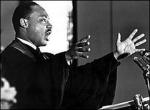
“Willful Ignorance” (Be Still! Departure from Collective Madness, p.103-105) begins with an excerpt from Martin Luther King Jr.’s “Letter from the Birmingham Jail” (April 16, 1963):
“Nothing in all the world is more dangerous than sincere ignorance and conscientious stupidity.”
The essay concludes with the hope of something better than being blindly agreeable:
Thomas Aquinas by Botticelli
“Placed under the scrutiny of a public that refuses to be willfully ignorant, the loud shouts of demagoguery will be swept up by the vacuum of a citizenry schooled in due diligence. And the United States of America, refusing to wallow in the mire of purposeful ignorance, of which Thomas Aquinas, and we ourselves, can be proud.” – Be Still!, p.105.
Wouldn’t Thomas Aquinas and Bill Maher be surprised to be on the same page? Martin Luther King, Jr. is a bridge between the two. Maher, King, and Thomas: a tenor, baritone, and bass in one accord.
Gordon C. Stewart, Chaska, MN, April 11, 2017, responding to The Daily Post invitation to write something on today’s Daily Prompt word, “Blindly“.
“[T]hey brought the donkey and the colt, and put their cloaks on them, and he sat on them.” – Matthew 21:7
In advance of today’s annual Palm Sunday parade through downtown Excelsior, Trinity Episcopal‘s e-newsletter issued the sad, tongue-in-cheek announcement:
Between services the Trinity community will come together in a joyful parade, with music, laughter, and bubbles! Unfortunately, the donkey that was going to lead us is being a bit stubborn so he will not be with us.
Jesus on two donkey’s – Jean de Limbourg (c. 1385-1416)
Perhaps today’s cancellation serves as a reminder that the donkey is stubborn by nature, and that, if you manage to tame one, there will always be another nearby waiting to take its place.
Some churches today celebrate only Palm Sunday – “the Triumphal Entry” into Jerusalem. It’s all about palm-waving and “Hosannas!” shouted and sung to the victorious King of kings and Lord of lords.
Other churches honor the paradox of palms and fists, stubborness and spears, appearance and reality: the king who refused to be King who rode an ass (or two) into the city that wanted something more than the mortal it could raise on a cross.
Today there will be no donkey on the streets of Excelsior. The donkey is just being stubborn. Or perhaps it refuses to participate in this year’s re-enactment when palms and hosannas take her rider to the cross again in a world where asses still rule.
Gordon C. Stewart, Chaska, MN, Passion/Palm Sunday, April 9, 2017.

 “and lead us not into temptation,

 One year ago the French soldier in Paris said, “I love America. Very patriotic!” I wondered what he meant. You Americans love your country? Or something else?
 But today ‘make-up artist’ takes on different meaning: “one who makes stuff up.” Like a Commander-in-Chief whose administration tells the world the USS Carl Vinson and its Navy fleet are headed for the coast of North Korea, knowing full well they’re still headed toward Australia. When the crews
  But when a made-up president makes stuff up that causes the armed forces he commands to choose between their compasses and their commander, the Commander-in-Chief becomes the Liar-in-Chief who commands as much credibility as did Chicken Little after announcing too many times that the sky was falling.
 But here’s the thing — unless a car is re-engineered under the hood, it’s the same old car. If a


 “Nothing in all the world is more dangerous than sincere ignorance and conscientious stupidity.”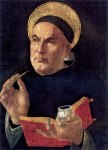

 Views from the Edge