I’m having a hard time . . .

“I’m having a hard time ...”
 he said with a scowl
 coming through the line
 to shake the hand 
 of the preacher who had
 preached his first sermon
 at the church judged
 to be the leading voice in
 the civil rights and peace
 movements in the city.
 
 “I’m having a hard time
 not hitting you,” he said,
 holding back his right arm
 with his left hand as the
 new 26 year-old anti-war 
 pastor reached to shake 
 his hand.  

 “Pools of Blood” had packed 
 a punch with the chair of the
 City Human Rights Commission.

GCS, July 20, 2019

Written in response to today’s Weekend Writing Prompt challenge to write a poem or prose on the word “judge” with exactly 95 words.

We sat down over coffee later that week.

Criticism and Dissent: Why don’t you just leave?

It’s almost always wise to take a deep breath. Step back as though you’re looking in from the outside, rather ‘objectively’ you might say, in order to see more clearly what’s happening.

“Why don’t you just leave/ go back where you came from?” has a certain logic and a history. Click HERE for the entire Wikipedia article on propaganda.

Ergo decedo (traitorous critic fallacy)

Ergo decedoLatin for “therefore leave” or “then go off”, a truncation of argumentum ergo decedo, and colloquially denominated the traitorous critic fallacy,[1] denotes responding to the criticism of a critic by implying that the critic is motivated by undisclosed favorability or affiliation to an out-group, rather than responding to the criticism itself. The fallacy implicitly alleges that the critic does not appreciate the values and customs of the criticized group or is traitorous, and thus suggests that the critic should avoid the question or topic entirely, typically by leaving the criticized group.[2]

Argumentum ergo decedo is generally categorized as a species of informal fallacy and more specifically as a species of the subclass of ad hominem informal fallacies.

In politics

Argumentum ergo decedo is directly related to the tu quoque fallacy when responding to political criticism. As whataboutism is used against external criticism,  is used against internal criticism.

Examples

Critic: “I think we need to work on improving Nauru‘s taxation system. The current system suffers from multiple issues that have been resolved in other places such as Tuvalu and the Marshall Islands.

Respondent: Well, if you don’t like it, why don’t you just leave and go somewhere you think is better?”

Critic: “Our office’s atmosphere is unsuitable for starting constructive conversations about reforms for the future of the company. A number of improvements are needed.

Respondent: “Well, if you don’t like the corporate system, then why are you here? You should just leave!”

A Personal Reflection

A Personal Reflection

Last night’s campaign rally in North Carolina sent chills up my spine. “Send her back! Send her back!” has a history. It paints criticism of the nation’s policies and behavior as unpatriotic. But patriotism (love on one’s country) is not nationalism. Patriotism is love of country. Nationalism makes the nation god.

We’ve heard these words before. I heard them used during the reign of terror fired up by Sen. Joseph McCarthy. II heard them in response to Ruby Bridges in Little Rock. I heard them from George Wallace and sheriffs, Selma, and Chicago. I heard them again when criticizing our policy in Vietnam War. Back then it was “America: Love it or leave it!” Now, as then, the cry to go home is not a criticism; it’s ergo deceto –a bullying response to criticism. Constitutional democratic republics assume a baseline of respect between and among people who disagree. No scapegoating. No name calling. No dismissal of each other as enemies, and a full, thoughtful discussion of policy and criticism. Wherever criticism is met with the traitorous critic fallacy, constitutional democratic republics are put to the brink of fascism.

Flash back: March 9, 1954: Dissent and Loyalty

We must not confuse dissent with disloyalty. . . . (McCarthy’s actions) “have caused alarm and dismay amongst our allies abroad and given considerable comfort to our enemies. And whose fault is that? Not really his. He didn’t create this situation of fear; he merely exploited it — and rather successfully. Cassius was right. ‘The fault, dear Brutus, is not in our stars, but in ourselves.’ Good night and good luck.

Edward R. Murrow, March 9, 1954, CBS; Commentary credited with stopping McCarthyism.
  • Gordon C. Stewart, Chaska, MN, July 18, 2019.

Pepé Le Pew and the Big Parade

Pepé Le Pew in our back yard

A strange thing happened this morning, July 4. I kid you not. True story. We had a visitor in our yard for the very first time in the two years we’ve been coming to the cabin by the wetland. Pepé Le Pew chose July 4 to say hello — a skunk just beyond the deck in broad daylight, strolling toward the woods.

American Civics 101

We’re nowhere near a television this Fourth of July, and that’s a good thing. It allows for memory and imagination. I remember all those years when we prided ourselves in not doing what they were doing in Red Square during the Cold War. Tanks and missile rolled through Red Square, a demonstration of military might in a world of nuclear threats. The generals sat and stood in the places of honor.  In Washington, D.C. there was no show of military power on the Fourth of July. We didn’t do that in a democracy. I “knew” that because my teachers, parents, and church all told me so. We prided ourselves that in America the military was under civilian rule; the Secretary of Defense was a civilian, not a general. That was just who we were, and who we were not, said our teachers, parents, faith communities, and those we elected to represent us in Congress or the White House. They’re all dead now.

The Big Parade years later

The Fourth of July parades in our nation’s capitol, like the thousands of smaller parades in American cities and towns, had no special VIP section for the wealthier folks who could afford the price of sittting there. The thought never crossed our minds. We were one nation that declared E pluribus unum. The rest of the year we were poor, middle class, or rich, eating in soup kitchens, Big Boy’s, or country clubs, but on this day we were the same. We were just Americans. We had no caste system like India. And we were all the same, irrespective of political affiliations, at the ballot box. No one’s vote was greater or smaller than another’s.

The only people who made money at Fourth of July parades stood behind the hot dog stands and the popcorn stands, but even then, most of the profits went to charity. No one made money on the Fourth of July. I knew this because our teachers, parents, faith communities, and elected officials told us so. 

How soon we forget

President Dwight David Eisenhower’s last speech to the nation warned us. The retired General who had commanded the largest military force in history during Word War II was a military hero who hated war. The greatest threat to democracy, he said was not communism or any other threat from beyond our borders. The great threat to democracy itself was the “the military-industrial complex.” 

Yesterday Eisenhower’s latest successor communicated with the nation in a tweet:

Big 4th of July in D.C. ‘Salute to America.’ The Pentagon & our great Military Leaders are thrilled to be doing this & showing to the American people, among other things, the strongest and most advanced Military anywhere in the World. Incredible Flyovers & biggest ever Fireworks!

Donald J. Trump, July 3, 2019
  • Gordon C. Stewart, Chaska, MN July 4, 2019.

Independence Day 2019: Who shall we become?

A NATIONAL HOLIDAY: “WHO ARE WE? WHAT HAVE WE BECOME?

image 0f U.S. Department of Homeland Security Customs and Border Patrol logo

Pulitzer Prize critic photographer Philip Kennicott‘s “We used to think photos like this could change the world. What needs to change is who we are” discusses the disparate responses to the photograph of the father and daughter who drowned trying to cross the Rio Grande. This Fourth of July it raises questions that deserve a thoughtful national conversation.

Kennicott’s op ed was a week ago, which means it’s mostly out-of-mind. Other photos, video coverage, and news stories have come to the fore, but our responses to them are as different as Kennicott described:

There is a fundamental difference between these two interpretations: One requires time and effort, an act of engaged empathy, while the other is a quick judgment that reaffirms an existing sense of the world. The power of a photograph like this depends on the time we devote to it and our basic sense of who these people are.

PhilipKennicott, Who are we? What have we become?, Washington Post, June 36, 2019

People of my ilk gasp with horror at the sight of real people lying face down on the shore of the river they had hoped to cross, the exodus from hopelessness to a better life in the land of promise on this side of the shore. Others see the father and child as the consequence of having paid the price for breaking the law.

THE FAULTLINE AND ABYSS

Stories that have replaced the photo from the shore of the Rio Grande come so quickly we don’t have time to stop and think about what we’re seeing, or hearing, and why we’re seeing or hearing them the way we are. The focus of the faultline of public perception is Donald Trump. We either love him or hate him with little room between visceral disgust and vociforous affirmation. Bridging the two sides of the chasm is anathema to both sides of the political-cultural chasm. If we don’t stop and find a way forward in the USA, all of us will fall into the abyss.

OXYMORONIC PERCEPTIONS

News of Mr. Trump crossing into North Korea last week is a case in point. The US President breaks precedent by stepping across the dividing line between the two halves of the Korean Penninsula.

Perception One:

People of my persuasions immediately dismiss it as one more stunt. The North Korean leader who called Mr. Trump a baby and threatened a nuclear attack and the American President who called Mr. Kim “Little Rocket Man” have laid aside their schoolyard name-calling and bullying. But it’s confusing. We are the anti-war people. We stand for peace. We are the peacemakers who likely would applaud if it were some other president. Mr. Trump just did what my faith tradition called for in 1967:

The church, in its own life, is called to practice the forgiveness of enemies and to commend to the nations as practical politics the search for cooperation and peace. This search requires that the nations pursue fresh and responsible relations across every line of conflict, even at risk to national security, to reduce areas of strife and to broaden international understanding. Reconciliation among nations becomes peculiarly urgent as countries develop nuclear, chemical, and biological weapons, diverting their manpower and resources from constructive uses and risking the annihilation of humankind.

Confession of 1967, Presbyterian Church (USA)

Mr. Trump and Mr. Kim shocked the world by doing what the Confession of 1967 called for. Whatever reasons underlie what happened, whether the handshakes were genuine or disingenuous, when something happens that we see as good, should we not encourage more, not less, of the same?

PERCEPTION TWO:

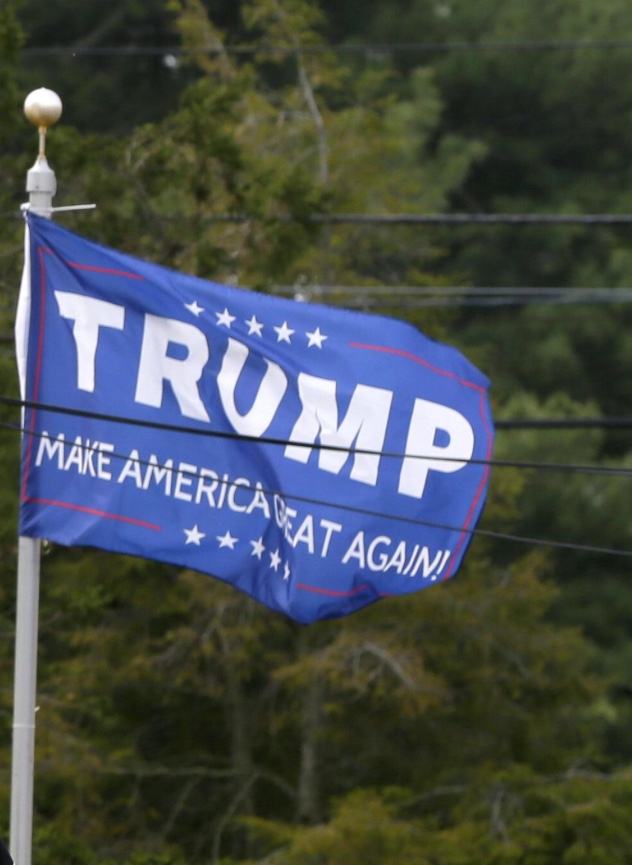
People who support President Trump applaud him for singularly bold leadership, daring to do what no previous president has done. Mr. Trump has once again defied the operations of “the deep state” in a way that puts the faux news media back on their heels. Calling Mr. Kim “Little Rocket Man” and threatening to obliterate North Korea were strategic steps that made the breakthrough possible. This is no ordinary president. Mr. Trump is a patriot’s patriot, strong, strategic, and deserving of the nation’s unconditional support.

But it’s confusing.This support rises from historic Cold War perceptions of North Korea, China, and the Soviet Union as godless enemies of all that is good in the West. Being tough on communism was required to make us secure in a world where softness would mean surrender — the end of freedom, free markets, religious freedom. Insuring national security comes first, and national security means elimination of the enemy, not accommodation.

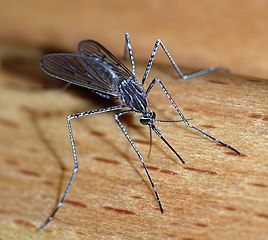
MOSQUITOES AND FLY SWATTERS

When a people becomes anxious, when up is down one day and left is up is down the next day, the mind gets scrambled in search of solid ground.

Reason and civility become the pests in the living room. The fly swatters come out. Hard lines get drawn. Some of us are mosquitoes; some of us are fly swatters. There is no room for conversation between mosquitoes and fly swatters.

INDEPENDENCE DAY

The Fourth of July comemorates the Declaration of Independence, the birth of the American Republic. There will be parades in cities and small downs across America, and a huge parade in the nation’s capitol sure to further divide an indivisible nation. The American flag will fly everywhere. Who we are, what we have become, and who we shall become beg for reasonable discussion. Without it we will be a swarm of mosquitoes with fly swatters and a nuclear arsenal.

  • Gordon C. Stewart, Chaska, MN, July 3, 2019

Mr. Slicker and the Egg Robbers

Mickey Mouse comicstrip panel of Mickey reading invitation to Blaggard Mansion at 10o'clock tonight.
Comic strip panel from Mickey Mouse, “In the Interest of Science,” created by Floyd Gottfredson and published December 1932

Honesty and the Egg Robbers

Mr. Slicker and the Egg Robbers — 1930 AND 2023

“Mr. Slicker and the Egg Robbers” was set in Mouston, where Mickey Mouse opens up a miniature golf course on his farm. Soon a very tall mouse, Mr. Slicker, wows the citizens of Mouston, tries to woo Minnie away from Mickey, steals Minnie’s family’s farm eggs, and comes to Marcus Mouse’s (Minnie’s father) rescue when a draught and the egg thefts leave him unable to pay the mortgage. Mr. Slicker offers to pay off the family’s debt, but only if Minnie will marry him. When Mickey comes to the rescue with savings from his miniature golf course, a stange thing happens. The Mouston Bank is robbed. Mr. Slick goes to the police to pin the robbery on Mickey.

Long story short — if you want the full story, click THIS LINK — Mickey, surmising that Mr. Slicker is behind the egg thefts and the bank robbery, convinces Slicker’s right hand man that Mr. Slicker has no intention of cutting the robbers in on the heist. Slicker and the robbers are arrested, and Minnie throws a dinner party for Mickey, her hero!

REDEEMING THE COIN OF THE REALM

It’s an old story from 1930 but it still brings a smile to those who are not fooled by slickers in high places who seem never to have learned what most country folks have always known but now seem to have forgotten: honesty is the coin of the realm. Please, take Slicker down from the flagpole where the American flag once waved.

  • Gordon C. Stewart, Chaska, MN, June 27, 2019.

NO WAR AGAINST IRAN

Hours before authorization for military strikes oft Iran (and sudden reversal), an email from RABBI ARTHUR WASKOW‘s arrived in my inbox. Views from the Edge republishes it without further comment.

Although the focus of Rabbi Waskow’s epistle is Iran, the opening paragraph distills into a few words a perspective we share. There are “three urgent impending disasters:” war with Iran; the war that threatens to deport “millions” of immigrants; and the war against Mother earth.

EMERGENCY: NO WAR AGAINST IRAN

“Dear Gordon, This morning I started writing a Shalom Report letter that addressed three urgent impending disasters: A Trumpist war against Iran; a Trumpist war against immigrants living in American cities and towns, whom he just threatened with imminent sudden mass deportations of “millions”; and an escalation of the Trumpist war against Mother Earth.

“The Trumpist obsession with subjugating others is at a tipping point – between utter lethal disaster or the deepening and broadening of resistance.

“I thought we had about a week. I went to an eye-doc appointment. It turned out we had only hours. setting aside the other emergencies. Still with dilated eyses, I am trying to see clearly, and I am for the moment

“I ask you right now, as soon as your receive this, to act against the Trumpists’ plans to attack Iran. After that, please read the rest of this letter where I will outline what I think is going on..

“What to do now:

{“contact.first_name, please call your members of Congress. Here’s what I invite and encourage you to do:

“1) Call the Congressional Switchboard at 202-224-3121. Call three times, for your two Senators and one Congressperson. (If you live in DC and have no Senators, call Senator Schumer, the Minority Leader.)

“2) Ask the Capitol operator for your representative/senators, and when connected say your own version of this:

“‘My name is _ and I am a constituent living at [your address]. I’m calling to urge [Congressperson/Senator X] to publicly oppose U.S. military attacks on Iran. I urge [her/him] to tell the president he does not have constitutional authority for any attacks.’

“‘[Congressperson/ Senator X ] should point out any retaliatory strike on Iran for what happened to the U.S. drone could spiral out of control. Instead, I strongly urge [[Representative/Senator X] to call for the U.S. to return to diplomacy, including supporting a convening of the UN Security Council to work to defuse tensions in this global crisis.'”

“Gordon, I urge you to step up your activism today to prevent all-out war with Iran. The Shalom Center will have a number of suggestions for actions you can take over the next few days, but today I urge you to call Congress right away as critical meetings are happening in D.C. right now.

“A potential U.S. retaliatory strike is likely being discussed in the White House as I write this. The White House has said they will be briefing Congressional leaders later today and that is often a sign that an attack is imminent. Meanwhile, Speaker Nancy Pelosi has called a caucus meeting of Democrats for later today. Members of Congress will be the key here and active peace-loving people need to push them to stand in Trump’s way.

“The only way to pull us out of this spiral toward war is for supporters of peace like you to get active and push Congress to stand up to the president and tell him clearly that he has no authority to go to war.

“Please call now.

“Background:

“But the Trumpist Regime worsened the sanctions. They were aimed at totally disrupting the Iranian economy and literally starving the Iranian people. They were beginning to damage daily life –- all because the Trumpists could not bear an Obama-initiated agreement that offered hope for bringing Iran back into the international community. Faced with enormous US pressure, the Europeans began to cave in.

"Third big step on the road to war: Trump threatened nuclear war if Iran were to resist by interfering with oil shipments in its Gulf.

 "It is not clear whether the claims of such interference are lies as blatant as the “Tonkin Gulf attacks” in 1964 that never happened; but even if they were real, they were defenses against a devastating economic war imposed by the Trump regime.

"Now it is clear – Iran and the US agree – that Iran shot down an unmanned drone. Iran says it was flying over Iranian territory.The Trumpist regime claims it was over the Gulf. No matter where it was, cause not for war but for diplomacy. And given the history of those in Washington now unleashing the mad dogs of war, veterans of the lies about Iraqi nuclear weapons, and given the history of Trumpist efforts to provoke a war, I very much doubt the US claim. It would fit Trumpist policy to send a drone over Iranian territory.

“There are more thoughts about the past that few Americans remember but practically all Iranians do:

“The CIA’s overthrow of a democratically elected New Dealish Iranian government in 1953 to prop up a tyrannical Shah who used torture against his critics. Why this CIA/ US action? Because the Mossadeq government intended to nationalize American oil companies that were draining Iran of its resources for US profits.

“When the Islamic Revolution succeeded in 1979 and the Shah fled, the US refused to extradite him to stand trial for his crimes. Americans remember only that Iranians reacted by detaining dozens of Embassy staff for a year.

“In 1980, Iraq under the rule of Saddam Hussein invaded Iran. The US supported Saddam, even aiding him in using chemical weapons against Iran. The war ended in 1988. The death toll on both sides was about 500,000.

“This is not a history likely to inspire trust for the US government on Iran’s part. Add the
Trumpist abandonment of the nuclear-disarmament agreement so painstakingly negotiated and enforced.

“And the history of Trumpism does not inspire much trust among most of the American people in the truthfulness of the Trump regime.

“That’s the background. If you have not already made your calls to Congress, please do so now: 1202-224-3121

“Thanks!! And given the burdens this unfolding disaster is liable to put upon our ability to resist, please contribute through the maroon “Contribute” budget just below
sohl [that is “peace” in Farsi, the language of Iran], paz, peace! — Arthur
With blessings of shalom, salaam, peace.”

Thank you, Arthur,

Gordon

GORDON C STEWART, CHASKA, MN, JUNE 21, 2019

The Oath: “I do solemnly swear….”

Interview in the Oval Office

George Stephanopoulos’ Oval Office interview with President Trump is going viral. For the first time in history an American president sees nothing wrong with a candidate for public office accepting a foreign government’s dirt on an opponent.

Oaths of office

Every member of Congress knows that’s illegal. However how wide the chasm between Republicans and Democrats on this president or the Report on the Investigation into Russian Interference in the 2016 Presidential Election (“Mueller Report”), there should be no question about this one. President Trump handed Congress an issue on which its members are sworn to act. Either the President was ignorant of the federal law that protects the integrity of the American electoral system or he was consciously defying the rule of law.

Republicans for the rule of law and the Constitution

Today Republicans for the Rule of Law begins airing “THE OATH” — a TV ad calling on Congress to act. Click HERE for more on THE OATH. Bill Kristol, serves as director of Republicans for the Rule of Law

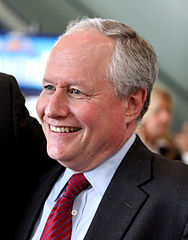
photo go Bill Kristol, Director of Republicans for the Rule of Law

Today Republicans for the Rule of Law begins airing “THE OATH” — a TV ad calling on Congress to take action. Click HERE for more on THE OATH.

Bill Kristol, a conservative highly respected in Republican Party circles, is director of Republicans for the Rule of Law.

Previous Views from the Edge commentaries on impeachment

As always, leave a comment to join the conversation, if you wish.

If you’ve come by Views from the Edge, you know where we stand. If you haven’t visited us before today, Click our May 25 commentary In the winkling of an Eye: Impeach or Wait? Or click Impeach or Wait: It’s an Oath of Office Question for MinPost’s republication and reader comments.

  • Gordon C. Stewart, Chaska, MN, June 14, 2019.

A Memorial Day Memory Re-visited

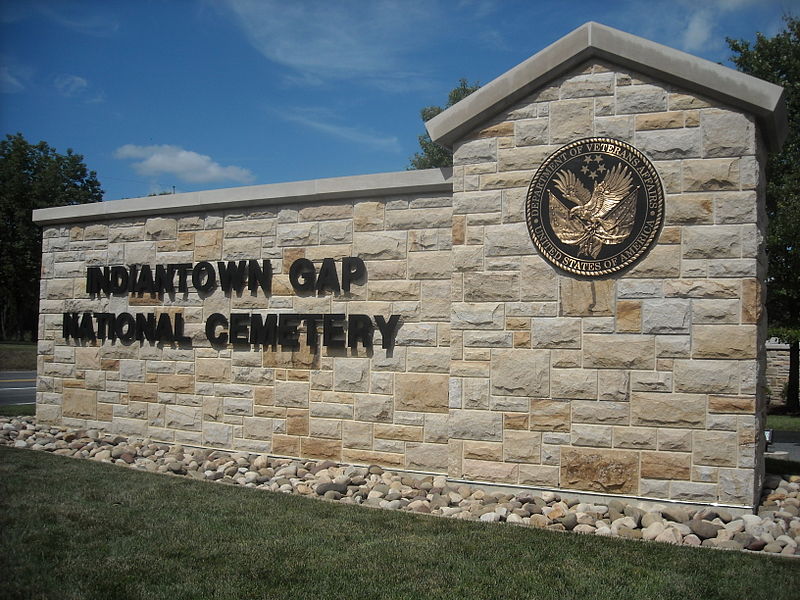
Today my brother Bob and sister-in-law Janice will drive to Indiantown Gap National Cemetery to lay flowers on Dad’s grave.

Protestant Service on Saipan led by my father, Kenneth Campbell Stewart, end of WWII.

Our father served as the Army Air Force chaplain for troops in the South Pacific before, during, and after the bombing of Tokyo. During Dad’s absence, my mother and I lived with my grandparents in Boston and South Paris, Maine, where Dad’s safe return was foremost in prayers before every meal.

I was three-and-a-half when Dad came home at the end of the war. The memory is clear as a bell. I watched as my father emerge from the B-29 bomber, walked down the ramp and across the tarmac at Boston’s Logan Airport. When he picked me up and took me in his arms, I reared back and asked “Are you really my Daddy?” “I am,” he said, “and I’m never going away again.”

All these years later, my hair has turned white, my skin is wrinkled, the world is mute without the hearing aids, my bones ache, and my head hurts most days. But I’m still the three year-old who felt the heavy weight of concern around my grandparents’ table listening for news from the South Pacific

It takes a lifetime for some memories to become clear. “Memorial Day and the Soldier’s Helmet,” published two years ago in Be Still! Departure from Collective Madness (2017 Wipf and Stock), offers a Memorial Day example.

Today I’m remembering again that night when the burly WWII Marine veteran unburdened himself of the locked box of hidden artifacts from the Japanese soldier he’d killed in hand-to-hand combat during the American invasion of Saipan. The ending of the story written just a few years ago is sorely incomplete.

So…today I observe Memorial Day by returning to the original sense of Memorial Day as a day to remember the fallen – ALL of them – but even more, a day to re-commit to ending the insanity of war itself. It’s a day when I remember the in-breaking of sacredness – three men in the living room – two live Americans and one Japanese – and pray for something better for us all.

Be Still! Departure from Collective Madness, p.12

This Memorial Day the three-year-old who waited for his father’s return remembers how strange memory is. As Bob and Janice lay flowers on Dad’s grave today, I am more conscious of a glaring omission. There were not three men in the living room that night. There were four. Dad was the first man there. Bless you, Dad. RIP.

photo of Indiantown Gap National Cemetery
Entrance to Indiantown Gap National Cemetery, East Hanover Township, PA

Grace and Peace,

Gordon

Gordon C. Stewart, Chaska, MN, May 31, 2019

Commentary Published Today

Publication of Views from the Edge social commentary

Thanks to MinnPost.com for today’s publication of Views from the Edge commentary on impeachment. Click Impeach or Wait? It’s an Oath-of-Office Question to read the piece and reader comments.

About MinnPost

MinnPost is a nonprofit online newspaper in Minneapolis, founded in 2007, with a focus on Minnesota news. “MinnPost is a nonprofit, nonpartisan enterprise whose mission is to provide high-quality journalism for people who care about Minnesota. We publish online at http://www.minnpost.com Monday through Friday with a limited edition on Saturday and a Sunday Review.” Wikipedia’s description adds further information.The site does not endorse candidates for office or publish unsigned editorials representing an institutional position. MinnPost encourages broad-ranging, civil discussion from many points of view, subject to the discretion of a moderator.

Thanks for visiting,

Gordon

May 30. 2019, Chaska, MN

What’s happening to us: Postman, Orwell, and Huxley

INTRODUCTION

Funny how things come together, crisscross, intersect, lead us down roads no one has ever walked before. Neil Postman offers insight into what’s happening. I read it one morning last week at the cabin, away from everything that entertains and distracts me from that little plot of land on the edge of the wetland in Central Minnesota.

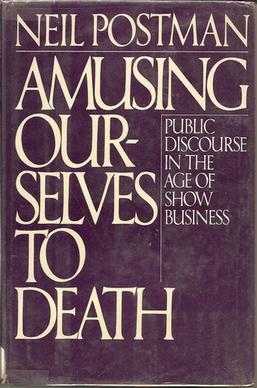
William Britton’s Wisdom from the Margins: Daily Readingsexcerpts from Neil Postman’s Amusing Ourselves to Death: Public Discourse in the Age of Show Business painted a picture that felt true, like a revelation pealing back the curtain to find that Lewis Carroll’s walk down the yellow brick road with Alice, the lion, the tin man, and the scarecrow is outdated. Oz is no longer a harmless little old man.

Neil Postman on Orwell and Huxley

Contrary to popular belief. . . Huxley [Brave New World] and Orwell [1984] did not prophesy the same thing. Orwell warns that we will be overcome by an externally imposed oppression. But in Huxley’s vision, no Big Brother is required to deprive people of their autonomy, maturity and history. As he saw it, people will come to love oppression, to adore the technologies that undo their capacity to think.

What Orwell feared were those who would ban books. What Huxley fears was that there would be no reason to ban a book, for there would be no one who wanted to read one. Orwell feared those who would deprive us of information. Huxley feared those who would give us so much those that we would be reduced to passivity and egoism. Orwell feared that the truth would be concealed from us. Huxley feared the truth would be drowned in a sea of irrelevance. Orwell feared we would become a captive culture. Huxley feared we would become a trivial culture, preoccupied with some equivalent of feelies, the orgy porgy, and the centripetal bumblepuppy . . . . In 1984, Huxley added, people are controlled by inflicting pain. In Brave New World, they are controlled by inflicting pleasure. In short, Orwell feared that what we hate will ruin us. Huxley feared that what we love will ruin us. This book is about the possibility that Huxley, not Orwell, was right.
—Neil Postman, Amusing Ourselves to Death

Neil Postman, Amusing Ourselves to Death

The wetland pond, the flyway, and return home

At the cabin, the water in the wetland is unusually high this year because of record-breaking rainfall. The flocks of Buffleheads and other non-diving ducks have by-passed their familiar stop on the flyway; the water is too deep to for them to reach the food sources below. Only the long-necked Trumpeter Swans, Sandhill Cranes, and Canadian Geese, and the diving Loons and Mergansers that can reach the bottom have stopped by this year.

Leaving the cabin and the wetland lead home to the world Huxley feared where the truth is drowned in a sea of irrelevance. We settle back into the lounge chairs in front of the television and flip through Netflix, YouTube, and other means of entertainment in what Postman later called the Technopolis in which our capacity for critical thought is numbed.

The new normal

We turn on the evening news and see two very different versions of Speaker of the House Nancy Pelosi speaking to the press. One is real. The other is altered by technology that deceives viewers into believing the Speaker is drunk, on drugs, or mentally impaired by slowing and altering the pace of her speech. The culture of amusing ourselves to death in the Technopolis distorts truth into propaganda, the first wave of what will become the new normal.

The culture of amusing ourselves to death in the Technopolis distorts truth into propaganda, the first wave of ... the new normal.

We’re not in make-believe Mayberry anymore. What we love — entertainment — is drowning us. In the world foreseen by Huxley, Orwell, and Postman, truth is hard to find. “Where there is no critical perspective, no detached observation, no time to ask the pertinent questions, how can one avoid being deluded and confused?” wrote Thomas Merton in Faith and Violence: Christian Teaching and Christian Practice.

Only the long-necked Trumpeter Swans, Sandhill Cranes, and Canadian Geese, and the smaller, deep-diving Loons and Mergansers can reach or swim to the bottom to see what’s real and what’s not in the Technopolis. William Britton’s Wisdom from the Margins with Neil Postman, Aldous Huxley, George Orwell, and Thomas Merton took me there this morning.

— Gordon C. Stewart, Chaska, MN, May 26, 2019