Unknown's avatar

About Gordon C. Stewart

I've always liked quiet. And, like most people, I've experienced the world's madness. "Be Still! Departure from Collective Madness" (Wipf and Stock Publishers, Jan. 2017) distills 47 years of experiencing stillness and madness as a campus minister and Presbyterian pastor (IL, WI, NY, OH, and MN), poverty criminal law firm executive director, and social commentator. Our cat Lady Barclay reminds me to calm down and be much more still than I would be without her.

The Legacies of Joe Hill and Doug Hall

You who hold us in the hollow of your hand,

Who hold us in the curve of a mother’s arms,

Whose flesh is the flesh of hills and hummingbirds and angleworms,

Whose skin is the leathered skin of the barge-toter and the old Indian Chief and the smooth skin of a newborn babe,

Whose color is the color of the zebra and the brown bear and the green grass snake,

Whose hair is the aurora borealis, the rainbow and nebulae,

Whose eyes sometimes shine like the evening stars, and then like fireflies, and then again like an open wound,

Whose touch is the touch of life and the touch of death,

Whose name is everyone’s, each and all alike, for just a fleeting moment on the shore of time, the hem of your eternity:

Grant us to see ‘tis only the splendor of light hideth thee.’  Let Your healing balm salve the tender wounds of grief and turn the tears of mourning into tears of unshakable joy.

God of the sparrow, God of the whale, God of the pruning hook: You ask only that we do justice, love mercy and walk humbly with You.  Lead us to take the claims of justice, mercy and humility into the palaces and chambers of power where public policy is made and administered.  Give us confidence that, though truth still sways upon the gallows, yet it is truth alone that is strong.

Let our lives flow in endless song above earth’s lamentations.  Let no storm shake our inmost calm.  No tempest dim our vision.  No noisy gongs or clanging cymbals of ignorant armies clashing by night drown out the gentle sounds of the flute and the dulcimer, the quiet chords of love.

For this work and this alone, raise us up on eagles’ wings to follow Wamble Pok-he, our lead eagle now departed, and to see him standing there, like old Joe Hill, as big as life and smiling with his eyes.  “What they could not kill,” says Joe, says Doug, “went on to organize, went on to organize.”   “I did not die,” says he.  “I did not die.  Where workers strike and organize,” says he, “You’ll see Doug Hall,” says he, “We’ll see Doug Hall,” says he.  How can we can we keep from singing?  Amen.

– GCS, pastoral prayer at Doug Hall’s Memorial Celebration, Wabasha, MN.
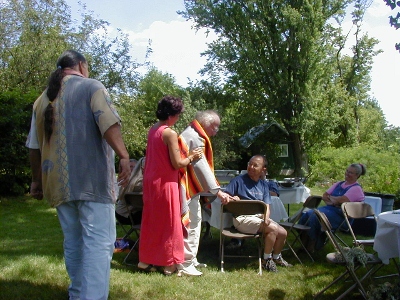
Stephanie Autumn and Clyde Bellecourt honoring Doug with Indian blanket

Stephanie Autumn and Clyde Bellecourt honoring Doug with Indian blanket

Doug was the definition of “the street lawyer.” The farewell to Doug was attended by the people he had defended over many years, the founders of the American Indian Movement, African-American activists, U.S. District Court Judges, MN Supreme Court Justices, Indian drummers, and “America’s troubadour, Larry Long.” Doug was an important figure in the standoff between the federal troops and the AIM members who occupied Wounded Knee. He served as Director of the Legal Rights Center, and, in the last decade of his life was a leading figure in the state-wide movement for restorative justice. He was the Honorary Chair of the Minnesota Restorative Justice Movement.
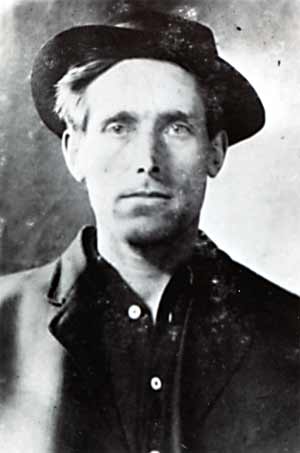
Joe Hill, Swedish-American labor organizer, songwriter, (1879-1915)

I dreamed I saw Joe Hill last night

Alive as you or me.

Says I,  “But Joe, you’re ten years dead.”

“I never died,” says he,

“I never died,” says he.
“In Salt Lake, Joe,” says I to him,

Him standing by my bed.

“They framed you on a murder charge.”

Says Joe, “But I ain’t dead,

Says Joe, “But I ain’t dead.”
“The copper bosses killed you, Joe,

They shot you, Joe,” says I.

“Takes more than guns to kill a man.”

Says Joe, “I didn’t die,” Says Joe,

“I didn’t die.”

And standing there as big as life,

And smiling with his eyes, Joe says,

“What they forgot to kill Went on to organize,

Went on to organize.”
“Joe Hill ain’t dead,” he says to me,

“Joe Hill ain’t never died.

Where working men are out on strike,

Joe Hill is at their side,

Joe Hill is at their side.”
“From San Diego up to Maine

In every mine and mill,

Where workers strike and organize,”

Says he, “You’ll find Joe Hill.”

Says he, “You’ll find Joe Hill.”
I dreamed I saw Joe Hill last night

Alive as you or me.

Says I, “But Joe, you’re ten years dead.”

“I never died,” says he,

“I never died,” says he.

Just one country?

Kosuke Koyama – RIP

The late Japanese Christian theologian Kosuke Koyama (click HERE for NYT obituary) said, “There is only one sin, and it is exceptionalism.”  Koyama was baptized during the bombing raids of Tokyo in WW II. As the bombs exploded and the building burned around the church, Kosuke’s pastor looked him in the eye. “Kosuke,” he said, “You are a disciple of Jesus Christ. You must love your enemy… even the Americans.”Koyama first saw the myth of exceptionalism in the Japan of his youth where the Emperor and the Divine were hand-in-glove. Japan was an exceptional people that could not fail. In his later years, following his retirement from Union Theological Seminary in the City of New York, “Ko,” as his friends called him with great affection moved to Minneapolis.

During the 15 years I knew him, he shared his greatest sadness that the ideology of exceptionalism he had experienced as a  boy in Japan he now saw in the United States.

Today in 2012 political candidates cunningly appeal to the myth, believing that doing so  will rally true believers to cast their votes for them as the truest believers in America. Steve Shoemaker sent this piece today.

Verse – Steve Shoemaker, Urbana, IL May 2, 2012

The U.S.A. actually  is just one

country out of quite many “under God.”

It would be wrong to think the summer sun

shines only on our farms.  In other lands

the children grow as strong and bright as here,

and elders have respect around the world

(in fact, in many places they don’t fear

such loneliness and high cost of health care.)


Other countries are also free and brave, and have fine soldiers ready to defend

their shores.  It’s sweet and seemly that we give

our lives to save our families,  friends and land,

but we must not think we’re exceptional

and forget, too, the international.

The Strangest of Gifts

Socrates is reported to have said that “the unexamined life is not worth living.”

Judas' conscience - G.E Nikolaj (1891)

Any honest self-examination knows that to be human is to experience betrayal. We betray and we are betrayed.

Would it help to think of God as being closer to our betrayals than we ever dare to be?

Would it help, perhaps, to see your betrayal of others and your self-betrayals, as scenes in a drama with many different scenes and acts, a drama bigger than betrayal?  A drama of One who knows our nature. Our fears. Our dashed hopes. Our un-trustworthiness. The side of us so ugly that we dare not look it in the eye – the side that, for thes moment, cannot imagine the larger dramatic piece and the hopeful theme we have forsaken: the persistence of love, of forgiveness, of life out of death, the resurrection of love itself…here and now…not just then and there.

There are two traditions about Judas, disciple of Jesus whose betrayal has been handed down across the ages, the scapegoat Betrayer we don’t want to be.

According to the first story In Matthew, “when Judas, [Jesus’]  betrayer, saw that [Jesus] was condemned, he repented and brought back the thirty pieces of silver…and throwing down the pieces of silver…he departed; and he went and hanged himself.”  The first story puts Judas at the end of his own noose. But there’s an altogether different tradition according to which Judas exploded from within while walking across a field. In this story, the Betrayer is a walking dead man, walking with such self-hatred – a self-loathing so profound – that he could not live with himself, and as he was walking, “all his bowels gushed out” (Acts of the Apostles 1:18).

A few of us have attempted suicide. Most of us have not  All of us, if we’re honest, know something of what it’s like to walk through life with unsettled stomachs and intestines. The prescriptions we take for upset stomachs or roiling bowels cannot touch the issue of betrayal when we have betrayed or have been betrayed.

But – stay with me a moment longer -here’s the thing I’ve come to see. The word for “gift” in New Testament Greek is didomi. The word most often translated “betrayal” is paradidomi – to give over –  para (over or across) and didomi (gift). Tradition is handing over the gift from one generation to the next.

Interesting…strange, even…that these words are so closely related. In Christian tradition, Jesus is the great Gift. Judas, the Betrayer, unwittingly passes on the gift, gives the gift over, hands the gift over… to the authorities…and to us…with a kiss.

With Judas’ kiss the story of Jesus the betrayed becomes OUR story: the story of the Betrayer and the Betrayed, the tradition handed over to us across the millenia.

Betrayal Steve Shoemaker, Urbana, IL, 2012

J. seemed a friend–he chose to join the group.

We trusted him.  We let him keep the purse

we held in common.  We would meet for supper

often–yes, our hands would touch, we’d curse

the same opponents, be amazed and shake

our heads at miracles.  We later learned

he stole, and made a secret deal to take

the silver from the Priests–from grace he turned

to greed.

Soon after,  he was overcome

with shame:  he threw the money at their feet.

J. left us then, he had himself to blame

and took his life:  Disciple of Defeat.

The greatest miracle of all he’d miss

because he betrayed Jesus with a kiss.

Betrayal is not the most importance scene in life. Stick around for the next scenes and acts that transform the laments of examined lives into anthems to the One who is closer to our betrayals than we ever dare to be. The examine life is worth living.

The walls are tumbling down!

The walls are tumbling down!

Interesting post from David Earle in New Zealand

Saturday “Views from the Edge” re-posted David’s piece on the Bishop with dreadlocks, originally posted on  “In the Company of Hysterical Women.”

Today’s piece offers an interesting personal reflection by someone who left the church in disgust because it had become insular and irrelevant to the larger world, returned to it because of marriage, and now rejoices that the walls may be tumbling down.

Oakritchie left a comment on the earlier posting of the Bishop with dreadlocks that merits a thoughtful response. I’m still working on it. Perhaps David, too, will choose to weigh in on Oakritchie’s observation about “us” and “them”.

Thank you, David, Oakritchie, and all of you who have so thoughtfully engaged the conversation.

Verse – “Literally”

From Steve Shoemaker, Urbana, IL, April 30, 2012

We seminary students went to see

our liberal Prof destroy, annihilate,

the right-wing Prof from the seminary

across town in a Church-sponsored debate.


Our Hero showed the Bible could not be

interpreted literally without

becoming nonsense:  John said, “Behold the

Lamb of God!”  Baaa!  (A raucous laugh rang out.)


The conservative said he trusted God

to help folks understand the types of tales

found in the Bible. He did not find odd

the miracles, healings, parables.


Our man was sarcastic, reasonable;

their guy was meek like one from the Bible…

Steve’s walk down memory lane arrived as I prepare to moderate a public meeting tomorrow night (Tuesday, May 1) that could repeat the history of religious arrogance. Pro and con positions  will be offered on the proposed “marriage amendment” to the MN State Constitution that would define marriage as between one man and one woman. Lord, help the moderator…and the speakers…and all who attend to speak boldly and clearly, but also with some meekness. This is not a laughing matter.

A Visit to Rockefeller Center

This post is by historian and friend Gary Severson. I asked him to put his reflection in writing not because it says someting nice about you-know-who, but because I thought it should reach a larger audience. Views from the Edge added the photos of Atlas holding up the world to supplement Gary’s commentary.

Rockefeller Center Plaza with sculpture of Atlas

Rockefeller Center Plaza with sculpture of Atlas

“When in NYC this past week I made my way to Rockefeller Center just to see a part  of the city I had never seen.  As it turns out my NYC experience in Rockefeller Center related to Gordon’s sermon this morning, The Estate Sale & 1000 years”. His sermon related to the impermanence of many things in our society including its architecture. Gordon was surprised to see the estate sale he attended taking place at an “art deco’ style house that was totally out-of-place in a neighborhood of Tudor houses.  This is a style that has disappeared compared to more traditional styles.

“As I arrived in Rockefeller Center Plaza I was taken by the immense architecture of places like NBC, News Corp., Time Life, Citibank etc. The tremendous sense of the power represented by these buildings was overwhelming in the sense that they represent a huge influence in terms of their ability to generate propaganda about America.”These buildings are generally of a sterile style described as spires of steel & glass. I stopped to talk to a security guard and by his demeanor it was clear he even took on the arrogance these buildings exuded. I walked into another RC building where I saw a $137,000 necklace in a window display & saw the clerk inside & thought that isn’t a place I would be welcome in either. As I turned around I noticed a sign that said “Onassis Museum”. I went in and could see it was free admission and contained 100 or so priceless sculptures, tiles, metal work etc. from Greece & Rome.

“As I listen to Gordon’s sermon I realize I’d been experiencing what he is describing in terms of permanence and impermanence. These skyscrapers in Rockefeller Center will be imploded while these ancient artworks represent eternal ideas right here in the midst of the impermanence of these modern buildings.  In fact the exhibit in the Aristotle Onassis Museum was about the changes taking place in the artwork of the period in the transition from paganism to Christianity.

“When I left I saw across the street St. Patrick’s Cathedral, built during the Civil War. It rivals the cathedrals of Europe. It stands out in stark contrast to the surrounding modern glass structures with its spires pointing 300 ft. into the air.  I went in and again saw the amazing sanctuary with its 250 ft. ceiling & spectacular stained glass windows.

Saint Patrick Cathedral

“Here we have a building that is already 160 yrs. old and will outlast the surrounding towers of crystalized guilt, a reference to the attempt by modern man to deny his mortality by replacing traditional religious worship with the worship of Earthly money and power.  Today’s sermon was a wonderful example for me of the connections we can make between our seeming separate spiritual & everyday lives to create meanings that allow us to gain a deeper understanding of who we are.”

– Gary Severson, Chaska, MN

Atlas and St. Patrick Cathedral

Atlas and St. Patrick Cathedral

He Always Taught Her to Respect Herself

“He Always Taught Her to Respect Herself”

Steve Shoemaker, Urbana, IL – April 24, 2012

A college-age daughter does not enjoy

hearing that her dad was quite the

when her age.

She can see him in a boy

that she is with:  so tall and gaunt, a grin,

a joke, a casual touch roué. But now a man

quite married to her mom–could he have been

a thong-collector?  (No, back then they called

them “panties…”)

Now a lawyer, then he studied

seduction,  Casanova, de Sade?

Now he’s a Deacon in the Church– absurd!

Steve Shoemaker standing at historic pulpit of Sheldon Jackson Church, Colorado

“Views from the Edge” note: Steve is not a Deacon and he’s not a lawyer. He’s a retired Presbyterian minister, poet, and activist living on the prairie near the University of Illinois. Steve was Pastor and Director of the McKinley Presbyterian Church and  Foundation at the University of Illinois. He concluded his ministry as Executive Director of the University YMCA  at the University of Illinois, a vigorous campus student center as big in heart and mind as Steve. His voice is heard every Sunday evening as host of “Keepin’ the Faith” an interview show on the University of Illinois’s radio station, WILL AM – Illinois Public Radio.

“Child Again”

Picture of classmates with Harry Strong to the right

Picture of classmates - Harry Strong on the far right

Yesterday classmate Harry Strong,sent this by email in response to Steve and my reflection “Words from childhood” posted on Views from the Edge. I asked Harry for permission to publish part of his email here. Harry’s reflection ends with questions for your reflection.

–  by Harry Lee Strong, San Juan Mountains, Colorado, sent April 28, 2012

While teaching adult classes at the Church of the Wildwood in Green Mountain Falls, I led a course called: “Could I Sing That Song and Mean It?”  We sang and listened to a number of sacred and secular pieces on various topics. This was one of them.

“Child Again” (Beth Nielsen Chapman) 

She’s wheeled into the hallway
Till the sun moves down the floor
Little squares of daylight
Like a hundred times before
She’s taken to the garden
For the later afternoon
Just before her dinner
They return her to her room

And inside her mind
She is running
She is running in the summer wind
Inside her mind
She is running in the summer wind
Like a child again

The family comes on Sunday
And they hover for a while
They fill her room with chatter
And they form a line of smiles
Children of her children
Bringing babies of their own
Sometimes she remembers
Then her mama calls her home … CHORUS

Playmate, come out and play with me
(It’s raining, it’s pouring, the old man is snoring)
And bring your dollies three
(Bumped his head on the edge of the bed)
Climb up my apple tree
(Never got up in the morning)
Slide down my rain barrel
(Rain, rain, go away)
Into my cellar door
(Come again another day)
And we’ll be jolly friends
(Little Johnny wants to play)
Forevermore
(Some more) … CHORUS

  1. Do you have family members or friends who are suffering from Alzheimer’s or dementia? 
  2. What counsel, wisdom, or inspiration do you have to offer  to caregivers and loved ones who are trying to be helpful companions  to those whose mind is not what it used to be?

Ephemera (Dennis Aubrey)

Profound and humorous personal story by Dennis Aubrey of Via Lucis.. “…And so I read these books in the library, but I carried them around the school halls in order that young women would be impressed.”  Lessons from Bertrand Russell, Alfred North Whitehead, Das Capital, libraries, books, and the raging hormones of  “the juvenile medieval monks who worked diligently in the scriptorium.”

Click Ephemera (Dennis Aubrey) for the photos and the story. Well worth the read.

Bishop in dreadlocks – Hallelujah!

Click Bishop in dreadlocks – Hallelujah!.

“In the Company of Hysterical Women”  sent this today – the appointment of a bishop with dreadlocks in New Zealand.  Read the story and watch the video interview with the pastor whose ministry has stood with the homeless and marginalized people.

Indeed. Hallelujah! It’s a good day.

Gordon