Unknown's avatar

About Gordon C. Stewart

I've always liked quiet. And, like most people, I've experienced the world's madness. "Be Still! Departure from Collective Madness" (Wipf and Stock Publishers, Jan. 2017) distills 47 years of experiencing stillness and madness as a campus minister and Presbyterian pastor (IL, WI, NY, OH, and MN), poverty criminal law firm executive director, and social commentator. Our cat Lady Barclay reminds me to calm down and be much more still than I would be without her.

Woolly Mammoths and Woodbine Willie

Coronavirus & the truth we rarely face

There is Only One House

Legitimate fears, on the one hand, and the false assurances, on the other, expose a truth we rarely face. The coronavirus (COVID-19) pays no attention to political parties, economic status, or national borders. Viruses do not discriminate. One human being is the same as the next. Viruses like this are familiar with homo sapiens stupidity that ignores our mortal frailty. They know better than we that there is only one economy — one house, one planet — in which what happens in one room (one class, one race, one culture, one nation) affects everyone in every room of the house.

A Time for Solitude

The closing of schools, businesses, sports venues, cancellations of political rallies, social gatherings et.al. will separate us until the current siege passes. But is it too much to hope that the threat of a virus would bring our species to its senses and rouse us to action in the face of the bigger pandemic threat, the health and habitability of the planet itself? The viruses will be fine; we may become the latest Woolly Mammoths to die of thirst.

The experience of separation will be either lonely or solitary. Loneliness is its own kind of despair; solitude offers opportunity to step away to reflect. How much we reflect deeply depends in part on learning from previous generations the kind of wisdom that does not shrink or shrivel when there are real reasons to fear. One of those sources of wisdom is G.A. Studdert Kennedy (1883-1929), the Irish Anglican priest, poet, author, and World War I British Army chaplain affectionately known as ‘Woodbine Willie’.

‘Studdert Kennedy became ‘Woodbine Willie’ after insisting on serving in the trenches, moving among the injured and dying, distributing “Willis’s Woodbine’ cigarettes as part of his pastoral care. “Our first job,” he advised a newly commissioned chaplain, “is to go beyond the men in self-sacrifice and devotion. . . . There is very little spiritual work — it is all muddled and mixed — but it is all spiritual. Take a box of [cigarettes] in your haversack, and a great deal of love in your heart, and go to them, live with them. You can pray with them sometimes, but pray for them always.”

The modern cult of cheeriness: deadly fear of sadness

G. A. Studdert Kennedy left behind a word for our troubles in 2020. He called called people to think and feel. He demands that we get real. “Thinking, he said, “begins with trouble in the mind.

“Thinking begins with trouble in the mind. There is no thought without tears. ‘Blessed are they that mourn.’ The modern cult of cheeriness is largely due to the fact that we are deadly afraid of being sad. We want Easter without Lent. But we cannot have it. The human mind and the human heart — you cannot separate one from the other — God has joined them together and no one can put them asunder.”

There’s no such thing as thought which does not feel,
If it be real thought, and not thought’s ghost
All pale and sicklied o’er with dead conventions,
Abstract truth, which is a lie upon this
Living, loving, suffering Truth which pleads
And pulses in my very veins. The blue
Blood of all beauty and the breath of life itself.

--G.A. Studdert Kennedy sermon, The Word with God, 1926.

Coming Next: more wisdom from ‘Woodbine Willie’

In days to come, Views from the Edge will feature more of G. A. Struddert Kennedy as it applies to this moment for thoughtful solitude to reflect on who we are and who we choose to become. Coming next:

“There is, and must be, a plane upon which we can think and reason together upon the questions. . . apart from . . . the prejudices and passions that arise in party strife.”

Thanks for coming by,

Gordon C. Stewart, Chaska, MN, March 10, 2010.

Dear Mr. President — it’s me again, Elijah

Dear President Trump, I’m sorry to bother you again. I know you must be very busy on Super Market Tuesday. I meant to send this picture of me but I forgot, like Bumpa. Mommy gave me this Medal of Freedom after seeing you give one to Rush Limmba. She gave me mine last week after I put it in the potty. I bet you have one too.

Elijah

  • Gordon C. Stewart (Bumpa), Chaska, MN, Super Tuesday, March 3, 2020

Elijah’s Super Market Tuesday Letter to the President

Dear Mr. President,

My Gamma and Bumpa helped me with this letter. I love Gamma and Bumpa! Please don’t tell them that I changed it a little. I don’t want to hurt their feelings. When I showed it to the kids at daycare in show and tell, they said it was too nice. They hurt my feelings. I told them we’re Minnesotans. We’re nice here in Minnesota. We don’t say mean things. They say our generation needs to be more honest and pretend we’re not Minnesotans.

Anyway, Bumpa and Gamma don’t like you. They say you need to see the doctor and lie on the couch. I don’t know why. I’ve been to the doctor and she doesn’t have a couch. Maybe you need sleep? Sometimes I do. Like last night. I couldn’t sleep, so I climbed out of my bed and woke up Mommy. Mommy said it’s important to get a good night’s sleep. Then we cuddled in her bed. I wish you could sleep better. Do you get to cuddle?

You have a lot on your mind. Like all the germs from China and the Bidens. That’s a lot! I’m glad I’m not president. I think the germs are coming from Russia. Whatever! You said on tv not to worry. It’s just a bad cold. But then, yesterday, Mr. Pence said you’ve put all hands on deck. I asked Mommy what that means. She just shook her head and told me to go back to sleep.

Today is Super Market Tuesday here in Minnesota. Amy quit yesterday, so you don’t need to worry about Amy anymore. She didn’t want to come in second or third behind Bernie and Joe, and Elizabeth in her own state. That wouldn’t be very nice. So she quit and flew to Texas to help Joe and stop Bernie. That’s kinda weird, don’t ya think? But maybe not. Bumpa thinks she’s sucking up to Joe so Joe will pick her for his wife.

Anyway, the kids at day care are mad at you and Mr. Pence. You say climate change is a hoax. We like the Green New Deal! It’s not a hoax. You said not to worry about the germs from China and blamed the Democrats and television ’cause it’s just another way to make you look bad. You’re not saying that anymore. You lied. I’m just 2, but I know that.

The doctors say the crownaviris germs will go after old people. Yesterday Bumpa and Gramma got masks. They’re going to wear them to vote today. They won’t tell me whether it’s Joe, Bernie, or Elizabeth they’re voting for, but definitely not you. They say you’re not very nice.

I don’t like you, but we’re Christians. We will pray for you to get a good night’s sleep, or sleep on the doctor’s couch if you have a tummy ache, or cuddle with your mommy at home.

Your fellow American.

Elijah

The Lure of Splendor

Cliff Notes on Being Human

Some stories never happened but are always happening. Like the Matthew and Luke stories of the 40 day temptation of Jesus in the wilderness. If everything in Christian scripture should become lost, except for the narratives of the wilderness temptation, we would still have the story that succinctly describes what it means, and does not mean, to be human.

The narratives of Jesus in the wilderness are a kind of Cliff Notes on the ways mortal life gets twisted. They condense the challenges of all of us. The Devil (Diabolos) is a Trickster, the Liar, twisting the good out of shape. We live with the diabolical.

Is it about power? Or is it about splendor?

As many times as I have read and preached about them, the word “splendor” seemed incidental to the temptation of power. Or so I thought until this life in 2020 drew my attention to splendor.

Again, the devil took him to a very high mountain and showed him all the kingdoms of the world and their splendor; and he said to him, “All these I will give you, if . . . .”

Gospel according to Matthew 4:8-9 NRSV

The genius of scripture is that it brings fresh things to light that speak to new socio-reliigious-political circumstances. Perhaps it is the dark and darkening skies of 2020 that drew my eye to the “splendor” of the kingdoms (nations). The Greek word is δόξαν (appearance, glory, splendor) is the same as the church’s song of praise, the Doxology: “Praise God from Whom all blessing flow; Praise God all creatures here below….”

Power is not an end, but a means to the end: self-glorification. The Gospel writers knew what the privileged often remember only after it has vanished into nothing. “Glory is like a circle in the water/ which never ceaseth to enlarge itself/ till by broad spreading it disperse to naught.” — William Shakespeare, Henry VI.

The Lure of Splendor

The lure of power is reserved for the privileged. No such illusion is found among the separated mothers, fathers, and children sweltering in crammed detention camps at our southern border. They are reminded hour by hour of their powerlessness. Nor is it a temptation among the suffering and dying patients or the doctors, RNs, LPNs, and orderlies in senior health care centers, homeless shelters, and hospitals overwhelmed by the new covid virus pandemic. Nor among the suddenly unemployed waiting in the miles-long food distribution center lines, holding fast to whatever shreds of hope and dignity remain while those with power and control, absorbed in themselves. discount their reality,

It is no accident that ‘splendor’ caught my attention last winter when powerful privileged man addicted to splendor trampled on the public trust with daily updates from the White House. I was watching the Third Temptation unfold with an altogether different ending than the one Matthew’s and Luke’s narratives described.

“All these [kingdoms] I will give you, if you will bow down and worship me.” Jesus said to him, “Away with you, Satan! for it is written, ‘Worship the Lord your God, and serve only him.'”

Then the devil left him, and suddenly angels came and waited on him

Gospel of Matthew 4:9-11 NRSV

Prayer for Public Officials

Walter Rauschenbusch’s “Prayer for Public Officials” is preserved by Prayers of the Social Awakening, published in 1909.

We give the thanks that by the free institutions our country the tyrannous instincts of the strong may be curbed to the patient service to the commonwealth.

Strengthen the sense of duty in our political life. Grant that the servants of the state will feel ever more deeply that any diversion of their public powers for private ends is a betrayal of their country. Purge our cities and states and nation of the deep causes of corruption which have so often made sin profitable and uprightness hard. Bring to an end the stale days of party cunning.”

Walter Rauschenbusch, “For Public Officers,” Prayers of the Social Awakening, 1909.

– Gordon C. Stewart, Chaska, Minnesota, First Sunday of Lent, March 1, 2020.

Music for the Whirling Soul

Leonard Bernstein’s “Simple Song” is a rendering of Psalm 121. It also calls to mind “Blessed are the pure of heart” — the Beatitude from Jesus’s Sermon on the Mount. It’s music that calms my whirling soul among the clanging cymbals.

A Simple Song — The Bernstein Mass

Gordon C. Stewart, Chaska, MN, Feb. 29, 2020.

The President and a Letter to an A__hole.

Horace’s Reassurance

One can’t help but wonder why a president with no medical knowledge would contradict the doctors and research scientists standing next to him at a news conference meant to address the coronavirus. Aaron James’s “Letter to an Asshole” reminds the reader of Homer’s wise counsel:

“You should be open to wise counsel — if not from me, then maybe from Horace. ‘All swollen up with love of glory, are you?’ Horace offers ironic reassurance:

“No one’s so far gone in savagery —
A slave of envy, wrath, lust, drunkenness, sloth — 
That he can’t be civilized, if he’ll only listen
Patiently to the doctor’s good advice.”
- Aaron James, Assholes: A Theory (Anchor Books, 2014)

My Annual Physical

I’m accustomed to ignoring the doctor’s advice. “You’re overweight. I’d like you to lose 10 pounds by our next annual visit. You need to eat smaller portions and walk a mile every day,” advises my doctor.  I thank her, hop in the car, and drive one block to the ice cream parlor for a banana split. Refusing to listen is common to us all, but few of us are surrounded by the props of glory that allow us to deny our savagery. 

Chicken Little’s Annual Physical

Chicken Little goes for his annual physical. “Well,” says the doctor who has been the family doctor for years, “before we begin, is there anything you’d to discuss?” Chicken Little tells the doctor the same story he tells every year. “I’m depressed, doctor. “I need an anti-depressant. Nobody listens to me anymore.” “Let’s hold that thought for discussion after the physical exam,” says the doctor. “Remember . . . I don’t do that glove thing,” says Chicken Little. After the physical exam, the doctor addresses Chicken Little’s concern. “Chicken Little, we’ve known each other for years. We know each other pretty well. Today I want to do what a good friend does. I want to tell you the truth no one else will tell you. If you want people to listen, you need to stop yelling ‘The sky is falling! The sky is falling’. It drives people crazy and no one listens to you because the know science. They know the sky can’t fall.” The doctor gives him a postcard to keep with him at all times. Chicken Little ignores the postcard; an hour later, he’s yelling about the sky falling. He can’t help himself.

Chicken Little’s Cousin’s Annual Physical

Chicken Little’s cousin visits the same doctor. He, too, makes up reality. But there is a difference. While Chicken Little proclaims gloom and doom, even on the best of days, Chicken Little’s cousin never sees a cloud, even on the darkest days. His annual physical ends with the doctor’s good counsel. “You and Chicken Little think you’re opposites, but you’re just alike. Chicken Little lies every day: ‘Fire! Fire! The sky is falling! The sky is falling!’ and no one listens. You, on the other hand, tell people what they want to hear, no matter how real the danger. ‘Everything is fine. Nothing can go wrong!’ If and when something goes wrong, you’ll be as responsible as Chicken Little. Neither of you has been open to good advice.’”

As he had done with Chicken Little, he hands the cousin the postcard to keep him in touch with reality, but unlike Chicken Little, he reads it.

Let us settle ourselves, and work and
wedge our feet downward through the
mud and slush of opinion and prejudice
. . . till we come to a hard bottom and
rocks in place, which we can call reality.
-- Henry David Thoreau, Walden, 1854

The Coronavirus News Conference

The sky is not falling, but neither is it cloudless. The coronavirus has made people anxious. The general public needs reassurance, someone to settle them by cutting through the mud and slush of opinion and prejudice. They want a leader who will tell them the truth, someone who stands on the hard bottom of reality.

The President of the United States, accompanied by the nation’s leading medical experts, steps behind the White House podium to address an anxious nation. He blames the press for exaggerating the danger and driving down the stock market. This is the same president who calls climate change a hoax, regardless of international scientific consensus; eliminated the National Security Council’s pandemic disease team’s leading specialist; and proposes slashing the funding of the Centers for Disease Control and Prevention. He reassures the people that the threat to this country is very low — “very, very low” — not much more than the common cold, and that it will be gone in a couple of months, and that a vaccine is weeks away.

He offers the microphone to the public health experts and steps behind and to the side of the podium. His body posture says he’s ill-at-ease. His eyes are squinting as though he cannot see something from afar but they are blank. One after another, the medical ‘experts’ express deep concern and uncertainty. They correct the disinformation about the timing of developing a vaccine for coronavirus. Vaccines are not developed quickly. The question is not whether the virus will spread; it’s a question of when it will spread.

The President returns to the podium, thanks the staff, and repeats Chicken Little’s cousin’s insistence that Chicken Little is wrong. The sky is not falling. But, just in case it does, he is appointing Mike Pence to coordinate the different teams addressing it. ”[Mike] is really very expert at the field,” he says. ”Mike will be working with the professionals and doctors and everybody else that’s working. The team is brilliant.”

Letter to Chicken Magnus

You face grave risks. If I may say so, as you are, it is as though you sit, squatting, defiant, and starving, in a dark cave of your own making. You prefer to be feared, if not respected. In that way you strive for a pale copy of true moral recognition. … You would not like the epitaph I would write for you…. Or maybe you aren’t bothred. Either way, please accept my honest concern for your health and safety. One could easily pity your condition, and so I hope you change it.

Aaron James,”Letter to an Asshole,”Assholes: a Theory

Is there a doctor anywhere in the house?

  • Gordon C. Stewart, Chaska, MN, Feb. 28, 2020.

Plagiarism or a Blank Page?

Today, Ash Wednesday, is a solemn day that calls for distraction from frivolous distractions, you might say.

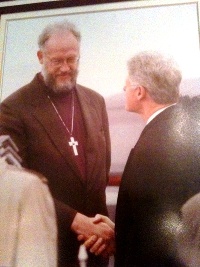
Photo of Steve Shoemaker welcoming  President Clinton to Champaign-Urbana, IL.

Entertainment cultures shun solemnity. Ash Wednesday interrupts our flight from the knowledge of our mortality: “You are dust and to dust you shall return.”

Steve Shoemaker, seen here welcoming President Clinton to Champaign-Urbana, shared a poem that leads me a decision Ash Wednesday: plagiarize or leave the page (Views from the Edge) blank?

I HAVE NOTHING

I have nothing…
nada…zilch…zero…

no thoughts, no ideas
no inspiration.

Worse, only clichés
crowd my mind:

stock images
standard phrases,

or remembered words
wielded by real writers.

Feeling only frustration,
tempted by alliteration,

or worse, rhyme…
Theft?

Is it worse to plagiarize
than to leave a blank page?

— Steve Shoemaker, Feb. 6, 2013
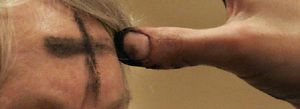
Photo of ashes drawn on a forehead

In memory and thanksgiving for Steve’s faithful solemnity and smile,

Gordon C. Stewart, Chaska, MN, Ash Wednesday, Feb. 26, 2020

I will give up ______ for Lent?

photo of 6'8" poet Steve Shoemaker crammed into seat of an airplane.

Seen here with his 6’8″ frame squeezed into his seat on a flight to somewhere, Steve Shoemaker (1942-2016) wrote poetry. Often the verses came to him in the dark. At 3:00 or 4:00 A.M. Steve would turn to his right side so as not to disturb Nadja, and commit the verses to his iPhone. The poem was waiting in the in-box in the morning.

Often he led the reader through the lines to a surprising last line that shined a humorous light on all that had come before.

LENT

I will give up writing poems for Lent.

I will give up eating desserts for Lent.

I will give up sex for Lent.

I will give up thinking about sex for Lent.

I will give up lying for Lent.

I will give up bragging for Lent.

I will give up exaggerating for Lent.

I will give up self-centeredness for Lent.

________________________________

I will give up self-denial for Lent.

— Steve Shoemaker RIP, Ash Wednesday, March 5, 2013.

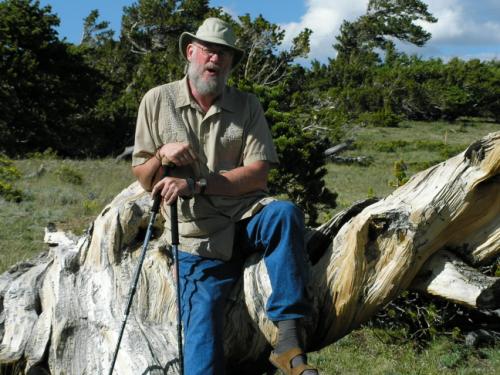
Steve Shoemaker sitting on an ancient bristlecone pine at 1,000+ feet in Colorado.

In this era of ill-humor and self-indulgence, Steve’s tongue-in-cheek verses ring the bell on the distortions of our best intentions and our shared need to focus on what lies beyond the self.

This photograph shows Steve sitting on an ancient bristlecone pine at 11,000+ feet in Colorado. — GCS, Feb. 25, 2020.

A Memoir: Selma to Montgomery

Former seminary classmate Jim Haugh wrote this response to “John Lewis: ‘What did you do?'” published with his permission by Views from the Edge earlier this morning.

1965

I took the Illinois Central train from Chicago to Montgomery.

Photo of postage stamp honoring The National Guard of the U.S.

I remember the three Army National Guard Officers with bayonets fixed and their pointy ends against my sternum.

I remember Jerry’s admonition. “If you find yourself in trouble and go to a high steeple church expecting help, You Will Be Killed.”

I remember speaking at Lawndale Presbyterian (Clarence Lennon, Pastor) after returning to Chicago. I said something to the effect “the parable of the Good Samaritan to the Alabama Black is a myth. The victims got out of the ditch and picked each other up.” An ancient woman approached me after the service. “I hated you until this morning.”

2020

I have a friend in Norfolk who took her children to Selma in 2015 when Obama and John Lewis spoke. The KKK was leafleting the city.

We now live adjacent to the City of Baltimore. 500,000 people have fled from its peak. Segregation ordinance of 1910, redlining (still) Brown vs Board of Education 1954, White Flight.

Of the 150 public schools 12 have water students can drink. 138 schools have lead pipes.

Republican Governor Larry Hogan says a program supported by the Kirwan Commission will bankrupt the state. 35% of the students who graduate cannot read at the 4th grade level. One-third of that number are incarcerated in Maryland Prisons.

The struggle against Structural Racism continues. The struggle has just begun. Even though the Constitution of Maryland requires funding for every school district in accordance with the needs of the students.

Best,
Jim

Gordon C. Stewart, Views from the Edge, Chaska, MN, Feb. 22, 2020.

P. S. “When we pray, we move our feet.”

John Lewis — “what did you do?”

MARTIN LUTHER KING AND JOHN LEWIS

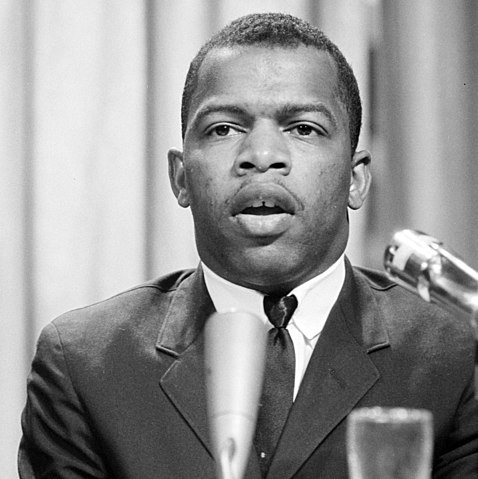
Photo of John Lewis (1964)

Behind every Moses is an Aaron. John Lewis was Martin Luther King, Jr.’s Aaron. If Dr. King was the face and voice of the civil rights movement, John Lewis was, and still is, its soul.

PANCREATIC CANCER AND A MEMORY OF SELMA

News of his Stage IV pancreatic cancer was a sad day that calls for national reflection, thanksgiving for his witness, and prayers of intercession that “his suffering be minor and his transition easy.”

Pancreatic cancer is no stranger to the seven old seminary friends who gather annually for friendship and study. Steve Shoemaker and Wayne Boulton pancreatic cancer diagnosis preceded John Lewis. We are down to four and counting, but the memories of walking from Selma to Montgomery in March,1965 did not pass with Steve and Wayne; they are alive and fresh among the busload of seminary students who rode the bus from Chicago to Selma, AL to walk with Moses (Martin Luther King Jr) and Aaron (John Lewis) across the Pettus Bridge to Montgomery.

CANCER, CALENDARS, AND CLOCKS

John Lewis knows that some cancers metastasize. America’s “original sin,” i.e., deep-rooted and omnipresent, never quite goes away. It may appear to be in remission. It may hide awhile, but it is always there.

“WHAT DID YOU DO?”

Day after day — hour by hour, now — the calendar and clock are turned back against the dream. But there is different calendar and clock beyond the control of white nationalism. Until his last breath, John Lewis will bear witness to a better life on the other side of America’s original sin. It falls to all of us afflicted to walk across the bridge Pettus Bridge with confession resistance, and joyful hymns of praise.

BE THOU OUR GUARD WHILE TROUBLES LAST

Thy Word commands our flesh to dust,
Return, ye sons of men:
All nations rose from earth at first,
And turn to earth again.

A thousand ages in Thy sight
Are like an evening gone;
Short as the watch that ends the night
Before the rising sun.

Time, like an ever rolling stream,
Bears all its sons away;
They fly, forgotten, as a dream
Dies at the opening day.

Like flowery fields the nations stand
Pleased with the morning light;
The flowers beneath the mower’s hand
Lie withering ere ‘tis night.

O God, our help in ages past,
Our hope for years to come,
Be Thou our guard while troubles last,
And our eternal home.

— Isaac Watts

What did you do?” – Congressman John Lewis. “Come on, now. We can do better than this!” – Congressman Elijah Cummings (RIP), Chair of the House Committee on Oversight and Reform.

Gordon C. Stewart, Feb. 22, 2020.