Poetic night view from the plains

Twilight on the Plains

Three things up above tonight,
No, four: last, a star, (the kite
First reached altitude), a hot
Air balloon was second, third,
Bright against the dark-turned
Sky–precisely half a moon.

Matches lit the hurricane
Lantern and a pipe beside
Rocking chair, plants, on side
Porch. Horizon towns show light
After light: gold, yellow, white.
Flashing red antennas point…

– Steve Shoemaker, Urbana, IL, September 21, 2003.

Join Steve for an evening of poetry on the theme “Becoming Free: Go Fly a Kite” Tuesday, October 1 at 7:00 p.m. Steve’s visit is part of the Shepherd of the Hill Presbyterian Church’s Tuesday Dialogues Program: examining critical public issues locally and globally. Steve will look at emancipation – both social and personal – in advance of a major celebration of the 150th Anniversary of the Emancipation Declaration here in Chaska, MN on Saturday, October 26 at Chaska High School.

The Donkey’s Questions

Matthew’s Gospel has two asses (donkeys), not one, in its Palm Sunday narrative. “They brought the ass and the colt, and put their garments on them, and he sat thereon.” Steve Shoemaker’s versed ponders the scene from the standpoint of the colt.

Verse – The Donkey’s Questions on Palm Sunday,
according to St. Matthew

He searched for just the right stick…
but then he never hit me? Why
go to all that trouble? Pick
the answer: 1. that he would try
directing the singing? 2.
to lean on when the day was through?

Why does he ride on my mom
while I’m just trotting alongside?
What does “Halleluja” mean?
Who’ll pick up clothes after the ride?
Now he shifts and rides on me–
he breaks the stick and makes a “T.”
His face looks like he’s had a loss…
Is he thinking of that cross?

– Steve Shoemaker, Urbana, IL,

17 Pounds

If matter never disappears but only changes form, where now are the 17 pounds that disappeared from my waistline over the last two months?

Shrinking waistline

Shrinking waistline

Okay, the picture is of some other guy 🙂

On the Road to Damascus

This sermon connects the interruption of Paul’s journey to Syria with the recent U.S. threat to bomb Syria to destroy evil in the name of goodness.

Verse – learning when age-ed

the teachers now are all younger
they have read more than i ever
will their devices seem part of
their hands but words and books they love
still as well as screens and apple
will my swiss cheese mind prove ample

-Steve Shoemaker, Urbana, IL, September 19, 2013

Swiss Chees Brain

Swiss Chees Brain

Steve is bringing his Swiss cheese mind to Tuesday Dialogues at Shepherd of the Hill Presbyterian Church in Chaska, MN on Tuesday, October 1.

Verse – A Stain on the Moon (Brain?)

While driving home last night, I saw

a full moon in the eastern sky.

There were no clouds wandering by

(I’m sorry, Wordsworth…), but I saw

a line, a dark smudge–vertical–

move from the upper right and fall

quite slowly (like a tentacle)

down to the lower left. 

                                               I called

my spouse at home using my cell

(risking the lives of all around),

but she saw nothing.  Could it be

a floater in my eye?  Windshield

bugs, butterflies?  Or could it be,

as some have thought, that I’m crazy.


-Steve Shoemaker, Urbana, IL, September 19, 2013

Howling at the Moon

Howling at the Moon

Howl at the moon with Steve Tuesday, October 1 at 7:00 p.m. at Shepherd of the Hill Church Tuesday Dialogues: examining critical public issues locally and globally: “Emancipation: Becoming Free – Go Fly a Kite!”

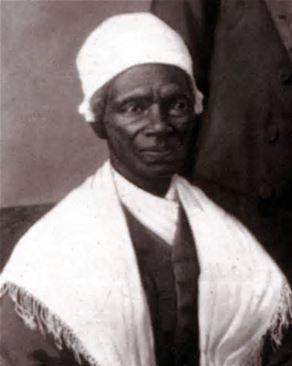
Sojourner Truth – Ain’t I a Woman?

Video

Anticipating Shepherd of the Hill Dialogues’ “Voices of the Slaves” program celebrating the 150th Anniversary of the Emancipation Proclamation, we offer Sojourner Truth’s speech here on Views from the Edge. The Tuesday Dialogue on Oct. 15 (7:00 P.M.) will feature dramatic readings like this one and the music that originated in the cotton fields.

Sojourner Truth

Sojourner Truth

Human Evolution

This NPR piece Attenborough’s muddled thinking can’t stop human evolution came to our attention this morning by way of David Earle from New Zealand.

David’s blog is In the Company of Hysterical Women.

His comment on yesterday’s Views from the Edge post The American Religion reads, in part:

Fortunately Sir David is totally wrong on all counts. It is only a small fraction of humanity that benefit for these improvements and even then, it has little to no measurable impact apparently on generic change across population. …

But he is tapping into a wider sentiment that some day we might be so in control of our own destiny that we are no longer subject to this nasty, animal based thing called evolution.

Isn’t that when we force our way back to the garden and eat from the second tree?

Editor’s note: David is referring to the Genesis story (Gen. 2 and 3) where what David calls “the “first tree” is the tree of the knowledge of good and evil (the tree of control/mastery by which they will “be like God”). “The second tree” is the tree of life (by which the characters in the story would become eternal.)

The Garden story is not history; it’s anthropology and theology. It never happened; it’s always happening.

Your thoughts on the matter are welcome. Leave a comment to promote the discussion.

The American Religion

“A religion is a unified system of beliefs and practices relative to sacred things, that is to say, things set apart and forbidden, beliefs and practices which unite into one single moral community…all those who adhere to them.” – Emile Durkheim, The Elementary Forms of Religious Life, p. 17.

Emile Durkheim is one of the fathers of the social sciences and the father of sociology. When he first studied the aboriginal people of Australia, he carried with him a bias against all religion.

“During Durkheim’s life, his thinking about religion changed in important ways. Early in his life, as in Division, he argued that human societies could exist on a secular basis without religion. But later in his life he saw religion as a more and more fundamental element of social life. By the time he wrote Forms, Durkheim saw religion as a part of the human condition, and while the content of religion might be different from society to society over time, religion will, in some form or another, always be a part of social life. Durkheim also argues that religion is the most fundamental social institution, with almost all other social institutions, at some point in human history, being born from it. For these reasons he gave special analysis to this phenomenon, providing a philosophy of religion that is perhaps as provocative as it is rich with insights.

“According to Durkheim, religion is the product of human activity, not divine intervention. He thus treats religion as a sui generis social fact and analyzes it sociologically. Durkheim elaborates his theory of religion at length in his most important work, Forms. In this book Durkheim, uses the ethnographic data that was available at the time to focus his analysis on the most primitive religion that, at the time, was known, the totemic religion of Australian aborigines. This was done for methodological purposes, since Durkheim wished to study the simplest form of religion possible, in which the essential elements of religious life would be easier to ascertain. In a certain sense, then, Durkheim is investigating the old question, albeit in a new way, of the origin of religion. It is important to note, however, that Durkheim is not searching for an absolute origin, or the radical instant where religion first came into being. Such an investigation would be impossible and prone to speculation. In this metaphysical sense of origin, religion, like every social institution, begins nowhere. Rather, as Durkheim says, he is investigating the social forces and causes that are always already present in a social milieu and that lead to the emergence of religious life and thought at different points in time, under different conditions.”
– Paul Carl’s entry on Emile Durkheim published June 3, 2012 in Internet Encyclopedia of Philosophy: a Peer-Reviewed Academic Resource.

QUESTION

Later sociologists like Robert Bellah look today at American society and ask what “sacred things” are enshrined in American culture and practices.

What are the equivalent beliefs and practices, “sacred things” set apart or forbidden, that give coherence to a fast-changing American society?


The Sacredness of Time

A Sermon at Shepherd of the Hill Presbyterian Church in Chaska, Minnesota.

EXCERPTS

“I have always been bemused by time and place. I am a toddler on a train listening in the night to the eerie sound of the train whistle and the constant click-clacking of the wheels. Where were we? Where are we going – and why, just my mother and I?”

“We are all in transit. But from where to where and from when to when have become less and less my questions.”