The Prophets: Parents of Newtown

Featured

The parents of the murdered children of Sandy Hook Elementary School in Newtown are back in Washington, D.C today and tomorrow. They are meeting with our nation’s law-makers.

Like Jeremiah, “the Weeping Prophet” who cried over the plight of his people, these mourning parents are courageous spokespersons for sanity, compassion, and an end to America’s love of violence.

May the Spirit that inspires these grieving parents to leave home for meetings in the center of American power and public scrutiny stir the consciences of the Congressional Representatives and Senators with whom they meet.

A friend brought to my attention “Thank God, I’m Alive” on the latest tragedy of gun violence to garner national attention in Santa Monica, California.

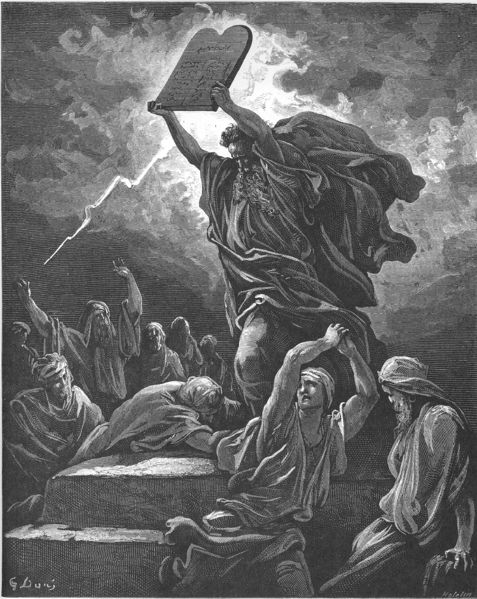
As Moses said when Joshua wanted to silence two people (Eldad and Medad) who were speaking out without authorization: “I wish that all God’s people were prophets!” (Book of Numbers 11:29, Torah, Hebrew Bible).

I invite your prayers and well wishes for the parents of Newtown as they carry forward the prophetic tradition. Let no one silence you. Speak the truth with love, and let the Spirit do its work.

Please share your comments.

Hide-and-Seek: Oysters Can’t Hide

Featured

Oysters can't hide!

Oysters can’t hide!

The subsistence fishers who have inhabited Isle de Jean Charles since 1830 see things differently from BP and the mainline press.

‘Come to Louisiana. Everything is fine’ say the BP ads. Well, they’re not fine. There are no oysters. There are no shrimp,” said Chief Albert Naquin of the Isle de Jean Charles Band of the Biloxi-Chitimacha-Choctaw during a recent three hour conversation in Chaska, Minnesota.

Chief Naquin and Kristina Peterson were on route to Duluth for a consultation of American indigenous people focusing on the Mississippi River from its headwaters in Minnesota to its mouth in Louisiana, the site of the vanishing traditional home of the Isle de Jean Charles tribe.

Kristina is a professional community disaster recovery specialist who splits her time between the University of New Orleans Center for Hazards Assessment, Response, and Technology (CHART) and the Blue Bayou Presbyterian Church in Gray, LA, where she is the Pastor. Kristina had come to Chaska, MN two years ago as speaker for First Tuesday Dialogues: examining critical public issues locally and globally, a community forum of Shepherd of the Hill Presbyterian Church.

For three hours we discussed what was happening three years after the ecological tragedy America has almost forgotten.

ABOUT ISLE DE JEAN CHARLES

The people of Isle de Jean Charles have been there since 1830. They re-settled there after fleeing the U.S. government’s forced re-settlement program, leaving their native lands in search of a place where they could continue their culture and live together in hiding.

The place that became home was a piece of solid land hidden deep in the freshwater marshlands of the Louisiana Delta. When they settled there, the island measured 10 miles long by five miles wide.

From there they fished the coastal waters abundant in oysters, crabs, shrimp, and fish. They grew their own vegetables and fruit trees, and used its green pasture for horses and cows. The members of the tribe in hiding shared their seafood, dairy products, chickens, and produce with each other in a barter economy.

“My mother told me every time I went out to play, ‘If you see a stranger, hide.”’

THE 1940s: OIL CANALS

As Chief Albert tells the story, the accelerated erosion of the Gulf coastlands dates to the early 1940s. Big oil received a license from federal, state, and local authorities to dig canals through the Delta marshlands in search of oil. The new canals cut every which way, often crisscrossing, in search of liquid gold. And as they did, the marsh began to disappear. The salt water of the Gulf of Mexico seeped further and further into the Delta.

Chief Naquin and his people do not forget. They have long attention spans. They remember that oil canals were created by licensed permission under specified conditions. They remember that the licenses had time limits The time limits have long since passed. They remember what others have ignored or conveniently forgotten: the terms of the licenses required the oil companies to remediate the land at the conclusion of the license period.

The reclamation never took place. The Chief remembers. Click HERE for BP’s online promotion of its work to restore the Gulf of Mexico since Deep Water Horizon. There’s nothing about the canals or the licenses that required reclamation of the Delta.

ISLE DE JEAN CHARLES TODAY

The island that once measured 10 miles by five miles has shrunk to two miles long and one-quarter mile wide. The island will not survive.

Chief Naquin has been working to negotiate a suitable substitute for their ancestral home. The Army Corp of Engineers offered an alternative site that would have kept the tribe together, preserved their way of life, and helped bring income to the tribe by means of a visitor center for tourists.

A condition of occupying the new land, however, was that 100% of the tribe’s members vote Yes on the proposal. The vote was 85%. The 15% minority are mostly older people who have lived their entire lives on Isle de Jean Charles and insist they will go down with the island.

“When’s the last time any city, any nation, any group, any organization was asked for a vote of 100%?” asks Chief Naquin. “It’s impossible. We had 85% but it wasn’t enough.”

There is no hiding place. There is no lasting hiding place.

CHASING DOWN THE STRANGER: SURVIVAL BEYOND HIDING
Perhaps survival beyond hiddenness is the lesson of Isle de Jean Charles. Not just the Chief’s people who once hid from hostile powers in the Louisiana Delta, but all of us who hide from the harsh reality of the crony capitalism that grants a permit to oil companies to cut their canals through our fragile ecosystems and then allows those same companies to disappear into hiding from the initial terms of the licenses.

They call the oil rigs “rigs” for a reason. The whole thing is rigged.

If we see a stranger on what used to be Isle de Jean Charles; if we see canals still crisscrossing through the marsh; if we’ve seen the fires of Deep Water Horizon light up the Gulf of Mexico and slick the waters and estuaries with black gold; if we’ve seen the evidence of breaking-and-entering in the house of the Gulf Coast waters, if we see empty oyster shells where once there were oysters; if we’ve heard about the oil companies hiding without anyone playing seek, we can ignore the game or we can seek and find for the sake of survival.

There is a stranger on our island. The fire of Deep Water Horizon lit up the horizon to expose his hideout. The blazing fire in the Gulf of Mexico three years lit up the world with a previously hidden truth that called us to embrace the more transparent future we share with the shorebirds, shrimp, crabs, and oysters.

The oysters can’t hide. Will we, who can make moral choices, hide, or will we seek and call to account the strangers on our island?

Remembering Will Campbell

Featured

Will Campbell

Will Campbell

Will Campbell (1924-2013) is unforgettable. Beyond unusual, he was idiosyncratic. In death, he calls us to the deeper selves we so easily lose.

Will Campbell was that rare person of integrity who seemed to fulfill the hard calling described once by his friend William Stringfellow – “to be the same person everywhere all the time” – and his different places still blow the mind.

He was idiosyncratic. Who else would or could march at the forefront of the Civil Rights Movement in the 1950s and ‘60s, once the law was changed, turn his ministry to sipping whiskey with the Good Ol’ Boys on the front porches of the Ku Klux Klan?

Campbell was a son of the Deep South, a white Southern Baptist preacher raised in Mississippi, who betrayed his white privilege as a matter of Gospel discipleship. He became one of the closest friends of the youth Rev. Dr. Martin Luther King, Jr., the only white person present at the founding of the Southern Christian Leadership Conference that led the charge for Civil Rights in America. He was trusted that much.

His life was threatened repeatedly. He gained national prominence as a field worker for the Department of Racial and Cultural Relations of the National Council of Churches, the nation’s largest ecumenical council that suffered heavy criticism from anti-civil rights forces across the country, but especially in the Deep South. The National Council of Churches and Will Campbell were to their critics what the KKK was to those who worked to eliminate segregation in America.

When the nine black school children walked through hostile crowds to integrate the public school system in Little Rock, Arkansas, Will Campbell was one of four people at their side.

He became Director of the Committee of Southern Churchman, a position he used to promote racial reconciliation, his vocation until the day he died.

With the passage of the Civil Right Act, the man who spent his ministry to help win freedom for blacks did something no one could have imagined. He chose to re-direct his ministry to the new lepers of society, the defeated hooded enemies of integration, the Ku Klux Klan.

No one but Will Campbell would have done this, and few others could have done this. But he did. He became known as the chaplain to the KKK. Campbell wrote in Brother to a Dragonfly, one of 26 publications that bear his name:

“I had become a doctrinaire social activist without consciously choosing to be. And I would continue to be some kind of social activist. But there was a decided difference. Because from that point on I came to understand the nature of tragedy. And one who understands the nature of tragedy can never take sides.”

Will Campbell was not a hater. He was a reconciler who loved people. All kinds and conditions of people, even his ‘enemies’. He was the same person everywhere all the time.

He confused his critics – first the Right and then the Left – by insisting that his soul did not belong to any team – racial, political, religious, cultural. It belonged to the Kingdom of God. There was only one team, and that was the family of ALL God’s children everywhere. Compassion came first in his hierarchy of values. Compassion led him to campaign for justice in the Civil Rights Movement, and compassion led him to sip whiskey with the cross-burners in the rocking chairs on their front porches. His was a ministry of reconciliation, a living, idiosyncratic expression a bold declaration of the biblical gospel that God was in Christ reconciling the world to God’s own Self.

The notice of Will’s death (June 3, 2013) at the age of 88 in Nashville, Tennessee reminded me of just how hard it is to be a disciple of Jesus, how hard it is to love my neighbor as myself, especially when the neighbor is the enemy of my own claims to righteousness. Would that all of us were as idiosyncratic as Will.

I’m not going to take it anymore!

Featured

A dear friend sent an email about cause-weariness. She’s not alone in suffering an assault of email alarms and solicitations. She’s very conscientious and exhausted. I responded:

I, too, find myself increasingly angry. And that’s not a good thing. It’s right, but it’s not good for my soul. You have always been a tender, gentle, loving, musical person with that unique sense of humor, and this hits you hard, maybe harder than it hits me. I, too, am weary of all the emails and solicitations. They, too, have come to make me angry. “Just leave me alone!!!” I say to myself…and… out loud sometimes. “I’m not on your team. I’m not on anybody’s team. I don’t like teams. And stop treating me like one of the President’s best friends! He doesn’t know me from the man-in-the-moon, and, NO, you can’t get another $100 from me by peddling a raffle for lunch with the president! I don’t like gambling. Never have. Never will. Giving should be giving, not for purposes of getting.”

Anyway, you get my point.

I am torn between being a responsible disciple and citizen – staying abreast of current events and looking deeply into their meaning and the powers and principalities behind them – and living in the joy to which we are called.

I don’t know what to do either. I do know that you are one of God’s very precious children with a love of music and the arts. Listen to LOTS of music and spend time with beauty to off-set the ugliness.

Sober and Drunk

Socrates, The Louvre

Socrates, The Louvre

Is it true Socrates said
we should argue every problem
sober and then drunk? Well fed
then hungry? Free then enslaved? When
we try to ascertain truth,
historical or otherwise,
science, engineering, math–
is the answer that we all prize
irrefutable? Will all
bow down to its logic, reason,
pertinence? Or will it fail
to win the imagination,
hearts as well as minds–dreamers
as well as the philosophers?

- Steve Shoemaker, Urbana, IL, May 18, 2013

Memorial Day and the soldier’s helmet

Featured

Japanese soldier's helmet

Japanese soldier’s helmet

Memorial Day once honored the fallen soldiers of the Civil War, both Union and Confederate soldiers. They called it “Decoration Day” when they laid wreathes and flowers on the graves of the dead soldiers.

When I learned this in elementary school, it struck me as more than a little strange. My father had served as a Chaplain on Saipan. My father was a good guy. The people he went to war against were not. How strange to honor soldiers who fought against each other, “heroes” all, killing each other, especially when one side was good and the other was evil. And then, on top of that it seemed to pay homage to something we were also taught to scorn: war itself. It was more than a little confusing.

Many years later, it’s a Monday morning. I’m a pastor. (The person in this story is since deceased.)

A 70-something year old ex-Marine calls the church office. He’s a big ma, what tough guy call “a man’s man,” a World War II Marine, 6’2”. 250 lbs, part of the invasion of Saipan in the South Pacific when he was 17.

“My wife’s out of town. Can you come over tonight for a drink?”

I’ve never been to their home. I’m guessing he wants to talk about his marriage.

He takes my coat. We sit down. He pours us each a Scotch.

“You know, your first couple of years here I didn’t come to church much. I didn’t like your preaching. I’m not one of these peace guys. But something made me keep coming back. I started to listen and I kept coming, and all this peace stuff and Jesus stuff started to get to me. It’s been a long time now. That’s why I called you. I hate the Japs! I know I’m not supposed to call ‘em ‘Japs’. I hate them! But I can’t hate them anymore.”

He gets up and walks over to the mantel above the huge stone fireplace.

“My wife has no idea what’s in this box. I’ve never told her. I can’t tell her. I don’t want it anymore. I’m asking you to take it. I can’t live with it anymore.”

He takes the box from the mantel, places it on the ottoman in front of me, and opens the locked box with a key. He is shaking now and crying.

“This poor bastard! I killed this [expletive] with my bear hands!”

His whole body shakes as, one by one, he removes the contents from the box -

a soldier’s helmet;
a lock of hair;
two eye teeth;
dog tags, and
a gun -

that had belonged to the Japanese soldier he killed in hand-to-hand combat on Saipan.

“All these years of hate. And this poor bastard was just doing the same thing I was. He was just doing his duty to his country. How will God ever forgive me? I just want this stuff out of my house. I want it out of my life! How will God ever forgive me? I can’t hate any more. I can’t.”

We stand in the middle of his living room. I hold him like a baby: a grown man – a “man’s man” – sobbing and shaking with guilt, sorrow, and grief.

I take the box and the contents home. I give the gun to a friend who’s a gun collector. I have no memory of what I did with the box or the artifacts of what remained of the Japanese soldier. Memory is like that. It was too personal. It was too hot.

_____________

So…today I observe Memorial Day by returning to the original sense of Memorial Day as a day to remember the fallen – ALL of them – but even more, to re-commit to ending the insanity of war itself. It’s a day when I remember the in-breaking of sacredness – three men in the living room – two live Americans and one Japanese – and pray for something better for us all.

What the Book of Revelation was REALLY about

Featured

No book has been more abused and abusive than the Book of Revelation.

Gunnison Memorial Chapel, St. Lawrence University, Canton, NY

Gunnison Memorial Chapel, St. Lawrence University, Canton, NY

Martin Ramirez Sostre. inmate held in solitary confinement, later pardoned.

Martin Ramirez Sostre. inmate held in solitary confinement, later pardoned.

Below are excerpts from a sermon preached at the Gunnison Memorial Chapel of St. Lawrence University in Canton, NY inspired by Martin Sostre and re-reading the Book of Revelation. The sermon was published by The Christian Century (March, 1974).

The first half of the “Worship and Resistance: The Exercise of Freedom” introduces the hearer/ reader to the case of Martin Sostre’s resistance as a political prisoner incarcerated in solitary confinement at Clinton Correctional Facility in Dannemora, NY, known as “New York’s Siberia” or, as the inmates refer to it, “the Hell Hole of the New York Prison system”.

It was during my weekly Wednesday evening program and visits with prisoners there that I learned about the case of Martin Sostre, held in solitary confinement in resistance to dehumanizing prison practices, and joined the campaign for his pardon.

Excerpts from “Worship and Resistance: The Exercise of Freedom:

“Incarcerated on the Aegean Island of Patmos, a penal settlement of the Roman Empire in the first century A.D., was a political prisoner named John. He wrote a political-religious manifesto declaring open resistance to the Roman Empire. The Revelation to John – the Apocalypse, the last book of the Bible – is the earliest extant Christian tract deliberately and openly directed against the pretensions of the world’s greatest power. In the Revelation to John, resistance to Roman power and authority is so inextricably bound together with worship of God that they constitute two sides of the same coin. Worship and resistance are the twin sides of faith’s freedom to celebrate God’s gift of life. The unity of resistance and worship is expressed with notable clarity in the passage where the fall of mighty Babylon occasions a celebration in heaven. The destruction of Babylon is joined to the salvation of the world itself and is the sign of God’s power and righteous rule over the nations. Only those who profit by Babylon’s wealth, power and injustice have reason to mourn her fall, while those who have ‘come out of her’ – who have disentangled themselves from her oppression, corruption and imperial claims – have cause to worship God and sing joyful hymns of praise.”

….

“Babylon is the state or nation in its presumption to be God. Babylon is any state, nation, or constellation of principalities and powers, which attempts to rule as final judge of persons and nations. Babylon is any such power – in any time or place – which makes its people subjects, calling them into idolatry of the nations, and any state or nation that persecutes its prophets of righteousness, peace and justice while rewarding the aggressive supporters and the silent ones who acquiesce. America is Babylon.”

….

“Envision once more a visit to Clinton Correctional Facility. Remember the disorienting sensation of having left everything familiar on the other side of the wall, the feeling of walking out of a real world into a nightmare, the shock induced by the size of the walls and the presence of the guards – strange and terrifying.

“But the closer one gets to the prison reality, the more one comes to realize that it is not so strange, that it is simply a more exaggerated and visible form of our own everyday reality in the face of death. Here on the outside, the walls are not visible, but they are much higher. Out here the guards do not stand poised with machine guns, but they are real and far more powerful – the guards our own fears provide.”
….
“Then I heard another voice from heaven ssying, ‘Come out of her, my people, lest you take part in her sins…’” (Rev. 18:4 RSV).

A commentary will follow soon on my experience of visiting Martin during the time he was transferred to the Federal Detention Center in NYC where he was held as a witness in someone else’s trial. Prior to that visit, none of us in Northern New York had been able to meet with Martin because of his refusal to see visitors on the principle that the rectal “searches” required before and after visits violated his human rights.

NY Governor Carey eventually issued a pardon.

Talk Radio and the Anti-Christ

Featured

Talk radio host

Talk radio host

A previously unpublished commentary from March 24, 2010, Gordon C. Stewart. It’s even truer three years later.

Something from the Christian tradition – the idea of ‘the Anti-Christ’ – is lifting its ugly head, a word and concept that could trigger unthinkable tragedy unless we clean up our civil discourse.

According to Harris Interactive Poll taken between March 1 and 8, “more than 20% believe [President Obama] was not born in the United States, that he is ‘the domestic enemy the U.S. Constitution speaks of,’ that he is racist and anti-American, and that he ‘wants to use an economic collapse or terrorist attack as an excuse to take dictatorial powers.’ Fully 20% think he is ‘doing many of the things that Hitler did,’ while 14% believe ‘he may be the anti-Christ’ and 13% think ‘he wants the terrorists to win.”

The poll reflects what we all know: our civic health as a nation is being poisoned by inflammatory rhetoric from both sides of the political aisle. This toxic disregard for truth lies behind the results of the Harris Poll. Trigger words like ‘socialist,’ ‘communist,’ ‘terrorist,’ ‘anti-American,’ and ‘the Anti-Christ’ and the allegation that America’s first black president is the nation’s chief domestic enemy take us beyond the McCarthyism of the ‘50s. This cocktail is lethal.

As a Christian pastor I rue the use of Christian scripture to stoke the fires of fear and hate. The Christian life – or spiritual life of any sort, for that matter – is a life of discernment about the powers that shape ordinary life. It is not blind to evil. But loud spirituality is an oxymoron. We need to be reminded that all the great religions hold some version of the essential tenet expressed in the First Letter of John. “Whoever says he is in the light and hates his brother is in the darkness still” and “If any one says, ‘I love God,’ and hates his brother, he is a liar, for he who does not love his brother whom he has seen cannot love God whom he has not seen. And this commandment we have from him, that he who loves God should love his brother also.”

Labeling the President of the United States ‘the Anti-Christ” gives deranged minds a license to kill . . . in the name of the non-violent, crucified Jesus. If some deranged American patriot like the Marine who plotted to assassinate the President should succeed . . . God forbid! . . . the blood will be on the hands of all who remained silent when the hate speech was being poured into the public stream of consciousness. And if you claim to be a disciple of Jesus, get yourself to church Maundy Thursday and Good Friday to ground yourself again in the love that conquers fear.

My bias: Scenes along the way.

Featured

The gun lobby won in the U.S. Senate because Senators either fear 1) they will be defeated by pro-Second Amendment constituents, 2) they will lose a major source of campaign financing, or 3) they genuinely stand with the NRA and gun-manufacturers.

“You’re biased.”

I am. Every one of us is biased. Our experiences shape how we feel and how we think about these matters. My limited experience with guns influences how and what I see in the national discussion of gun control. I share these real life “scenes” In the interest of furthering honest discussion.

Scene 1

I am in Junior High School in Broomall, PA, a small town west of Philadelphia where my father is a pastor. The upstairs phone is in my bedroom. The phone rings in the middle of the night. I answer the phone. A police officer is asking for my father. Dad comes to the phone. “Reverend Stewart, we have a situation here. We need your help. Mrs. Smith (not her real name) is holed up at her home on Darby Lane. Her son called us. She’s threatening to kill him and herself. She has a gun. Can you help us?”

My father gets dressed, goes to the home. Mrs. Smith lets him in. He sits down with her. She finally agrees to give the gun to my father, her pastor.

Scene 2

President John Fitzgerald Kennedy is assassinated in Dallas. Initial reports point to the Grassy Knoll. The Warren Commission concludes all the shots came from a single rifle from a window in the Book Depository Building.

Scene 3

I am a graduate student at McCormick Theological Seminary in Chicago, IL. A senior project on allegations of police violence on Chicago’s North Side involves spending the night with a police officer in a police squad ride-along.

A little after 3:00 A.M. a Plymouth Valiant makes an illegal turn on a major street. The officer decides to warn the driver. “I’m just going to make sure he knows that he made an illegal turn. There’s no traffic. I won’t give him a ticket. Just want to be sure he knows not to do it next time.”

As the squad car makes the right turn to follow the Valiant, the Valiant takes off. An APB comes over the police radio. There’s been a break-in at a store three blocks from our location. “He’s hot!” says the Officer. He draws his pistol.

The Valiant leads us down a number of side streets and narrow alleys, making hair-pin turns on two wheels. Making the hard right turn, the Officer’s revolver flies out of his hand onto the floor on the passenger’s side in front of me.

”Get the gun! Get the gun! Just hold it until I tell you.”

I’m holding a deadly weapon in a life or death high speed chase. The chase ends with six squad cars blocking an alley. They throw the driver – a father with a baby at home one block away from home – onto the hood of the car – and make the arrest. We return to the police station.

Scene 4

Martin Luther King, Jr. is assassinated in Memphis. I am Assistant Pastor at First Presbyterian Church in downtown Decatur, Illinois where I am responsible for “Teen Town” a program for youth from the public housing projects.

The kids learn that Dr. King has been shot. The room is hot. We quickly gather up 12 tape recorders, divide the kids into 12 groups, and tell each group that this is their time to talk. Their time to speak about what they’re feeling. What they say needs to be heard. We, the adult leaders, will see that city and school officials hear what they have to say. The evening ends peacefully.

Scene 5Bobby Kennedy, Presidential candidate, brother of John Fitzgerald Kennedy, is assassinated.

Scene 6

A despondent professor at the college and member of the college church I serve goes into his basement, calls his 15 year-old son downstairs, puts a pistol in his own mouth and pulls the trigger.

It falls to me to minister to the son and his wife. I do the memorial service and spend endless hours with a traumatized family. All I can do is stand with them. The horror will never leave the son’s memory. The college and congregation are also in shock.

Scene 7

Five years later a woman calls the church office. Her boyfriend is at home by himself. He has a gun. She has left because she’s afraid he would kill her and himself. Would I go to the house?

I go to the house. I know him well. He trusts me. He lets me in. As my father did when I was a teenager, I stay calm. I listen as he paces the room, waving the pistol, ranting and raving and crying about how meaningless life is and about how he’ll never get his life in order.

After an hour, he calms down. He gives me the gun and asks me to take it away.

I have no idea what to do with it. I gave it to Karl, a church member and friend who has a gun collection. I tell Karl I can’t tell him where it comes from. “Just get rid of it.”

Scene 8

On a Monday morning, a 70 year old ex-Marine calls the church office. He’s a big man. What other men might call “a man’s man,” a World War II Marine, 6’2”. 250 lbs, part of the invasion of Saipan in the South Pacific when he was 17.

“My wife’s out of town. Can you come over tonight for a drink?”

I’ve never been to their home. I’m guessing he wants to talk about his marriage.

He takes my coat. We sit down. He pours us each a Scotch.

“You know, your first couple of years here I didn’t come to church much. I didn’t like your preaching. I’m not one of these peace guys. But something made me keep coming back. I started to listen and I kept coming, and all this peace stuff and Jesus stuff started to get to me. It’s been a long time now. That’s why I called you.

“I hate the Japs! I know I’m not supposed to call ‘em ‘Japs’. I hate them! But I can’t hate them anymore.”

He gets up and walks over to the mantel above the huge stone fireplace.

“My wife has no idea what’s in this box. I’ve never told her. I can’t tell her. I don’t want it anymore. I’m asking you to take it. I can’t live with it anymore.”

He takes the box from the mantel, places it on the ottoman in front of me, and opens the locked box with a key. He is shaking now and crying.

“This poor bastard! I killed this [expletive] with my bear hands!”

His whole body shakes as, one by one, he removes the contents from the box:

• the soldier’s helmet;
• a lock of hair;
• two eye teeth;
• his ID, and…
• the soldier’s pistol.

“All these years of hate. And this poor bastard was just doing the same thing I was. He was just doing his duty to his country. How will God ever forgive me? I just want this stuff out of my house. I want it out of my life! How will God ever forgive me? I can’t hate any more. I can’t.”

We stand in the middle of his living room. I hold him like a baby: a grown man – a “man’s man” – sobbing and shaking with guilt, sorrow, and grief.

I take the box and the contents home. I give the gun to Karl. I have no memory of what I did with the box or the artifacts of what remained of the Japanese soldier. Memory is like that. It was too personal. It was too hot.

Scene 9

It’s a Tuesday night in 2013. I am hosting a community dialogue on “Gun Violence in America.” I am the Moderator of the program. 138 people crowd the Chapel. Normal attendance at the Dialogues is 35 to 50. Tonight the overwhelming majority are gun owners, many of whom have come in response to partisan emails from Second Amendment gun-rights advocates.

I welcome everyone, invite people to introduce themselves to each other, and introduce the evening’s two speakers. Chaska Police Chief Scott Knight is an outspoken advocate for increased gun control legislation. Carver County Sheriff Jim Olson takes a more conservative position, arguing instead for enforcement of existing laws. The Chief and the Sheriff engage in respectful exchange. The program then turns, as it always does, to the floor for comments and questions.

I recognize the first of many hands, a woman from the back of the Chapel. She reads from a prepared script. She is angry about government. At one point she says that government has no business telling her whether or not she can have a gun. The Second Amendment guarantees that right to every American citizen.

I do what I have always done over the seven years we’ve been holding these Dialogues: I ask a follow-up question meant to stimulate deeper thought and discussion: “Let me ask a follow-up question to be clear about what you’re saying. Are you saying that anybody should be able to buy a gun anywhere, anytime?”

“I didn’t say that!” She was angry. The room was hot.

I knew then that this would not be a dialogue. The best we could hope for was a series of monologues.

After a series of statements, a participant sites a Facebook posting which had declared that “the second best thing that could happen to Obama would be for him to be impeached.”

The speaker continues, “And we all know what the best thing would be…assassination.”

There is a visceral outcry objecting to painting Second Amendment rights advocates as racists and potential assassins.

Later a woman stands to ask how many people in the room have lost a loved one to gun violence. Three hands go up. Before she can continue, there are shouts from the back of the room. “That has nothing to do with the Second Amendment.” The shouts continue. I address the shouting, reminding the shouters of the rule that one person speaks at a time without interruption. By the time order is restored, the woman has finished the story I could not hear. Her father committed suicide with a gun. The woman is weeping. She sits down.

Ten minutes later a man speaks from the front. He makes the case that the American economy is going to collapse because the federal treasury is dependent on derivatives. He will need his gun, he says, when there’s not enough food and the girl from next door comes over to get the food he’s stored up for just this eventuality. He puts the Chief of Police on the spot. “So, if an order comes down (from the President) to take away our guns, will you obey the order?”

In the social time following the event, four women tell me they were afraid physically. They don’t think they will come back for the second program. The woman who has shouted down says, “I don’t think I can back.” Two first-time attendees to Dialogues seek me out to say they didn’t expect this. “I can get this at home watching television. I expected something more enlightening, not just more of the same,” says one of them.

The gun rights advocates express pleasure with the evening and are looking forward to the announced second program in the series featuring a debate between an NRA representative a pro gun control advocate. There is no indication of dissatisfaction with the evening. “We’ll be back. Thank for doing this.”

One of the visitors identifies himself as a Republican Second Amendment advocate who came because of an email. He thanks me for the evening and for the even-handed moderating.

“But I have to say I’m really disappointed. I’m sad. How can anyone not have compassion for that poor woman who tried to tell her story about her father’s suicide? I don’t understand the response. No matter where you stand your heart has to go out to her, no matter where you stand.”

Scene 10

The church board meets to review the program and to prepare for the next one. We are concerned that the First Tuesday Dialogues’ purpose of “examining critical public issues locally and globally” will be no better served by the second program than it had been at the first. We also know that the night’s capacity crowd will increase for the next program. A hundred gun-rights advocates who were attending a hearing at the legislature in the state capitol the night of the first event will be free to attend the second program. There is no room to accommodate a larger crowd, and the purpose of meaningful conversation diminishes with larger numbers.

We cancel the next program and publish a letter in the local newspaper explaining our decision.

In response to the cancellation, Letters to the Editor and on-line comments declare that the Moderator was biased and that the real reason for cancelling the program is that the Moderator was surprised and disappointed by how many Second Amendment gun-rights advocates attended.

Conclusion

We’re all biased by our personal histories (the Scenes in our lives). No one is objective. Perhaps the place to start is speaking out loud the experiences that prejudice every one of us.
Can the members of a community, a city, a state, a nation, a community of nations, engage in meaningful conversation about their mutual safety and security? Can we begin by sharing our experiences? Might the open expression of our various personal experiences be the narrow door that leads to the other side of suspicion and violence? Or will the NRA and the gun manufacturers call the shots?

Deep Water Horizon Three Years Later

Featured

This conversation about BP, the oil companies, coastal erosion, and the distribution of the BP Settlement Fund took place at Shepherd of the Hill Presbyterian Church in Chaska one week before the 3rd Anniversary of the Deep Water Horizon explosion.

Albert Naquin is Chief of the Isle de Jean Charles Band of Biloxi-Chitimacha-Choctaw, a subsistence fishing community whose traditional land and way of life are vanishing quickly.

Kristina Peterson is Pastor of the Bayou Blue Presbyterian Church in Gray, LA and a disaster recovery professional and researcher with the University of New Orleans Center for Hazard Assessment, Response, and Technology. Kristina was a speaker at First Tuesday Dialogues in Chaska, MN one year after the explosion of Deep Water Horizon. She returned with Chief Albert for this conversation on their way to a conference in Duluth, MN of indigenous people who live along the Mississippi River from its headwaters in Minnesota to its mouth in the Louisiana Delta of the Gulf Coast.

The off-camera voice later in the conversation is the editor of Views from the Edge and Pastor of Shepherd of the Hill.

“Something is very wrong with a system that puts corporations above people.” – Kristina Peterson