Republican Convention Religious Crusade

The rousing video from the Republican National Convention (“Believe”) played like an evangelistic crusade waiting for an altar call.

From the musical crescendos to the hyped voice to the pentecostal elation of the crowd, it was religious to the core. Here’s the definition of “religion” that leads to the claim:

“Religion is the state of being grasped by an ultimate concern, a concern which qualifies all other concerns as preliminary and which itself contains the answer to the question of a meaning of our life.”Paul Tillich

The makers of the video know how quick we are to shed a tear. Especially when at a crusade that plays all the chords of American “civil religion” as argued in the recent “Views from the Edge” post on American religion and American politics.

Tillich was the first professor dimissed from his university teaching position by the  German Third Reich. Like the Germans at the Service Club meeting in an earlier post here, he knew that religion is not confined to the four walls of a church, synagogue, or mosque. It is the state of “being grasped by….”

What “grasps those who viewed the “Believe” video?
A poor attempt to answer the quesiton appeared yesterday (“Believe in America“). The post was too obscure to make its point. Thus, this folllow-up elaboration.
The god of the “Believe” video is America iteself. It is the god of American exceptionalism. The video stirs the heart with the cunning of Kafka’s Green Dragon and the seductive voices of Kafka’s The Sirens who know they cannot deliver what we long for. Their wombs cannot give birth to any kind of future.

The following exchange followed the earlier “American Religion and American Politics” post. Both C.A. and I see the world as the theater of God’s glory but also as the Theater of the Absurd.

C.A. left this comment:

If my small experience is any guide, you may get hammered on this one, Gordon.  When someone has been brought up on American exceptionalism, especially if coupled with Caucasian exceptionalism, and one kind of Christian belief the three can be so ingrown as to be more than subconscious,  virtually unconscious.  Working together, they justify any negative behavior that the person believes, and cause outright rejection of much that he or she hears or reads about as impossible. …

I replied:

C.A., You just wrapped it all up very nicely. Willem Zuurdeeg, a Dutch philosopher of religion, linguistic philosopher and phenomenologist, concluded that our deepest “convictions” are unexamined – below the surface of conscious awareness, so obviously true to us that they are what you call “virtually unconscious.” The compelling conviction hinted at by American civil religion is what Zuurdeeg described as an Ordered Home , a world order. In this case. the world revolves around tjhe doctrines of white supremacy and national supiority. These are the spiritual and moral centers.

“Views from the Edge’s” most popular post is the one about the Germans at the Service Club.  It’s gone viral.

“Five folks from Germany recently visited central Illinois as part of a local service club program to improve international understanding.

At one point they asked me about something they did not understand:  why do Americans begin so many gatherings with a ‘”patriotic” song, the Pledge of Allegiance, and a prayer?

Perhaps especially because they were from Germany, remembering the horrors of two world wars begun partly from excessive beliefs in the superiority of their nation and religion, they were sensitive to expressions of exceptionalism at U.S.A. sports events and service club meetings.

What Tillich, Zuurdeeg, and the Germans at the American service club meeting were seeing was a religious people hypnotized by Kafka’s Sirens and Green Dragon.

Go to yesterday’s post “Believing in America” to see the juxtaposition of the Kafka parables and the Convention video.

Leave your comment or question. And thanks again for visiting.

A Journey of Faith into Economics

 – Gordon C. Stewart Feb. 12, 2012

North Philadelphia street scene

Where I grew up Karl Marx was the enemy of all that was good and true. The United States and the Soviet Union were in a dead heat in the Cold War between the Christian and capitalist West, and the atheistic, Communist East. In elementary school we dove under our desks during air raid drills to prepare us for the atomic bomb that would be dropped on Broomall, Pennsylvania, population 1,000. We began the school day reciting the Pledge of Allegiance – “one nation under God” – and a prayer that asked for God’s blessing. In World War II our fathers had beaten back the evil of Nazism. Now, evil was threatening once again from fascism’s opposite, godless Communism. It was either us or them.

It took a while before I asked about the coupling of Christian faith and capitalism or read Marx himself. To read him or to entertain the idea of a classless society was heretical treason, or treasonable heresy. Church and nation were two sides of the same thing. But the more I recited the Pledge of Allegiance, went to worship and youth group,  and became acquainted with the poverty of north Philadelphia, I began to realize that “freedom and justice for all” was, at best, an aspiration, not a fact.  At worst, it was a compelling myth that allowed us to think of ourselves as the chosen whose job was to eliminate evil from a fallen world.

Two summers working as a street worker for the Presbytery of Philadelphia in the poorest neighborhoods rattled my world and shook me to my knees. Every Monday through Friday during the summers of 1961 and ’62, I traveled an hour-and-a-half by bus and subway from my suburban home in Broomall to north Philadelphia and back trying to make some sense of these two very different worlds. How and why did they exist – one white; one black? One materially satisfied; one not? Martin Luther King, Jr. and the civil rights movement were answering that it was because of  the politics and economics of white privilege.

When I read the work of Willem Zuurdeeg, a Dutch philosopher of religion who grew up as part of the underground resistance during World War II, I found the philosophical mind that looked below the surface to the deeper convictions that hold our hearts and minds captive. The rest of the story is too long to tell.

Capitalism, like Communism, is an idol manufactured by the human heart, one of the convictions, often unexamined, that vie for our worship and allegiance. No economic system is now, or ever will be, perfect. Its efficacy and utility are to be judged by what it does to the people who live under its mindset and institutions.  Today, I hear strident voices that sound like the voice of the late Senator Joe McCarthy who turned over the tables looking for America’s internal enemies. I would like it to be said when I am gone that I honored the memories of Edward R. Murrow whose courageous reporting exposed McCarthyism, and of Joseph Walsh, the attorney for the Army who spoke aloud the words that brought an end to the power of the McCarthy Hearings to destroy decent, dissenting American citizens: “Have you no decency, Sir? Have you no decency left?”

Ours is a later time. The issues of our day are complex. But underneath the debates, the “us against them” mindset of World War II and the Cold War is no less alive than it was then. However and wherever McCarthy’s eyes flash while his finger points and his voice rises again, those of us who hear a Deeper Voice must not be silent. The Deeper Voice is the “still small Voice” of conscience and dissent.

How I See the World

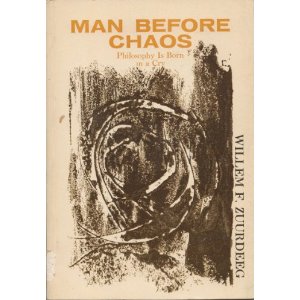
My way of listening and seeing is profoundly shaped by Willem Frederik Zuurdeeg, the late Professor of the Philosophy of Religion and author of An Analytical Philosophy of Religion, and Man Before Chaos: Philosophy Is Born in a Cry, completed following Zuurdeeg’s untimely death by his colleague and friend, Esther Cornelius Swenson, my undergraduate college professor.

They were those rare Christian philosopher-theologians whose work crossed the solid line between the philosophical rigors of empiricism and linguistic analysis, on the one hand, and the depths of existentialists Sartre, Heidegger, Camus, and Marcel and their precursors Dostoevsky and Kierkegaard.

Every day I start out with a fresh-brewed cup of coffee and read the newspaper. What a way to start a day!!! “Don’t give me no bad news, no bad news, no bad news!” But most of the news that’s printed is just that: bad news.

But good news reporting is a thing of joy and a call for celebration. My heroes include muckrakers like A.J. Muste, reporters like Edward R. Murrow, Harrison Salisbury, Daniel Schorr, Bill Moyers, Paul Krugman, and the comedians whose irreverent and sometimes coarse humor exposes the absurd and helps us laugh when we would cry: Jon Stuart, Bill Maher, Lewis Black, Steven Colbert.

I come at the news from a different angle than professional journalism or comedy. My ears are tuned by Willem Zuurdeeg, Esther Swenson, other beloved teachers at Maryville College, McCormick Theological Seminary, and Harvard Divinity School; the people of the congregations and campuses where I have been privileged to minister, and the criminal defense clients of the Legal Rights Center, Inc. where Dostoevsky’s world of Crime and Punishment, Dom Sebastian Moore’s The Crucified Jesus Is No Stranger, and Jesus’ Beatitudes and parables helped me to hear a deeper Voice than the cries that sometimes drove them and their defense lawyers to despair.

I have always had the sense of living at the edge of existence. From the edge I listen for the spoken and unspoken convictions “where ignorant armies clash by night” (Matthew Arnold, “Dover Beach“) to win our minds and hearts, the wars between and among ideologies, ideals, prejudices, states, nations, political parties, religions, economic convictions that shape us for good or for ill.

Lately I have been drawn back to Gabriel Marcel’s The Mystery of Being and Homo Viator to which Dr. Swenson introduced me in college but which were then beyond my experience or interest. Many years later, I find myself more and more at home in the mystery of being itself. I resonate with William Sloane Coffin’s reflection in his last years of life following a stroke.

There is a Zen paradox whereby we may lack everything yet want for nothing. the reason is that peace, that is, deep inner peace, comes not with meeting our desires but in releasing ourselves from their power.  I find such peace is increasingly mine. It’s not that I feel I’m withdrawing from the world, only that I am present in a different way. I’m less intentional than “attentional.” I’m more and more attentive to family and friends and to nature’s beauty. Although still outraged by callous behavior, particularly in high places, I feel more serene, grateful for God’s gift of life. For the compassions that fail not, I find myself saying daily to my loving Maker, “I can no other answer make than thanks, thanks, and ever thanks.”

– William Sloane Coffin, Credo