The Abel Project in the City of Cain

The same day America honored the 50th Anniversary of the March on Washington most remembered for Dr. King’s “I have a dream” speech, America’s first black President, who had just delivered a great speech in honor of Dr. King’s dream, appeared on the Newshour to discuss military strikes in Syria.

Irony of Ironies

Martin Luther King, Jr. was as deeply committed to peace and to non-violent, non-military solutions to global problems as he was to ending racism. As his analysis of the national, international, and human condition continued to develop, he became an outspoken critic of the Vietnam War, capitalism, and imperialism. He grasped as well as any public figure of his time, and of ours, the insidious institutional power of an unelected, undemocratic web of the economic-military-corporate complex at work behind the scenes of American public life.

President Obama’s speech from the same spot where where Dr. King had stood 50 years before at the March on Washington was a potential seminal moment of American history. It was a great contradiction to that potential to view the President’s interview on The Newshour (PBS) later in the day regarding Syria. I couldn’t put together the President’s honoring of Dr. King’s dream just hours earlier with his entertainment of military action in Syria. For whatever reason, the media did not seem to notice the incongruity and the irony.

The Newhour also featured a conversation among foreign policy experts about the advisability of “punishing” Syria for crossing the red line of chemical weapons. University of Chicago Professor John Mearsheimer’s raised the gravest voice of caution. “Stay out militarily.” He also reminded the other two panelists and the viewing audience that the United States is the only nation ever to have dropped the bomb. The world has not forgotten. Click HERE to listen to the conversation.

Martin Luther King, Jr. rose to national prominence because he issued a clarion call for the dawning of the City of Peace in the midst of the City of Cain, the city of bloodshed. In King’s view you can never get to the City of Peace by means of the methods of the City of Cain: violence, the lex talionis, or worse.

Ethical decisions, in personal life or in international affairs, are rarely simple. Our hearts go out to the innocent children, women, and men who died from chemical weapons in Syria. We want to be our brother’s and sister’s keepers. We want to help. We want to stop it. That sense of compassion is as it should be. All hearts should break over this horror. But something else is called for before we act on the impulses of the compassion.

It is also worth remembering who it was that first asked the question “Am I my brother’s keeper?” It was Cain, who made the statement to God to put the blame for his own homicide back on the One who held him responsible for the senseless murder of his brother Abel in a fit of anger. “Sin is crouching at your door, and you must master it.” Dr. King and others who choose the methods of non-violent resistance to great tragedies like the one in Syria interpret the instruction to Cain – you must master your anger – as the instruction to master one’s own knee-jerk retaliatory response. Patience is required. Taming the lion that crouches at our own door is a chief task of becoming genuinely human.

The Blood of Abel and the City of Cain

For Martin Luther King, Jr., Mohandas Gandhi, the Dalai Lama, and a host of un-noted, anonymous souls, the way of violence, even in behalf of the good, represents a failure to tame the lion crouching at our door and further entrenches the City of Cain.

Beyond the philosophical-ethical-theological considerations are other facts. The “red line” of chemical weapons is one that was crossed years ago. It was crossed in Vietnam. A trip to the nearest Veterans Hospital is a humbling reminder. It was the United States that used Agent Orange and Napalm in Vietnam, Laos, and Cambodia as part of Operation Ranch Hand. Our hands are not clean. As much as we might like, we do not speak from moral high ground. We have already crossed the red line. The moral finger we point toward Syria points back at us. To unleash even the most minimal, narrowly targeted Cruise Missile strike on Syria from a warship from the coast of a tinder-box in a far off place is like throwing out a boomerang expecting that it will not return to us in retributive violence. As Dr. King understood so well, violence begets violence.

As if that were not enough, the struggle in the Middle East is confounded by another form of political-economic-cultural-religious-military violence: the American corporate presence in the oil fields, arranged by American and Saudi elites (Sunni Muslims), and the expropriation through the United Nations of Bedouin Arab land to create a homeland for the survivors of the holocaust of World War II Germany. The intent, so far as the general public was concerned, was compassion. Provide a safe place, a homeland. But the homeland belonged to someone else when the United Nations expropriated it for the creation of the State of Israel, and the Arab world has never forgotten the way it happened.

“Am I my brother’s keeper?” drove popular sentiment to support the creation of Israel. Why the homeland was not carved out of Germany or perhaps France is an interesting question. Or why the United States did not carve out of our vast geography a territory in the United States of America as a safe haven, is a question long since ignored by nations who thought they were taking the moral ground but not forgotten by Palestinians, Shiites, and most of the Middle East.

Those questions aside, Israel today is a sovereign State in the midst of an Arab world that resents both its presence, the history of its creation, and the United States as its most faithful ally and supporter.

Behind it all stands a military-industrial-technological-corporate complex that feeds on mistakes like Iraq and Afghanistan, and the question of whether we are our brother’s keeper, responsible to play policeman to the world. Martin Luther King, Jr. never lunched on the food at the lunch counter of the military-industrial-technological-corporate complex. Nor should we. Neither should the President. Neither should Congress.

The Abel Project: We are the World

An alternative to a military response with potential catastrophic consequences for the Middle East and for us is the neglected methodology of nonviolent, passive resistance by which Martin Luther King, Jr. and Mohandas Gandhi changed the world.

If we and the rest of the world believe in the City of Peace and wish to redeem the blood of Abel in the City of Cain, let the recording artists of the world with the full support of the United Nations, the Vatican, the World Council of Churches (Orthodox and Protestant Christians), the Organisation of Islamic Cooperation, and international Jewish organizations representing the spectrum of Judaism lift the people’s voice so clearly across the world that it cannot be ignored.

Call it “The Abel Project” – named for the innocent who was lost to the world, the slain brother of Cain, whose blood still cries out to God from the ground.

Let there be candlelight prayer vigils for an end to the way of Cain in Syria. Let the lighted candles in every national capitol, every state or provincial capitol, and in cities and towns around the world make the statement that we, the people of the world, led by the three warring children of Abraham and Sarah (Jews, Christians, and Muslims), stand for the transformation of the redemption of the blood of Abel and in the name of the City of Peace.

The President can contribute to that effort but he must not attempt do it alone. Nor can he lead it.

Unleashing the potential of a worldwide vigil in the spirit of “We are the World” must rely on the untapped power of the United Nations as a force for peaceful resolution, the original dream that inspired its Charter. He must do it not only with our closest allies in the West but with the leaders of nations that resent our history in the Middle East and Southeast Asia who are suspicious of American saber-rattling from the Western presumption of moral high ground. The voice of the world must include the two warring branches of Islam – Sunni and Shiite – whose tensions and hatreds also lie at the center of the conflict in Syria and most of the Middle Eastern Arab States.

If he does, the irony between the August 28, 2013 commemoration of the 50th anniversary of the poor people’s march on Washington and the evening news will resolve itself in a new decision to honor the legacy of the fallen witness to the power of non-violent resistance and the power of love as the only method and power that ever really change the City of Cain. For the sake of Abel, our slain ancestral brother, let the candles be lit across the world.

Puppy salutes Martin Luther King’s Dream

Barclay and the memory of Martin Luther King, Jr.

Barclay and the memory of Martin Luther King, Jr.

Fourteen-week old Barclay was reading the morning paper where he read for the first time about the Rev. Dr. Martin Luther King, Jr. and his “I have a Dream speech” 50 years ago this Wednesday. “Woof!” said Barclay. Then his eyes became sad as he read the other stories in the paper and told his Dad to put on the Society for the Prevention of Cruelty to Animals (SPCA) shirt Barclay’s Mom found at a garage sale. The America Barclay wants is one that prevents cruelty to animals, including humans.

“Dad,” he said, “We have to go to Washington this Wednesday! We have to keep the dream alive.”

“We can’t go to Washington,” said Dad. “We’re not ready to go to Washington. Not until you learn to go potty outside. Maybe next year, when you’ve learned that going outside is your contribution to the prevention of cruelty to humans and the American way of life, we can go to Washington and visit Congress to train them too.”

Barclay looked at Dad and said Dad wasn’t worthy to wear that t-shirt. Dad goes inside all the time. “It’s prejudice, pure and simple and I won’t have any part in it! Dad hates dogs!”

“Sit,” said Dad.

“Just another form of cruelty and intimidation,” said Barclay. “Martin would never have treated me like that.”

“You don’t understand,” said Dad. “Martin was able to accomplish what he did in the Civil Rights Movement and the Peace Movement because he put himself under the strict discipline of non-violent resistance. Martin Luther King, Jr. understood discipline and self-discipline. I want you to learn the same thing. Every time you go in the house, it’s an act of violent resistance. It’s an act of terror. Do you understand? Sit!”

Barclay sat, knowing that the treat was in Dad’s hand. He took the treat, then squatted right in front of Dad, and said, “Maybe some day I’ll be self-disciplined like Dr. King. Right now I’m just a puppy in training. … So next year we can go Washington, D.C. and train everyone in Congress and the White House not to make a mess in their own houses?”

Poor People’s March 50 Years Ago Today

Martin Luther King, Jr. 50 years ago

Martin Luther King, Jr. 50 years ago

2013 MLK: "What happened?"

2013 MLK: “What happened?”

Glock owner at State Capitol hearing. Photo by David Joles, StarTribune.

Glock owner at State Capitol hearing. Photo by David Joles, StarTribune.

Remembering Will Campbell

Will Campbell

Will Campbell

Will Campbell (1924-2013) is unforgettable. Beyond unusual, he was idiosyncratic. In death, he calls us to the deeper selves we so easily lose.

Will Campbell was that rare person of integrity who seemed to fulfill the hard calling described once by his friend William Stringfellow – “to be the same person everywhere all the time” – and his different places still blow the mind.

He was idiosyncratic. Who else would or could march at the forefront of the Civil Rights Movement in the 1950s and ‘60s, once the law was changed, turn his ministry to sipping whiskey with the Good Ol’ Boys on the front porches of the Ku Klux Klan?

Campbell was a son of the Deep South, a white Southern Baptist preacher raised in Mississippi, who betrayed his white privilege as a matter of Gospel discipleship. He became one of the closest friends of the youth Rev. Dr. Martin Luther King, Jr., the only white person present at the founding of the Southern Christian Leadership Conference that led the charge for Civil Rights in America. He was trusted that much.

His life was threatened repeatedly. He gained national prominence as a field worker for the Department of Racial and Cultural Relations of the National Council of Churches, the nation’s largest ecumenical council that suffered heavy criticism from anti-civil rights forces across the country, but especially in the Deep South. The National Council of Churches and Will Campbell were to their critics what the KKK was to those who worked to eliminate segregation in America.

When the nine black school children walked through hostile crowds to integrate the public school system in Little Rock, Arkansas, Will Campbell was one of four people at their side.

He became Director of the Committee of Southern Churchman, a position he used to promote racial reconciliation, his vocation until the day he died.

With the passage of the Civil Right Act, the man who spent his ministry to help win freedom for blacks did something no one could have imagined. He chose to re-direct his ministry to the new lepers of society, the defeated hooded enemies of integration, the Ku Klux Klan.

No one but Will Campbell would have done this, and few others could have done this. But he did. He became known as the chaplain to the KKK. Campbell wrote in Brother to a Dragonfly, one of 26 publications that bear his name:

“I had become a doctrinaire social activist without consciously choosing to be. And I would continue to be some kind of social activist. But there was a decided difference. Because from that point on I came to understand the nature of tragedy. And one who understands the nature of tragedy can never take sides.”

Will Campbell was not a hater. He was a reconciler who loved people. All kinds and conditions of people, even his ‘enemies’. He was the same person everywhere all the time.

He confused his critics – first the Right and then the Left – by insisting that his soul did not belong to any team – racial, political, religious, cultural. It belonged to the Kingdom of God. There was only one team, and that was the family of ALL God’s children everywhere. Compassion came first in his hierarchy of values. Compassion led him to campaign for justice in the Civil Rights Movement, and compassion led him to sip whiskey with the cross-burners in the rocking chairs on their front porches. His was a ministry of reconciliation, a living, idiosyncratic expression a bold declaration of the biblical gospel that God was in Christ reconciling the world to God’s own Self.

The notice of Will’s death (June 3, 2013) at the age of 88 in Nashville, Tennessee reminded me of just how hard it is to be a disciple of Jesus, how hard it is to love my neighbor as myself, especially when the neighbor is the enemy of my own claims to righteousness. Would that all of us were as idiosyncratic as Will.

My bias: Scenes along the way.

The gun lobby won in the U.S. Senate because Senators either fear 1) they will be defeated by pro-Second Amendment constituents, 2) they will lose a major source of campaign financing, or 3) they genuinely stand with the NRA and gun-manufacturers.

“You’re biased.”

I am. Every one of us is biased. Our experiences shape how we feel and how we think about these matters. My limited experience with guns influences how and what I see in the national discussion of gun control. I share these real life “scenes” In the interest of furthering honest discussion.

Scene 1

I am in Junior High School in Broomall, PA, a small town west of Philadelphia where my father is a pastor. The upstairs phone is in my bedroom. The phone rings in the middle of the night. I answer the phone. A police officer is asking for my father. Dad comes to the phone. “Reverend Stewart, we have a situation here. We need your help. Mrs. Smith (not her real name) is holed up at her home on Darby Lane. Her son called us. She’s threatening to kill him and herself. She has a gun. Can you help us?”

My father gets dressed, goes to the home. Mrs. Smith lets him in. He sits down with her. She finally agrees to give the gun to my father, her pastor.

Scene 2

President John Fitzgerald Kennedy is assassinated in Dallas. Initial reports point to the Grassy Knoll. The Warren Commission concludes all the shots came from a single rifle from a window in the Book Depository Building.

Scene 3

I am a graduate student at McCormick Theological Seminary in Chicago, IL. A senior project on allegations of police violence on Chicago’s North Side involves spending the night with a police officer in a police squad ride-along.

A little after 3:00 A.M. a Plymouth Valiant makes an illegal turn on a major street. The officer decides to warn the driver. “I’m just going to make sure he knows that he made an illegal turn. There’s no traffic. I won’t give him a ticket. Just want to be sure he knows not to do it next time.”

As the squad car makes the right turn to follow the Valiant, the Valiant takes off. An APB comes over the police radio. There’s been a break-in at a store three blocks from our location. “He’s hot!” says the Officer. He draws his pistol.

The Valiant leads us down a number of side streets and narrow alleys, making hair-pin turns on two wheels. Making the hard right turn, the Officer’s revolver flies out of his hand onto the floor on the passenger’s side in front of me.

”Get the gun! Get the gun! Just hold it until I tell you.”

I’m holding a deadly weapon in a life or death high speed chase. The chase ends with six squad cars blocking an alley. They throw the driver – a father with a baby at home one block away from home – onto the hood of the car – and make the arrest. We return to the police station.

Scene 4

Martin Luther King, Jr. is assassinated in Memphis. I am Assistant Pastor at First Presbyterian Church in downtown Decatur, Illinois where I am responsible for “Teen Town” a program for youth from the public housing projects.

The kids learn that Dr. King has been shot. The room is hot. We quickly gather up 12 tape recorders, divide the kids into 12 groups, and tell each group that this is their time to talk. Their time to speak about what they’re feeling. What they say needs to be heard. We, the adult leaders, will see that city and school officials hear what they have to say. The evening ends peacefully.

Scene 5Bobby Kennedy, Presidential candidate, brother of John Fitzgerald Kennedy, is assassinated.

Scene 6

A despondent professor at the college and member of the college church I serve goes into his basement, calls his 15 year-old son downstairs, puts a pistol in his own mouth and pulls the trigger.

It falls to me to minister to the son and his wife. I do the memorial service and spend endless hours with a traumatized family. All I can do is stand with them. The horror will never leave the son’s memory. The college and congregation are also in shock.

Scene 7

Five years later a woman calls the church office. Her boyfriend is at home by himself. He has a gun. She has left because she’s afraid he would kill her and himself. Would I go to the house?

I go to the house. I know him well. He trusts me. He lets me in. As my father did when I was a teenager, I stay calm. I listen as he paces the room, waving the pistol, ranting and raving and crying about how meaningless life is and about how he’ll never get his life in order.

After an hour, he calms down. He gives me the gun and asks me to take it away.

I have no idea what to do with it. I gave it to Karl, a church member and friend who has a gun collection. I tell Karl I can’t tell him where it comes from. “Just get rid of it.”

Scene 8

On a Monday morning, a 70 year old ex-Marine calls the church office. He’s a big man. What other men might call “a man’s man,” a World War II Marine, 6’2”. 250 lbs, part of the invasion of Saipan in the South Pacific when he was 17.

“My wife’s out of town. Can you come over tonight for a drink?”

I’ve never been to their home. I’m guessing he wants to talk about his marriage.

He takes my coat. We sit down. He pours us each a Scotch.

“You know, your first couple of years here I didn’t come to church much. I didn’t like your preaching. I’m not one of these peace guys. But something made me keep coming back. I started to listen and I kept coming, and all this peace stuff and Jesus stuff started to get to me. It’s been a long time now. That’s why I called you.

“I hate the Japs! I know I’m not supposed to call ‘em ‘Japs’. I hate them! But I can’t hate them anymore.”

He gets up and walks over to the mantel above the huge stone fireplace.

“My wife has no idea what’s in this box. I’ve never told her. I can’t tell her. I don’t want it anymore. I’m asking you to take it. I can’t live with it anymore.”

He takes the box from the mantel, places it on the ottoman in front of me, and opens the locked box with a key. He is shaking now and crying.

“This poor bastard! I killed this [expletive] with my bear hands!”

His whole body shakes as, one by one, he removes the contents from the box:

• the soldier’s helmet;
• a lock of hair;
• two eye teeth;
• his ID, and…
• the soldier’s pistol.

“All these years of hate. And this poor bastard was just doing the same thing I was. He was just doing his duty to his country. How will God ever forgive me? I just want this stuff out of my house. I want it out of my life! How will God ever forgive me? I can’t hate any more. I can’t.”

We stand in the middle of his living room. I hold him like a baby: a grown man – a “man’s man” – sobbing and shaking with guilt, sorrow, and grief.

I take the box and the contents home. I give the gun to Karl. I have no memory of what I did with the box or the artifacts of what remained of the Japanese soldier. Memory is like that. It was too personal. It was too hot.

Scene 9

It’s a Tuesday night in 2013. I am hosting a community dialogue on “Gun Violence in America.” I am the Moderator of the program. 138 people crowd the Chapel. Normal attendance at the Dialogues is 35 to 50. Tonight the overwhelming majority are gun owners, many of whom have come in response to partisan emails from Second Amendment gun-rights advocates.

I welcome everyone, invite people to introduce themselves to each other, and introduce the evening’s two speakers. Chaska Police Chief Scott Knight is an outspoken advocate for increased gun control legislation. Carver County Sheriff Jim Olson takes a more conservative position, arguing instead for enforcement of existing laws. The Chief and the Sheriff engage in respectful exchange. The program then turns, as it always does, to the floor for comments and questions.

I recognize the first of many hands, a woman from the back of the Chapel. She reads from a prepared script. She is angry about government. At one point she says that government has no business telling her whether or not she can have a gun. The Second Amendment guarantees that right to every American citizen.

I do what I have always done over the seven years we’ve been holding these Dialogues: I ask a follow-up question meant to stimulate deeper thought and discussion: “Let me ask a follow-up question to be clear about what you’re saying. Are you saying that anybody should be able to buy a gun anywhere, anytime?”

“I didn’t say that!” She was angry. The room was hot.

I knew then that this would not be a dialogue. The best we could hope for was a series of monologues.

After a series of statements, a participant sites a Facebook posting which had declared that “the second best thing that could happen to Obama would be for him to be impeached.”

The speaker continues, “And we all know what the best thing would be…assassination.”

There is a visceral outcry objecting to painting Second Amendment rights advocates as racists and potential assassins.

Later a woman stands to ask how many people in the room have lost a loved one to gun violence. Three hands go up. Before she can continue, there are shouts from the back of the room. “That has nothing to do with the Second Amendment.” The shouts continue. I address the shouting, reminding the shouters of the rule that one person speaks at a time without interruption. By the time order is restored, the woman has finished the story I could not hear. Her father committed suicide with a gun. The woman is weeping. She sits down.

Ten minutes later a man speaks from the front. He makes the case that the American economy is going to collapse because the federal treasury is dependent on derivatives. He will need his gun, he says, when there’s not enough food and the girl from next door comes over to get the food he’s stored up for just this eventuality. He puts the Chief of Police on the spot. “So, if an order comes down (from the President) to take away our guns, will you obey the order?”

In the social time following the event, four women tell me they were afraid physically. They don’t think they will come back for the second program. The woman who has shouted down says, “I don’t think I can back.” Two first-time attendees to Dialogues seek me out to say they didn’t expect this. “I can get this at home watching television. I expected something more enlightening, not just more of the same,” says one of them.

The gun rights advocates express pleasure with the evening and are looking forward to the announced second program in the series featuring a debate between an NRA representative a pro gun control advocate. There is no indication of dissatisfaction with the evening. “We’ll be back. Thank for doing this.”

One of the visitors identifies himself as a Republican Second Amendment advocate who came because of an email. He thanks me for the evening and for the even-handed moderating.

“But I have to say I’m really disappointed. I’m sad. How can anyone not have compassion for that poor woman who tried to tell her story about her father’s suicide? I don’t understand the response. No matter where you stand your heart has to go out to her, no matter where you stand.”

Scene 10

The church board meets to review the program and to prepare for the next one. We are concerned that the First Tuesday Dialogues’ purpose of “examining critical public issues locally and globally” will be no better served by the second program than it had been at the first. We also know that the night’s capacity crowd will increase for the next program. A hundred gun-rights advocates who were attending a hearing at the legislature in the state capitol the night of the first event will be free to attend the second program. There is no room to accommodate a larger crowd, and the purpose of meaningful conversation diminishes with larger numbers.

We cancel the next program and publish a letter in the local newspaper explaining our decision.

In response to the cancellation, Letters to the Editor and on-line comments declare that the Moderator was biased and that the real reason for cancelling the program is that the Moderator was surprised and disappointed by how many Second Amendment gun-rights advocates attended.

Conclusion

We’re all biased by our personal histories (the Scenes in our lives). No one is objective. Perhaps the place to start is speaking out loud the experiences that prejudice every one of us.
Can the members of a community, a city, a state, a nation, a community of nations, engage in meaningful conversation about their mutual safety and security? Can we begin by sharing our experiences? Might the open expression of our various personal experiences be the narrow door that leads to the other side of suspicion and violence? Or will the NRA and the gun manufacturers call the shots?

MLK Celebration in Shambles? Or…Not!

The planned Martin Luther King Day program fell to shambles with a phone call at 4:00 p.m. yesterday afternoon. The Minneapolis African drummer and the Liberian Choir that was to sing “The Hallelujah Chorus” a capella would not be coming to the 7:00 p.m. MLK Celebration here in Chaska.

When the bad news came, I was apoplectic. “This can’t be. We’ve advertised this.  People are coming to hear the drumming and the singing of this unusual choir. We can’t change this after we’ve done the PR. We’ve sent out electronic and Chaska Herald invitations to the community. We can’t disappoint these people like this.” I wanted to crawl under a rock. I wasn’t of a mind to remember or believe that sometimes…”God moves in a mysterious way his wonders to perform” (hymn by William Cowper, 1774).

After the momentary paralysis, Momoh Freeman, guest soloist and song-leader Jerry Steele, and Chaska resident Ray Pleasant quickly scrambled to put our heads together to scratch together an emergency game plan. The people who would come would be the choir – we would sing, and sing, and sing. There would be nothing to confuse as entertainment; instead there would be full participation…all the way from beginning to end. “What a concept!” I thought to myself. “That’s how it’s supposed to be. As the President had said in earlier in his Second Inaugural Address, ”It’s about we, the people.”

Jerry, a superb African-American soloist and song-leader, was magnificent. The collective voice of the people singing “Every time I feel the Spirit” filled the Chapel with joy. Strangers turned and welcomed each other easily with signs of warmth and kinship. Sections of the Sermon on the Mount that had inspired Dr. King were read. “You have heard that it was said, ‘You shall love your neighbor and hate your enemies’. But I say to you, Love your enemies, bless those who curse you, do good to those who hate you, and pray for those who despitefully use you and persecute you, that you may be children of your Father who is in heaven, for he makes his sun to rise on the evil and on the good, and sends the rain on the just and the unjust.”

A hush filled the room except for Jerry’s baritone voice, singing the song to which Martin Luther King, Jr. so often turned in tough times. “Precious Lord, take my hand, Lead me on, help me stand; I am tired, I am weak, I am worn; Through the storm, through the night, Lead me on to the light; Take my hand, precious Lord, lead me home.”

Chaska resident Ray Pleasant, a retired engineer and former MN State Representative and Bloomington City Councilman, shared the CD of African drumming he had quickly supplied for the ad hoc program.

The room was hushed by the rhythms of the drums, followed by Ray’s explanation of the central importance of drumming to African culture and the reminder that the drumming was once forbidden the African slaves.

Ray set the historical context of what later became known as “Letter from the Birmingham Jail”: Dr. King’s decision to march in Birmingham, refusing to put the need for fund-raising for the fledgling Civil Rights Movement and the Southern Christian Leadership Conference ahead of his conscience. Many of the white northern church pastors and the northern newspapers that had previously supported him rebuked him for his arrest, arguing that now was not the time, arguing that he should be law-abiding and patient. It was in that context of lonely exile in the Birmingham Jail that a young Martin Luther King, Jr. penned with courage “The Letter from the Birmingham Jail” that addressed his critics in ways that changed the world.

A brief portion of that letter fell on the ears of all of us – eyes closed so as to savor the words without distraction – and the once forbidden drums from the quickly fetched CD again filled the Chapel with African drumming and hope.

Three-time Mayor of the City of Chaska Bob Roepke and Carver County Commissioner Randy Maluchnik were invited to share brief excerpts from the speeches of Dr. King. Randy a personal moment of his visit to the MLK museum in Memphis, which is housed in the motel on whose balcony Dr. King was killed by an assassin’s rifle. Randy’s sharing, which had not been planned and could not have been anticipated, is but one example of the what happened in that room, movement of the Spirit of the Living God and the gift of something better than the lost plan that caused a distraught planner’s apoplexy just three hours before.

The voices of the 90 people who had left their couches on a freezing cold night echoed through the Chapel: “God down, Moses, way down to Egypt land. Tell ol’ Pharaoh, ‘Let my people go!'”; “Siyahamba” (“We are marking to the Light of God”),  a movement song that had kept the light of hope burning on the way to the end of apartheid and the democratic election of Nelson Mandela as President of the Republic of South Africa; “Lift Every Voice and Sing,” the Black national anthem of poet James Weldon Johnson; and “We Shall Overcome”.

The evening ended with prayer for the safety and well-being of the newly inaugurated President, whose election would have been so joyfully celebrated by the man on whose shoulders he stands.

“God moves in a mysterious way his wonders to perform.” Thank you, precious Lord, and thank you Ray, Momoh, Jerry, Bob, Randy, and each and every one who came on a frigid Minnesota night to warm your spirits by the CD drumming of an indoor campfire.

Martin Luther King Day

MLK imagesCACBW2T7MONDAY, JAN. 21, 2013

7 – 8 p.m. (African Drumming begins @ 6:45)

Community Celebration of the life and witness of the Rev. Dr. Martin Luther King, Jr.

Shepherd of the Hill Presbyterian Church in Chaska, MN.

Add your voice.

African drumming with Arthur Turner begins @6:45, jazz-gospel pianist Momoh Freeman, baritone soloist and song-leader Jerry Steele, the Liberian choir from All Nations Church in Minneapolis. excerpts from the work of Dr. King shared by local dignitaries and community


This bold, courageous, peace-making civil rights and peace movement pastor has been absorbed into American culture as a revered but rather harmless figure. He has become an icon. To honor the memory of the real Rev. Martin Luther King, Jr. who put his life on the line and lost it while standing with striking sanitation workers in Memphis, the music and readings will bring Dr. King’s voice to an America he would still challenge for our idols of race, class, and nation and the pervasive worship of violence at Newtown and in Afghanistan.

Shepherd of the Hill hosts this community celebration for the City of Chaska out of our commitment to Dr. King’s legacy and the gospel of the Beloved Community that stood at the heart of his life and public ministry.

This hour in history….

Remember this?

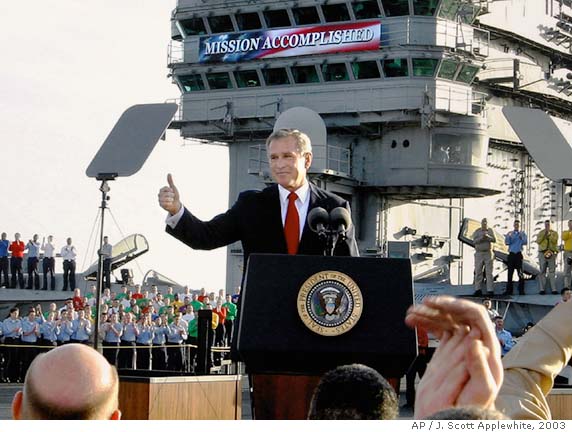
George W. Bush – battleship USS Abraham Lincoln: “Mission Accomplished!”

Now we have copycats:

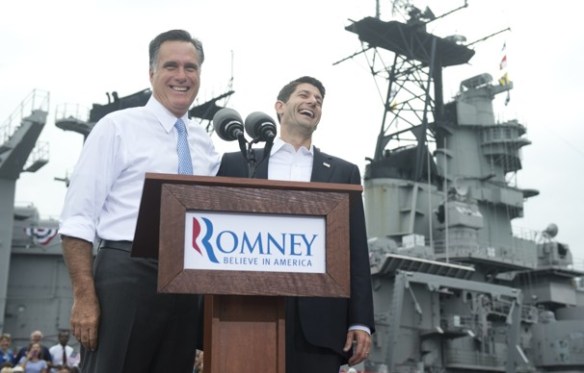
Romney, Ryan, and the U.S.S. Wisconsin

But we will always have this:

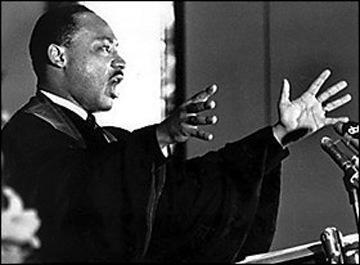
This hour of history – The Rev. Dr. Martin Luther King, Jr.

Take your pick.

MLK Assassination: A Memory

The Rev. Dr. Martin Luther King, Jr.

Forty-four years ago today the Rev. Dr. Martin Luther King, Jr. was assassinated in Memphis, Tennessee. Read this morning’s Washington Post story.I was with about 200 teenagers from “the projects” in Decatur, Illinois when the news broke. First Presbyterian Church and the Office of Economic Opportunity had partnered to create a youth program at the church. Charles Johnson, a former Blackstone Ranger from Chicago, and I (the 29-year-old Assistant Pastor) jointly administered the program.

We were in the church basement when the voice rang out from the steps, “Dr. King’s been shot! Dr. King’s been shot!” The room was filled with shock and anger. Some of the kids preferred Malcolm X to Dr. King, but on that night it didn’t matter. The room was united, overwhelmed by tragedy, another violent act of racial hatred.

Dr. King’s assassination came two months after the release of the report of the President’s National Advisory Commission on Civil Disorders (the “Kerner Commission”) that had concluded:

Our nation Is moving toward two societies, one black, one white—separate and unequal.”

The conclusion of the Kerner Report about police violence had been demonstrated on the church parking lot two weeks before Dr. King’s assassination. On that night Decatur police officers, without warning, had stormed into the crowd of black kids in the church parking lot at the end of the evening program. They came waving billy clubs and spraying mace. I was there. I saw it. Forty store windows in downtown Decatur were broken out that night. A number of the kids were arrested.

While the Decatur Chief of Police and I squared off with our different accounts of the events on the front page of The Decatur Herald, the board of First Presbyterian Church, which included a prominent sitting Judge, stood united and firm. We would not close the program, as the Chief was demanding.

First Presbyterian Church, Decatur, IL

When the voice announced that Dr. King had been shot, the adult leaders of the program had reason to fear the worst. Quickly we rounded up tape recorders. We made an announcement inviting the kids into smaller circles, spread out throughout the church building, that would give each and all of them time to talk.  We announced that, in light of what had happened two weeks before, we wanted their voices to be heard by the Chief, the Mayor, and the members of the Decatur City Council. We were all outraged; the feelings needed to be spoken and shared.There was no violence in Decatur that night. There was no riot.

The tapes were edited and played for the city officials.

The program continued without further interruption.

The Spirit of Martin Luther King, Jr. prevailed. And it still does.