

Baseball as a Road to God

The Gathering minus Steve

The Gathering minus Steve

On Monday six seminary friends come together from Indiana, Texas, Colorado, Illinois, and Minnesota for an annual “Old Dogs’ Gathering” at our alma mater, McCormick Theological Seminary, in Chicago.

Years ago four of us cut Professor Boling’s Hebrew class to take our homiletics (i.e., preaching) professor, Herb King, to the Opening Day Cubs game at Wrigley Field. We were VERY serious students!

In preparation for this year’s annual gathering, we’ve been reading John Sexton’s marvelous book, Baseball as a Road to God: Seeing Beyond the Game, and we’ll return to Wrigley Field where two of the Old Dogs’ hearts are perpetually broken. Steve Shoemaker, one of the Old Dogs, sent this to us this morning.

Seminary Reunion

Here we would each learn to preach
a sermon–going from the Greek,
Hebrew, to the common speech
of folks today. Here we would seek
answers to all questions: old,
or new, conundrums from a child,
screams of pain from a grey head
that’s waiting for a grave. Reviled
scorned, by former college friends
who now run businesses, our mild
Biblical response pretends
to follow One who like a lamb
went to the slaughter. We damn
ourselves in not forgiving them.

This year we lost one of the original seven old friends, Dale Hartwig, who grew old too soon and faster than the rest of us. John Sexton reminds us of the difference between beginnings and endings, and the need for a vantage point:

“While the teams and players on the field may change each autumn, the game’s evocative power is continuous. Opening Day in the spring and the World Series in the fall are the bookends of baseball’s liturgical time…. Vantage point is critical.”

Baseball as a Road to God: Seeing Beyond the Game, Penguin Group, NY, NY, 2013.

Everyone should be so blessed as to have friends like these and a vantage point of continuing thanksgiving.
From Students, teachers should receive…

From students, teachers should receive

much money:  for the smart believe

they learned so much–and from the dull

because they raised unholy Hell.

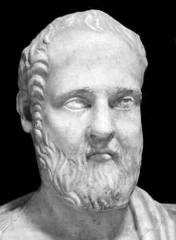
(after Isocrates, 5th C., BCE)

– a Chreia

Isocrates, Greek teacher and rhetorician

A chreia in classical Greek culture was a brief, useful (“χρεία” means useful) anecdote attributed by the author to a particular character. In this case it was in honor of Isocrates, an honored rhetorician.The chreiai are remembered primarily for their role in classical Greek education, a system known as paideia in which wisdom was the goal. Children were introduced to simple chreiai almost as soon as they could read. These chreiai served as the means of character formation and the increase of wisdom for living in a civil society.

Later in their education, as they prepared to practice rhetoric (the art of discourse, both written and spoken), these chreiai served as the basis for formal eight paragraph essays in which the student elaborated on the subject of a chreia. The student would praise, paraphrase, explain, contrast, compare, provide an example, make a judgment, and, in conclusion, exhort the reader.

Thanks to my fellow student Steve for sending “after Isocrates.” In honor of my teachers – Gordon Kidder, Mrs. Martino, Mr. Thompson, Ms. Manlove, Harold Miller, Helen Semar, Esther Swenson, Ted Campbell, Lew Briner, Tom Parker, Krister Stendahl, my father and mother –  I’m going to write an eight paragraph essay on this chreia.