
”There’s a gullible side to the American people. They can be easily misled. Religion is the best device used to mislead them.” — Michael Moore
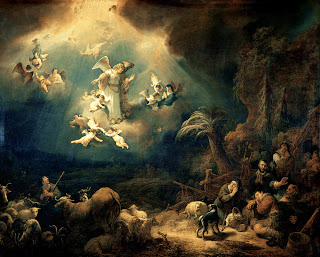
Like the “Make America Great Again Bible,” the Trump campaign’s “Fear Not” marketing pitch preys on religious gullibility. For Christians, “fear not” brings to mind Jesus’s assurance: “Fear not, little flock, for it is your Father’s pleasure to give you the kingdom.” It also reminds us of the angels’ message to shepherds, abiding in their fields by night” in Matthew’s birth narrative.
How and why anyone would send the chain e-mail message asking me to “Forward this message to 10 friends… I want to spread the LOVE,” is puzzling.
The message came with a photo advertisement for a “FEAR NOT” coffee mug, featuring former president Trump in a MAGA hat. His fist is raised in defiant resolve with “Old Glory” waving in the background.
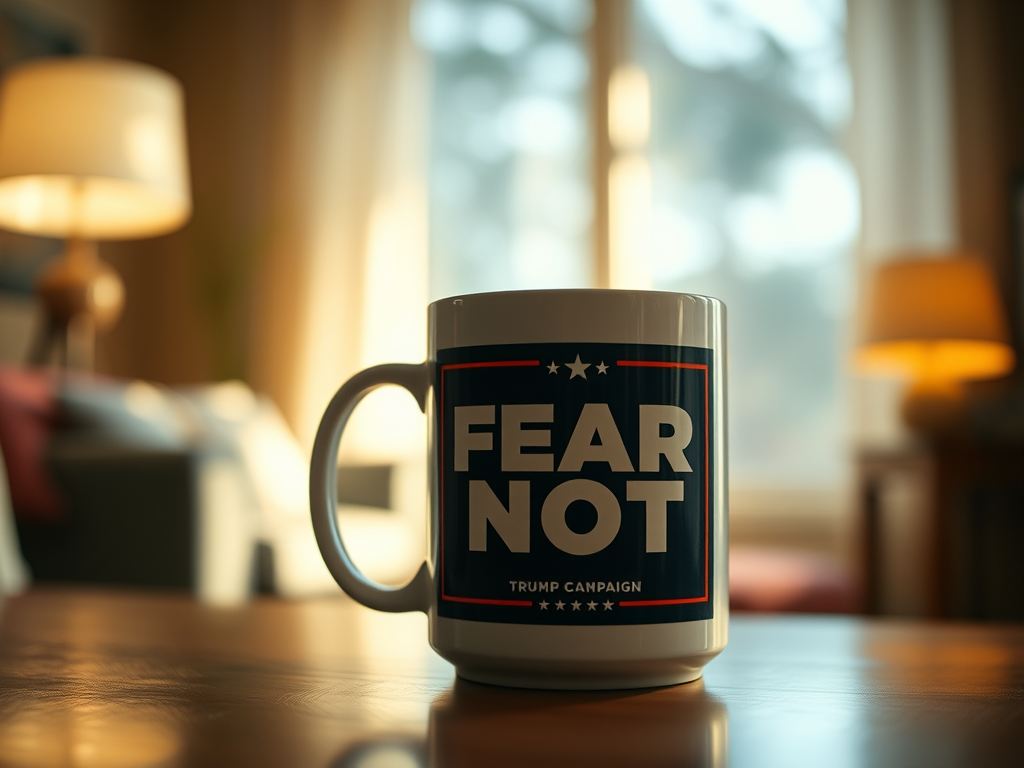
So, there you have it. FEAR NOT and LOVE together on a coffee mug featuring a mug shot of the “Chosen One” who uses the word G-d on occasions when it’s useful. What could be better?
The Relationship between Fear and Love
Fear and love lie next to each other at the heart of Christian faith. The First Letter of John describes the relationship this way. “There is no fear in love. But perfect love casts out fear, because fear has to do with punishment. The one who fears is not made perfect in love.”—1 John 4:18
The Christian story of Jesus as the Christ (the Messiah) begins and ends with fear.
And the angel said unto [the shepherds] ‘’Fear not: for, behold, I bring you good tidings of great joy, which shall be to all people. For unto you is born this day in the city of David a Savior, which is Christ the Lord.’” – Gospel According to Luke 2:10, KJV.
In the Garden of Gethsemane, Jesus of Nazareth prays to be spared the horror awaiting him the next day. His plea is not granted. Yet Christians profess him Lord and Savior. He suffers torture and death on a cross outside the city walls on the Hill of Skulls. Before the wrenching cry of abandonment, “Eloi, Eloi, lama sabchtani?” (My God, my God, why have You forsaken me?”), Jesus cries out from the cross, “Father, forgive them, for they do not know what they are doing.”
A surprising way to end a Gospel
The original ending of the Gospel Mark, the earliest of the four New Testament Gospels, ends with fear. Young’s Literary Translation reads as follows:
And, having come forth quickly, they fled from the sepulchre, and trembling and amazement had seized them, and to no one said they anything, for they were afraid.
The Monday following the second attempt on his life, the Trump campaign announced that “Democrats’ rhetoric inspired another attempt on former President Trump’s life.” Recalling the earlier attack in Butler, PA, the former president spoke in religious terms.
“There’s something going on,” he said. “I mean, perhaps it’s God wanting me to be President to save this country. Nobody knows.” — Antonio Hitchens, The New Yorker, September 18, 2024.
An image on the Trump coffee mug also features graphic image that intertwines two American twisted into angel’s wings. The words at the top read:
“GOD SAID: NOT TODAY”
Alexis de Tocqueville’s Reflection on America
“Not until I went into the churches of America and heard her pulpits flame with righteousness did I understand the secret of her genius and power. America is great because America is good, and if America ever ceases to be good, America will cease to be great.” — Alexis de Tocqueville
Whether Tocqueville said it, or the presidents, senators, and other Americans in high places mistakenly attributed it to Tocqueville, makes little difference to its wisdom and warning. Without goodness, there can be no greatness.
Gordon C. Stewart, public theologian, author of Be Still! Departure from Collective Madness (2017, Wipf & Stock), Brooklyn Park, MN, Dec. 15, 2024 (revised from unpublished draft written Sept. 20, 2024).
 Views from the Edge