The Story of a Book

A Sin a Week:
     52 sins described in loving detail for folks with the inclination and ability to sin,
but who have run out of bad ideas.
     ILLUSTRATED!

To order: email sshoem3636@gmail.com
$ 19.30 incl tax

I began writing poetry in Urbana High School. I continued the questionable practice in college. Ten years later my first poem was published in a reputable journal.
Twenty years after grad school, I believed a collection of my poems could be made around the theme of sin. I hired an undergraduate cartoonist, T. Brian Kelly, who had a weekly strip in the Daily Illini student newspaper to illustrate them. At $20 a poem I could afford it, and he needed the money.

“A Sin a Week” became the title and I sent the manuscript to finally a total of five unimpressed NY publishers. They said few books of poetry sold well. Then I put it in a drawer for 25 years.

A month ago Doris Wenzell of Mayhaven Publishing asked me if I had a collection of my poems she could see. She had heard I had readers of my poems on FaceBook, especially since I had been diagnosed with pancreatic cancer. Two days later I handed her my manuscript with my newly added subtitle. (See above.)

She loved it, we signed a contract, she rushed through the editing and printing because of my predicted shortness of time, and the book has now been selling for a week. Reviews from early readers have been good.

Notice the book says it describes sins, not that it is poetry. The first sin described is “Lying.” Ancient writers referred to the Devil as “the Father of lies.” This theme continues throughout the book, notably in my never revealing the book is poetry.
This is my confession–if you choose to order a copy, you’ve been warned.

  • Steve Shoemaker, Urbana, IL, June 14, 2016

Verse – Making Love at 3:00 a.m.

I thought the lightening bugs were shooting stars
And woke you up at three in the morning
To see the display. You knew better, but
Were kind, suggesting the more likely fact,
Though my view was the more romantic…

  • Steve Shoemaker, Urbana, IL, June 12, 2016

Verse – 52 Killed

Mass murder, terror, hate,
Assault rifles, semi-automatic,
Hand guns, gun shows,
Concealed carry,
Congress bought by the NRA.

Victims: LGBTQ,
Children, shoppers,
Movie-goers,
Muslims, Christians,
African-Americans, worshippers,
Anyone.

Shooters: ISIS,
Racists, bigots,
Mentally ill, gangs,
Drug addicts,
Anyone,
No background checks needed
For private gun sales or gun shows.

  • Steve Shoemaker, Urbana, IL, June 13, 2016

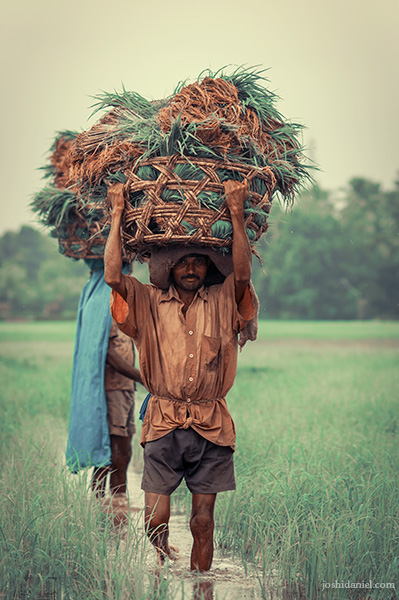
Farmer walking through fields in Kumta

Scroll down for Joshi Daniel’s photograph that inspired this reflection.

Tourists and residents see things differently. Actually, it’s more than that. They see different things, like the farmer walking through the field in Kumta, and this tourist website that introduces would-be visitors to Kumta.

Today we’re tourists in Beynac-et-Cazenac, one of the loveliest places we’ve ever experienced. Well, i,e. experienced as tourists. But even a tourist (we’ve rented a house      for the week (pictures to follow) recognizes the slower pace of this medieval town on the banks of the Dordogne River.

The Experiment in International Living (EIL) offered a deeper way of seeing the world forty years ago. That summer I lived with a host family in Bratislava, Czechoslovakia. Immersed in the daily life of my Slovakian family and students at the university, I was not a tourist. I cared nothing about the sites a tourist might visit. I walked everywhere, paying attention to where I was, looking more deeply, more thoughtfully – being more present, one might say – less disembodied, less virtual, less distracted, not as entertained, but so much happier in my body.

Like the Experiment in International Living, Kosuke Koyama encouraged me to slow down, to walk instead of run by, drive past, or fly over – to see the dailyness and the natural field of the man Joshi’s photograph. God, said Kosuke, is a three-mile-an-hour God who meets us at the pace of human being walking.

Momentarily, we’ll walk very slowly down the steep hill into the village on Sunday morning in this beautiful place. If we go to fast, we’ll fall on our faces.

  • Gordon C. Stewart, Beynac-et-Cazenac, June 12, 2016.

joshi daniel's avatarJoshi Daniel Photography

A farmer walking through fields in Hegde, Karnataka while holding a basket Farmer walking through the fields | Hegde, Kumta, Karnataka, India

If you would like to buy a print of any of the images, get in touch with me here.

View original post

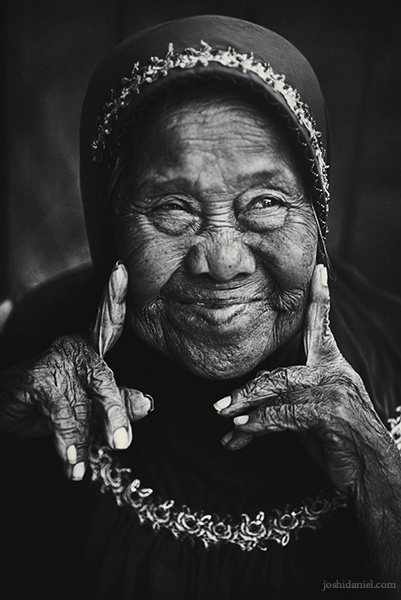
Uninhibited

Joshi Daniel took this wonderful picture of a woman who posed for him. The eyes and the wrinkles combine for an invitation to joyful wisdom.  I’m proud to say I knew Joshi when he was a student at The College of Wooster years ago. His photography provides windows into the unseen beyond words.

joshi daniel's avatarJoshi Daniel Photography

Black and white portrait of an old lady in Beringharjo market, Yogyakarta, Indonesia An old lady posing | Beringharjo market, Yogyakarta, Indonesia

I met this lovely cute lady on my early morning visit to Beringharjo market in Yogyakarta, Indonesia with Windy. This is how she posed for us.

Thankful to Wonderful Indonesia and the Indonesian Ministry of Tourism for a great opportunity to see Indonesia.

View original post

Église Saint-Étienne de Lubersac (Dennis Aubrey)

Thanks to Dennis Aubrey and PJ McKey for introducing beloved and me to this beautiful. I didn’t even need to kill the wolf to save my beloved! 😂

Dennis Aubrey's avatar

It always astonishes me how little we remember of all the churches that we shoot. Today’s example is the Église Saint-Étienne de Lubersac in the Limousin, part of a group of eleven churches that we photographed last June. This was an incredibly rich area of exploration with eleven major churches including the Collégiale Saint-Pierre-ès-Liens in Le Dorat, the Collégiale Saint-Junien de Saint-Junien, and the Abbatiale Saint Pierre et Saint Paul in Solignac. Somehow PJ and I had both forgotten this church in Lubersac until a few weeks ago when we were looking for a subject on which to post. Both of us were immediately struck by the excellence both of the architecture and especially the sculpture. Today we make amends for this oversight.

I started shooting the exterior, especially the sculptures on the life of Saint-Etienne. But the south portal is also quite a fine piece of work…

View original post 561 more words

The History of Saint Etienne in Lubersac (Dennis Aubrey)

We are here today after evening at vineyard hotel. Visiting this church today. Then on to Beynac-et-Cazenac on the Dordogne for a week.

Dennis Aubrey's avatar

Our recent rediscovery of our photos of the Église Saint-Étienne in Lubersac has been very fruitful. Today’s post is about a series about the life of the eponymous patron of the church, Saint Etienne, or Stephen. The exterior is distinguished by three excellent capitals telling the story of his martyrdom – the stoning, the discovery of the body, and the translation of the relics. Stephen is known as the Protomartyr, the first martyr of the Christian church. When he berated the Jewish authorities, he used the strongest language:

Which of the prophets have not your fathers persecuted? and they have slain them which shewed before of the coming of the Just One; of whom ye have been now the betrayers and murderers: Who have received the law by the disposition of angels, and have not kept it. Acts 7:52-53)

For this speech he was stoned to death and his body…

View original post 281 more words

Verse – Night Vision

The rotating blades make the red lights
appear to blink atop the windfarm
electrical generators far in the distance, while In the back yard the lightening bugs flash their need for love.
All our chargers need charging, too.
Electronic lives have been drained
by machines powered by dinosaurs.
Coal miners and oil rig workers
die to supply the energy we covet.
Piles of nuclear wastes surround us
glowing unblinking in the dark.

  • Steve Shoemaker, Urbana, IL, June 6, 2016

Impressions of Paris 4

Six degrees of separation and Holy Ground

When Steve learned that Kay and I are staying in the apartment of  Abdelwahab Meddeb, he wrote that he had interviewed Meddeb’s translator, Jane Kurtz, on his weekly radio interview program, Keepin’ the Faith (WILL-AM at the University of Illinois). Sure enough. Steve contacted Jane. Jane Kurtz emailed me. And voila! Six degrees of separation.

Jane wrote that she translated two of his books into English, including Talismano, and that they corresponded quite a bit during their work. She listened to his weekly radio program, “Cultures d’Islam,” thanks to the internet and Radio France-Culture (one of the most remarkable radio stations in the world). They were supposed to meet in Palo Alto, and teach a class together at Stanford, but that semester corresponded with his onset of the cancer that took his life in a short time.

“His writings can be very esoteric, since his interest in Islam spanned so many continents and cultures (hence the title of his radio program, “cultures” with an “s”.

“…. I almost think it was a good thing he didn’t live to see the terrible violence that struck his beloved Paris these recent years. It would have broken his heart to see the evil done in the name of Islam in the city he so loved.”

Abdalwahab Meddeb practiced his Muslim faith “though he also believed strongly in the secular values of France —he was of that generation—and in the possibility of an Islamic reform coming out of the communities of European Muslims. How sad that exactly the opposite is happening, French Muslims are being radicalized and are filling mosques and prisons.

“Anyway, a few of his books are available in English, if you are not a reader of French (and believe me, many readers of French still don’t understand his writings), so I would recommend starting with The Malady of Islam.
——–

The old saying “wherever you go, there you are,” is worth heeding. The intent of the saying is to remind us that we take ourselves wherever we go. But it occurs to me there’s another dimension to the adage. Wherever you go, be there – really be present to the place and see it for what it is. This apartment in France has turned out to be a kind of holy ground.

  • Gordon C. Stewart, Paris, France, June 7, 2016.

Impressions of Paris 3

From Day 2, Saturday, June 4, 2016

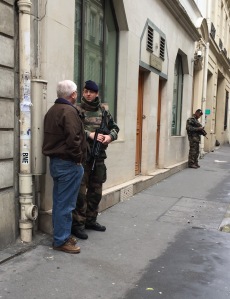
French soldier & GIt’s Saturday morning. We’re standing in front of our apartment complex, waiting for arrival of an Uber car. Twenty feet to our left, two soldiers holding machine guns across their chests stand on either side of the entrance to the building next door. I decide to speak to the nearer soldier.

“Bonjour.”

“Bonjour,” he replies.

“Military, oui?” I ask.

“Oui. Jews,” he says, pointing to the building behind him.

“Synagogue?” I ask. “Jews,” he says.

“Ummm, synagogue?” I try again. He doesn’t understand. I continue: “Eglise pour Jews?”

“Yes, a church for Jews,” he says. “Terrorists.” They’re protecting Jewish worshipers from a potential Islamist extremist attack on the synagogue on Shabbat.

A man walks by talking loudly to the air. He is obviously mentally disturbed and maybe into his cups or on something as well. “Crazy man!” says the soldier says, showing me the taser gun, which he carries in case “the crazy man causes trouble.”

He asks where I am from. “U.S.A.”

“I like U.S.A.,” he says.

I ask whether he has been to the U.S.A. He has not but says, “I like U.S.A. Patriotic.!” I wonder what he means.

What goes through the mind of a 20-something French soldier on a Paris street protecting the Jewish minority from Islamic extremists who have successfully attacked Paris? Why does he think America is patriotic? Is he thinking of an American businessman who has captured the news in Europe by promising to make America great again by closing the borders to Muslims and building a wall against immigrants, returning America to the real Americans?

Anti-immigrant sentiment is not new to France. It has fed the political right in recent years. No one knows what the young soldier thinks. I like him. He seems to like me. Whatever the answer may be to what goes on in his head and heart, we’re dealing with the same world and the same issues. But I do wonder whether he might think that French patriotism would mean taking his country back from those who are not really French?

And who might the really French or the real Americans be?

American Indians?

Wóablakela, Paix, Shalom, Salaam, Peace!

  • Gordon C. Stewart, Paris, France.