A personal reflection in a mad time

I stood in front of the governor’s mansion in Saint Paul last night, its face lit up by thousands of glowing lights. My apartment isn’t all that far from the guv’s place, and I needed a walk after a long day inside, and suddenly, there I was.

The lights are gorgeous, both the governor’s and a number of nearby homes. No question about that. But last night, those lights did not light up my countenance, at least not in the way they are probably intended to do. Not in times like this. Not after yet two more mass shootings this week; not amidst the recent violence of Chicago and Colorado Springs, Syria and Nairobi, Beirut and Paris. and what continues in north Minneapolis. Not after a day-long barrage of social media opinions IN ALL CAPS — and the predictable defensive responses to those solutions, not to mention the downright nasty ones.

As I walked away from the governor’s house back into the dark of night, I found myself thinking about the advice a guy named Howard Beale had for people in times that seemed remarkably similar to today.

“I want you to get MAD! I don’t want you to protest. I don’t want you to riot — I don’t want you to write to your congressman, because I wouldn’t know what to tell you to write. I don’t know what to do about the depression and the inflation and the Russians and the crime in the street. All I know is that first you’ve got to get mad. You’ve got to say: ‘I’m a human being, god-dammit! My life has value!’ So, I want you to get up now. I want all of you to get up out of your chairs. I want you to get up right now and go to the window. Open it, and stick your head out, and yell: I’m mad as hell, and I’m not going to take it anymore.”

Howard Beale was, of course, the fictional deranged former-television anchor played by Peter Finch in the 1976 movie “Network,” that wildly cynical film from and for a battered time period in our history. His rant is legendary; the last line is considered one of the 20 most memorable movie quotes of all time.

But last night, I found myself wondering if Howard Beale’s colorful and so- oft-quoted last line has affected, and infected, us today in ways that have obscured another message from the movie, one more powerful but far less memorable: I’m a human being; my life has value!

Yes, we ought to get mad about what’s going on in the world today. Yes, the biblical call to justice requires us to raise our own voices to stand with the oppressed and challenge the powers of our world. But yesterday, as my social media feeds piled up, one-after-another, what struck me as self-righteous, power- coveting, fear-inducing I’m-not-going-to-take-this-anymore rants, all talk and no listen, I couldn’t help but wonder about the other part, too: the part about all being human. God’s own. And acting as if we believe it.

Advent begins in the shadows, where people are longing to see a great light. The prophets speak into a world much like our own, “where justice has gone missing and there is no safety in the city. The people are oppressed … the weak are trampled … the covenant with God is broken … there’s no peace in the land … nation rises up against nation … the future looks bleak. In other words, a world not all that different in many respects from our own, (that) seems to have come unhinged, to have lost its moral bearings. The prophet looks out on that world, caught up in war and violence and fear, desperately following ways that do not make for peace, and says, with confidence, The days are surely coming … ” (Thanks, Tim Hart-Andersen, for words that both describe and inspire.)

And so I’ve decided my Advent discipline can be this: to walk to the governor’s house every night I can for the duration of the season, not so the glittering lights might lift me out of the darkness of the season, but so they might remind me to listen more intently for the voice of light in the darkness; to ask intentionally how I might also act with the conviction of the prophet. It’s not enough, I know; not nearly enough. But it’s a start, and it starts here:

I’m a human being; my life has value.

  • Jeff Japinga

    Jeff Japinga

    Jeff Japinga, Transitional Executive Presbyter, Presbytery of the Twin Cities Area, published today, December 3, 2015, in the Presbytery’s online newsletter. Links have been added to the original text by Views from the Edge.

Christmas is for Losers

As a loser who has failed more often than not in preaching the Christmas story, I find this blogger’s rendering refreshing. I identify with the shepherds and the bacon. – Gordon

Source: Christmas is for Losers

Nine-tenths of reality on a new/old corner

Thanks to the Chaska Herald for publishing this Opinion commenary last Thursday in advance of the grand opening of Chaska’s redeveloped site, a source of contention and controversy.

PARK PERCEPTION VERSUS REALITY by Gordon Stewart

"Illusion"- W. E. Hill

“Illusion”- W. E. Hill

Wednesday, Dec. 2 — after a hard public debate over Fireman’s Park — the newly developed site, with its event center, curling center, Crooked Pint Ale House, and redeveloped park will open its doors to a divided public.

They say perception is nine-tenths of reality. Listening to the public discussion about redevelopment over the past few years, the old adage helps explain the differences in how various Chaska residents view Chaska’s most prominent street corner.

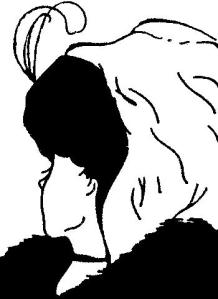
In teaching psychology, a particular drawing of a woman is used to illustrate the power of perception. Every member of the class is asked to look at the same picture. Some see the beautiful face of a young woman wearing a fancy hat with a plume. Others see a mean old woman with an enormous chin and the kind of nose that belongs next to a witch’s brew in fairy tales.

How could different people see the same reality so differently? Or were they seeing different realities? Some who saw the beautiful young woman could not perceive the old woman. Likewise, those who saw the mean old woman could not see the beautiful young woman. Objectively speaking, both women were in the picture waiting to be perceived.
What we see is shaped by memory and experience.

During the debate before the final decision on its redevelopment, many of us perceived the corner as a beautiful park under assault. The memory was of a pristine Firemen’s Park, a lovely open-space created in honor of Chaska’s firemen, green space surrounding the historic clayhole. It was where we went as children or teenagers to swim, fish, or enjoy a family picnic.

Others had a different impression of the corner. Our memory was the truck manufacturer that stood on the corner, an eyesore that struck visitors more like the witch in the psychology class picture. Passersby did not see a beautiful park or green space; they saw a site with no aesthetic sensibility. It was not a corner to be proud of, and it had nothing to do with Firemen’s Park.

No one seems to have remembered what the corner looked like 10 years ago. It would be hard for anyone to look at that the corner of Highway 41 and Chaska Boulevard and say it was beautiful.
Reality may be nine-tenths perception. But the other one-tenths also counts. Sometimes the buried memory lies in the one-tenth we don’t recall.

One of my first days in Chaska in 2006 I stopped in at the downtown Dunn Bros for a cup of coffee. I asked the young person behind the counter to tell me about Chaska. “Which Chaska?” he replied. “Old Chaska or new Chaska?” I was surprised; I didn’t know there were two. He explained that I was in old Chaska; new Chaska was up the hill.
In American general perception — sad though it may be — new means young and vibrant, like the beautiful young woman. Old means over-the-hill and dying.

All across America, downtowns are either crumbling with boarded-up businesses or they are being successfully redeveloped to preserve, re-populate, and energize them in ways that overcome the old-new divide.
The promise of the new site is that younger people from far and wide will be drawn by its beauty for curling, a pint of ale and a hamburger with a beautiful view of the clayhole, maybe a fishing rod, and a stroll on the new walkways around the old park.

Chaska redevelopment at corner of Chaska Blvd. and State Highway 41

Chaska redevelopment at corner of Chaska Blvd. and State Highway 41

As one of Chaska’s more un-athletic residents, older in age but newer to the city, I’ll be there Wednesday, where the forgotten eyesore stood, to learn a new sport that won’t threaten my health and celebrate the renewed promise of a thriving “old Chaska.”

  • Gordon C. Stewart, Chaska, MN, Dec. 2, 2015

The Presidential Debate

The pundits focused on Hillary and Bernie. They ignored a third candidate on the stage who fared well. His name is Martin O’Malley. He didn’t hit the home run the gurus said was required to bring him into the race, but he represented his record clearly with poise and with the dignity the American people have a right to expect of the person in the Oval Office. He had the stature of a President.

The Bernie-Hillary show was a media creation, a script which, to his great credit, Moderator Anderson Cooper did not follow. Cooper asked hard questions to every candidate with the first questions of the evening. Cooper was a professional journalist, working for the American people to flush out the inconsistencies and push for the truth of what a candidate really stands for. Bernie danced a jig on his poor record on gun control and his votes on the Brady Bill; Hillary danced on the email controversy, her Iraq War vote, and her change of opinion on the TPP trade agreement. Cooper was the consummate moderator, insisting that candidates answer the question they were asked, but respectful and fair.

Jim Webb and Lincoln Chafee were like minor leaguers on a Major League field in the early playoffs. There were five candidates on stage but only three major leaguers.

Webb performed poorly as the most conservative candidate who suffered from a shirt collar that made him look tight as a tic. He looked like the kid whose parents dressed him in a tux for the senior prom – very unnatural, ill at ease, unable to be his winsome self.  Chafee  stood by his progressive voting record and admirable credentials as a former U.S. Senator and Governor of Rhode Island, but his facial eccentricities and persona do not help his candidacy. Although he might make a great president, he’d be very hard to watch for four full years.

O’Malley, on the other hand, looked and sounded the part of a presidential candidate. Or, perhaps, Vice-Presidential. Like Joe Biden, O’Malley is both smart and tough, seasoned and fresh, just the kind of running mate Hillary or Bernie might choose, if either of them wins the Democratic Party nomination. The problem, of course, is that O’Malley is another Easterner, which all but eliminates him according to the prevailing wisdom that the best ticket is geographically balanced.

But, if in the debates ahead, Bernie and Hillary should falter, Martin O’Malley is someone to watch. If I were Bernie or Hillary, I’d sleep with one eye open. Remember the tortoise and the hare.

  • Gordon C. Stewart (Bernie supporter), Chaska, MN, October 14, 2015.


Hope from the Bowels of Forsakenness

Vulnerable. Weak. Lonely. Frightened. Anxious. Forlorn. Forsaken.

The hospitalized teenager suffering a sudden, undiagnosed illness of the bowels, wondering whether he’s dying, fearful there is no cure, came to my attention during the day. The consciousness of it remain through the night. Awakening in the morning, I look for something that will speak to the helpless feeling of his parents and grandparents.

Opening the Psalter, the opening verse of Psalm 22 leaps from the page — “My God, my God, why have you forsaken me?” — the tortured cry from the cross Jesus quoted many centuries after Psalm 22 had embedded itself in the collective consciousness of the Jewish people.

That the Newer Testament Gospels would put these words on Jesus’s lips is, it strikes me this morning, a Jewish code to look deeper for something much more complex, both tragically realistic and surprisingly hopeful in the psalm’s entirety. Though the forsakenness cry repeats itself immediately — “Why are You so far from helping me, and from the words of my groaning?” — Psalm 22 goes on to recall poetically the existential-spiritual history of Israel’s suffering at the hands of the nations and its deliverance from the same, ending with “They (i.e., our descendants) shall come and make known to a people yet unborn the saving deeds that He has done.”

Jesus’s cry from the cross strikes me as the kind of cry we might read or hear in the writings of Auschwitz survivor Elie Wiesel – honest yet faithful to the Jewish tradition because the tradition itself expresses the horror of god-forsakenness and faith in the absent God at the same time.

Jesus on the cross has this history in his bowels and his bones. The teenager in the hospital has no active faith community, no wisdom tradition or practice, except for the faith and prayers of his grandparents whose faith has been kept at a distance for many years.

The week before learning of the teenager’s plight I had been filled with questions about another young man: the 26 year-old who gunned down the nine students in Oregon who suffered a nano-second of god-forsakenness in the classrooms where they had presumed to be safe from death at the community college that became their execution chamber. The grizzly scene of the shooter asking people about their faith, telling those who rose that they were about to meet their Maker, chilled me to the bone, raising the question of what the shooter’s experience of Christians had been that would so fill him with anger at them and their religion. Was he one of the many in America who, for reasons explainable or inexplicable, feel forsaken and despised? Alone. Isolated. Scorned. Forlorn. Angry.

To be human is to be intrinsically vulnerable. We are all at risk; all headed inevitably toward death. We are not immortal, eternal, timeless, invulnerable. Was the young man turned executioner mocking his death row victim’s belief in an afterlife? Was he saying loudly that there is nothing on the other side of death – a message to the world that this is all there is and that religion is a cruel hoax?

Death is our common lot, but the irony is that it does not wait until the end; it takes hold of us in the middle – between birth and death – as much as at the end. The foreshadowing of it sends us running for cover, running for relief, for an escape. It appears under the guises of control, power, invulnerability. Sometimes its disguise is a pistol or an assault rifle. Other times its disguise is religion that entertains illusions of immortality, belief systems that include and exclude, like “are you a Christian?”

This morning I’m freshly struck by the entire Psalm whose first line has echoed through the centuries every Good Friday: “Eloi, Eloi, lama sabachtani?” —“My God, my God, why have your forsaken me?”. I’m wishing our bowels could hear it, feel it, digest it, weep it, and find the hope and trust that smiles the conviction that the forsakenness we feel is not the final word.

  • Gordon C. Stewart, Chaska, MN October 8, 2015

Morning Fog and the Horizon

The horizon disappears behind the morning fog.Prairie grasses in fog

Tall grasses that yesterday colored the prairie as far as eye could see are still there. Only the nearest 100 feet of the rusty red, yellow, and brown prairie grasses now appears, the rest only imagined behind the gray mist curtain.

The Nebraska prairie and its earth-tone colors are native to Kay. They’ve been less appreciated by her husband, raised on the tree-covered hills and the bright ocean blues and greens, dotted occasionally with sumac red and willow yellow, of the Northeast Coast.

The Hutton Niobrara Ranch Wildlife Sanctuary, this 5,000 acre wildlife refuge of Audubon of Kansas, feels unspoiled by human hands, except for the indigenous people who long ago vanished with the buffalo along the Niobrara River.

By noon the fog is still here. So are the earthen colors. What’s changed is the Yankee’s fresh appreciation for the intrinsic beauty of the browns, yellows, and rusty reds he once viewed as the dull, faded colors of boredom and decay.

The Earth is a splendid place to live. Morning fog blew in years ago over Old Garden Beach in Rockport, Massachusetts leaving only the gray granite, red sumac and pink primrosed white picket fence visible to the eye. Then and now, there and here, life is wrapped in mist and wonder. The horizon disappears in morning fog.

  • Gordon C. Stewart, Hutton House, Hutton Niobrara Ranch Wildlife Sanctuary, somewhere near Bassett, Nebraska, September 22, 2015.

Chasing the Light: Everything in Life Is “Compared to What”?

Kay Stewart

Kay Stewart

by Kay Stewart

After 16 years of marriage you learn many lessons. But the ones on vacation are especially worth noting.

My husband and I have been given the opportunity of fulfilling a preaching assignment for a lovely little chapel named St. Timothy’s Memorial Chapel located in the abandoned mining town of Southern Cross, Montana. The chapel is perched on the edge of a beautiful mountainside with a gorgeous panoramic view of Georgetown Lake, the largest lake in the area. Breathtaking beauty. A vacation of our dreams. One for the bucket list. All he has to do is provide four Sundays of sermons and they provide us with a free cabin on the meadow down in the valley below, nestled between two mountain ranges. In the morning we hear melodies of little chirping birds, and every evening soft gentle breezes waft across our side porch as we watch sunset after sunset throw a veritable light-show of color as it criss-crosses the valley below. All we have to put up with is a modern-day schizophrenic auditory milieu–pristine quiet periodically interrupted by the highway noises from cars, trucks and RV’s. We have every reason to be grateful, and we are.

After two weeks of our four week almost-ideal vacation here in Montana, we decided the vacation could be expanded, enhanced–an improvement on perfection. “What we need is an adventure,” I said. This dynamic is better known as “the grass is always greener on the other side”. My husband didn’t really need an adventure, he was liking his Montana vacation just fine. But I was getting restless. I am seven years younger and think it is due to this age difference that I am being deprived of adventures to which I am entitled. It didn’t take long to convince him to break camp (cabin) in search of something else. I used the regret-reduction argument.  It works every time. “When we get home, won’t we wish we had done more exploring of this part of the country?” Avoiding future regret is my argument of choice–it burns like a slow wick, providing a living breathing phantom of anxiety forecast into the future when you won’t be able to do anything about it. So within 24 hours we dismantled our “ideal” vacation in search of a relocation of our vacation spot. We chose a trip to Grand Teton National Park in Wyoming.

We are experienced travelers and have always felt comfortable using Trip Advisor to book a motel reservation. With the correct box checked filtering “pet friendly” venues, we booked a motel for $179.00 a night plus fees and taxes. It seemed a bit high, but Jackson, Wyoming is a high ticket vacation destination. After all, that’s why we were going there. Our internet provider doesn’t have enough cell phone towers in the hills of Montana, so my husband did not get an immediate confirmation number and we got worried. Avoiding any problems, we called the motel to verify only to find out they were not pet friendly after all and we could not stay there if we had a dog. They directed us to another motel close to them that was assuredly pet friendly and we immediately called to book with them for two nights, sight unseen. They articulated right off that under no condition would we be allowed to leave our dog unattended in the motel room. “Fair enough” we thought, we can leave Barclay in the car, for short breaks, going to restaurants, leaving the windows open, we do it all the time when the weather is cool enough. Barclay loves to “go for a ride in the car”; he simply takes naps in the front seat where the Alpha Dog sits.

Five hours of driving later, we rolled into Jackson. We were thinking five hours wasn’t such a bad drive, since it was much less than the 19 hours it took us to drive to Montana from Minneapolis, but we were wrong. Five hours is a long day of driving any time you do it. Especially under a hot 95 degree sun. It’s July. The sun does that in Wyoming in July. This leads into another complication. It’s about our dear little dog. Barclay is a wonderful 14 pound, 2-year-old Cavalier King Charles Spaniel. His Cavalier breeding makes him adorable and affectionate, but Barclay has a psychological disorder—he is a “shadow chaser”. I prefer to call it by its more obvious name–Barclay is a “light chaser”. The disorder is not rare, it causes obsessive compulsive behavior in a dog, drawing him, like a magnet, to wherever and whenever there is a difference between light and its accompanying shadow. Barclay is a serious light chaser and intensely loves all light. He actually has no choice in the matter; it’s a compulsory lifestyle for him. When light happens, it immediately activates Barclay. He positions himself as close to the light as possible. Then he, well, just stares at it, or paws it, or licks it. When the light changes, as light often does, Barclay changes too — he moves on to his next favorite piece of it. He never goes looking for different light, better light. He is totally satisfied with the light that happens in his midst. Barclay plays with light like a young child plays with an imaginary friend, but one he will not outgrow. But, after five hours of driving with light careening off of everything metal or electronic, we are pretty much “lights out”.

We arrive at our destination in Jackson worn out and find that our $200 a night motel room would rent for about $80 in any other city but Jackson. The quality is just not there. The room is pitch dark when the heavy musty-smelling curtains are drawn which must occur at all times unless you want the 100’s of nearby tourists to look inside your motel room. But for a family with a light obsession, dark is better for us. As we listen to the roar from the room’s air conditioning unit, which can barely keep up with the afternoon heat, we decide there is nothing else we’d like to do than take a nap.

We read in our motel room the travel brochure provided us explaining Grand Teton National Park’s rules concerning pets. They must be on a leash at all times—we are used to that. But we read further to find that dogs are not allowed at all on any of the park’s trails or public attraction areas. That’s just great.

This being a spontaneous vacation get-away from our primary vacation, we had not realized we were choosing to spend it at Grand Teton National Park on the lead-up to the 4th of July holiday weekend. The city of Jackson gets 3-4 million tourists a year. We were spending the day driving around in our air conditioned car with our beloved dog in bumper to bumper traffic with a great portion of those 3-4 million tourists.

As the vacation wore on, we became grouchier and grouchier. The tourist attractions became mostly distractions because of the tourists. And although The Grand Tetons were magnificent, “when you’ve seen one mountain, you’ve seen ’em all”. We couldn’t hike the trails. Bumper to bumper traffic in 95 degree weather. We wanted to go home.

We chose to travel home through Yellowstone National Park. It made us sad watching the devastation to the forests from the 1988 forest fires. The forest was indeed “coming back”, but it just wasn’t there yet. We tried to stop and see “Old Faithful”, but gave up when we couldn’t find a parking spot. We couldn’t wait to get home so we kept driving.

In 72 hours, we drove 750 miles, spent $700, slept in a dungeon for two nights, and drove home through countless forested areas with dead trees and no parking spaces. Once back in our original vacation location, we discovered something uniquely wonderful. We saw the light of what had been in our midst the whole time–the natural beauty, rolling hills, fresh breezes on our side porch and chirping birds heard even as the highway sang its tune. This lesson learned is one we will keep for years to come.

  • Kay Stewart, Chaska, Minnesota, July 4, 2015. Recently retired from 16 years with Hennepin County Medical Center’s Addiction Medicine Program, Kay is a licensed chemical dependency counselor with degrees in theology and social work. Her reflections on grief have appeared on her blog on Raw Grief.

An American Paradox

“Our laws are not generally known; they are kept secret by the small number of nobles who rule us.”

[Franz Kafka, “The Problem of Our Laws,” Parables and Paradoxes, Schocken Books, New York.]

Franz Kafka

Franz Kafka

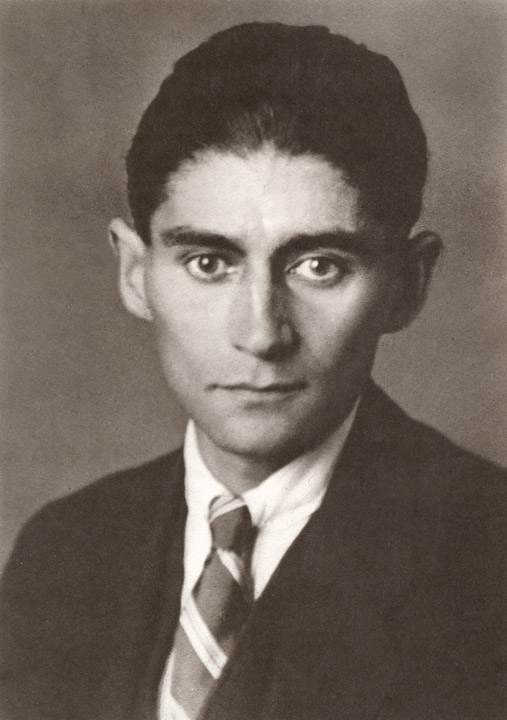
The laws of which Kafka wrote in the early 20th Century are not the ones peculiar to his time. They are not written in legislation. They are not acts of Congress. They are not the federal, state, or local statutes and ordinances lawyers argue in courts of law. The laws of which he speaks are not visible to the masses. They are the secret of the nobles. They are laws of a different order.

“The laws were made to the advantage of the nobles from the very beginning; they themselves stand above the laws.”

According to Kafka, the nobles themselves have inherited the Law as a mystery whose origins are hidden in antiquity. The nobles believe in this Law, but, in fact the Law is whatever the nobles do.

We, the populace who live under the Law of the nobles, dream of a time “when everything will have become clear, the law will belong to the people, and the nobility will vanish. This is not maintained in any spirit of hatred against the nobility; not at all, and by no one. We are more inclined to hate ourselves, because we have not yet shown ourselves worthy of being entrusted with the laws.”

Franz Kafka knew nothing of Donald Trump, the noble who knows the Law is whatever the nobles do and convinces the masses that we, too, can become nobles.

“Actually,” wrote Kafka, “we can express the problem only in a sort of paradox: Any party that would repudiate, not only all belief in the laws, but the nobility as well, would have the whole people behind it; yet no such party can come into existence, for nobody would dare to repudiate the nobility. We live on this razor’s edge. A writer summed the matter up in this way: the whole visible and indubitable law that is imposed upon us is the nobility, and must we ourselves deprive ourselves of this one law?”

  • Gordon C. Stewart, writing from the shoreline of Lake Shagawa, Ely, MN, September 9, 2015.

“Trumped”

Emily Hedges

Emily Hedges

by Emily Hedges

My parents’ annual visit from Oklahoma falls during Shark Week this year. The July Discovery Channel tradition captivates my Dad. He sent a text a month ago reminding me to set a DVR recording. Since arriving, they spend time with my three kids—nine, eight and seven—gathered around the television in the downstairs living room watching glass-eyed, roving predators take chucks out of human thighs and sides. I allow it against my better judgement. I have already said no to Dad’s dosing my kids with home-brewed colloidal silver and the show River Monsters. I feel I can’t say no to everything, so I say yes to this with my silence.

“It’s not just a great white. It’s a rogue monster with a taste for people,” Dad tells us over coffee. In a show he watched the night before, three boaters encountered a megalodon—a super shark—which dragged their craft underwater.

“Naturally the two women were panicking, but the man stayed calm. This guy in the boat next to theirs volunteers to go down and try to bring them up,” Dad says. “He was just some guy willing to go down there knowing what was waiting. Now that’s courage.”

“You know Dad, there’s nothing ‘natural’ about women panicking,” I say. He just cuts a glance at Mom, frustrated that once again I’ve missed the point. I’m curious about the word “megalodon” so I Google the name. I learn it’s an extinct, ancient shark scientists believe once measured 40 to 70 feet in length, compared to the average great white that is from 15 to 20 feet.

Later that day I’m sitting in the living room reading. Mom and Dad come in with my nine-year-old, Scout, and sit down. The television screensaver is scrolling stock landscape photos with news headlines. I see the name Hillary Clinton out of the corner of my eye. Dad sees it too because he says, “Okay Emily. The election is tomorrow. Who do you vote for, Hillary or Trump?”

“Hillary!” Scout responds with a fist pump in the air. I love her innocent, uncalculating honesty. If only it was so easy to be an adult child. I feel my parents’ eyes on me and hope perhaps this is a rhetorical question, meant as a comment on the impossible state of American politics, like when I proclaimed myself a conscientious objector in the 2004 Bush/Kerry election. But their silent, challenging expressions make it clear they’re waiting for a response.

“Hillary,” I say, knowing how my parents feel about her. Just the day before, my Dad detailed what he refers to as the “Clinton body count”—White Water, Ruby Ridge, Waco, and “all the others” strewn along their path to the top. But surely they couldn’t support Trump either. I remember how Bill’s presidency inspired an almost daily discussion of the necessity of character in an American president? Would they consider Trump as having character?

“Why?” Mom asks me in an accusing tone. Then she catches herself, forcing her body to relax against the arm of the couch. The corners of her mouth soften into a half smile. She’s trying to look calm, but it only gives her face a smirk.

“What do you know about him? Has he broken the law?” she challenges. Unformed sentences catch in my throat. I don’t know whether I should let them out or keep them trapped. Paralyzed, I feel myself bobbing in open water about to be bitten. Then a memory surfaces from their last visit. While drinking coffee on the deck, Mom made a statement about global warming that I challenged. Her face flushed; her lips trembled; and her eyes turned shiny. She apologized each time she reached up to wipe away a tear with the back of her hand, weathered and brown from daily work in her garden.

“I’m sorry. I don’t know why I’m crying,” she kept saying over and over.

I look down at her hand and remember how when I was little, I used to wrap it up in a wash cloth and pretend it was my baby. Now those gentle fingers are curled inward, clinched together with anger.

“It wouldn’t surprise me if he’s broken the law given his business, but of course I don’t know that and I’m not going to bear false witness against him,” I say, hoping this might discourage them from doing the same about Hillary in front of Scout. Unlike yesterday when I was able to smile and walk away, in front of my children I don’t have that option.
“Really Emily. What do you think you know about him?” Mom presses.

I see gold-plated Trump Tower near Columbus Circle in New York; his Atlantic City casino, in bankruptcy when I was there in 1999 on business. I see the arrogant sneer, the hair.

“I don’t really think you want my opinion, so I’d rather not say.” I am careful not to appear upset. Then I go upstairs for a soda. As I disappear around the corner, I hear her say, “For someone who doesn’t pay attention to the news, you seem to think you know a lot.” Her tone was low, meant only for Dad. My parents think I don’t follow the news because I don’t watch Fox, and I never bring up current events. My pride makes me want to correct her, but instead I say loud enough for her to hear: “I pay attention to more than you think Mom.”

It occurs to me—why Trump over all the other Republican candidates who seem a more logical fit for my parents’ conservative Christian worldview? I’ve never heard them mention him before. Why now? I hear the TV roar back to life downstairs, and the answer comes to me: for the same reason Trump is trending—for his recent comments describing Mexican immigrants as criminals, rapists, roving predators. I turn, ready to go downstairs and tell them there is no research that supports the claim that illegal immigrants are more likely to commit crimes (except relating to immigration of course) than the rest of the population. In fact, statistically they are less likely, which makes sense given their fear of deportation. But then I stop. What good would it do? I look over at my two younger children sitting at the kitchen table coloring, both adopted from Mexican American birth parents, and puzzle over my parents’ logic.

After a time I return to the living room and all appears to be forgotten. In this episode a man in a cage is lowered into shark-infested water. The scientists hope to tag one of the great whites so they can better understand their movements and protect the nearby beach full of unsuspecting innocents swimming only a few hundred feet from a seal breeding ground. Then the scientist hazards an opinion as to why shark attacks have increased so dramatically over the last decade in this one beach off the coast of South America. His theory is that increased dumping of toxic waste into waterways is constricting the great white’s domain.

“The victim is always at fault,” my Dad says sarcastically. The suggestion that man could play a role in shark attacks offends him. He explains to Scout that it’s in the nature of a shark to look for new territory and to kill. To try to attribute that nature to something man causes or deserves is to deny observable fact. His words feel like the dark ocean, and I notice his arms forming a protective cage around her. She snuggles into them the way I did when I was little and I’m jealous. From where I sit on the opposite couch, it’s obvious there’s only enough room in them for a child. I watch his eyes watch the flickering images. His face seems content, the threatening, disintegrating world contained within the borders of the 48-inch television screen.

Go Set a Watchman: A Review

Watchman-Mockingbird

A Review: Go Set a Watchman 

by Emily Hedges*, September 3, 2015

Fans of To Kill a Mockingbird have already heard—Harper Lee’s Go Set a Watchman (Harper Collins July 2015) doesn’t reflect well on everyone’s hero, Atticus Finch. The timing couldn’t be worse. With the Charleston shootings still on our minds and the phrase “black lives matter” as a rallying cry instead of an obvious truth, we needed him. We needed Atticus’s courage and ethics to be a sign of hope. Maybe that’s why we were all so ready to accept the story of a found manuscript after all these years. We felt the gods were sending us a sign, like Mockingbird was for the Civil Rights South.

Watchman was written and set in the mid-1950’s in the aftermath of Brown vs. Board of Education. Atticus, who was willing to sacrifice everything to defy the racist establishment in Mockingbird, set in 1936, now sees a different threat looming over the South. Grown up Scout returns home and finds Atticus part of the Macomb County Citizens’ Council, an organization he knows is racist, but feels is their only protection against the federal government (and organizations like the NAACP) usurping the community’s right to determine what and how institutional changes are made.

The fact that Watchman is more about state’s rights than civil rights was always going to be disappointing to me and many fans of Mockingbird, but it’s the preachy way it’s done that makes the novel unpalatable. I think this happens because the story is more about groups than individuals. Where Watchman gives us “negros,” Mockingbird gave us Tom Robinson; where Watchman gives us racists, Mockingbird gave us Bob Ewell; where Watchman gives us the Old Sarum folks (poor whites), Mockingbird gave us Mr. Cunningham. I think this lack of compelling, fully developed characters is what forced Lee to resort to long stretches of didactic dialogue to carry her political message. This is particularly evident in Parts V, VI, and VII where Atticus’s brother, Dr. Jack, is portrayed as a two-dimensional interlocutor, a patient, patriarchal figure that forbears Jean Louise’s passionate tirades about race, guiding the exchanges with patronizing questions and long-winded homilies. There is nothing of the tender charm found in interactions between Scout and Atticus from Mockingbird.

For all its faults and disappointments, it’s almost worth reading Watchman just for Scout’s childhood flashbacks, a few precious scenes where we can once again romp through a lazy, hot summer afternoon with Scout, Jem and Dill. It’s like watching deleted scenes from your favorite movie. In these moments especially, and throughout the novel, Lee’s voice visits you like an old friend. Passages like this:

“Alexandra had been married for thirty-three years; if it had made any impression on her one way or another she never showed it. She had spawned one son, Francis, who in Jean Louise’s opinion looked and behaved like a horse, and who long ago left Macomb for the glories of selling insurance in Birmingham. It was just as well.”

I think it’s obvious that Watchman was the place Lee fine-tuned her characters and worked through plot and point-of-view. For that, we should appreciate that Watchman helped make Mockingbird a masterpiece. Appreciate it, but don’t publish it.

There was just too much money to be made. More than 1.1 million copies sold in the first week. As a recent New York Times op-ed pointed out, it’s no coincidence the manuscript was “discovered” within months after the death of Lee’s old protector (her sister Alice Lee) by her new protector, a woman who worked in Alice’s law office. Supposedly Lee, 89 years old and suffering from dementia in a nursing home, granted consent.

Since publication everyone has wondered, and worried, how Go Set a Watchman will taint the legacy of To Kill a Mockingbird. Many have said they don’t think it will, but I don’t agree. I can’t help feeling like a character from my other favorite American novel, The Great Gatsby, a character whose “count of enchanted objects had diminished by one.” I wish I could go back and un-read this book. Maybe then I wouldn’t feel guilty of shooting a mockingbird, because Atticus was right—it is a sin.

*A native of Muskogee, OK, Emily Hedges is a published writer in a master’s program at Dartmouth College, Hanover, NH.  Emily lives in Lebanon, NH with husband Joe and three beautiful children. Thank you, Emily, for setting the bar for insightful literary criticism and for trusting Views from the Edge to publish your work. – Gordon