Ferguson, Missouri

“Hands up. Don’t shoot!” Ferguson, Missouri is not new.

Think Detroit 1967. Think riot police, National Guard. Think Chicago 1968 Democratic Convention. Think The Kerner Commission Report on police violence. Think armored vehicles. Think tanks. Think guns on tripods. Think Afghanistan. Think Iraq. Think occupation. Think race. Think black. Think white. Think guns. Think Trayvon Martin. Think militarization. Think occupation. It’s all a replay.

Think… America.

Jacob’s Dream: the Great Reversal

This sermon at Shepherd of the Hill Presbyterian Church in Chaska, Minnesota focuses on what is commonly known as Jacob’s Ladder, Jacob’s dream of a ladder set up between heaven and earth, ending with his exclamation “Surely God was in this place and I did not know it.”

A Ride at the Fair

The Umbrella Ride

The County Fair was in July that year
as usual. In 1959
we had been dating since last December.
I played basketball, she was a sports fan,
we both played in the high school band. At five
foot two she looked up high to my shoulder.
I stood tall, but I hated heights. I never
rode the midway rides. I saw her wave
from on the Ferris wheel.

…………………………………………… One ride looked safe,
even for me, two kids in each small pod
just spun close to the ground. I saw the force,
centrifugal, would swing her nice soft body
into mine. I vomited–she stared…

There was no help with foreplay at the Fair.

– Steve Shoemaker, Urana, IL, July 20, 2014

Editor’s Note: apologies for the use of ……s – the editor doesn’t know the code to put the line far to the right as in the original. And, BTW, six-foot-eight Steve and five-foot-two Nadja got married and have lived happily ever after. They no longer need to go the fair.


Solitude

Steve Shoemaker wrote this lovely verse after reading Alexander Pope’s Ode on Solitude.

On Reading “Solitude,” written at age 12 by Alexander Pope.

In our time of celebrity
adulation, we all want fame.
To die unknown, not on TV,
will bring us shame.

Pope seems to love obscurity,
yet he is known 300 years
later for his great poetry.
I write with tears

my words will not ever be read
except on FaceBook by 10 friends.
No one will know me when I’m dead:
pride even ends.


– Steve Shoemaker, July 15, 2014

Editor’s Note: Steve’s verse arrives two weeks after his first cataract surgery and the morning after my latest hearing test. His eyesight is better than it’s been since he was eight, but he has no illusions of a return to the tender years when life lay all ahead waiting to unfold. Unlike Steve’s corrected eyesight, my hearing will not get better; it moves me ever deeper into silence and solitude, a gentle sort of preparation for the acceptance of death (obscurity) when there is no pride.

That Alexander Pope could write this at the age of 12 is astonishing. I’m going back to the Poetry Foundation for more of him, but today I’ll feast on Steve’s reading of him and the first stanza of Pope’s Ode to Solitude:

Happy the man, whose wish and care
A few paternal acres bound,
Content to breathe his native air,
In his own ground.

Click the link above (Ode on Solitude) for Pope’s poem on the site of The Poetry Foundation.

Thanks for coming by!

Gordon and Steve


The Beef House

Some spoon strawberry jam
or apple-butter from
the dish in the huge room
filled with lovers of rolls.

Yes, they are named The Beef
House, but I think that half
the folks would quickly leave
if they ran out of rolls.

Pure white with just a touch
of golden brown on top,
it splits open in two
inviting, mouth-sized rolls.

I just put butter on
each open half, and when
it melts and starts to run,
I bite into the rolls.

I know this sounds just like
an ad, and some the steak
prefer, but on-line check
the website: beefhouserolls!

– Steve Shoemaker, Urbana, IL

As War Looms: a Jewish-Muslim fast day July 15

Isreali-Palstinian relations are getting worse. Rabbi Arthur Waskow speaks from within the Jewish community. His words have weight because they do not come from an outsider. They have no source in the historic anti-Semitism that makes Christian criticism suspect.
The best criticism is always self-criticism. Rabbi Waskow published this piece in the Shalom Report of the Shalom Center.

As War Looms, Can Jews & Muslims Join In 17 Tammuz/ Ramadan Fast on July 15 In “Hunger Strike Against Violence”?

Dear friends,

There are two crises in the world that call especially for Jewish responses:

One because it involves the future of a state that calls itself “Jewish,” and of its supporters in America — their spiritual, intellectual, ethical, and practical futures – at a moment when the relationship between Jews and our Abrahamic cousins of Palestine is filled with violence that threatens to kill more people, breed more hatred, and poison the bloodstream of Judaism and Jewish culture;

The other because it calls on Judaism as –- probably uniquely — a world religion that still can draw on having once been an indigenous people of shepherds and farmers with a Torah, offerings, festivals, and many other practices centered on the sacred relationship with the Earth. Can these roots regrow new flowering at a moment when all the wisdom of all human cultures is needed to cope with a planetary crisis that originates in human mistreatment of the Earth?

Reb Zalman addressed both of these, beginning from the deep spirit-place that was his calling in the world. In two Shalom Report letters this week, I will suggest ways to begin the spiritual turning necessary to address both these.

Let me begin with the first crisis, which every hour is worsening toward war:

Bottom line, a proposal, originating from Israelis & Palestinians; : That the traditional Jewish fast day of 17 Tammuz, which coincides this year with a day in the month-long Muslim fast of Ramadan, be set aside on Tuesday, July 15, as a “Hunger Strike Against Violence.”

Background: Murder, violence, and ugly threats of it have broken out in Israel, its settlements in Occupied Palestine, and in Palestine itself – at both the level of street mobs and the level of governmental rockets, bombs, and troop mobilizations.

The endemic violence of occupation has been intensified by the murder of three Israeli youngsters by some Palestinians, one lynching murder of a Palestinian youth by Israelis, Israeli street mobs threatening pogroms against Palestinians and Israeli citizens of Palestinian origin, and exchanges of rocket and missile/ bomb firing between Gaza and Israel.

Eliaz Cohen (an Israeli poet/ settler in Gush Etzion) has proposed that Jews & Muslims respond to the outbreaks of violence by joining in a Hunger Strike Against Violence. He suggested fasting on the traditional Jewish fast day of 17 Tammuz, this year on July 15, which is also a day in the month-long fast of Ramadan. (Both fasts are from sunrise to sunset.)

What is 17 Tammuz about? It commemorates the day when the Babylonian Army broke through the walls of Jerusalem in 586 BCE, three weeks before the Babylonians destroyed the Temple.

So it is, among other things, a day of sorrow for the dead and self-restraint from killing.

My thought: — It would be both a serious expression of commitment to peace and decency and also a serious memorial to Reb Zalman Schachter-Shalomi, who died last week, for us here as well in the USA to join with Muslims on 17 Tammuz in a Hunger Strike Against Violence, and to end the day together with Iftar, the evening break-fast.

To do this, we could ask a mosque near any one of us, and/ or a chapter of organizations like CAIR, the Council of American-Islamic Relations, to join with our own congregation.

What does this have to do with Reb Zalman? He schrei’d Gevalt, gevalt, about the massacre of Palestinians in Sabra and Chatila; he visited the Tomb of Abraham in Hebron not in triumph but in Abrahamic peace; he became a Sufi initiate; he climbed the mountain known as Sinai with Muslims.

Why should we do this? The editorial board of Haaretz, not just an op-ed piece, has just warned that :


“There are no words to describe the horror allegedly done by six Jews to Mohammed Abu Khdeir of Shoafat [allegedly to “avenge” the murders of three Israeli youngsters]. Although a gag order bars publication of details of the terrible murder and the identities of its alleged perpetrators, the account of Abu Khdeir’s family — according to which the boy was burned alive — would horrify any mortal. Anyone who is not satisfied with this description, can view the horror movie in which members of Israel’s Border Police are seen brutally beating Tariq Abu Khdeir, the murder victim’s 15-year-old cousin.

“[We Israelis] belong to a vengeful, vindictive Jewish tribe whose license to perpetrate horrors is based on the horrors that were done to it.

“Prosecuting the murderers is no longer sufficient. There must be a cultural revolution in Israel. Its political leaders and military officers must recognize this injustice and right it. They must begin raising the next generation, at least, on humanist values, and foster a tolerant public discourse. Without these, the Jewish tribe will not be worthy of its own state.”


It seems to me that for the sake of God’s demand for justice, peace, and love for BOTH the peoples of Israel and Palestine, and for the sake of our own souls as well, we must support such a “cultural revolution in Israel” and in the American Jewish “organized” community — where idolatry for Israel is replacing love for Israel, despite deep disquiet and disaffection at the grass roots.
Below is what Eliaz wrote. And below that is a report from The Times of Israel (NOT a left-wing or liberal paper) about visits of sorrow and condolence between the bereaved families of the two peoples, including a Palestinian Muslim who affirmed the idea of sharing the Fast of 17 Tammuz/ Ramadan.

(If you want to know more about Eliaz Cohen, as I did, see http://kavvanah.wordpress.com/2010/12/23/eliaz-cohen-in-translation-%E2%80%93hear-o-lord-poems-from-the-disturbances-of-2000-2009/)


Shalom, salaam, peace! — Arthur

^^^^^^^^^^^^^^

Thanks to Rabbi Eyal Levinson of northern Israel, who sent me Eliaz Cohen’s proposal:


“A day of fasting together, or in the language of civil protest: a hunger-strike day, next Tuesday, when the Jewish and Muslim calendars are united in a day of fast: the fast of 17 Tamuz and the fast of Ramadan, Jews and Muslims will unite in a day of fast.

“For both traditions/cultures – this is a day designated for soul-searching, an opportunity for people to take responsibility, for self repair and for self and communal purification and for repentance.

“This is an attempt to direct the consciousness of both peoples to this day as a “peak day” “in which each man and woman in their home and in their communities will be invited to take part, to fast in solidarity with the suffering, violence and pain of self and others, to ask how to end the cycle of bloodshed and draw a horizon of hope and vision.

“Afternoon gatherings and classes will be held between the two communities – sharing stories, studying and praying together, and by the appearance of the stars the people gathered will share an “iftar” – breaking the fast with a delicious meal.”

^^^^^^^^^


From The Times of Israel
http://www.timesofisrael.com/slain-israeli-teens-uncle-consoles-murdered-palestinians-father/
Earlier Sunday, two Palestinians from the Gush Etzion area … arrived at the Fraenkel’s Nof Ayalon residence where the family is in the midst of the traditional seven-day mourning period [for one of the three Israeli youngsters murdered by Palestinians].
Last week, the Fraenkels condemned the murder of Abu Khdeir [a Palestinian youngster murdered by Israelis], saying, “There is no difference when it comes to blood. Murder is murder; there is no justification, forgiveness or atonement for any murder.”

One of the visitors [said] that Fraenkel’s statements last week after Abu Khdeir’s murder “touched a large portion of the Palestinian people.”
“I come from a bereaved family, I lost my brother and I have family that were former prisoners, unfortunately we also threw stones at you. …
“The moment we learn to deal with each other’s pain and stop the anger against one another, the situation will be better,” the visitor said. “Our mission is to strengthen the family and also to take a step forward towards the liberation of my people. We believe that only through the hearts of the Jews will our liberation happen.”

He described the warm welcome the Fraenkels gave him, and said: “We are sorry for any harm against people, whether Jewish or Muslim. We don’t want anyone to be hurt, and want to reach a political agreement.”

The two Palestinians also described an upcoming initiative called the “Hunger Strike Against Violence,” next Tuesday, on which the Jewish fast of the 17 of Tammuz coincides with the ongoing Muslim Ramadan holiday.

^^^^^^^^^^^^^^^^^^^^^^^^^^^^^^^
I hope that as we mourn Reb Zalman, we turn the mourning not only into tzedakah (socially responsible charity) but also into tzedek (balanced justice), chesed (loving-kindness), and mishpat (justice on behalf of the poor and disempowered) . “Tzedek u’ mishpat ashira: l’cha YHWH azamaira. Of love & justice I will sing, to the ONE Breath of Life I’ll sing praises!”

Shalom, salaam, peace — Arthur

Dead young men – a Rabbi’s perspective

Rabbi Arthur Ocean Waskow

Rabbi Arthur Ocean Waskow

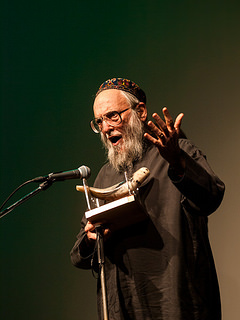
Rabbi Arthur Waskow of the Shalom Center in Philadelphia is one of the more interesting religious leaders of our time. Views from the Edge republishes this week’s “Shalom Report” with permission.

Dead Young Men: 50 Years Ago and Now

Spirals of Violence — or Nonviolence

Dear friends,

I spent several days last week in Mississippi –Mourning the murders of three young men

  • 50 years ago (and many others before and since);
  • Celebrating a Mississippi that today is very different;
  • Facing the truth that Earth and human communities –– especially, still, those of color and of poverty –- are being deeply wounded by the Carbon Pharaohs’ exploitation and oppression;
  • Talking/ working toward a future of joyful community in which Mother Earth and her human children can live in peace with each other in the embrace of One Breath.

And then, a few days later, came the news of the murders of three young men just weeks ago –- three Israeli youngsters — their bodies, like those of Mickey Schwerner, Andy Goodman, and James Earl Chaney, hidden while the search went forward for them.

But not only them. The violent deaths of young Palestinian boys/men as well, during the Israeli Army crack-down on the West Bank. Their mothers also mourning. As the New York Times reported the day before the three Israeli bodies were discovered:

“Most Israelis see the missing teenagers as innocent civilians captured on their way home from school, and the Palestinians who were killed as having provoked soldiers. Palestinians, though, see the very act of attending yeshiva in a West Bank settlement as provocation, and complain that the crackdown is collective punishment against a people under illegal occupation.”

Is there a danger of “moral relativism” in mentioning these deaths together? Is the cold-blooded murder of three hitchhiking youngsters morally equivalent to killings carried out by angry, frightened soldiers faced with a protesting mob? At the individual level, No.

But at the level of decision-making and public policy, there is also no moral equivalence between a cold-blooded military occupation and the impotent rage of the occupied.

Above all, there is no “relativism” in the tears of mothers.

Some Israelis and some Palestinians have joined their sorrow over the killings of their own children to work in the Circle of Bereaved Families for a peace that would end the killing. (See http://www.theparentscircle.com/.)

Others –-including some Israeli cabinet ministers in the last day — have defined their deaths as the warrant for more killing.

But Mississippi did not change through threats like that. It changed because an aroused American citizenry from outside Mississippi allied itself with the oppressed community inside Mississippi to demand – through nonviolent direct action and through passing laws — that an oppressed population of black folk be freed to achieve some measure of political power.

As a result of that arousal, the deaths 50 years ago have made a visible difference. Fifty years ago, a scant few black Mississippians had been allowed to register to vote. As the “Freedom Summer + 50” gathering opened last week, thousands of black Mississippians who are devoted to the Democratic Party intervened in a Republican primary to prevent the nomination and for-sure election of a far-right Tea Party candidate.

Important change? Yes. Enough change? No.

In the Israeli-Palestinian conflict, no sufficiently powerful outside energy has made the commitment to bring all its lawful, nonviolent power to bear to achieve a two-state peace. So the violence worsens in a downward spiral of injustice.

What the gathering in Mississippi showed was that even when change is still necessary, even when injustice still continues, there can be an upward spiral, growing from past transformations into future ones.

For the gathering at Tougaloo College addressed the future as much as the past. The memory of youthful deaths so many years ago –- we recited their names, we sang their songs, we welcomed their families — became the celebration of youthful courage that had led to serious change. So not only many veterans of 1964 were there, but also many many young activists, come to learn and be inspired.

So we addressed the injustices that persist, and we took up some levels of injustice that fifty years ago were not on anyone’s agenda. Even Rachel Carson’s Silent Spring, published in 1962, did not envision a massive disruption of the planetary climate system and the web of life it has nurtured for millions of years.

So there was a confluence of issues almost unimaginable in 1964 when Jacqueline Patterson of the NAACP staff brought together two excellent workshops on ”climate justice.” They were the first climate–action settings I have ever seen in which people of color — Black and Hispanic and Asian and Native — were at least half of those present.

Many spoke of two clear cases in their own region when the fossil-fuel Pharaohs had shattered the lives of poor communities of color even worse than they had damaged prosperous whites:

  • How Hurricane Katrina (which was greatly worsened by the oil rigs that chopped up marshy wetlands that used to absorb much of the energy of hurricanes when they hit land) had most damaged the poor folk who were living closer to the river (because houses were cheaper there).
  • And how poor folk also were the slowest and still the least served by relief and reconstruction efforts after the BP Oil blow-out in the Gulf.

And we learned as well how on a global level the overheating of our planet was hurting and killing the poor even worse than others: How droughts in California, the US corn-belt, central Africa, and Russia had raised the price of staple foods so badly that those who were teetering on the edge in poverty fell into hunger, and those who had been hungry faced starvation. And some who were starving fought civil wars to get their hands on food.
We discussed alternatives for climate activism. Some of us talked about the model of the “Freedom Schools that emerged in 1964, teaching where the impulses to learn and teach were deeply interwoven with the impulse to heal the world. Those Freedom Schools helped give birth to the Teach-Ins against the Vietnam War that flowered in the spring of ’65.

Could we create new Freedom Schools, new Teach-Ins, to fuse the science of climate and the facts of Corporate Carbon domination with the strategies of change? Was our gathering itself a kind of Freedom School, a Teach-In, with the young and the old teaching each other?

And Freedom Summer inspired co-ops, the redirection of our money from feeding bloated corporate power to nourishing the seeds of a grass-roots economic democracy. In that spirit, I shared The Shalom Center’s campaign to Move Our Money/Protect Our Planet (MOM/POP) and handed out copies of our “Action Handbook” on specific steps for how to Move Our Money. See https://theshalomcenter.org/treasury/209.

All of us learned more deeply how important it is to recognize and act on the true linkage of what we might call eco-social justice.

And we learned that what happened fifty years ago in Mississippi sowed the seeds of our ability to recognize and resist new depredations of today. We saw how deeply the nonviolent movement of fifty years before had, even when some of its activists were killed, given continuing birth to nonviolent responses to make more necessary change.

I ended one of those workshops by invoking the spirit of Vincent Harding. If he had not died just a month ago, I said, he would have been deeply pleased by our intergenerational learning, and he would have brought his own deep listening and the quiet with which he surrounded his own wise words.

And most of all, he would have brought his willingness to invest his life in the effort to use nonviolence to expand democracy, to win justice for those who have been oppressed.

And now, in the wake of the news from Palestine and Israel, his ghostly, powerful presence actually reminds me of the Unity of that long effort. For just two summers ago, Brother Vincent took part in a delegation of American Jews and Blacks to visit the occupied West Bank and bring hope to Palestinians committed to nonviolence.

Brother Vincent would have wept over the deaths of the young men of both peoples. As do I.

May the tears we shed become the wellsprings of transformation, not revenge — as they did in Mississippi.

And may we teach the intertwinement of eco-social justice, learning anew from Freedom Summer’s creativity to go beyond our forebears — as they did.

Shalom, salaam, paz, peace! — Arthur

Blind Spot

The walkway
four stories up
went from store
to parking spaces.

They had walked
under it for years
but now they
were driving cars
and saw it.

– Steve Shoemaker, Urbana, IL, June 15, 2014

Jesus and Economics

Friendly fire and Fratricide

“There is the possibility that fratricide may have been involved,” said a U.S. military official yesterday of the five American soldiers’ deaths in southern Afghanistan, according to news reports like this one from NBC News. The sentence came over my car radio yesterday. I’ve been pondering it ever since.

Interesting choice of words: “fratricide”, the killing of a brother, meaning, in this case, one of our guys, not one of their guys.

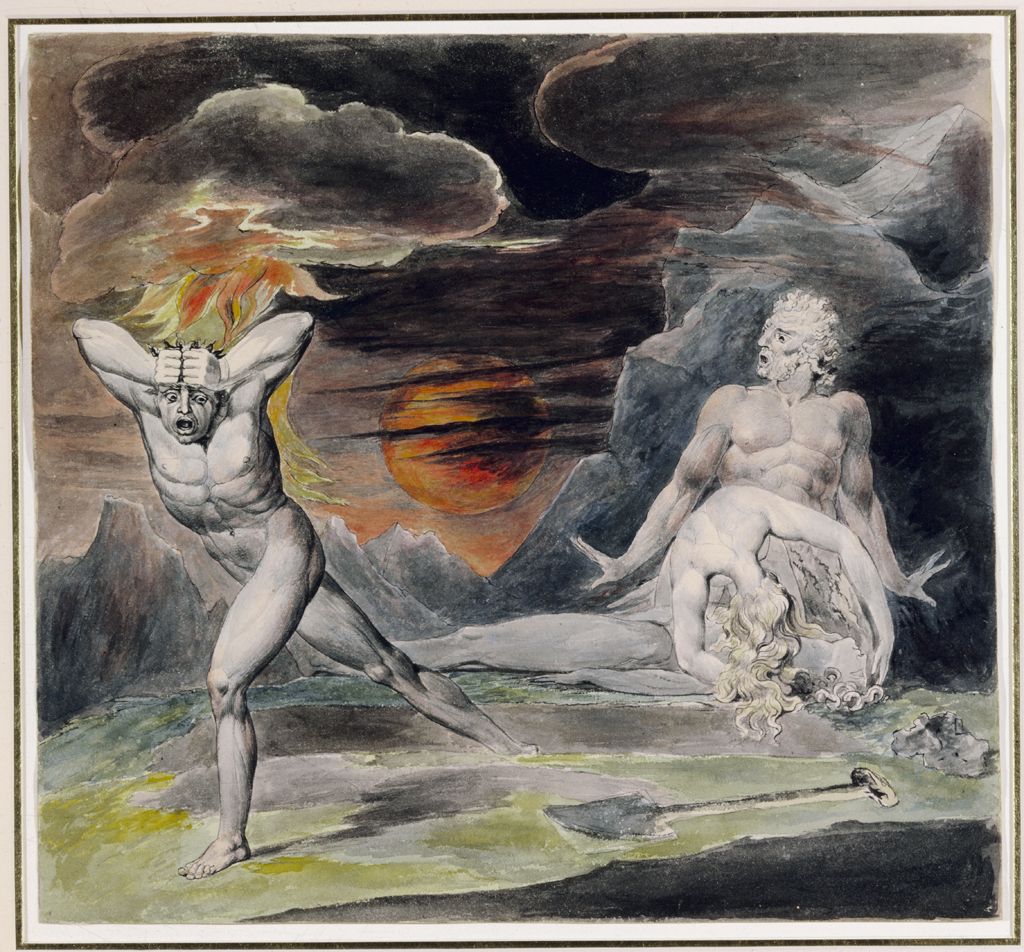
The Genesis story of Cain and Abel is the archetypal fratricide in Western culture. Cain turns to violence. Abel, his biological brother, is dead. When God asks Cain where his brother is, Cain retorts, “Am I my brother’s keeper?”

The answer is “Yes, Cain, you are.” Fratricide is out of order.

So is friendly fire. But what about killing the Taliban? Is that “unfriendly fire”? Is that not fratricide because the Taliban are not my brothers?

My ears are attuned to fratricide and to the use of language that brings theology and humaneness into stories like yesterday’s tragedy in Afghanistan and many wartime public relations press releases. The implication is clear. One of our guys may have killed one of his own guys.

In a subsequent statement, another military official said that, in the daylong fight preceding the apparent friendly fire airstrike, the joint U.S.-Afghan security forces operation had killed “lots of them” (i.e., Taliban, the enemy, the non-brothers). The case is being investigated.

Every death of a human being at the hands of another human being, on the ground or from the air, is an act of fratricide.

William Blake painting of "Cain fleeing from the wrath of God "as Adam and Eve look on in horror following the fratricide.

William Blake painting of “Cain fleeing from the wrath of God “as Adam and Eve look on in horror following the fratricide.