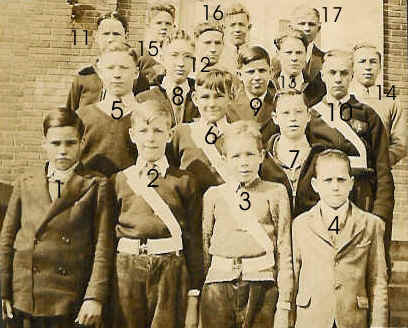
“Pops” Warfel, the Principal at Marple Elementary School in Broomall, PA, was like a prison warden. Every prison warden has his guards, his ‘goons’, as the prisoners call them. Every school back in the 1950s had its Safeties, the Principal’s goons who wandered the Yard during recess to keep the students in line. Real guys. Like Sammy Peacock.
School Safeties
In the 3rd Grade Sammy, attired in his Safety outfit, “arrested” his classmate Gordon during recess for cursing. “I DIDN’T curse,” said I.
“You did, too,” said Sam. “You said a bad word. I’m taking you to the Principal’s Office!”
Pops Wafel asked his Goon what happened out in the Yard. “Gordon, you know better than that. You father’s a minister! He wouldn’t approve of you using language like that. We’ll keep this between us just this once. But if it happens again, I’ll have to tell your father.”
Long before I read Kafka’s The Trial, I experienced existential guilt – the feeling of guilt for something I never did – the guilt of being alive. I was Josef K in The Trial.
Meanwhile, Pops Warfel was violating one of the prison rules daily: no eating in class. Pops often reached into his desk drawer, and, pretending to cough, would pop in a jelly bean. No one dared say a word.
Gordon C. Stewart, Marple Elementary Inmate #00056789, Jan. 22, 2016
Barclay and I loved playing with you yesterday. I think you enjoyed it too!
You and Barclay aren’t old enough to understand all the things I know. Both of you are only two-and-a-half years old. But, from the looks of yesterday’s play time, you both enjoy life more than Grandpa. Watching you and Barclay do his tricks was such fun! “Barclay, sit!” “Barclay, down.” “Leave it.” “Roll over.”
You were the alpha dog, the commander-in-chief, Chairwoman of the Joint Chiefs of Staff. To this day, no woman has ever held any of those positions.
But I’m getting ahead of myself. You don’t know all that stuff. You don’t know what an alpha dog is, or a Commander-in-Chief, or Chairwoman of the Joint Chiefs of Staff or President. You’ll learn all that stuff soon enough, and, if this were the world I would like for you, there wouldn’t be any Commanders-in-Chiefs, or Joint Chiefs of Staff. There would be grandchildren like you and Cavalier King Charles Spaniels like Barclay who play together with moms and dads, grandmas and grandpas without worrying about the reasons we have Commanders-in-Chief and Chairwomen of the Joint Chiefs of Staff.
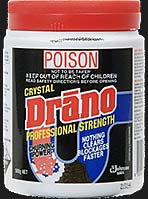
Watching the two of you yesterday made me think about how much of what I know I wish I could un-learn. My head and heart are crammed full of things that don’t belong there, like the time your Great Uncle Bob drank the Drano and had to be rushed to the hospital to have his stomach pumped.
Drano container – POISON
Older people your Uncle Bob and me have drunk the poison of thinking we’re smarter and better than dogs and cats, and trees and birds and blue skies and clouds and rivers and ponds and oceans. We drank the poison. I hope you’ll grow up remembering your play time with Barclay whenever the can of Drano sits on the back of the toilet.
I go to the toilet a lot more these days. You’re still wearing diapers. If you’re lucky you’ll learn from Barclay what my generation never learned: never poop in your own kennel. The world, the planet, is your kennel, Ruby! This whole wide world. We need to take care of it. Enjoy it. Not be mean to it or hurt it.
As you get older, remember how you and Barclay looked right in each other’s eyes and smiled. Remember the love. If you do, the world will be a better place than the one I’m passing on to you. And, when I pass on, remember that our big wonderful kennel doesn’t go anywhere. It just keeps going long after we’ve been here. Be nice to it. Be nice to yourself. Keep playing, and, please, don’t swallow the Drano!
We were young with no money to show,
But had patience, we want you to know:
We bought Mexican take-out,
And before we would make-out,
We looked good in the candlelight glow.
The wedding I’m remembering took place in August, 1972 at Shalom House, the ecumenical campus ministry center at the University of Wisconsin-Whitewater that housed a collaborative Roman Catholic and Protestant campus ministry.
The bride and broom were students active in the campus ministry. Max, we’ll call him, a counter-cultural jazz flutist with long hair down his back raised in the arch-conservative Wisconsin Synod Lutheran Church, had become involved in the progressive protestant campus ministry. The bride, whom we’ll call Elizabeth, was raised Roman Catholic and was active in the Catholic Campus Ministry.
Because it was a “mixed” marriage involving at least one Christian tradition that viewed the other as going to Hell, Father Charlie and I officiated together at the wedding. Charlie, a much loved priest known for his light touch and quick laugh, and I were colleagues and best of friends.
Imagine the scene in the small Shalom House living room.
Father Charlie and I take our places at one end of the living room, followed by Max, who has replaced his normal attire of blue jeans and a tie-dyed shirt with the light tan polyester suit purchased just for this occasion. Elizabeth enters wearing a lovely traditional white gown every bride still wears, forgetting the ancient meaning of the symbolism. They’ve “known” each other, as the Good Book puts it, for quite awhile.
The mid-afternoon temperature is in the high 90s. There is no air conditioning. Max is sopping wet, sweat pouring from his nose and chin onto the new polyester suit.
It seems he’s in danger of fainting. “Don’t lock your knees,” I whisper to Max, just hang loose.” The whole room feels more than a little uptight. Wisconsin Synod Lutherans and Roman Catholics don’t share the same space, except at the drug store.
Because the guests are from war traditions, Father Charlie and I have printed out every word of the service. The bride and groom, and each of the 50 guests has a copy of the service. Every word of it.
Father Charlie’s and my words are in regular type; responses by the bride, groom, or congregation are in bold type. Charlie and I had agreed to alternate leading. But we have also decided that whichever one of us is not leading will help prompt the congregation in the bold type responses.
All is well until we come to the consent questions, the “I will” questions.
Charlie, reading the regular type, asks Max the question. Max responds: I will.
I ask Elizabeth, “Will you have Max to be your wedded husband, to live with him and cherish him, in the holy bond of marriage?”
The bass voice from next to me answers I Will! before Elizabeth can respond. I look at Charlie, Charlie puts his hand to his mouth, opens his eyes wide and says, “Oops!”
Father Charlie and I worked together for four fun-filled years. The day of Max and Elizabeth’s celebration of Holy Matrimony was a Mr. Bean kind of day.
In 1969 I started Duke
to get a Ph.D. They gave me ten
long years to finish, but for me it took
a bit more time… I had a job, and then
two kids, and boy, could I procrastinate.
A great new novel to be read, a cause
to join, a film to see, a verse to write…
I hired two friends, good Joe, who failed because
he was too kind believing every lie.
But Jackie, who seemed sweet, looked in my eye
and gave me hell. And so I worked and wrote.
The Duke degree I finally earned, I note
four decades later, came because of two:
one nice, one mean–and finally I was through.
In her old age – I know we don’t use that term anymore but she was old no matter whether you called her a “senior citizen” or the more current “older adult” – my 88 year-old Grandmother came to live with us. “Us” was my father, mother, two brothers and I, the five (5) of us and Grandma in a small three (3) bedroom home in Broomall, Pennsylvania.
Grandma also shuffled back and forth between two other places – my rich Uncle Harold’s palatial home on Long Island Sound in Greenwich, Connecticut, and Harold’s summer cottage in Rockport, Massachusetts, where Grandma and Pop (Grandpa’s children called him “Pop”) spent their summers.
Letitia Sophia Campbell Stewart (“Sophie”) felt welcome in our little home and would settle in during her stays with us. Everything would be fine for a month or two. She sort of seemed to like my mother, although no woman would be quite good enough for her Kenneth or her Harold, and both daughters-in-law knew it.
My mother was more than gracious, much more attentive to her needs than Rene, and they got along just fine. But there were times when something like a boulder would come crashing through the picture window into our living room, hit Grandma in the head, and turn her into a whining old goat. She became self-absorbed, self-pitying, annoying and quite unlovely.
Grandma was attached at the hip to Harold, 15 years older than my father. She hated the separation. Harold was the family hero, the nationally recognized Washington insider, the wealthy provider. Aloof and cold as ice but kind…if that makes any sense. Which meant he didn’t pay attention to his mother when she was at our house. Out of sight, out of mind.
Grandma became morose. “Was there a letter from Harold?” “No, Mom. I’m sorry. No mail today.”
“Harold never writes. He hasn’t called. Harold doesn’t love me. I’m just a burden. Why doesn’t God just take me. I’m of no use to anybody anymore.”
One day my mother couldn’t take it anymore. “Ken,” she said, “we have to do something or she has to go to Harold’s.”
Dad suggested taking Grandma to the doctor. She liked the doctor in Broomall.
“Sophie, what’s going on?” asked the doctor, who’d already been briefed on the boulder. Grandma repeated the script. She was a burden to everyone. Pop was gone. She was alone. “I don’t know why God doesn’t just take me!”
“Well, that’s not a problem. WE can take care of that,” said the doctor. “Really?” asked Grandma. “You bet. We can take care of that right now. I have gun out back. We can just go out back and end your misery right now.”
“O, doctor, you wouldn’t do that!!!” said Grandma.
Grandma came home as though the boulder had never hit her. The whole world had been lifted from her shoulders. She flashed her beautiful smile again and told us how much she loved us. But she continued to leave her leave her mark in the living wherever she sat, leaving my mother to ask why God hadn’t taken either Grandma or her, and I asking when I could get my bedroom back.
When I was 13 my parents put me on a flight from Philadelphia to Boston. My paternal grandmother, recovering from a near fatal heart attack, needed a live-in caregiver at the summer cottage in Rockport, Massachusetts. My grandfather had died three years earlier.
When we learned of her need, there was an extended family discussion. The doctor said she needed someone with her for the next month.
Who would stay with Grandma? Who could go stay for a month?
Motif #1, Rockport Harbor
Grandma insisted on going to Rockport when released from the hospital, and she did, all by herself, though she remained bed-ridden on doctor’s orders except for necessary short trips to the facility and the kitchen.
Shall we say Grandma was…just a tad stubborn, and her stubborn independence was a worry for the whole family. She wasn’t safe and shouldn’t be alone.
My cousin Gina would have been the most likely candidate, but Gina had married a MacDonald. Grandma – of the Campbell clan, the mortal enemy of the MacDonalds – had refused to bless Gina’s marriage to Norman, and would have nothing to do with either of them. Did I mention she was stubborn?
Partly by process of elimination and partly by reason of her grandson seizing the chance to live up the road from Old Garden Beach and the Headlands in my favorite place in the world, I boarded the plane and stayed the month in Rockport.
I took the train from Logan Airport to Rockport, suitcase in hand, walked the mile from the train station up Atlantic Avenue beside Rockport Harbor and turned left onto Harraden Avenue. It didn’t occur to me that it was odd for a 13 year-old to be on his own on his way to an onerous responsibility. Old Garden Beach, the Headlands, and nightly trips to Bearskin Neck and Tuck’s for ice cream were on my mind more than Grandma.
Grandma Stewart was in bed when I opened the picket fence gate and walked in the cottage’s unlocked door. We greeted each other with outspread arms, Grandma’s eyes big as saucers, flowing with tears.
“We’ll be safe,” she says. “I have a gun.” She points under the bed.
I pull out a revolutionary war rifle weighing about 10 pounds. There’s no ammunition. Just an old revolutionary war musket, like the ones the authors of the 2nd Amendment had in mind.
Revolutionary War rifle – requires only 13 steps to fire.
“Grandma,” I say, “I don’t see any bullets. Is it loaded?”
“I don’t think so,” she says. “It’s heavy. We’ll just hit ‘em with it!”
The rifle stayed under the bed long after my month playing long-distance nursemaid and body guard to Grandma from down at the beach during the day and from candy and ice cream shops on Bearskin Neck at night. I was the family hero.
Poor Grandma! Poor America! Wouldn’t the founding fathers be proud!
Thanks to the Chaska Herald for publishing this Opinion commenary last Thursday in advance of the grand opening of Chaska’s redeveloped site, a source of contention and controversy.
PARK PERCEPTION VERSUS REALITY by Gordon Stewart
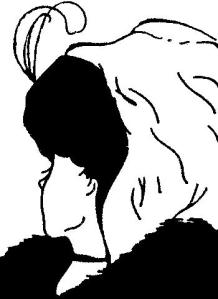
“Illusion”- W. E. Hill
Wednesday, Dec. 2 — after a hard public debate over Fireman’s Park — the newly developed site, with its event center, curling center, Crooked Pint Ale House, and redeveloped park will open its doors to a divided public.
They say perception is nine-tenths of reality. Listening to the public discussion about redevelopment over the past few years, the old adage helps explain the differences in how various Chaska residents view Chaska’s most prominent street corner.
In teaching psychology, a particular drawing of a woman is used to illustrate the power of perception. Every member of the class is asked to look at the same picture. Some see the beautiful face of a young woman wearing a fancy hat with a plume. Others see a mean old woman with an enormous chin and the kind of nose that belongs next to a witch’s brew in fairy tales.
How could different people see the same reality so differently? Or were they seeing different realities? Some who saw the beautiful young woman could not perceive the old woman. Likewise, those who saw the mean old woman could not see the beautiful young woman. Objectively speaking, both women were in the picture waiting to be perceived.
What we see is shaped by memory and experience.
During the debate before the final decision on its redevelopment, many of us perceived the corner as a beautiful park under assault. The memory was of a pristine Firemen’s Park, a lovely open-space created in honor of Chaska’s firemen, green space surrounding the historic clayhole. It was where we went as children or teenagers to swim, fish, or enjoy a family picnic.
Others had a different impression of the corner. Our memory was the truck manufacturer that stood on the corner, an eyesore that struck visitors more like the witch in the psychology class picture. Passersby did not see a beautiful park or green space; they saw a site with no aesthetic sensibility. It was not a corner to be proud of, and it had nothing to do with Firemen’s Park.
No one seems to have remembered what the corner looked like 10 years ago. It would be hard for anyone to look at that the corner of Highway 41 and Chaska Boulevard and say it was beautiful.
Reality may be nine-tenths perception. But the other one-tenths also counts. Sometimes the buried memory lies in the one-tenth we don’t recall.
One of my first days in Chaska in 2006 I stopped in at the downtown Dunn Bros for a cup of coffee. I asked the young person behind the counter to tell me about Chaska. “Which Chaska?” he replied. “Old Chaska or new Chaska?” I was surprised; I didn’t know there were two. He explained that I was in old Chaska; new Chaska was up the hill.
In American general perception — sad though it may be — new means young and vibrant, like the beautiful young woman. Old means over-the-hill and dying.
All across America, downtowns are either crumbling with boarded-up businesses or they are being successfully redeveloped to preserve, re-populate, and energize them in ways that overcome the old-new divide.
The promise of the new site is that younger people from far and wide will be drawn by its beauty for curling, a pint of ale and a hamburger with a beautiful view of the clayhole, maybe a fishing rod, and a stroll on the new walkways around the old park.
Chaska redevelopment at corner of Chaska Blvd. and State Highway 41
As one of Chaska’s more un-athletic residents, older in age but newer to the city, I’ll be there Wednesday, where the forgotten eyesore stood, to learn a new sport that won’t threaten my health and celebrate the renewed promise of a thriving “old Chaska.”
Once upon a time a long time ago, I was a little “Big A”, a Little League baseball team in Broomall, Pennsylvania. So was Coach McBride’s short son, Dickie, the 10 year-old Little League All Star catch. I was the smaller than small 8 yr. old Big A’s bench-warmer without a position.
I came to the plate once as an 8 yr. old. “Stewart,” said Mr. McBride, “Get a bat. You’re going to pinch hit. We’ve got to get somebody on base. You’re the man. Robin Williams is the best in the league, but you’ve got the smallest strike zone. So… here’s what I want you to do. Crouch down. Don’t take the bat off your shoulder. Make him pitch to you. No matter how good the pitch looks, DON’T SWING. Got it?”
“Got it, Coach.”
Three pitches later, the bat was still on my shoulder. I struck out on three called strikes. But the truth was I could barely see Robin’s fast ball!
When the McBride family moved to Cleveland the next year, the Big A’s had no catcher. The new coach lined all us Big As up in a row along the first base line. “We don’t have a catcher. Who’d like to catch?”
No hands went up. Not a one.
“Here’s my big chance to get off the bench. Dickie was short. Size didn’t matter to Dickie!” said I to myself.
“I’ll try it!”
They strapped on the shin guards, six inches taller than my knees. The chest protector draped over my torso like a horse blanket over a pony. The mask and catcher’s mitt were heavy. Freddie Lamb took the mound. Bobby Lawson stepped into the batter’s box. The pitch came. Bobby swung and missed. I blinked…but, to my surprise, caught the ball. From that moment on I was the Big A’s little catcher.
Moral of the story? If you’re short, don’t count yourself out. You, too, could proudly wear the tools of ignorance, and become another Big A’s All Star catcher.
Gordon C. Stewart, Big A forever with Freddie Lamb, Bobby Lawson, Ron Nagy, Kenny Olson, Arden Silverian, Gary Boen, Robbie Gillmor, and all the rest. You guys were the best! Love you all. November 10, 2015.




 Views from the Edge