“We wither and perish, but…”

Video

ISIL’s terrorist attacks have put the world on high alert.  Anxiety is high. How do we provide security against the threats of religious madness while honoring the Bill of Rights against illegal government intrusion?

Times like this also remind us of the need for prayer and thoughtful reflection, the need for something less knee-jerk, less urgent, more principled, wiser and more lasting.

People of my faith tradition often turn to the church’s music. We look to great hymns like “Immortal, Invisible, God Only Wise” from whose poetry a favorite line came to mind yesterday.

“We blossom and flourish, like leaves on the tree, and wither and perish, but naught changeth Thee.”

Until darkness descends, it’s easy to forget we are mortal. We unconsciously indulge the illusion that we are immortal, that we will forever blossom and flourish without withering and perishing. These great hymns and the scriptures which inspired them help to recover our bearings in the search for the deeper wisdom that does not wither and perish, “the true life of all.”


  • Gordon C. Stewart, Chaska, MN, November 18, 2015

Verse – MY HERO

The pain is constant
How can he hammer a nail
The middle of the stomach
Abdomen hurt first
How can he still care
About the chronic pain of others

Then he noticed his back ached
Why does he still write and give speeches
The aches spread around both his sides
Where will he fly next around the world
Habitats here peacemaking there
When did the CT scan confirm cancer

Pancreatic a quick killer
What will he teach this Sunday
The codeine cuts agony in half
But constipation adds new pain
Is his faith a factor
What is he smiling about

  • Steve Shoemaker, Urbana, IL, November 18, 2015

A Song for Beirut and Paris

Video

News from Paris and Beirut reminds us of the history of Lac qui Parle, the Dakota Creation Song, that still speaks hope to a violent world. Thirty-eight Dakota men sang it in its original Dakota language – Wakantanka taku nitawu – before their executioners took them to the gallows in Mankato, MN in 1862.  The threat of death did not deter them from affirming the goodness of creation.

“Many and great, O God, are Thy things, Maker of Earth and Sky; Thy hands have set the heavens with stars, Thy fingers spread the mountains and plains. Lo, at Thy word, the waters were formed; Deep seas obey Thy voice

“Grant unto us communion with Thee, Thou star-abiding One; Come unto us and dwell with us: With Thee are found the gifts of life. Bless us with life that has no end, Eternal life with Thee.

[Joseph R. Renville, Dakota, 1842; paraphrased translation, R. Philip Frazier, 1929 and 1953]


Being Human – nothing more, nothing less

The ISIL fundamentalist extremists who terrorized Paris, San Bernardino, Beirut, and elsewhere in the name of God believe in an eternal reward for sacrificing themselves for a holy cause. Though it may seem strange to many of us in the West, they share two beliefs widely held by others who are not terrorists:

  1. God (Allah, in Arabic) is a being — the Supreme Being, but ‘a being’ nonetheless.
  2. Death is not the end of mortal life; we are destined for immortality – Heaven or Hell, eternal states of bliss or punishment.

It’s not just the jihadists who deny our mortality, our perishable nature within the order of Nature.

In Man Before Chaos: Philosophy Is Born in a Cry, philosopher of religion Willem Zuurdeeg wrote:

“Threatened by nonbeing, by chaos, and meaninglessness, man looks for a foothold in the Imperishable.”

The “soldiers of the caliphate” are young. Paradoxically, as hideous, grotesque, and deranged as their thinking is, their massacres are performed in the name of an ideal. They are idealists claiming “a foothold in the Imperishable”.

Seeking to rid the world of evil, they succumb to evil. In the name of heaven and the Imperishable, they create hell on earth.

But what if God is not a being? What if, as Paul Tillich argued, God does not “exist” as a thing or person exists, but instead is Being-Itself or the Ground of Being or the God above god?

What if we are mortal? What if death is the end, not a doorway to heavenly reward or eternal punishment? What if no St. Peter stands at the pearly gates to separate sheep and goats? What if no vestal virgins are waiting? What if life and death are what they seem?

John Lennon’s “Imagine” strikes a chord in the aftermath of the attacks in Paris, Beirut, and Mali. Imagine there’s no religion. But imagining won’t erase the problem of religion or the anxiety endemic to the human condition. We are suckers for certainty desiring the end of complexity and ambiguity.

“Finitude,” wrote Paul Tillich, “means having no definite place; it means having to lose every place finally, and with it, to lose being itself.”  [Systematic Theology, Vol. I., p. 195, University of Chicago Press]

The appeal of fundamentalist certainty, whatever its form, is the promise of a secure foothold, place in immortality – a purpose bigger than life itself, the escape from ambiguity.

When faith is ill-conceived as acting to end the ambiguities represented by the enemies of God, instead of as coping with life’s inherent ambiguities, we create what we seeks to escape. We create a foothold in what will not hold.

What if to be human is not to escape mortality, but to embrace it thankfully and to live courageously within the boundaries of time, of mortal flesh filled with the Eternal in the midst of time?

“Being holy . . . does not mean being perfect but being whole; it does not mean being exceptionally religious or being religious at all; it means being liberated from religiosity and religious pietism of any sort; it does not mean being morally better, it means being exemplary; it does not mean being godly, but rather being truly human.” ― William Stringfellow, A Keeper of the Word: Selected Writings.


  • Gordon C. Stewart, Chaska, MN, January 9, 2016

Ordinary people, Socrates, and the Psalmist

Last Sunday was my first experience with the Adult Forum at Trinity Episcopal Church. It was a brainstorming session for the church’s adult faith formation program.

A woman introduced herself as “the octogenarian in the group” to lots of laughter since a number of them were well on their way to their 80s. She proposed “living well in anticipation of dying and death” as her topic of interest. The group’s response was immediate. They were hungry for it.

DenialofdeathcoverThey went immediately to the practical considerations like Living Wills, leaving clear instructions for children. But the discussion soon moved to the deeper matter of mortality itself, our culture’s juvenile denial of death (a la Ernest Becker), and the desire to go deeper into the philosophy and theology of wellness, death, and dying.

Two days later at last night’s Republican presidential debate, when Senator Marco Rubio drew roaring applause for his put down of philosophers – “We need more welders, less philosophers” – I wanted to invite the senator and everyone in the auditorium to join the 20 people  next Sunday in the Fireside Room where ordinary people will heed the wisdom of Socrates to “apply themselves in the right way to philosophy”:

“Ordinary people seem not to realize that those who really apply themselves in the right way to philosophy are directly and of their own accord preparing themselves for dying and death”

Death is always the elephant in the living room. So is philosophy when it is scorned. It’s easy to be glib about it, to knock it, ignore it, or mock it. Not so easy to face it “of [our] own accord”, as Socrates and the psalmist urge those who would live well – with gladness and and mercy – in anticipation of dying and death.

“So teach us to number our days, that we may apply our hearts unto wisdom. … O satisfy us early with thy mercy; that we may rejoice and be glad all our days.” – Psalm 90:12,14, KJV

Gordon C. Stewart, Chaska, MN, November 11, 2015.

Guns and God

No matter what your religion or politics, this is worth a look.  Click “Beyond Any Singing” below to tune in to the video of an evangelical Christian pastor’s reflections on how his mind has changed on gun violence.

Donald Trump and the Presbyterians

Donald Trump and Ben Carson

Candidate for President Donald Trump’s sideswipe at fellow Republican candidate Ben Carson’s Seventh Day Adventist faith calls for a response from those who are what Mr. Trump is not – a Presbyterian.

Although Mr. Trump attended Sunday School and was confirmed at the First Presbyterian Church of Jamaica in Queens, NY, he is not a member of a Presbyterian Church. His church of choice on Easter and Christmas is Marble Collegiate Church, the historic Reformed Church in America congregation in midtown Manhattan best known for the Rev. Dr. Norman Vincent Peale, author of The Power of Positive Thinking.

“I am Presbyterian Protestant. I go to Marble Collegiate Church,” he told reporters in Greenville, S.C.  Two funny thing about that: 1) Marble Collegiate Church is not a Presbyterian church, and 2) even if it were,  Mr. Trump is not a member there, according to the church itself.

Why does it matter?

Who cares?  UNTIL Mr. Trump presents himself as a Presbyterian in contrast to another candidate’s Seventh Day Adventist faith in a way that is typically very un-presbyterian.

“I’m a Presbyterian. I’m a Presbyterian. I’m a Presbyterian!” he proclaimed with pride, insinuating that he is in the mainstream while Dr. Carson’s Seventh Day Adventism (SDA) is a fringe group outside the mainstream of American religious life. He seemed unaware that 1) Seventh Day Adventists are one of the fastest growing churches both in the U.S. and the world with a worldwide membership of 18.1 million, and 2) unlike the overwhelmingly white Presbyterian Church to which he claims to belong, the SDA is full of color and immigrants.

As to his own faith, Trump’s answer to Frank Luntz’ question of whether he’s ever asked for forgiveness offers further insight:

“I am not sure I have. I just go on and try to do a better job from there. I don’t think so,” he said. “I think if I do something wrong, I think, I just try and make it right. I don’t bring God into that picture. I don’t.”

Trump said that while he hasn’t asked God for forgiveness, he does participate in Holy Communion.

“When I drink my little wine — which is about the only wine I drink — and have my little cracker, I guess that is a form of asking for forgiveness, and I do that as often as possible because I feel cleansed,” he said. “I think in terms of ‘let’s go on and let’s make it right.'”

The Presbyterian-Reformed Tradition

There are a few things about the Presbyterian-Reformed tradition of the Christian faith that Mr. Trump seems not to know or has forgotten:

  1. The Reformed-Presbyterian faith shuns ostentation.
  2. Simplicity is a characteristic of the Christian life.
  3. “The sins forbidden by the First Commandment” include “self-seeking, and all other inordinate and immoderate setting of our mind, will, and affections upon other things;…hardness of heart, pride, presumption, carnal security” (Larger Catechism, Q 1).
  4. Confession of sin – both in private prayer and in the “Confession of Sin” in every Sunday service of worship – is a daily spiritual discipline of Christian life and practice.
  5. Divine grace and the forgiveness are the sources of personal and communal renewal and reconciliation.
  6. Respect for other religions -“Christians find parallels between other religions and their own and must approach all religions with openness and respect” (Confessions of 1967 IIB3) – and humility about one’s own religious claims are called for before God.

Local Presbyterians and Seventh Day Adventists

Momoh Freeman

Momoh Freeman

Every Sunday for seven years Momoh Freeman, a gifted Liberian refugee musician, served as Director of Music at Shepherd of the Hill Presbyterian Church in Chaska; on Saturdays he served in the same capacity at a Seventh Day Adventist Church in Minneapolis. The beliefs and practices of the two congregations are distinctly different in many respects, but we became fast friends.

The SDA Choir, comprised of Liberian-Americans, Liberian refugees, and African Americans, performed in concert at Shepherd of the Hill at our invitation, singing both African hymns and Handel’s Hallelujah Chorus a cappella!

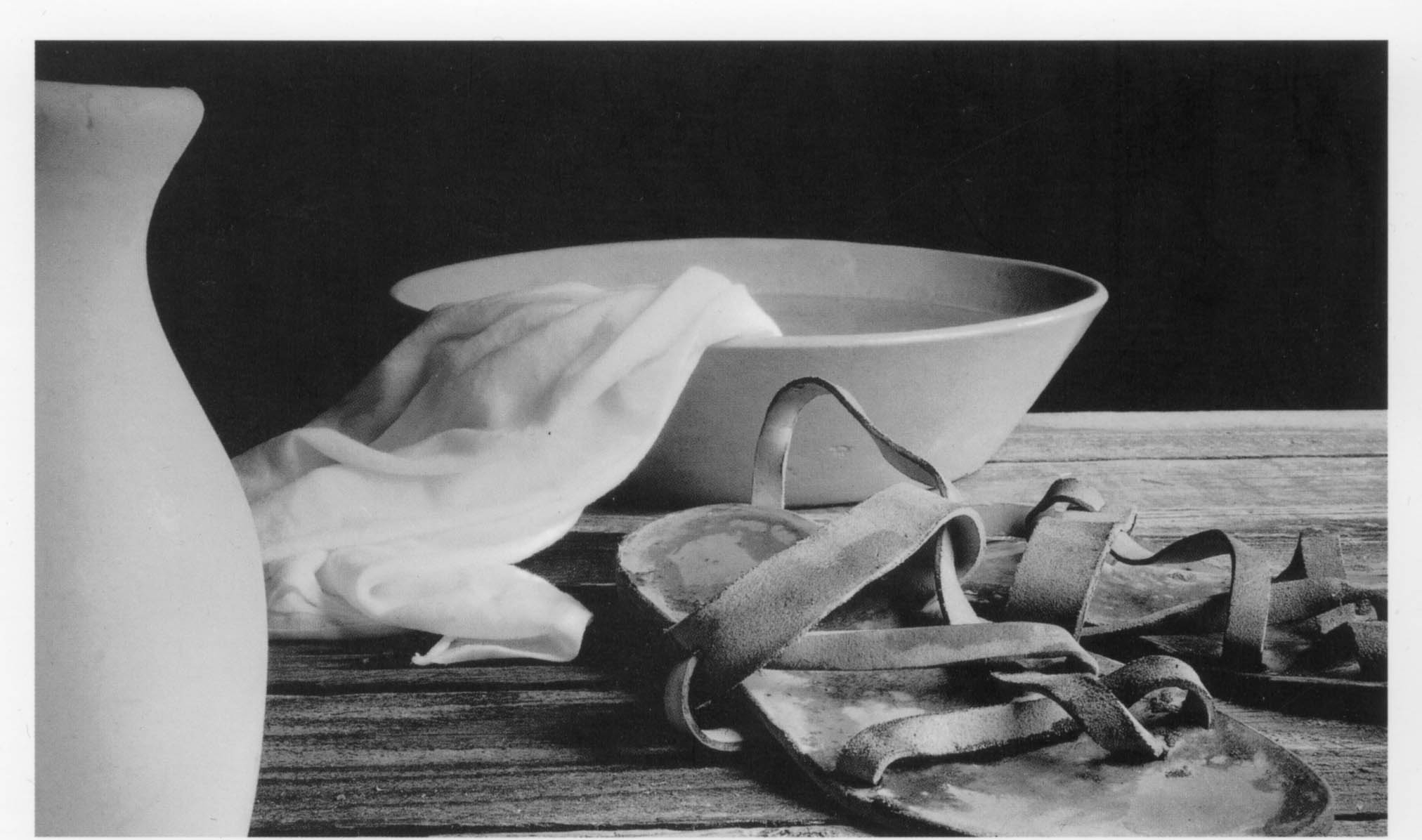
We Presbyterians joined our SDA friends in Minneapolis for Saturday worship, including the foot-washing ritual that preceded the Sacrament of Holy Communion to which we were also welcome. None of us went to the table “drink my little wine…and have my little cracker.”

A remedy of humble faith

Considering the disrespect in the run up to a presidential nomination, a good foot-washing seems in order.

When Jesus washed Peter’s feet, Peter replied, “Lord, not my feet only but also my hands and my head!” (John 13.9)

  • Gordon C. Stewart, Presbyterian Teaching Elder (i.e., Minister of Word and Sacrament) H.R., Chaska, Minnesota, October 28, 2015



Flip Saunders and the Media

Yesterday morning Minnesota media announced the untimely death of Flip Saunders, one of Minnesota’s most beloved public figures.

Cheered long ago as the diminutive starting point guard of the University of Minnesota Gophers basketball team, Flip worked his way through the ranks of the CBA to become a successful NBA Head Coach with Minnesota, Detroit, and Washington before returning “home” to Minnesota as both President and Head Coach of the Minnesota Timberwolves.

There is a deep sadness over his loss. At 60 years old, he was looking forward to the fruits of his labor, the makings of a future world championship team developed by Flip’s extraordinary draft picks, trades, and the return to Minnesota of Kevin Garnett, the NBA star who credits Flip with his development when Kevin was fresh out of high school.

Like Garnett himself, Flip Saunders was not a native Minnesotan. But he, and Garnett, came to see this as home, as do many out-of-state transplants once they taste the beauty and culture of Minnesota.

Today it’s that culture that should be lifted up along with the love for Flip: the respectful silence kept by the media in response to the Saunders family request for privacy during the long hospitalization that began in early September.

Readers and sports pundits who feed on sensationalism might have misinterpreted the absence of detailed coverage as meaning the sports writers and the media didn’t give a flip about Flip. It’s rare that the need for privacy is honored, even when a family requests it.

Team owner Glenn Taylor and the Minnesota Timberwolves were a class act from the first announcement of his diagnosis and encouraging prognosis to the heartbreak of his long hospitalization and death.

Flip’s illness and death were handled with the rare discretion that represents the very best of Minnesota Nice. Minnesotans don’t like prying into each others’ business unless invited, and quiet respectfulness is a Scandinavian characteristic that held back the pens of sports writers and voyeurs until there was something to share.

The StarTribune headline, quoting the NBA Commissioner, reads “Flip Saunders ‘leaves gaping hole in the fabric of the NBA”.  In the fabric of NBA culture of bigger-than-life heroes, Flip Saunders brought something smaller, more private, and all too rare.

A Picture of God

A Kindergarten teacher observed the children drawing pictures in her classroom. As she walked around the room, one little girl was totally absorbed in her drawing when the teacher asked what she was drawing.

“I’m drawing God!”

“But no one knows what God looks like,” said the teacher.

The girl kept drawing. Without a hitch and without looking up, she replied, “They will in a minute.”

As part of their research, psychologists have asked children to draw pictures of God looking for correspondences between the children see their parents and how they imagine God.

“God the Father” of trinitarian Christian theology was of particular interest. The children’s drawings turn out to be vastly different, depending upon positive or negative experiences with their fathers. Some drew God as kind and loving; others drew God as fearful and violent.

Sigmund Freud, Karl Marx, and Ludwig Feuerbach would not be surprised. Each in his own way saw ‘God’ as a human projection, not a Divine reality. Yet there is something about even the most disbelieving of us that is still drawn to try to draw God.

Maybe the little girl in the kindergarten class had heard in church the line that “No one has ever seen God, but if we love one another, God lives in us and his love is made complete in us” (I John 4:12). Maybe she was drawing Love.

  • Gordon C. Stewart, Chaska, MN, Nov. 5, 2015.

Verse – The Memorial Service

The day we remember
at the Memorial Service
a friend of 55 years, some
will say he was a human
having a spiritual experience,
looking to the skies for the
one who’s “passed on”.

Others of us remember
the face, the smile, the stride,
the fitness, the speech
and mannerisms during
walks in the mountain woods
of a real human having a
spiritual experience.

Are we flesh and blood,
living on the eternal’s shore
turned back to dust?
Or are we stardust that
never dies, immortals
experiencing mortality
before returning to the sky?

Has he died or passed on?
Are the ashes and memories
of Phil what remain of him
or were his smile, his walk
and talk just time-bound
expressions of a spiritual
being locked in a cage?

I hear no bird singing but
the funeral dirge and hymn
reminding us to think
less of ourselves and our
not-so exceptional species
of flesh and blood, dust and
ashes left in cemetery urns.

“O God, our help in ages
past, our hope for years to
come, we fly forgotten as
a dream dies at the opening
day. Be Thou our guide
while life shall last and
our eternal home.”

Today our tears again will
fall, as do all creatures
great and small when
time’s short river returns
to the eternal ebb and flow
whence we came and to
which all soon return, with
sobs of humility and praise.

  • Gordon C. Stewart, Chaska, MN, October 17, 2015, written in anticipation of today’s Memorial Service for college and seminary classmate and friend Philip Conner Brown. At the same time as the Memorial Service today at White Bear Lake United Methodist Church, he will be remembered in a Chapel service for Maryville College alumni who died during the last year.