Distribution of Wealth according to the Sages

“An imbalance between rich and poor is the oldest and most fatal ailment of all republics.” –Plutarch, ancient Greek biographer [c. 46 – 120 CE].

“The disposition to admire, and almost to worship, the rich and the powerful, and to despise, or, at least, to neglect persons of poor and mean condition is the great and most universal cause of the corruption of our moral sentiments.” – Adam Smith, Scottish political economist, author, The Wealth of Nations, father of capitalism [1723-1790].

“The poor have sometimes objected to being governed badly. The rich have always objected to being governed at all.” –G. K. Chesterton, English essayist (1874-1936)

“So distribution should undo excess, and each man have enough.” William Shakespeare, King Lear, Act 4, Scene 1.

“In the long run men inevitably become the victims of their wealth. They adapt their lives and habits to their money, not their money to their lives. It preoccupies their thoughts, creates artificial needs, and draws a curtain between them and the world.” – Herbert Croly, U.S. political philosopher [1869-1930].

“No person, I think, ever saw a herd of buffalo, of which a few were fat and the great majority lean. No person ever saw a flock of birds, of which two or three were swimming in grease, and the others all skin and bone.”–Henry George American political economist [1839-1897].

“The greatest country, the richest country, is not that which has the most capitalists, monopolists, immense grabbings, vast fortunes, with its sad, sad soil of extreme, degrading, damning poverty, but the land in which there are the most homesteads, freeholds — where wealth does not show such contrasts high and low, where all men have enough — a modest living— and no man is made possessor beyond the sane and beautiful necessities.” –Walt Whitman [1819-1892].

“We can either have democracy in this country or we can have great wealth concentrated in the hands of a few, but we can’t have both.” –Louis Brandeis, U.S. Supreme Court Justice [1856-1941]

“The form of law which I propose would be as follows: In a state which is desirous of being saved from the greatest of all plagues—not faction, but rather distraction—there should exist among the citizens neither extreme poverty nor, again, excessive wealth, for both are productive of great evil . . . Now the legislator should determine what is to be the limit of poverty or of wealth.”–Plato, Greek philosopher [427-347 B.C.E.]

“He has brought down the mighty from their thrones and exalted those of humble estate; he has filled the hungry with good things, and the rich he has sent away empty.” – Mary, mother of Jesus of Nazareth, Christian Scripture, Gospel of Luke 1:52-53.

  • Gordon C. Stewart, Chaska, MN, Dec. 29, 2015.


?

Me: God, Why?
God: No, I ask the questions…
Me: Ok, what are your questions?
God: Don’t ask.

  • Steve Shoemaker, from Mayo Clinic, Rochester, MN, Dec. 5, 2015

Muslim Clerics declare “ISIS is un-Islamic”

Before Beirut and Paris, 1,ooo+ Muslim clerics in India issued a Fatwa against ISIS  declaring, “The acts of the Islamic State are inhuman and un-Islamic.” The Associated Press report was published September 9, 2015. Click the link above to read the story.

Also in September, NPR aired Prominent Muslim Sheikh Issues Fatwa Against ISIS Violence, re-aired yesterday. Posts like these deserve wider attention.

Meanwhile, a very small Christian church in the little town of Philo, Illinois, drew attention in the local paper for its consideration of hosting Muslim Syrian refugees.

News on Philo Presbyterian Church and Muslim Syrian refugees

News on Philo Presbyterian Church and Muslim Syrian refugees

  • Gordon C. Stewart, Chaska, MN, November 18, 2015.


Ordinary people, Socrates, and the Psalmist

Last Sunday was my first experience with the Adult Forum at Trinity Episcopal Church. It was a brainstorming session for the church’s adult faith formation program.

A woman introduced herself as “the octogenarian in the group” to lots of laughter since a number of them were well on their way to their 80s. She proposed “living well in anticipation of dying and death” as her topic of interest. The group’s response was immediate. They were hungry for it.

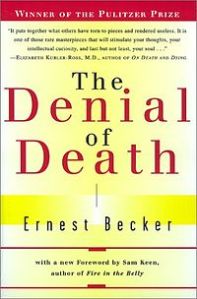
DenialofdeathcoverThey went immediately to the practical considerations like Living Wills, leaving clear instructions for children. But the discussion soon moved to the deeper matter of mortality itself, our culture’s juvenile denial of death (a la Ernest Becker), and the desire to go deeper into the philosophy and theology of wellness, death, and dying.

Two days later at last night’s Republican presidential debate, when Senator Marco Rubio drew roaring applause for his put down of philosophers – “We need more welders, less philosophers” – I wanted to invite the senator and everyone in the auditorium to join the 20 people  next Sunday in the Fireside Room where ordinary people will heed the wisdom of Socrates to “apply themselves in the right way to philosophy”:

“Ordinary people seem not to realize that those who really apply themselves in the right way to philosophy are directly and of their own accord preparing themselves for dying and death”

Death is always the elephant in the living room. So is philosophy when it is scorned. It’s easy to be glib about it, to knock it, ignore it, or mock it. Not so easy to face it “of [our] own accord”, as Socrates and the psalmist urge those who would live well – with gladness and and mercy – in anticipation of dying and death.

“So teach us to number our days, that we may apply our hearts unto wisdom. … O satisfy us early with thy mercy; that we may rejoice and be glad all our days.” – Psalm 90:12,14, KJV

Gordon C. Stewart, Chaska, MN, November 11, 2015.

Senator Rubio, Welders and Philosophers

“Welders make more money than philosophers,” said Mr. Rubio during last night’s Republican presidential debate. “We need more welders and less philosophers.”

No one on the stage seemed to remember John Adams, one of the Founding Fathers, who observed,

“I must study politics and war [in order] that my sons may study mathematics and philosophy.”

Instead of raising the minimum wage, Mr. Rubio calls for re-tooling America’s educational system to prepare people for jobs so they’ll make more money. Education would become training for a specific job.

His contrast between welders and philosophers is more about liberal arts education than about wages. Classical liberal arts programs teach people how to think. Philosophers are thinkers.

There is an anti-intellectual streak in American culture. When a skilled debater scratches that itch, there is loud applause, as there was last night in Milwaukee.

In the search for simplicity, those who applauded Mr. Rubio’s swipe at philosophers ignored philosopher Bertrand Russell’s observation.

“To teach how to live without certainty and yet without being paralyzed by hesitation is perhaps the chief thing that philosophy, in our age, can do for those who study it.”

The stereotype of the philosopher as aloof and beside the point makes for an easy target and an immediate laugh. But governing is not like welding.  We need need good philosophers and good welders.

“The society which scorns excellence in plumbing as a humble activity and tolerates shoddiness in philosophy because it is an exalted activity will have neither good plumbing nor good philosophy; neither its pipes nor its theories will hold water.” – John W. Gardner

  • Gordon C. Stewart, Chaska, MN, November 11, 2015


Views from the Edge republished today

Click Reframing the Gun Conversation for today’s republication (with some fine editing) by MinnPost.com, one of Minnesota’s best independent news sources.

  • Gordon Stewart, Chaska, MN, October 22, 2015

Happiness

What is this searched after state we Americans pursue, one of only three “unalienable rights” specifically named as worthy of praise in the American Declaration of Independence – “the pursuit of happiness”?

Did the writers of the Declaration mean what we mean? Or was it something different? Why was such a subjective term as ‘happiness’ listed with Life, and Liberty?  Was there a reason why the pursuit of Happiness was listed as the last of the three? What it considered least important, of equal importance, or, perhaps, as most important?

Thomas Jefferson and John Adams, the principal writers of the Declaration, were well-schools in the Classics – the ancient Greek and Roman philosophers, novelists, playrites and poets; Democritus, Plato, Aristotle, Homer, Cicero and Diogenes. They read Plato’s Republic, Cicero’s Disputations, Aristotle’s Nicomachean Ethics, Metaphysics, and Politics; Virgil’s The Aeneid, and Sophocles’ Oedipus Rex in their original Greek or Latin language. They translated the New Testament Gospel of John from its original Greek into Latin and into English.

What did happiness mean to these classical writers? How did it inform Jefferson, Adams, Franklin, and the rest?

The word εὐδαιμονία’ (eudaimonia) expressed the Greek philosopher’s understanding of what Jefferson and Adams called happiness.

The term “eudaimonia” is a classical Greek word, commonly translated as “happiness“, but perhaps better described as “well-being” or “human flourishing” or “good life“. More literally it means “having a good guardian spirit”. Eudaimonia as the ultimate goal is an objective, not a subjective, state, and it characterizes the well-lived life, irrespective of the emotional state of the person experiencing it. ….

Socrates, as represented in Plato‘s early dialogues, held that virtue is a sort of knowledge (the knowledge of good and evil) that is required to reach the ultimate good, or eudaimonia, which is what all human desires and actions aim to achieve.

The Basics of Philosophy

Happiness, as understood in Aristotle’s Nicomachean Ethics, is the full human flourishing which is the highest of all good according to Nature.

The Committee of Five that wrote the final draft approved by the Second Continental Congress had something like that in mind.

One researcher claims the following:

“Actually, happiness was defined by the Continental Congress in the original May 1776 declaration of independence as “internal peace, virtue, and good order,” closely following Cicero’s Tusculan Disputations; the definition of happiness was drafted by John Adams, not Jefferson.” [Link inserted by VFTE]

[Unidentified source within longer article on the origins of “the pursuit of happiness in the American Declaration of Independence.] -Other Choices (talk) 00:14, 16 June 2012 (UTC)

Whether we are happy in America is a matter of perspective and definition. Some of us would say we are; others would say not. But a fresh look at the Declaration of Independence’s original meaning of the word as human flourishing might lead us to the discussion of “the full human flourishing which is the highest of all good according to Nature” in a consumer society intoxicated with distraction and superficial definitions of happiness.

  • Gordon C. Stewart, Chaska, MN, October 28, 2015

Re-Framing the Gun Conversation

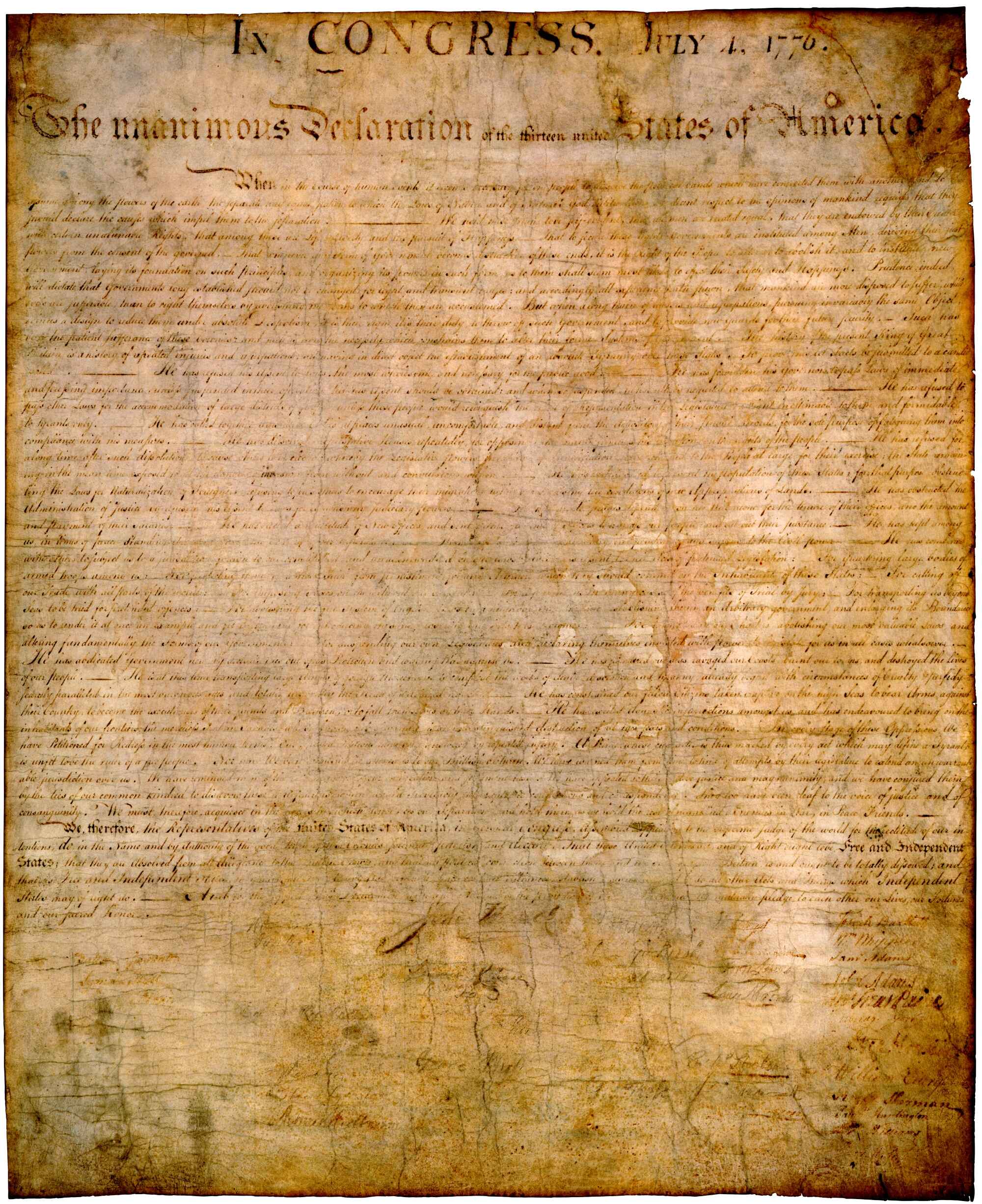
“We hold these truths to be self-evident, that all men are created equal, that they are endowed by their Creator with certain unalienable Rights, that among these are Life, Liberty and the pursuit of Happiness.” – American Declaration of Independence, July 4, 1776.

Today in America we continue to define, weigh, and measure these three “unalienable Rights”.
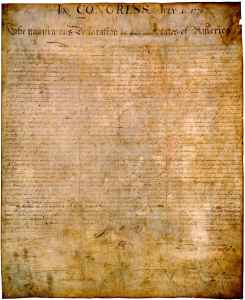
Original American Declaration of Independence

Original American Declaration of Independence

No matter whether the Declaration’s principal author, Thomas Jefferson, and the Committee of Five of the Second Continental Congress assumed these three Rights to be mutually compatible or whether they saw them in tension with each other, today in America there is little agreement about the meaning of, or the relations among, Life, Liberty, and the pursuit of Happiness. Instead we are locked in a heated debate about one of the three – Liberty – focused  on the Second Amendment to the U.S. Constitution, adopted in 1791.

Lost in the debate is the more reflective philosophical, moral, and religious pondering of the “unalienable Rights” which, in the eyes of Jefferson and the Second Continental Congress were essential virtues of a new republic. Then, as now, the way we understand life, liberty, and the pursuit of happiness is shaped, to some extent, by different cultural experiences. At the time of the Declaration of Independence, the differences were often between northern and southern colonies. Today the differences are still sectional, but perhaps even more, they are between rural and small town, urban, and suburban cultures and settings.

Rural and small town populations, especially those who plow the fields and grow our food, tend to view guns as instruments that support life and the pursuit of happiness. A gun is used for hunting, protecting the animals from coyotes, or for skeet shooting. The rifle by the back door is part of rural life, not meant to be used on another human being, except in the unlikely event of a burglary. The right to own and use a gun is a matter not only of liberty but of life and the ability to pursue happiness. The gun is a family friend.

Urban populations, especially those living in densely populated centers with the high crime rates that accompany economic deprivation, see guns differently. Guns in their neighborhoods are not for hunting, protecting animals, or shooting coyotes. They are threats to Life and the pursuit of Happiness. The cities are divided between very wealthy, middle class, and the economically impoverished neighborhoods where gun shots are heard while putting children to bed. Residents who can afford to leave for the suburbs to pursue Happiness sometimes do.

Suburban populations are a blend of former rural and urban dwellers with native suburbanites. Some grew up on the farm or in small towns where there was little or no tension among the three unalienable rights. Some left the city in pursuit of happiness or in search of a safe place to live. Some, born and raised in the suburb, can imagine neither the farm, small town, nor the city as a preferred place to live. In the suburbs it is a matter of some confusion and debate whether Liberty, as in gun rights, supports or conflicts with, Life and the pursuit of Happiness.

The National Sheriffs Association, serving rural and small town America, takes a conservative position on gun rights and gun control, while the National Association Chiefs of Police and International Association of Chiefs of Police, serving urban, small cities, and large suburban communities, call for improved gun control legislation.

Although informed debate about the origins and intent of the Second Amendment is good and necessary, a preoccupation with the Second Amendment all but insures the demise of a productive national conversation.

We would do better to look earlier in our history to the Declaration of Independence which defined the goals of a soon-to-be-born American republic. To this writer’s knowledge, there has been little if any discussion of gun rights and regulation in the context of the three unalienable rights explicitly lifted up in the document we all celebrate on July 4th.

Those who declared American independence from Great Britain in 1776 could not have imagined that one of the three named unalienable Rights — Liberty — would stand as the sole Right without reference to Life and the pursuit of Happiness.

Few venues lend themselves to a mature discussion among rural/small town, urban, and suburban American experiences. In theory, the 50 state legislatures and the United States Congress provide the forums for thoughtful discussion and the search for solutions by representatives of rural, urban, and suburban constituents. But in today’s America where representative government itself is often viewed with distrust and even fear, the likelihood of success is far less than the Founders might have hoped.

Where and how, then, do we, the people — rural and small town, urban, and suburban — citizens of the diverse country we all love, come together to discuss our life in light of the creative tension of the rights to Life, Liberty, and the pursuit of Happiness in 2015?
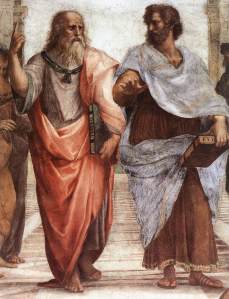
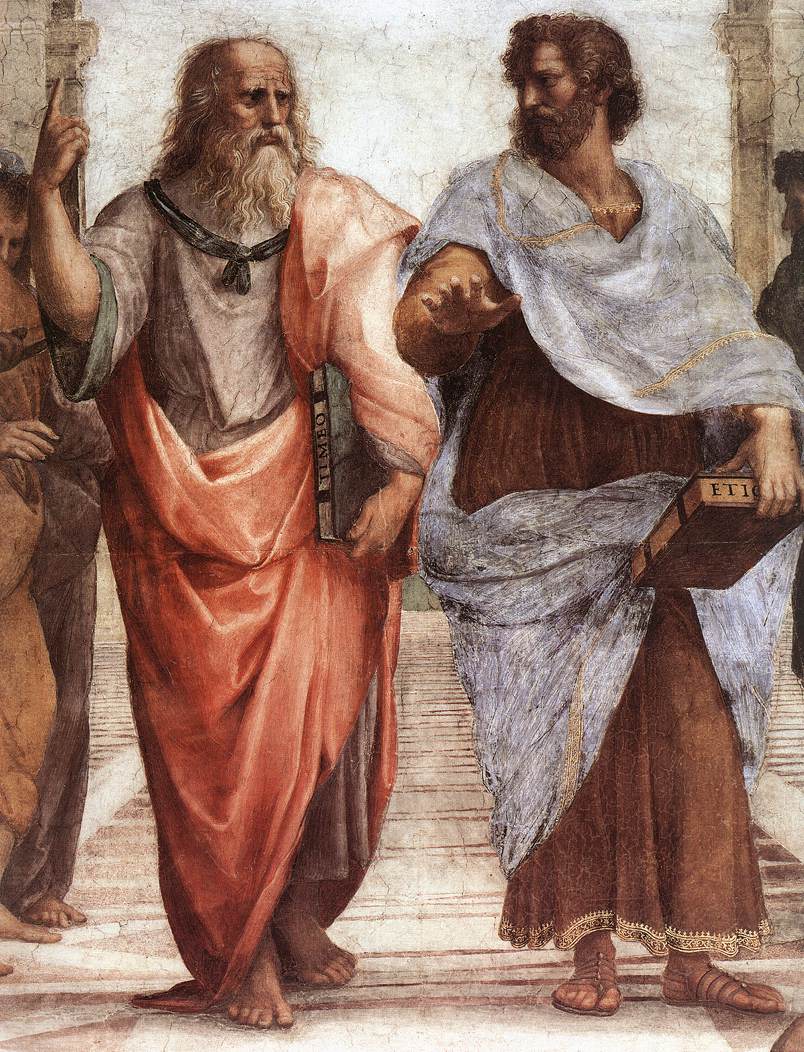
Aristotle (right) talking with Plato in The School of Athens by Raphael

Aristotle (right) talking with Plato in The School of Athens by Raphael

In 2015 one could hardly say we in America are happy. In the light of current tragedies of gun violence and our socio-poliictal history, we might do well to remember the wisdom of Aristotle (384—322 B.C.E) to help guide citizens of a constitutional republic:

Happiness depends upon ourselves.

  • Gordon C. Stewart, Chaska, MN, October 20, 2015

Professors and Jack-hammer Operators

Is there a difference between being retired and being dead?

Is there a difference between being employed and being dead?

It all depends, perhaps. Is your retirement deadly boring? Is your employment deadly meaningless? It all comes down to “calling” – the sense that one is called to something.

Eugen Rosenstock-Huessey

Eugen Rosenstock-Huessey

Social philosopher Eugen Rosenstock-Huessey noted how curious is was that in their leisure time professors read books and jack-hammer operators rode motorcycles. If it really was leisure, he said, the professors who worked with ideas would be riding motorcycles; the jackhammer operators whose ears were filled with noise all week would be reading philosophy, history or novels.

I think  need a motorcycle!

P.S. My audiologist said I have the ears of a 45 year old jack-hammer operator.

  • Gordon C. Stewart, Chaska, MN, Oct. 1, 2015

An American Paradox

“Our laws are not generally known; they are kept secret by the small number of nobles who rule us.”

[Franz Kafka, “The Problem of Our Laws,” Parables and Paradoxes, Schocken Books, New York.]

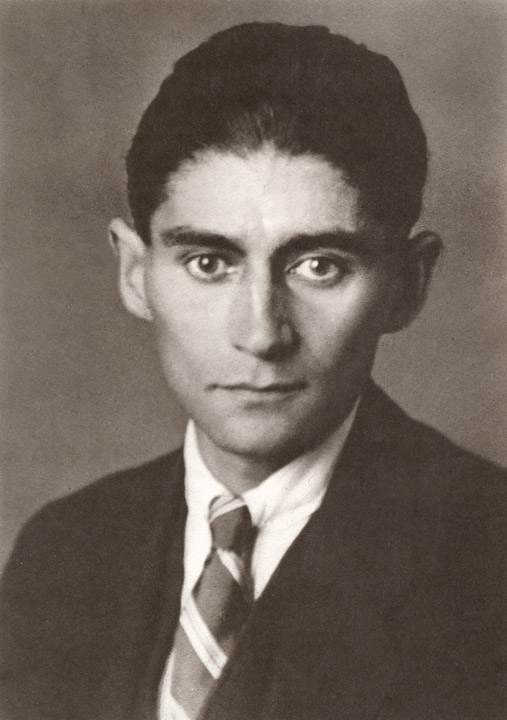
Franz Kafka

Franz Kafka

The laws of which Kafka wrote in the early 20th Century are not the ones peculiar to his time. They are not written in legislation. They are not acts of Congress. They are not the federal, state, or local statutes and ordinances lawyers argue in courts of law. The laws of which he speaks are not visible to the masses. They are the secret of the nobles. They are laws of a different order.

“The laws were made to the advantage of the nobles from the very beginning; they themselves stand above the laws.”

According to Kafka, the nobles themselves have inherited the Law as a mystery whose origins are hidden in antiquity. The nobles believe in this Law, but, in fact the Law is whatever the nobles do.

We, the populace who live under the Law of the nobles, dream of a time “when everything will have become clear, the law will belong to the people, and the nobility will vanish. This is not maintained in any spirit of hatred against the nobility; not at all, and by no one. We are more inclined to hate ourselves, because we have not yet shown ourselves worthy of being entrusted with the laws.”

Franz Kafka knew nothing of Donald Trump, the noble who knows the Law is whatever the nobles do and convinces the masses that we, too, can become nobles.

“Actually,” wrote Kafka, “we can express the problem only in a sort of paradox: Any party that would repudiate, not only all belief in the laws, but the nobility as well, would have the whole people behind it; yet no such party can come into existence, for nobody would dare to repudiate the nobility. We live on this razor’s edge. A writer summed the matter up in this way: the whole visible and indubitable law that is imposed upon us is the nobility, and must we ourselves deprive ourselves of this one law?”

  • Gordon C. Stewart, writing from the shoreline of Lake Shagawa, Ely, MN, September 9, 2015.