
Modern Demoniacs

The story of the Gerasene Demoniac (Gospel of Mark chapter 5:1-20) was to be the sermon today at Shepherd of the Hill in Chaska. Because of a storm that limited attendance, that sermon will be spoken next Sunday, the first Sunday of Lent. In the meantime. this afternoon, one of our members sent me this sermon on the Gerasene Demoniac.

“Modern Demoniacs”

A Sermon for the Third Sunday after Pentecost
by the Rev. John Kirkley, long-term interim rector
The Episcopal Church of St. John the Evangelist, San Francisco, California

May I speak in the name of God, the one, holy and undivided Trinity. Amen.

Does anyone recognize the name, Claude Eatherly? Major Eatherly was the captain of the Straight Flush, a B-59 that accompanied the Enola Gay in dropping atomic bombs on Hiroshima and Nagasaki. Responsible for reconnaissance and assessment of the effect of the bombings, it was Earthly who gave the signal to drop the bombs. After the war, he shared his remorse with the German philosopher Gunther Anders in a series of letters that became the basis for the book, Burning Conscience: The Guilt of Hiroshima.

The tall, handsome Texan was completely undone by his participation in the use of weapons of mass destruction (which earned him the Distinguished Flying Cross and other honors). According to his family, he wasn’t the same person after he left the military in the early 1950s. He was a haunted man, haunted by the inability of his fellow citizens to acknowledge the crime against humanity for which they were collectively responsible. “The truth is,” he wrote to Anders, “that society cannot accept the fact of my guilt without at the same time recognizing its own far deeper guilt.”

As Eatherly’s mental health deteriorated, he seemed compelled to seek out punishment for his crime, to become the scapegoat for a nation that refused to acknowledge its guilt. In between hospitalizations, he became involved in a series of petty crimes leading to armed robbery. Eventually, he was committed to a mental institution based on the expert witness of psychiatrists. Gunther Anders response to Eatherly’s earlier correspondence proved to be prophetic when he wrote, “One can only conclude: happy the times in which the insane speak out this way, wretched the times in which only the insane speak out this way.”

Claude Eatherly, it seems to me, was a modern-day equivalent of the Gerasenes’ demoniac. He was the United States’ demoniac; we needed him, much as the Gerasenes’ needed the possessed man whom Jesus healed. The story of the Gerasenes’ demoniac is a story about the social usefulness of possession. It is a story about the dynamic of scapegoating as a way to deny and displace our collective encounter with evil, whether the evil we commit (as in the case of Eatherly) or the evil we endure (as in the case of the Gerasene’s demoniac). Although the story takes on mythic elements that seem irrational by the standards of scientific materialism, these elements serve to heighten the universality of the story and underscore its truth. The language of demonic possession may seem archaic, but it points to a reality that we cannot dismiss.

Why did the Gerasenes’ “need” this demoniac? What “necessary” role did he play in their community? The country of the Gerasenes was a region encompassed by the Decapolis, ten Greek city-states established and populated by veterans of Alexander the Great’s campaigns. These Gentile cities, originally autonomous, were subsequently caught between Jewish rebels from Galilee and the legions of the Roman occupation. Struggling to maintain their proud independence, these cities were at various times sacked by both Jewish and Roman forces. There was no love lost between the Gerasenses and either the Jews or the Romans.

In fact, the Gerasenes seethed with resentment over the indignities of Roman subjugation. In Jesus’ time, this repressed anger, this despair of ever being free again, simmered well below the surface of Roman control. This is the context in which we must understand the Gerasenes’ demoniac.

It is not surprising that this man’s demons collectively named themselves, “Legion.” His psyche was occupied by the demons representing the spirituality of the Gerasenes under Roman occupation. He internalized the dynamic of colonizer and colonized, characterized by brutality, exploitation, subservience, resentment, and guilt. In his inner life and relationship with his neighbors we see the evil of Roman imperialism writ large.

The Gerasenes and their demoniac engaged in a ritualized drama of bondage and release, whereby the demoniac was repeatedly subdued and chained, only to break free and return to the wild again. It was his self-destructive enactment of their unfilled rage that allowed them to retain a sense of “normalcy” in the face of the dehumanizing constraints of Roman rule. This one man, dwelling naked in the tombs, gave expression to the suffering and powerlessness that no else was willing to acknowledge.

We, of course, have our “demoniacs” as well. Thursday afternoon a woman came by St. John’s looking for her son. She showed me a picture of Nick, a young man in his early twenties diagnosed with bi-polar disorder and schizophrenia. He has been living on the street for several weeks, refusing to take his medication and becoming increasingly disassociated from reality. His mother, following a trail of ATM transactions, was led to the Mission.

It turns out that Nick had been a promising film school student at NYU, without any previous symptoms of mental illness – until the events of September 11, 2001. Nick was at school in Manhattan when the terrorists crashed the two hijacked planes into the Twin Towers. It changed his life forever. Shortly thereafter, an agonizing process of mental and emotional deterioration ensued, culminating in his sure conviction that God has called him to save the world by convincing us that we all just need to get along. Sounds crazy, doesn’t it?

Now, I do not doubt that there is something within Nick’s psychological constitution that made him susceptible to being affected by the trauma of 9/11 in this way. He is clearly mentally ill. Yet, I believe that he has been possessed by evil, internalizing the spirituality of the death-dealing institutions of our world that dominate so much of our lives. Like Claude Eatherly and the Gerasene’s demoniac before him, Nick is giving expression in his inner life and relationships to the evil that the rest of us refuse to fully acknowledge, expose, and renounce. In so doing, Nick allows us to feel normal and comfortable in our denial. “Poor Nick,” we say, as if his mental illness is simply a personal problem and not a sign of our collective insanity. One can only conclude: happy the times in which the insane speak out this way, wretched the times in which only the insane speak out this way.

Nick is a symptom of spiritual disease that has infected all of us. We have come to accept a hellish level of violence, dishonesty, prejudice, greed, and xenophobia as normal in our society. In fact, so blind are we to our own faults as a nation that we persist in believing that we have the right and duty to impose our culture throughout the world, by force if necessary. In so doing, we mask our self-interest and will-to-power behind a façade of benevolent aid. We are “liberators, not occupiers,” said the Romans to the Gerasenes. Meanwhile, the suicide bombers keep exploding and the Nick’s keep crying out in our streets. The truth is, we have all been colonized, victims of collective possession, and we cling to the identified demoniacs in our midst so that we can feel good about ourselves.

It is instructive to see how Jesus intervenes in this situation. In Luke’s narrative, it is a bit odd that we find Jesus diverting into Gentile territory at this point in his ministry, a kind of sneak preview of the Gentile mission to come. What is this Jew doing in the Decapolis? Whatever the reason, notice that Jesus comes among the Gerasenes as an outsider, and it is precisely as an outsider that he can see beneath the surface of the spiritual façade operative in the culture of the Decapolis.

The demoniac approaches Jesus, only Jesus doesn’t see a “demoniac.” He sees a man in search of wholeness. Jesus recognizes that the source of this < man’s trouble lies outside of himself, and so he commences to address the foreign power that has invaded this poor man’s psyche. That power’s name is Legion.

Legion doesn’t want to be sent away. The occupying power desperately wants to maintain its foothold somehow, somewhere. Jesus acquiesces to this request, but in such a way as to reverse the scapegoat mechanism that had locked the demoniac in such a cruel relationship with the townspeople. Normally it is the scapegoat who is killed by the people as a substitutionary sacrifice for their sin. Instead, the scapegoat is healed, and Legion, representing the spirituality of the people, is cast into the swineherd and headlong over a cliff. Evil requires a scapegoat in order to maintain its legitimacy; without it, it dies.

The townspeople are definitely not happy with Jesus. The cost of his intervention to heal this man was simply too high for them, economically and spiritually. The loss of the swineherd is a significant financial loss, and in the spirituality of Legion, profits always have more value than people. While the Gerasenes marvel at the healing of the demoniac, they are also afraid. Who will be their scapegoat? Must they now acknowledge their own inner violence and despair? That is simply too much to ask, and so they beg Jesus to leave them alone.

The demoniac is like an alcoholic who gets well, depriving everyone else in the family of their scapegoat. Suddenly, everyone is in an uproar because the family drunk is unwilling to carry all the negative emotional energy. What, you mean I have to look at myself now instead of focusing on you as the problem? No thanks!

In an extraordinary example of what Freud called “the return of the repressed,” the “Legion” that is cast out by Jesus subsequently reappeared in the form of an actual Roman legion that occupied the Decapolis less than forty years later. The demoniac was healed, but the people refused to accept the implications of his healing for their own spiritual well-being. Unable to acknowledge their hatred of the Romans, and without a scapegoat to accept their displaced violence, it erupted in a bloody revolution that was ruthlessly suppressed.

What is perhaps most astonishing, is the response of the man formerly known as the Gerasenes’ demoniac. The townspeople find him clothed and in his right mind at Jesus’ feet, in the posture of a disciple. When the townspeople run Jesus out of town, he pleads to go with him. Jesus responds, “Return to your home, and declare how much God has done for you.” Which is exactly what the demoniac-become-disciple did.

His courage in so doing is nothing less than breathtaking. Jesus calls us to the same form of discipleship as the former demoniac. Our faith is not a retreat from the world, a following Jesus that takes us out of the brokenness of our world. It is rather the marvelous gift of freedom from possession by the evil powers of this world, precisely so that we can offer a voice of peace and hope to that very world.

In a world such as ours, this gift of awareness can feel like a terrible burden sometimes. As daunting as it may seem to hold together both the pain of life and its inexhaustible joy simultaneously, to fail to do so leaves us vulnerable to becoming either a scapegoat or a devotee of the spirituality of Legion. In our baptism, we renounce Satan and all the spiritual forces of wickedness that rebel against God, as well as the evil powers of this world which corrupt and destroy the creatures of God. Together (for we cannot do it alone) we must refuse, with all our might, to collaborate with structures of evil, so that the insane will not be the only ones to speak out; and, what is more, so that there will be no need for insane people. In renouncing evil, we must renounce our need for scapegoats as well, until all God’s children know the joy and dignity for which they were created.

“Return to your home, and declare how much God has done for you.” Amen.

——————————————————————————–
•The Series: `Do Justice'. Reflections before and after GC 2003. http://www.rci.rutgers.edu/~lcrew/dojustice/dojustice.html
•Assays. A Series of reflections before GC 2000 http://newark.rutgers.edu/~lcrew/assays.html
•Joy Anyway!. Reflections and Visions of Anglican Pilgrims. http://newark.rutgers.edu/~lcrew/joy.html
•Louie Crew's Anglican pages: http://newark.rutgers.edu/~lcrew/rel.html
•Louie Crew's home page: http://newark.rutgers.edu/~lcrew
You are welcome to submit your essays for consideration for this series. Send them to lcrew@newark.rutgers.edu Identify yourself by name, snail address, parish, and other connections to the Episcopal Church. Please encourage others to do the same.
————————————

Please sign my guestbook and view it.

——————————————————————————–
My site has been accessed times since February 14, 1996.
Statistics courtesy of WebCounter.

The Rise of Patriot Groups

Today The GrandForks Herald published “Thirty years after Medina, ND, shooting some still worry about ‘patriot groups’“.

Commentary: Church cancels gun violence dialogue series – Chaska Herald: Commentaries

Editor’s note: This column, submitted by the Rev. Gordon Stewart and Bill Tisel, clerk of session, on behalf of the Shepherd of the Hill Presb…

via Commentary: Church cancels gun violence dialogue series – Chaska Herald: Commentaries.

The still, small voice of calm

We live in a pandemic sea of fear and rage. We are ridden on all side by anxiety. Our hearts are anxious, easily stirred up, annoyed, and angry.

I remember the calm that would come over me as we sang this quietly during Vespers in my boyhood church. Even then, it calmed my troubled spirit. It calms me still. John Greenleaf Whiittier’s lyrics and Frederick Charles Maker’s music combine to calm me down to listen quietly for “the still, small voice of calm” that speaks through the social earthquake, winds, and storms. “Lord, breathe through the heats of my desire Thy coolness and Thy balm.”

Police Chief spokesman for gun control

“Small Town’s Big Voice on Gun Control” appeared this morning in the Star Tribune.

Click HERE to read the story on Chaska Police Chief Scott Knight, including information about last Tuesday’s First Tuesday Dialogues event on “Gun Violence in America” at Shepherd of the Hill Presbyterian Church here in Chaska. Here’s a photo of Chief Knight and Carver County Sheriff Jim OIson from last Tuesday’s Dialogue.

Scott night (l with Sheriff Olson

Scott night (L) with Sheriff Olson

Dialogues cancelled

A Public Letter from the Board of Shepherd of the Hill Presbyterian Church, host of “First Tuesday Dialogues” – Feb. 8, 2013:

“This is the word of the LORD to Zerubbabel: Not by might, nor by power, but by my spirit, says the LORD of hosts….” – Zechariah 4:6 (NRSV)

In this spirit we at Shepherd of the Hill – the church with the rocking chair – have chosen to cancel the First Tuesday Dialogues previously announced for Feb. 19 and March 5 on Gun Violence in America.

The First Tuesday Dialogues serve a single purpose: examination of critical public issues locally and globally with respectful listening and speaking in the search for common ground and the common good. The program expresses our own Christian tradition (Presbyterian) whose Preliminary Principles of Church Order (adopted in 1789) call us to honor individual conscience and direct us toward kindness and mutual patience.

The First Principle -“God alone is Lord of the conscience…“- upholds “the still, small voice” in the midst of social earthquakes, winds and fires. It requires us to listen. Ours is a tradition that honors dissent. The voice of one may be where the truth lies. The Dialogues are meant to give space for that voice on critical public issues.

The Fifth Principle declares that “There are forms and truths with respect to which people of good character and conscience may differ, and, in all these matters, it is the duty of individuals and of societies to exercise mutual forbearance”  It is our tradition’s answer to Rodney King’s haunting question: Can’t we all just get along?

These historical principles are not only our historical tradition. They represent a daily interpretation of Jesus’ teaching to love our neighbors in the present moment. One can only love God, whom no man or woman has seen, wrote the Apostle Paul, if we love the neighbor we do see.  How we treat the neighbor is how we treat God.

The success of Shepherd of the Hill’s community programs depends upon a wider acceptance of these principles of respectful listening and exchange among individuals in dialogue. They also assume a group small enough to engage each other more personally and thoughtfully.

If numbers were the only measure of success, last Tuesday’s Dialogues event on gun violence featuring Chaska Chief of Police Scott Knight and Carver County Sheriff Jim Olson was a huge success. 138 people attended. The Chapel was filled. I thought perhaps it was Easter!  But it wasn’t Easter. There was tension in the room. The established habit of the Dialogues program – one person speaks at a time without interruption or rebuttal, no clapping, and respectful listening –gave way to a sense of one team versus another. When a woman dared to stand to ask how many people there had lost a loved one to gun violence and proceeded to tell her story of personal tragedy, she was not met with compassion. She was met with shouts that her story was irrelevant. By the time the other voices had been quieted, the woman had finished her story of a horrible tragedy. She deserved better.

We all deserve better than to be shouted down, no matter what our experiences or views are. One first-time visitor who was there to oppose gun control shared his puzzlement over the treatment of the woman. “How could anyone not have compassion for her pain?” he asked. “Everyone should be moved to compassion by her story of personal tragedy, no matter what we think about the Second Amendment.”

America always jeopardizes its promise as a place of life, liberty, and the pursuit of happiness when might and power rule. To the extent that we fear that we are unsafe, it will be because we have chosen to ignore the wise word to Zerubbabel to live not by might, nor by power, but by God’s spirit reflected in the commandment to love our neighbors as ourselves.

Lots of people have asked about the rocking chair on the front lawn. Why is it there? What does it stand for?

After the Amish school room massacre in Pennsylvania several years ago – very much akin to what happened at Sandy Hook – Minnesota Public Radio’s “All Things Considered” aired a commentary called “My Amish Rocker.” It was about a more peaceful, forgiving, and loving way of life, the amazing picture of the Amish buggies clip-clopping their way past the home of the man who had murdered their children, tipping their hats respectfully to the killer’s family, on the way to the funeral of their own slaughtered children. The story on MPR was about my Amish rocking chair, made for me by Jacob Miller of Millersburg, Ohio and the opportunity it gives me to think again about who I am in a violent world.

The chair on Shepherd of the Hill’s lawn is there to invite the world to a different way of life. It reminds passers-by to slow it down. Stop speeding through life on the way to who-knows-where. Take a seat.  Rock a while. Breathe deeply. Get in touch with the deep things of the human spirit. Be quiet and listen, like the Amish, for the still, small voice which, in the end, is the only Voice at all.

Nothing

I have wrestled through the night after a packed church gave voice to highly charged emotions and views of guns in America. I’m asking how in the world we move forward…together…and confess: I don’t know. I just know that we have to try. But I’m weary this morning. I have no answers. This poem could not have arrived at a better time.

Nothing

I have nothing…

nada…zilch…zero…

no thoughts, no ideas,

no inspiration.


Worse, only clichés

crowd my mind:

stock images,

standard phrases,

or remembered words

wielded by real writers.


Feeling only frustration,

tempted by alliteration,

or worse, rhyme…

Theft?

Is it worse to plagiarize 

than to leave a blank page?

– Steve Shoemaker, Urbana, IL Feb. 6, 2013

It occurred to me that we’re not alone.

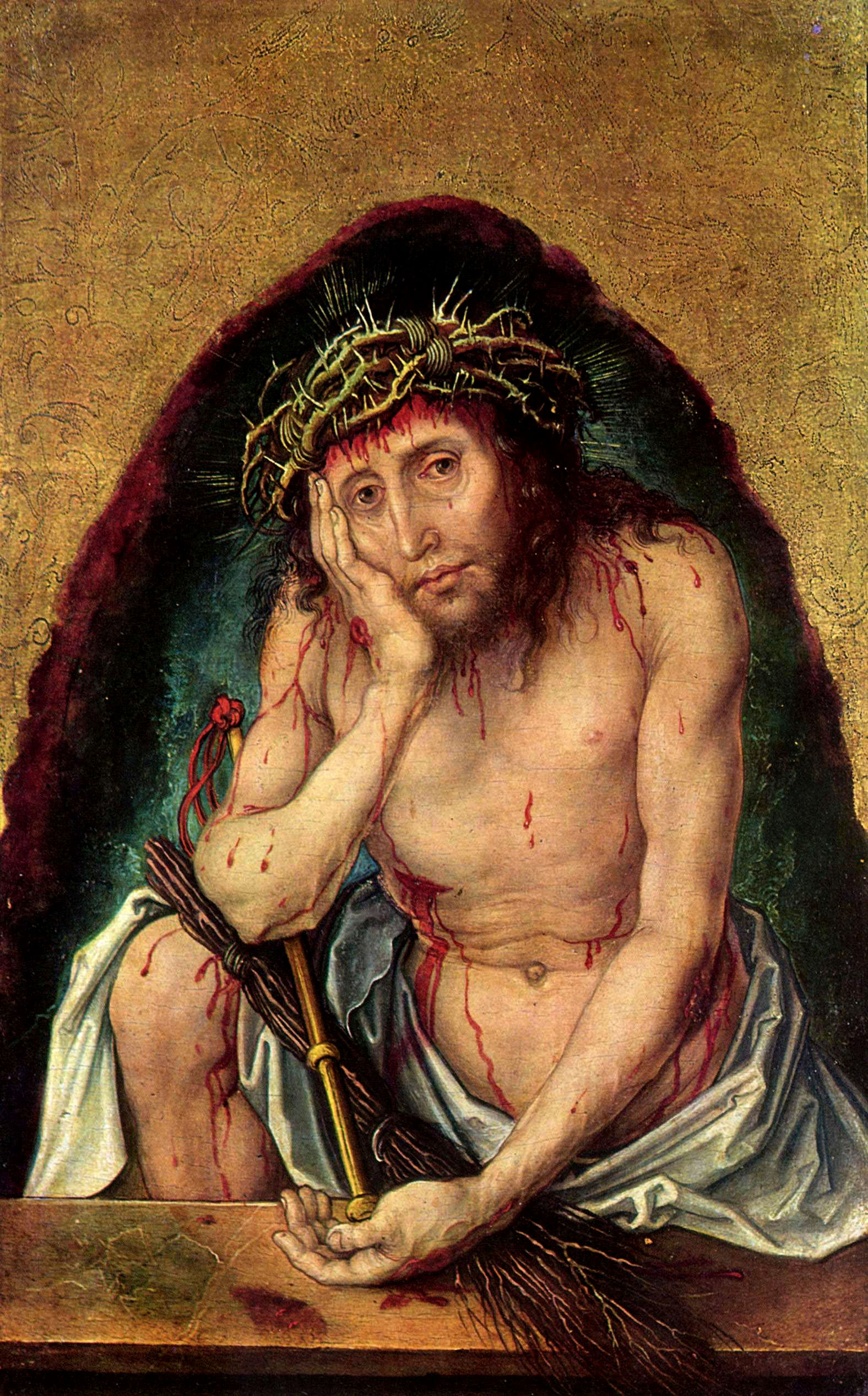
Ecce Homo - "Here is the Man" Albrecht Durer

“Ecce Homo” Albrecht Durer

Can we get along?

NOTE: This personal reflection was written yesterday (Tuesday, Feb. 5) in advance of last night’s public dialogue on “The Epidemic of Gun Violence in America” that drew 138 people. Even arranging the program was fraught with difficulty.

Tonight a series of public dialogues on the causes and remedies of gun violence begins at 7:00 PM at the church I am privileged to serve in Chaska.

How do we have this conversation? Can we talk? Can we all get along?

Every word, every phrase, is a powder keg. All speech is suspect. We listen not with open ears to hear a different point of view. We approach each other with suspicion, reacting defensively or aggressively to any hint that the conversation might be prejudiced against one’s own point of view. Even a title is a land mine.

I love the U.S. Constitution. I also don’t like guns. My only experiences with guns have been negative. The assassinations of President Abraham Lincoln in the Booth Theater and JFK in Dallas; Martin Luther King, Jr. supporting the striking sanitation workers in Memphis; presidential candidate Senator Robert Kennedy. A gun has only one purpose: to shoot something or someone. It has other use. Violence is often committed with one’s own fist. But capacity to hurt or destroy does not define a hand. A foot may kick, but that’s not why we have feet. A baseball bat picked up in a moment of rage is a lethal weapon, but it is not by definition a weapon; its purpose is to hit a baseball within the rules of baseball. A car can become a lethal weapon in the hands of a car bomber, but its purpose is transportation, to get us from here to there and back.

The human capacity for violence is deep and ineradicable. It’s in our DNA. The story of Cain’s slaying of his brother Abel is not about the beginning of human history; it is one of the defining facts of human nature itself. As my tradition puts it in a Prayer of Confession, “We are prone to evil and slothful in good.”

My tendency toward evil is often the conviction that I am right. I need to be reminded that my experience with guns is not the same as it is for those who grew up on a farm or a ranch where guns serve the purpose of killing a wolf or coyote or of putting down an injured horse out of mercy. The experience in rural America is altogether different from the small town outside a major city in which I was raised, and it is different from urban centers by reason of low population density. My ownership of a gun on the farm is not a threat to the person next door in a tenement or in the housing development of the suburb. Guns in rural America serve a different purpose. And, it seems to me, the split and the suspicion regarding guns and violence in America is to a great extent defined by these two very different social experiences, demographics, and cultures.

Having spent the last two weeks trying to organize a series of respectful conversations in the wake of Newtown has taught me how difficult it is to have conversation. Fear of the other is rampant. “I won’t appear on the same program with him. He’s an extremist.” Or, “I don’t think I’ll come. I don’t like trouble.” Or, “You bet I’ll be there. We’re going to pack the house.”

But the gospel of Jesus which is the center of Christian faith calls us to live by the Spirit of the Living God, not by fear or suspicion. Christ himself was the human “other” – the one on whom every side projected its hatred of the other side – and ultimately the representative of the “Wholly Other” who is other to us all.

“Whoever says, ‘I love God’ and hates his brother/sister,” is a liar; for whoever does not love his brother/sister whom he has seen,  cannot love God whom he has not seen. And this commandment we have from him, that those who love God should love their brother also.” (First Letter of John 4:20-212).

I also find wisdom in the organizing principles of my religious tradition. The Preliminary Principles of Church Order (adopted in 1789) gives some advice for how to conduct ourselves when we strenuously disagree. They are called “preliminary” because they are the core principles for how we believe we are called to interact as the children of God. We believe

…” that there are truths and forms with respect to which people of good character and principles may differ. In all these it is the duty both of private Christians and societies to exercise mutual forbearance toward each other.”

“Preliminary Principles of Church Order (1789 at the organizing of the Presbyterian Church USA).

I’m trying my best to do my duty. Can the Pastor with strong personal views also serve as the Moderator? Can I promote the duty to exercise mutual forbearance toward each other?  Can we talk? Tonight how will we answer Rodney King’s haunting question: “Can’t we all just get along?”  Lord, take my hand and lead us on to toward  the light.

The Second Amendment and Slavery

What is the “Militia” of the Second Amendment and how did “the right to bear arms” get there?  Thom Hartmann summarizes a different account of what we now know as the Second Amendment. Please chime in after you’ve read through the piece.

The Second Amendment was Ratified to Preserve Slavery.

Out of the Mouth of Woodbine Willie

“Woodbine Willie” is a strange name for an Anglican priest. The nickname was given to

G. A. Studdert Kennedy (18813 - 1929)

G. A. Studdert Kennedy (1883 – 1929)

G. A. Studdert Kennedy (1883-1929) by the battered troops of the British forces to whom he ministered in World War I.

The name came from the “Woodbine” cigarettes he gave to the troops. Woodbine Willie grew up among the desperately poor. He had two great passions: the church and social reform. He never winced and, oh, how he was loved by what were then known as “the common people.” He was a fighter for social justice and human rights, but he also advocated civil conversation, what he called “a plane” upon which people of differing views and good conscience would come together to resolve a problem.  Think about the current national debate in the wake of the tragedy at Newtown.

There is, and there must be, a plane upon which we can think and reason together upon questions arising out of our wider human relations, social questions, that is, apart from and above party prejudice and sectional interest. If it is not so, and there is no such plane, and we can not think of these big questions outside the prejudices and passions that arise in party strife, then it is safe to assert that there will never be any solution of the problems whatsoever. The idea that politics in the true sense – that is, the art of managing our human relationships on a large scale – must remain a separate department of life, distinct from morals and religion, is ultimately irrational and absurd, and is an idea with which no  responsible teacher ought to have anything to do. – Sermon, “The Church in Politics: a Defense”

Tomorrow night, Tuesday, Feb. 5, Shepherd of the Hill Presbyterian Church in Chaska will do its best to provide “a plane” for reasonable discussion of the epidemic of gun violence in America. 7:00 – 8:30 PM. Hope and pray that it be an evening where we step back to discuss “the big questions outside the prejudices and passions that arise in party strife.”