Are we all still France?

Paris was attacked one week ago today. Within minutes Nous sommes toute la France — We are all France– went viral on FaceBook along with French flags.

Very quickly U.S. Congressmen and a majority of governors in the United States went before television cameras and microphones to declare that Syrian refugees would no longer be welcome here.

Meanwhile a strange thing happened in France. French President Francois Hollande, speaking to French mayors, declared the opposite. He re-iterated and increased his commitment to France’s “humanitarian duty” to refugees fleeing Syria and Afghanistan.

Click After Attacks, France Increases Its Commitment to Refugees to read the story.

While the French President and President Obama have maintained balanced concerns for national security and humanitarian duty, fear has been spreading. Fear of terror is as legitimate in the U.S. as it is in France. It’s what we do with fear that matters.

Fear is the enemy of reason, the great confuser of thoughtful action. Those who stoke the embers of fear confuse fire with courage, forgetting that is is cowardice to surrender one’s deep principles when under pressure or assault. The courageous refuse to let fear determine their course; no darkness can extinguish the light.

One week after the Paris attacks we face the question of how to live in the reality of throngs of refugees and the threat of terrorism. It’s not simple. We can say to the world, Nous ne sommes pas tous de France. Nous sommes des lâches au cœur dur”  [We are not all France. We are hard-hearted cowards]or we can say again with the courage of high resolve and principled compassion:

“Nous sommes toute la France!”

  • Gordon C. Stewart, Chaska, MN, November 20, 2015

Muslim Clerics declare “ISIS is un-Islamic”

Before Beirut and Paris, 1,ooo+ Muslim clerics in India issued a Fatwa against ISIS  declaring, “The acts of the Islamic State are inhuman and un-Islamic.” The Associated Press report was published September 9, 2015. Click the link above to read the story.

Also in September, NPR aired Prominent Muslim Sheikh Issues Fatwa Against ISIS Violence, re-aired yesterday. Posts like these deserve wider attention.

Meanwhile, a very small Christian church in the little town of Philo, Illinois, drew attention in the local paper for its consideration of hosting Muslim Syrian refugees.

News on Philo Presbyterian Church and Muslim Syrian refugees

News on Philo Presbyterian Church and Muslim Syrian refugees

  • Gordon C. Stewart, Chaska, MN, November 18, 2015.


The Statue of Liberty: “Send THESE, not those?”

Statue of Liberty, NY, NY

Statue of Liberty, NY, NY

“Send these, the homeless, tempest-tossed to me, I lift my lamp beside the golden door!” – Emma Lazarus, Jewish American author; inscription, Statue of Liberty, New York, New York

“Send these, the [Christian] homeless, tempest tossed to me, I lift my lamp beside the golden door!” – Sen. Ted Cruz

Click “Ted Cruz’s Religious Test for Syrian Refugees” for Amy Davidson’s November 16 article in The New Yorker.

  • Gordon C. Stewart, Chaska, MN, Nov. 19, 2015


A Song for Beirut and Paris

Video

News from Paris and Beirut reminds us of the history of Lac qui Parle, the Dakota Creation Song, that still speaks hope to a violent world. Thirty-eight Dakota men sang it in its original Dakota language – Wakantanka taku nitawu – before their executioners took them to the gallows in Mankato, MN in 1862.  The threat of death did not deter them from affirming the goodness of creation.

“Many and great, O God, are Thy things, Maker of Earth and Sky; Thy hands have set the heavens with stars, Thy fingers spread the mountains and plains. Lo, at Thy word, the waters were formed; Deep seas obey Thy voice

“Grant unto us communion with Thee, Thou star-abiding One; Come unto us and dwell with us: With Thee are found the gifts of life. Bless us with life that has no end, Eternal life with Thee.

[Joseph R. Renville, Dakota, 1842; paraphrased translation, R. Philip Frazier, 1929 and 1953]


Old Joe Hill and Old Doug Hall

Joe Hill (1879-1915)

Joe Hill (1879-1915)

I dreamed I saw Joe Hill last night,
Alive as you or me
Says I, “But Joe, you’re ten years dead,”
“I never died,” says he.

I dreamed I saw Doug Hall last night,
Alive as you or me
Says I, “But Doug, you’re 11 years dead,”
“I never died,” says he.

If Doug Hall had heroes, foremost among the candidates were Joe Hill, the labor organizer and Paul Robeson, whose rendition of Old Joe Hill was his Doug’s favorite. Willie Nesbitt echoed Robeson’s versions of Old Joe Hill and Old Man River at Doug’s Memorial Celebration November 14, 2004.

Those who live and die for economic justice never die. They live on through those who pick up the shovels when they’re gone.

  • Gordon C. Stewart, Chaska, MN, November 13, 2015

Ordinary people, Socrates, and the Psalmist

Last Sunday was my first experience with the Adult Forum at Trinity Episcopal Church. It was a brainstorming session for the church’s adult faith formation program.

A woman introduced herself as “the octogenarian in the group” to lots of laughter since a number of them were well on their way to their 80s. She proposed “living well in anticipation of dying and death” as her topic of interest. The group’s response was immediate. They were hungry for it.

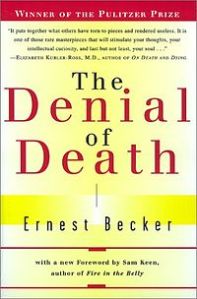
DenialofdeathcoverThey went immediately to the practical considerations like Living Wills, leaving clear instructions for children. But the discussion soon moved to the deeper matter of mortality itself, our culture’s juvenile denial of death (a la Ernest Becker), and the desire to go deeper into the philosophy and theology of wellness, death, and dying.

Two days later at last night’s Republican presidential debate, when Senator Marco Rubio drew roaring applause for his put down of philosophers – “We need more welders, less philosophers” – I wanted to invite the senator and everyone in the auditorium to join the 20 people  next Sunday in the Fireside Room where ordinary people will heed the wisdom of Socrates to “apply themselves in the right way to philosophy”:

“Ordinary people seem not to realize that those who really apply themselves in the right way to philosophy are directly and of their own accord preparing themselves for dying and death”

Death is always the elephant in the living room. So is philosophy when it is scorned. It’s easy to be glib about it, to knock it, ignore it, or mock it. Not so easy to face it “of [our] own accord”, as Socrates and the psalmist urge those who would live well – with gladness and and mercy – in anticipation of dying and death.

“So teach us to number our days, that we may apply our hearts unto wisdom. … O satisfy us early with thy mercy; that we may rejoice and be glad all our days.” – Psalm 90:12,14, KJV

Gordon C. Stewart, Chaska, MN, November 11, 2015.

Senator Rubio, Welders and Philosophers

“Welders make more money than philosophers,” said Mr. Rubio during last night’s Republican presidential debate. “We need more welders and less philosophers.”

No one on the stage seemed to remember John Adams, one of the Founding Fathers, who observed,

“I must study politics and war [in order] that my sons may study mathematics and philosophy.”

Instead of raising the minimum wage, Mr. Rubio calls for re-tooling America’s educational system to prepare people for jobs so they’ll make more money. Education would become training for a specific job.

His contrast between welders and philosophers is more about liberal arts education than about wages. Classical liberal arts programs teach people how to think. Philosophers are thinkers.

There is an anti-intellectual streak in American culture. When a skilled debater scratches that itch, there is loud applause, as there was last night in Milwaukee.

In the search for simplicity, those who applauded Mr. Rubio’s swipe at philosophers ignored philosopher Bertrand Russell’s observation.

“To teach how to live without certainty and yet without being paralyzed by hesitation is perhaps the chief thing that philosophy, in our age, can do for those who study it.”

The stereotype of the philosopher as aloof and beside the point makes for an easy target and an immediate laugh. But governing is not like welding.  We need need good philosophers and good welders.

“The society which scorns excellence in plumbing as a humble activity and tolerates shoddiness in philosophy because it is an exalted activity will have neither good plumbing nor good philosophy; neither its pipes nor its theories will hold water.” – John W. Gardner

  • Gordon C. Stewart, Chaska, MN, November 11, 2015


Donald Trump and the Presbyterians

Donald Trump and Ben Carson

Candidate for President Donald Trump’s sideswipe at fellow Republican candidate Ben Carson’s Seventh Day Adventist faith calls for a response from those who are what Mr. Trump is not – a Presbyterian.

Although Mr. Trump attended Sunday School and was confirmed at the First Presbyterian Church of Jamaica in Queens, NY, he is not a member of a Presbyterian Church. His church of choice on Easter and Christmas is Marble Collegiate Church, the historic Reformed Church in America congregation in midtown Manhattan best known for the Rev. Dr. Norman Vincent Peale, author of The Power of Positive Thinking.

“I am Presbyterian Protestant. I go to Marble Collegiate Church,” he told reporters in Greenville, S.C.  Two funny thing about that: 1) Marble Collegiate Church is not a Presbyterian church, and 2) even if it were,  Mr. Trump is not a member there, according to the church itself.

Why does it matter?

Who cares?  UNTIL Mr. Trump presents himself as a Presbyterian in contrast to another candidate’s Seventh Day Adventist faith in a way that is typically very un-presbyterian.

“I’m a Presbyterian. I’m a Presbyterian. I’m a Presbyterian!” he proclaimed with pride, insinuating that he is in the mainstream while Dr. Carson’s Seventh Day Adventism (SDA) is a fringe group outside the mainstream of American religious life. He seemed unaware that 1) Seventh Day Adventists are one of the fastest growing churches both in the U.S. and the world with a worldwide membership of 18.1 million, and 2) unlike the overwhelmingly white Presbyterian Church to which he claims to belong, the SDA is full of color and immigrants.

As to his own faith, Trump’s answer to Frank Luntz’ question of whether he’s ever asked for forgiveness offers further insight:

“I am not sure I have. I just go on and try to do a better job from there. I don’t think so,” he said. “I think if I do something wrong, I think, I just try and make it right. I don’t bring God into that picture. I don’t.”

Trump said that while he hasn’t asked God for forgiveness, he does participate in Holy Communion.

“When I drink my little wine — which is about the only wine I drink — and have my little cracker, I guess that is a form of asking for forgiveness, and I do that as often as possible because I feel cleansed,” he said. “I think in terms of ‘let’s go on and let’s make it right.'”

The Presbyterian-Reformed Tradition

There are a few things about the Presbyterian-Reformed tradition of the Christian faith that Mr. Trump seems not to know or has forgotten:

  1. The Reformed-Presbyterian faith shuns ostentation.
  2. Simplicity is a characteristic of the Christian life.
  3. “The sins forbidden by the First Commandment” include “self-seeking, and all other inordinate and immoderate setting of our mind, will, and affections upon other things;…hardness of heart, pride, presumption, carnal security” (Larger Catechism, Q 1).
  4. Confession of sin – both in private prayer and in the “Confession of Sin” in every Sunday service of worship – is a daily spiritual discipline of Christian life and practice.
  5. Divine grace and the forgiveness are the sources of personal and communal renewal and reconciliation.
  6. Respect for other religions -“Christians find parallels between other religions and their own and must approach all religions with openness and respect” (Confessions of 1967 IIB3) – and humility about one’s own religious claims are called for before God.

Local Presbyterians and Seventh Day Adventists

Momoh Freeman

Momoh Freeman

Every Sunday for seven years Momoh Freeman, a gifted Liberian refugee musician, served as Director of Music at Shepherd of the Hill Presbyterian Church in Chaska; on Saturdays he served in the same capacity at a Seventh Day Adventist Church in Minneapolis. The beliefs and practices of the two congregations are distinctly different in many respects, but we became fast friends.

The SDA Choir, comprised of Liberian-Americans, Liberian refugees, and African Americans, performed in concert at Shepherd of the Hill at our invitation, singing both African hymns and Handel’s Hallelujah Chorus a cappella!

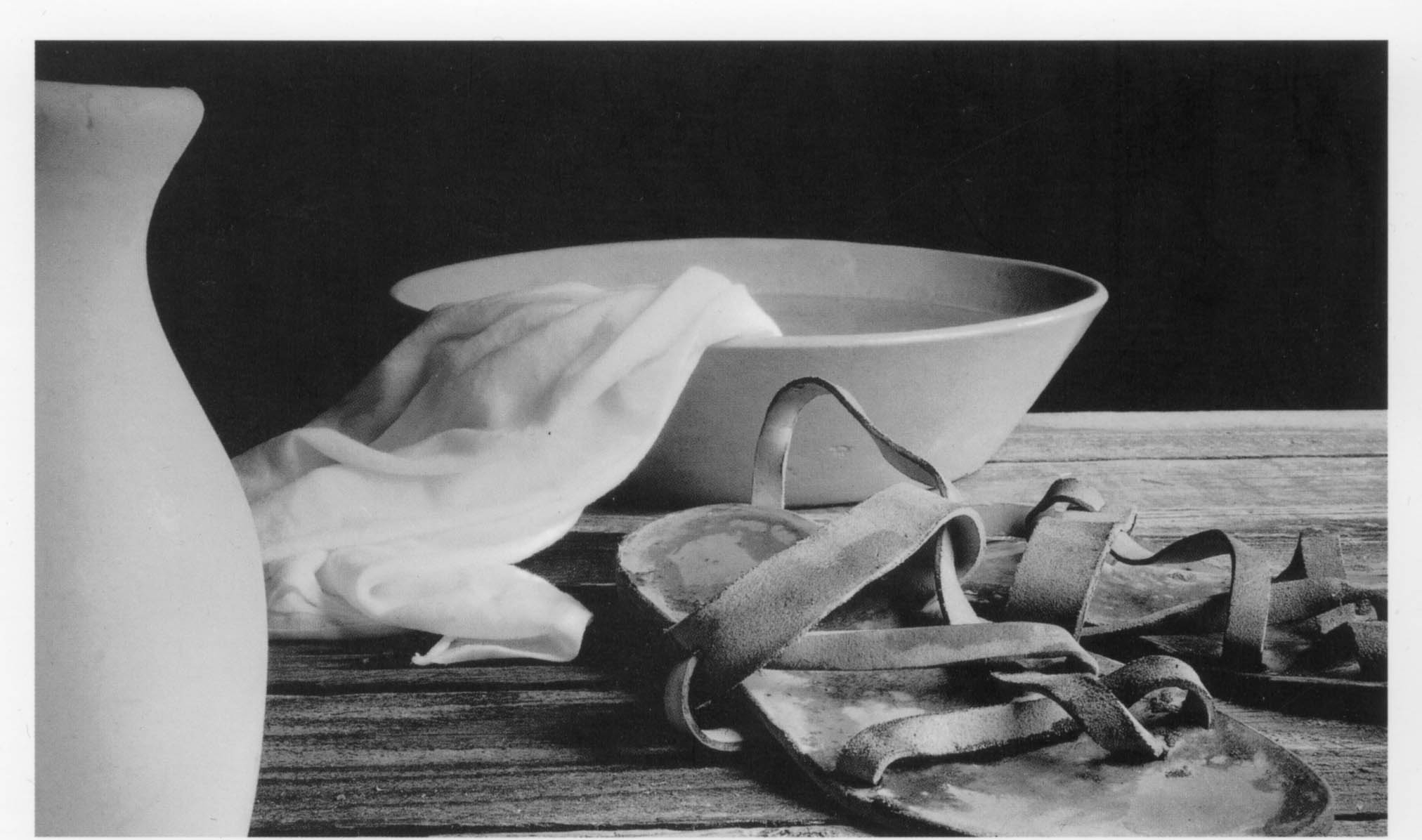
We Presbyterians joined our SDA friends in Minneapolis for Saturday worship, including the foot-washing ritual that preceded the Sacrament of Holy Communion to which we were also welcome. None of us went to the table “drink my little wine…and have my little cracker.”

A remedy of humble faith

Considering the disrespect in the run up to a presidential nomination, a good foot-washing seems in order.

When Jesus washed Peter’s feet, Peter replied, “Lord, not my feet only but also my hands and my head!” (John 13.9)

  • Gordon C. Stewart, Presbyterian Teaching Elder (i.e., Minister of Word and Sacrament) H.R., Chaska, Minnesota, October 28, 2015



A funny thing happened at the doctor’s office

A funny thing happened yesterday during my annual physical.

The physician was excited to share something she’s very proud of: a policy statement on “Firearm-Related Injury and Death in the United States: A Call to Action from 8 Health Professional Organizations and the American Bar Association“. Click HERE to read the entire text.

It begins with an Abstract that reads, in part, “Deaths and injuries related to firearms constitute a major public health problem in the United States.

The document provides findings and recommendations based on the separate policies of the 7 health professional societies that represent most physicians in the United States – American Academy of Family Physicians, American Academy of Pediatrics, American College of Emergency Physicians, American College of Obstetricians and Gynecologists, American College of Physicians, American College of Surgeons, and American Psychiatric Association and the American Bar Association.

She noted how rarely doctors and lawyers join together on public policy positions, let alone an issue as contentious as this one. This was a victory of common sense among doctors and lawyers.She was pleased that her medical society is part of this Call to Action.

“The specific recommendations include universal background checks on gun purchases, elimination of physician ‘gag laws’, restricting the manufacturing and sale of military-style assault weapons and large capacity magazines for civilian use, and research to support strategies for reducing firearm-related injuries and deaths. … The American Bar Association through its Standing Committee on Gun Violence, confirms that none of these recommendations conflicts with the Second Amendment or the rulings of the U.S. Supreme Court.

“Across the United States, physicians have first-hand experience with the effects of firearm injuries and deaths and the impact of such events on their patients and families. Many physicians and other health professionals recognize that this is not just a criminal violence issue but also a public health problem.”

This year’s annual physical enlightened more than the state of my health. Like clergy, physicians hear stories that confidentiality keeps between sealed lips, but the doctors know the sorrow from the inside out in ways to which most do not have access. Congratulations for speaking out to frame the questions in terms of public health.

  • Gordon C. Stewart, Chaska, MN, October 27, 2015

Views from the Edge republished today

Click Reframing the Gun Conversation for today’s republication (with some fine editing) by MinnPost.com, one of Minnesota’s best independent news sources.

  • Gordon Stewart, Chaska, MN, October 22, 2015