A Proverb, Truth Social, and the Science Guy

Featured

Truth Social and it’s tutor

“Truth Social,” Donald Trump’s social media platform, and Donald Trump’s use of it have two things in common. As a platform, Truth Social is neither truthful nor social. It’s a propaganda machine — untruthful and anti-social. Donald Trump’s self-serving posts are the same, untruthful and antisocial. They reflect the defense strategy Roy Cohn taught him years ago. “Never defend! Always attack! Attack, attack, attack!” Roy Cohn fried whatever and whomever stood in his way.

Two featured news headlines — “Trump reverts to scorched-earth political strategy as he runs for ’24” (NYT), and “In U.S., Phoenix tops them all; climate change threatens health” (Associated Press)— strike me this morning as two sides of the same coin. The US Constitution and Earth are being scorched by an indicted former president and his party. Denial may have worked before now, but it’s harder to ignore when Phoenix and Death Valley hit record-breaking temperatures while the forests are ablaze in the Pacific Northwest and in Canada; the Northeast U.S. is awash with flooding and the scenes are most everywhere around the globe.

It’s time to listen to Bill Nye, the Science Guy

Bill Nye the Science Guy photo

“Do you believe climate change is real? Is human impact making the earth less inhabitable?” should be the FIRST questions a voter asks a candidate. “Yes or No?” If the answer is No, or the candidate does a tap dance, it’s time to turn our backs, and find a candidate who answers “Yes.”

Seven detestable things

This direct question to candidates goes hand in hand with the seven detestable things named in the Book of Proverbs:

• haughty eyes;
• a lying tongue;
• hands that shed innocent blood;
• a heart that devises wicked schemes;
• feet that are quick to rush into evil;
• a false witness who pours out lies; and
• a person who stirs up conflict in the community.

The Faith and Freedom Coalition

At the Gala dinner at the Washington Hilton that ended this year’s Faith and Freedom Coalition Annual Conference (23–24 June 2023), the featured speaker brought his haughty eyes, lying tongue, heart that devises wicked schemes, feet that quickly rush into evil, and mouth that pours out lies to arouse the adrenaline of a crowd that claims to know their Bibles.

“Every time the radical left Democrats, Marxists, communists and fascists indict me,” he declares, “I consider it a great badge of courage. I am being indicted for you….” The faithful lift their Bibles and flags in rapturous worship and praise.

Deception, denial, scorched-earth, and scorched Earth

When a candidate blames his criminal indictments and climate change as hoaxes cooked up by “Democrats, Marxists, communists, and fascists,“ Roy Cohn would be proud. But a scorched-earth defense by offense is not only morally offensive; it is a pattern of deception that is scorching the Earth itself.

Gordon C. Stewart, author of Be Still! Departure from Collective Madness (2017 Wipf & Stock),49 brief meditations on faith and life, Brooklyn Park, MN, July 19, 2023.

The Legitimate Person and the Cookie Jar

Featured

It’s stranger than strange, yet, perhaps, not strange at all, for a human being to describe himself as legitimate. “I don’t do things wrong. I do things right. I’m a legitimate person,” said former president DJT on June 27 in self-defense when his integrity had been called into question following release of a self-incriminating audio tape.

What is a legitimate person? What makes a person illegitimate? What might it mean to call oneself a legitimate person? The synonyms for “legitimate” are interesting, but they are less helpful than some of the antonyms: counterfeit, deceptive, dishonest, false, illegal, invalid, unfitting, unreal, unreliable, unsuitable, untrustworthy, unlawful.

Who will rescue me from myself?

There are neither legitimate nor illegitimate persons, according to my faith tradition. Even the best of us lives in the throes of tragic estrangement. No one is exempt. The Apostle Paul — Saul of Tarsus who’d been knocked off his horse and blinded on his way to Damascus to commit domestic terrorism — expressed in his Epistle to the Romans the horrifying truth he had come to see in himself.

Though the will to do what is good is in me, the power to do it is not: the good thing I want to do, I never do; the evil thing which I do not want — that is what I do…. In my inmost self I dearly love God’s law, but I see that acting on my body there is a different law which battles against the law in my mind. So I am brought to be a prisoner of that law of sin which lives inside my body.What a wretched man I am! Who will rescue me from this body of death?

Epistle to the Romans 7:19-24 New Jerusalem Bible

Breaking the paradigm of reward and punishment

While studying Paul’s Epistle to the Romans, Martin Luther saw that the genitive in Justitia Dei (“the justice of God”) was not passive but active, his heart and mind set aside the mistaken view of God as the Judge waiting to reward or punish us according to our own righteousness and embraced the Judge who is gracious toward the defendant who throws himself on the mercy of the court, and, as in the parable of the prodigal son, is met by the grieving parent who has waited patiently for the beloved child’s return and reunion.

“The trouble with our times is not the multiplication of sinners, it is the disappearance of sin.”

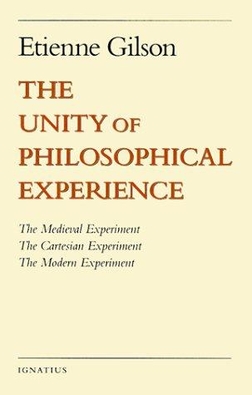
“Philosophy always buries its undertakers.”

Étienne Gilson (1884 – 1978).

photo of cover of The Unity of Philosophical Experience by Etienne Gilson

“I’m a legitimate person” is not a declaration of innocence. It’s a cry for rescue from the horror within one’s own self — the terrifying sense of illegitimacy — the threat that leaves one weeping in a solitary confinement of his own making.

Photo of Eric Fromm

“Life moves against itself through aggression, hate, and despair.”

– Erich Fromm (1900 –1980)

Law and Grace

In my less frequent pastoral moments I hear in the former president’s declaration of legitimacy the stammering cry of a wounded child who put his hand in the cookie jar but was never called to account. When the protest — “I didn’t put my hand in the cookie jar!”— is declared, and the lie is believed, or the truth swept aside with a shrug, the child is split between the instinct of self-preservation and the instinct of self-destruction. There remains a life-long denial, oozing from the cracks between truth and falsehood, a protest of legitimacy —“I don’t do things wrong. I do things right. I’m a legitimate person.” The adult child has yet to learn that none of us is legitimate or illegitimate and that there is a floor of mercy and acceptance waiting to save us from ourselves.

A return to Paul Tillich

In this moment I return to the wisdom of Paul Tillich that broke through the darkness of a despondent college student who had all but concluded that the faith tradition in which I had been raised was a hoax. I

I pray now for a similar wave of light for other sinners like me.

Grace strikes us when we are in great pain and restlessness. It strikes us when we walk through the dark valley of a meaningless and empty life. It strikes us when we feel that our separation is deeper than usual, because we have violated another life, a life which we loved, or from which we were estranged. It strikes us when our disgust for our own being, our indifference, our weakness, our hostility, and our lack of direction and composure have become intolerable to us. It strikes us when, year after year, the longed-for perfection of life does not appear, when the old compulsions reign within us as they have for decades, when despair destroys all joy and courage. 

Sometimes at that moment a wave of light breaks into our darkness, and it is as though a voice were saying: “You are accepted, accepted by that which is greater than you, and the name of which you do not know.”

— Paul Tillich, “You Are Accepted,” The Shaking of the Foundations” (New York, Charles Scribner’s Sons, 1948).

No one can claim to be legitimate. None of us can claim we don’t do things that are wrong. No one does only right. The division of life into right and wrong is an early stage of childhood development in which the judge either rewards good behavior or punishes when you’ve put your hand in the cookie jar.

Blessed are they who live long enough to get knocked off their horses, and trust that there is more mercy in God than there is sin in us.

Gordon C. Stewart, public theologian, author of Be Still! Departure from Collective Madness, Brooklyn Park, MN, July 15, 2023

“Liar! Liar! Pants on Fire!”

Featured

Same day — different field trips

The day Congressman Jim Jordan took his House Judiciary Committee on a field trip to NYC, Elijah’s kindergarten teacher took the five year-olds on a field trip to the Science Museum in Saint Paul, Minnesota. Mr. Jordan’s committee went to NYC to hold a “field hearing” to expose the failure of the “pro-crime, anti-victim” policies of Democrats like Manhattan District Attorney Alvin Bragg. Elijah’s kindergarten class rode a school bus without the federal law enforcement that protects congressional committee field hearings.

Different daily drills

The visit to the Science Museum meant time out from the daily safety drills that prepare the kindergartners for what to do when a shooter shows up at their school. Mr. Jordan and his committee didn’t take a break from practicing their daily rope-a-dope drill of how to evade responsibility for the guns that are sending kids on a one way trip to the morgue.

Photo of message to parents during Uvalde school shooting
Message to Robb Elementary School parents of students several hours following the shooting.

Body language: pants on fire

Mr. Jordan’s conflicting answers to the repeated question whether and when he talked with the president on Jan. 6, 2021 are captured in this video. Watch the body language that accompanies his words.

CNN post showing Rep. Jim Jordan’s differing answers about the January 6, 2021 insurrection

Under ordinary circumstances, Jim Jordan fires words at the pace of an AR-15 magazine. The Jim Jordan we see in this video stammered, and his stammering was accompanied by something I found more telling — his body language. He was hitching his pants up.

Promoting a radical political agenda

New York City “has lost its way when it comes to fighting crime and upholding the law. Here in Manhattan, the scales of Justice are weighted down by politics. For the district attorney justice isn’t blind — it’s about advancing opportunities to promote a political agenda — a radical political agenda.”

Rep. Jim Jordan, Chair of US House of Representatives Judiciary Committee

Getting it right while getting it wrong

Mr. Jordan got it wrong. NYC’s crime rate is lower than most other American cities. It is also, however, the city whose district attorney, Alvin Bragg, had just indicted Donald Trump on 34 criminal counts for lying about not keeping his pants up.

But Mr. Jordan also got it right. His accusations of others describe himself and his party. He and the Judiciary Committee had travelled to NYC to promote their own political agenda — a radical political agenda — the conspiracy of power that lit the match of the January 6 insurrection and “the Big Lie” that never dies.

Gordon C. Stewart, Be Still! Departure from Collective Madness (2017 Wipf and Stock), 49 brief (2-4 pages) commentaries on faith and life; Brooklyn Park, MN, April 28, 2023.

Two Personal Reflections on Despair and Faith

Featured

This post comes in two parts. The first was written Holy Saturday (the day between Good Friday and Easter); the second was written yesterday, the second Sunday of Easter.

The Silence of Holy Saturday

Everything falls into silence today. Jesus is crucified, dead, and buried behind the heavy rock of a borrowed tomb. Armed guards stand on either side of the stone that secures the tomb; the governor’s seal — the occupying empire’s official seal —warns against tampering with this tomb. The seal is unbroken; everything else is broken.

Holy Saturday is the day after the victory of death on the Hill of Skulls. There is no Easter. No reason to trust that the clouds will blow over, the sun shine through, the shivering stop. Life is frozen stiff. Only the loneliness within my frozen self remains.

To protect themselves against the fear of death, two bullies twist truth into lies, and station their guards to keep the rock in place and the seal unbroken. The piercing of his side; thorns cutting into his skull; the ridicule of vision; the soldiers’ taunts to come down to prove he is the king he never claimed to be; the cynic-sneer that takes the place of innocence; the barren blindness to what was once my sense of beauty; the indictment of hope and trust; the gnarling of beauty, truth, and goodness into tangled knots that are neither truthful nor social, hammer in my head from Moscow, Mar-a-Lago, and now from the state house of Tennessee.

My soul is not still today. The stone has not been moved. The seal stays put. Only Pilate’s questions and sneer remain:”So you’re a king!” “What is truth?”

Thomas and his Twin

I’m a lot like Thomas. Neither of us was there to verify what others told us. We were not in the room when the others reported that the crucified Jesus had come through their locked door. Thomas wasn’t into ghosts. Neither am I. Although my grandmother claimed the old house on Church Lane was haunted by a previous resident named ‘Gus’, and although I often heard the creaking steps outside my bedroom, I’ve always been like Thomas. I’ve never believed in Gus or the Jesus-ghost other apostles say they’d seen and heard.

My Holy Saturday experience this year was just my latest recurring argument with my grandmother and with the surviving apostles who made up fairytales to keep us from doing what Judas did when despair and guilt overwhelmed him.

I like fairytales. I love Wendy, Peter Pan, and Tinker Bell, but I don’t confuse them with the way things are. Neither Wendy’s wand or Jiminy Cricket could wish upon a star and make the Pied Piper drop by Gus’s house to rid the rats that scampered through the walls at night.
This year reminded me of that; it’s the year of the rats, another year of the plague with no Pied Piper to lead the rats out of town. In 2023, there is no longer anywhere that is out of town.

Thomas is called ‘The Twin’ with no further explanation or elaboration. People of my ilk carry Thomas’ DNA! We’re Thomas’ identical twin. When Thomas arrives at the upper room to join the other surviving apostles, a week has passed. The difference between Thomas and Judas is that despair has not yet severed Thomas’ sense of connection. Loneliness, not belief, drives him back to what remains of his circle of friends. All hope is gone for Thomas. There is only the grieving: the sounds of nails being driven into Jesus’ hands, the horror of a soldier thrusting a spear into his side, the shouts of mockery and insult, his final declaration that it was over. His Lord is dead and buried, never to return. His friends have told him that things are not as they seem. The rock, they said, had been rolled back, the imperial seal broken, the guards lay on the ground like dead men, an encounter with Mary as a gardener, instruction to meet him in Galilee. All of it a fairytale!

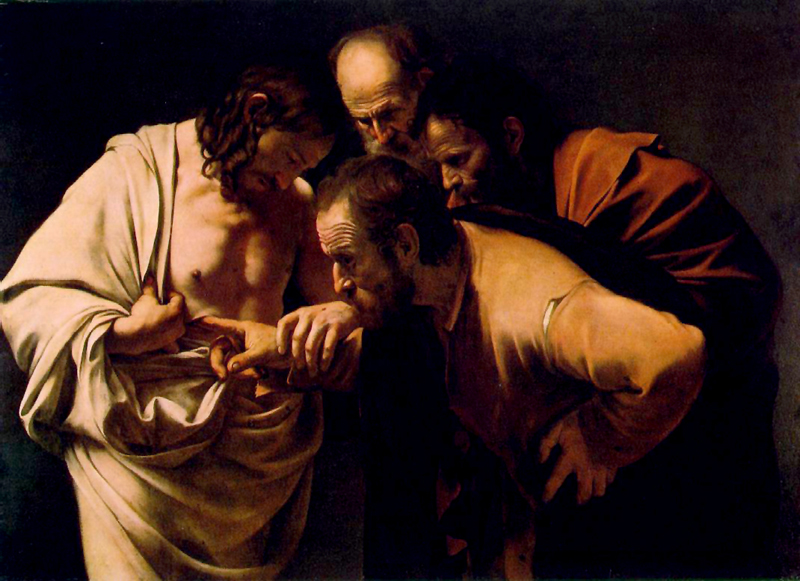
The Incredulity of Thomas – Carravagio

“Put your finger here; reach out your hand”

What happens to Thomas and others like him is more tangible than magic wands and pixie dust. “Put your finger here and see my hands. Reach out your hand and throw it into my side” is not an ethereal invitation. To be a disciple of Jesus means not only to see and hear, but to touch his physical wounds. The new community is born of his wounds and their transformation, commanded to throw ourselves into the sufferings and open wounds from which blood and water still flow. Resurrection is not pixie dust.

In the world it is called Tolerance, but in hell it is called Despair…the sin that believes in nothing, cares for nothing, seeks to know nothing, interferes with nothing, enjoys nothing, hates nothing, finds purpose in nothing, lives for nothing, and remains alive because there is nothing for which it will die.

Dorothy Sayers

Gordon C. Stewart, Be Still! Departure from Collective Madness (2017, Wipf and Stock), 49 short meditations on faith and the news; Brooklyn Park, MN, Second Sunday of Easter, April 16, 2023

Are you a king?

Featured

Parody and paradox

Over the years, every Palm Sunday has spoken in ways I did not expect. Today is no different. I no longer fixate on the question whether Palm Sunday happened or is the narrative artistry of Gospel writers. That question no longer interests me. Whether an historical event, or the Gospel writers’ way of looking back on who Jesus was and is, the entry into Jerusalem is filled with parody and paradox. While Caesar’s troops ride into Jerusalem on tall white stallions, Jesus rides in on a donkey as a crowd welcomes his coming with palm branches, the symbol of Jewish resistance to Roman occupation. They are looking for the long-awaited king, the Messiah, who would put an end to national humiliation by a foreign occupation. Jesus was the warrior-king whose purpose was to restore the nation’s glory.

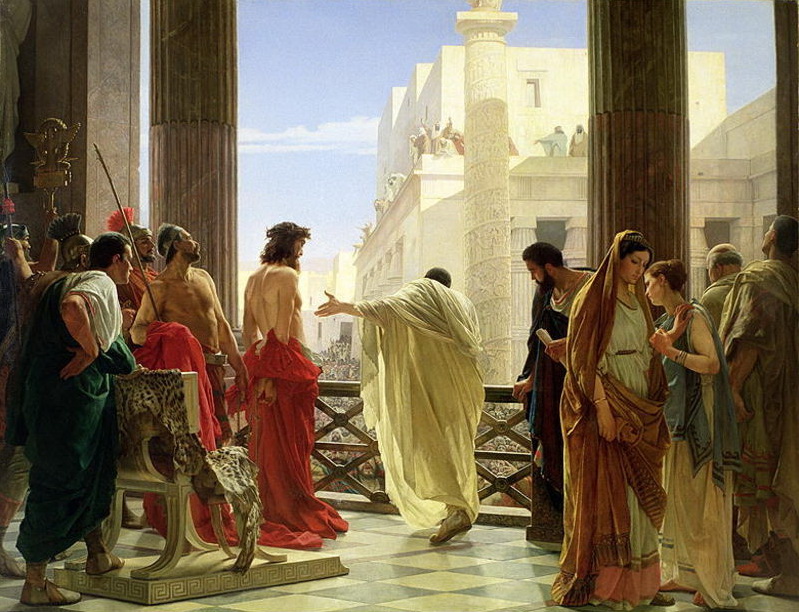
Pontius Pilate with his Prisoner - Antonio Ciseri
Ecce homo – “Here is the man”

This year, Palm Sunday drew me to Jesus standing before Pilate. “Are you a king, then?” or “So, you are a king, then!” begs the question of Jesus’ understanding of himself. Jesus’ response is as paradoxical as his ride into Jerusalem: “You have said so.”

Mistaken identity?

“You, Pilate, and Caesar, and my compatriots — not I — have said so!” This refusal to claim royal authority is what captured my attention this year. I imagine Donald Trump responding to Judge Juan Merchan’s question tomorrow when the judge unseals the indictments.

“So, you are a King?” “Damn straight! I’m the king who will make America great again.” “But, Mr. President, we don’t have kings in this country.” “Take a look outside, Your Dishonor. Count the crowd! Count the flags, the AK-15s, the gas masks, the helmets, and battering rams; look at the Proud Boys, the Oath Keepers, the Michigan Wolverines, the Congressmen, who know who I am. You can indict me, but you can’t judge me without my consent, and, if you convict me of what I did not do, all hell will break loose.”

Paradox: two indictments — opposite responses

At his arrest, Jesus makes a telling reply, a question and a declaration. “Have you come out with swords and clubs to arrest me as though I were a bandit? Day after day I sat in the temple teaching, and you did not arrest me,” he says. Then comes the parody of the Roman legions who occupied Jerusalem: if he wishes to defend himself, twelve legions of angels would stand with him.

‘Legion’ is the Latin (Roman) word for a Roman military unit, a battalion of some 2,000 soldiers. Jesus’ “twelve legions” do not bear arms; they are angels (messengers), not soldiers, and their number (24,000) far outnumbers the Legions that occupy Jerusalem. Furthermore, Jesus is not to be mistaken for a ‘bandit’ (i.e., an armed insurrectionist). Jesus sees himself as a teacher of Wisdom and Truth. Even when charged with a capital offense, Jesus of Nazareth, the Christ, makes no claims for himself other than as a teacher. It’s quite a contrast with an indictment in the age of QAnon.

What kind of person can charge another person, in this case a former President of the United States, who got more votes than any sitting President in history, and leading candidate (by far!) for the Republican Party nomination, with a Crime, when it is known by all that NO Crime has been committed, & also known that potential death & destruction in such a false charge could be catastrophic for our Country? Why & who would do such a thing? Only a degenerate psychopath that truely [sic] hates the USA, 2023!

Donald Trump, Truth Social, March 24, 2023.

“Then you are a king!” said. Pilate. “You say that I am a king,” he answered, “for this reason I was born and have come into the world, to testify to the truth. Everyone who belongs to the truth hears my voice” (John 18:37).

Within hours, on what we now call Good Friday, the Jesus who bore the cross of truth cried out a plea for mercy: “Father, forgive them, for they know not what they do.”

Gordon C. Stewart, Be Still! Departure from Collective Madness (2017 Wipf and Stock), 49 two to four page meditations on faith and public life; Brooklyn Park, MN, April 2, 2023.

The Valley of the Bones

Featured

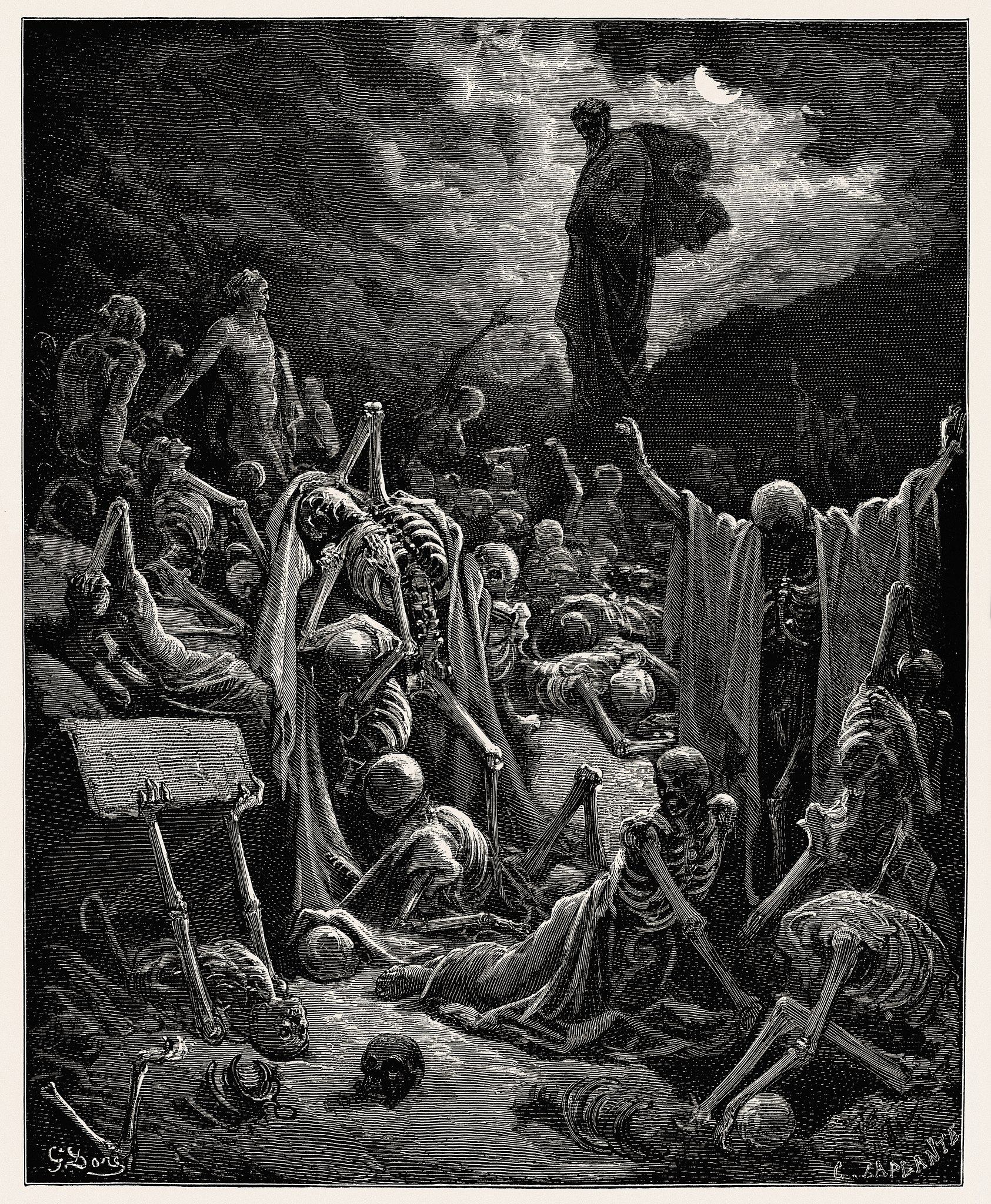
In these times, Ezekiel’s valley of the bones comes to mind. The valley is full of bones. The bones are everywhere, and they are very dry. There is no hope. A Voice speaks from the midst of the valley: “Mortal, can these bones live?” I answer, “No. They’re dead. They’re all dead!’’ To which the Voice responds, “Of course they are. They’re dead, but don’t you see? They are you. You and your people are the bones in the valley” (Ezekiel 37).

Gustave Doré, Vision of the Valley of the Bones (1866)

Like Ezekiel, I look in despair at my country and kindred. Ezekiel’s dry bones were his people in exile, far from their homeland. I’m a stranger in my own country, the valley of the bones, with little reason to no hope for a transformation.

Fresh bones are thrown into the valley every day. The remains of three nine-year-old children and three of their teachers in Nashville are the latest to hold our attention, until tomorrow another man, woman, or child repeats the horror somewhere else, while our children and grandchildren go through drills to protect themselves in the event the next gunman comes to their schools.

The land of the fearful

The assault weapons carried by American soldiers in Afghanistan and Iraq, and the culture of war — “kill-or-be-killed” — have come home to roost, turning schools, shopping malls, synagogues, churches and mosques into valleys of death and destruction in Ukraine and places like Nashville. The “land of the free” has become the land of the fearful; the home of hucksters and cowards. not the home of the brave. The assault weapons that killed nine-year-old Evelyn Dicephalus, Hallie Scruggs, and William Kinney and their teachers were not stolen; they were bought and sold legally.

Asking questions — speak what is real

Evelyn, Hallie, and Billy won’t blow out 10 candles on their next birthdays. They cannot ask the man who has failed to represent them in Congress whether he might now think twice before sending another Christmas card picturing his smiling family, each brandishing an AK-15, or why, moments after they were shot and killed, he said nothing can be done to “fix it,” noting that he homeschools his children. Evelyn, Hallie, and Billy can’t ask him what goes haywire in his brain that allows him to sport an AK-15 on his lapel on the floor of Congress, and shed tears and express surprise and horror at what happened at the school in the district he represents.

Understanding ourselves

Answers to how America arrived at the valley of the bones in 2023 are as many as the disciplines that study such matters: psychology, sociology, history, biology, genetics, economics, philosophy, anthropology, and, yes, religious studies and theology. I look through the lens of theological anthropology — mortals and mortality (death) understood in light of that which does not die—the Immortal, the Eternal, the Encompassing within which every mortal lives and dies.

Guns don’t kill?

“Guns don’t kill; people do.” Seriously? Guns don’t kill? AK-15s don’t kill? A firearm in the hands of “God-fearing, law-abiding citizens” won’t kill? Guns do kill; assault weapons slaughter, massacre, and tear bodies into body parts.

I’d like to say I don’t get it, but I think I do. The bones in Ukraine are added to the valley every hour by a mortal’s worship of himself and his nation. The idolatry of self and nation is no different in America. What’s the difference between “Make America Great Again” and “Make Russia Great Again?” How did the party of Lincoln (“Honest Abe”) become the party of John Wilkes Booth? Why do elected Representatives and Senators wear AK-15s on their lapels and take the floor to block legislation that would put legal boundaries around the freedom to bear arms under the Second Amendment? Guns don’t kill; elected officials do. Guns don’t kill; liars and cowards do. Guns don’t kill; bullies do. Guns don’t kill; ideologues do. Guns don’t kill; those who mistake themselves as more than mortal do.

From folly to wisdom

For people like me there is no better explanation for such horror than the violation of the First Commandment that Moses brought down from Mount Sinai. The sense of it is this: “You are not the center of the universe. You are mortal. You are born and you will die. You are not infinite. You are finite. To worship yourself is folly.

Photo of Hiker Above the Sea of Fog by Friedrich, Caspar David ,ca. 1817.

I scratch my head and wonder why the obvious isn’t obvious. The valley of the bones makes me weep. Nothing I do will turn us from this madness. The dry bones in Ukraine will not rattle, come together, and stand again, as in Ezekiel’s vision. But my faith tradition insists, against all evidence to the contrary, that the Word is more powerful than an AK-15, and the Immortal greater than a mortal.

Gordon C. Stewart, Be Still! Departure from Collective Madness (2017 Wipf and Stock), Brooklyn Park, MN, April 1, 2023.

CHRISTIAN NATIONALISM

Featured

There is no such thing as Christian nationalism. It’s an oxymoron. Come to think of it, so are Jesus and those who confuse Jesus with power. “You are a king, then?” asks Pilate. Jesus responds, “You have said so!” You, not I, say so. The Gospels of Matthew and Luke paint pictures of Jesus alone in the wilderness, where the Satan (the Twister/the Liar) puts him to the test. “All these (nations) I will give you, if you fall down and worship me,” says the Twister. Jesus does not bow down, and for that, he is crucified. Jesus refuses to be a king. “I have come to bear witness to the truth,” says Jesus to Pilate. The idea of a Christian nation has no biblical footing. It’s a hoax. It’s a lie.

Refusal of Special Privileges

My faith tradition has no desire to achieve religious supremacy or special privilege. The organizational meeting of the Presbyterian Church in this country adopted eight Preliminary Principles. The FIRST principle declared the following views about religion and the civil authorities:

We consider the rights of private judgment, in all matters that respect religion, as universal, and unalienable: we do not even wish to see any religious constitution aided by the civil power, further than may be necessary for protection and security, and, at the same time, equal and common to all others.

First preliminary principle, adopted in 1789 by the first general Assembly of the Presbyterian Church in America

Parable about Here and Now: the Last Judgment

In Jesus’ parable of the last judgment, the King (the Sovereign) will gather all the nations and separate the goats from the sheep. It is no accident that national identity plays no part in the division between sheep and goats. The only thing that matters to the Sovereign is compassion. Period!

It’s a parable, of course, not a peek into the end of time. It’s about now. Jesus’ parable turns every nationalist claim on its head. The question is the same for all the nations: what are you doing for “the least” among you — the hurting among you, people in the cellar of the tower?

The sheep have no idea there is a reward. They just do it. The goats complain that, if only the Sovereign had told them the rules of the game, they would have fed the hungry, given drink to the thirsty, welcomed the stranger, clothed the naked, visited the sick and imprisoned. If you had just told us, we would have done it.

No claim to national exceptionalism stands the test. Christian nationalism is an oxymoron. No questions are asked about belief or religion. There is no, “Have you accepted Jesus Christ as your Lord and Savior?” No, “What church do you belong to. No, “What’s your religion, your belief system?” There is one criterion. Only one: COMPASSION. “Insofar as you have done it to the least of these….”

Gordon C. Stewart, public theologian, Be Still! Departure from Collective Madness (2017, Wipf and Stock), Brooklyn Park, MN, March 14, 2023.

THREE PRESIDENTS in and out of the Limelight

Featured

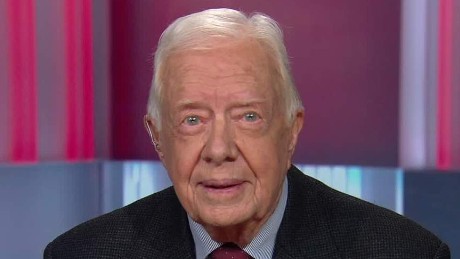
Former President Jimmy Carter has entered hospice care at home. The love of his life, Rosalind, asked that their privacy be respected. They have had their fill of limelights and cameras. When Ronald Regan defeated his bid for a second term, President Carter graciously conceded, and returned to their home in Plains, GA. He spent the rest of his life with hammer and saw in hand, building homes for Habitat for Humanity.

On Presidents Day, President Joe Biden risked a visit to Kiev for a face-to-face meeting with Vladimir Zelensky to assure him that the USA would keep its commitment to Ukraine for as long as it takes to put down Vladimir Putin’s siege. Joe Biden was in the limelight yesterday, but the limelight was not about him. It was about Ukraine and the defense of democracy against autocracy and oligarchy.

Former President Donald Trump was at home alone with a golf club in one hand and a scorecard in the other. The cameras and microphones were missing. His soul, buried in a sand trap, was his only company, if he could find it. No one is holding their breath waiting for Mr. Trump to find the conscience he had sliced into the rough years ago, long before he pressured Vladimir Zelensky to investigate — and announce to the world — Ukraine’s investigation of Hunter Biden as the quid pro quo for releasing the US budgeted dollars he was withholding from the Zelensky administration.

Living in the Metaverse

In the latest issue of The Atlantic (March 23), Megan Garber’s “We’re Already Living in the Metaverse” draws on the insights of George Orwell, Aldous Huxley, Neil Postman, Neal Garber, Hanna Arendt, and others to trace how we came to live in the dystopian “post-truth” era when “the news is entertainment, and entertainment is the news.

In the metaverse, the ideal subjects of authoritarian rule are not the true believers in the cause. They are instead people who come to believe in everything and nothing at all: people for whom the distinction between fact and fiction no longer exists.

To live in the metaverse is to expect life should play out as it does on our screens. And the stakes are anything but trivial. In the metaverse, it is not shocking but entirely fitting that a game-show host and Twitter personality would become president of the United States.

Megan garber, “we’re already living in the metaverse,” The Atlantic, March 2023

Character counts for little in the world of the metaverse. Glitz and entertainment are everything. But flesh and blood reality doesn’t disappear. Within a matter of weeks, Jimmy Carter will breathe his last in Plains, GA. Rosalind and the Carter family will decide how best to celebrate the exemplary character of the former president whose real hammers and saws remind us that character is everything.

Gordon C. Stewart, public theologian, author of Be Still! Departure from Collective Madness (2017 Wipf and Stock), Brooklyn Park, Minnesota, February 21, 2023.

STUMBLING FORWARD–FINDING A FOOTHOLD

Featured

Today’s post is in two parts. Part one was written before the State of the Union Address. Part two was added after the Address.

PART ONE: Finding a Foothold

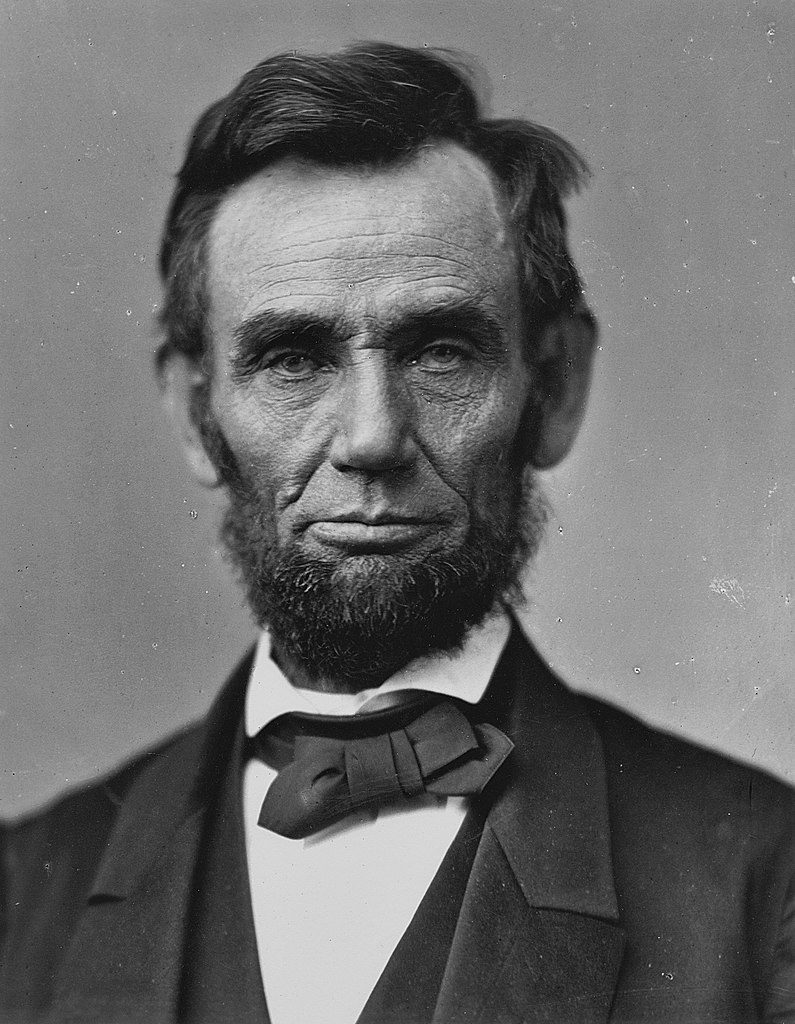
America is stumbling. In such a time as this, looking back at an earlier anxious moment may help us regain a footing. The assassination of Abraham Lincoln is one of those moments.

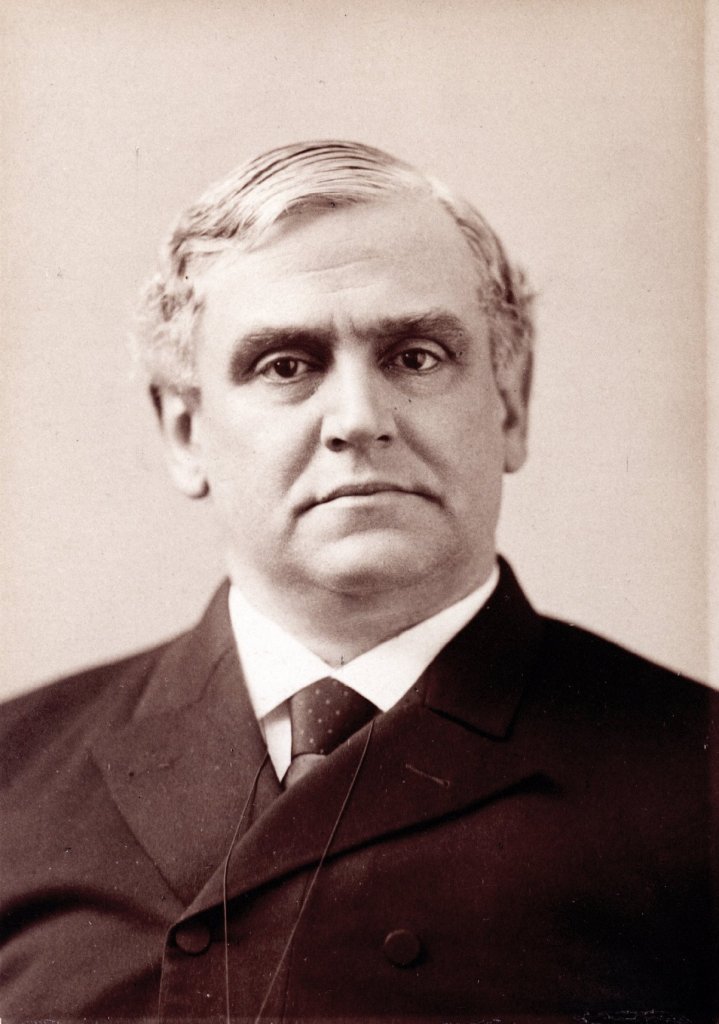
The body of President Lincoln lay in State in Independence Hall when Phillips Brooks, Rector of Philadelphia’s Church of the Holy Trinity, addressed mourners in words and concepts that overflow the banks of time and place.

Brooks’ sermon called listeners to aspire to the higher standard of character he attributed to Lincoln: a template for personal and national character. Brooks’ text was Psalm 78:71-73:

“He chose David also His servant, and took him away from the sheepfolds; that he might feed Jacob his people, and Israel His inheritance. So he fed them with a faithful and true heart and ruled them prudently with all his powers.” (Psalm 78:71-73)

The Blending the Two Kinds of Power

Phillips Brooks offers a description of our better selves — the blending of what he called the moral and mental powers.

The line between the two kinds of power is always vague and indistinct in the simplest characters. They run together, and in their best combinations you are unable to discriminate, in the wisdom which is their result, how much is moral and how much is intellectual. You are unable to tell whether in the wise acts and words which issue from such a life there is more of the righteousness that comes of a clear conscience, or of the sagacity that comes of a clear brain.

A feeble and narrow conscientiousness and an unprincipled intelligence

In more complex characters, and under more complex conditions, the moral and mental lives come to be less healthily combined. They cooperate, they help each other less. They come even to stand over against each other as antagonists; till we have that vague but most melancholy notion which pervades the life of all elaborate civilization, that goodness and greatness, as we call them, are not to be looked for together, we expect to see a feeble and narrow conscientiousness, on the one hand, and a bad, unprincipled intelligence, on the other, dividing the suffrages of men.

The wedding of greatness with goodness

It is the great boon of such characters as Mr. Lincoln’s, that they reunite what God has joined together and man has put asunder. In him was vindicated the greatness of real goodness and the goodness of real greatness of real goodness. The twain were one flesh.

The one was free to look all that claimed to be truth in the face, and separate the error from the truth that might be in it; the other did not dare to investigate, because its own established prides and systems were dearer to it than the truth itself, and so even truth went about in it doing the work of error.

Excerpts, Phillips brooks’ “Abraham Lincoln” in addresses (chicago: W.B. Conkey co., 1900), pp149-75.

Brooks’ manner of speaking is different. It’s dated. He doesn’t talk like us. His cadence varies. The sentences are longer. Complex and compound sentences outnumber the simple ones. Yet we may, I think, presume that his hearers were well-equipped to follow and take the measure of his thoughts. There was no talk radio. There was the blending of heart and intellect that can come when the two powers, though different, are not divorced from each other.

When encouraged to stand for election as the Episcopal Church’s Bishop of Massachusetts, Brooks declined because he did not believe in the apostolic succession of the bishopric. He spoke his truth. His character was such that, though he had demurred, the Episcopal Church elected him Bishop of Massachusetts in 1891.


PART TWO: STUMBLING FORWARD

Last night’s State of the Union Address offered a public illustration of “the feeble and narrow conscientiousness, and bad, unprincipled intelligence” of which Phillips Brooks spoke. Historian Heather Cox-Richardson speaks for me in her Feb. 7 issue of Letters from an American:

What viewers saw tonight was a president repeatedly offering to work across the aisle as he outlined a moderate plan for the nation with a wide range of popular programs. He sounded calm, reasonable, and upbeat, while Republicans refused to clap for his successes—800,000 new manufacturing jobs, 20,000 new infrastructure projects, lower drug prices—or his call to strengthen the middle class. 

And then, when he began to talk about future areas of potential cooperation, Republicans went feral. They heckled, catcalled, and booed, ignoring House speaker Kevin McCarthy’s (R-CA) attempts to shush them. At the State of the Union, in the U.S. Capitol, our lawmakers repeatedly interrupted the president with insults, yelling “liar” and “bullsh*t.” And cameras caught it all. 

Extremist Marjorie Taylor Greene (R-GA), her hands cupping her wide open mouth to scream at the president, became the face of the Republican Party.

HEATHER COX-RICHARDSON, LETTERS FROM AN AMERICAN, FEB 7, 2023.

Gordon C. Stewart, Public Theologian, author of Be Still! Departure from Collective Madness (2017 Wipf and Stock), 49 short essays on faith and the news; Brooklyn Park, MN, February 9, 2023.

What happened in Memphis?

Featured

“King of the Hill” came to mind while looking for some explanation for the cruelty we saw in Memphis. This incident seems different. Tyre Nichols had not been stopped for “driving while Black.” The cops were also Black. Why would five Black cops stop a young Black man to beat him as though they were members of the Ku Klux Klan (KKK)? This horror was not about race. What happened was about something deeper that’s killing us all from inside out.

King of the Hill

Pieter Brueghel the Elder (1526/1530–1569) King of the Hill (cropped from “Children’s Games”)

Training for the game of Dominate

The object of King of the Hill is domination. In my back yard, most of us got to be king, for a moment. The rest of the time we were disgruntled subjects, doing what we could to knock the latest king off the mountain. It was just a game we kids played in each other’s back yards.

It was fun back then, but it’s not fun and it’s not funny anymore. It’s no longer a kindergartners’ game. Children no longer play King of the Hill in our backyards these days, and that’s too bad, because, if they did, we adults might see and flee from the game we’ve been trained to play. King of the Hill has become America’s game.

You have to dominate or you’ll look like jerks

“You have to dominate,” declared the king of the hill to the nation’s governors, “or you’ll look like a bunch of jerks, you have to arrest and try people . . . You don’t have to be too careful . . . . You have to dominate. If you don’t dominate, you’re wasting your time.”

Donald Trump had just peeled back the layers of obfuscation that keep the game’s ugliness out of sight and hearing, until it surfaced again, as it did in Memphis two years after George Floyd died under a White police officer’s knee in Minneapolis.

Some social critics attribute the unrestrained violence to police training or the lack of it. But perhaps the cause and remedy are deeper than police training. Before they put on badges and uniforms to “protect and serve,” they — like the rest of us — had been well-trained by the culture of king of the hill where the objective is to dominate without legal and moral guard rails to restrain us.

Domination = you can cheat, you can lie, you can beat without consequences

America stands at a crossroads between the reign of compassion or tyranny; between kindness and cruelty; between tending to the Samaritan’s wounds or throwing him in the ditch. “You have to dominate. If you don’t dominate, you’re wasting your time.” And, remember, “You don’t have to be too careful.”

To get to the top of the hill and stay there, you can cheat, you can lie, you can roll stones down the hill to stop disloyal subjects and enemies from taking your place.

We are well trained in how to succeed in a society without the spiritual, moral and legal guardrails that would keep us honest and true to our better selves. “It’s a movement,“ said an angry president, referring to Black Lives Matter. “The only time it’s successful is when you’re weak and most of you are weak.”

King of the Hill — dominate or you’ll be dominated — has become America’s game in Minneapolis, in Memphis, and here, there, and everywhere. It’s not fun anymore.

Gordon C. Stewart, Public Theologian, author of Be Still! Departure from Collective Madness (2017, Wipf and Stock), 49 short social commentaries on faith and public life; Brooklyn Park,