The Invaders of the Land of the Long White Cloud

Llightning struck down 50 worshipers and injured another 50 In Aotearoa — the Land of the Long White Cloud — the Maori name for their home before foreign invaders re-named New Zealand.

Evening scene of the Maori people on the banks of the Waikato River, Land of the Long White Cloud, 1847

The mind of western white nationalism makes few, if any, distinctions between Muslims and Jews. Although we rightly think of anti-Semitism as responsible for the gas ovens of Nazi Germany and the long history of anti-Jewish pograms, the term ‘Semite’ applies more broadly to the Hebrew- and Arab-speaking people of the Middle East. Whether gathered at Tree of Life synagogue in Pittsburgh or in the mosques of New Zealand makes no difference. Their existence is a threat to the mindset of white superiority and, more lately, western nationalism.

A 72 page white nationalist manifesto did not know, or chooses not to know, that the original invaders were not dark skinned people. They were not Middle Easterners. They were not Semites. They were not Muslim. It was the Dutch and English colonizers who “discovered” and then invaded the Maori “Land of the Long White Cloud” (English translation) that turned the Maori homeland into the land of their own displacement, subjugation, and long-suffering. The invaders were white Europeans who considered it their right and calling to spread their religion and culture around the world.

Judaism and Islam claim a common family origin in Abraham, but they do not same the same maternal lineage. They do not claim the same mother. Jews and Christians see themselves as the children of Sarah, the mother of Isaac. Muslims claim Hagar, Sarah’s banished slave woman, the mother of Ishmael, as their mother. Neither Sarah nor Hagar, nor Abraham, nor Isaac, nor Ishmael was “white.” The predominant religion of the western culture is rooted in Middle Eastern people and cultures. And, the scriptures Jews, Christians, and Muslims share in common the memory that the estrangement between the Isaac and Ishmael ended when the re-united to bury father Abraham.

One can suppose with near certainty that yesterday’s attack on mosques in New Zealand, like the bombing of Tree of Life in Pittsburgh arose from the cauldron of anti-Semitism, hatred toward the children of Abraham — Isaac, the son of Sarah, and Ishmael, the son of Hagar. So apparently different, and yet the same.

Ignorance is not bliss. Knowledge that feigns ignorance is a fools’ paradise that turns long white clouds of an otherwise blue sky into dark clouds of smoke, dust and smog.

— Gordon C. Stewart, Chaska, MN, March 19, 2019.

A Snoopy Philosophy — the Blessing of a Dog

“Life” according to Peanuts by Charles Schultz.

Snoopy and Charlie Brown’s conversation greeted me today in Marilyn Armstrong’s “What’s the Point of It All?” Some mornings I’m like Charlie Brown. Other days I’m like Snoopy.

More often than I’d like, I’m the human being on the left side of the dock — a morose Gloomy Gus. But I’ve most always been blessed by a Snoopy. A Maggie. A Sebastian. And, then, after Maggie and Sebastian died, a Barclay who looks on the bright side of life. How about you?

Sebastian and Maggie with Kay

Charles Schulz was a native Minnesotan. I never met Charles, but his cartoon of Charlie Brown and Snoopy sitting at the end of the dock looking out to the far horizon leads me to suppose two things about him. 1) Charles Schulz had a dog as his philosophical partner. Like me, he had a Maggie, Sebastian, or a Barclay. 2) He spent time in the Boundary Waters Canoe Wilderness Area (BWCWA), paddling a canoe through a narrow channel between the rocks, or sitting with his dog at the end of a Kawishiwi cabin dock . . . or nestled in a hammock . . . pondering the meaning of it all, and feeling more like Snoopy than a Gloomy Gus.

Kay in the Boundary Water Canoe Wilderness Area
Kay in the Boundary Waters Canoe Wilderness Area

“Yesterday I was a dog. Today I’m a dog. Tomorrow I’ll probably still be a dog. Sigh! There’s so little hope for advancement.” – Charles Schulz

“Gratitude is not only the greatest of virtues, but the parent of all others.”
― Marcus Tullius Cicero

— Gordon C. Stewart and Barclay, Chaska, MN, March 14, 2019.

Sentencing Disparity in the American Oligarchy

Judge T.S. Ellis’s lenient sentence of Paul Manafort came as a jolt. It should not have. I know better. So do you.

I am an ordained minister of the gospel who has spent lots of time in courtrooms. It was a short step from pulpits of privilege to a criminal defense law firm founded by the American Indian Movement and African-American civil rights center. I left the pulpit, but the faith that points to an essential human dignity went with me. Irrespective of the seriousness of the charges and crimes, I saw, or tried to see, a dignity and worth in defendants no court sentence can take away.

Legal Rights Center clients convicted of serious crimes were sentenced to the state prisons, about as far from the comforts of federal prisons as their neighborhoods were from gated communities and country clubs.

Unlike the inmates of Faribault and Stillwater who have been found guilty of street crimes, a great number of the guests of the federal correctional system are doing time for white collar crimes. There’s a world of difference. Yet, as to sentence disparity, they are the same.

Comparing Judge Ellis’s 13 year sentence of African-American Congressman William J. Jefferson (D) from Louisiana in 2009 with the 47 month sentence of the former chair of the president’s presidential campaign committee draws attention to the ugly realities of race and class we often see but quickly forget or choose not to see at all.

We do not live in a democracy; we live in an oligarchy—
“government by the few, especially despotic power exercised
by a small and privileged group for corrupt or selfish
purposes.” I’ve been waiting for people in high places to say it.

Goldman Sachs executives’ testimony Tuesday before the
Senate Permanent Subcommittee on Investigations4 brought the
elephant into the living room, but the name of this species of government remains unspoken for understandable reasons.

A democratic republic is a constitutional form of government
where the people rule through their elected representatives
gathered in deliberative bodies. The faces and voices of Goldman
Sachs’s executives demonstrated the intransigent arrogance of the
private institutional concentration of the wealth and power of deregulated capitalism.

The matter is growing more serious.

The “small and privileged group” that operates corruptly and
selfishly knows that elections are bought and sold in America. No
one gets elected without big money. Goldman Sachs executives’ testimony Tuesday before the Senate Permanent Subcommittee on Investigations brought the elephant into the living room, but the name of this species of government remains unspoken for understandable reasons.

Excerpt, gordon c. stewart, “The american oligarchy — 4/29/10,” p.126, Be Still! Departure from collective madness (2017, wipf & stock).

Nine years after publishing The American Oligarchy, the reality is, for the most part, the same. But there is a difference. The selfishness of “despotic power exercised by a small and privileged group for corrupt or selfish purposes” (Encylopaedia Brittanica definition of oligarchy) feels heavier now. The judge’s lenient sentence of Paul Manafort caught me off-guard. How quickly we forget!

“The American Oligarchy” was first published by MinnPost.com with the title “They may squirm in hearings, but Wall Street Oligarchs know who has he power.” With Minnpost’s generous copyright permission, it became one of Be Still!’s 49 essays on faith and the news.

— Gordon C. Stewart, Chaska, MN, March 9, 2019.

Judicial Bias: the fight in the back hallway

Yesterday’s light sentence of Paul Manafort leads observers to wonder what happened. Why would Judge T. S. Ellis depart from the federal sentencing guidelines (19-24 years)? Why would a judge depart so egregiously to render a sentence of 47 months?


These questions and the judge’s remarks painting Mr. Manafort as an ill-fated first-time offender who had led a blameless life beg for answers.

Searching the internet for cases of judicial bias or misconduct led to the case of Judge John C. Murphy of Brevard County, Florida that brought an unexpected laugh.

Judge John C. Murphy of Brevard County, Florida, made headlines in June 2014, when he was recorded on camera challenging a public defender to a fistfight. Andrew Weinstock, the public defender acting in the normal course of representation, had refused to have his client waive the right to a trial. This set off a number of heated remarks which included Judge Murphy stating: “You know, if I had a rock, I would throw it at you right now.” When Weinstock refused to sit down, Judge Murphy then told him: “If you want to fight, let’s go out back and I’ll just beat your ass.”

Deputy Bryon Griffin, who was at the scene, described it as follows: “I stepped into the back hallway and saw the two of them grabbing ahold of each other’s suitcoat, pushing each other back and forth…I heard Judge Murphy say, ‘Do you wanna f-ck with me, do you?’ and I heard Mr. Weinstock say, ‘Alright.’ I immediately stepped in and separated the two of them as they still had a grasp on each other.”

Top 5 list of real-life judicial misconduct, Ballotpedia

We need a laugh in times like this when different ones of us might welcome a good fist fight in the back hall, but the humor is momentary. An article in Forbes this morning suggests political bias behind Judge Ellis’s lenient sentence of Manafort when compared with a similar case of a Democrat in 2009:

Take a comparison of the Manafort case with another prosecution of a political figure, a Democratic Congressman from Louisiana named William J. Jefferson. …

Manafort may have gotten off easy with four years, but Ellis threw the book at Jefferson. In 2009 Ellis sentenced Jefferson to 13 years, the longest sentence of any Congressman to that date. … It seems that while Judge Ellis can sympathize with Manafort, the Republican presidential campaign manager, he did not sympathize with Jefferson.

Charles Tiefer, “Judge who let manafort off easy with 47 months has conservative pedigree,” forbes, March 7, 2019.

Describing Paul Manafort at yesterday’s sentencing, Judge Ellis cedited Mr. Manafort for having been “a good friend” and “a generous person” who “has lived a blameless life” and “earned the admiration of a number of people.” It’s commendable judicial practice to offer some hope to the person being sent to prison. But might not these same attributes have been said of Al Capone, John Gotti, or Gordon Liddy, all good, generous family men who, until they were caught, had led “blameless lives”?.

Given Judge Ellis’s disrespectful remarks and angry outbursts against the Mueller investigator prosecutors, and his rulings against the admission of evidence, is it unthinkable to imagine the “Caesar of his own little Rome,” challenging the prosecutor to a fist fight in the back hallway behind the bar?

— Gordon C. Stewart

The Magician’s Bargain in 2019 America

Beneath the surface of the obvious turmoil in American lies a fissure deeper than our differences. More than just a fissure. A seismic shift in the ground that has traditionally held the nation together, as suggested by this adaptation of L. Robert Kohl’s “The Values Americans Live By”:

Traditional American Cultural Values

1. PERSONAL CONTROL OVER THE ENVIRONMENT
People can/should control nature, their own environment and destiny. The future is not left to fate.
Result: An energetic, goal-oriented society.

2. CHANGE / MOBILITY
Change is seen as positive and good. This means progress, improvement and growth.
Result: An established transient society geographically, economically and socially.

3. TIME AND ITS IMPORTANCE
Time is valuable - achievement of goals depends on the productive use of time.
Result: An efficient and progressive society often at the expense of interpersonal relationships.

4. EQUALITY / EGALITARIANISM
People have equal opportunities; people are important as individuals, for who they are, not from which family they come.
Result: A society where little deference is shown or status is acknowledged.

5. INDIVIDUALISM, INDEPENDENCE AND PRIVACY
People are seen as separate individuals (not group members) with individual needs. People need time to be alone and to be themselves.
Result: Americans may be seen as self-centered and sometimes isolated and lonely.

6. SELF-HELP
Americans take pride in their own accomplishments.
Result: Americans give respect for self achievements not achievements based on rights of birth.

7. COMPETITION AND FREE ENTERPRISE
Americans believe competition brings out the best in people and free enterprise leads to progress and produces success
Result: Competition is emphasized over cooperation.

8. FUTURE ORIENTATION / OPTIMISM
Americans believe that, regardless of past or present, the future will be better and happier.
Result: Americans place less value on past events and constantly look ahead to tomorrow.

9. ACTION AND WORK ORIENTATION
Americans believe that work is morally right; that it is immoral to waste time.
Result: There is more emphasis on "doing" rather than "being". This is a no-nonsense attitude toward life.

10. INFORMALITY
Americans believe that formality is "un-American" and a show of arrogance and superiority.
Result: A casual, egalitarian attitude between people is more accepted.

11. DIRECTNESS / OPENNESS / HONESTY
One can only trust people who "look you in the eye" and "tell it like it is". Truth is a function of reality not of circumstance.
Result: People tend to tell the "truth" and not worry about saving the other person's "face" or "honor".

12. PRACTICALITY / EFFICIENCY
Practicality is usually the most important consideration when decisions are to be made.
Result: Americans place less emphasis on the subjective, aesthetic, emotional or consensual decisions.

13. MATERIALISM / ACQUISITIVENESS
Material goods are seen as the just rewards of hard-work, the evidence of "God's favor."
Result: Americans are seen as caring more for things than people or relationships.

Adapted from http://“The Values Americans Live By”, L. Robert Kohls

Thoughtful people may quibble with Robert Kohl’s list. But few would erase the 11th valuehonesty/trustworthiness –as bedrock to the American experiment in democracy. 

The Magician’s Bargain

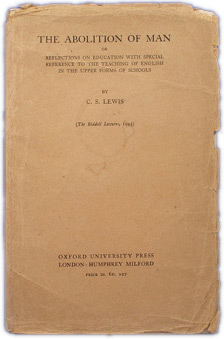
Looking each other in the eye and “telling it like it is” has been chipped away, replaced by the twists of tongue and cunning to get and hold power. In our time, truth has been reduced to a function of circumstance in the road to power. We live with the consequences of what C.S. Lewis called the magician’s bargain.

It is the magician’s bargain: give up our soul, get power in return. But once our souls, that is, ourselves, have been given up, the power thus conferred will not belong to us. We shall in fact be the slaves and puppets of that to which we have given our souls.

C.S. Lewis, The Abolition of Man

The surrender of soul in return for power is the seismic shift in the America of 2019. Honesty/openness/directness have never been a fact of our common life. The 11th traditional value is aspirational. There have been and always will be lies. But never in my lifetime has truth-telling been less valued than it is today in the highest places of government. To the chagrin and sadness of George Will and other principled traditional conservatives, it is the children of Jerry Falwell‘s Moral Majority who engage the moral magician’s bargain.

The Irony of the American Magician’s Bargain

Michael Cohen testified last week before the U.S. House Oversight and Reform Committee. The minority members of the Committee attacked the credibility of the convicted criminal who had served for 10 years as the president’s personal lawyer and “fixer” and chose to ignore the hard evidence the president’s “rat” had placed before them.

The only difference between Michael Cohen and those who refused to exercise their duty to uphold the Constitution was that Michael had confessed.

Do we feel the rumbling of the common ground beneath the partisan divide?

How deep is the loss! How much greater the challenge. Ben Franklin would have a cow!

“We laugh at honor and are shocked to find traitors in our midst.”  — C.S. Lewis, The Abolition of Man.

— Gordon C. Stewart, Chaska, MN, March 2, 2019.

We’re better than this!

Elijah spoke yesterday. Elijah preached yesterday. Elijah spoke from the heart yesterday. Elijah was kind yesterday. Elijah warned us yesterday. Elijah spoke of destiny yesterday. Elijah challenged all of us yesterday:

“C’mon now! We’re better than this! We really are!

Congressman Elijah Cummings, Chair of the U.S. House Committee on Oversight and Reform, is named after the Hebrew prophet.

Rep. Elijah Cummings’ closing remarks at House Oversight and Reform Committee hearing examining Michael Cohen, February 27, 2019.

— Gordon C. Stewart, Chaska, MN, Feb. 28 2019.

Elijah made Elijah proud yesterday!


The Cohen Moment

This morning Michael Cohen testifies publicly before the House Oversight Committee. He’s lied before. Will he lie again? Whether he does or doesn’t, how does one discern what’s true and what’s not?

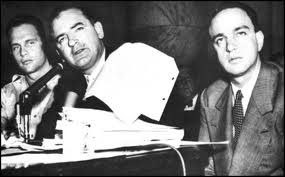
Michael Cohen walks in the long shadow of Roy Cohn (R in this photo), right-hand man and fixer for Sen, Joseph McCarthy (C in photo), and the lawyer, fixer, mentor for Donald Trump.

Roy Cohn continued to practice law and “fix” things until his fixing led to disbarment five weeks before he died. Like Roy, Michael Cohen will never practice law again. Unlike Roy Cohen, Michael Cohen may yet redeem himself from the darkness and unqualified public scorn.

Michael Cohen is going away for three years. But am I imagining that I see a different countenance since his sentence? That his face looks different — less troubled — and his walk lighter because he has little reason deny or twist the truth? Who’s to say?

Watching Michael on C-Span today, the Leonard Cohen’s There Is a Crack in Everything. That’s How the Light Gets In will play in my head. Will Michael be a Roy or a Leonard? Will Michael “sing” or sing? Or are “singing” and singing the same thing when there’s a crack in everything?

— Gordon C. Stewart, Chaska, MN, Feb. 27, 2019.


I’m sorry to disturb you again!

When was the last time you had time to waste before boarding a flight? The uber drops you off at the curb in plenty of time. You check your bag. You pass through security. You have an hour or so to kill before the 11:10 boarding of your flight on Concourse C.

You haven’t had breakfast. You go to the food court, buy a coffee and a breakfast sandwich, and take a seat at a small table in the food court. You reach for your iPhone to check the time, read the texts and tweets, and read the e-edition of your favorite news source. But it’s missing! You rummage though your pockets or your purse. You’ve forgotten or, God forbid, lost your iPhone. You never do that. Never, never, never!

You scarf down the coffee and croissant sandwich and go across the hall for a newspaper. You buy a copy of today’s New York Times, return to the table in the food court, read the front page headlines, open to the sections of interest, and get absorbed in the latest news or this morning’s crossword puzzle or sudoku.

Suddenly, you realize you’ve lost track of time. You reach for your iPhone and remember. You look for a clock, but there are no clocks. You leave the food court in search of a clock. There are no clocks.

You race down the concourse toward your gate, looking for a clock to see whether you’re late for your flight. But there are no clocks. None. Anywhere. Not even on the flight arrival and departure boards. The flight boards display the schedule and whether your flight is on time, delayed, or cancelled, but they do not tell you what time it is now.

Arriving at the gate, there is no line for boarding. You breathe a sigh of relief when you learn you’re not too late. You sit down in the waiting area and sheepishly ask a stranger for the time. She checks her phone and gives you the time, while you explain that you’ve left home without your new iPhone6, or maybe you’d lost it, as though she cares.

On board the flight, you fasten your seat belt and break the rule of privacy. “Hi, my name’s Bob. Is this home, or do you live in Denver?” “Denver,” he says without looking up from his smartphone. You might as well have asked for his Social Security number. This flight will be a long exercise with silence, a chance for meditation, but you can’t do meditation without the meditation app on your iPhone.

After take-off, you take out the New York Times. It’s been awhile since you read a newspaper in print, and you’d missed out on an aisle seat where you could spread out. Your left arm is flush against the window. As you unfold the newspaper, you intrude again into the space of the guy from Denver in the middle seat. He looks up and shakes his head. You apologize for your rudeness and carefully fold the newspaper in half the way commuters do on trains on their way to work in the city. You settle down with the properly-folded newspaper. A headline leaps from the page:

Do Not Disturb: How I Ditched my Phone and Unbroke My Brain”(Kevin Roose, Feb. 23, NYT) comes to the rescue. It begins:

“My name is Kevin, and I have a phone problem. And if you’re anything like me — and the statistics suggest you probably are, at least where smartphones are concerned — you have one, too.”

I do! Yes! I do! you say to yourself. You wonder whether Kevin also has a clock problem. Whether he’ll lament our isolation in a world missing the one thing we all had in common before smartphones: public clocks on the tower of the old village square . . . and in airports!

On the way to baggage claim, the problem is bigger than the absence of a friendly clock. You’re in a strange city without information on where you’re supposed to go. The address of your hotel, how to get there, contacts, e-mail and text information, phone numbers, and the name of the restaurant where you’re to meet the headhunter for the job interview are carefully stored on your iPhone.

What to do? At baggage claim, a stranger takes pity on you. She lends you her smartphone. A family member answers your call, finds your phone, follows your instructions for unlocking your iPhone, and begins to give you the information you’ve asked for. But without a phone to take down the information, you’re still helpless!

“Hold on a minute,” you tell the family member back home, and return to the stranger. “I’m sorry to disturb you again, but do you have a pencil and a piece of paper?”

Monday Morning Wake-Up Call

David Kanigan’s Monday Morning Wake-Up Call popped up this morning while pondering a reference to Jacques Ellul’s “meditation on inutility” cited in a footnote of Walter Brueggemann’s The Psalms and the Life of Faith. The sentence which leads the reader to the Ellul footnote on inutility reads, “In the end — not before, but in the end — praise is a useless act.” (p.122, footnote 21)

Thank you, David for drawing attention to this current meditation in praise of inutility by Kevin Roose in the New York Times.  Jacques Ellul and Walter Brueggemann would call it an act of praise.

Live & Learn's avatarLive & Learn

For the rest of the week, I became acutely aware of the bizarre phone habits I’d developed. I noticed that I reach for my phone every time I brush my teeth or step outside the front door of my apartment building, and that, for some pathological reason, I always check my email during the three-second window between when I insert my credit card into a chip reader at a store and when the card is accepted.

Mostly, I became aware of how profoundly uncomfortable I am with stillness. For years, I’ve used my phone every time I’ve had a spare moment in an elevator or a boring meeting. I listen to podcasts and write emails on the subway. I watch YouTube videos while folding laundry. I even use an app to pretend to meditate.

If I was going to repair my brain, I needed to practice doing nothing…

It’s an…

View original post 37 more words

Why do British people NOT like Trump?

This morning we offer, without further comment, this serious and witty piece by English writer Nate White, published by The WOW Report.

“Why do British people NOT like Trump?” — The WOW Report, 2/13/19

The 90 year-old Queen is forced to go around our idiot President,
who doesn’t even know how to walk properly

“A few things spring to mind.

“Trump lacks certain qualities which the British traditionally esteem.

“For instance, he has no class, no charm, no coolness, no credibility, no compassion, no wit, no warmth, no wisdom, no subtlety, no sensitivity, no self-awareness, no humility, no honour and no grace – all qualities, funnily enough, with which his predecessor Mr. Obama was generously blessed.

“So for us, the stark contrast does rather throw Trump’s limitations into embarrassingly sharp relief.

“Plus, we like a laugh. And while Trump may be laughable, he has never once said anything wry, witty or even faintly amusing – not once, ever.

“I don’t say that rhetorically, I mean it quite literally: not once, not ever. And that fact is particularly disturbing to the British sensibility – for us, to lack humour is almost inhuman.

“But with Trump, it’s a fact. He doesn’t even seem to understand what a joke is – his idea of a joke is a crass comment, an illiterate insult, a casual act of cruelty.

Trump is a troll

And like all trolls, he is never funny and he never laughs; he only crows or jeers.

And scarily, he doesn’t just talk in crude, witless insults – he actually thinks in them. His mind is a simple bot-like algorithm of petty prejudices and knee-jerk nastiness.

There is never any under-layer of irony, complexity, nuance or depth. It’s all surface.

Some Americans might see this as refreshingly upfront.

Well, we don’t. We see it as having no inner world, no soul.

And in Britain we traditionally side with David, not Goliath. All our heroes are plucky underdogs: Robin Hood, Dick Whittington, Oliver Twist.

Trump is neither plucky, nor an underdog. He is the exact opposite of that.

He’s not even a spoiled rich-boy, or a greedy fat-cat.

He’s more a fat white slug. A Jabba the Hutt of privilege.

And worse, he is that most unforgivable of all things to the British: a bully.

That is, except when he is among bullies; then he suddenly transforms into a snivelling sidekick instead.

There are unspoken rules to this stuff – the Queensberry rules of basic decency – and he breaks them all. He punches downwards – which a gentleman should, would, could never do – and every blow he aims is below the belt. He particularly likes to kick the vulnerable or voiceless – and he kicks them when they are down.

So the fact that a significant minority – perhaps a third – of Americans look at what he does, listen to what he says, and then think ‘Yeah, he seems like my kind of guy’ is a matter of some confusion and no little distress to British people, given that:

  • Americans are supposed to be nicer than us, and mostly are.
  • You don’t need a particularly keen eye for detail to spot a few flaws in the man.

This last point is what especially confuses and dismays British people, and many other people too; his faults seem pretty bloody hard to miss.

After all, it’s impossible to read a single tweet, or hear him speak a sentence or two, without staring deep into the abyss. He turns being artless into an art form;

he is a Picasso of pettiness; a Shakespeare of shit

His faults are fractal: even his flaws have flaws, and so on ad infinitum.

God knows there have always been stupid people in the world, and plenty of nasty people too. But rarely has stupidity been so nasty, or nastiness so stupid.

He makes Nixon look trustworthy and George W look smart

In fact, if Frankenstein decided to make a monster assembled entirely from human flaws – he would make a Trump.

And a remorseful Doctor Frankenstein would clutch out big clumpfuls of hair and scream in anguish:

‘My God… what… have… I… created?

If being a twat was a TV show, Trump would be the boxed set.

Brits fly a Trump Baby balloon over London which makes the POTUS “feel unwelcome”…
(Photo, YouTube; T/Y Michaela)