The Web of Sanity and Fullness

Pond with morning mist evaporating

Pond with morning mist evaporating

A newspaper reporter asked me some questions. We were preparing for a First Tuesday Dialogues series on sustainability called “The Good Green Earth.”

The series would bring five speakers, including  spokespeople from the Gulf of Mexico deeply engaged in hazard assessment, technology, and recovery in the wake of Deepwater Horizon.

What’s your sense of the possibilities and trends for sustainability in your work now and what does it look like in the future?

I responded that one of my inspirations is Paul Tillich, according to whom:

Being religious means asking passionately the question of the meaning of our existence and being willing to receive answers, even if the answers hurt.

Faith consists in being vitally concerned with that ultimate reality to which I give the symbolical name ‘God’. Whoever reflects earnestly on the meaning of life is on the verge of an act of faith.
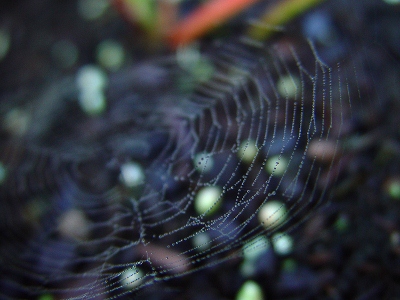
The Spider’s Web with Morning Dew

My calling as a pastor was to help us here at Shepherd of the Hill and here in Chaska literally “go out of our mind.”

Because the collective mind that has delivered us to this place is killing us and destroying the balance of nature.

My calling is to shake us loose from the mental and spiritual chains of species superiority, My calling is to shake us loose from the mental and spiritual chains of species superiority, the mistaken notion that we – humankind – are the exception to Nature.  It’s a call to help re-shape our understanding of ourselves as participants rather than owners, participants rather than conquerors or manipulators, members of a diverse natural order of interdependent life. The spiritual resources are there in Hebrew scripture, in the New Testament epistles to the Ephesians and the Colossians, and in the ancient respectful spirituality of some of America’s indigenous people. By “going out of our mind” we will come back into a the web of sanity and fullness.

What factors do you see pushing towards or against sustainability?

Historian of science and technology Lynn White said flat-out that the root problem of the sustainability crisis is religious or spiritual, and so is the solution.

So, number one, we have to address the old and emerging questions about what Tillich called “Ultimate Reality” and the meaning of our existence.  We have to go into labor to set the new theological and anthropological  paradigm free from of the old destructive thinking.  What we are beginning to find as we go into this spiritual labor is that this more respectful, more holistic way of thinking is not new at all – it’s the older paradigm that got side-tracked by greed and pride.
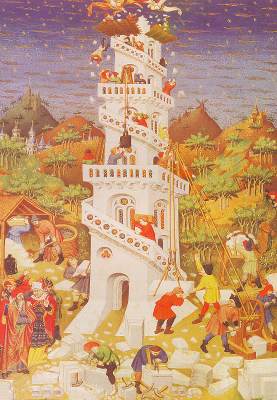
Building of the Tower of Babel – Master of the Duke of Bedford

God has “come down,” as it were, to frustrate our attempts at building the secure city called Babel; God is making us nomads again who recognize that we and the Earth are already full, not empty. Every settlement comes to nothing. Every tower built as a monument to pride falls. And number two, and I’m afraid there is no other way to say this – we will never make it without leaving behind the economic system of greed. Capitalism is killing us.

The consolidation of wealth and corporate power have a stranglehold on national, state, and local public policy. The members of the boards of the oil companies sit on the boards of General Motors and Ford.  So it’s no wonder that U.S. federal policies on transportation are car-friendly and suspicious of mass-transit, regardless of a car’s gas mileage. Osalescence is built in because you can’t sell something five years from now if the old model is still like new. Our health care and the FDA are in the palm of the insurance and drug company’s so that it’s illegal to go across the border to fill your prescription in Canada.

Finally, the sustainability of the human species itself is, I believe, imperiled by chemical alterations that are meant to do good but that, in the long run, make us biologically less resistant and resilient. Our natural immune systems are being weakened by pesticides in the food we eat and by the pharmaceuticals we ingest from the drug store.

Black tar heroin - U.S. Drug Enforcement Administration

Black tar heroin – U.S. Drug Enforcement Administration

We have become a nation of addicts.  Addicted to illusionary dreams of abundance.  Addicted to prescription drugs.  Addicted to fast food and faster short-term solutions. Even instant gratification is too slow. Controlled by advertizing that sells us prescription drugs that’ll give you an immediate erection but may send you to the emergency room if it last more than four hours,or drugs that may ruin your liver or land you in a casket, and the real pushers are not the petty drug peddlers on Minneapolis’s North Side. The real pushers are legal. They’re given license, while those who would shut them down are looked upon as crackpots and throw-backs who are opposed to progress.

So…what’s stopping real progress, a more Earth-friendly way of organizing human affairs that embraces reality itfself, “Being-Itself”?  The intransigent, legal, institutionalized arrangements of power and money, on the one hand, and our willing compliance with the de-democratization of America that salutes the system of greed. We have to learn again, and we are – very slowly –  pushing and screaming, that “the Earth is the Lord’s and the fullness thereof”. We have turned it over to the forces of greed and destruction.

The Good, Good Earth: Our Island Home

The Good, Good Earth: Our Island Home

We need to recover the gratitude and spiritual paradigm of a natural abundance in order to push against the false promises of those who would have us believe that our lives and the world would be empty without all the stuff that ends up in the landfills or washes ashore in the estuaries of the Gulf of Mexico.

So……Chime in, friends. How would you answer the reporter’s questions?

Watch Dynamic speech on “My Energy Plan”

President Gerald Ford addressing the nation

President Gerald Ford addressing the nation on energy policy

Click HERE to be blissfully inspired by dynamic speaker President Gerald Ford’s speech on energy policy and Congress “doing nothing to end energy dependence,” including a call for “a windfall profits tax on oil companies,” complete with equally dynamic props. “Nothing has been done since January!” “We must get on with the job RIGHT NOW. Thank you, and good night.” – 1975

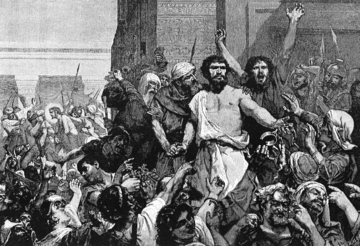
Jesus Barabbas

Give Us Barabbas

There are two Jesuses – two different Sons of the Father. One is executed; the other is released. Both are with us still.

Here’s the sermon at Shepherd of the Hill Presbyterian Church in Chaska, MN, a place for the mind and heart on YouTube:

YouTube: “” 

The Legacies of Joe Hill and Doug Hall

You who hold us in the hollow of your hand,

Who hold us in the curve of a mother’s arms,

Whose flesh is the flesh of hills and hummingbirds and angleworms,

Whose skin is the leathered skin of the barge-toter and the old Indian Chief and the smooth skin of a newborn babe,

Whose color is the color of the zebra and the brown bear and the green grass snake,

Whose hair is the aurora borealis, the rainbow and nebulae,

Whose eyes sometimes shine like the evening stars, and then like fireflies, and then again like an open wound,

Whose touch is the touch of life and the touch of death,

Whose name is everyone’s, each and all alike, for just a fleeting moment on the shore of time, the hem of your eternity:

Grant us to see ‘tis only the splendor of light hideth thee.’  Let Your healing balm salve the tender wounds of grief and turn the tears of mourning into tears of unshakable joy.

God of the sparrow, God of the whale, God of the pruning hook: You ask only that we do justice, love mercy and walk humbly with You.  Lead us to take the claims of justice, mercy and humility into the palaces and chambers of power where public policy is made and administered.  Give us confidence that, though truth still sways upon the gallows, yet it is truth alone that is strong.

Let our lives flow in endless song above earth’s lamentations.  Let no storm shake our inmost calm.  No tempest dim our vision.  No noisy gongs or clanging cymbals of ignorant armies clashing by night drown out the gentle sounds of the flute and the dulcimer, the quiet chords of love.

For this work and this alone, raise us up on eagles’ wings to follow Wamble Pok-he, our lead eagle now departed, and to see him standing there, like old Joe Hill, as big as life and smiling with his eyes.  “What they could not kill,” says Joe, says Doug, “went on to organize, went on to organize.”   “I did not die,” says he.  “I did not die.  Where workers strike and organize,” says he, “You’ll see Doug Hall,” says he, “We’ll see Doug Hall,” says he.  How can we can we keep from singing?  Amen.

– GCS, pastoral prayer at Doug Hall’s Memorial Celebration, Wabasha, MN.

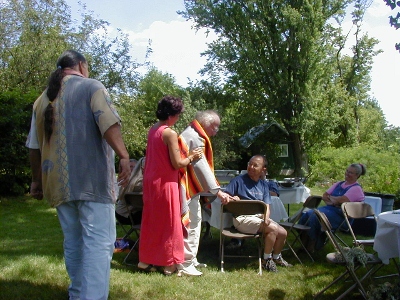
Stephanie Autumn and Clyde Bellecourt honoring Doug with Indian blanket

Stephanie Autumn and Clyde Bellecourt honoring Doug with Indian blanket

Doug was the definition of “the street lawyer.” The farewell to Doug was attended by the people he had defended over many years, the founders of the American Indian Movement, African-American activists, U.S. District Court Judges, MN Supreme Court Justices, Indian drummers, and “America’s troubadour, Larry Long.” Doug was an important figure in the standoff between the federal troops and the AIM members who occupied Wounded Knee. He served as Director of the Legal Rights Center, and, in the last decade of his life was a leading figure in the state-wide movement for restorative justice. He was the Honorary Chair of the Minnesota Restorative Justice Movement.

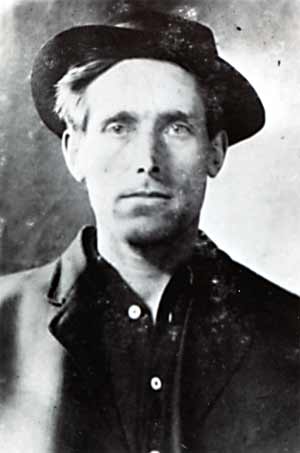
Joe Hill, Swedish-American labor organizer, songwriter, (1879-1915)

I dreamed I saw Joe Hill last night

Alive as you or me.

Says I,  “But Joe, you’re ten years dead.”

“I never died,” says he,

“I never died,” says he.
“In Salt Lake, Joe,” says I to him,

Him standing by my bed.

“They framed you on a murder charge.”

Says Joe, “But I ain’t dead,

Says Joe, “But I ain’t dead.”
“The copper bosses killed you, Joe,

They shot you, Joe,” says I.

“Takes more than guns to kill a man.”

Says Joe, “I didn’t die,” Says Joe,

“I didn’t die.”

And standing there as big as life,

And smiling with his eyes, Joe says,

“What they forgot to kill Went on to organize,

Went on to organize.”
“Joe Hill ain’t dead,” he says to me,

“Joe Hill ain’t never died.

Where working men are out on strike,

Joe Hill is at their side,

Joe Hill is at their side.”
“From San Diego up to Maine

In every mine and mill,

Where workers strike and organize,”

Says he, “You’ll find Joe Hill.”

Says he, “You’ll find Joe Hill.”
I dreamed I saw Joe Hill last night

Alive as you or me.

Says I, “But Joe, you’re ten years dead.”

“I never died,” says he,

“I never died,” says he.

A Visit to Rockefeller Center

This post is by historian and friend Gary Severson. I asked him to put his reflection in writing not because it says someting nice about you-know-who, but because I thought it should reach a larger audience. Views from the Edge added the photos of Atlas holding up the world to supplement Gary’s commentary.

Rockefeller Center Plaza with sculpture of Atlas

Rockefeller Center Plaza with sculpture of Atlas

“When in NYC this past week I made my way to Rockefeller Center just to see a part  of the city I had never seen.  As it turns out my NYC experience in Rockefeller Center related to Gordon’s sermon this morning, The Estate Sale & 1000 years”. His sermon related to the impermanence of many things in our society including its architecture. Gordon was surprised to see the estate sale he attended taking place at an “art deco’ style house that was totally out-of-place in a neighborhood of Tudor houses.  This is a style that has disappeared compared to more traditional styles.

“As I arrived in Rockefeller Center Plaza I was taken by the immense architecture of places like NBC, News Corp., Time Life, Citibank etc. The tremendous sense of the power represented by these buildings was overwhelming in the sense that they represent a huge influence in terms of their ability to generate propaganda about America.”These buildings are generally of a sterile style described as spires of steel & glass. I stopped to talk to a security guard and by his demeanor it was clear he even took on the arrogance these buildings exuded. I walked into another RC building where I saw a $137,000 necklace in a window display & saw the clerk inside & thought that isn’t a place I would be welcome in either. As I turned around I noticed a sign that said “Onassis Museum”. I went in and could see it was free admission and contained 100 or so priceless sculptures, tiles, metal work etc. from Greece & Rome.

“As I listen to Gordon’s sermon I realize I’d been experiencing what he is describing in terms of permanence and impermanence. These skyscrapers in Rockefeller Center will be imploded while these ancient artworks represent eternal ideas right here in the midst of the impermanence of these modern buildings.  In fact the exhibit in the Aristotle Onassis Museum was about the changes taking place in the artwork of the period in the transition from paganism to Christianity.

“When I left I saw across the street St. Patrick’s Cathedral, built during the Civil War. It rivals the cathedrals of Europe. It stands out in stark contrast to the surrounding modern glass structures with its spires pointing 300 ft. into the air.  I went in and again saw the amazing sanctuary with its 250 ft. ceiling & spectacular stained glass windows.

Saint Patrick Cathedral

“Here we have a building that is already 160 yrs. old and will outlast the surrounding towers of crystalized guilt, a reference to the attempt by modern man to deny his mortality by replacing traditional religious worship with the worship of Earthly money and power.  Today’s sermon was a wonderful example for me of the connections we can make between our seeming separate spiritual & everyday lives to create meanings that allow us to gain a deeper understanding of who we are.”

– Gary Severson, Chaska, MN

Atlas and St. Patrick Cathedral

Atlas and St. Patrick Cathedral

Drug Wars

“Drug Wars”

Steve Shoemaker, Urbana, IL, April 26, 2012

The prisons are full and profit only

the investors in the rich companies

that plan, build and manage the “Custody

Industry.”  All that the prisoner sees

is injustice:  blacks serve more time than whites,

the rich with high-priced lawyers pay a fine,

the poor endure the filth, the rapes, the fights,

and learn to do sophisticated crime.

Released with prison records few can find

a decent job, or a safe place to live.

Back on the streets often their only friend

is the one who had sold them drugs, who give

them yet another chance to forget pain.

Their land will never let them forget shame.

Homeless men on Corinthian Aveune in Philadelphia

Homeless men on Corinthian Avenue in Philadlephia

Returning last year to the street where I once worked with homeless men and youth gangs in North Philadelphia, I took this shot from the car window. The scene was all too familiar.

The Estate Sale and a Thousand Years

Last Saturday I bit my tongue and went to an estate sale in hopes of buying a patio set. It was sold by the time I got there. Here and gone in a heartbeat.The rest of the stuff, except for the men’s suits (wrong size) was junk.

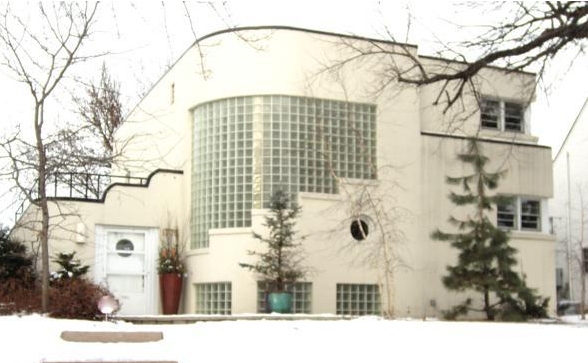
The memory that lasts is the house itself. Highland Park is a lovely neighborhood in Saint Paul. Beautifully constructed old Tudor homes on a tree-lined street…except for…the house with the estate sale…a lavishly done white retro Art Deco house…plopped down like a fly on top of a French Soufflé.

I blurted out to another shopper, “This place is really strange.”  “Yes!” she said. “What were they thinking?”

Right then I thought of the ongoing conversation with Dennis Aubrey of Via Lucis Photography about the Romanesque and Gothic churches that still inspire reverence and awe eight centuries after they were built.

Dennis: “One of the wonderful things about these [Gothic and Romanesque] churches was that they took so long to construct and design that the intellectual currents that drove the builders were deep and powerful, not short, erratic eddies of fashion.”

Dennis had posted a question about a contemporary artistic installation at the Church of Saint Hilaire in France.  Would the newly created installation at the Church of St. Hilaire stand the test of  time. Might it also come from sources that are “deep and powerful, not short, erratic eddies of fashion”? Would it stand the test of time as compared with Gothic and Romanesque structures with their high vault ceilings that lift our eyes and hearts to something else for which we human beings long?  I had shared with Dennis that I find most contemporary church architecture banal and uninspiring.

I wrote to Dennis: “The culture of individualism is NOT Romanesque or Gothic where the glory is directed away from the individual, where the individual gets to feel…well…very small, humble, rather insignificant in the best way. I, too, see wonderful works of contemporary architecture, and I hope I’m not just being a cranky old man here. The comment about banality is not about those magnificent creations but rather about what I believe is the prevailing dumbing down of our time that leaves us bereft of awe, the sense of grandeur, wonder, or humility [one feels in Gothic and Romanesque spaces]. There’s a flattening, a leveling of existence itself to human proportions. The belief in species superiority displaces everything that suggests otherwise. My comments, I think you know, are not so much about the new installation at St. Hilaire – which, in and of itself, strikes me as quite lovely – but more about the age in which we live where nothing much seems to be of lasting value.”

Dennis: “Gordon, I think it was a form of this ‘prevailing dumbing down’ that inspired us to these churches in the first place. I became increasingly disturbed by rampant      commercialism, when the point of commerce is to create obsolescence so that goods can be replaced whether necessary or not. Fashion and styling is substituted for value. PJ and I wanted to concentrate on something that had intrinsic value, and when we began exploring these churches in  2006, we found that something.

“One of my favorite books of all time is Raymond Chandler’s The Long Goodbye [published in 1953]. In it, there is a speech by the wealthy Harlan Potter:

“’You can’t expect quality from people whose lives are a subjection to a lack of quality. You can’t have quality with mass production. You don’t want it because it lasts too long. So you substitute styling, which is a commercial swindle intended to produce artificial obsolescence. Mass production couldn’t sell its goods next year unless it made what it sold this year look unfashionable a year from now. We have the whitest kitchens and the most shining bathrooms in the world. But in the lovely white kitchen the average American housewife can’t produce a meal fit to eat, and the lovely shining bathroom is mostly a receptacle for deodorants, laxatives, sleeping pills, and the products of that confidence racket called the cosmetic industry. We make the finest packages in the world, Mr. Marlowe. The stuff inside is mostly junk.’”

Well, the kitchens today aren’t just for the “housewives,” thank goodness, but the rest hit too close to home.

I think of the height of the Gothic arches and the things that will last when someone says at my departure “Dust to dust, ashes to ashes” and holds an estate sale.

I sit down with the Scriptures for something longer lasting than deodorants, laxatives, sleeping pills, or a plastic patio set.  I want something like the lasting value of the Gothic and Romanesque architecture “took so long to construct and design,” where “the intellectual currents that drove the builders were deep and powerful, not short, erratic eddies of fashion.”

I’m drawn to the English translation that preserves the clear distinction between the Divine and the human – the use of the archaic word “thou” for God. Like the vaults of St. Hilaire, the language lifts up my heart from the flat banality of our self-preoccupations and species grandiosity.

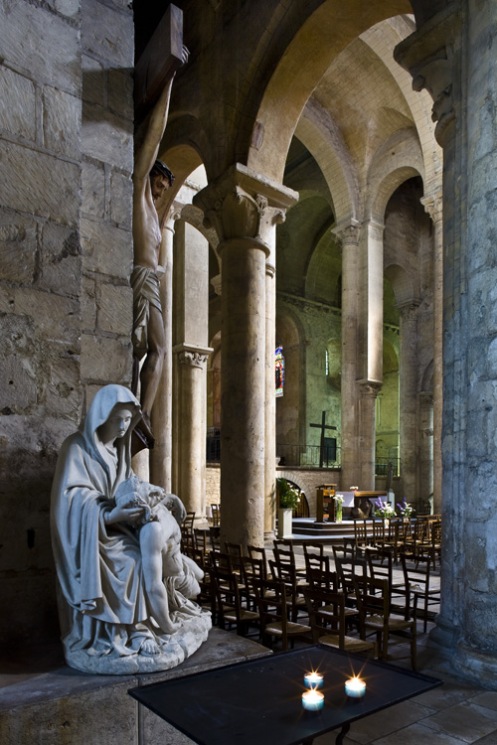
Basilique Saint Hilaire, Poitiers (Vienne) Photo by PJ McKey

“O Lord, how majestic is thy name in all the earth!

When I look at the work of thy heavens, the work of thy fingers,

The moon and the stars which thou hast established;

What is man that thou art mindful of him…?


O Lord, our Lord, how majestic is thy name in all the earth!” (Psalm 8)


“Lord, thou hast been our dwelling place in all generations.

Before the mountains were brought forth, or ever thou hadst formed the earth and the world,

From everlasting to everlasting thou art God.

Thou turnest man back to the dust, and sayest, ‘Turn back, O children of men!’

For a thousand years in thy sight are but as yesterday when it is past, or as a watch in the night.” (Psalm 90:1-4)

Supply and Demand

“Rats and roaches live by competition under the laws of supply and demand; it is the privilege of human beings to live under the laws of justice and mercy.”
― Wendell Berry

President Obama Speech at National Holocaust Museum – 4/23/12

President Obama Speech at National Holocaust Museum – 4/23/12. to watch the speech.

UneditedPolitics.com publishes speeches by current and former Presidents, Senators, Congressinal Representatives, Governors in American public life. I have found it a great source of  information without comment. I hope you find it the same.

The World in an Oyster – an Earth Day reflection

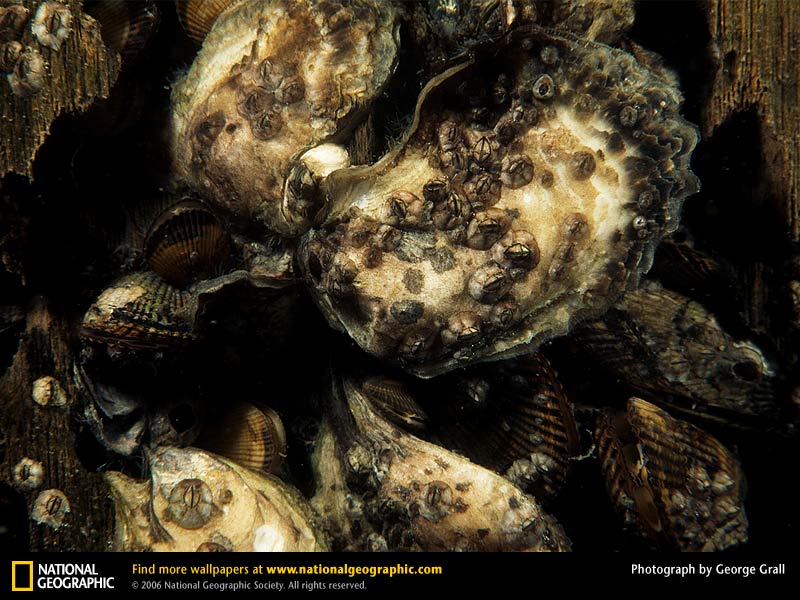
Oysters

A COMMENTARY FOR EARTH DAY – Rev. Gordon C. Stewart | Friday, June 4, 2010 – published by MinnPost.comThe “spill” in the Gulf of Mexico raises the most basic questions about how we humans think of ourselves.

We’re at a turning point. The crisis we can’t seem to kill in the Gulf of Mexico puts before us the results of a more foundational crisis than the black goo that is choking the life out of the Gulf. The uncontrolled “blow-out” raises basic questions about how we think of ourselves and the order of nature.

Fifteen years ago I was with a group of pastors who spent four days with the Chesapeake Bay Foundation, whose mission is to protect and clean up the Chesapeake Bay. Our time there began with a day on the bay on a Skipjack, one of the last remaining motorless sailing vessels that used to harvest oysters by the tens and hundreds of bushels from oyster beds. The director of the Chesapeake Bay Foundation and an old waterman named Earl, who had worked the bay for 54 years, took us to school.

Back then the oyster population had shrunk to a fraction of 1 percent of what it used to be. Fifteen years before our visit the oyster population would filter all the water in the bay in three days’ time. A single oyster pumps five gallons of water through its filtration system every day.

The oysters were close to extinction; the bay’s natural filtering system was in danger. “It’s humans who’ve done this,” said the old waterman. “They’ll come back; I have to believe they’ll come back.”

Others were less hopeful. The Maryland Department of Natural Resources discussed the damage to the wetlands and the estuaries, the seedbeds of life. It had sounded the alarm for public action to protect the birthplaces of all the seafood we eat, the places on which the whole chain of life depends.

Deepwater Horizon fire

This week we heard from the Gulf of Mexico that the attempted “top kill” has failed and that the “spill” is spreading in every direction — not only on the surface, but below the surface — a glob the size of the state of Texas. I think of Earl and his Skipjack as I see the poisoned oysters in the hands of Louisiana oystermen whose livelihood depends on clean Gulf waters. “It’s humans who have done this.”

But it’s not every human who has done this violence to the Gulf. It was not the indigenous people of North America, nor was it the Moken people (“the sea gypsies”) who, because they see themselves as part of nature, anticipated the 2004 Asian tsunami while the rest of the world was caught by surprise. It was a specific form of humanity known as Western culture that sees humankind as the conqueror of nature.

Our language is not the language of cooperation with nature. “And God said, ‘… fill the earth and subdue; and have dominion over the fish of the sea and the birds of the air and over every creeping thing that creeps upon the earth’ ” — (Genesis 1:28), a conquering view based in the idea of species superiority expressed in the phrase “top kill” for the attempt to plug the hole that is killing the oysters and fish of the sea.

Insofar as interpreters of the Book of Genesis have shaped this Western hubris, my Judeo-Christian tradition bears responsibility for this crisis. The idea of human exceptionalism springs from the Bible itself.

But no sooner do I sink into confession and despair than I remember a prayer that Earl called to my attention on the Skipjack 15 years ago, the prayer of St. Basil from the third century that offers a more hopeful understanding of ourselves, a view like Moken people’s that knows that the whole world’s in an oyster:

“The Earth is the Lord’s and the fullness thereof. O God, enlarge within us the sense of kinship with all living things, our brothers and sisters the animals to whom You have given the Earth as their home in common with us. We remember with shame that in the past we have exercised the high dominion of man with ruthless cruelty, so that the voice of the Earth, which should have gone up to You in song, has been a groan of travail. May we realize that they live not for us alone, but for themselves and for You, and that they have the sweetness of life.”