Grandpa’s letter to Ruby

Dear Ruby,

Barclay and I loved playing with you yesterday. I think you enjoyed it too!

You and Barclay aren’t old enough to understand all the things I know. Both of you are only two-and-a-half years old. But, from the looks of yesterday’s play time, you both enjoy life more than Grandpa. Watching you and Barclay do his tricks was such fun!  “Barclay, sit!” “Barclay, down.” “Leave it.” “Roll over.”

You were the alpha dog, the commander-in-chief, Chairwoman of the Joint Chiefs of Staff. To this day, no woman has ever held any of those positions.

But I’m getting ahead of myself. You don’t know all that stuff. You don’t know what an alpha dog is, or a Commander-in-Chief, or Chairwoman of the Joint Chiefs of Staff or President. You’ll learn all that stuff soon enough, and, if this were the world I would like for you, there wouldn’t be any Commanders-in-Chiefs, or Joint Chiefs of Staff. There would be grandchildren like you and Cavalier King Charles Spaniels like Barclay who play together with moms and dads, grandmas and grandpas without worrying about the reasons we have Commanders-in-Chief and Chairwomen of the Joint Chiefs of Staff.

Watching the two of you yesterday made me think about how much of what I know I wish I could un-learn. My head and heart are crammed full of things that don’t belong there, like the time your Great Uncle Bob drank the Drano and had to be rushed to the hospital to have his stomach pumped.
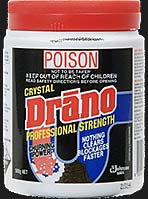
Drano container - POISON

Drano container – POISON

Older people your Uncle Bob and me have drunk the poison of thinking we’re smarter and better than dogs and cats, and trees and birds and blue skies and clouds and rivers and ponds and oceans. We drank the poison. I hope you’ll grow up remembering your play time with Barclay whenever the can of Drano sits on the back of the toilet.

I go to the toilet a lot more these days. You’re still wearing diapers. If you’re lucky you’ll learn from Barclay what my generation never learned: never poop in your own kennel. The world, the planet, is your kennel, Ruby! This whole wide world. We need to take care of it. Enjoy it. Not be mean to it or hurt it.

As you get older, remember how you and Barclay looked right in each other’s eyes and smiled. Remember the love. If you do, the world will be a better place than the one I’m passing on to you. And, when I pass on, remember that our big wonderful kennel doesn’t go anywhere. It just keeps going long after we’ve been here. Be nice to it. Be nice to yourself. Keep playing, and, please, don’t swallow the Drano!

Love you,

Grandpa Stewart

Another Use for Vaseline in 2016

Three gifts are mentioned in the story of the Three Kings, aka the Wise men, and the Magi: gold, frankincense, and myrrh.

Moments ago, on Epiphany, three seminary friends arrived at Steve and Nadja Shoemaker’s home on the prairie near Urbana, Illinois. It’d be a stretch to call Harry, Bob, and Don the Three Kings or the Wise Men. More like three wise guys, not from the East, but from the West and North – Corsicana, Texas; Prescott, Arizona; and Highland Park, Illinois – bringing a lighter touch to Steve, the patient with the terminal diagnosis of pancreatic cancer.

Harry, the musician among them, will lead them in his own freshly-written lyrics to the tune of the Epiphany hymn “We Three Kings” – a trio of bass and baritone voices – bringing laughter to the room Kay and I can hear all the way in Minnesota.

Many years ago, a similar thing happened in New York City where Episcopal lay theologian William (Bill) Stringfellow was in Surgical Intensive Care following near fatal pancreatic surgery.

Entering the room following the surgery, Stringfellow’s close friend Bishop James A. Pike exclaimed, “Well, I’m a bishop. I should do something!” He promptly disappeared. Moments later he returned with Bill’s attending nurse and a large bottle of petroleum jelly. He consecrated the jelly, declaring to the nurse with typical Pike humor that “this substance has now been set apart for uses other than those ordinary and familiar for Vaseline.”

“Taking a thumbful of this freshly made urgent, he came to the bedside and anointed me,” wrote Stringfellow, “signing my forehead with the cross, and saying:

“‘I anoint you in the name of God; beseeching the mercy of our Lord Jesus Christ, that all your pain and sickness of body being put to flight, the blessing of health may be restored to you. Amen.'” [William Stringfellow, A Second Birthday, Doubleday & Company, 1970]

The bishop’s prayer of unction for the sick was near verbatim from The Book of Common Prayer of the Episcopal Church.

When the surgeon told the patient that his recovery was spectacular, Stringfellow replied, “That doesn’t surprise me at all. I was anointed by Bishop Pike! – what else would you expect?”

This Day of Epiphany, I hope the Three Wise Men, Steve and Nadja may enjoy the same fellowship, humor, and prayer all these years later. They bring no gold, frankincense or myrrh, but everyone in the Urbana gathering tonight knows that when the end is in sight, only the frankincense, the myrrh, and telling stories only dear friends call tell are appropriate. The third gift – gold – no longer matters, if it ever did!

  • Gordon C. Stewart, Chaska, MN, Epiphany, Jan. 6, 2016


The Manifestation of Christ: Epiphany

Ever wondered what an authentic disciple of Jesus might look like in 2016 following a year of deadly gun violence? Today is Epiphany when Christians celebrate the manifestation of Christ to the gentiles, remembering the Wise Men who presented their gifts to the Prince of Peace.

President Obama, Jan. 5, 2016

President Obama, Jan. 5, 2016


The Psalter Reading for Epiphany: Psalm 72:1,2,7-14 (NRSV)

Give the king your justice, O God, and your righteousness to a king’s son.

May he judge your people with righteousness, and your poor with justice.


In his days may righteousness flourish and peace abound, until the moon is no more.

May the kings of Tarshish and of the isles render him tribute, may the kings of Sheba and Seba bring gifts.

May all kings fall down before him, all nations give him service.

For he delivers the needy when they call, the poor and those who have no helper.

He has pity on the weak and the needy, and saves the lives of the needy.

From oppression and violence he redeems their life; and precious is their blood in his sight.

  • Gordon C. Stewart, Chaska, MN, January 6, 2016, The Day of the Epiphany on the Western Christian liturgical calendar.


Verse – Dinner for Two

We were young with no money to show,
But had patience, we want you to know:
We bought Mexican take-out,
And before we would make-out,
We looked good in the candlelight glow.

  • Steve Shoemaker, Urbana, IL, Jan. 3, 2016

Talking about death and dying

Talking openly about death is a rare thing. We don’t like talking about it. We prefer it go away and stay away, like rain: “Rain, rain, go away. Come again some other day.”

When someone dies, it’s often said they’ve passed, passed away, or passed on, a sentiment dating back to a Greek idea of the immortality of the soul. It was/is assumed the soul at death is set free from its mortal cage to live forevermore.

The likes of Barbara Brown Taylor, of whom I consider myself one, have different idea. “Matter matters,” she says. Flesh and blood matter. Flesh, blood, and matter matter. Christians, following the older view of the Hebrew Bible, do not share the belief in a part of us – a soul – that survives our mortal frame. Instead, we profess a curious hope that affirms the essential goodness of corporal existence. Belief or hope in the resurrection of the body may seem even stranger than the immortality of the soul.

I have no more reason to believe in the resurrection of the body than I do to believe in an immortal soul. Watching the life go out of my dogs, I did not imagine some invulnerable part of them leaving their bodies to pass on to some other state of being. They were dead. I cried. I grieved. I mourned their loss. I never thought I would see them again. If they, or we, had a future, it seems more natural, so to speak, to think of them in their bodies all over again.

But which body would it be? Would Maggie, our West Highland White Terrier-Bichon Frise, be the playful pup or the one with the tumor on her hip? Would I be the 73 year-old me, the new-born me, or the teenager with the raging hormones?

Passing away has always made more sense to me than passing or passing on. “You are dust and to dust you shall return” makes better sense to me. The Earth will go on, as will those I love … for a time … but not forever, so far as any of us really knows. I say the Nicene creed on Sundays and ponder what it means to say “I look for the resurrection of the body and the life of the world to come.” The world to come, so far as I can tell, is the Earth where Cecil the lion doesn’t get killed by a dentist, and the lion and the lamb…and the dentist…lie down together in peace and hurt one other no more.

My friend Steve talks openly about death and dying. “I’m dying,” he says, not with a morose or maudlin sensibility but as a fact. It’s not a great surprise to him. Would he and we prefer the rain to go way and come back some later day? You bet. But it won’t, and even it if would, it would be back some other day. There’s great grace in the acceptance of death and the maturity to speak of it aloud, enjoy old friends when one can, laugh and cry and hug and kiss those one loves.

That we would want something more or fear death as the end is part of being human. The time of death is not time to debate philosophy or theology. It’s time for compassion, and for grace and courage to recognize our creatureliness – the distinction between every creature and the Creator, mortal life and the Immortality, the finite and the Eternal.

– Gordon C. Stewart, Chaska, MN, Dec. 29, 2015

Verse – The Last Septet

INTRO: Steve just posted on his CaringBridge site: “Awoke clear-headed, with more energy than in weeks. Just wrote this poem”:

I do not know how to die.
No words left to say good-bye.

The cancer spread everywhere;
Family and friends showed they care.

Will I find a peaceful death?
Or fight for each gasping breath?

Be here now? To future bow…

  • Steve Shoemaker, Urbana, IL, Dec. 29, 2015

NOTE:

Biggest and smallest Dogs

Biggest and smallest Dogs

My friend and Views from the Edge colleague, Steve, was diagnosed mid-November with terminal pancreatic cancer. For years death and dying have been a topic of conversation among the seminary friends who keep changing our group’s name. At first we called ourselves The Chicago Seven. After Dale died, we were six. We became The Gathering. More lately we call ourselves The Dogs. Steve at 6’8 is the biggest Dog. He’s always said “Big dogs go first.”

A month ago Steve came to Minnesota for a consultation at the Mayo Clinic. On a Thursday, Kay and I visited Steve and Nadja in their small room at the Kaylor Hotel across the street from the Clinic. While Nadja and Kay began to discuss the procedures Steve would undergo the next day, Steve stuck his fingers in his ears and smiled at me. I’m with Steve, I’d rather just do it when it’s time. I’d rather not know. I wonder if it’s a guy thing.

Steve wrote “The Last Septet” after his second Chemo treatment back in Illinois, a treatment meant to give him more time with no illusions about the outcome. To live forthrightly without illusion is a beautiful thing. Meanwhile, the other five Dogs watch and pray, growl and snarl, curse the cancer, mourn his demise, remember our shared mortality and the line from the Presbyterian Church (USA) A Brief Statement of Faith: “In life and death we belong to God.”

Gordon, a much smaller Dog, December 29, 2015.


Birthday Tribute to Steve

Kate Shoemaker, MD, and her Uncle Steve Shoemaker share the same birthday – today, December 19. Kate sent this to Steve today. Kate, from St. Louis, MO, is spending the day with Steve and Nadja in Urbana, IL.

Happy Birthday poem from Kate Shoemaker to Uncle Steve.

Happy Birthday poem from Kate Shoemaker to Uncle Steve.

The Mr. Bean-like Wedding

The wedding I’m remembering took place in August, 1972 at Shalom House, the ecumenical campus ministry center at the University of Wisconsin-Whitewater that housed a collaborative Roman Catholic and Protestant campus ministry.

The bride and broom were students active in the campus ministry. Max, we’ll call him, a counter-cultural jazz flutist with long hair down his back raised in the arch-conservative Wisconsin Synod Lutheran Church, had become involved in the progressive protestant campus ministry. The bride, whom we’ll call Elizabeth, was raised Roman Catholic and was active in the Catholic Campus Ministry.

Because it was a “mixed” marriage involving at least one Christian tradition that viewed the other as going to Hell, Father Charlie and I officiated together at the wedding. Charlie, a much loved priest known for his light touch and quick laugh, and I were colleagues and best of friends.

Imagine the scene in the small Shalom House living room.

Father Charlie and I take our places at one end of the living room, followed by Max, who has replaced his normal attire of blue jeans and a tie-dyed shirt with the light tan polyester suit purchased just for this occasion. Elizabeth enters wearing a lovely traditional white gown every bride still wears, forgetting the ancient meaning of the symbolism. They’ve “known” each other, as the Good Book puts it, for quite awhile.

The mid-afternoon temperature is in the high 90s. There is no air conditioning. Max is sopping wet, sweat pouring from his nose and chin onto the new polyester suit.

It seems he’s in danger of fainting. “Don’t lock your knees,” I whisper to Max, just hang loose.” The whole room feels more than a little uptight. Wisconsin Synod Lutherans and Roman Catholics don’t share the same space, except at the drug store.

Because the guests are from war traditions, Father Charlie and I have printed out every word of the service. The bride and groom, and each of the 50 guests has a copy of the service. Every word of it.

Father Charlie’s and my words are in regular type; responses by the bride, groom, or congregation are in bold type. Charlie and I had agreed to alternate leading. But we have also decided that whichever one of us is not leading will help prompt the congregation in the bold type responses.

All is well until we come to the consent questions, the “I will” questions.

Charlie, reading the regular type, asks Max the question. Max responds: I will.

I ask Elizabeth, “Will you have Max to be your wedded husband, to live with him and cherish him, in the holy bond of marriage?”

The bass voice from next to me answers I Will! before Elizabeth can respond. I look at Charlie, Charlie puts his hand to his mouth, opens his eyes wide and says, “Oops!”

Father Charlie and I worked together for four fun-filled years. The day of Max and Elizabeth’s celebration of Holy Matrimony was a Mr. Bean kind of day.

  • Gordon C. Stewart, Chaska, MN, Dec. 11, 2015


I am the enemy who must be loved

Bill Britton's avatarRicher By Far

“It took me a long time to learn that God is not the enemy of my enemies. He is not even the enemy of His enemies.” Martin Niemöller

“The acceptance of oneself is the essence of the whole moral problem and the epitome of a whole outlook on life. That I feed the hungry, that I forgive an insult, that I love my enemy in the name of Christ – all these are undoubtedly great virtues. What I do unto the least of my brethren, that I do unto Christ. But what if I should discover that the least among them all, the poorest of all the beggars, the most impudent of all the offenders, the very enemy himself – that these are within me, and that I myself stand in need of the alms of my own kindness – that I myself am the enemy who must be loved…

View original post 322 more words

Huckleberry Finn and Steve

Steve Shoemaker, my poet colleague on Views from the Edge, is at Mayo Clinic here in Rochester getting a second opinion on newly diagnosed pancreatic cancer and silent heart attack. He recently shared the news with his friends, many of whom had applauded his recent advocacy for welcoming Syrian refugees.

Here’s what Steve wrote:

In Mark Twain’s “Huckleberry Finn,” the young rascal lets his family, and the whole small Missouri town, think he was drowned in the Mississippi River & his dead body carried down stream… And then Huck snuck back into town in disguise and attended his own funeral.

The frequent truant was amazed at all the nice things said about him–even by his school teachers.

This has been my experience the last few days as my serious cancer diagnosis became known, along with a surprisingly positive article in our partisan Republican News-Gazette about Democrat me being critical of Illinois’ Republican Governor refusing State aid, public or private, to vetted Syrian refugees.

As I spoke & wrote about welcoming Syrians, the outpouring of support & personal praise has been amazing…some of the positive words coming even from my grown children (who seeing me up close for years could have written very differently.)

Of course I know after bad news, and at a funeral, critics are silent or absent. I am grateful for both the good words, and the silence!

Illness, diagnoses, prognoses and treatments are personal. Some keep them not only from others but from themselves. Not so with Steve. This is typical Steve. What’s not to love about a humble rascal?

  • Gordon C. Stewart, Chaska, MN, Nov. 28, 2015